Is It Safe to Cook With Stainless Steel Utensils
I used to worry about cooking with stainless steel. I heard people say it could leach metals into food, especially when cooking acidic dishes like tomato sauce. That concern made me question the safety of the stainless steel pans and utensils I used every day.
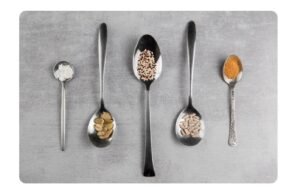
After years of cooking at home and researching food safety standards in the United States, I learned that high quality stainless steel remains one of the safest and most reliable materials you can use in the kitchen. I cook sauces, soups, stir fries, and even acidic dishes in stainless steel without worrying about harmful chemicals.
Unlike some coated cookware, stainless steel contains no synthetic layers that can break down over time. It handles high heat well, resists rust, and lasts for decades when you care for it properly.
In this guide, I explain whether stainless steel utensils are truly safe, what science says about metal leaching, and how you can use them with confidence in your kitchen. If you want clear answers based on real experience and practical research, this article will help you decide what works best for your cooking routine.
2. What Is Stainless Steel?
Stainless steel is not a single metal but an alloy—a mixture of several different elements designed to create a material that is stronger and more resistant to environmental damage than any of its parts would be alone.
Composition: The “Big Three”
-
Iron: The primary base of the alloy, providing the structural strength and “heft” we associate with high-quality cookware.
-
Chromium: The “magic” ingredient. To be classified as stainless steel, the alloy must contain at least 10.5% chromium.
-
Nickel: Added to improve “luster” (that silver-like shine) and to provide a secondary layer of protection against corrosion, particularly from acids.
The Role of Chromium in Rust Resistance
The reason stainless steel doesn’t rust like a cast-iron skillet or a carbon steel knife is due to a process called passivation. When chromium is exposed to oxygen, it forms an invisible, microscopic layer of chromium oxide on the surface of the metal.
Unlike rust (iron oxide), which flakes away and exposes more metal to decay, this chromium oxide layer is “self-healing.” If you scratch your spoon, the chromium in the exposed area immediately reacts with oxygen to seal the “wound,” preventing oxygen from reaching the iron and causing rust.
Common Grades in the USA
In American kitchens, you will most frequently see these two grades:
-
18/10 (304 Grade): This contains 18% chromium and 10% nickel. It is the premium standard for high-end flatware and pots. The high nickel content makes it highly resistant to pitting and gives it a long-lasting shine.
-
18/0 (400 Series): This contains 18% chromium but 0% (or very little) nickel. These spoons are often magnetic and more affordable, but they may lose their luster over time and are slightly more prone to corrosion if left soaking.
3. Is Stainless Steel Safe for Cooking?
In the hierarchy of food safety, stainless steel sits at the very top, alongside glass and high-quality ceramic.
FDA and US Food Safety Standards
The U.S. Food and Drug Administration (FDA) recognizes stainless steel as “GRAS” (Generally Recognized as Safe). Because it is non-porous, it does not harbor bacteria or mold, and it is easy to sanitize in high-heat dishwashers.
Non-Reactive Properties
One of the greatest benefits of stainless steel is that it is non-reactive. Unlike aluminum or unseasoned cast iron, stainless steel does not chemically interact with the food you are cooking. This ensures that:
-
Your food doesn’t pick up a “metallic” tang.
-
The color of delicate sauces (like a white béchamel) remains pure and bright.
Stability Under High Heat
Stainless steel remains chemically stable even at temperatures exceeding 425°C (800°F), which is far hotter than any home stovetop will ever reach. Unlike nonstick coatings (PTFE), which can begin to break down and release toxic fumes at around 260°C, stainless steel remains inert and structurally sound.
4. Does Stainless Steel Leach Into Food?
A common question among health-conscious cooks is whether the metals in the alloy—specifically nickel and chromium—can migrate into the food.
When Leaching Can Happen
Minor leaching is a documented reality, but it typically occurs in very specific circumstances. It is most common when:
-
The cookware is brand new (the passivation layer is still stabilizing).
-
The food is cooked for a very long duration (over 2 hours).
-
The food is highly acidic.
Impact of Acidic Foods
Foods like tomatoes, vinegar, lemon juice, and wine act as mild solvents. When simmered for hours in a stainless steel pot, these acids can draw out microscopic amounts of nickel and chromium.
A Note on Health: For the vast majority of people, these amounts are negligible and often lower than the minerals naturally found in soil-grown vegetables. However, individuals with a severe nickel allergy are often advised to use “nickel-free” (18/0 or 400-series) stainless steel or glass to avoid any potential reaction.
How High-Quality Grades Reduce Risk
Choosing higher-grade stainless steel (like 304 or 316 grade) significantly reduces the risk of significant leaching.
-
Superior Bonding: High-quality manufacturing ensures the alloy is tightly bonded, making it harder for acidic foods to break the surface tension.
-
Corrosion Resistance: Lower-quality steels can develop “pitting” (tiny holes). These pits increase the surface area of the metal exposed to food, which can increase leaching. Premium steel remains smooth and “closed,” keeping the metals locked within the alloy structure.
Continuing our deep dive into stainless steel, we move from the molecular composition to the practical health and performance considerations that define it as a kitchen staple.
5. Health Considerations
While stainless steel is widely regarded as one of the safest materials for food preparation, it is not a “one-size-fits-all” solution for every individual.
Nickel Sensitivity and Allergies
For approximately 10% to 15% of the population, nickel is a contact allergen. While most reactions occur through skin contact (like jewelry), systemic nickel allergy syndrome (SNAS) can be triggered by dietary intake.
-
The Leaching Factor: As discussed, acidic foods (tomatoes, citrus) simmered for long periods can leach small amounts of nickel. For most, this is harmless, but for those with extreme sensitivities, it can trigger dermatitis or digestive upset.
Safe Alternatives for Sensitive Individuals
If you or someone in your household has a diagnosed nickel allergy, you don’t have to abandon the durability of steel. Look for:
-
Nickel-Free Stainless Steel (18/0 or 400 Series): These alloys rely on chromium for rust resistance but omit nickel. They are often magnetic and slightly less shiny, but virtually eliminate the risk of nickel migration.
-
Glass or Enameled Cast Iron: These materials are completely inert and provide a 0% risk of metal leaching.
Long-Term Safety Research
Extensive research by organizations like the European Food Safety Authority (EFSA) suggests that the amount of chromium and nickel released during standard cooking is well below the Tolerable Daily Intake (TDI). In fact, chromium is an essential trace mineral that the human body requires in small amounts for insulin function.
6. Stainless Steel vs. Other Materials
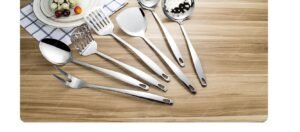
How does the “shiny workhorse” stack up against its rivals?
The Comparisons
-
Vs. Aluminum: Aluminum is a better heat conductor but is highly reactive with acids and can warp easily. Most high-end stainless pans actually have an aluminum core “sandwiched” between steel layers to get the best of both worlds.
-
Vs. Nonstick: Nonstick is easier for eggs, but the coatings degrade over time and cannot handle high-heat searing. Stainless steel offers a “forever” surface that won’t flake into your food.
-
Vs. Cast Iron: Cast iron is king for heat retention, but it is heavy and requires “seasoning” with oil. Stainless steel is lighter and requires no special prep to stay rust-free.
7. Benefits of Cooking With Stainless Steel
Durability and Lifespan
A high-quality 18/10 stainless steel pot is a “buy-it-for-life” item. It cannot be chipped like ceramic, melted like plastic, or scratched away like nonstick.
Even if you burn food onto it, it can almost always be restored to a mirror finish.
Resistance to Corrosion
Unlike carbon steel or cast iron, you don’t have to worry about a single drop of water turning your pan orange overnight. The chromium oxide layer (passivation) ensures that it remains pristine even in humid environments.
No Chemical Coatings
With stainless steel, what you see is what you get. There are no “forever chemicals” (PFAS/PFOA) that can off-gas at high temperatures. It is a mechanical surface, not a chemical one.
8. How to Use Stainless Steel Safely
The biggest complaint about stainless steel is food sticking. This is almost always due to user error rather than the material itself.
Preheating Properly (The “Water Drop” Test)
To make stainless steel “non-stick,” you must use physics.
-
Heat the pan on medium for 2–3 minutes before adding oil.
-
Flick a drop of water onto the pan. If it sizzles and evaporates, it’s not ready.
-
If the water forms a solid bead that glides around the pan like a puck on ice (the Leidenfrost Effect), the pan is perfectly preheated.
Using the Right Oils
Because stainless steel is used for searing, choose oils with a high smoke point, such as:
-
Avocado oil (270°C)
-
Grapeseed oil (215°C)
-
Refined coconut oil (200°C)
-
Avoid Extra Virgin Olive Oil for high-heat searing, as it will burn and create a sticky residue.
Avoiding Overheating
“Flash heating” a dry pan on the highest setting can cause heat tinting (a rainbow-colored oxidation). While harmless, it’s a sign you’re stressing the metal. Always heat gradually.
Proper Cleaning Methods
-
For everyday cleaning: Use warm soapy water and a soft sponge.
-
For “rainbow” stains: Use a splash of vinegar; the acid will dissolve the oxidation layer instantly.
-
For burnt-on food: Use a specialized cleaner like Bar Keepers Friend. The oxalic acid in it breaks down burnt proteins without scratching the steel.
9. Signs You Should Replace Stainless Steel Utensils
In a world of disposable plastic and peeling nonstick, stainless steel is remarkably resilient. However, “stainless” does not mean “invincible.” Here is how to know when your trusted spoon or pan has reached the end of its safe operational life.
Deep Pitting
Pitting looks like tiny, dark pinholes on the surface of the metal.
-
The Cause: This usually occurs due to galvanic corrosion or prolonged exposure to high concentrations of salt. If you add salt to a pot of water before it reaches a boil, the undissolved salt grains can sit on the bottom and attack the chromium oxide layer.
-
The Risk: Once a pit forms, it creates a microscopic “cave” where bacteria can hide from a sponge. Furthermore, these pits bypass the protective surface layer, making it significantly easier for nickel and iron to leach into your food. If the surface feels like sandpaper, it’s time to retire the piece.
Warping
Warping is most common in lower-quality, thin-walled stainless steel or “impact-bonded” pans where the base is separate from the sides.
-
The Cause: Thermal shock. This happens when you take a ripping-hot pan and plunge it into cold sink water. The rapid contraction of the metal pulls it out of alignment.
-
The Risk: While not a chemical health hazard, a warped pan won’t sit flat on a glass-top stove, leading to “hot spots” and unevenly cooked food. In utensils like spoons, warping can lead to structural stress fractures where the handle meets the bowl.
Flaking or Corrosion
It sounds contradictory, but stainless steel can flake if it is of poor quality or has been exposed to harsh industrial chemicals (like bleach).
-
The Cause: If the alloy was not mixed properly during manufacturing, the layers can begin to delaminate. Additionally, using chlorine bleach on stainless steel is a cardinal sin; it eats through the chromium oxide layer and causes the metal to actually “weep” rust.
-
The Risk: If you see any grey or metallic flakes in your food, or if the spoon is shedding a dark residue that doesn’t wash off with soap, stop using it immediately. This is a sign the alloy is breaking down.
10. Frequently Asked Questions
Is stainless steel safer than nonstick?
From a long-term health and environmental perspective, yes. Nonstick pans (PTFE) are incredibly convenient for eggs, but they have a finite lifespan. Once the coating is scratched or overheated (above 260°C), it can release polymer fumes. Stainless steel, by contrast, is a mechanical surface. There are no coatings to chip, no “forever chemicals” (PFAS) to worry about, and no risk of toxic off-gassing at high temperatures. It is the preferred choice for those looking to reduce their chemical footprint in the kitchen.
Can stainless steel cause metal poisoning?
For the average healthy individual, no. The human body actually requires small amounts of iron and chromium to function. The trace amounts of these metals that leach into food—even when cooking acidic tomatoes—are typically far below the safety limits set by the World Health Organization. The only exception is Nickel. As discussed earlier, individuals with a severe, medically diagnosed nickel allergy should opt for “Nickel-Free” (18/0) stainless steel to avoid localized allergic reactions. However, “poisoning” in the sense of acute toxicity from cooking utensils is virtually unheard of in medical literature.
What grade of stainless steel is best for cooking?
If you want the “Goldilocks” of kitchenware, look for 18/10 (304 Grade).
-
The 18% Chromium ensures it won’t rust, even if you leave it in the dishwasher.
-
The 10% Nickel gives it that beautiful, silver-like mirror polish and incredible resistance to acidic foods. If you are on a budget, 18/8 is an excellent runner-up. If you have a nickel allergy, 18/0 (400 Series) is your best bet, though you will need to dry it more carefully to prevent minor spotting.
Summary: Making the Most of Your Investment
Stainless steel is the bridge between amateur cooking and professional technique. It allows for the “Maillard Reaction”—that beautiful brown crust on a steak or scallop—that nonstick simply cannot achieve. By understanding the material’s composition and respecting its few weaknesses (like salt and thermal shock), you can curate a collection of tools that will literally last longer than your kitchen cabinets.
Quick Reference Checklist:
-
Always Preheat: Use the water drop test to ensure a non-stick surface.
-
Avoid Bleach: Stick to mild soaps or specialized cleaners like Bar Keepers Friend.
-
Salt Late: Add salt to boiling water, never cold water, to prevent pitting.
-
Cool Down: Let pans cool naturally before washing to prevent warping.
Final Verdict
Stainless steel is the most honest material in the kitchen. It doesn’t hide behind coatings, it doesn’t demand constant pampering, and it provides a chemically stable environment for your food. By mastering the “heat-then-oil” technique, you unlock a professional cooking experience that lasts a lifetime.

- 10 Best iPhone 13 Pro Camera Protectors for Reliable Lens Safety 2026 - March 2, 2026
- 10 Best iPhone 14 Pro Cases with Camera Protection 2026 - March 2, 2026
- 10 Best iPhone 14 Pro Max Cases for Camera Protection 2026 - March 2, 2026