Grinder vs. Chopper vs. Blender: Which Prep Tool Do You Need?
The primary difference between a grinder, chopper, and blender is the final texture and the role of liquid. A grinder uses dry force to turn hard solids into fine powders (coffee, spices). A chopper uses a pulsing action to create uniform chunks (onions, nuts). A blender requires a liquid base to create a vortex that turns solids into smooth liquids (smoothies, soups). Choosing the wrong one can result in motor burnout or “mushy” food.
The Physics of Your Kitchen’s Loudest Appliances
I ruined a perfectly good bag of coffee beans and learned everything I needed to know about kitchen tools. I was convinced my high-speed blender was a superhero. It could turn frozen fruit into smoothie silk, so why not coffee beans into grounds? I poured a cup of beans in, hit “pulse,” and was greeted by a sound like a box of rocks in a washing machine. Thirty seconds later, I had a jar full of dusty powder, gritty pebbles, and a smell of hot, burnt coffee. My morning brew tasted like bitter, uneven punishment. I’d used a jackhammer to do a job that needed a scalpel.

This is the silent, grainy frustration in so many kitchens. We see blades and motors and think “they all chop.” So we use the closest, shiniest gadget for every job. But a blender, a grinder, and a food chopper aren’t just different sizes of the same machine. They are different species with different blueprints. Using the wrong one doesn’t just give you a bad texture—it can wreck your ingredients, overheat your machine, and leave you with a mess that’s harder to clean than if you’d just used a knife. The problem is a fundamental mismatch between tool design and ingredient physics.
Think about it this way: you wouldn’t use a hammer to cut a piece of paper. You’d use scissors. In the kitchen, a blender is a hammer for liquids. A grinder is a precision scalpel for hard, dry stuff. And a food chopper is a handy pocketknife for small, solid jobs. Use the hammer on the paper, and you get confetti. Use the blender on coffee beans, and you get a dusty, burnt, uneven mess.
A quick thought: The best kitchen tool isn’t the most powerful one you own. It’s the one engineered for the specific texture you’re trying to create.
The Mechanical Science of Texture
Let’s look under the hood. Why do these machines act so differently?
How a Grinder Pulverizes Hard Solids

A coffee or spice grinder is a demolition expert in a tiny cup. It usually has two small, very sharp blades positioned close to the bottom of a short, narrow container. When you press the button, these blades spin at incredibly high speeds, creating a cyclone of cutting force in that confined space. There’s no escape for a coffee bean or peppercorn. It gets hit by the blade, bounces off the wall, and gets hit again and again until it’s reduced to a fine, consistent powder. The small size is the secret—it creates chaos that leaves nothing whole.
The Chopping Action: Dicing Without the Liquid

Your food chopper is more strategic. It has one larger, often duller “S-blade” at the bottom of a taller bowl. When you pulse it, the blade spins, whacking the ingredients at the bottom. The chunks fly upward, then fall back down to get whacked again. You control the texture by how many times you pulse. It’s a controlled bludgeoning. It’s perfect for creating a coarse, rustic chop where you can still see distinct pieces of onion or cilantro. There’s no vortex, just impact.
Creating the Vortex: Why Blenders Need a Liquid Base
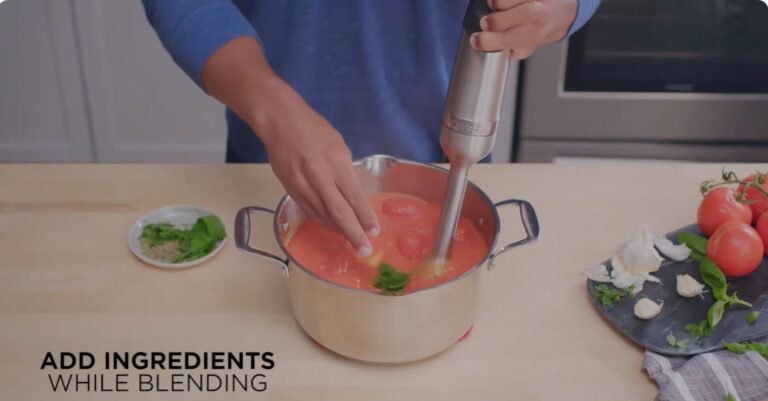
This is the blender’s magic trick. The blade is uniquely shaped and the jar is perfectly tapered to create a powerful liquid tornado—the vortex. This vortex sucks solid ingredients down from the top and forces them into the ultra-sharp blades at the bottom, over and over, until they are completely liquefied. If there isn’t enough liquid to create this vortex, the ingredients just slap around uselessly at the top (this is why your smoothie gets stuck). The blender’s mission is total unity. It wants to make everything one smooth liquid.
Another reflection: A blender doesn’t blend solids. It blends solids that are suspended in a liquid. No liquid, no blend.
When to Reach for Your Grinder
The grinder is your specialist for dry, hard transformation.
Coffee and Spices: The Precision of Burrs vs. Blades
For coffee, a blade grinder (like the one I used) is the budget option. It smashes beans unevenly. For true precision, burr grinders are the gold standard. They crush beans between two abrasive surfaces, creating a uniform particle size essential for balanced flavor. For spices, a blade grinder is perfect. It can turn cinnamon sticks or cumin seeds into fragrant powder in seconds, capturing their volatile oils better than pre-ground spices.
Making Flour: Turning Grains into Powders
Want to make oat flour for pancakes or grind wheat berries? A clean, dry grinder is your best friend. Its contained, high-speed action can turn small batches of grains into fine flour. A blender can do this too, but often less evenly and with more “hot spots” that can affect the flour.
Why You Should Never Add Wet Ingredients to a Grinder
This is a cardinal rule. Adding anything wet (like a drop of oil or a damp herb) to a dry grinder will create a pasty, gummy disaster that cements itself to the blades and walls. It’s a nightmare to clean and can rust the mechanism. Grinders are for bone-dry ingredients only.
The Practical Utility of the Food Chopper
This is the underdog that saves you on busy nights.
The Mirepoix Master: Onions, Celery, and Carrots
Need a quick base for soup, sauce, or stew? The food chopper is your MVP. One small onion, two celery stalks, and a carrot fit perfectly. A few pulses gives you a nice, even small dice—the “mirepoix”—in less than a minute, with no tears and way faster than chopping by hand.
Nut Butters: Can a Chopper Handle the Heat?
Here’s the truth: it can start the job, but it will likely lose the battle. I’ve tried making almond butter in mine. After a minute of pulsing, the motor housing was warm, the nuts were a dry, clumpy paste, and I smelled that faint, scary scent of an overworked motor. Choppers lack the sustained power and cooling to friction-grind nuts into a smooth, creamy butter. For nut butter, you need the heavy-duty, high-torque motor of a food processor.
[Personal Experience] The Salsa Disaster of 2023
This was my turning point. I wanted a chunky, restaurant-style salsa. I foolishly used my blender. I added tomatoes, onion, cilantro, and lime juice. I hit “pulse.” What came out was a thin, frothy, homogenous pink soup. The vortex had liquefied everything. The next week, I tried the same recipe in my food chopper. Pulse three times: perfect coarse chop. Pulse five times: a finer, but still textured, salsa. I was in control. The chopper gave me the texture I wanted because its job is to chop, not to liquefy.
So, how do you break the cycle of using the wrong tool? Follow this simple four-step method to never ruin a meal with bad texture again.
Step 1: The “Dry vs. Wet” Test.
Before you grab an appliance, ask: Is my main goal a dry powder or a wet puree?
-
Dry Powder (Spices, Coffee, Grains) = Grinder.
-
Wet Puree (Soups, Smoothies, Sauces) = Blender.
-
Small, Solid Chop (Garlic, Onions, Nuts, Salsa) = Food Chopper.
Step 2: The “Batch Size” Check.
Look at the amount. Is it a cup of coffee beans or a single onion? Small, dry batches go in the grinder. Small, solid batches go in the chopper. Large batches of anything usually need the bigger capacity of a blender or food processor.
Step 3: Listen to the Motor.
Your machine will tell you it’s struggling. A high-pitched whine, a labored sound, or a hot smell means stop immediately. You’re either overloading it or using it for a job it wasn’t built for.
Step 4: Clean as You Go.
This is especially crucial for grinders. After grinding spices, wipe it out with a dry paper towel or brush. For blenders and choppers, rinse immediately so food doesn’t dry and stick to the blades. A clean tool is a tool you’ll reach for again.
Final reflection: Great cooking isn’t about having the most gadgets. It’s about knowing which one of your three basic blade machines—the wet vortex, the dry cyclone, or the solid impactor—is the right ambassador for your ingredients.
My dusty, bitter coffee taught me to respect engineering. Now, I use my grinder for powders, my blender for liquids, and my chopper for everything in between. They’re a team, and I’m finally the coach who knows how to assign plays.
What about you? Have you had a texture disaster? Are you a grinder devotee or a blender believer? Share your own kitchen gadget wins and losses in the comments—let’s help each other make fewer messes and better meals.
Real Kitchen Lessons From Fifteen Years of Cooking
The moment I realized power could ruin food surprised me. I assumed stronger always meant better. I believed faster blades meant better texture. One quiet night in my kitchen proved me wrong and reshaped how I cook to this day.
After fifteen years of daily home cooking, I no longer chase power. I chase purpose.
A Small Personal Story That Changed My Thinking
Years ago, I owned a high powered Blender and used it for almost everything. One afternoon, I tried to make pesto for pasta night. I tossed in basil, garlic, nuts, and olive oil. I pressed blend and walked away for seconds.
When I came back, the pesto looked smooth but lifeless. The bright green turned dull. The aroma faded. I learned that speed stripped character.
The next week, I tried the same recipe using a Food Chopper. The texture stayed rustic. The flavor stayed bold. That contrast taught me more than any manual ever could.
The Real Problem Home Cooks Face
Most people choose tools based on strength, not outcome. That mistake causes frustration. You blame the recipe. You blame yourself.
The truth is simple. Texture defines satisfaction. Different tools create different textures.
Once I understood that, cooking became calmer and more predictable.
A Deeper Emotional and Logical Look
Emotionally, powerful machines feel safe. They promise speed. They promise ease.
Logically, food needs restraint. Herbs bruise. Heat changes flavor. Over processing dulls freshness.
When you match tool to task, food feels intentional.
Micro reflection one
Power without control removes character.
The Dominance of the High Power Blender
Smoothies and Purées Achieving a Silky Texture
Blenders dominate when smoothness matters. Their tall pitcher creates a vortex. Ingredients fall into the blades repeatedly.
I rely on my blender for smoothies because nothing else delivers that silky mouthfeel. Greens disappear. Seeds break down fully. Ice blends evenly.
For sauces meant to pour or sip, the blender wins.
Hot Soups The Friction Heat Factor
Friction heat matters more than people realize. High speed blades generate warmth quickly.
I learned this while blending hot soup. A blender not only smooths but gently reheats. That friction creates a velvety finish.
Processors struggle here. Choppers lack sealing. Blenders handle hot liquids with care and control.
Micro reflection two
Heat changes texture faster than time.
Crushing Ice Motor Power and Blade Geometry
Ice tests machines honestly. Weak motors stall. Poor blades bounce.
A strong blender crushes ice into snow without strain. Blade angle pulls ice down instead of pushing it away.
For frozen drinks and smoothie bowls, blenders stay unmatched.
Side by Side Comparison Which Tool for Which Task
Pesto Chopper for Texture or Blender for Smoothness
This choice depends on intention. If you want rustic pesto with bite, a chopper preserves leaf structure. If you want smooth spreadable pesto, a blender delivers.
I prefer choppers for pesto because texture carries aroma.
Hummus Why the Chopper Often Wins Over the Blender
Hummus surprised me. I assumed blenders would dominate. They do not.
Choppers create thick creamy hummus without aerating it too much. Blenders introduce air and require more liquid.
For authentic dense hummus, I choose the chopper every time.
Micro reflection three
Density often feels richer than smoothness.
Baby Food Scaling from Single Servings to Batches
When making baby food, scale matters. For single servings, choppers feel perfect. Quick prep. Easy cleanup.
For batch cooking and freezing, blenders save time. They handle volume efficiently.
Both tools serve different stages well.
Where the Grinder Quietly Fits
While not the focus here, a grinder earns respect for dry tasks. Spices. Coffee. Grains.
Grinders protect aroma by avoiding heat buildup. Blenders dull spice flavor quickly.
I treat grinders as specialists, not generalists.
Four Practical Steps to Choose the Right Tool
Step One Define Desired Texture
Ask yourself if the dish should feel smooth, chunky, or dense.
Step Two Consider Heat and Liquid
Hot liquids belong in blenders. Dry ingredients belong in grinders.
Step Three Match Volume to Tool Size
Small batches favor choppers. Large batches favor blenders.
Step Four Respect Cleanup Energy
Choose the tool you will clean without hesitation.
Common Mistakes I Made Early On
Using blenders for herbs
Using choppers for ice
Using grinders for wet pastes
Each mistake slowed me down.

- 10 Sennheiser Momentum 4 Office Premium Wireless Headphones - April 11, 2026
- 10×20 Greenhouse For Sale Premium Options For Outdoor Gardening Enthusiasts 2026 - April 10, 2026
- 5 Gallon Garden Pots Ideal For Home Gardening And Plant Cultivation 2026 - April 10, 2026