5 Best Ant & Bee Proof Hummingbird Feeders 2026 (Top Picks)
Quick answer: Yes — ant-proof and bee-proof hummingbird feeders exist, and the best ones combine three features: a built-in ant moat, narrow bee-guard ports, and a leak-proof base. Below are five that deliver on all three.
At a Glance: Best Ant and Bee-Proof Feeders
| Feeder | Capacity | Best For | Key Pest Defense |
|---|---|---|---|
| Aspects HummZinger HighView | 12 oz | Hot weather | Ant moat + bee-proof ports |
| Bolite Hummingbird Feeder | 22 oz | Heavy traffic | Copper base ant moat + bee guards |
| More Birds Garnet | 20 oz | Easy maintenance | Leak-proof base + ant moat |
| Perky-Pet Pinch Waist Glass | 16 oz | Budget buyers | Ant moat + 6 bee-guard ports |
| Muse Garden Feeder | 27 oz | Eco-conscious birders | Gasket seal + bee-proof ports |
Why Ants and Bees Target Hummingbird Feeders
Sugar water is the draw — the same 1-part-sugar-to-4-parts-water nectar hummingbirds love smells like a buffet to insects, especially as it warms in summer heat. Three things make it worse:
- Leaky ports. Loose seals or shallow ports let nectar drip, and a single drip trail can bring ants within hours.
- Wide, unguarded ports. Feeders without bee guards let bees and wasps muscle in, chasing hummingbirds away from their own food source.
- Old nectar. Fermenting nectar has a stronger scent and is more attractive to insects — and less safe for birds.
Ant moats and bee guards solve these problems directly, which is why they’re the two features worth prioritizing over anything else on the label.
1. Aspects HummZinger HighView (12 oz) — Best for Hot Weather
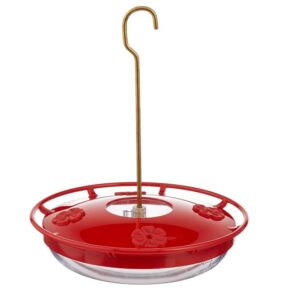
I hung this saucer-style feeder on a shaded patio, and its bright red top drew hummingbirds within hours. The built-in ant moat stopped ants cold, and the bee-proof ports kept nectar safe even in summer heat. The top pops off for easy cleaning, and the high perch gives a clear view of visiting birds. It holds enough for a small yard but needs frequent refills during peak season.
| Pros | Cons |
|---|---|
| Built-in ant moat blocks crawling pests | 12 oz capacity needs frequent refills |
| Bee-proof ports prevent insect access | Plastic may fade over years |
| Easy to clean and dishwasher-safe |
Bee and ant defense: A central ant moat holds water so ants can’t reach the nectar, while raised ports with narrow openings admit only hummingbirds’ long tongues — bees are shut out. Optional Nectar Guard Tips add extra bee protection.
Cleaning: Pop off the red cover and rinse the clear reservoir with warm water and a mild vinegar solution; it’s top-rack dishwasher-safe.
Hanging: Included brass rod hangs securely from a shepherd’s hook even in wind.
Visibility: Bright red cover and yellow ports catch hummingbirds’ attention from a distance.
2. Bolite Hummingbird Feeder (22 oz) — Best for Heavy Traffic
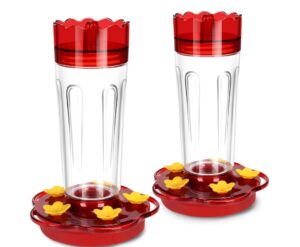
This glass feeder turned a busy backyard into a hummingbird haven. The copper base with sealed ports prevented leaks, and the ant moat kept ants away even on humid days. Five red ports attract multiple birds at once, and the sturdy S-hook makes hanging easy — just know it’s heavy when full.
| Pros | Cons |
|---|---|
| Leak-proof copper base with bee guards | Heavy when full, needs sturdy hook |
| Ant moat stops crawling pests | Hand-wash only, not dishwasher-safe |
| Large capacity for busy yards |
Bee and ant defense: A built-in moat at the top blocks ants; five flower-shaped ports with bee guards have openings narrow enough for hummingbirds but not bees. The sealed copper base prevents drips.
Cleaning: Unscrew the wide-mouth glass bottle and clean with a bottle brush and soapy water; use a small brush on the base ports.
Hanging: Included S-hook works well from a tree branch, giving bees a wide radius to avoid.
Visibility: Red base and flower ports stand out even in low light.
3. More Birds Garnet (20 oz) — Best for Easy Maintenance
Placed near a kitchen window, this hourglass feeder adds style while keeping pests out. Its ant moat and bee-proof ports stopped insects, and the leak-proof base kept the deck clean underneath. Five ports handle multiple birds, and the detachable base makes cleaning quick — though it’s on the heavier side for weak hooks.
| Pros | Cons |
|---|---|
| Ant moat and bee-proof ports | Heavy when full, needs strong mount |
| Leak-proof base prevents drips | Ports may clog in high humidity |
| Easy to clean with detachable base |
Bee and ant defense: Top-mounted ant moat blocks ants; five raised, narrow ports keep bees out while allowing hummingbird tongues through. The sealed base prevents pest-attracting drips.
Cleaning: Unscrew the base and rinse with warm water; a small brush handles the ports.
Hanging: Shepherd’s hook recommended — the glass weight needs a sturdy mount.
Visibility: Red top and ports are visible from across the yard.
4. Perky-Pet Pinch Waist Glass Feeder (16 oz) — Best Budget Pick
A low price point that still delivers pest-free feeding. The built-in ant moat stopped ants, and bee guards on six ports kept nectar safe. The wide-mouth bottle makes cleaning simple, though it sways in strong wind. The plastic base feels less premium than glass rivals, but for the price it holds its own.
| Pros | Cons |
|---|---|
| Affordable with effective ant moat | Plastic base less durable |
| Bee guards on six ports | Sways in wind, may need shelter |
| Wide-mouth bottle for easy cleaning |
Bee and ant defense: Central moat filled with water blocks ants; six flower ports with bee guards exclude bees while letting hummingbirds feed. Sealed base minimizes leaks.
Cleaning: Wide-mouth glass bottle cleans easily with soapy water and a small brush on the ports.
Hanging: Metal hook works best in a sheltered spot to prevent swaying.
Visibility: Red base and yellow ports are easy for hummingbirds to spot.
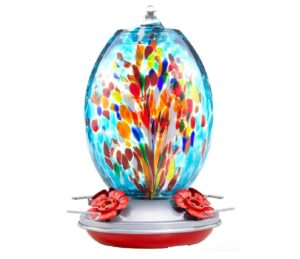
5. Muse Garden Hummingbird Feeder (27 oz) — Best for Eco-Conscious Birders
This hand-blown glass feeder looks striking in the garden while keeping pests at bay. The ant moat and bee-proof ports stopped insects, and the leak-proof gasket eliminated drips. The wide mouth makes cleaning easy and the S-hook hangs securely — just handle it carefully, since glass is fragile if dropped.
| Pros | Cons |
|---|---|
| Eco-friendly recycled glass | Fragile if dropped |
| Ant moat and bee-proof ports | Premium price point |
| Leak-proof gasket prevents drips |
Bee and ant defense: Top ant moat blocks crawling insects; four narrow, bee-proof ports keep nectar exclusive to hummingbirds. Gasket-sealed base prevents pest-attracting leaks.
Cleaning: Rinse the wide-mouth bottle with warm water and clean ports with a small brush; hand-wash only but quick.
Hanging: Included S-hook works well from a sturdy branch.
Visibility: Red glass and ports catch sunlight, drawing birds from a distance.
What Actually Makes a Feeder Ant and Bee (and Wasp) Proof
- Ant moats — small water-filled cups that sit above the feeder. Ants can’t cross water, so they’re physically blocked before reaching the nectar. This is the single most effective anti-ant feature, but only if you keep it filled — it can dry out in under 24 hours in summer heat.
- Bee guards — flower-shaped, screen-covered ports with openings narrow enough for a hummingbird’s long tongue but too small for bees’ and wasps’ shorter mouthparts. The same guards that block bees generally block wasps too, since both need direct port access to feed.
- Non-leaking design — tight seals and gravity-fed ports stop drips before they create a scent trail. This matters as much as the moat or guards; a leaky feeder can undermine both.
- Elevated, well-suspended ports — raised ports set higher above the base are harder for crawling ants to reach, and a feeder with some sway on its hook is mildly deterring to bees looking for a stable landing spot.
Natural Ways to Keep Ants and Bees Away
These complement a good feeder design — they don’t replace it.
- Use clear nectar. Mix 1 part cane sugar to 4 parts boiled water, cooled before filling. Skip the red dye — store-bought colored nectar has a stronger scent that draws more insects.
- Hang in partial shade. Bees prefer sunny spots, and shade slows fermentation, keeping nectar fresher and less pungent longer.
- Keep moats filled — daily. This is the most common failure point. Check it whenever you check the nectar level.
- Wipe port exteriors after refilling. A damp cloth removes residue before it attracts insects.
- Rotate placement if bees build up. Bees memorize feeder locations and are territorial; moving a feeder 2–3 feet every few days disrupts them, while hummingbirds relocate it quickly thanks to stronger spatial memory.
- Apply petroleum jelly to the hanging wire or hook — not the feeder itself. A thin layer above the moat adds a slippery secondary barrier against ants. A dab of cinnamon or peppermint oil on the pole works similarly.
- Check feeder placement. Keep feeders away from tree branches, fences, or railings ants can crawl down; an open spot on a metal shepherd’s hook is harder for them to reach.
Cleaning and Maintenance Schedule
Old, fermenting nectar grows mold, harms hummingbirds, and attracts the exact insects you’re trying to avoid — cleaning frequency matters as much as feeder design.
- Every 2–3 days in summer (above 80°F/27°C): rinse with warm water, scrub ports with a small brush, refill.
- Every 4–5 days in cooler weather: same routine, longer interval.
- Deep clean weekly: soak parts in a 1:10 white vinegar-to-water solution for 30 minutes, rinse thoroughly, air dry before refilling.
- Never use dish soap — it leaves residue in porous plastic ports that can harm birds. Vinegar is sufficient and safe.
Saucer-style feeders (HummZinger, Bolite, More Birds Garnet) are easiest to clean since every surface is directly accessible. Bottle-style feeders need a long-handled brush for the reservoir.
Seasonal Tips
Spring (migration arrival): Put feeders out 1–2 weeks before your region’s typical first hummingbird sighting — early migrants rely on supplemental nectar before native flowers bloom.
Summer (peak season): Pest pressure peaks here. Check moats daily and replace nectar every two days above 85°F (29°C).
Autumn (migration departure): Keep feeders up 2 weeks after your last sighting to fuel late migrants. Leaving feeders out doesn’t delay migration — that’s triggered by daylight length, not food supply.
Winter: Bring feeders in once nighttime temps consistently drop below freezing (frozen nectar can crack glass). In climates where hummingbirds overwinter — parts of the Gulf Coast and Pacific Coast — maintain feeders year-round.
FAQ: Ant and Bee-Proof Feeders
Do ant moats really work?
Yes — moats like the Perky-Pet Ant Guard are highly effective as long as they’re kept filled with water. An empty moat stops working the moment it dries out, so check it on the same schedule as your nectar level.
Can bees still get through large ports?
Yes, if the ports lack bee guards. Narrow-opening guards — like Aspects Nectar Guard Tips — solve this by physically blocking bees’ shorter mouthparts while still letting hummingbirds’ long tongues through.
Are bee guards safe for hummingbirds?
Yes. They’re made from bird-safe materials and don’t restrict a hummingbird’s feeding — just keep them clean to avoid residue buildup that could interfere with the mechanism.
Will an ant-proof feeder also keep wasps out?
Mostly. The same narrow bee-guard ports that block bees typically block wasps too, since both need direct port access. Wasps are more persistent, though, so pair guards with strict nectar-freshness habits (wasps are drawn to older, fermenting nectar even more than bees are).
How often should I clean my feeder to avoid pests?
Every 2–3 days in summer with warm water and a brush; every 2 days in extreme heat above 85°F. Skip the soap — use a vinegar rinse for deep cleans instead.
What’s the best way to prevent leaking?
Fill below the neck curve, tighten the base gently, and check seals after every refill. A level-hanging feeder also reduces the drips that create ant trails in the first place.
Final Verdict
For most U.S. yards dealing with regular ant and bee pressure, the Aspects HummZinger HighView is the strongest all-around pick — its saucer design, dishwasher-safe cleanup, and built-in moat make it the easiest to maintain long-term. If you’re feeding a high-traffic yard, the Bolite 22 oz carries more nectar between refills without sacrificing pest protection. Whichever feeder you choose, the moat-plus-bee-guard combination only works if you keep the moat filled and the nectar fresh — the feeder does half the job, and your maintenance routine does the rest.
Have a trick for keeping pests off your feeder? I’d love to hear it — and see your setup.

- Top 10 Best Outdoor Smart Doorbell 2026 - October 11, 2026
- Top 10 Best Smart Doorbell With Multiple Ecosystem Support 2026 - October 11, 2026
- Top 10 Best Smart Doorbell For Office 2026 - October 11, 2026