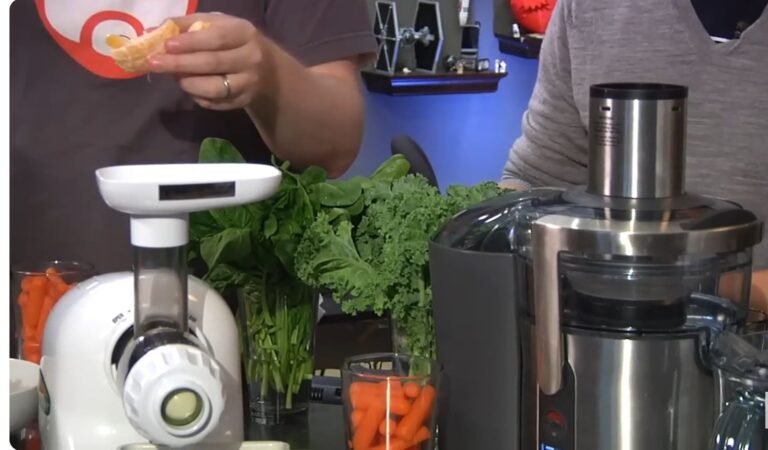
Slow Masticating vs Cold Press Juicer: What is the Real Difference?
In the juicing world, Slow Masticating and Cold Press refer to the same technology. These juicers use a slow-turning screw (auger) to crush and squeeze produce at low speeds. This method generates minimal heat and friction, preserving delicate enzymes and preventing oxidation. Unlike high-speed centrifugal juicers, cold press machines offer higher yields for leafy greens and a longer shelf life for the juice.
The Big Secret: Are Masticating and Cold Press the Same?

Let me save you some time and a lot of headaches: Yes, they are the exact same thing. Check out the Omega Cold Press Juicer if you want the industry standard. This machine has earned a 4.7 star rating from over 10,000 users. People absolutely love the 15 year warranty and the fact that the build feels almost indestructible.
Why the Industry Uses Two Different Names
“Masticating” is a technical term that literally means chewing. It describes how the machine works. “Cold Press” is a marketing term that describes the result: juice extracted without heat. Retailers use these terms interchangeably to catch different types of shoppers. If you see one or the other, just know you are looking at a machine that uses a slow, crushing motion rather than a fast, shredding one.
How the Slow Pressing Mechanism Works
Think of a masticating juicer like a giant screw. This screw, called an auger, slowly turns and crushes the fruit against a screen. It is a gentle process. It does not use sharp blades or high speeds. By pressing the food slowly, it squeezes out the liquid while leaving the fiber behind. Because it does not move fast, it does not create heat, which is where the “cold” in cold press comes from.
The Anatomy of a Masticating Juicer
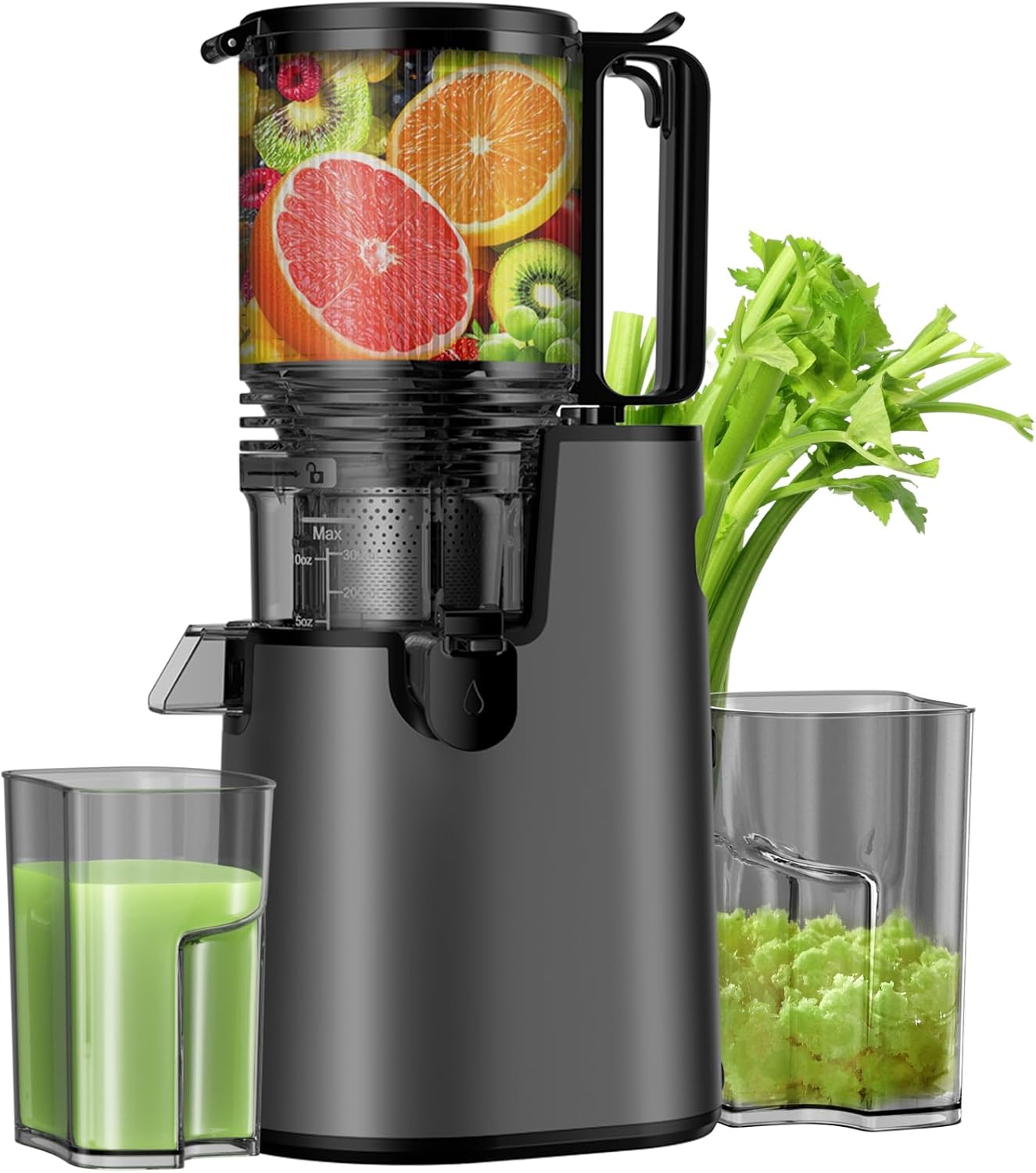
If you want the best premium experience on the market, look no further than the Nama J2 Cold Press. Users often call this the Apple of Juicers because of its sleek design. My favorite part is the hands-free hopper that literally saves me ten minutes of prep time every morning.
The Role of the Single Auger
The auger is the heart of the machine. Most home juicers use a single auger that does all the work. As it rotates, it grabs the produce and forces it through a narrowing gap. This pressure is what separates the juice from the pulp. A high quality auger is usually made of a dense, BPA-free plastic that can handle the massive pressure of crushing a hard beet without cracking.
Vertical vs. Horizontal Designs: Which Fits Your Kitchen?
You will see two main shapes. Horizontal juicers look like a long tube. They are the original design and are world-class at juicing wheatgrass and leafy greens. Vertical juicers have a smaller footprint on your counter. They are usually better all-around machines for families because they process soft fruits like oranges and berries more efficiently.
First Reflection: We often buy the biggest, most complex machine because we think it makes us “better” cooks. In reality, the best machine is the one that actually fits on your counter and gets used.
Cold Press vs. Centrifugal: The Real Battle

If you are always in a rush and just need a quick shot of vitamins, the Breville Juice Fountain is the best fast alternative. Reviewers love the 3 inch wide chute because you can drop whole apples in without even slicing them.
Speed vs. Quality: Why 80 RPM Beats 10,000 RPM
Centrifugal juicers spin at incredibly high speeds, sometimes up to 10,000 RPM. This creates a lot of noise and pulls in a ton of air. A masticating juicer spins at about 80 RPM. It feels like a turtle racing a rabbit. However, that slow speed is exactly why the juice stays fresh. It does not whip air into the liquid, so the nutrients stay intact much longer.
Juice Yield: How Much Money Are You Wasting on Wet Pulp?
This is where the math really matters. Centrifugal juicers are fast, but they are wasteful. If you take the pulp from a fast juicer and squeeze it with your hand, it will feel wet. That is juice you paid for but did not get to drink. A cold press juicer leaves the pulp bone-dry. Over a year, the money you save on produce can actually pay for the cost of the juicer.
Nutritional Analysis: Does the Process Change the Juice?
Understanding Oxidation and Why Your Juice Turns Brown
Have you ever noticed how a sliced apple turns brown if it sits on the counter? That is oxidation. High-speed juicers force so much air into the juice that oxidation starts immediately. This is why centrifugal juice has a thick layer of foam and starts to separate quickly. Cold press juice has almost no foam and stays a vibrant, deep color.
Keeping Enzymes Alive: The Heat Transfer Problem
High speed creates friction, and friction creates heat. Even a small rise in temperature can start to damage delicate enzymes and vitamins. Because cold press juicers stay cool, you get a “live” juice that contains more of the raw health benefits you are looking for.
Shelf Life: Can You Juice for Three Days at Once?
This was the game changer for me. You cannot store centrifugal juice; it tastes “off” after just a few hours. But because cold press juice is extracted so gently, you can store it in a sealed glass jar for up to 72 hours. I now juice on Sunday nights and have breakfast ready for Monday and Tuesday morning.
Second Reflection: Time is our most valuable resource. If a machine allows you to “batch” your health prep, it is no longer an appliance; it is a lifestyle tool.
[Personal Experience] My Journey from Fast Juicing to Slow Pressing
I started my journey with a high-speed centrifugal juicer because I was impatient. I loved how fast I could get a glass of juice. But after a few weeks, I realized I was spending forty dollars a week on organic kale just to see most of it end up as wet mush in the trash can. I also hated the loud roar of the machine at 6:00 AM. It felt like I was starting my day with a construction project.
When I switched to a slow masticating juicer, my whole routine changed. The kitchen was quiet. The juice tasted richer and sweeter. Most importantly, I stopped throwing away money. The dry pulp told me I was getting every penny’s worth out of my groceries.
[Practical Advice] The Real Reason Most People Give Up on Juicing
People don’t quit juicing because they don’t like the taste. They quit because of the cleanup. If your juicer has ten parts and requires a toothbrush to clean the mesh, you will eventually stop using it.
My 4-Step Solution for Juicing Success
If you are ready to start but feel overwhelmed, follow these four practical steps:
-
Prep the Night Before: Wash your vegetables and put them in a container in the fridge. This removes the biggest barrier to morning juicing.
-
The “Water Rinse” Trick: As soon as you finish juicing, run a cup of warm water through the machine while it is still on. This flushes out the pulp before it has a chance to dry and stick.
-
Alternate Your Produce: Feed a soft fruit like a strawberry, then follow it with a hard vegetable like a carrot. The carrot acts as a “scrubber” to push the soft fruit through the auger.
-
Batch Your Sessions: Do not juice every single day. Use a cold press machine to make enough for two or three days. It makes the cleanup feel worth it.
Third Reflection: We often focus on the finish line—the perfect glass of juice. But health is found in the systems we build to make that juice happen consistently.
Question-Based Insights
Is a slow masticating juicer better than a centrifugal one?
For nutrient density and yield, yes. If your goal is the highest quality juice and you want to juice leafy greens, a slow masticating machine is the superior choice.
Why is cold press juice more expensive at the store?
It takes longer to make and uses more produce to get a higher concentration of nutrients. When you make it at home, you are skipping the middleman and getting that premium quality for a fraction of the price.
Can I make nut milk and sorbet in a masticating juicer?
Yes! Many models, like the Omega, come with “blank” attachments that allow you to make homemade almond milk or turn frozen bananas into healthy soft-serve ice cream.
Which juicer is best for leafy greens like kale and spinach?
A horizontal masticating juicer is the king of greens. The long auger provides more surface area to crush those thin leaves that a centrifugal machine would just spit out.
Is it worth buying a masticating juicer if I only juice once a week?
Probably not. If you are an occasional juicer, a cheaper centrifugal machine is fine. But if you want to make juicing a daily habit, the investment in a masticating machine is worth every cent.
Closing Invitation
The world of juicing can feel like a maze of technical terms, but at the end of the day, it is just about getting more plants into your body. Whether you choose the indestructible Omega or the sleek Nama, the best juicer is the one you actually enjoy using.
What has been your biggest struggle with juicing so far? Is it the cleanup, the cost of produce, or just finding the right machine? I would love to hear your story and help you find a solution that works for your kitchen. Let’s talk in the comments below!
This is the great kitchen lie. We’re sold on the output—the vibrant glass of juice—but we’re not sold on the process. The real battle isn’t centrifugal vs. masticating. It’s convenience vs. commitment. A centrifugal juicer is fast but messy. A masticating juicer is efficient but requires prep. Both fail if they don’t fit into the chaotic 15-minute window of a real morning. The problem is that we choose based on specs (wattage, RPM) instead of the two things that actually matter: how you get food into it, and how you get pulp out of it.
Think of it like a pet. You don’t just get a dog for the cute walks; you commit to the feeding, grooming, and cleaning up. A juicer is the same. You’re not just buying a machine; you’re adopting a daily chore. The machine that wins is the one whose “chore” feels lightest on your busiest day.
First real talk: If you dread the cleanup, you will not juice. It’s that simple.
Ease of Use: The Real Daily Grind
Forget RPM for a second. Let’s talk about the human experience of juicing.
The Narrow Chute Struggle: Why Cutting Matters
This is the #1 shock for new masticating juicer owners. That beautiful, quiet Omega or Hurom machine? Its feed chute is often the size of a golf ball. You can’t just shove a whole apple in there. You have to cut everything into 1-inch pieces. This adds 5-7 minutes of prep time. It feels like a betrayal after the “just drop it in” promise of centrifugal models. The trade-off is the quality of juice, but the tax is paid in knife work and time before you even turn the machine on.
The Five Minute Cleanup Goal: What to Look For
If cleanup takes longer than 5 minutes, your habit is doomed. Here’s what to scrutinize:
-
Mesh Baskets (Centrifugal): The enemy. Tiny holes clog with pulp fiber. They require a stiff brush and careful picking. This is the step that breaks people.
-
Auger Systems (Masticating): Usually simpler. The main auger might have pulp stuck in its grooves, but it often rinses clean under the tap. Some models have clever self-cleaning features.
-
Pulp Ejection: Some masticating juicers have a continuous pulp ejector, so the dry pulp comes out one end as you juice. This is a game-changer—no stopping to empty a bin.
The machine that gets you closest to the “rinse-and-done” ideal is the one you’ll keep on the counter.
Final Verdict: Which Machine Should You Buy?
Stop asking which juicer is “better.” Start asking: “Which juicer is better for me?” Here’s your personality test.
Buy a Centrifugal Juicer (like the popular Breville Juice Fountain) if you are:
-
The Speed-First Person: You have under 10 minutes from start to finish.
-
The “Whole Apple” Juicer: You hate pre-chopping and want to feed produce fast.
-
The Occasional Juicer: You juice 1-2 times a week, not daily.
-
The Hard-Produce Fan: Your staples are carrots, apples, celery, beets.
-
The Immediate Drinker: You always consume your juice right away.
Buy a Masticating Juicer (like an Omega Cold Press or a premium Hurom) if you are:
-
The Quality Maximizer: Nutrient density and shelf life are your top priorities.
-
The Green Juice Devotee: You live for kale, spinach, wheatgrass.
-
The Batch Maker: You want to juice on Sunday for the whole workweek.
-
The Quiet Operator: You need a machine that won’t wake up the house.
-
The Versatility Seeker: You want to make nut milks, sorbets, or baby food (many masticating models can do this!).
So, how do you cut through the noise and make a choice you won’t regret? Follow this four-step “Juicer Reality Check” system.
Step 1: The “Tuesday Morning” Visualization.
Close your eyes. Picture your actual, chaotic Tuesday morning. Now picture yourself using each machine. Which process—fast-but-loud with easy-feed, or quiet-but-slower with chopping—feels less stressful? Your gut answer here is more important than any spec sheet.
Step 2: The “Produce Drawer” Audit.
Open your fridge. What’s in your crisper right now? Is it full of leafy greens and ginger? Or is it apples and carrots? Your most common ingredients should make the choice for you. Don’t buy a machine for the juice you wish you drank; buy it for the produce you actually buy.
Step 3: Implement the “Sunday Weaponization” Strategy.
This hack makes any juicer easier. Dedicate 30 minutes on Sunday to wash, chop, and bag all your juicing produce for the week. Store the pre-chopped bags in the fridge. This eliminates the daily prep friction for masticating juicers and makes centrifugal juicing even faster.
Step 4: The “Two-Minute Cleanup” Rule.
The instant your juice is poured, disassemble the machine. Rinse every part under warm water before the pulp has a millisecond to dry. This takes 120 seconds. Letting it “soak” is the death of the habit. A clean, ready machine invites you back.
Final reflection:
The perfect juicer is the one that disappears into your routine, not the one that becomes the main event.
My abandoned juicer taught me that health habits are built on systems, not willpower. Now, my system—prepped produce and instant cleanup—does the heavy lifting, and I just get the good stuff.

- Polycarbonate Panels For Greenhouse Durable Options For Enhanced Growth 2026 - February 27, 2026
- 10 Best Organic Fertilizers for Winter Crops: The Complete Guide - February 23, 2026
- 10 Best Overwinter Fertilizers for Vegetable Garden in 2026 - February 23, 2026