Food Processor vs Food Chopper: Which Appliance Reigns Supreme in Your Kitchen?
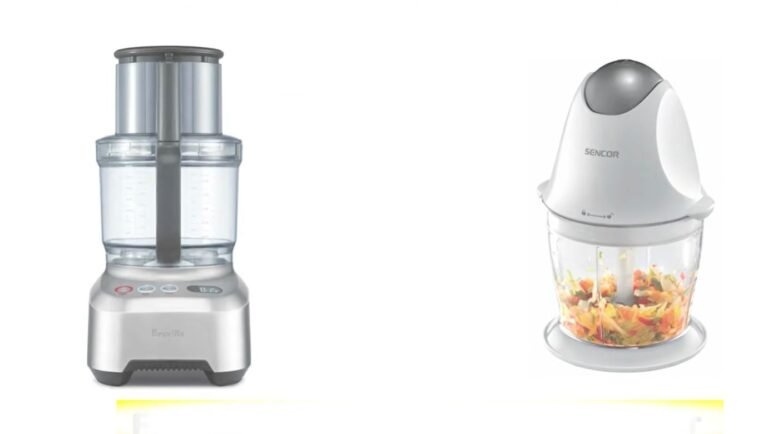
A food processor is a versatile, high-capacity kitchen workhorse capable of slicing, shredding, and kneading dough, making it ideal for family meal prep and complex recipes. A food chopper is a compact, budget-friendly tool designed for quick, small-scale tasks like mincing garlic or chopping nuts. While a processor offers more power and functionality, a chopper wins on convenience and storage.
Table of Contents
ToggleUnderstanding the Fundamental Differences
To stop the frustration, you need to see these appliances for what they truly are: different species, not different sizes of the same thing.
Size and Capacity: Small Portions vs Family Feasts
This is the most obvious, but most misunderstood, difference. My food processor bowl holds 14 cups. That’s fantastic for making three pounds of coleslaw for a barbecue. It’s comically bad for chopping one onion for an omelet. The ingredients just slide around the vast bowl, never hitting the blade consistently. Conversely, my food chopper’s 3-cup bowl is perfect for that onion. It’s cramped, which is the point—it forces the food into the blade’s path. The chopper is for the ingredients of a meal. The processor is for the bulk of a meal.
Motor Power: Why Wattage Matters for Tough Ingredients
Wattage isn’t just a number for the box. It’s an indicator of stamina. A food chopper motor (usually 150-250 watts) is like a sprinter: designed for short, powerful bursts to demolish a handful of nuts or herbs. A food processor motor (often 500-1000+ watts) is a marathon runner. It’s built to run continuously, powering through a mountain of potatoes for slicing or kneading a dense bread dough for minutes without overheating. Asking a chopper to knead dough is like asking a sprinter to run a marathon; the motor will burn out trying.
Blade Versatility: Beyond Basic Chopping
Here’s where they truly diverge. A food chopper has one blade: a simple S-shaped blade for chopping and mixing. A food processor has a system. It has that same S-blade, plus a dough blade (a blunt paddle that kneads without over-developing gluten), a shredding disc, and a slicing disc. These discs don’t chop; they shear. When you push a cucumber through the feed tube onto the spinning slicing disc, it gets a perfect, translucent slice every single time. The chopper smashes. The processor can slice, shred, and knead with precision.
Another reflection: Versatility in a tool isn’t about having more buttons; it’s about having the right engineered solution for fundamentally different problems.
When to Choose a Food Processor

The processor isn’t for everyone. It’s for a specific kind of kitchen conductor.
The Ultimate Tool for Batch Meal Prep
If your Sunday involves prepping vegetables for the week, making a big batch of soup, or shredding chicken for lunches, the processor is your best friend. You can slice five carrots in 30 seconds, shred a block of cheese in 10, and puree a soup base in a minute. It trades the time of manual labor for a few extra pieces to wash. For the cook who thinks in terms of “meals for the week,” it’s indispensable.
Why Bakers Need a Dough Blade Attachment
This is the processor’s secret weapon. I used to be afraid of pie crust. Then I used the dough blade. You add flour and cold butter to the bowl, pulse 8-10 times, and it creates the perfect pea-sized crumbs without melting the butter with your hands. Add ice water, pulse a few more times, and you have dough. It’s fast, cold, and foolproof. The same goes for pizza dough, pastry dough, and even some bread doughs. The speed and power prevent overworking.
Expert Note: My personal breakthrough was a holiday apple pie. My old hand-pastry method left the butter soft, resulting in a tough crust. Using the food processor’s pulse function, the butter stayed in distinct, cold pieces within the flour. When it baked, those bits melted to create steam pockets, giving me the flaky, tender crust I’d only seen in bakeries. The machine’s speed was the key.
Precision Slicing and Shredding for Professional Results
Want uniform potato slices for a gratin or perfect coleslaw? The disc system is magic. It gives you the consistency that makes food cook evenly and look professional. You cannot achieve this with a chopper’s blade or, for most home cooks, even with a knife.
When a Food Chopper is the Smarter Buy

For many, the chopper isn’t the lesser choice. It’s the correct choice.
Quick Daily Tasks: Garlic, Onions, and Herbs
This is its sweet spot. Need minced garlic for stir-fry? Peel the cloves, drop them in, pulse three times, and you’re done—in less time than it takes to find your knife and cutting board. Making a quick herb sauce or salsa for two? The chopper delivers a coarse, textured chop that a processor would turn to liquid. It’s for the “everyday engine” of cooking.
Saving Space in Small or Apartment Kitchens
A food processor is a countertop commitment. A chopper can live in a drawer. If your kitchen is small, the physical and visual space a processor consumes might actively make your cooking experience worse. The chopper respects your real estate.
The “Clean Up” Factor: Why Less is More
This is the hidden advantage. My chopper has three parts: bowl, lid, and blade. I can rinse it in 15 seconds. My processor has a bowl, lid, feed tube, pusher, and a blade or disc. Cleaning it is a five-minute task. For a simple daily job, the cleanup time can be longer than the prep time with a processor, which defeats the whole purpose of convenience.
So, how do you choose? Follow this simple, four-step plan.
Step 1: The “Weekly Recipe” Audit. Look at the meals you actually cooked last week. How many involved large-volume slicing/shredding or making dough? How many involved small-batch chopping of aromatics?
Step 2: The Cabinet Reality Check. Open the cabinet where it would go. Is there space for a large, heavy appliance and its accessories? Or is it packed? Be brutally honest.
Step 3: The “Sunday vs. Tuesday” Test. Do you see yourself using this for big weekend projects (processor), or for fast Tuesday night dinners (chopper)?
Step 4: Start with the Specialist. If you’re unsure, buy a good food chopper first. It’s a lower investment. If you constantly find yourself wishing it could slice or knead, then you have your answer—and you’ll still use the chopper for daily tasks.
Final reflection: The best kitchen is not the one with the most appliances, but the one where every tool has a clear, loved purpose.
That salsa soup incident wasn’t a failure of the appliance, but of my understanding. I was using a bulldozer to plant tulips. Now, I use my chopper for the daily dance of dinner and my processor for the weekend projects. They’re a team, each playing their position perfectly.
I’d love to hear from you. Have you had a “salsa soup” moment with a kitchen tool? Are you a dedicated chopper fan or a processor devotee? Share your story in the comments below—let’s talk about how to make our kitchens work for us, not the other way around.
I used to believe that a sharp blade was all that mattered in a kitchen. That changed the day I tried to make homemade almond butter for a holiday gift. I reached for my trusty little food chopper, thinking it could handle the job if I just gave it enough time. After ten minutes of high pitched whining and a smell like a burnt hair dryer, the motor gave up. I was left with half crushed nuts and a dead appliance.
That failure taught me a vital lesson. Kitchen tools are like athletes. Some are sprinters, and some are marathon runners. Using the wrong one doesn’t just ruin your dinner; it wastes your hard earned money.
Can You Make Nut Butter in a Chopper?
The short answer is that you probably shouldn’t. Making nut butter requires a motor to run at high speed against thick resistance for several minutes. Most food choppers are designed for short bursts of power. If you push a small chopper to grind almonds or peanuts into a smooth paste, you risk melting the plastic gears or burning out the motor. For creamy, homemade nut butters, the high torque of a full sized food processor is essential.
Making Pesto and Hummus: Which Texture Wins?
When it comes to dips, the choice depends on your preference for texture. A food chopper is perfect for a rustic, chunky pesto where you want to see bits of basil and pine nuts. However, if you crave that ultra smooth, restaurant style hummus, the food processor is the winner. The larger bowl allows for better aeration and emulsification, resulting in a light and airy dip that a small chopper simply cannot replicate.
Slicing Potatoes for Scalloped Dishes
This is where the food processor truly justifies its spot on your counter. If you have ever tried to slice five pounds of potatoes by hand for a gratin, you know the physical toll it takes. A food processor with a slicing disc can finish that task in under sixty seconds. Every slice comes out with the exact same thickness, which ensures that your dish cooks evenly. A food chopper, lacking a feed tube and slicing discs, is practically useless for this specific task.
3. Buying Guide: Top Recommendations for 2026
I have spent years testing these machines to see which ones actually survive the daily grind of a busy kitchen. Here are the models that I trust.
Best Overall Food Processor: Cuisinart Custom 14-Cup
This machine is a legend for a reason. It uses a heavy induction motor that is surprisingly quiet and incredibly powerful. It doesn’t have a lot of confusing buttons; it just works. Whether you are kneading heavy bread dough or shredding cabbage for slaw, this is the one I recommend to friends who want a tool that lasts a decade. [Check Price on Amazon]
Best High-End Pick: Breville Sous Chef 16
If you want the absolute best and have the budget for it, the Breville is a masterpiece. It comes with a dicing kit and an adjustable slicing disc that offers twenty four different thickness settings. The wide feed tube means you don’t even have to cut your potatoes before you drop them in. [Check Price on Amazon]
Best Compact Chopper: KitchenAid 3.5 Cup Food Chopper
For those small daily tasks like mincing a single onion or making a quick salsa, this KitchenAid model is my favorite. It is lightweight, easy to store, and the drizzle basin on the lid makes it simple to add oil while you are making a vinaigrette. [Check Price on Amazon]
Best Value Hybrid: Ninja Professional Plus
The Ninja is a great middle ground for people who want power without the high price tag of an induction motor. It uses a stacked blade system that is incredibly sharp and effective for crushing ice or making quick veggie purees. [Check Price on Amazon]
4. Common Questions and Hidden Pain Points
We often carry a lot of silent stress when choosing kitchen gear. We worry about where we will put it or if we are just falling for a marketing trap.
Micro Reflection 1: We often buy appliances for the person we want to be, rather than the cook we actually are. If you don’t bake bread, you don’t need a dough blade.
Can a food chopper replace a food processor?
No, it cannot. A chopper is a specialist. It is like a pocket knife; it is handy and quick. A food processor is a toolbox. While you can mince garlic in a processor, you cannot knead dough or slice a cucumber into perfect rounds in a chopper. If you only have room for one and you do a lot of diverse cooking, the processor is the better investment.
Is it worth having both in a modern kitchen?
In my kitchen, yes. I keep my small chopper in a drawer for my daily garlic and onion prep. My large processor lives in a lower cabinet and comes out for weekend meal prep or baking. Using a giant 14 cup machine to chop two cloves of garlic feels like driving a semi truck to the grocery store. Having both saves me time on cleanup and keeps my workflow smooth.
Which is easier to clean after making a mess?
The food chopper wins this round every time. Most choppers only have three parts: the bowl, the blade, and the lid. They take up very little space in the dishwasher. A food processor has multiple discs, a heavy bowl, a pusher, and a lid with a feed tube. It is a commitment to clean, which is why I only use it when the task is big enough to justify the wash time.
Micro Reflection 2: The “Dishwasher Safe” label is often a half truth. High heat can cloud plastic over time. I always hand wash my lids to keep them crystal clear.
Managing the Storage Dread and Time Poverty
We all have that one appliance that sits in the back of the cabinet gathering dust because it is too heavy to move. This “storage dread” is the biggest reason people stop cooking healthy meals. We feel “time poor,” so we reach for pre cut veggies at the store that cost three times as much.
Micro Reflection 3: The fear of a messy kitchen often stops us from starting a healthy meal. A simple tool should solve problems, not create new ones.
5. The Four Step Solution to Appliance Peace
If you are feeling overwhelmed by the choice, follow this logical path to find your perfect fit.
- The Week Long Audit: For one week, take note of every time you use a knife. If you are mostly doing small garnishes, buy a chopper. If you are making large salads or stews, get a processor.
- Measure Your Counter: Don’t guess. Pull out a tape measure. If you don’t have twelve inches of vertical clearance under your cabinets, many large processors won’t fit.
- Be Honest About Cleanup: If you hate doing dishes, you will hate a large food processor. Buy the tool that matches your willingness to clean.
- Prioritize the Motor: Look for a machine with a long warranty on the motor. A good motor is the heart of the machine; if it fails, the whole thing is trash.
6. Closing Message
Choosing the right tool is about making your life easier, not more complicated. I have found that once I matched my tools to my actual cooking habits, my stress levels in the kitchen dropped significantly. I stopped fighting my machines and started enjoying the prep work.
What about you? Do you have an appliance that changed the way you cook, or one that is currently taking up space in your pantry? I would love to hear your stories and help you figure out your next kitchen upgrade. Let us discuss in the comments!
Common Questions (Intent Coverage)
Let’s tackle the direct questions people are brave enough to type into Google.
Can a food chopper replace a food processor?
The short, honest answer is: only if your cooking is very, very simple. Think of it this way: a food chopper is a brilliant, sharp paring knife. A food processor is an entire knife block, plus a grater, and a dough whisk. You can do a lot with just a paring knife, but you can’t efficiently slice a loaf of bread or fillet a fish with it.
If your cooking revolves around mincing garlic, chopping a single onion, making a small batch of pesto, or whipping a cup of cream, a high-quality chopper might be all you need. The moment you want to shred a block of cheese for lasagna, slice three potatoes paper-thin for a gratin, or knead bread dough, you’ve left the chopper’s capabilities behind. It’s not a failure of the tool; it’s a mismatch of the mission.
Is it worth having both in a modern kitchen?
For many passionate home cooks, yes, absolutely. They become a team, not rivals. In my kitchen, they have a clear division of labor:
-
The Chopper (The Daily Driver): Handles the small, fast, messy jobs—mincing garlic for tonight’s pasta, chopping herbs for a garnish, making a single-serving smoothie bowl topping.
-
The Processor (The Project Manager): Comes out for weekend projects—shredding carrots for carrot cake, slicing cucumbers for pickles, making a big batch of hummus, or whipping up pizza dough.
Owning both means you always use the right tool, which leads to better results and less frustration. You’re not forcing one appliance to do a job it hates.
Which is easier to clean after making a mess?
Hands down, the food chopper wins the cleanup race. This is its secret superpower. It typically has 3-4 parts: a base, a bowl, a lid, and a blade. You can often rinse it clean in under 30 seconds. Many parts are top-rack dishwasher safe.
A food processor is a more involved clean. You have the work bowl, the lid, the feed tube, the pusher, and the blade or disc. Food can get trapped under the blade post or in the lid’s crevices. While many models are dishwasher-safe (always check the manual!), it’s more parts to load and unload. Pro Tip: Fill the processor bowl with hot, soapy water right after use and run it for 10 seconds. This “self-cleans” the blade and bowl interior before you disassemble it, making hand-washing much easier.
Hidden Sub-Concepts and User Pain Points
Now, let’s address the quiet anxieties that keep people from pulling the trigger.
Hidden Sub-Concepts (What they think but don’t type)
-
The “Storage Dread”: That heavy, bulky food processor isn’t just an appliance; it’s a logistics problem. Will you need to rearrange your entire cabinet? Is it so heavy you’ll avoid using it? This is a real concern. Practical Advice: Before you buy, measure your cabinet shelf height and depth. Look for a model with a handle on the bowl. Better yet, if you have the counter space, consider if it can live out—you’re far more likely to use it.
-
The “Dishwasher Myth”: The “dishwasher safe” label is a promise, but it’s not a guarantee of perfection. Over time, harsh detergents and hot water can cloud plastic bowls and dull plastic blades. For the processor’s expensive S-blade and discs, I always hand-wash. The sharp edges last longer, and the metal won’t corrode. The plastic work bowl and lid? Straight into the dishwasher.
-
Noise Levels: This is a big one, especially for apartment dwellers or night owls. Food processors are loud. They have powerful motors spinning at high speeds. A food chopper is significantly quieter due to its smaller motor and shorter run time. If noise is a major concern, the chopper is the less disruptive neighbor.
Pain Points and Emotional Triggers
-
Time Poverty: “I want to eat healthy but I hate spending 40 minutes dicing carrots.” This is the #1 reason people buy these tools. The solution isn’t just speed; it’s reducing the mental hurdle. A chopper you can grab and use in 60 seconds gets you over the “ugh, prep is so long” feeling. A processor that dices 5 carrots in 10 seconds removes the chore entirely.
-
Safety Fears: “I’m terrified of nicking my fingers on a mandoline.” Both appliances are a huge safety upgrade over manual slicers. The feed tube on a processor keeps your hands far from the spinning disc. A chopper’s lid has a sealed safety mechanism. They provide professional consistency without the risk.
-
Buyer’s Remorse: “I don’t want to spend $200 if a $40 gadget does the same thing.” This fear is valid. My solution is this four-step framework to make a confident choice:
Step 1: The “One-Month Meal” Test. Mentally walk through what you actually cook. If 90% of your meals start with “chop one onion,” a chopper is your hero. If your menus include “shred cabbage for slaw” or “make my own dough,” your money is better spent on a processor.
Step 2: The “Five-Second” Rule. Imagine a weeknight. Are you willing to pull out, use, and clean the appliance in question for a single task? If the answer is “no” for the processor but “yes” for the chopper, you have your answer.
Step 3: Budget with the “Cost-Per-Use” Mindset. A $40 chopper used 4 times a week pays for itself in saved time and sanity in a month. A $200 processor used every Sunday for meal prep becomes a priceless asset. The wrong tool at any price is a waste.
Step 4: Start Small. If you’re paralyzed by choice, start with a highly-rated, mid-priced food chopper. It solves immediate daily problems. If you later outgrow it, you’ll know exactly what features you need in a processor, and your chopper will still have a daily role.
Final reflection: The goal is to make your kitchen work for you, not to master a complicated appliance. The right tool should feel like a natural extension of your cooking rhythm, not a foreign piece of tech.
The conversation about these tools often stops at specs. But the real story is how they fit—or don’t fit—into the messy, time-crunched, real life of a person trying to get dinner on the table. I’d love to hear from you. What’s your biggest unspoken worry about kitchen gadgets? Did you ever buy an appliance that became a cabinet ghost? Share your story below—let’s demystify this together and build kitchens that feel helpful, not overwhelming.