
Disclosure: This post contains affiliate links. As an Amazon Associate I earn from qualifying purchases, at no extra cost to you. Learn more
Specs are compiled from manufacturer listings and verified buyer reviews and can change over time — please confirm the key details on the product page before buying.
If your ground has never been turned before, the machine you want is a rear-tine rototiller with counter-rotating tines — not a light cultivator that skips across the surface. The tines on those machines spin against the direction of the wheels, which is what lets them bite into packed clay and sod instead of bouncing over it. Engine size and tilling depth matter more here than any other spec, because hard soil punishes a weak engine all afternoon. The picks below are all built for that fight, ranging from a two-in-one unit that converts from front-tine to cultivator, up to a full dual-direction rear-tine machine.
This guide is built by comparing the manufacturers’ published specifications and the patterns across verified customer reviews, so you get each pick’s real strengths and trade-offs instead of marketing spin.
To break new ground instead of just scratching it, you need three things: engine size (displacement, measured in cc), how the tines spin, and how deep they reach. The rototillers for hard ground picks here cover every one of those tiers.
Top Picks


How To Choose The Best Rototillers for Hard Ground
Hard ground is not one problem — it is three. Untouched sod fights the tines from above. Compacted clay fights them from below. And rock, if it is in there, fights the transmission (the gears that drive the tines). That is why the first decision on this list is not brand or price tier. It is if you need front-tine or rear-tine.
Rear-tine versus front-tine, and why it decides everything
On a front-tine tiller, the engine and tines sit at the front and drag you along behind them. That design is lighter and cheaper, but in unbroken ground the tines tend to pull the machine forward instead of digging in. A rear-tine tiller puts the engine weight over the tines, so the machine digs while the wheels drive it. If your ground has never been tilled, start your search in the rear-tine half of this list.
Front-tine machines still earn a place — they are easier to steer between raised beds and lighter to haul out of a shed. They just ask more of you in virgin soil, and you will make more passes.
Counter-rotating versus standard rotating tines
Counter-rotating tines spin the opposite way to the wheels. Picture a tine biting up into the soil as the wheel pushes forward, and you have the idea. That action lifts and shatters compacted layers rather than smearing over them, which is exactly what clay and sod need.
Standard rotating tines spin the same direction as the wheels. They churn the soil forward and leave a smoother, finer bed behind them, which is what you want on ground you have already broken. A dual-direction tiller lets you switch between the two — counter-rotating to break new ground, standard to finish a seedbed.
Engine size, depth, and the numbers that actually matter
Engine displacement, measured in cubic centimeters, sets how much torque you have to push tines through resistance. Tilling depth, measured in inches, sets how far down that bite reaches. Tilling width sets how many passes you make across the bed. Get all three wrong and you will be out there twice as long as you planned.
Side-by-Side Comparison
| Model | Best For | Engine | Tilling Depth | Tilling Width | Amazon |
|---|---|---|---|---|---|
| Earthquake 20015 Versa 2-in-1★ Best Overall | Versatile small-plot digging | 99cc 4-cycle Viper | Up to 11 inches | 11 to 21 inches | Amazon |
| SuperHandy RotoTiller Cultivator 27”Deepest Bite | Widest passes, deepest bite | 7HP 209cc 4-stroke OHV | 11 to 14 inches | 21 to 27 inches | Amazon |
| Pulsar 212cc 20-Inch Rear Tine | Steady depth over large plots | 212cc OHV | Up to 6.5 inches | 20 inches | Amazon |
| NOVUS 18-Inch Dual Direction | Switchable tine direction, low fuss | 212cc 4-cycle | Up to 10 inches | 18 inches | Amazon |
| EARTHQUAKE 31285 Pioneer | Tight spaces and instant direction changes | 99cc 4-cycle Viper | 11 inches | 17 inches | Amazon |
Detailed Reviews
1. Earthquake 20015 Versa 2-in-1 Tiller Cultivator
Our pick — 4.0+★ from 750+ verified ratings; the strongest balance of quality and price.
One machine that shrinks from 21 inches wide down to 11 when the bed gets tight
If your soil is bad but your space is small, start here. The Versa runs a 99cc 4-cycle Viper engine (a small engine that runs on regular gas, not a two-stroke mix) and tills up to 11 inches deep, enough to turn over a kitchen garden and a couple of raised beds without wrestling a 154-pound machine. What earns it the top spot is the conversion: the side shields and outer tines come off without tools, dropping the working width from 21 inches to 11 inches. That is the difference between a tiller you can only use on an open plot and one that still fits between two raised beds.
Those tines spin forward, not against the wheels, so this machine is for going back over soil you have already worked, or for lighter first passes. That is unlike the rear-tine units further down this list, which spin their tines against the wheels to smash untouched clay. Buyers call it a monster in rock-filled soil, and it starts in a pull or two from cold.
What wins people over is the performance-to-effort balance — it starts reliably, digs deep, and handles compacted clay without the wrestle you would expect from a front-tine machine. It does have a habit of shaking itself loose, so keep a wrench handy for the tine bolts, and swapping tines needs a 15.5mm wrench, not a standard one. Assembly instructions are the other soft spot; the machine arrives mostly assembled, but the paperwork does not always keep up with it. The drag arm is the piece that stops the machine bucking forward, and it is worth setting before your first pass rather than after.
Where it earns its keep
- Tool-less conversion between 21-inch and 11-inch tilling width — one machine for open ground and tight beds
- 11-inch tilling depth is deep enough to break a compacted layer, not just scratch it
- Starts in a pull or two from cold and stays easy to handle in raised beds
- Adjustable handlebar height keeps taller operators from stooping all afternoon
- Onboard wheels make moving it around the yard simple
Worth knowing before you buy
- Forward-rotating tines, so virgin sod takes more passes than a rear-tine machine
- The assembly guide trails the machine itself — some steps are easier figured out than read
- Vibration works bolts loose over time, so plan on occasional tightening
- Tine changes need a 15.5mm wrench you may not already own
Best fit: Small-plot gardeners with clay or rock-heavy soil who want one tool that converts between tilling and cultivating.
Look elsewhere if: You are opening acres of untouched sod and want the deepest possible bite on the first pass.
2. SuperHandy RotoTiller Cultivator 27” Inch
Six steel tines reaching down 14 inches, in the widest swath on this list
If your complaint is that nothing cuts deep enough, this is the row to look at. SuperHandy rates the tilling depth at 11 to 14 inches — against the Pulsar’s 6.5 inches — and pairs it with a working width that adjusts from 21 up to 27 inches. That depth figure is what makes it interesting on hardpan, because a tine that reaches 14 inches has already punched through layers a shallower machine never touches. The 7HP 209cc single-cylinder OHV engine feeds six replaceable steel tines, each 14 inches in diameter, through a 30:1 reduction ratio, and the spec sheet puts maximum tine speed at 100 RPM. The frame is built on those numbers being the point.
Two things need saying plainly. First, the maker is specific that this machine belongs on dirt only — rock, stone, metal surfaces and debris are off limits, so it will not enjoy a rock garden however good it is in clay. Second, this is not the easiest machine in the group to get a straight answer out of on arrival. Plenty of units arrive and run well; the recurring snag is a gear box that shows up leaking oil before it is ever fired up. That is a real reason to check the unit carefully on delivery day and keep the return window open.
Buyers who get a healthy one describe it as sturdy and well made, doing the ripping and the tilling well, with the caveat that it suits soil you have already treated — set the depth halfway and it digs comfortably, but rooty ground gives it trouble. Assembly runs around half an hour with a few unlabelled bolts, and the handle grips have a habit of sliding. At 3.5+ stars across 30+ ratings, it is the lowest-rated pick here — a specialised depth machine for buyers who will inspect the crate on arrival.
The case for 14 inches: Nothing else on this list reaches that deep, and the 209cc engine has the displacement to keep six steel tines turning once they are down there.
The honest caution: The gear box leak is the pattern to watch for, and a rock-riddled plot is explicitly the wrong home for this machine.
Reach for this if: Depth is your whole problem and you will inspect the unit for oil leaks the day it lands.
Steer past if: Your ground is full of stone and debris — the manufacturer rules that surface out.
3. Pulsar 212cc 20-Inch Gas Powered Rear Tine Tiller

The biggest engine in the group, working a 20-inch pass at a set depth every time
Here is the displacement question answered directly. The 212cc OHV engine in this Pulsar is more than double the 99cc in the Earthquake Versa, and it drives four 13-inch counter-rotating tines across a 20-inch tilling width. What that engine buys you is repetition — the same pass, again and again, without the machine tiring before you do. The built-in depth regulator is the quieter advantage: it holds a consistent depth on each pass, which matters when you are working a large plot and cannot afford to re-do sections.
Where it gives ground back is depth itself. This machine tops out at 6.5 inches, against the 11 to 14 inches the SuperHandy reaches and the 10 inches the Victory and the NOVUS both hold. If compacted hardpan is the specific problem, that ceiling is a real limit and you will want to look at those other rows instead. What the Pulsar does have is durability and running cost: Buyers working a 6,000-square-foot garden report a full tank’s worth of work per fill, reliable starting, and a machine still going strong after a season.. The frame arrives packaged heavily, wrapped in steel and then boxed, and it shows up that way.
The catch to plan around is gearing. Shifting can be stiff, and buyers report it wants scarifying before tilling and will not reach maximum depth even after a tractor has been through. There is also a manual error worth knowing about — the gear oil uses a plug rather than the dipstick the paperwork shows, which risks an incorrect reading if you follow the instructions literally. A few units arrive missing small hardware like bumper nuts. None of that stops it working; it just means you should read the machine, not only the manual, when it arrives.
Engine-first thinking: A 212cc OHV engine over 20 inches of counter-rotating tine is the most displacement-to-width balance on this list.
The depth caveat: At 6.5 inches it is the shallowest reach here — pair it with a scarifying pass if your soil is genuinely hardpan.
Right call for: Large gardens that need a dependable, fuel-frugal machine making consistent shallow-to-mid passes.
Wrong call for: Buyers chasing maximum depth on untouched compacted clay.
4. NOVUS 18-Inch Dual Direction Rear Tine Tiller
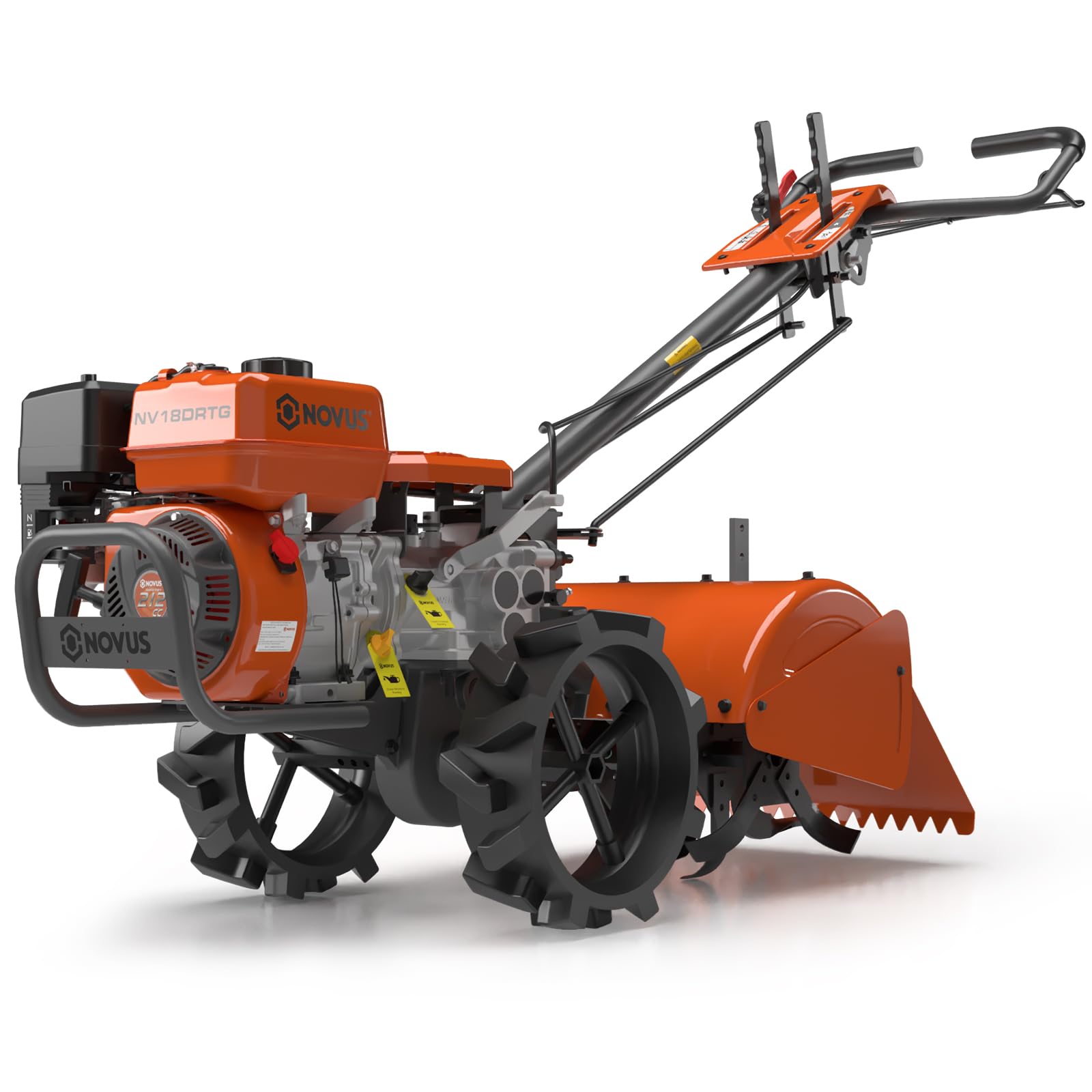
Sixteen steel tines, and a simple choice between breaking ground and finishing it
The pitch here is flexibility without complexity. A 212cc 4-cycle engine feeds 16 durable steel tines across an 18-inch tilling width, reaching up to 10 inches deep with an 8-position depth adjustment. Set the tines counter-rotating and the machine breaks tough ground; set them standard and it works soil you have already tilled. That switch is what the Victory and the Pulsar each do one half of — the NOVUS is the pick that gives you both directions in one frame.
What makes it worth its position over a belt-driven machine is the drivetrain. A full gear transmission, rather than a belt, is the low-maintenance route in rocky ground, where a belt is the part that gives first. The airless tires matter in the same practical way: never flat, and the machine moves over rough ground without you worrying about a puncture mid-job. Two forward speeds plus one reverse cover everything from tilling to transport, and the ergonomic handlebar supports one- or two-handed operation. It backs all of that with a 2-year warranty and free lifetime technical support out of a US-based team.
On the ground, Buyers describe a workhorse that is especially effective in hard dry dirt, starts on the first pull every time, and assembles easily from straightforward instructions.. It is the highest-rated pick of the six at 4.5+ stars across 50+ ratings, and buyers praise its build most — it simply feels solid. The one place opinions split is maneuverability, where the size of the frame shows up in tighter spaces. That is a fit question rather than a flaw, and the answer is simply the size of bed you are tilling.
Why it holds the top rating
- Switchable tine direction — counter-rotating for tough ground, standard for finishing a bed
- Full gear transmission instead of a belt, for durability with minimal maintenance
- 16 steel tines across an 18-inch width, down to 10 inches with 8-position depth adjustment
- Airless tires that cannot go flat on rough ground
- Two forward speeds plus reverse, with one- or two-handed handlebar operation
The trade-off to weigh
- Maneuverability divides opinion — the frame is a lot to swing in tight growing spaces
- Depth tops out at 10 inches, a step short of the deepest machine here
- Two-year warranty coverage is shorter than the five years on the Earthquake machines
Pick this one when: You want both tine directions, a gear drivetrain and the fewest maintenance jobs on a rental-sized plot.
Reconsider if: Your growing space is narrow and you need the machine to pivot on a coin.
5. EARTHQUAKE 31285 Pioneer Dual Direction Rear Tine Tiller
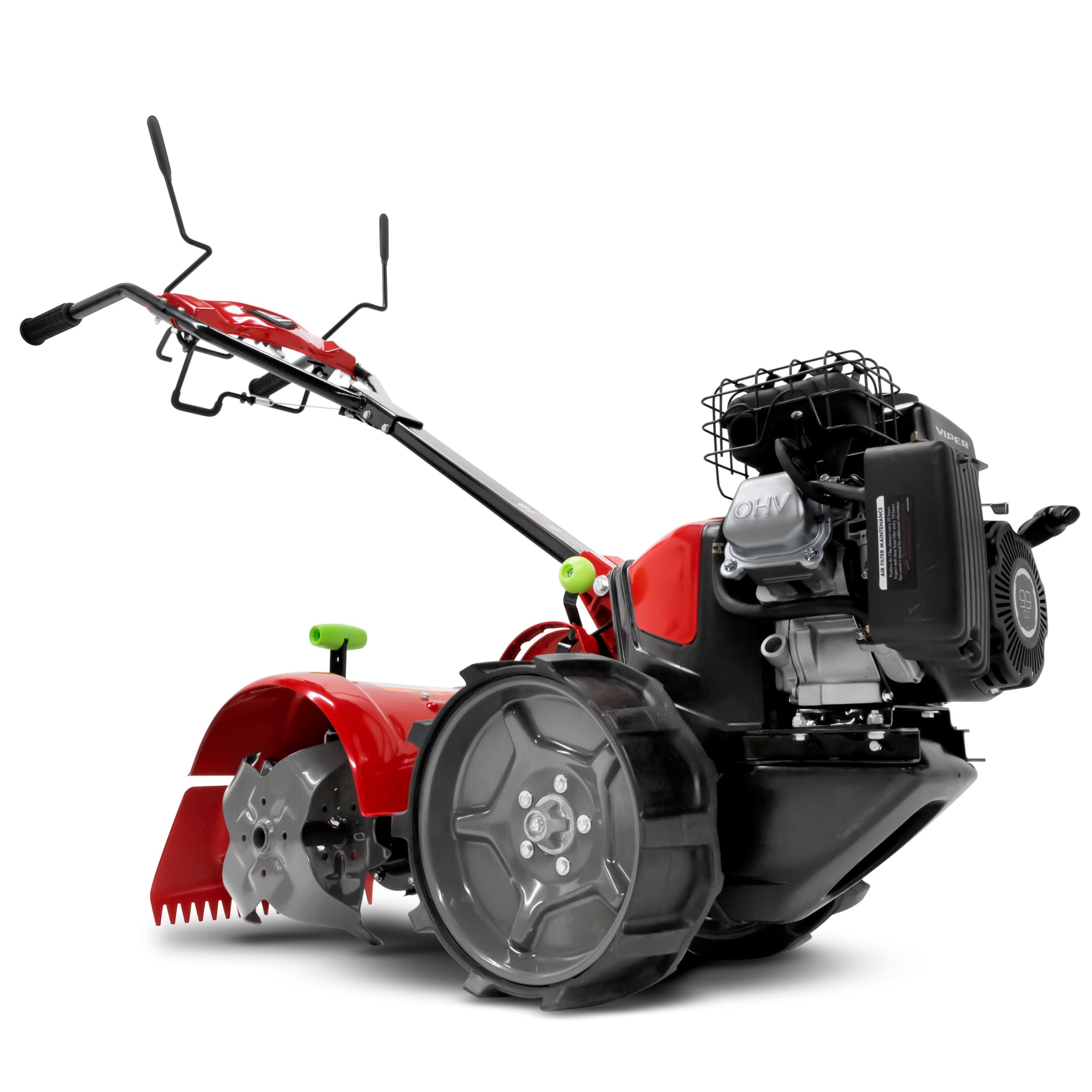
A 99cc rear-tine machine built to shift modes without the fuss
Here is the trade at its plainest. The Pioneer switches between counter-rotating tines to bust sod and tough soils, and standard rotating tines to leave a smooth seedbed — one handle, one shift, no back and forth. But it does that on a 99cc Viper engine at a 17-inch tilling width and 11-inch depth, where the Victory specs 209cc and the Pulsar and NOVUS both run 212cc. The lighter engine is deliberate: it drops weight and noise, which is what makes a rear-tine machine feel balanced and less wearing over a long session.
Instant Reverse is the feature you will appreciate most in a real garden. Pull the handle and you back out of a row; release it and you move forward again. There is a shift locator plate so you can find your drive mode by simply sliding the handle rather than hunting for it. Airless wheels come with aggressive lugs for grip and cannot go flat, and dual-grip handlebars let you step to the side of your path and till one-handed, keeping footprints out of the bed. The 5-year warranty matches the Victory, with US-based service and support behind it.
Buyers praise the compact frame most: it pivots at the ends of rows and navigates tight growing spaces. It also starts easily when cold, and buyers single out the forward and reverse tine option. Set against that, the weight advantage cuts both ways in heavy clay: a smaller engine is quieter and easier to manage, but it will not dig like the 209cc and 212cc machines when the ground fights back hardest.
The maneuverability argument: Aggressive-lug airless wheels, a compact balanced frame and one-hand operation add up to a machine that goes where bigger tillers cannot.
The power counter-argument: A 99cc engine at a 17-inch width is right-sized for garden work and short on muscle for genuinely brutal ground.
Suits you if: Your growing space is tight, your rows are short, and you want to shift tine direction without stopping.
Not for you if: You are opening raw acreage in clay and want the engine to do every ounce of the fighting.
Know the Specs
Engine displacement (cc)
Displacement is the swept volume of the engine’s cylinder, measured in cubic centimeters — think of it as the size of the engine’s lungs. More of it means more torque to keep tines turning when they hit resistance. The machines here range from 99cc up to 212cc, and the gap is not cosmetic: the Pulsar’s 212cc is more than double the 99cc in the Versa, which is why one powers through where the other works harder.
Tilling depth (inches)
Tilling depth is how far below the surface the tines reach, and it is the number that decides whether you are turning hardpan or just grooming the top inch. It runs from 6.5 inches on the Pulsar up to 11 to 14 inches on the SuperHandy. On ground that has never been broken, the deeper figure is what prevents a second and third pass over the same strip.
Tine rotation direction
Tines either spin with the wheels (standard rotating) or against them (counter-rotating). Counter-rotating tines bite up into the soil and shatter compacted layers — the right setting for sod and clay. Standard rotating tines churn soil forward and leave a level finish, which is what you want before planting. Dual-direction tillers offer both, so one machine can do the breaking and the finishing.
Tilling width (inches)
Width is the swath each pass covers, and it sets how long a job takes. The SuperHandy adjusts from 21 to 27 inches, the Versa from 11 to 21, and the rear-tine machines run between 16 and 20. Wider is faster on open ground; narrower is what lets a machine work between raised beds and fence lines. Adjustable width is the compromise to look for if your plot has both.
Common Questions
Do I need a rear-tine tiller for hard ground?
What does counter-rotating tines actually do?
How deep can these tillers dig into compacted soil?
Is a gear transmission better than a belt drive for rocky ground?
Why do hard-ground tillers weigh so much?
Can I till ground that has rocks and roots in it?
How do I stop a tiller from bucking forward?
What gas and oil do these tillers take?
Do I need a neutral gear to move a tiller without tilling?
How long do these tillers last in a working garden?
The Bottom Line
The rototillers for hard ground pick that suits most people is the Earthquake 20015 Versa, because its tool-less conversion between a 21-inch and an 11-inch tilling width means one machine handles both open ground and tight beds. If virgin sod is the job and depth is the priority, the SuperHandy reaches 11 to 14 inches, deeper than anything else here. And for a rear-tine machine that shifts tine direction in a compact footprint, the Earthquake Pioneer is the one to reach for. Whichever you pick, order with the return window in mind and check the gear box for leaks the day it arrives.
How we choose
We do not accept paid placement. Every pick is matched to a real buyer and a real use-case; we do not hands-on test units.
Sources
Specifications: manufacturer listings and product documentation. Review insights: verified customer reviews, as of October 2026. Pricing: not shown on this page (it changes often); check the current price via the retailer link.
As an Amazon Associate, Home Digitized earns from qualifying purchases. This does not affect which products we feature.