
Disclosure: This post contains affiliate links. As an Amazon Associate I earn from qualifying purchases, at no extra cost to you. Learn more
Specs are compiled from manufacturer listings and verified buyer reviews and can change over time — please confirm the key details on the product page before buying.
Recording volleyball is harder than it looks. The ball crosses the net in under a second, gym lighting is often dim and uneven, and the action never stops moving. This guide breaks down which cameras actually keep up with a fast indoor sport, and which ones leave you with blurred spikes and unusable footage.
This guide is built by comparing the manufacturers’ published specifications and the patterns across verified customer reviews, so you get each pick’s real strengths and trade-offs instead of marketing spin.
You will see mirrorless bodies, action cams, camcorders, and AI-tracking cameras lined up side by side so you can match one to your gym, your budget, and how much work you want to do in editing. By the end you will know exactly which of the best cameras to record volleyball games fits your setup and skill level.
Top Picks


How To Choose The Best Cameras to Record Volleyball Games
Indoor volleyball punishes weak cameras. A dim gym at ISO 3200 looks nothing like a sunny outdoor field, and the ball travels fast enough that slow autofocus shows up as a blurry smear. Before you compare specs, understand the three things that actually decide whether your footage is watchable.
Autofocus speed and subject tracking
Autofocus (the system that keeps the subject sharp without you turning a ring) is the number one spec for volleyball. A camera with hundreds of AF points and phase-detection tracking will hold a player’s face or body as they move, while a slow one hunts and misses the spike. Look for phase-detection AF and subject-recognition features that lock onto people and stay locked.
Low-light performance and sensor size
Gyms are dimmer than they look on camera. A larger sensor (the chip inside that captures light) and a camera with dual native ISO or strong noise reduction let you shoot with less grain in low light. Full-frame bodies generally gather more light than crop-sensor ones, but a well-tuned APS-C camera with a fast lens can still deliver clean footage.
Frame rate versus resolution
To capture a spike cleanly, frame rate (how many still images the camera captures each second, shown as fps) often matters more than resolution. At 60fps you get smoother motion, so you can slow a spike down without the footage turning choppy. 4K at 60fps is the balance for most courts, while 1080p at 120fps or 240fps is what you reach for when you want dramatic slow-motion replays.
Lens reach and crop factor
If you are filming from the sideline or the stands, you need reach. A crop-sensor camera extends the effective focal length of a telephoto lens, which is why APS-C bodies are popular for sport. A camcorder with a built-in 15x optical zoom, or an AI-tracking camera with optical zoom, saves you from buying and swapping lenses mid-game.
Side-by-Side Comparison
| Model | Best For | Sensor / Type | Top Video | Autofocus Points | Amazon |
|---|---|---|---|---|---|
| Sony Cinema Line FX30★ Best Overall | Cinematic game footage | 20.1MP Super 35mm APS-C | 4K (6K oversampled) | 495 | Amazon |
| GoPro Hero12 BlackPOV Action Pick | POV and courtside action | 1/1.9″ action cam sensor | 5.3K60 | — | Amazon |
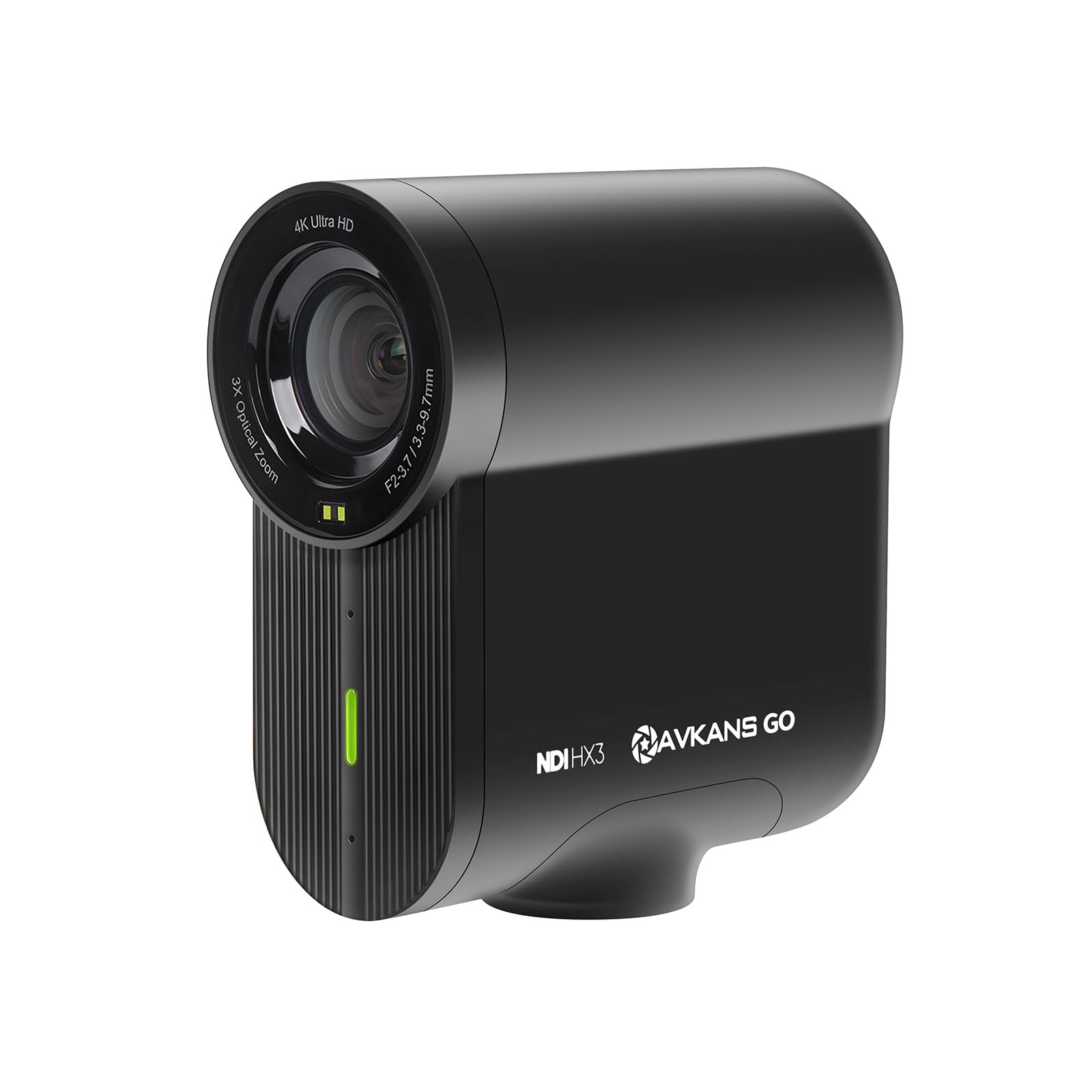
| AVKANS Go 4KBest for Streaming | Live streaming the match | Video camera, 90° wide angle | 4K | — | Amazon |
| Insta360 X5 | 360° rich coverage | Dual 1/1.28″ 360 sensors | 8K30 360° | — | Amazon |
| XbotGo Falcon | Hands-free AI tracking | Dual-lens AI action cam | 4K | — | Amazon |
| Canon EOS R7 | Reach on a crop sensor | 32.5MP APS-C CMOS | 4K | 651 | Amazon |
| Sony Alpha 7 IV | All-round hybrid shooting | 33MP full-frame CMOS | 4K 60p 10-bit | 693 | Amazon |
| Canon EOS R6 Mark II | Fast action stills and video | 24.2MP full-frame CMOS | 6K oversampled 4K 60fps | — | Amazon |
| Nikon Z6 III | Internal RAW video | Full-frame CMOS | 6K/60p N-RAW | 299 | Amazon |
| Canon XA70 | Long-zoom run-and-gun | 1″ CMOS camcorder | 4K UHD 30P | — | Amazon |
| LUMIX S1II | Open gate hybrid video | 24.1MP full-frame BSI CMOS | 6K 30p Open Gate | 79 | Amazon |
Detailed Reviews
1. Sony Cinema Line FX30 Super 35 Camera, Gray
Our pick — 4.5+★ from 500+ verified ratings; the strongest balance of quality and price.
A Super 35mm cinema body that gives dim gym footage a broadcast-grade look.
Your volleyball footage can look professionally shot without paying cinema-camera prices, and that is why this is the pick. The FX30 uses a 20.1 MP Exmor R APS-C sensor (a Super 35mm-format chip, the same size class used in a lot of film cameras) with a wide dynamic range, so a bright scoreboard and a dark far corner can both stay visible in the same frame. It shoots 4K with 6K oversampling, meaning the camera captures more pixels than it needs and downsizes them for sharper detail. That is why the footage reads as crisp even on a bright gym wall.
Low light is where gyms punish cameras, and the FX30 fights back with Dual Base ISO and a 14+ stop range. In plain terms, the camera keeps noise under control in dim rooms without you cranking the settings. You also get S-Cinetone, a preset color profile that gives footage a film-like look straight out of the camera, no editing required. With 495 autofocus points and both Contrast and Phase Detection, the focus locks on and stays locked. One owner who shoots podcasts called the autofocus “fantastic” and praised the colors and low light, though they flagged that the battery runs only 1-2 hours and they carry a spare pack to charge while shooting.
Here is the honest trade-off. This is a body-only cinema camera, so you buy lenses separately, and the E/FE mount opens a huge (and sometimes pricey) lens world. It also has no built-in flash and leans toward video work rather than casual snapshots. The upside of that older, well-established platform is a deep pool of accessories and tutorials. As one owner who shot 45+ podcasts put it, the frame rates and LUTs (custom color looks you can load into the camera) are versatile, and they plan another 60-90 shoots with it.
Why it earns the top spot
- 4K video with 6K oversampling means sharper detail than a plain 4K readout
- Dual Base ISO and 14+ stop range keep gym footage clean without heavy noise
- 495 phase-detect AF points track moving players reliably
- S-Cinetone delivers a cinematic look with no color grading
- Dual card slots (CFexpress Type A and SD) cover long matches
The honest catch
- Battery life runs about 1-2 hours, so you need a spare pack for a full tournament
- Body-only — lenses are an extra purchase and E-mount glass adds up fast
- Steeper learning curve than an auto-everything camcorder
Your match: Buy this if you want broadcast-grade volleyball footage and are willing to learn the menus and buy a lens.
Think twice if: You want a point-and-shoot you can hand to a parent with zero setup — a tracking camera below suits that better.
2. GoPro Hero12 Black E-Commerce Package
A waterproof 5.3K60 action cam you can strap to the net post or a chest mount.
When you cannot set up a tripod courtside, a tiny rugged camera you can mount anywhere wins. The Hero12 shoots 5.3K60 video and 27 MP stills, and it is waterproof down to 33ft (10m), so a splash from a stray ball or a rainy walk to the car is no problem. The HDR mode (high dynamic range, which captures more detail in both bright and shadowy parts of a scene) helps when one side of the gym is blown out by a window and the other is dim.
The standout tech here is HyperSmooth 6.0 stabilization, backed by an Emmy Award for in-camera sensor and software stabilization. In plain words, it keeps handheld or mounted footage smooth even when the camera is bouncing. There is also 360° Horizon Lock, which keeps your picture level even if the camera rotates a full turn, no gimbal needed. It records up to 8x slow motion at resolutions up to 2.7K, which turns a fast spike into a fluid slow-mo clip you can actually study.
Now the catch, and it is the one buyers talk about most. Battery life is the weak spot. The Enduro battery gives up to 70 minutes at 5.3K60, but real-world sessions run shorter, especially in cooler gyms or at high resolution, and some buyers report the camera warming up or shutting off in longer takes. Charging can take 3+ hours. It is also an action-first design with a small built-in screen, not a cinema rig. Buy a spare battery and keep clips short.
Where it shines: The GoPro Hero12 Black is the best choice when you need a mount-anywhere, waterproof camera that survives contact with the court. Its 5.3K60 resolution and Emmy-winning HyperSmooth stabilization mean the footage looks steady even from a bouncing mount, so a ball hitting the net nearby will not ruin the shot. The e-commerce package includes the enduro battery, curved adhesive mount, mounting buckle, and thumb screw, so you can shoot the same day it arrives.
What to plan around: Treat the short runtime and slow charging as the reality of any compact action cam — carry two batteries for a full tournament, and this little camera earns its place on the net post.
Reach for this if: You want a rugged, mount-anywhere camera for courtside angles, warmups, and slow-motion replays.
Look elsewhere if: You need long uninterrupted recordings of a whole match without battery swaps.
3. Go 4K Wireless Live Streaming Camera with NDI RTMP (AVKANS)
Built to stream a match live and record it to a card at the same time.
If your goal is to stream the game to grandparents in another state while also saving a clean recording, this camera was designed for exactly that. The AVKANS Go streams and records simultaneously, pushing a clean 4K feed to a micro SD card while it broadcasts live, so you skip the capture card and computer most streamers need. Its 90° wide-angle lens covers a full court from a single spot, and it mixes 3x optical zoom with 3x digital zoom to reach the far side without losing sharpness.
For game-day usefulness, the built-in sport scoreboard overlay (for volleyball, baseball, football, basketball, soccer and more) saves you from running separate graphics software, and it speaks the streaming languages streamers actually use. It supports HDMI, USB, RTMP, RTMPS, NDI and SRT, so it slots into most software and hardware setups, including GameChanger and SidelineHD. Battery life is a generous 6 hours, which covers multiple matches on a charge.
The trade-off is that this is a specialized streamer, not a cinematic shooter. It is larger than a pocket action cam, picks up some operational noise, and the battery is not swappable. Wi-Fi setup tripped up early buyers, though the current firmware has cleaned that up, and a rare unit fails outright, as one disappointed owner reported after a double-header. For a crowd that mostly loves it, that is a small blemish on an otherwise reliable value.
Built for the scoreboard crowd: The combination of a 90° wide-angle view, 6-hour battery, and simultaneous 4K stream-and-record is unusual at any level, and the sport scoreboard overlay is a feature most competitors make you add separately. That is why families filming a whole season lean on it.
Worth the compromise: Accept the non-swappable battery and the bulky body, and this is the easiest path to a live volleyball stream that also archives a clean recording for later.
Best fit: Coaches and parents who want to stream a live match and keep a clean 4K recording without extra gear.
Guess again if: You want something pocket-sized — a rugged action cam is the better shape for that job.
4. Insta360 X5 8K 360° Action Camera

Dual 1/1.28″ sensors record every direction at 8K30, so you choose the angle in editing.
Here is the problem a 360° camera solves for volleyball: you can never predict which side of the court the next great rally will happen on. The X5 records in every direction at 8K30fps using dual 1/1.28″ sensors, so instead of guessing your camera angle, you capture the whole gym and choose the framing later with AI-assisted reframing. That is a fundamentally different way to shoot a game, and it is why it earns a spot here.
The invisible selfie stick effect lets you produce third-person shots with the pole completely hidden, and the InstaFrame mode hands you a ready-to-share flat video instantly, either auto-tracking a player or locked to a fixed angle. FlowState Stabilization plus full 360° Horizon Lock keeps footage level even through bumps and full rotations, no gimbal required. With a 208-minute battery rating and a tougher, replaceable lens design, it is built to survive a season of sideline handling.
The low-light story is strong for a 360 camera too, thanks to a triple AI chip design that powers noise reduction in dim gyms. On the flip side, 360 footage eats storage fast, the lens can still scratch if you are careless, and reframing every clip adds an editing step some parents will not want. The payoff is footage nobody else at the game can get.
The angle nothing else gives you: With 8K30 resolution across dual sensors and a 208-minute battery rating, the X5 covers far more of the match than a fixed camera ever could, so you can reframe a play after the fact instead of missing it. The 360° Horizon Lock means the picture never tilts no matter how the camera moves.
Plan for the workflow: The X5 rewards buyers who enjoy editing. If you would rather hit record and share instantly, a standard tracking or streaming camera is the simpler path.
Take this home if: You want to capture every angle at once and shape the story in editing.
Keep browsing if: You want footage that is ready to post with no reframing step.
5. XbotGo Falcon All-in-One AI Action Camera, 4K
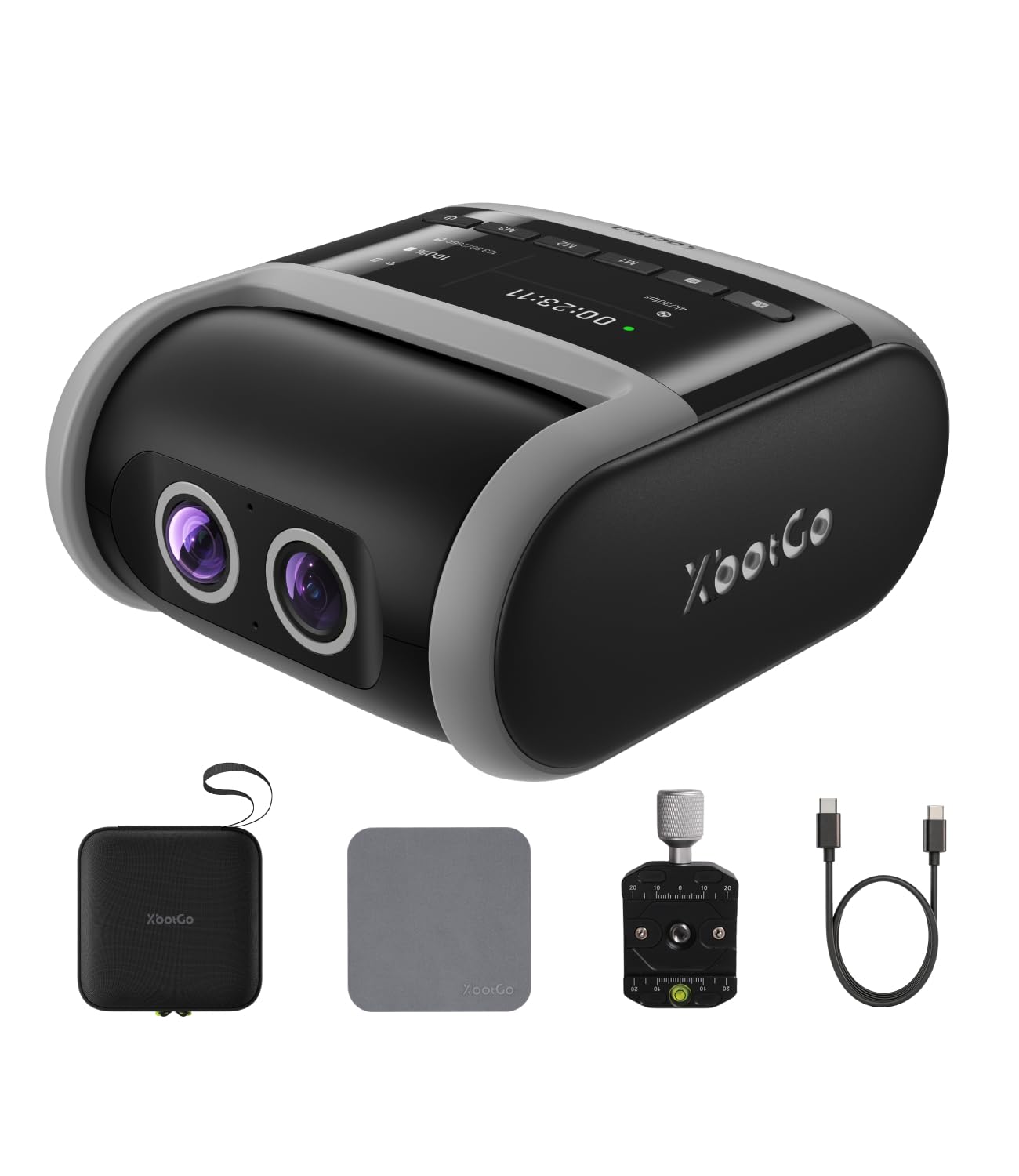
An AI-tracking camera that follows the play so you can watch your kid instead of the screen.
This is the pick for the parent who is tired of staring at a screen instead of the court. The Falcon is an all-in-one AI sports camera: it combines AI tracking, 4K recording, and live streaming in one unit, with no dedicated camera operator needed. An 8-core processor with 6 TOPS of AI performance (a measure of how much on-device computing it can throw at recognizing players) intelligently keeps the main action centered during team sports.
It records 4K through a dual-lens system: one lens captures the footage and a second, AI-assisted lens drives the tracking. Setup runs about 15 minutes, it mounts on any standard 1/4″ tripod, and with built-in Wi-Fi you can stream live to family and fans while recording. The appeal is real — owners describe finally being able to cheer instead of filming, and it works on any standard tripod you already own.
The honest catch is tracking reliability. When the field is cluttered or a ball leaves bounds, the AI can momentarily lose the play, and a few users report the stream dropping. Indoor and dim lighting hurt it, so a bright gym is where it performs best. Weigh that against a genuinely hands-free, subscription-free experience and it is a strong fit for team sports where the action stays in one area.
Hands-free is the whole point: The XbotGo Falcon records 4K hands-free, keeps the action centered with AI tracking, and streams live over Wi-Fi without any subscription fee, which is the feature families care about most.
Know its limits: The AI tracking can lag on fast plays or get confused in busy scenes, and it wants good lighting — treat bright gyms and soccer style continuous action as its comfort zone.
Right for you if: You film team sports solo and want tracking plus streaming without an operator or monthly fee.
Not your pick if: You shoot dim gyms or want flawless frame-by-frame tracking on every fast play.
6. Canon EOS R7 Mirrorless Camera (Body Only)

A crop-sensor body that puts extra reach on every lens you mount.
Filming from the stands changes everything, and this camera is built for that distance. The EOS R7 uses a 32.5-megapixel APS-C sensor, and a crop sensor effectively extends the reach of a telephoto lens, so a lens that feels short on a full-frame body gets you closer to the far court here. That reach is the single strongest reason to pick it for volleyball shot from across a gym.
Autofocus is a headline feature: Dual Pixel CMOS AF with up to 651 AF zones covers roughly 100% of the frame width and height, so a sprinting player rarely escapes the focus area. It shoots a fast 15 fps with the mechanical shutter and up to 30 fps electronically, plus RAW Burst with a 1/2-second pre-shooting buffer that helps you catch the exact moment of a spike. A 5-axis in-body stabilization system (IBIS, which physically steadies the sensor to fight shake) keeps handheld footage and low-light video steadier.
Two things to weigh. First, it is body-only, and it is best paired with a fast lens to exploit the crop reach. Second, its APS-C sensor cannot gather as much light as a full-frame body in a dark gym, though the IBIS and fast glass close much of that gap. A handful of owners mention non-Canon lenses having focus quirks, and one long-term user noted once-fixed firmware glitches earlier on — now mostly resolved. For a five-pocket camera at this level, the consensus is strong.
Arguments for it
- 32.5MP APS-C sensor adds reach on any RF telephoto lens
- 651 phase-detect AF zones cover ~100% of the frame, so tracking holds on running players
- 15 fps mechanical and up to 30 fps electronic for catching the split second of a spike
- 5-axis IBIS steadies handheld and low-light footage
- Over 30 minutes of continuous video recording plus an included extra battery point toward long shoots
Points to consider
- APS-C gathers less light than full-frame in a dim gym
- Body-only — expect to buy a lens separately
- Some owners mention non-Canon lenses losing focus reliability
Built for the bleachers: Choose this if you film volleyball from a distance and want crop-sensor reach plus quick AF.
Consider the full-frames instead if: Your gym is very dim and you would rather gain light than reach.
7. Sony Alpha 7 IV Full-frame Mirrorless

A 33MP full-frame hybrid that handles game video, stills, and social clips in one body.
If you want a single body that shoots game-day video, stills for the yearbook, and everything in between, this is the option most buyers land on. The Alpha 7 IV pairs a 33MP full-frame sensor with the BIONZ XR processor, capturing 4K 60p 10-bit 4:2:2 video with full pixel readout. Full pixel readout simply means every pixel is used for the image, which sharpens detail — a real advantage for picking out jersey numbers across a gym.
Its 693 phase-detect autofocus points track subjects accurately, and the menu system has improved enough that beginners can find their way. It also carries S-Cinetone for a polished color look with no editing required. The full-frame sensor gathers more light than a crop body, which is a genuine help in dim gyms. One long-time photographer upgrading from a DSLR called the eye autofocus accurate even in tricky lighting. A few users note crop in the highest-speed 60-120p modes, a normal limit to plan for.
The honest downside is that performance runs mixed for a small group, with some owners reporting overheating in heavy use. For a season of volleyball clips that is rarely an issue, but marathon sessions deserve a pause between takes. Battery life is adequate for shorts and stills, though a spare is wise for long shoots. Overall this is the most flexible body for the price in this list.
Why it earns its place
- 33MP full-frame sensor gathers plenty of light in dim gyms
- 4K 60p 10-bit 4:2:2 with full pixel readout for sharp detail
- 693 phase-detect AF points keep moving players locked in
- S-Cinetone gives a polished look straight out of camera
- Dual card slots (CFexpress Type A and SD) cover long tournaments
Real-world caveats
- Overheating reported by a minority during prolonged heavy shooting
- High-speed 60-120p modes crop the frame, cutting your wide view
- Battery life is only adequate — carry a spare for full-day events
The safe all-rounder: Pick this if you want one camera for game video, stills, and social clips without juggling two bodies.
Only if you shoot long marathons: Consider a camcorder if your sessions stretch for hours of uninterrupted recording.
8. Canon EOS R6 Mark II Mirrorless Camera (Body Only)

A 40 fps electronic shutter that catches the exact frame where hand meets ball.
Speed is the entire story with this body. The R6 Mark II fires up to 40 fps with the electronic shutter, which means the millisecond the ball meets a hand, you have a frame with it. That burst speed is backed by a full-frame 24.2MP sensor and the DIGIC X processor, so low-light gym footage stays clean with minimal grain. For volleyball stills and highlight reels, few cameras in this group hit the same combination of speed and light-gathering.
Subject tracking is unusually thorough. Beyond people, the camera detects animals, cars, motorcycles, horses, trains and aircraft, and its head, face, and eye detection focuses on a person’s eye — even the left or right one — or tracks the whole body. Video is no afterthought either: it captures 6K-oversampled uncropped 4K up to 60fps, Full-HD high-frame-rate up to 180 fps for slow motion, and up to 6 hours of continuous Full-HD recording without overheating. A 3.0-inch vari-angle touchscreen and a 0.5-inch OLED electronic viewfinder with a 120 fps refresh rate make composing easy from any angle.
The obvious caveats are that it is body-only, so a lens is an added cost, and it has no built-in flash. It is also a real investment compared with the crop-sensor and action options above, so you are paying for the burst speed and the low-light full-frame sensor specifically.
Speed you can rely on: Between the 40 fps electronic shutter and 6 hours of continuous Full-HD video, the EOS R6 Mark II is built to keep rolling through a full match or tournament day without overheating.
Worth the stretch if: You want one body that nails both fast-action stills and high-quality video — otherwise a crop-sensor Canon gives you reach for less.
Buy it for: Fast-action stills plus strong low-light video in a single full-frame body.
Pass if: You mainly need long-distance reach on a limited budget.
9. Nikon Z6 III Full-Frame Mirrorless

Records 6K/60p RAW straight to the card, no external recorder required.
If you want to grade and cut footage like a broadcast highlight reel, internal RAW recording is the differentiator. The Z6 III captures 6K/60p internal N-RAW video with oversampled 4K UHD, plus 4K/120p and Full HD/240p slow motion — enough frame rate to slow a spike to a crawl and enough resolution headroom to crop without losing quality. Its ISO range runs 100-64000, extended up to the equivalent of ISO 204800, so it keeps producing usable image in dim gyms where weaker cameras give up.
Autofocus detection reaches down to -10EV, which is a measure of how dark a scene the camera can still lock focus in, so a dim gym will not leave you with blurry players. Nikon’s Deep Learning subject recognition helps it catch human faces as small as ~3% of the frame, which is genuinely useful for distant players across a court. The electronic viewfinder is similarly strong: a 4000-nit brightness rating and 5760k-dot resolution with a 120 fps refresh deliver a bright, sharp view even under bright gym lights.
The honest caveats come from owners. The menus are deep and complex, and auto mode can be unreliable, so it rewards a hands-on user. One long-term user reported a rubber grip failure within the first year and unhelpful support, which is worth weighing if long-term durability matters. Battery life is only OK. For a capable full-frame hybrid, though, the value is clear.
For the editor-friendly shooter: Internal 6K/60p N-RAW plus a -10EV autofocus floor give you pro-grade footage in a compact body, and the 4000-nit, 5760k-dot EVF makes framing under gym lights genuinely easy.
The complexity tax: Expect a real learning curve in the menus and to bring a spare battery, but if you want internal RAW without an external recorder, this delivers it.
Pick this for: Internal RAW video and a top-tier viewfinder for editing-focused shooters.
Rethink if: You want a menu system you can fumble through without a manual.
10. Canon XA70 Professional Camcorder

A built-in 4K 15x optical zoom reaches the far court with no lens swaps.
If you hate the idea of buying and changing lenses, a camcorder is the answer, and this one carries the reach built in. The XA70 pairs a 1″ CMOS sensor and DIGIC DV6 processor with an integrated 4K 15x optical zoom lens. Optical zoom means the lens itself does the work rather than digitally enlarging pixels, so you can go zoomed-in on the far side and keep genuine detail. That is the whole reason this earns a spot: one fixed lens that covers wide and far.
It is built for event shooting. Dual SD card slots allow relay and simultaneous recording, so you keep rolling without swapping midway through, and a 3.5″ touchscreen plus a tiltable OLED EVF let you frame comfortably. On the audio side it has 2 XLR terminals on a detachable handle and 4-channel linear PCM, which is pro-level sound input for a gym with echo. It also does HD live streaming over USB Type-C with UVC support, and infrared plus optical image stabilization keeps footage steady. Recording formats include XF-AVC and MP4, with 4K UHD at 30P/24P or Full HD at 60P.
The important trade-off is that this is a manual-first tool. One buyer put it plainly: it is great if you use manual settings, but you will waste money if you want everything automatic. That means a learning curve, plus a couple of owners flagged a dim built-in monitor that made judging focus and lighting hard without a separate screen. Get comfortable with the controls and the run-and-gun zoom freedom is worth it.
Zoom without lens changes: The 4K 15x optical zoom, dual SD slots, and 2 XLR audio inputs make the XA70 a self-contained event camera — exactly what you want when a whole match may happen before you can adjust anything. You can zoom in on the far court without swapping lenses mid-game.
Manual-only mindset: Its dedicated owners are the ones who shoot manual rather than auto. If that is not you, a simpler 4K camera will serve you better.
Go for it if: You want one long-zoom lens, rugged event build, and pro audio inputs without lens swaps.
Steer clear if: You plan to rely on fully automatic video modes.
11. LUMIX S1II Full Frame Hybrid With Open Gate

6K 30p open-gate recording lets you crop a vertical highlight or a landscape cut from one clip.
Open gate is the standout feature here and it matters for volleyball. Instead of recording only a widescreen shape, the S1II captures 6K 30p (3:2) open gate, giving you extra frame area so you can crop to a vertical phone-friendly highlight or a standard landscape cut from a single recording. It also shoots 6K 30p 10-bit, C4K, 4K, 3.3K and FHD in internal 4:2:2 10-bit, which covers virtually every format a parent, coach, or content creator would need.
Under the hood is a partially stacked 24.1MP BSI CMOS sensor with a High Resolution mode that produces 96MP-equivalent stills handheld, plus 8.0-stop 5-axis image stabilization (which physically steadies the sensor to fight camera shake) for handheld sideline shooting. Burst shooting reaches 30 fps with the electronic shutter, blackout-free at 10 fps with autofocus, so stills of fast action are covered too. LUMIX’s color science is a real draw for anyone who wants good-looking footage with minimal grading.
The honest caveat is that a few customers note the camera runs hot and that rolling shutter shows up when the dynamic-range boost is on. Its autofocus-point count (79) is also modest compared with the Canon and Sony bodies above, so fast indoor action tracking leans more on the AI recognition the camera adds. The payoff for stills-and-video hybrid shooters who want open gate and internal codecs is a very flexible body.
Where it pulls ahead
- 6K 30p open gate (3:2) lets you crop vertical or landscape from one clip
- 24.1MP partially stacked BSI CMOS sensor with a 96MP-equivalent High Resolution mode
- 30 fps AFC burst, blackout-free at 10 fps, for action stills
- 8.0-stop 5-axis stabilization for handheld sideline work
Worth knowing first
- 79 autofocus points is modest versus the higher-count Canon and Sony bodies
- Reviewers point out it can run hot, and rolling shutter shows with the DR boost on
- Premium-tier body, so it is aimed at committed enthusiasts and pros
For the format-flex crowd: Grab this if you wantopen-gate flexibility, internal RAW-style codecs, and strong stabilization in one hybrid.
Skip if: You need the most aggressive autofocus tracking and prioritize a lightweight, cool-running body over open gate.
Know the Specs
Sensor size and crop factor
The sensor is the chip that captures light, and its physical size sets how much light the camera can gather and how close a scene appears. Full-frame sensors pull in more light for cleaner dim-gym footage, while a crop sensor (a smaller APS-C chip) magnifies the reach of any lens, so a telephoto feels longer. If your camera sits far from the court, crop reach helps; if your gym is dark, full-frame light-gathering helps.
Frame rate explained
Frame rate is how many still images the camera captures each second, written as fps. A 30fps clip can look slightly strobed on a fast spike, while 60fps plays smoother and slow-motion options start around 120fps and up. Higher frame rates trade resolution and file size, so the standard approach for volleyball is 4K at 60fps for the live game and a higher frame rate only for replay moments.
Autofocus technology
Autofocus keeps the subject sharp without you turning the lens ring. Phase-detection AF measures distance across many points and moves fast, which is why the higher AF-point counts here track a sprinting player better. Subject recognition adds eye, face, or body tracking on top. For volleyball, a camera with phase-detection and people-recognition holds focus far more reliably than a contrast-only system.
Optical versus digital zoom
Optical zoom uses the glass lens itself to enlarge the picture and keeps real detail. Digital zoom enlarges the image in software and softens the result as it reaches. A camcorder with a built-in 15x optical zoom, or a streaming camera mixing optical and digital zoom, lets you reach the far court without changing lenses — but only the optical portion preserves sharpness.
Common Questions
What frame rate should I use to record a volleyball game?
Do I need a full-frame camera for indoor gym lighting?
Can I live stream a volleyball match straight from the camera?
How long does the battery last when filming a full match?
Is an action camera or a mirrorless camera better for volleyball?
What is the difference between optical and digital zoom on a sports camera?
Can I record to an SD card while streaming the game?
How much reach do I need to film from the stands?
Does a camera sensor overheat during long volleyball recordings?
What storage do these cameras take for video?
The Bottom Line
For most people shopping for the best cameras to record volleyball games, the winner is the Sony Cinema Line FX30 because its Dual Base ISO, 14+ stop range, and 495-point autofocus deliver clean, sharp gym footage with a cinematic look and no grading. If streaming a live match matters most, the AVKANS Go 4K records and streams at once with a built-in scoreboard overlay and a 6-hour battery. And for filming solo from the sidelines hands-free, the XbotGo Falcon tracks the play with AI so you can finally watch the game.
How we choose
We do not accept paid placement. Every pick is matched to a real buyer and a real use-case; we do not hands-on test units.
Sources
Specifications: manufacturer listings and product documentation. Review insights: verified customer reviews, as of October 2026. Pricing: not shown on this page (it changes often); check the current price via the retailer link.
As an Amazon Associate, Home Digitized earns from qualifying purchases. This does not affect which products we feature.