
Disclosure: This post contains affiliate links. As an Amazon Associate I earn from qualifying purchases, at no extra cost to you. Learn more
Specs are compiled from manufacturer listings and verified buyer reviews and can change over time — please confirm the key details on the product page before buying.
You want footage you can actually use for coaching review, not twenty minutes of empty net. That depends on one thing: autofocus that locks onto a moving player and holds. Players move in bursts, the ball crosses the frame in a blink, and the light shifts from harsh noon sun to fading evening shadows in a single session. This guide covers nine cameras that record 1080p or 4K video and are built to survive a full practice session, from the crowd favorite — 4.5+ stars across 500+ owners — down to budget pickers that punch well above their class.
This guide is built by comparing the manufacturers’ published specifications and the patterns across verified customer reviews, so you get each pick’s real strengths and trade-offs instead of marketing spin.
Below you will see which of these nine cameras actually hold focus through a cross-court sprint rather than just on a spec sheet. Every pick is judged on the footage quality you need for the best cameras for filming tennis practice.
Top Picks


How To Choose The Best Cameras for Filming Tennis Practice
Three things decide whether your tennis practice footage is usable: the camera keeps a moving player in focus, it stays cool and powered for a full session, and you can reach the far baseline without sprinting after the camera. Everything else — color science, menu design, lens flavor — is secondary once those three are solved.
Autofocus tracking is the whole ballgame
Phase-detection autofocus (a system that predicts where a moving subject will be, not just where it is) is what separates a camera that films tennis from one that films a blurry shape in a polo shirt. More autofocus points sounds impressive on paper, but what actually matters is subject detection — the camera recognizing a human body, then an eye or a face, and re-acquiring that lock after the player turns away. Cameras with AI-assisted tracking simply do this more reliably than older contrast-only systems.
Reach beats wide angle for court coverage
You are usually filming from behind the fence or from the sideline, which means the player is far away and moving laterally. An APS-C sensor (a crop-sensor format smaller than full-frame) multiplies your effective focal length, so a 100mm lens behaves like a much longer one — genuinely useful when your subject is on the far baseline. Full-frame cameras give you better low-light performance but need longer, heavier glass to get the same reach.
Heat and battery decide whether you finish the session
A two-hour practice can wreck a camera that overheats or drains its battery in ninety minutes. Active cooling (a built-in fan that moves hot air out of the body) is what lets a camera record long clips without shutting down. On the battery side, look at rated shooting time and whether the camera can charge while recording — plugging into a USB power bank courtside solves more filming problems than any spec on the box.
Side-by-Side Comparison
| Model | Best For | Sensor / Video | Autofocus Points | Mount | Amazon |
|---|---|---|---|---|---|
| Sony Cinema Line FX30★ Best Overall | Cinematic practice footage | 20.1 MP Super 35 / 4K | 495 | Sony E/FE | Amazon |
| 8k Video Camera CamcorderBudget Champion | Beginners on a tight budget | 48 MP stills / 8K at 15FPS | — | Fixed lens | Amazon |
| XbotGo Falcon AI Action CameraMost Hands-Free | Hands-free auto tracking | 4K dual-lens / 6 TOPS AI | — | 1/4-inch tripod | Amazon |
| Canon EOS R8 | Full-frame value hybrid | 24.2 MP full-frame / 4K 60p | 1,053 | Canon RF | Amazon |
| Canon EOS R7 | Long-range court reach | 32.5 MP APS-C / 4K | 651 | Canon RF | Amazon |
| Sony Alpha a7 III | Hybrid photo and video | 24.2 MP full-frame / 4K | 693 | Sony FE | Amazon |
| Sony Alpha a6700 | Travel-ready APS-C tracking | 26.0 MP APS-C / 4K 120p | 759 | Sony E | Amazon |
| LUMIX S5IIX | Unlimited recording, no cooldown | 24.2 MP full-frame / 5.8K | 779 | Leica L | Amazon |
| Nikon RED Z Cinema | Broadcast-grade practice film | 6K full-frame / R3D RAW | 273 | Nikon Z | Amazon |
Detailed Reviews
1. SONY Cinema Line FX30 Super 35 Camera, Gray
Our pick — 4.5+★ from 500+ verified ratings; the strongest balance of quality and price.
The video-first body that keeps rolling through a full practice without overheating
Sony’s FX30 is the rare camera where the spec sheet and the owner experience actually agree. Its 20.1 MP Exmor R APS-C sensor in Super 35mm format (a sensor size just under full-frame that gives you extra telephoto reach) means a 100mm lens frames the far baseline like a longer lens would on a full-frame body. That reach matters when you’re filming from behind the fence, so the far player stays large in frame instead of a tiny figure.
What wins people over is consistency over long sessions. Buyers report 45+ podcast recordings and church sermons without trouble because the internal fan keeps hour-long 4K clips running when lesser cameras shut down. The autofocus gets the same praise: 495 autofocus points with both contrast and phase detection, and reviewers describe it locking onto subjects through a Ninja V monitor setup with a touchscreen tap. The S-Cinetone profile delivers a cinematic look straight out of the camera without color grading, which saves hours if you’re a coach or parent reviewing tape rather than a colorist.
The honest catch is battery. Owners mention powering the FX30 down after one to two hours of continuous shooting and carrying a spare battery pack to charge while filming. Budget for a second battery and you’re set. This is also a camera that wants a lens — the body ships without glass, so factor that into your total. At 4.5+ stars across 500+ ratings it is the highest-scoring pick here, and it wins on performance rather than price. The budget option below has far more owner feedback, but this one still holds the higher score.
What Buyers Keep Coming Back For
- 20.1 MP Super 35 sensor gives extra reach for far-baseline framing
- Active cooling lets it record long 4K sessions without overheating
- S-Cinetone color looks graded straight out of the camera
- 495 AF points pair with face and eye detection for moving players
The Fine Print Worth Knowing
- Sold as a body only — you’ll need a lens and a spare battery
- Owners note 1-2 hours of battery in continuous use
Made for: Anyone filming coaching tape who wants cinema-grade footage straight out of the body and can live with swapping a battery mid-session.
Think twice if: You want one box that does everything — this needs a lens, and the battery won’t last a marathon practice without a spare.
2. 8k Video Camera Camcorder vlogging Camera
An all-in-one camcorder that films 8K footage and zooms 18x for a fraction of a mirrorless rig
If you’re a parent filming a weekend junior tournament, this camcorder solves the reach problem better than any mirrorless body on this list. Its 18x digital zoom (a digital crop that magnifies the image) lets you pull the far baseline tight without swapping lenses, so you can frame the far player from the sideline. The spec comparison is stark: this reaches 18x where the XbotGo Falcon tops out at 3x. What wins people over is how much camera you get for a beginner-friendly price — picture quality is often described as better than a phone’s, and features like time-lapse, motion detection, a fill light for dim courts, and infrared night vision sit in the box.
The handling is part of the appeal. It weighs 0.61 lb and measures 5.12 x 2.17 x 2.17 inches, so it slips into a tennis bag without any ceremony, and the ¼-inch tripod thread mounts to any standard tripod or fence clamp. The photo-side doesn’t hurt either — 48MP stills mean you can scoop a full-resolution frame of a serve without carrying a second camera. Customers note it “Does everything a Sony does for video” and it arrives loaded with accessories, though it can’t be powered on from the remote.
The trade-offs are real but predictable at this tier. Video audio comes through muffled, which a shotgun mic fixes on the hot shoe, and one owner recounted files showing as “corrupt” until read through a card reader instead of a direct computer connection. A smaller share of buyers find the menu fiddly. Skipping the strap — a common complaint about the box contents — is easy to fix with a cheap add-on. If you want dependable reach and a dead-simple setup for casual practice filming, this is the sensible starting point.
Why Beginners Love It
- 18x digital zoom reaches the far baseline without changing lenses
- 48MP stills let you grab a full-res frame from a serve
- 0.61 lb body slots straight into a tennis bag
- Fill light and night vision help with evening or indoor sessions
Where It Falls Short
- Built-in mic records muffled audio — add an external mic
- Menu system can feel fiddly for some users
Go this way if: You want maximum zoom and dead-simple operation for casual outdoor practice footage and don’t want to buy lenses.
Step up instead if: You need clean audio without accessories or a menu that gets out of your way.
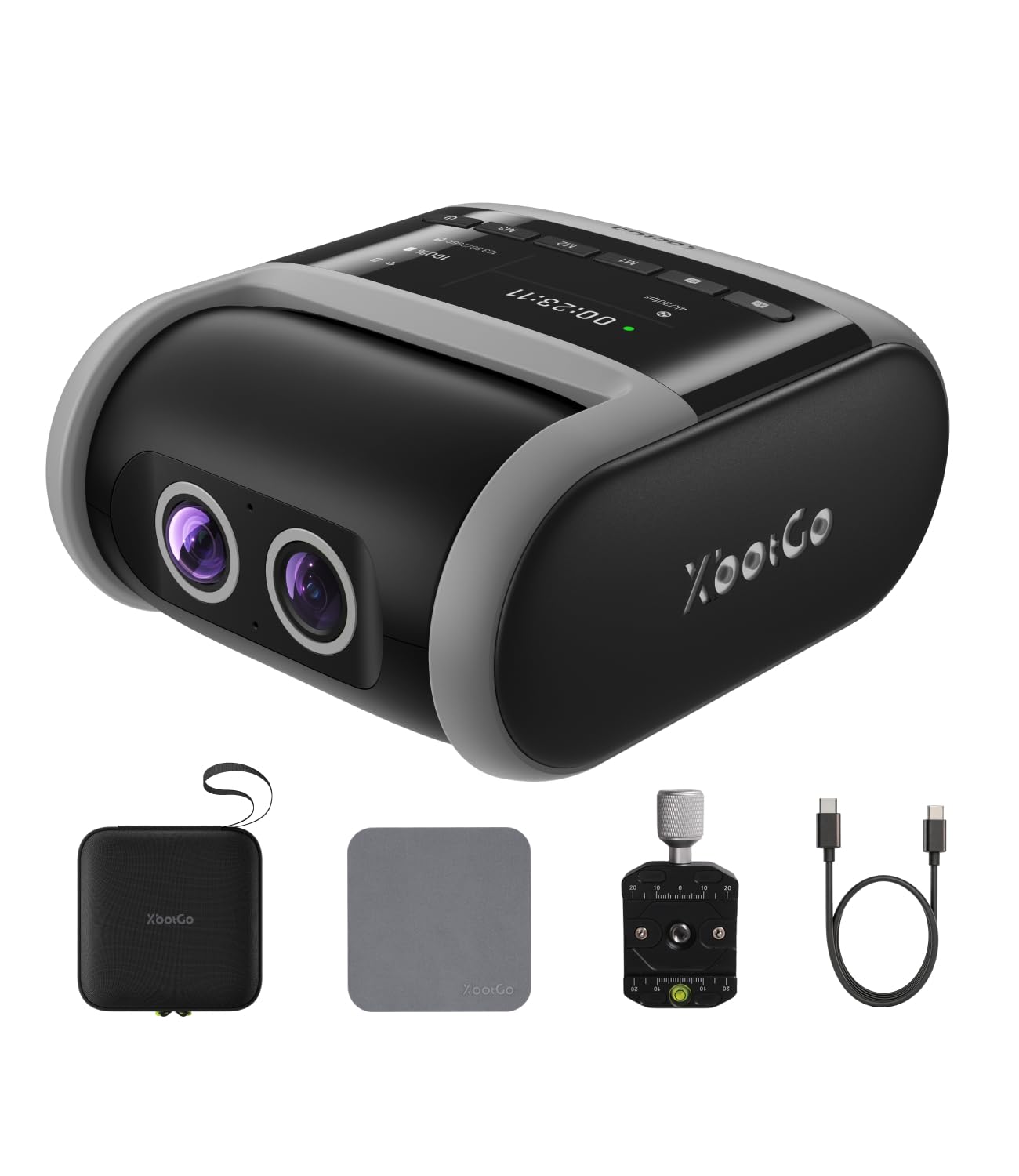
3. XbotGo Falcon AI Action Camera
The camera that pans itself so you can actually watch the practice instead of filming it
This is the only camera here designed to work without a person operating it. XbotGo’s Falcon pairs a 4K dual-lens setup with an AI tracking system rated at 6 TOPS (a measure of how many AI calculations the processor handles per second) and an 8-core processor, so it recognizes the main action and keeps it centered on its own. Set it on a standard ¼-inch tripod behind the court, walk away, and it follows the play while you watch the match.
The AI tracking is what wins people over. It’s described as working like a professional cameraman, with clean 4K footage and a wide-angle lens that captures the whole court before zooming in on the action. No subscription is required for live streaming, setup takes about 15 minutes, and the battery lasts a full game. As one owner put it, “Now I can actually pay attention to my kid’s game instead of worrying about capturing film.”
The honest catch is tracking reliability on fast, chaotic play. Reviewers point out the AI occasionally losing the ball when it goes out of bounds or when adjacent courts confuse the field of view, though it usually self-corrects. Live streaming can drop out, and the 3x digital zoom is modest compared to the 18x on the budget camcorder. Daylight is where it shines; dim or indoor settings weaken the tracking. If you want flawless tracking, a mirrorless body with fast autofocus will always beat AI — but no mirrorless pans itself.
What You’re Really Buying: Freedom from the sideline. The Falcon trades rock-solid perfection for genuinely hands-off recording, and for parents who would rather cheer than hold a rig, that trade is worth it.
Where It Struggles: Fast plays and adjacent courts can throw the tracking off temporarily, and the digital zoom ceiling of 3x limits how tight you can frame a far player.
Reach for this if: You want to watch your player practice while the camera does the filming, no operator required and no monthly fees.
Skip if: You film indoor courts under dim lights or need to zoom tight on a far baseline.
4. Canon EOS R8 Mirrorless Camera (Body Only)

Full-frame image quality and lightning autofocus in Canon’s lightest RF-mount body
The R8 is Canon’s least-expensive entry into full-frame mirrorless, and it borrows the autofocus brain from pricier bodies. Dual Pixel CMOS AF II covers up to 100% x 100% of the frame across 1,053 AF zones, and the subject detection uses deep learning to recognize people, animals, vehicles, and aircraft — so a sharply-turning player gets re-acquired immediately. That is the number that should make a tennis filmer pay attention: this camera has more than twice the AF zones of the Sony FX30, so it can lock onto a player who cuts across the court.
The 24.2 MP CMOS sensor and DIGIC X processor deliver full-frame detail with low noise at high ISO, which shows up in clean evening footage. Video is uncropped 4K at up to 60 fps, oversampled from 6K, with Full HD high-frame-rate recording up to 180 fps for slow-motion replay of a serve. Canon Log 3 and HDR PQ give you grading flexibility, and the max movie record time runs 2 hours. Add UVC support for using it as a webcam and you have a hybrid that does double duty.
What owners mention most is the versatility — good for portraits, car photography, and travel alike. The recurring gripe is battery: the smaller LP-E17 means around 500 shots or roughly an hour of video, so buy spares. Some 4K 60p shooting is reported to overheat around the 30-minute mark, which matters for long continuous practice sessions. There’s also no IBIS, so handheld footage relies on lens stabilization. Still, at 4.5+ stars it’s a compelling full-frame value for anyone who films and shoots photos on the same body.
The Real Draw: A full-frame sensor and autofocus that out-zones cameras costing much more, wrapped in Canon’s lightest RF body.
Be Aware: The smaller battery runs dry around an hour of video, and 4K 60p has been reported overheating near the 30-minute mark — plan for breaks or shorter clips.
Best when: You want premium full-frame autofocus and image quality but still shoot photos with the same camera.
Skip if: You need long uninterrupted 4K 60p recording or shoot marathon sessions on one battery.
5. Canon EOS R7 Mirrorless Camera (Body Only)

The crop-sensor body that turns a mid-length lens into a courtroom telescope
If you film from the parking lot side of the fence, the R7’s 32.5 MP APS-C sensor is the reason to buy it. A crop sensor stretches your effective focal length, so a 100mm lens reaches like a much longer one — the single most useful trait for framing a player who is 80 feet away and running. On top of that, it brings 651 AF zones and Dual Pixel CMOS AF, plus a 5-Axis In-body Image Stabilization system with auto-level technology that keeps handheld sidelines footage steady.
Speed is where it earns its keep for practice footage. The mechanical shutter fires at 15 fps, the electronic shutter hits 30 fps, and RAW Burst Mode offers 1/2-second pre-shooting — so if you miss the moment of contact on a serve, the camera already caught it. Owners praise the speed and the battery life, noting it easily bests its advertised runtime and handles long shoots without dying. It also takes RF glass and EOS EF lenses via an adapter, so you’re not locked out of older Canon lenses.
The trade-off is high-ISO noise. Owners flag that detail softens above ISO 1600, so late-evening or indoor courts need good light or a fast lens. There have also been firmware quirks — a few early buyers reported card read errors that cleared up with fast SanDisk Extreme Pro V90 cards rather than slower cards. Recording time runs over 30 minutes per clip, and the included LP-E6NH battery keeps the session going. For sports and action framing at a set distance, this is one of the sharpest APS-C tools on the list.
The Case For It: APS-C reach plus 5-axis stabilization means one lens covers more of the court, and the pre-shooting burst mode catches moments you’d otherwise miss.
The Catch: Image detail gets noisy past ISO 1600, so this is a fair-weather friend for planning practice — bright courts bring out its best.
Choose this one if: You film from a distance and want a crop-sensor reach boost plus real in-body stabilization for handheld sessions.
Look elsewhere if: You mostly film under indoor or evening light where low-ISO performance matters most.
6. Sony Alpha a7 III Mirrorless Camera with 28-70mm Lens Black

The do-everything full-frame that ships ready to film with a lens in the box
Most of the mirrorless bodies on this list arrive without glass. The a7 III comes with a 28-70mm f/3.5-5.6 lens, a battery, and the essentials, which makes it a genuinely turnkey option for a tennis parent who doesn’t want to research lenses. The 24.2 MP back-illuminated full-frame sensor reads out at 1.8x speed and delivers 15-stop dynamic range with 14-bit uncompressed RAW — that’s a lot of latitude for holding detail in both bright sky and dark court.
Autofocus is the pitch: 693 phase-detection points and 425 contrast points cover 93% of the frame, and up to 10fps of silent or mechanical shutter shooting with AE/AF tracking keeps subjects locked. Owners call it pro-level at an accessible price, with 4K video quality and low-light performance praised repeatedly. The battery is a standout too — one owner reported about 710 pictures per charge, and a full practice session of intermittent filming is comfortable on a single battery. The compact body fits hands well and the touch focus is appreciated.
Where it stumbles: the menu system is complex enough that some owners call it a learning curve, and weather sealing is thin compared to premium bodies. The kit lens is reliable but its f/3.5-5.6 aperture is slow, so low-light filming wants a faster lens. There’s also no 4K 60p — this tops out at 4K with 10fps stills shooting on the side. As a hybrid that films, photographs, and ships complete, though, it’s hard to argue with the package.
Standout Strengths
- Ships with a 28-70mm lens — ready to film from the start
- 693 phase-detection points cover 93% of the frame
- Roughly 710 shots per charge, plenty for a full session
- Up to 10fps with tracking for stills of a serve
Worth Weighing
- Menu system is dense and takes practice
- Kit lens aperture is slow for low-light filming
The smart pick for: First-time full-frame buyers who want a lens in the box and don’t want to fiddle with menu diving every session.
Not for you if: You film in consistently dim light or want 4K 60p slow-motion replays.
7. Sony Alpha a6700 Mirrorless Camera with 18-135mm Lens Black

A compact APS-C body with a dedicated AI chip that locks onto players mid-stride
Sony’s a6700 puts a dedicated AI processor and Real-time Recognition to work, and the payoff for tennis filming is tracking that anticipates movement rather than chasing it. The 26.0 MP APS-C sensor is paired with a BIONZ XR engine and 759 autofocus points using eye and face detection, with 4K/60p recorded 6K-oversampled in 4:2:2 10-bit color. There’s even high frame rate 4K 120p for slow-motion replays of a serve or a split-step. What wins people over is the autofocus: reviewers describe it as super fast and sticky on moving targets.
Portability is the other draw. The 18-135mm kit lens covers a huge focal range in a single compact zoom, sharp enough that owners call it exceptional for a kit lens, and the camera body is light enough to carry all day. The IBIS holds steady in lower light and produces clean stills and video. That combination — real reach, sharp glass, and AI tracking in one small package — is why it’s a fantastic option for a tennis parent who wants one bag.
The honest downside is thermal. Shoppers say the a6700 overheating after around 40 minutes of continuous 4K 60fps, which will end your session early if you record non-stop. It also carries just a single SD card slot and hits more high-ISO noise than a full-frame body. Battery life has been a concern for some buyers, and one owner noted the box didn’t include a battery charger or USB cable. For shorter clips and mixed photo/video use, though, this is among the most capable APS-C bodies available.
Where It Shines: A dedicated AI tracking chip and 4K 120p slow-motion put sports-action tools in a body you can carry all day.
What to Plan Around: Recording 4K 60fps continuously, some owners hit overheating around the 40-minute mark — take breaks or drop to a lower frame rate for long sessions.
Standout buy for: Anyone who wants AI-assisted tracking, slow-motion replay, and a single all-purpose zoom lens in one compact kit.
Look past it if: You record long unbroken 4K 60fps clips — overheating will cut the session short.
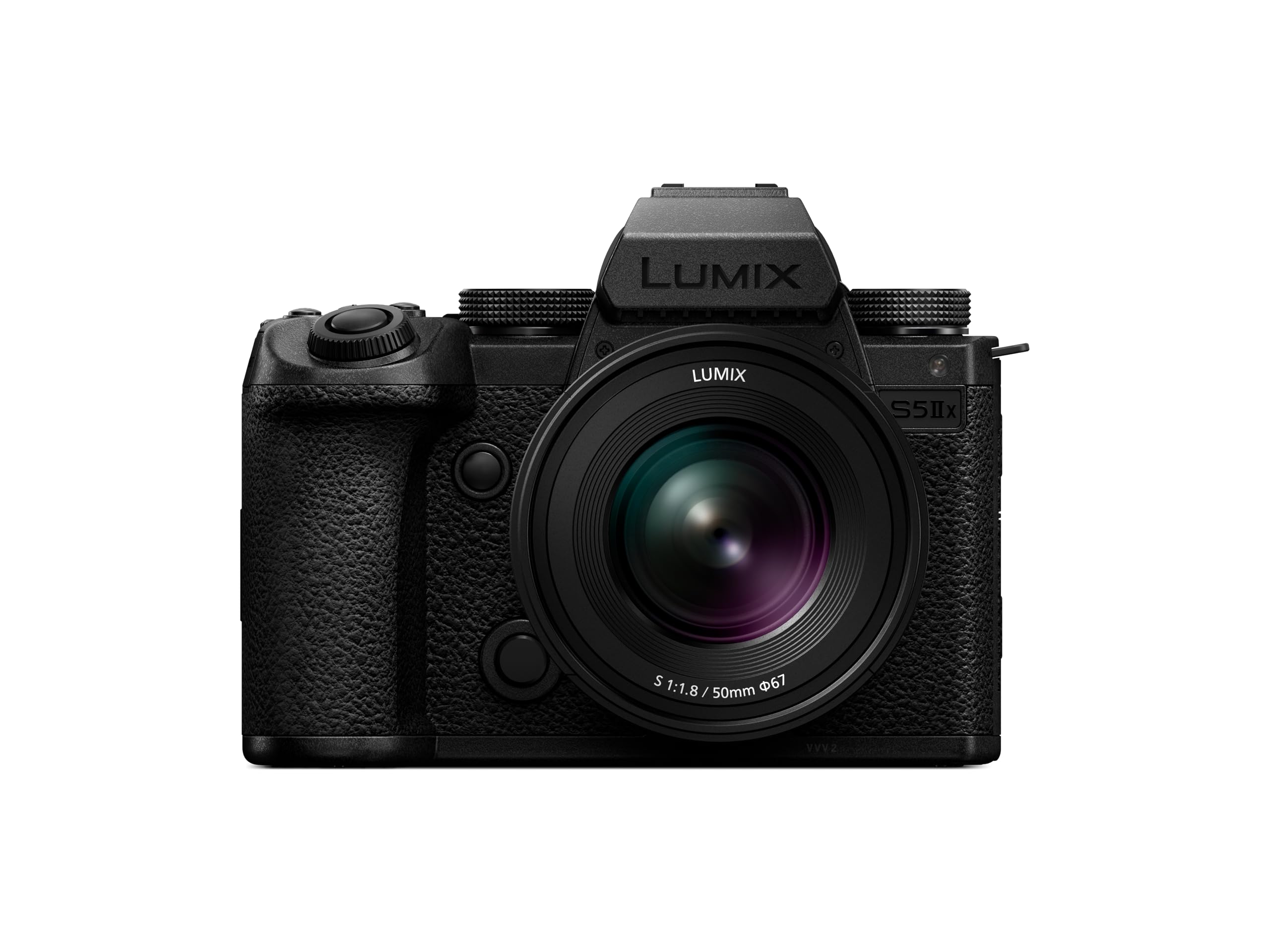
8. LUMIX S5IIX Mirrorless Camera
A fan-cooled full-frame hybrid that records tennis practice as long as the ball keeps moving
If overheating is the biggest risk to a tennis practice session, the S5IIX attacks it head-on. A heat dispersion mechanism combining a small fan and a high-efficiency heat sink delivers unlimited video recording and livestreaming without shutting down — a genuine advantage over the Sony a6700, which buyers report overheating around 40 minutes. The 24.2 MP full-frame sensor with Phase Hybrid Autofocus and 779 autofocus points tracks players accurately, and walking shots get Active I.S. stabilization support.
Video features are generous. It captures 5.8K Pro-Res internally, 14+ stop V-Log/V-Gamut for high dynamic range, RAW over HDMI, and both wireless and wired IP streaming, with in-camera photo and video color grading. Owners love the full-frame image in a compact body and celebrate the value-for-money — the kit often pairs a 20-60mm and 50mm lens for what a competitor body alone would cost. There’s also a genuine note that the body is famous for in-body stabilization, though the two kit lenses included don’t have optical stabilization.
Two things to know before buying. One owner reported a firmware update removed the Ethernet live stream feature (the highest-quality option) from all S5IIX units, even though it’s still advertised — so if wired streaming is critical to you, verify current firmware behavior. The L-mount lens lineup is also smaller than Sony’s or Canon’s, though it’s growing. This is a camera for someone who wants full-frame, unlimited recording, and doesn’t mind a less-developed ecosystem.
Built For Long Sessions
- Fan and heat sink enable unlimited recording and streaming
- 779 autofocus points with Phase Hybrid tracking
- 5.8K Pro-Res internal and 14+ stop V-Log
- Kit bundles two lenses for value
Trade-offs To Consider
- L-mount lens lineup is smaller than rivals
- Kits lenses lack optical stabilization
- Firmware reportedly removed an advertised streaming feature
Best suited to: Anyone who records long, uninterrupted sessions or livestreams practice and cannot afford a camera shutdown mid-match.
Think carefully if: You want the widest lens selection or wired Ethernet streaming, which may no longer be available on current firmware.
9. Nikon RED Z Cinema Camera

A 6K cinema body so light it disappears on a rig, with audio you never have to fix
This is the professional’s answer to filming tennis. The ZR is the first dedicated cinema camera from the Nikon-RED collaboration, pairing RED color science with Nikon engineering in a 6K full-frame sensor that delivers 15+ stops of dynamic range and Dual Base ISO. For practice footage shot in mixed light, that range is what keeps both the bright sky and the shaded court readable in the same frame, so you don’t lose the far player in shadow. The R3D RAW codec open up the same color space and Log curve RED cameras use. The 4-inch DCI-P3 touchscreen monitor swivels, and the body weighs just 1.18 lbs — light enough to leave on a gimbal or tripod all session.
what separates it from every other pick here is audio. The camera records 32-bit float audio with support for external microphones — the format that captures sound so robustly you can’t easily clip it, which is a real advantage when a ball strike or a grunt needs to come through clean. Owners call it their favorite camera so far, even against DJI, Canon, and Sony cinema bodies, and describe it as easy to use and easy to get the best footage from. It boots fast, has snappy menus, and the large bright screen draws praise.
The catch is more than just a nitpick — it’s a real consideration. 6K R3D files are very large, so you’ll need fast CFexpress Type B storage and a plan for it; one owner noted the ZR shoots 6K at 60fps and flagged the file-size burden honestly. There’s also a serious caveat: some owners encountered a Nikon service advisory for a manufacturing defect that can affect certain serial numbers without warning, and at least one returned their unit after three days for that reason. Check your serial number against any active advisory before buying. At 4.0+ stars, this is the most niche, purpose-built pick here — but nothing else on the list films like it.
The Zoom-Out View: RED color science, 32-bit float audio, and a 6K full-frame sensor in a 1.18 lb body make this the most technically capable camera here for serious film work.
The Critical Check: Some units were subject to a Nikon service advisory for a manufacturing defect affecting certain serial numbers, and 6K R3D files demand fast, high-capacity CFexpress Type B cards.
Only for: Filmmakers and videographers who want RED-grade color, 6K resolution, and broadcast-quality audio and will accept the storage and warranty-serial checks.
Wrong pick if: You want a simple point-and-film camera for casual family practice footage.
Know the Specs
Autofocus Points and Subject Tracking
Autofocus points are the spots across the image where the camera can detect and lock focus — more points generally mean the camera can follow a subject across more of the frame. Phase detection is the fast type that predicts where your player is moving; contrast detection is slower and hunts. The number that matters most for tennis is subject detection: whether the camera recognizes a person and re-locks after they turn. Bodies with dedicated AI processors do this noticeably more reliably than older systems, which is why trackers like the a6700 and S5IIX hold a moving player better than a decade-old DSLR would.
Sensor Size, Crop Factor, and Reach
Sensor size decides two things you’ll feel on the court: how much light the camera gathers and how far your lens reaches. Full-frame sensors (roughly 35mm) collect more light for cleaner evening footage but frame wider, so a given lens reaches less. APS-C crop sensors make a lens reach farther, which is valuable when the player is on the far baseline and you’re filming from the fence. Neither is “better” — full-frame wins on low light, crop wins on reach and price for a given focal length.
Common Questions
Can I film tennis practice with a phone instead of one of these cameras?
Do I need a full-frame camera for filming tennis?
How long can these cameras record before overheating?
Is a camcorder or a mirrorless camera better for tennis practice footage?
Will autofocus actually keep up with a fast-moving tennis player?
How much does a camera for filming tennis practice weigh?
Can these cameras livestream a tennis match or practice?
What memory cards do these cameras use for 4K and 6K video?
Do I need a lens with these cameras or are they ready to film?
Is it worth stepping up to a cinema camera like the Nikon RED ZR for practice footage?
The Bottom Line
For most people filming tennis practice, the cameras for filming tennis practice winner is the Sony Cinema Line FX30 because its 20.1 MP Super 35 sensor and 495-point autofocus deliver cinema-grade results that hold up over long sessions, all backed by active cooling that keeps it recording when other bodies shut down. If autofocus tracking in a compact body is your priority, grab the Sony Alpha a6700 — its dedicated AI processor and 759 autofocus points are built for moving athletes. And for hands-free recording so you can actually watch the match, the XbotGo Falcon is the one to reach for, tracking the action on its own with no subscription required. The FX30’s 4.5+ star score across 500+ ratings makes it the safest bet here.
How we choose
We do not accept paid placement. Every pick is matched to a real buyer and a real use-case; we do not hands-on test units.
Sources
Specifications: manufacturer listings and product documentation. Review insights: verified customer reviews, as of October 2026. Pricing: not shown on this page (it changes often); check the current price via the retailer link.
As an Amazon Associate, Home Digitized earns from qualifying purchases. This does not affect which products we feature.