
Disclosure: This post contains affiliate links. As an Amazon Associate I earn from qualifying purchases, at no extra cost to you. Learn more
Specs are compiled from manufacturer listings and verified buyer reviews and can change over time — please confirm the key details on the product page before buying.
Smoke is two problems wearing one coat. The visible haze is particles, and the smell that soaks into curtains and cushions is gas. An air purifier only helps with second hand smoke if it fights both at once — a HEPA-grade particle filter for the haze, and real activated carbon for the gas. A machine with a thin carbon sheet will clear the air and leave the smell behind. That single distinction decides almost every pick below.
This guide is built by comparing the manufacturers’ published specifications and the patterns across verified customer reviews, so you get each pick’s real strengths and trade-offs instead of marketing spin.
Second-hand smoke never really leaves a room on its own, so the right machine has to run constantly and quietly. Filter cost over years matters as much as the unit, and that is exactly how I ranked these air purifiers for second hand smoke.
Top Picks

How To Choose The Best Air Purifiers for Second Hand Smoke
Second hand smoke is a mix of fine particles and gases, and each half needs a different filter layer. Get the pairing wrong and you buy a machine that clears the haze while the room still smells like an ashtray. Here is what to check before you commit.
Carbon is the layer that actually fights smoke smell
Particles get trapped in the HEPA media, but odor molecules are gas and pass straight through it. Only activated carbon adsorbs them, which is why carbon weight and carbon type are the specs that separate a smoke-capable purifier from a dust-capable one. A honeycomb carbon block and a loose carbon sheet look similar on a listing and behave nothing alike after a month of daily smoke.
Coverage numbers are not all measured the same way
A coverage figure is only meaningful next to the air-change rate it assumes. A rating based on one air change per hour describes a much larger room than the same unit can refresh five times per hour. For smoke you want the faster number — the one that tells you how quickly the unit turns the room over when the air is visibly dirty. Look for the CADR score (a lab-measured airflow rating) rather than the headline square footage alone.
Noise and filter cost decide whether it stays switched on
A purifier only works while it runs, and smoke needs constant running. A unit that is unbearable at the speed you need gets turned down to a speed that does nothing. Replacement filter price and interval matter just as much — carbon exhausts long before HEPA does in a smoking household, so check how often the carbon layer needs swapping and what a set costs.
Side-by-Side Comparison
| Model | Best For | Room Coverage | Filters | Weight | Amazon |
|---|---|---|---|---|---|
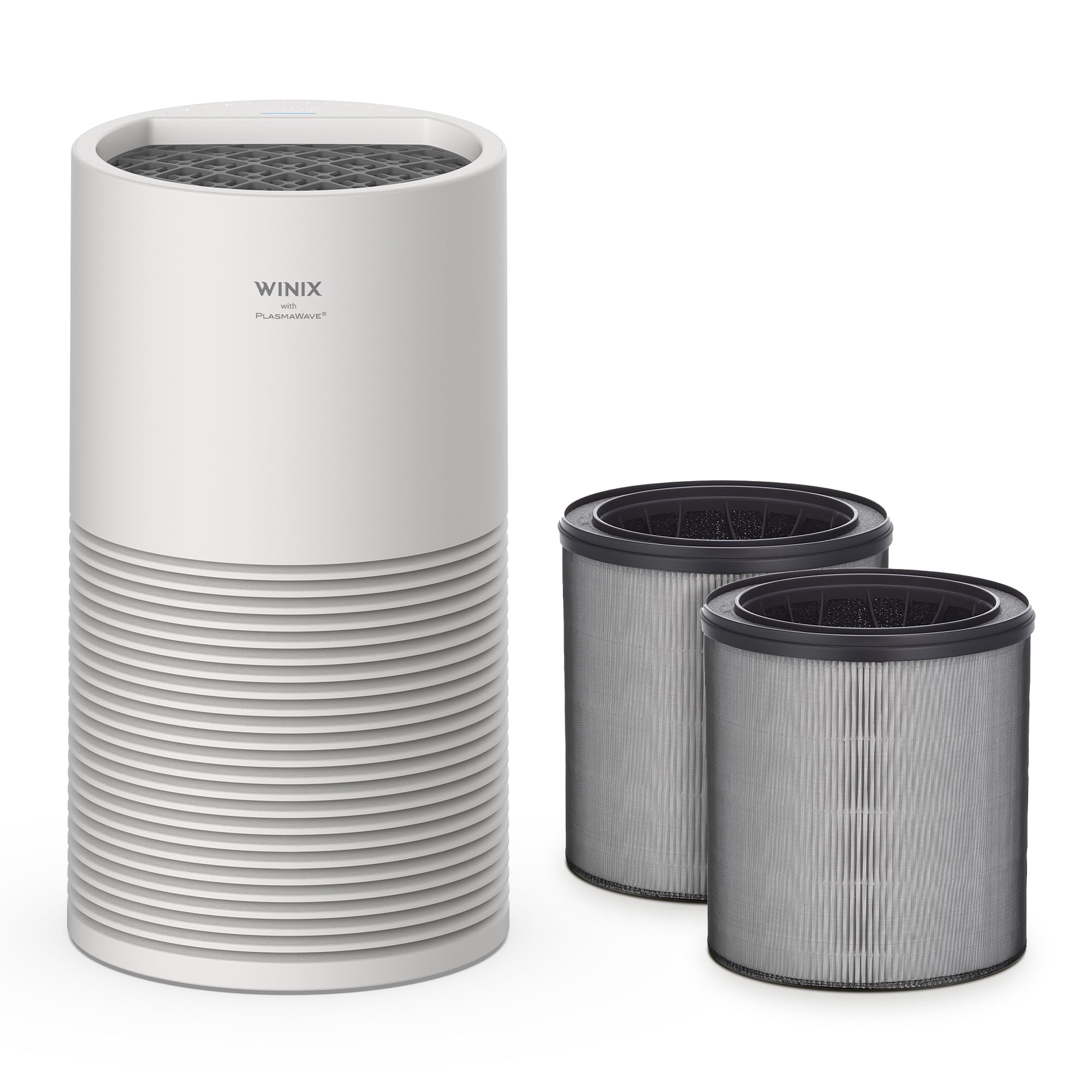
| WINIX AT40★ Best Overall | Whole-home smoke and odor, running all day | 1,968 sq ft in 1 hr | True HEPA + carbon, 2 filter sets included | 8.35 lb | Amazon |
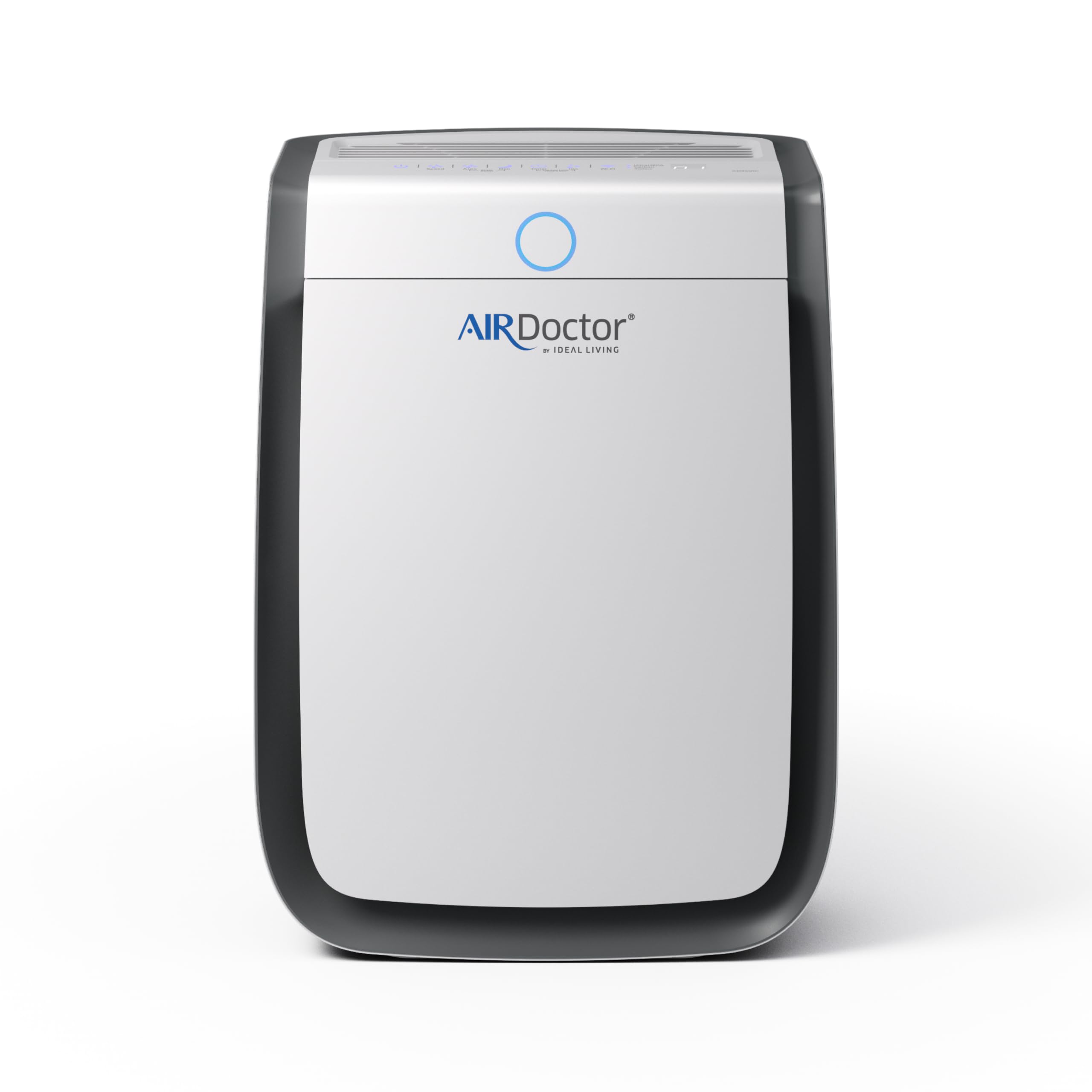
| AirDoctor AD3500Premium Pick | Very fine smoke particles | 2,520 sq ft in 1 hour | Pre-filter + premium carbon + UltraHEPA | 24 lb | Amazon |
| WINIX 5510Best for Large Rooms | Large rooms, heavy odor loads | 1,882 sq ft in 1 hr | Fine mesh pre-filter + high-deodorization carbon + True HEPA | 13.3 lb | Amazon |
| DBFIT AP2410 | Tight budgets and small apartments | 2,180 sq ft in 1 hr | Nylon pre-filter + HEPA + honeycomb carbon | 7 lb | Amazon |
| DREO DR-HAP009 | Bedrooms and single smoky rooms | 245 sq ft at 4.8 ACH | 3-in-1 pre-filter, HEPA, carbon | 158 CFM CADR | 6.86 lb | Amazon |
| LEVOIT Vital 100S-P | Pet homes that also deal with smoke | 222 sq ft at 4.8x per hour | Washable pre-filter + 3-stage, Smoke Remover option | 8.6 lb | Amazon |
| COWAY AP-1512HH | Long-term ownership without app fuss | 1,748 sq ft in 60 min | Washable pre-filter + deodorization + HEPA (4 stage) | 12.3 lb | Amazon |
| PuroAir 240 (2-pack) | Two rooms at once | 1,000 sq ft in one hour | Pre-filter + HEPA + activated carbon | 7.3 lb | Amazon |
| ORANSI mod+ | Open-plan rooms and bird or pet dust | 563 sq ft every 12.5 min | 363 CADR | Single 3-in-1 HEPA + carbon filter | 23 lb | Amazon |
| IQAir GC MultiGas XE | The heaviest gas and chemical loads | 1125 sq ft | HyperHEPA + carbon + gas cartridges + post-filter sleeves | 29 lb | Amazon |
Detailed Reviews
1. WINIX AT40 Air Purifier
Our pick — 4.5+★ from 11,500+ verified ratings; the strongest balance of quality and price.
The one that arrives with two years of filters already in the box.
The most expensive running cost in a smoking household is not the purifier — it is the filters you burn through month after month. This one ships with two 360° All-in-One True HEPA Filter Sets, which takes that early replacement sting off the table. It also moves serious air: an AHAM Verified 410 sq ft rating, and it cleans rooms up to 1,968 sq ft in 1 hour, 984 sq ft in 30 minutes, and 656 sq ft in 20 minutes.
Winix rates its True HEPA layer at capturing 99.99% of airborne particles including pollen, dust, smoke, and pet dander, as small as 0.3 microns. The digital display and color-coded LED show air quality as Good (Blue), Fair (Amber), or Poor (Red), so when someone lights up you can watch the indicator shift in real time. It also connects to the Winix Smart App over WiFi, so you can crank the fan from another room before you walk in.
On auto, the sensor reacts to gases and temperature rather than particles, so for smoke you should set the fan manually. The real strength is the long-run setup. Buyers who put one in a room with a smoker keep it running and forget it — one owner reports the color-coded sensor flipping to orange the moment a door opened or food hit a hot pan. It is the crowd favorite here at 4.5+ stars across 11,000+ ratings, and unlike the DBFIT below, it is an extra-large-room machine that also comes with a built-in odor-reducing carbon layer and a WiFi app.
What earns it the top spot
- Two complete 360° True HEPA filter sets included, covering roughly two years of filtration
- Cleans 1,968 sq ft in 1 hour and 984 sq ft in half that time
- Captures 99.99% of airborne particles as small as 0.3 microns
- Color-coded Good/Fair/Poor display plus Winix Smart App control over WiFi
Where it asks patience
- Auto mode reads gases and temperature, not particles, so smoke needs manual fan speed
- It stands 19 inches tall and weighs 8.35 pounds — over 19% heavier than the DBFIT AP2410
Reach for it if: you want a long-coverage unit that comes with its own filter supply and a monitor to tell you when to act.
Look elsewhere if: you need something pocketable for a single small room — this is a full-size machine.
2. AirDoctor AD3500 Air Purifier
Built for households where the smoke gets everywhere and the dust follows.
If you want the smallest particles gone first, this is the machine that goes furthest down the scale. Its UltraHEPA filtration is rated to capture 99.99% of airborne particles at 0.003 microns, and it cleans 630 ft² in 15 minutes, up to 2,520 ft² in 1 hour. That is the largest one-hour coverage figure in this whole lineup — ahead of both the ORANSI mod+ and the IQAir GC MultiGas XE on the same measure.
Behind that filter sits a premium activated carbon stage made with activated carbon and potassium permanganate, designed to reduce toxic gases, odors, pet smells, cooking fumes, gas emissions, wildfire smoke, and VOCs. Filters roll over on a schedule rather than a sensor: carbon every 6 months, UltraHEPA every 12 months. FSA and HSA eligibility means you can put pre-tax dollars toward it.
The trade-off is cost of ownership and noise at the top end. Filters are not cheap if you run it constantly, and high speed is loud enough to notice. The rest of the time it is genuinely unobtrusive — one owner describes it kicking into high gear for three or four minutes when popcorn goes in, then settling back to near silence. Owners with a house full of animals describe the dust problem dropping off sharply, one owner of a pet-heavy home says dusting dropped from constant to every two weeks. At 4.5+ stars it holds the same score as the WINIX AT40, but it weighs 24 pounds — nearly three times the DBFIT AP2410, so pick your spot before you set it down.
Where the money goes: a filtration ceiling nobody else here matches, paired with a carbon stage designed for chemical-sized gases rather than just odor.
The recurring gripe: filter cost. Run it around the clock and the replacement schedule gets real.
Suits: anyone in a heavy smoke or high-dust household who wants the finest-particle capture available in this lineup and can budget for annual filters.
Skip if: you want a light, glance-and-forget unit — this one is 24 pounds and wants a fixed position.
3. WINIX 5510 Air Purifier
Four filter layers, a carbon stage built for odor, and a sensor that reacts to cooking smoke.
Where the AT40 leans on included filters and app convenience, this one leans on odor chemistry. Its Advanced Odor Control Carbon Filter is designed to reduce VOCs and household odors from cooking, pets, and smoke, and the washable fine mesh pre-filter takes the big particles before they ever reach it. Coverage is AHAM Verified at 392 sq ft, with a one-hour rating of 1,882 sq ft — that puts it ahead of the COWAY AP-1512HH in raw room size, though the two sit close in practice.
Winix True HEPA captures 99.99% of airborne allergens including pollen, dust, smoke, and pet dander as small as 0.3 microns, and the fan drops to 23.5dB on its slowest speed. Sleep Mode flips on automatically when the room darkens and hands the unit back to Auto Mode the moment light returns. Sensors adjust fan speed in real time, and the Winix Smart App handles remote control.
What settles it for smoke is how the carbon holds up. Owners run these through thick cooking sessions and report the smell gone by the time the meal is plated, and this model gets the same treatment long term — one owner reports a 340 sq ft bedroom lost its carpet smell in two days. It is heavier than the AT40 at 13.3 pounds, and the app has drawn scattered complaints about lag, which matters less when the unit runs on its own schedule anyway. Filter cost is where it wins hearts: buyers report carbon and HEPA sets landing cheaper than most rivals, and one keeps two units running on Medium overnight without touching a button.
Why smoke households like it
- Four stages: washable mesh pre-filter, high-deodorization carbon, True HEPA, and an ionizer you can switch off
- 1,882 sq ft in 1 hour, 941 sq ft in 30 minutes, 627 sq ft in 20 minutes, 470 sq ft in 15 minutes
- Drops to 23.5dB on the lowest speed, with light-activated Sleep Mode
- Smart sensor adjusts fan speed as air quality changes
What to plan for
- The app has drawn complaints about lagging — you do not need it, but the sensor-driven mode is what many buy it for
- High-deodorization carbon is the layer that needs the closest eye on the replacement schedule
Pick it if: you want a large-room unit with a carbon stage tuned for odors and a sensor that reacts to cooking without touching a dial.
Not for you if: you want a compact bedside unit — this stands over two feet tall.
4. LEVOIT Air Purifier

The only pick here that sells a filter built specifically for smoke.
Levoit lets you choose your filter for the problem you actually have. The Smoke Remover Filter addresses smoke from wildfires and other particulates, while the Toxin Absorber Filter specializes in smog, toxins, and VOCs (volatile organic compounds — chemicals that can off-gas from paint, cleaners, and furniture) — so when smoke is the target, you can buy the right cartridge instead of accepting a general one. The stock setup is a 3-stage system with a washable pre-filter and an activated carbon layer rated to help remove pet odors, fumes, and VOCs.
Performance numbers: AHAM Verifide to purify air 4.8x per hour in rooms as large as 222 ft², and once per hour in areas up to 1,073 ft². Filtration efficiency is listed at 99.97% for fine particles sized 0.1-0.3μm. The wide U-shaped air inlet traps airborne pet fur and larger particles, and Sleep Mode quiets the fan to 25dB while a light sensor dims the display in a dark room.
What owners come back to is how the pre-filter does the dirty work. Rinsing it under a tap lifts off the visible catch — dander, fur, dust — which stretches the HEPA (a high-efficiency filter that traps fine particles) and carbon behind it. One owner with six cats watched the app flag bad air from a burnt grilled cheese and had the smoke and smell gone in half an hour on the highest speed. The trade-off is room size. At 222 ft² for the quick turnover, this is a bedroom and small-office unit, not an open-plan one, so a big smoky living room needs more than one. It runs on Alexa and Google Assistant through the VeSync app, and with 4.5+ stars across 11,000+ ratings it is among the most-proven picks in this lineup.
Why it holds its place: the only unit here with a filter you can buy purpose-built for smoke, plus a rinse-out pre-filter that keeps the expensive layers alive longer.
Size it right: 222 ft² at full turnover is honest for a bedroom or small office — a large open room will need two.
Go for it if: you want the option of a smoke-specific filter and you are cleaning a bedroom or small office.
Think twice if: you need one unit to cover a large open-plan space — this one is sized for smaller rooms.
5. COWAY AP-1512HH Air Purifier
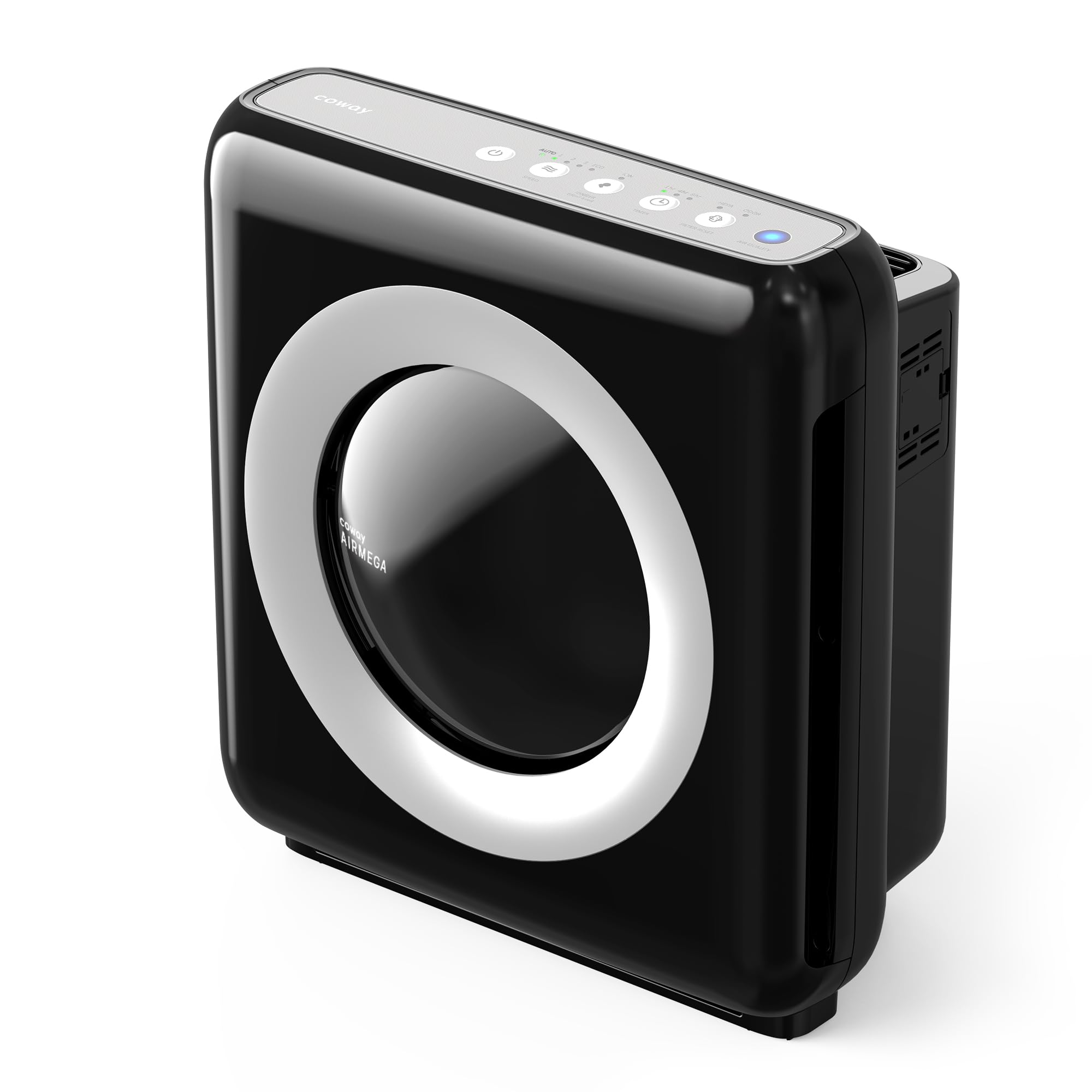
No app, no WiFi, no gimmicks — just four filtration stages and a warranty.
The Mighty AP-1512HH has been on the shelf for years, and its draw is simplicity. A four-stage system runs a washable pre-filter, a deodorization filter, a Bipolar Device, and a HEPA filter rated to reduce 99.97% of 0.3 micron particles including pollen and other allergens, and to reduce volatile organic compounds and odor. Coverage is designed to clean spaces up to 1,748 sq ft in 60 minutes, putting it close to the WINIX 5510 on room size.
The pollution sensor feeds a display with brightly colored LED that shows air quality in real time, and you can switch the light off at night. Filter alerts tell you when the filters need changing and when the pre-filter needs a rinse. There is no WiFi and no app, which for some buyers is the point — nothing to set up, nothing to lose a connection to.
Ownership cost is where it earns its reputation. The pre-filter catches hair and dust and vacuums clean, and the disposable filters roll over on a slow schedule, which is why owners keep these running for years. The recurring complaint is not performance but the price of the unit against how much plastic it is wrapped in — it feels like less machine than the money suggests. It has been a recurring recommendation from independent review outlets for years, and owners of multiple units describe a house full of pet hair and hay smell disappearing.
Where it wins quietly
- Four filtration stages including a deodorization filter and a Bipolar Device
- Cleans up to 1,748 sq ft in 60 minutes
- Washable pre-filter vacuums clean and stretches the filter schedule
- 3-year warranty backed by a manufacturer that has made this model for years
What it does without
- No WiFi and no app — you control it at the unit, not from your phone
- The body feels like less machine than the outlay suggests
Best for: buyers who want proven filtration, a washable pre-filter, and no app to maintain.
Look past it if: remote control or phone monitoring is on your list — this one has neither.
6. DREO DR-HAP009 Air Purifier
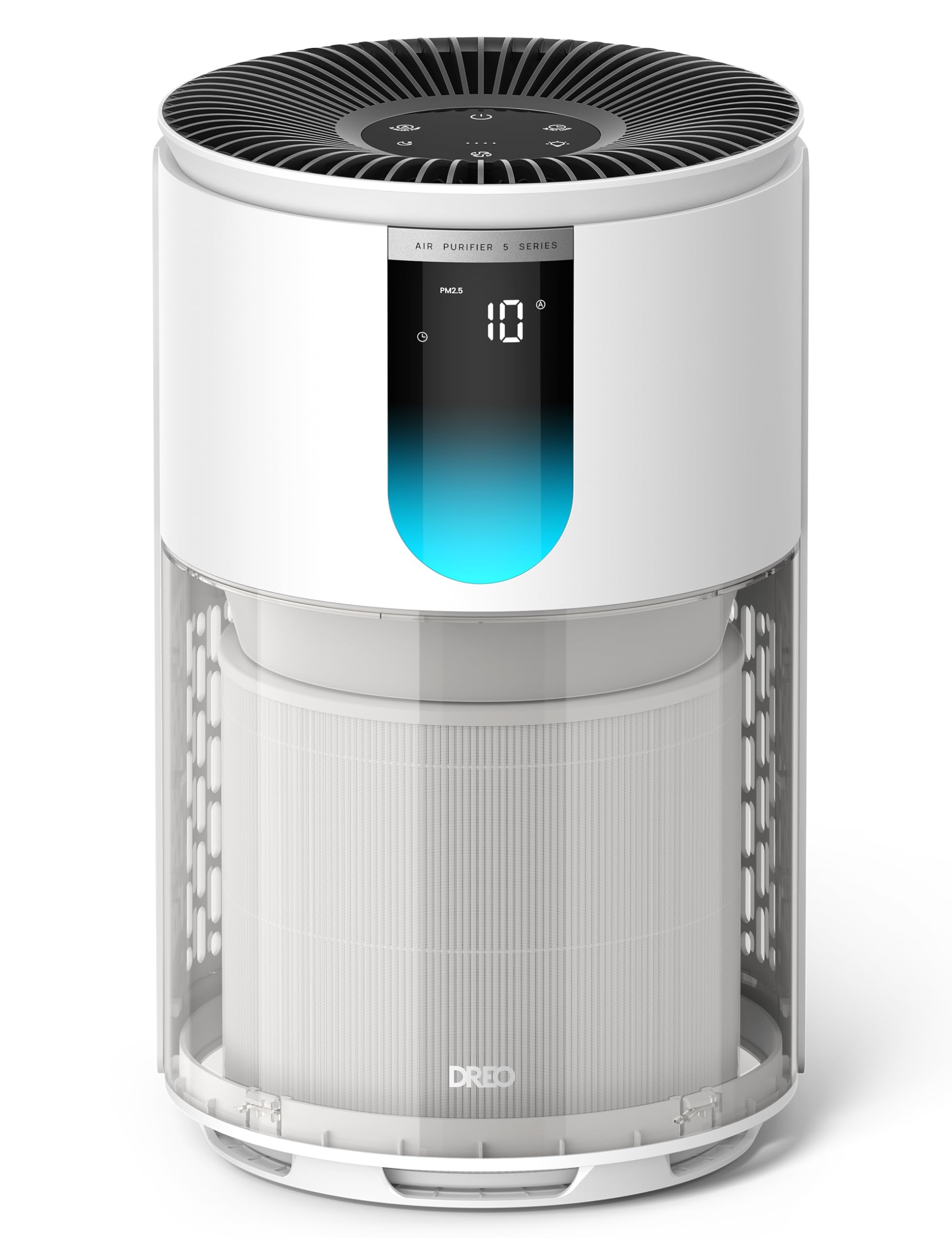
The one where the smoke reading tells you exactly how bad it just got.
The DREO displays its PM2.5 reading (the count of tiny smoke and dust particles in the air) as a live number from 1 to 999, and that is the feature that earns it a place in this list. Smokers do the math before they hit the fan speed — if the number is climbing, it is time for Turbo. AHAM Verified performance (tested by the Association of Home Appliance Manufacturers) backs the number with a CADR of 158 CFM (cubic feet per minute — how much clean air it pushes out), refreshing the air every 12.4 minutes in rooms up to 245 sq ft at 4.8 air changes per hour, or covering up to 1,176 sq ft on a single change per hour.
Three filter layers handle the work: a pre-filter, a high-efficiency filter, and an activated carbon layer to capture PM2.5, pollen, dust, and smoke while helping reduce household odors. A TurboPure design pairs a large intake with 360° spiral airflow, and a bottom air inlet with a spiral grille keeps noise down. It runs on an efficient BLDC motor and is ENERGY STAR certified, drawing roughly 162 kWh annually.
What draws people to this model is how quickly it wipes the slate clean in a small space. In a ventilated bathroom where someone smoked, the PM2.5 reading dropped from over 600 to 2 in about a minute, which is what the 245 sq ft figure means in practice. The catch is exactly that number — this is a small-to-medium-room machine, not an open-plan one, and it needs Turbo to get that fast. Auto, Turbo, Sleep, and Normal modes cover the rest, with sleep mode killing the display light entirely. At 4.5+ stars it trails the WINIX AT40 and the LEVOIT slightly, but it is the one to watch when the smoke reading is your trigger.
It suits: a bedroom, office, or single smoky room where you want to see the number fall.
It won’t suit: a large open-plan space — the coverage tops out at 245 sq ft at full turnover.
7. PuroAir 240 Air Purifiers 2PK
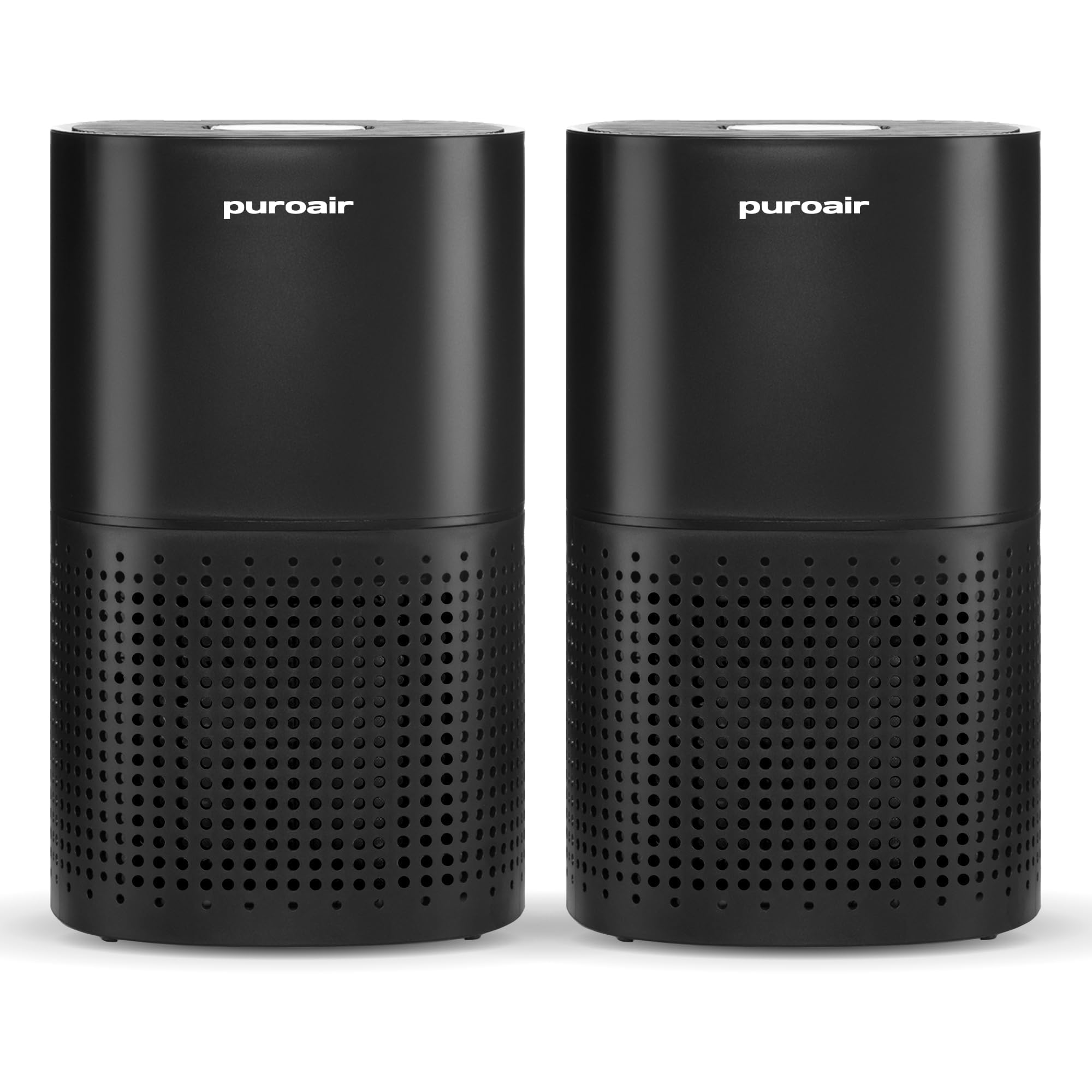
Two purifiers instead of one, for the room the smoke starts in and the room it travels to.
Smoke drifts, so covering two rooms usually means buying two units. This bundle handles that in one purchase, and each one cleans rooms up to 1,000 sq ft in one hour. PuroAir uses a three-layer system — a pre-filter, a HEPA filter, and activated carbon — rated to filter up to 99.9% of pollutants including dust, pollen, smoke, pet dander, and VOCs. The carbon layer is what deals with the lingering smell rather than the haze.
A smart particle sensor watches the air and increases power when it senses polluted air, which is the behavior you want when someone lights up in a room you are not standing in. Sleep mode keeps it running quietly overnight, and the unit is designed to run 24/7. The maker partners with the American Lung Association and states over 1 million families use PuroAir under a 2-year warranty.
Owners describe a fast turnaround in real conditions. One buyer running units in a basement and living area of an old house reported the air cleaner and a stuffy nose gone in 15 minutes — a good illustration of what 1,000 sq ft of coverage does in a normal room. The caveat is the indicator lights, which are bright enough to bother children at night in one home; sleep mode dims the display but this is the one detail to know before you put a unit in a child’s room. At 4.5+ stars across 19,000+ ratings, this is the volume option for two rooms at once.
The case for the pair: two complete purifiers for the price tier of many single large-room units, each with a particle sensor and sleep mode.
Before you commit: bright indicator lights have been called out as disruptive in a child’s room — plan the placement.
Worth it for: a smoker’s room plus the bedroom downstream of it, run together around the clock.
Not the pick if: you need one unit with a huge single-room number — this pair works per room rather than as a single open-plan machine.
8. ORANSI mod+ Air Purifier

A single filter that lasts a year and turns a room over every 12.5 minutes.
One filter, one replacement a year, and a 363 CADR score. The ORANSI mod+ is AHAM Verifide for CADR and CARB Certified Zero Ozone, and it cleans 563 square feet every 12.5 minutes. For a 563 square foot room, that is a fixed rotation you can plan around. It filters smoke, VOCs, and particles down to 0.02 microns with a 3-in-1 high-efficiency particle filter and carbon stage.
The design is deliberately quiet by omission — minimal lights so sleep is not disturbed — and there is no app to lose. Filter changes are a single cartridge rather than a stack of separate components, and the manufacturer rates it to purify your air up to 12 months, which is the standout spec here. The unit itself weighs 23 pounds and stands 25 inches tall.
Owners who keep a handful of pets or birds have taken to it hardest. Parrot dust and feathers drop off sharply, and one household that started at weekly dusting is down to monthly. The honest caveat is the carbon layer — one owner measured it at roughly a pound of activated charcoal and found it handles light odors only, so a heavy, constant indoor smoke load will need more carbon than this single cartridge supplies. Noise splits opinion too, quiet at low and loud at the top speed.
Standout number: a single easy-to-replace 3-in-1 cartridge rated for up to 12 months of purification, so you swap once a year.
The honest limit: the carbon is sized for light odors — a heavy, constant smoke load outruns one cartridge.
Fits best: an open-plan living space or a pet-heavy, dust-heavy household that wants one annual filter change and no app.
Not the fit if: you need heavy odor and gas handling — the single carbon cartridge is built for light loads.
9. DBFIT AP2410 Air Purifier

The cheapest way in, and the one with the least to lose on filters.
Three things drive up the cost of running a purifier: the machine, the filters, and the electricity. This one undercuts the lineup hard on the machine and attacks the other two directly. The pre-filter is washable nylon that rinses clean in seconds and dries fast, the carbon stage is a honeycomb block, and the DEBFIT AP2410 refreshes spaces up to 2,180 sq ft every hour. That one-hour coverage figure actually edges the WINIX AT40’s 1,968 sq ft — a smaller unit on a bigger headline number, thanks to the wider side air inlets and the three-stage design.
It also packs a cleanable PM2.5 sensor and a 4-color LED with PM2.5 levels on-screen, so smoke shows up as a color change rather than a guess. Sleep mode runs at a whisper-quiet 15dB with the display off. There is a built-in aroma pad with 5 spare pads for essential oil, a child lock, and a 1-12 hour timer. A filter replacement reminder light tells you when the composite cartridge — the honeycomb carbon holds 112.5% more carbon, per the manufacturer — is used up. It is CARB, ETL, DOE, and FCC certified, with no UV light and no ozone generator.
The trade-off is the small footprint versus the big claim. It weighs 7 pounds and measures 6.3 x 12.2 x 15.7 inches, noticeably smaller than the WINIX AT40 at 10.45 x 10.45 x 19 inches, and owners are split on whether it is the right size for their room. The honest answer is that the 2,180 sq ft number reflects a single air change per hour, so a small smoky bedroom is what this is built for. The manufacturer suggests a composite filter change every 3-6 months, which is the trade-off for the low entry price.
Why it punches up
- Washable nylon pre-filter rinses clean and stretches the composite filter’s life
- Cleanable PM2.5 sensor with 4-color LED and on-screen PM2.5 readings
- 15dB sleep mode with the display light off
- Child lock and a 1-12 hour timer for a nursery or bedroom
What the low entry price costs
- The manufacturer suggests composite filter changes every 3-6 months, so running costs build over a year
- At 6.3 x 12.2 x 15.7 inches it is compact, and some owners find it too small for a big room
Buy it if: you are cleaning one small room on a tight budget and want a live PM2.5 number to prove it is working.
Leave it if: you need one machine for a large open-plan space — this is sized for a single room.
10. IQAir GC MultiGas XE Air Purifier
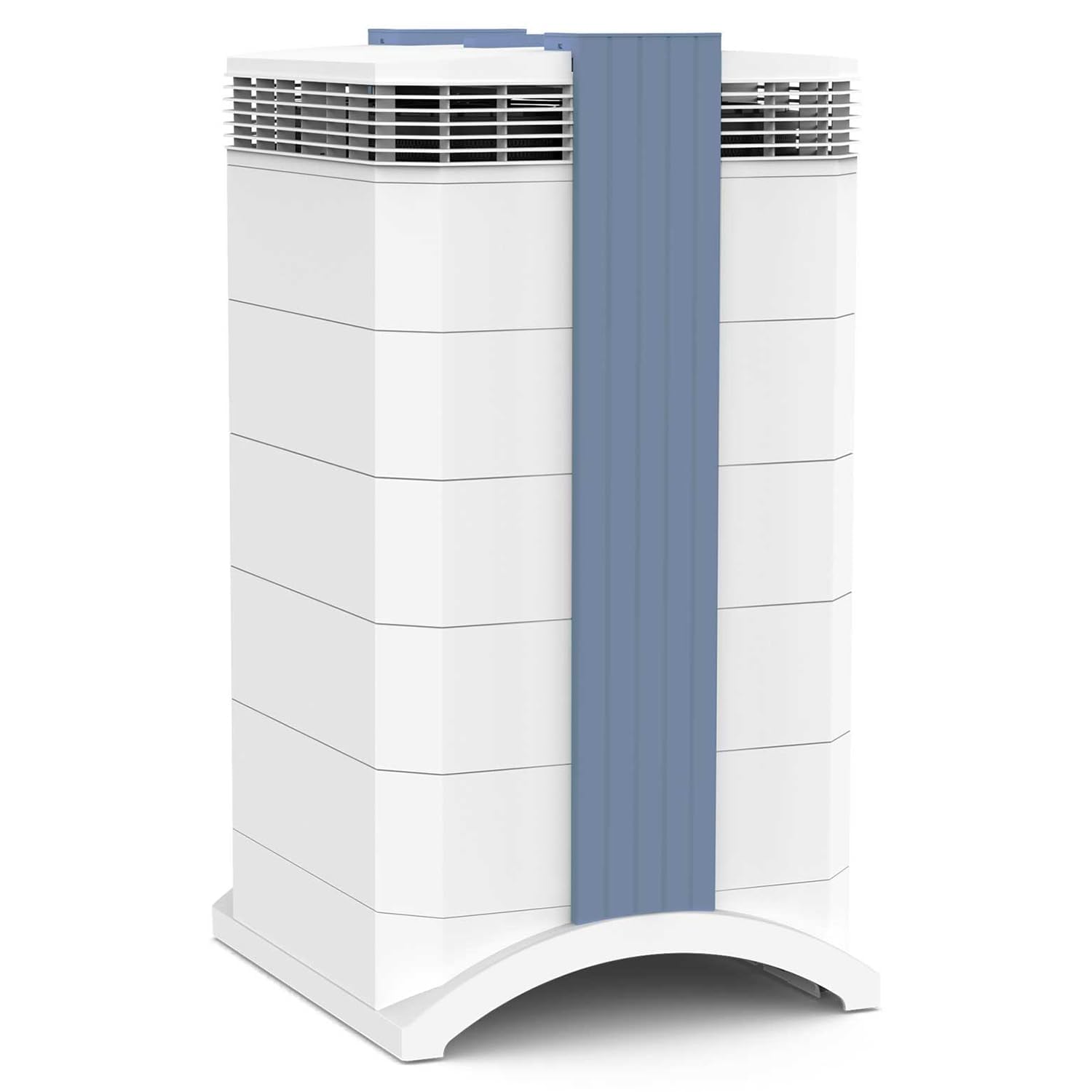
The heaviest gas-handling machine here, built for where smoke never stops.
Most purifiers here treat carbon as one layer. This one treats it as the whole point. The GC MultiGas XE combines HyperHEPA filtration, activated carbon, gas cartridges, and post-filter sleeves, rated to capture 99% of targeted pollutants, including chemicals, tobacco smoke, and odors. It is the only unit here that adds dedicated gas cartridges on top of a carbon bed, and the manufacturer positions it as medical-grade filtration for spaces up to 1125 sq ft.
The fan system is redesigned for lower power draw while keeping airflow up, and the unit links to the IQAir AirVisual app for real-time monitoring and remote control. Smart sensor technology adjusts filtration settings as air quality shifts. It is designed and manufactured in Switzerland, carries a 10-year limited warranty through the manufacturer, and ships in two boxes with possible signature on delivery. It stands 28 inches tall and weighs 29 pounds — the heaviest pick in this guide by a wide margin.
For a home with shared ventilation, soot, or chronic odor, owners mention the difference is stark. One buyer describes a downtown high-rise with shared vents and soot, where dust dropped sharply and turning the unit off for six weeks brought back the dust and stale smell. That is the kind of load this machine is built for, and it is why buyers accept the outlay and the size. The honest catch on this one is expectation-setting. One buyer who measured particulate levels with outside equipment concluded the results did not match the claim, and others flag the noise at the top speed as a real limit. Buyers should weigh the price, the weight, and the running noise against the carbon capacity that no other pick here matches.
What you are paying for: the largest carbon and gas-handling package here, with a Swiss build and a 10-year limited warranty.
What to accept: the highest price and the heaviest body in this lineup, plus a real dispute over how the filtration performs versus its headline claim.
For you if: you have the heaviest, continuous chemical, gas, and smoke load here — shared vents, soot, or unrelenting tobacco — and you want the most carbon you can buy.
Not for you if: you want a light, quiet, easy-to-move unit — this one is heavy and, at high speed, loud.
Know the Specs
CADR (Clean Air Delivery Rate)
A CADR number tells you how many cubic feet of clean air a purifier delivers per minute, tested to a standard rather than estimated. A higher CADR means the machine can turn over a room faster, which is what matters when the air is visibly smoky. Look for a CADR that matches your room size, since a low CADR cannot compensate for a large space no matter how long it runs.
Activated Carbon and Odor Removal
HEPA captures particles; activated carbon adsorbs the gases behind the smell. Carbon performance depends on how much of it there is and how it is packed, which is why a honeycomb carbon block behaves differently from a thin carbon sheet. Carbon exhausts faster than HEPA in a smoking household, so check the replacement interval for the carbon layer separately from the particle filter.
Coverage Numbers and Air Changes
Coverage figures are quoted at a specific number of air changes per hour, usually one. One change per hour in a large room is a light clean; higher turnover is what clears a smoky space. When comparing two purifiers, match the air-change assumption behind each number, not just the headline square footage.
Running Noise and Sleep Mode
Noise is measured in decibels, and a lower figure means quieter operation — a typical quiet bedroom reads around 25dB. Since a smoke purifier usually runs around the clock, a low-speed sleep mode keeps it on through the night without waking anyone. High fan speeds are louder on every unit here, so look at the noise at the speed you will actually use.
Common Questions
Will a HEPA air purifier actually remove second hand smoke?
Do I need an activated carbon filter for cigarette smoke smell?
How big a room can one air purifier handle for smoke?
How often should I change the carbon filter in a smoking household?
Is a higher CADR better for smoke removal?
Can I run a purifier 24/7 in a room where someone smokes indoors?
Do air purifiers with ionizers produce ozone?
Should I place the purifier near the smoker or near the room center?
What is the difference between True HEPA and a HEPA-type filter?
Does a smoke purifier help with wildfire smoke too?
How do I know when the filter is actually done?
The Bottom Line
For most households dealing with second hand smoke, the air purifiers for second hand smoke pick that makes the most sense is the WINIX AT40, because it covers a huge room, reacts to smoke on its color display, and arrives with two full filter sets so the running cost stays low for years. If you need the finest-particle capture and have a heavy, constant smoke load, the AirDoctor AD3500 is the one to reach for. And if you want a live PM2.5 number that tells you the instant the air turns, the DREO DR-HAP009 is the pick for a single smoky room. Whichever you choose, run it continuously and replace the carbon layer on schedule — that is what keeps the haze and the smell from coming back.
How we choose
We do not accept paid placement. Every pick is matched to a real buyer and a real use-case; we do not hands-on test units.
Sources
Specifications: manufacturer listings and product documentation. Review insights: verified customer reviews, as of October 2026. Pricing: not shown on this page (it changes often); check the current price via the retailer link.
As an Amazon Associate, Home Digitized earns from qualifying purchases. This does not affect which products we feature.