
Disclosure: This post contains affiliate links. As an Amazon Associate I earn from qualifying purchases, at no extra cost to you. Learn more
Specs are compiled from manufacturer listings and verified buyer reviews and can change over time — please confirm the key details on the product page before buying.
If you do nails, you already know the real problem in your room is not dust — it is the vapour coming off acrylic monomer, gel top coat, primer and acetone. HEPA alone will not touch that smell. For nail technicians, the filter that matters is the activated carbon stage, because gases and solvent fumes pass straight through a particle filter. This guide looks at nine purifiers that all include carbon filtration, so you are comparing the right machines instead of pretty boxes that only catch hair and dust.
This guide is built by comparing the manufacturers’ published specifications and the patterns across verified customer reviews, so you get each pick’s real strengths and trade-offs instead of marketing spin.
You will see coverage numbers explained in plain terms, which carbon setups actually hold up under daily solvent exposure, and how noise levels affect a client-facing workroom. The list below covers the best air purifiers for nail technicians working in salons, home studios and spare bedrooms.
Top Picks


How To Choose The Best Air Purifiers for Nail Technicians
Nail work produces two different kinds of pollution, and that splits your shopping list in two. Dust from filing and buffing is a particle problem — that is the HEPA filter’s job. Monomer, primer, acetone and gel fumes are a gas problem, and only the carbon layer absorbs those. If you buy on HEPA efficiency alone, you will still smell the acrylic.
Carbon is the filter that earns its money in a nail room
Activated carbon works by trapping gas molecules on its surface, so the more carbon weight a filter holds, the longer it keeps working before it saturates. That is why a thin carbon pad in a cheap unit fades within weeks in a busy station. Look for wording that names what the carbon targets — VOCs, chemical fumes, cooking and smoke odours — rather than a vague “odour filter” line.
Two models here spell out the actual gas chemistry in more detail than the rest. The AirDoctor AD3500 and AD4000 both pair activated carbon with potassium permanganate, a second material that breaks down gases rather than only holding them.
Match coverage to the room you actually work in
Coverage figures are quoted at different time frames, and that changes everything. A unit rated for a large area over a full hour is running a slower air exchange than one rated for a smaller area in fifteen minutes. For a single nail table in a closed room, faster turnover matters more than a big headline number.
Think about noise before you think about looks
You are talking to a client for an hour or more with the machine running a few feet away. A purifier that only stays quiet on its lowest setting is fine — as long as that setting still moves enough air for your room. Check the decibel figure quoted for the quiet mode, and check how the unit behaves when fumes spike and it ramps up on its own.
Filter replacement is a running cost, not a one-off
Carbon is consumed, not cleaned. In a workspace with daily monomer exposure, expect to replace carbon more often than a household would. Before you commit, look at how the manufacturer structures replacements — all-in-one cartridges versus separate carbon and HEPA stages — because that determines both cost and how much downtime you face.
Side-by-Side Comparison
| Model | Best For | Carbon / Gas Stage | Coverage Claim | Quiet-Mode Noise | Amazon |
|---|---|---|---|---|---|
| WINIX 5510★ Best Overall | Everyday salon stations | High-deodorization carbon filter | 1,882 sq ft in 1 hr | 23.5 dB on lowest speed | Amazon |
| GermGuardian AC4880WCompact Pick | Slim corners and small rooms | Activated carbon filter | 743 sq ft in 1 hr | — | Amazon |
| InvisiClean Aura IIBest Value | Small studios on a budget | Activated carbon pre-filter plus ionizer | 1,094 sq ft at 1 change/hr | — | Amazon |
| Resiners Purair | Resin and acrylic craft benches | H13 HEPA and resin-fume purifying filter | Up to 158.76 ft² | — | Amazon |
| AirDoctor AD3500 | Busy multi-station salons | Activated carbon with potassium permanganate | 2,520 sq ft in 1 hr | — | Amazon |
| AirDoctor AD4000 | Large open studio floors | Activated carbon with potassium permanganate | 2,776 sq ft in 1 hr | — | Amazon |
| Rabbit Air A3 SPA-1000N | Solvent-sensitive technicians | Toxin Absorber plus activated carbon | 1,070 sq ft | 20.3 dBA on lowest setting | Amazon |
| Coway Airmega ProX | Whole-salon coverage | Active carbon filter with washable pre-filter | 4,253 sq ft in 60 min | — | Amazon |
| IQAir GC MultiGas XE | Chemical-heavy professional rooms | Activated carbon plus gas cartridges | Up to 1,125 sq ft | — | Amazon |
Detailed Reviews
1. WINIX 5510 Air Purifier
Our pick — 4.5+★ from 32,000+ verified ratings; the strongest balance of quality and price.
True HEPA plus a high-deodorization carbon filter, with an auto sensor that ramps up as monomer fumes build.
Start with the number that decides whether this unit can keep up with a nail table: 1,882 square feet in one hour, with 941 square feet done in 30 minutes and 470 square feet in 15. That is the room turnover metric, meaning how fast the whole air volume gets pulled through the filters. For a single nail station with the door closed, that is genuinely quick recovery after a monomer-heavy set.
What actually handles the fumes is the high-deodorization carbon filter, which the maker states reduces VOCs — the gases that evaporate out of acrylic liquid, primer and acetone. It sits ahead of the True HEPA layer, which captures 99.99% of airborne allergens including pollen, dust, smoke and pet dander as small as 0.3 microns, so dust from filing gets caught as well. There is also a washable fine mesh pre-filter that grabs the largest debris first, which in a nail room means filings and lint rather than hair.
The everyday usability is where this one separates from the pack. A built-in air quality sensor watches the room and adjusts fan speed on its own, so the machine ramps up while you are working wet and eases back once the smell clears. On its lowest speed it runs at 23.5 dB — near silent, comfortably below normal conversation — and the sleep mode activates automatically when the room darkens. It is also AHAM Verified and UL Certified.
Under the Winix Smart App you can monitor and control it remotely, which is useful if your station is in a separate room at home. Being a 4.5+ rated unit with tens of thousands of owners, the review record is deep, and the consensus praise lands on quiet operation and strong odour removal. One buyer measuring a 12x12x9 ft room reported: “Turbo achieves ~11-12 air changes/hour.” The recurring practical note is that replacement filters are a real ongoing cost and that the app connection is 2.4GHz Wi-Fi only.
What earns it the top slot
- True HEPA plus high-deodorization carbon, so it handles filings and fumes together
- 1,882 sq ft in one hour coverage, with a 470 sq ft fifteen-minute figure for fast recovery
- 23.5 dB on the slowest setting and automatic sleep mode
- Auto sensor adjusts speed by itself as fumes build and fade
- Washable fine mesh pre-filter catches the bulky debris first
Worth knowing before you buy
- Smart App runs on 2.4GHz Wi-Fi only
- Carbon filters are consumables, so budget for replacements on a fume-heavy schedule
- Turbo is the loud setting — fine between clients, not during a conversation
Reach for this if: you run one or two nail stations in a closed room and want carbon and HEPA handled by a single machine that manages itself.
Look elsewhere if: your workspace is a big open floor — you will want the higher-volume Coway or AirDoctor picks instead.
2. GermGuardian HEPA Indoor Large Room Air Purifier AC4880W
At 6 x 9.5 x 22 inches and 9.1 pounds, it tucks beside a nail desk where a full-size purifier will not fit.
This is the size story that wins here. At 6 x 9.5 x 22 inches and 9.1 pounds, the GermGuardian takes up a fraction of the footprint of the WINIX 5510, which measures 11 x 15.9 x 25.2 inches and weighs 13.3 pounds. If your nail station is squeezed into a corner of a home studio or a rented booth, that slim profile and lighter carry weight decide whether the machine fits at all.
Filtration gives you the same two-stage logic: a protective HEPA filter capturing 99.97% of particles as small as 0.3 microns for dust, pollen and pet dander, plus an activated carbon filter that traps and absorbs volatile organic compounds and large particles while reducing odours from smoking, cooking and pets. There is also an optional UV-C light — a lamp the maker says helps reduce airborne particles — which is independently verified Zero Ozone.
The coverage is split into two honest figures: small rooms of 153 square feet get a full air change every 12.5 minutes, while large rooms of 743 square feet get one every hour. An Intellisense monitor measures air quality 60 times per minute using a PM 2.2 sensor and raises fan speed when it detects poor air. The unit is CARB Certified, ETL Certified and Zero Ozone Verified.
Owner feedback is strongly positive on effectiveness and build quality, with cooking odours clearing reliably and setup taking minutes. Two things deserve honesty. Noise is genuinely split — quiet for some, a little loud for others on the higher settings. And a small number of units have arrived with a lingering chemical smell, or in rare cases stopped purifying months in. Neither is the norm, but if you are highly sensitive to new-plastic odour, air the unit out before it goes in your workspace.
Where it fits best: a narrow booth or home studio with limited floor space, where 153 square feet of fast turnover covers the working area around a single table.
The trade-off: the 743 sq ft hourly figure is a slower exchange than the WINIX’s, so in a larger room the carbon has more air to work through and you should expect it to run harder for longer.
Best for: nail technicians working in tight booths who need a purifier that disappears into a sliver of floor.
Not ideal for: wide open spaces or anyone who wants the carbon stage to keep pace with a big room’s air volume.
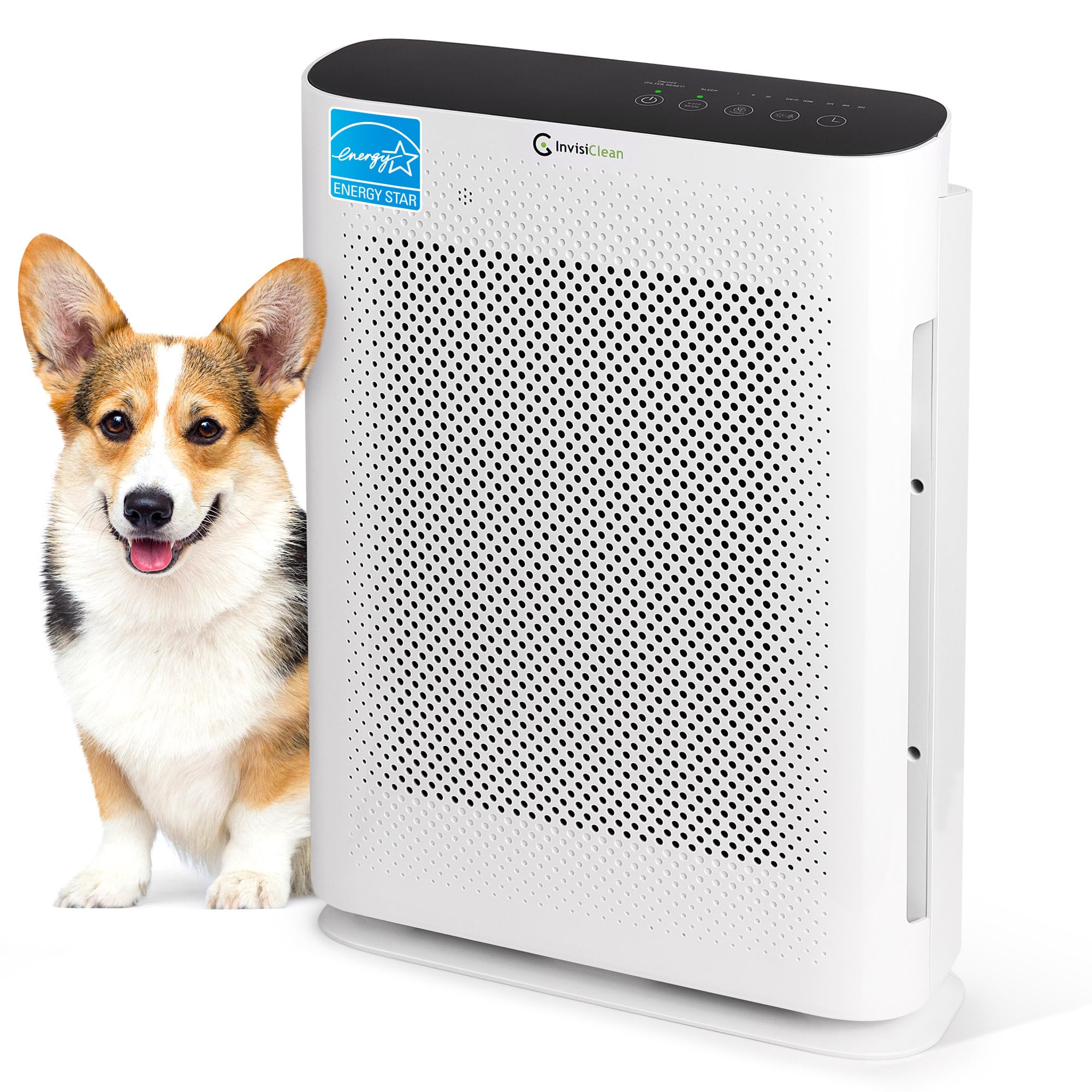
3. InvisiClean Aura II Air Purifier
Four filtration stages — H13 HEPA, activated carbon pre-filter, ionizer and UV-C — in a 6.25-inch-wide body.
If your nail setup shares space with a bedroom, this is the one to look at first. It measures just 6.25 x 12.34 x 17.75 inches and weighs 8.9 pounds, so it sits against a wall without eating into your working area. Coverage runs to 1,094 square feet at one air change per hour, or 228 square feet at 4.8 air changes per hour, with a CADR of 171 CFM.
The filtration is a genuine four-in-one: an H13 True HEPA filter rated to capture 99.985% of particles, an activated carbon pre-filter, an optional ionizer, and a UV-C light. That carbon pre-filter is the part that matters for your fume problem, and it is replaceable on its own rather than bundled into an expensive cartridge. The Aura II is CARB Certified and SGS tested, and the maker states it eliminates 99% of Influenza A H1N1, E. Coli, Staph. Aureus and Aspergillus Mold from the air.
Running costs are unusually low for the class. A low-EMF DC motor is stated to deliver double the air output using up to 82% less electricity, and one owner measured the unit drawing 15 watts at the number-two speed. Sound is controlled in four steps — Low, Medium, High and Turbo — with the lowest setting described as barely audible, so you can keep it running through a full client appointment.
Owners consistently report real dust capture: heavy dust and dog hair filling the pre-filter within days, and cooking or smoker odours clearing from a master bed and bath in under an hour. The honest caveats are twofold. Turbo moves serious air but is loud enough that conversation gets difficult, so it is a between-clients setting rather than a during-service one. And the stock filter does not fully neutralise strong cat-litter odour in some reports — a reminder that carbon has limits and heavy solvent loads will shorten its useful life.
Why it lands here: replaceable carbon pre-filter, four speed steps, and a footprint small enough for a shared room make it a smart entry point for a home nail studio.
Standout strengths
- Separate carbon pre-filter you can replace without buying a whole cartridge
- 228 sq ft at 4.8 air changes per hour is fast turnover for a single station
- 15W draw reported at speed two keeps it cheap to leave on all day
- Lowest setting is quiet enough to work through
Honest limits
- No timer and no smart control
- Turbo is loud for a client-facing room
- Carbon pre-filter life shortens quickly with daily monomer exposure
The verdict: a compact four-stage machine that keeps a home nail room’s dust down and its running cost low — the strongest value in this lineup.
skip it if: you need app control or timer scheduling built in.
4. Resiners AirPure Air Purifier with H13 True HEPA Filter
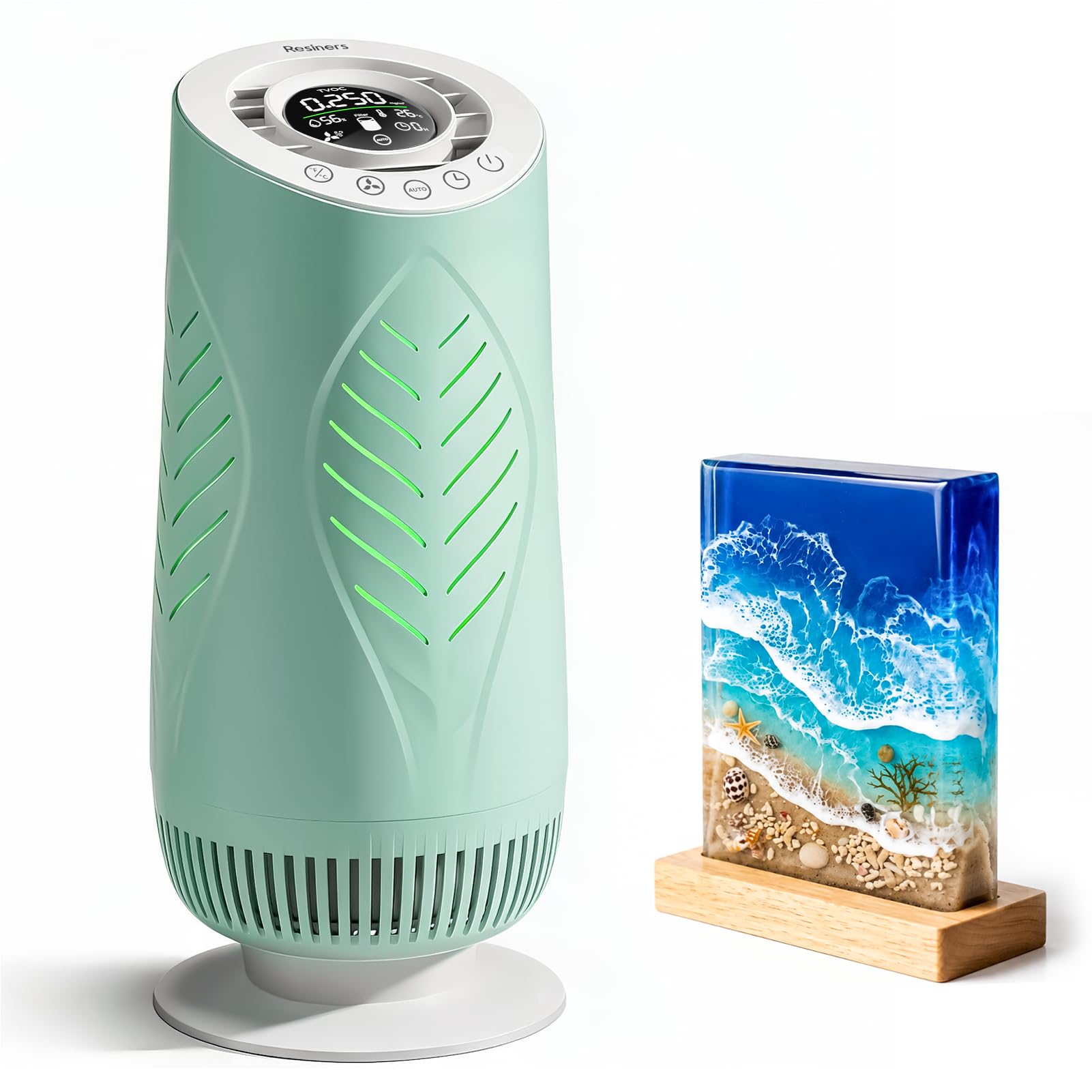
Designed for resin benches, so it targets the same evaporating solvent gases as acrylic monomer and primer.
This is the only purifier here designed from the ground up for a chemical craft bench, and the overlap with nail work is obvious. The maker states it removes 83.59% of harmful VOCs from epoxy resin fumes and that it was SGS-certified and tested in high-VOC environments. Acrylic monomer, primer and gel top coat are the same category of problem — evaporating solvent gases rather than particles.
Filtration runs two stages. The pre-filter captures large particles like dust, fibers and hair — filings and lint, in your case. The H13 HEPA and resin fumes purifying filter then removes 99.97% of airborne particles as small as 0.3 μm while decomposing harmful VOCs from resin fumes. Running costs are transparent: up to 2000 hours of filter life, with replacements recommended every 3 to 6 months.
What makes this genuinely useful in a nail room is the monitoring. A real-time air quality sensor detects harmful resin pollutants and displays green, yellow or red LED indicators, plus resin TVOC data — TVOC being the total count of volatile organic compounds in the air. In practice you can watch the reading climb when you open the monomer and fall as the filter works, which tells you directly whether your ventilation routine is actually doing anything.
The circulation design suits a workbench: a 360-degree intake with a 45-degree angled outlet for spaces up to 158.76 ft², an auto mode that adjusts fan speed on its own, three manual speeds, and a timer you can set anywhere from 1 to 9 hours. It also reads indoor temperature and humidity. The size is the honest catch — 158.76 square feet is a bench and the air immediately around it, not an entire salon floor. Owners describe it clearing resin odours and paint fumes reliably, including smells described as undetectable.
Why a nail tech should care
- TVOC readout with green, yellow and red indicators shows fumes falling in real time
- Auto mode plus a 1-to-9-hour timer means it can run through a full booking
- Compact and light enough to sit on the bench next to your lamp
Where it stops short
- 158.76 ft² coverage is a bench, not a room
- Filters need replacing every 3 to 6 months in heavy fume use
- No smart app control
Pick this when: you want to see your fume levels in numbers and you work at a fixed bench rather than moving around a large space.
Choose a bigger unit instead if: clients sit several feet from the machine or you need the whole room covered.
5. AIRDOCTOR AD3500 Air Purifier
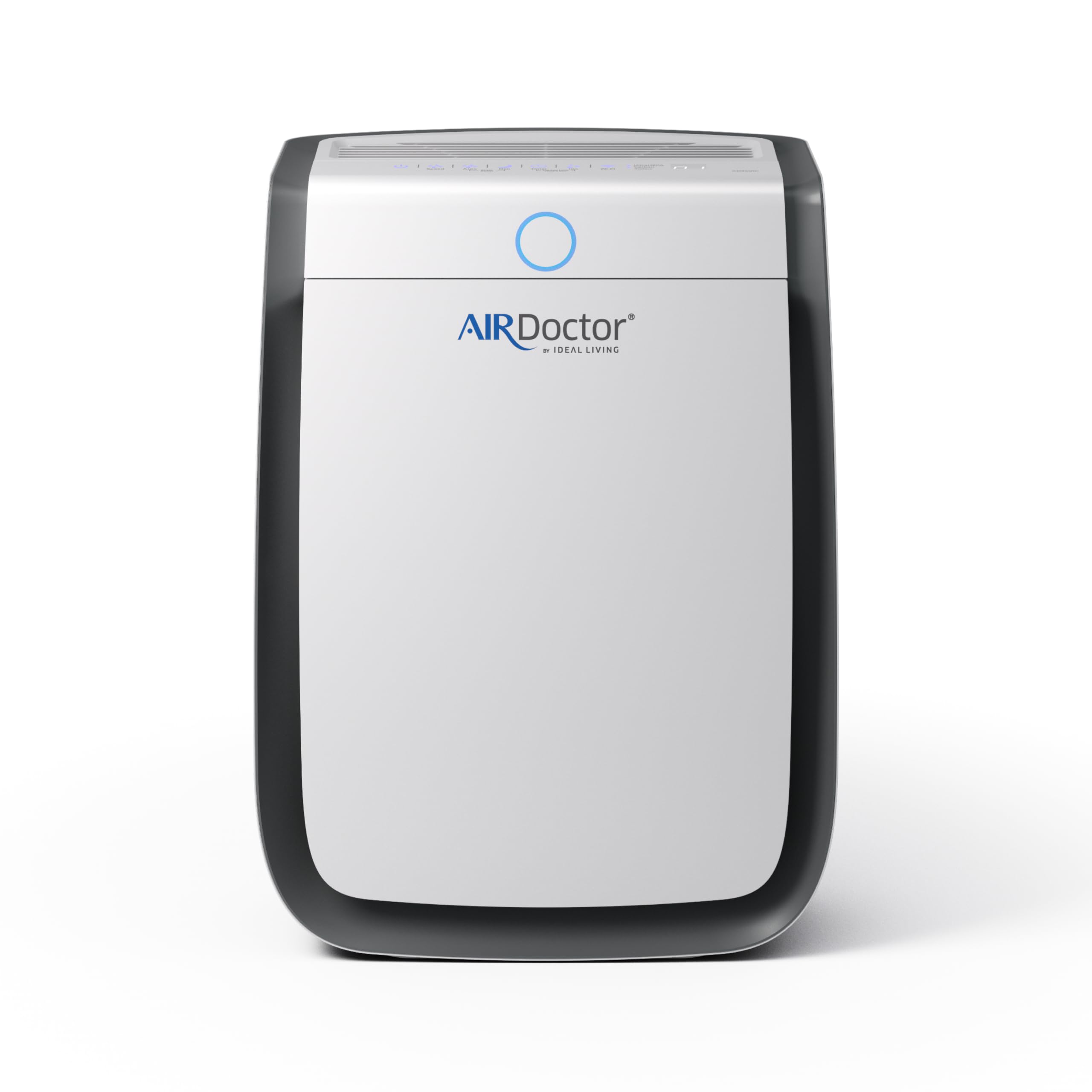
Three filtration stages with carbon and potassium permanganate, and a PM2.5 sensor that triggers Boost the moment fumes spike.
Coverage here is stated for a full salon floor: 630 square feet cleaned in 15 minutes and up to 2,520 square feet in one hour. That is a genuinely different tier from the single-station machines, and it is what you want if you run three or four nail tables in one open room where fumes from every station mix together.
The filtration is a three-stage stack — a pre-filter, a premium activated carbon filter, and an UltraHEPA filter. The UltraHEPA layer is stated to capture 99.99% of airborne particles at 0.003 microns, and what makes it interesting for a nail room is the carbon, which is made with activated carbon and potassium permanganate to absorb and break down gases and airborne chemicals. That second material is added specifically to work on gases rather than just hold them.
Responsiveness is the standout behaviour. PM2.5 sensors — a PM2.5 sensor watches fine particles small enough to get deep into your airways — monitor the air continuously while the Halo display shows colour-coded quality levels, and Auto Mode raises fan speed or triggers Boost on its own. Owners describe popcorn triggering a high-gear burst that clears the room in minutes, then a return to near-silent running. There are four fan speeds, a timer and a filter indicator, and the unit is FSA and HSA eligible.
Effectiveness is where owner sentiment concentrates, with noticeably less dust settling around the room and faster clear-out of cooking and smoke odours. The genuine friction points are the filter programme — carbon every 6 months and UltraHEPA every 12 months, using genuine AirDoctor filters only — and the fact that Turbo is loud and the chassis is on the bulky side.
Standout behaviour: the sensor-driven auto mode is the most reactive here — it catches a fume spike within moments rather than waiting for the room to fill.
Sized for a real salon: at 2,520 sq ft in an hour it will hold a multi-station room, where the single-station picks only manage a corner of it.
Ideal for: busy multi-station salons where fumes from several tables accumulate in one volume of air.
Think twice if: you work solo in one small room — the coverage and the filter schedule are more machine than you need.
6. AIRDOCTOR AD4000 Air Purifier
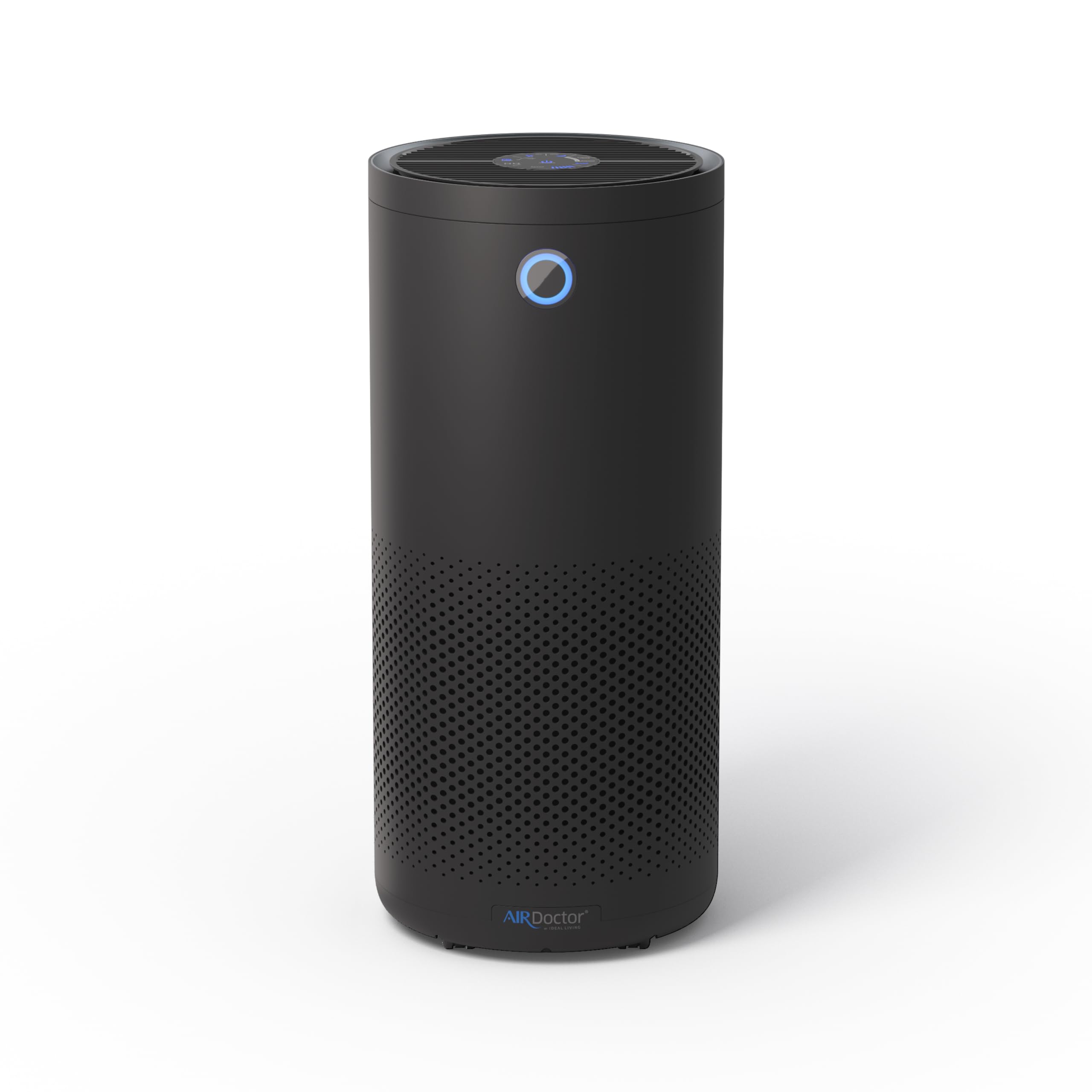
Six fan speeds instead of four, and 2,776 sq ft in one hour versus the AD3500’s 2,520.
The AD4000 is the AD3500 with more room behind it. Coverage reaches 694 square feet in 15 minutes and up to 2,776 square feet in one hour, and the fan control gains two more increments — six speeds instead of four. If your studio is an open floor with several stations and a reception area, that extra headroom is the reason to step up.
The filtration hardware is the same proposition: 3-stage filtration in a pre-filter, a premium activated carbon filter made with activated carbon and potassium permanganate, and an UltraHEPA layer stated to capture 99.99% of airborne particles at 0.003 microns. PM2.5 sensors feed the Halo display, Auto Mode adjusts fan speed and triggers Boost as needed, and there is a timer and filter indicator. It is FSA and HSA eligible.
What owners notice most is how quietly it carries such a large job — this is a machine built for running continuously in a shared room, and the low settings are described as near silent, with a DIM mode that switches the LEDs off for night use. It handles dust and odours well and cuts down how often you have to wipe surfaces. Small wheels make it easy to reposition between the main floor and a back room.
The honest notes: the all-in-one filter system is replaced every 6 months, so budget for it, and the chassis is 20.05 pounds with a footprint closer to the WINIX’s 11 x 15.9 x 25.2 inches than a compact unit’s. Owners also mention that on first power-up the fan runs high before settling to a low speed when the air is clean — worth knowing so it does not surprise you mid-appointment.
What you gain over the smaller model
- 2,776 sq ft in one hour versus 2,520 sq ft on the AD3500
- Six fan speeds for finer control between a whisper and a blast
- DIM mode kills the LEDs for evening appointments
- Wheels make it easy to move between rooms
What to plan around
- All-in-one filter replaced every 6 months
- Kicks to high speed on startup before settling
- Real floor space required — this is not a corner unit
Reach for this if: you need one machine to cover an entire open studio floor and you want the finest fan control the AirDoctor line offers.
Look at the AD3500 instead if: your space tops out around a couple of stations — you will save the footprint and the extra fan steps.
7. Rabbit Air A3 SPA-1000N HEPA Air Purifier
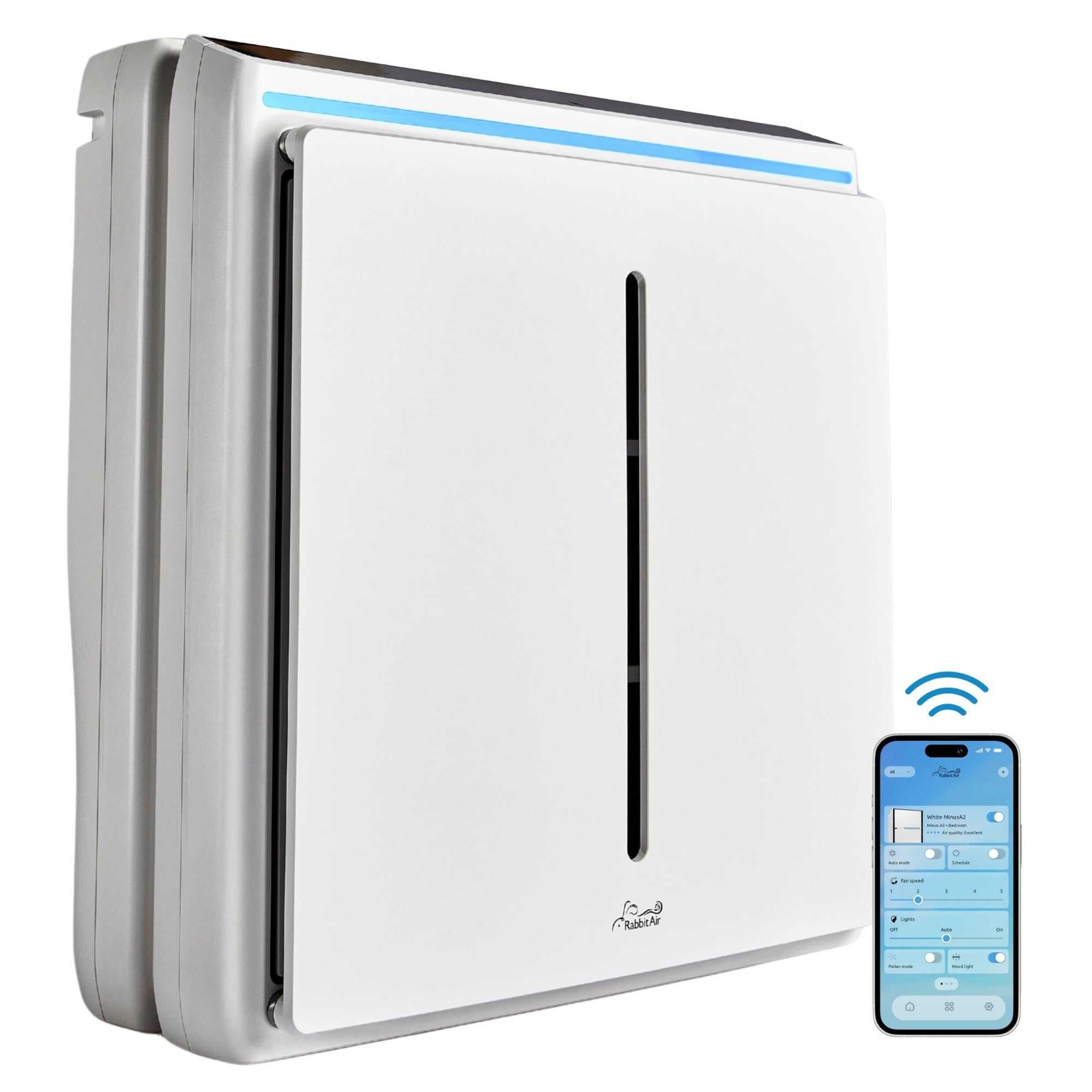
The only wall-mountable unit here, which clears your entire work surface.
For a technician who is chemically sensitive — or who has had a client react badly to monomer — this is the pick to study closely. The A3 ships with a Toxin Absorber filter option alongside an activated carbon filter, and the maker states it captures VOCs, formaldehyde, chemical fumes and airborne toxins at 0.3 microns at over 99% efficiency. That is the exact pollutant class nail work produces.
The filtration design is unusual: a customizable 6-stage system covering Pet Allergy, Germ Defense, Toxin Absorber and Odor Remover specialty filters, so you choose the cartridge matched to your air problem rather than accepting a general-purpose blend. Coverage is 1,070 square feet, cycling 8,560 cubic feet of air every 30 minutes. A 12-month HEPA filter life under 24/7 use means you are not changing cartridges constantly, and smart NFC filter tracking in the Rabbit Air app tells you where it stands.
Silence is where it leads the field: 20.3 dBA on its lowest setting is the quietest figure in this lineup, low enough to run through a full appointment without raising your voice. It is also the only wall-mountable unit here — a design recognised with the iF, Red Dot and German Design Awards — which frees the floor around your station completely. The app handles fan speed, scheduling and mood lighting remotely.
Owner experience backs up the chemical angle. This is a machine people reach for specifically for cigar rooms and painting fumes, and it detects smoke particles across a room within 45 seconds and starts filtering on its own. The Toxin Absorber filter is repeatedly described as the version to buy for wildfire smoke and sanding fumes, with an Odor Remover filter excelling at keeping a neighbour’s tobacco smoke out. The fair warning is that it is the second most expensive pick here and one filter lasts about 9 months in heavy use — a running cost worth planning for.
The chemical edge: a Toxin Absorber cartridge targeting VOCs, formaldehyde and chemical fumes at 0.3 microns makes this the most purpose-built answer for solvent-heavy workrooms.
Built for silence: 20.3 dBA on the lowest setting beats every other pick here, and the wall mount removes the floor-space problem entirely.
Best suited to: technicians who are sensitive to chemical fumes and want targeted filtration plus the quietest possible running noise.
The catch: it is the second most expensive pick here and its filter lasts around 9 months in heavy use, so the running cost is real.
8. COWAY Airmega ProX Air Purifier
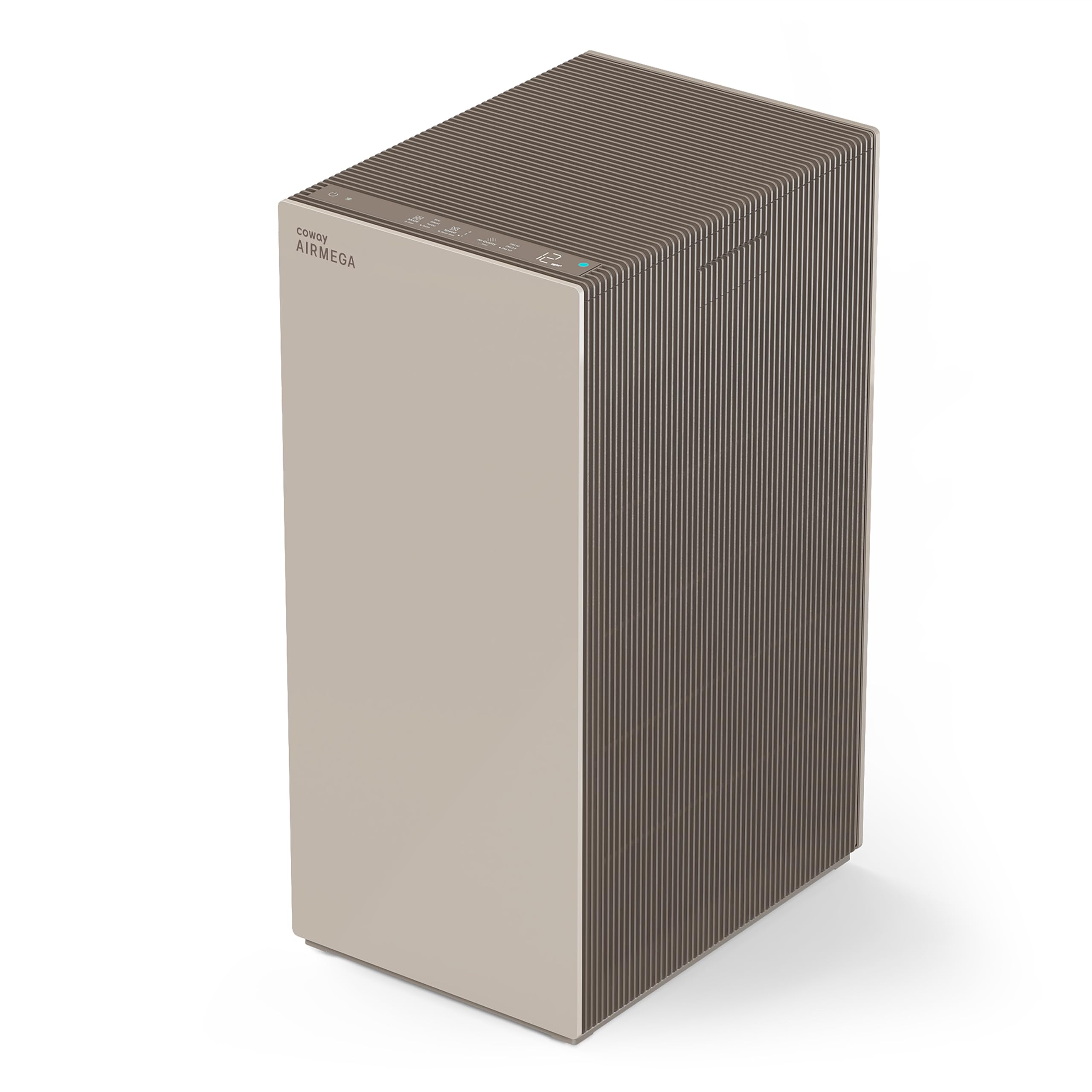
Twin motors driving the largest coverage claim here: 4,253 sq ft in 60 minutes.
If you are outfitting a full salon where you want one machine instead of four, the ProX is the volume answer. It uses a binary motor — twin motors working together — to handle up to 2,126 square feet in 30 minutes and up to 4,253 square feet in 60 minutes, with CADR figures of 580 for dust, 567 for smoke and 450 for pollen. That is the largest coverage claim on this list.
The HyperCaptive system stacks a washable pre-filter, an active carbon filter and a HEPA filter, reducing 99.97% of particles down to 0.3 microns while also reducing volatile organic compounds and odour. It ships with two sets of XL washable pre-filters and HEPA filters for dual purification, which spreads your replacement rhythm out rather than hitting you with one big cartridge bill at once.
The sensing is more granular than most: a real-time air quality indicator adjusts purification to changing conditions, Smart Mode adds adaptive airflow, and the particle sensor reads PM 1, PM 2.5 and PM 10 rather than just one size band. Coverage of three particle sizes matters in a nail room because filings throw a wide range of debris into the air. It is also covered by a 5-year warranty and has wheels for repositioning.
Quiet operation is the thing owners talk about most, and the machine holds that even during work calls. It also reportedly clears a large space fast — one owner describes odours in a 4,000 square foot home with pets disappearing within two days. Be realistic about the rest though: this is a 50-pound unit the size of a water cooler, it needs real floor space, and annual filters are described as expensive. One owner hit an E31 error early on and found support slow to engage before a replacement unit was issued.
Scale note: at 4,253 sq ft in an hour this is the only pick here that will hold an entire salon floor with room to spare — the single-station units cover roughly a third of that.
Consider the footprint: 50 pounds and a water-cooler silhouette mean this is a committed placement, not something you shift between rooms casually.
Great fit for: a salon owner covering the whole floor with one machine and a 5-year warranty in mind.
Wrong choice if: you work from a single table in a spare room — the size and the annual filter outlay will outweigh the coverage.
9. IQAir GC MultiGas XE Air Purifier
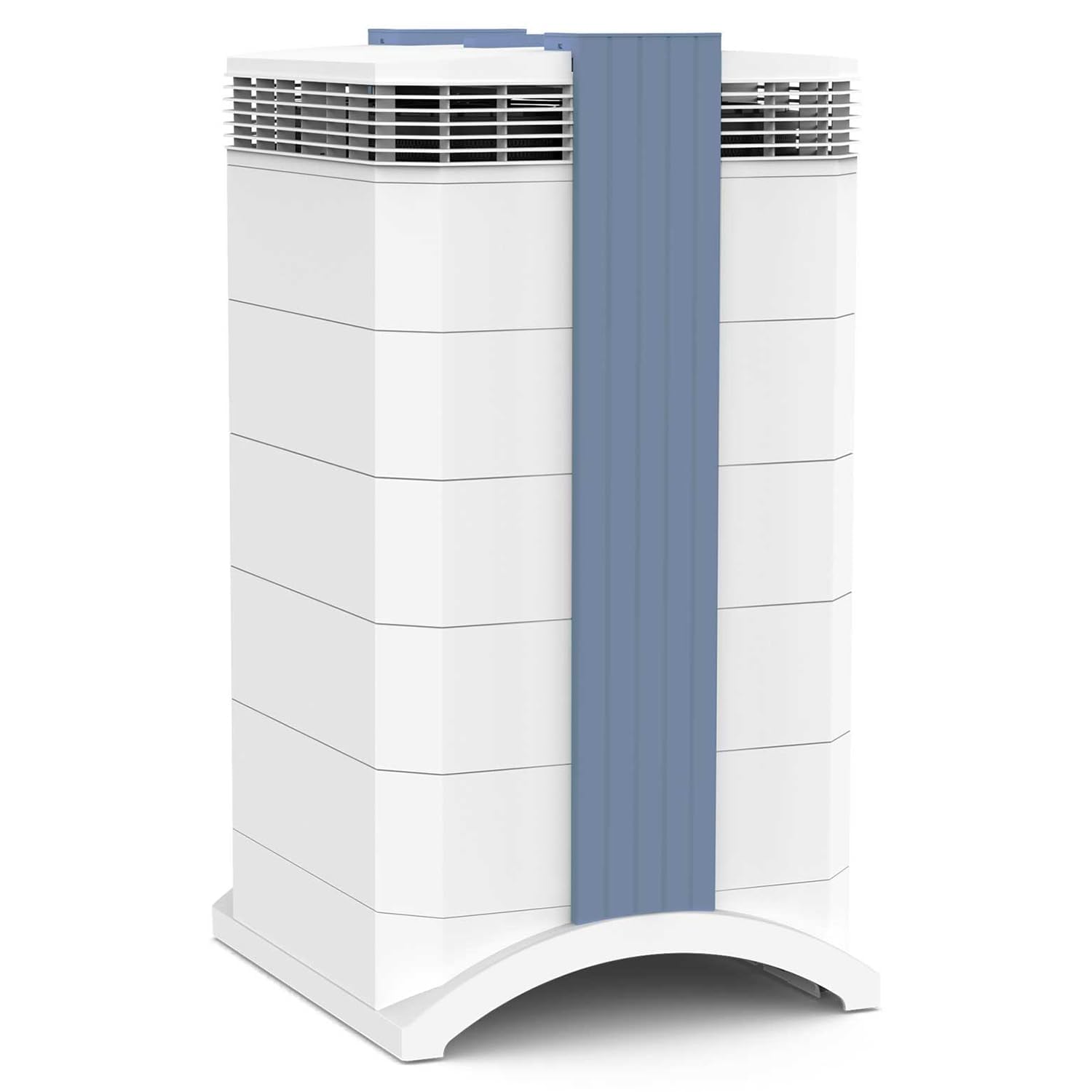
Gas cartridges instead of a carbon pad — engineered for rooms that smell like a chemistry lab
Every other pick here uses a carbon filter. This one uses gas cartridges, and that is a meaningful distinction for a nail room. Instead of one carbon layer, the GC MultiGas XE combines HyperHEPA filtration, activated carbon, dedicated gas cartridges and post-filter sleeves, with the maker stating it helps capture 99% of targeted pollutants — specifically chemicals, tobacco smoke, odours and airborne contaminants. That cartridge architecture is designed to hold far more gas-handling media than a flat filter.
The build and the coverage reflect that. It is designed for spaces up to 1,125 square feet, stands 29 pounds, and is designed and manufactured in Switzerland, with EPA Est. No. 97566-CHE-1 and CARB EO No. G-24-068 on record. Each unit ships in two boxes — one for the purifier and one for the filters — and a signature may be required on delivery, which is worth knowing before you book a client. It carries a 10-year limited warranty through the manufacturer.
Technical integration is where it pulls ahead of the simpler machines. The IQAir AirVisual app gives real-time monitoring and remote control from anywhere, and the smart sensor technology automatically adjusts filtration settings to current air quality, which the maker states helps extend filter life. The fan system was redesigned for improved energy efficiency with reduced power consumption versus the earlier version.
Owner feedback is clear about the two things that matter most: air quality and breathability are what people praise, with noticeable improvements during fire seasons and fewer allergy symptoms. Where opinion splits is on value — this is the most expensive pick here and it is the single most-discussed topic in its reviews, so go in with eyes open. Some find it too loud, particularly at higher settings. Owners also note set-up is straightforward with good instructions.
what separates it: dedicated gas cartridges plus activated carbon make this the most heavily gas-oriented filtration stack on this list — the right architecture if monomer fumes are your primary concern, not dust.
Plan for the cost: value for money is the most contested theme in its reviews, and it is the priciest machine here — the trade being a 10-year limited warranty and gas cartridges built for the job.
Consider it if: your work involves heavy solvent exposure and you want the most gas-focused filtration architecture available, with app monitoring to match.
Weight the trade-offs: it costs the most here, divides opinion on value, and runs loud on the higher settings — a considered purchase, not an impulse one.
Know the Specs
Activated Carbon and Gas Cartridges
Carbon works by trapping gas molecules on its surface, which is why weight and depth of the carbon stage matter more than the HEPA rating when your problem is fumes. A thin carbon pad saturates fast under daily monomer exposure. Dedicated gas cartridges, like those on the IQAir GC MultiGas XE, hold far more media. Some filters add potassium permanganate alongside the carbon — as the AirDoctor AD3500 and AD4000 do — a second material intended to break gases down rather than just hold them.
Coverage and Air Changes Per Hour
Coverage figures are quoted at different time frames, so read the time alongside the area. A unit rated for 2,776 square feet in one hour is running a slower exchange than one rated for 470 square feet in 15 minutes. The metric behind both is air changes per hour — how many times the full volume of the room passes through the filters. For a single nail station, fast turnover on a smaller area beats a big headline number.
Noise Ratings in Decibels
A decibel figure tells you whether you can keep the machine running while a client talks. Whisper level sits around the low twenties — the WINIX 5510 runs at 23.5 dB on its slowest setting and the Rabbit Air A3 at 20.3 dBA. Higher settings are always louder, and Turbo modes can be loud enough to interrupt conversation. The setting that matters is the lowest one, because that is what runs for most of the appointment.
Air Quality Sensors and PM Readings
Sensors let the purifier decide when to work harder. PM2.5 measures fine particles small enough to reach deep into your airways, and it is the standard reading behind the AirDoctor Halo display and the Coway ProX auto mode. The Resiners Purair goes a step further for fume work by showing a TVOC figure — the total volatile organic compounds in the air — which is the reading you actually want when the concern is monomer rather than dust.
Common Questions
Will a HEPA purifier actually remove acrylic nail fumes?
How big a unit do I need for a single nail table?
How often will I need to change the carbon filter if I work with monomer daily?
Is UV-C or an ionizer useful for nail salon odours?
Will a quiet purifier still clean the air at low speed?
Should I run the purifier during a service or only between clients?
Do I need one purifier per nail station or one for the room?
Can I use a purifier with a washable pre-filter to save on replacement costs?
Is a purifier enough on its own, or do I still need extraction at the table?
What does TVOC mean on an air purifier display?
Should a nail technician with chemical sensitivity pick a different unit?
The Bottom Line
For most nail technicians, the winner among these air purifiers for nail technicians is the WINIX 5510 because it pairs a true HEPA layer with a high-deodorization carbon filter built for VOCs, and it covers 1,882 square feet in one hour with a 470 sq ft fifteen-minute figure — quick enough to recover between clients. Add 23.5 dB running on the slowest speed and a sensor that adjusts the fan for you, and it is the easiest machine to live with at a working station.
If you want the carbon stage to work on gases rather than simply hold them, grab the AirDoctor AD3500 — its activated carbon filter includes potassium permanganate and its sensor catches a fume spike within moments. And for a chemically sensitive technician who wants targeted filtration and the quietest possible running noise, the Rabbit Air A3 SPA-1000N is the one to reach for, with its Toxin Absorber cartridge and a wall mount that gives you back your floor.
One honest nudge before you decide: the WINIX carries the deepest owner record here and holds a 4.5+ rating across tens of thousands of buyers, which is the kind of volume that tells you how a machine behaves after the novelty wears off. Whichever you pick, plan your carbon schedule around your actual monomer usage rather than a calendar — that single habit does more for your air than any feature on the box.
How we choose
We do not accept paid placement. Every pick is matched to a real buyer and a real use-case; we do not hands-on test units.
Sources
Specifications: manufacturer listings and product documentation. Review insights: verified customer reviews, as of October 2026. Pricing: not shown on this page (it changes often); check the current price via the retailer link.
As an Amazon Associate, Home Digitized earns from qualifying purchases. This does not affect which products we feature.