
Disclosure: This post contains affiliate links. As an Amazon Associate I earn from qualifying purchases, at no extra cost to you. Learn more
Specs are compiled from manufacturer listings and verified buyer reviews and can change over time — please confirm the key details on the product page before buying.
The most useful thing to know upfront: in this range, sensor size and autofocus behavior decide your everyday results far more than megapixels do. A full-frame body and a smaller APS-C body can both sit inside the same ceiling — and the one you should buy depends on whether you shoot people and motion, or scenes and interiors. Every pick below is a mirrorless camera with interchangeable lenses, so you are buying into a mount and a lens family, not just a one-time box. That is the real decision.
This guide is built by comparing the manufacturers’ published specifications and the patterns across verified customer reviews, so you get each pick’s real strengths and trade-offs instead of marketing spin.
Work through the specs sheet first, then the head-to-head reviews, because the mount you commit to here quietly sets what lenses you can afford for years. The picks that follow cover the genuine standouts among the mirrorless cameras under 1500.
Top Picks


How To Choose The Best Mirrorless Cameras Under 1500
Start with the mount, not the megapixel number. The mount is the bayonet fitting on the front of the camera that accepts a lens — Sony E, Fujifilm X, Nikon Z, Canon RF, and Micro Four Thirds are the five families represented here. Once you buy a body, every lens you add later has to fit that same fitting, so the mount is the longest-lasting decision you make today.
Sensor size: APS-C, full-frame, or Micro Four Thirds
Sensor size sets how much light the camera collects and how shallow you can push the background blur. Full-frame sensors are the largest in this lineup, so the Nikon Z 6II and Canon EOS R8 pull in more light and separate a subject from a busy background more easily. APS-C sensors are smaller, which makes the bodies and lenses more compact, and Micro Four Thirds is smaller again — the Panasonic LUMIX G85 uses that format. Smaller sensors also crop your field of view, so the same lens reaches further but captures less of the scene.
Autofocus system and tracking
For anyone photographing kids, pets, or sports, autofocus behavior is the single most important spec on the page. Look at two things: the number of autofocus points (how many spots across the frame the camera can lock onto) and whether it has subject detection that recognizes people, animals, or vehicles automatically. A system with more points and real-time recognition holds focus as your subject moves. A basic contrast-only system will hunt more when things get fast.
Video specs that actually change your footage
If you shoot video, check the resolution and how it is captured. True 4K is 3840 x 2160 pixels, and oversampling means the camera reads more pixels than it needs and downsamples for a cleaner image. Bit depth (how much color data each frame holds) matters too — 10-bit footage gives you more room to adjust color in editing than 8-bit. Also check whether the camera has a microphone jack and a screen that flips toward you.
Stabilization and battery life
In-body image stabilization (IBIS) is a moving sensor that counteracts your handshake, so handheld video looks smoother and you can shoot slower shutter speeds in dim rooms. Not every camera here has it. Battery life is the other quiet factor: mirrorless bodies burn through charge faster than older DSLRs, so budget for a second battery if you shoot long days.
Side-by-Side Comparison
| Model | Best For | Sensor | Autofocus Points | Continuous Shooting | Amazon |
|---|---|---|---|---|---|
| Sony ZV-E10★ Best Overall | Vlogging and streaming | 24.2MP APS-C Exmor CMOS | 425 | — | Amazon |
| Panasonic LUMIX G85Best Autofocus | Handheld 4K video | 16MP Micro Four Thirds | 49 | — | Amazon |
| Fujifilm X-M5Best Color Science | Color straight out of camera | 26.1MP APS-C X-Trans CMOS 4 | 425 | — | Amazon |
| Sony Alpha a6000 | Two-lens starter kit | 24MP APS-C | 25 | 11fps | Amazon |
| FUJIFILM X-T30 III | Compact everyday carry | APS-C X-Trans | 425 | 20fps | Amazon |
| Nikon Z 6II | Full-frame stills and video | 24.5MP BSI full-frame | 273 | 14fps | Amazon |
| Nikon Z50 II | All-in-two-lens travel kit | 20.9MP DX (APS-C) | 231 | 5fps | Amazon |
| Canon EOS R8 | Full-frame photo and video | 24.2MP full-frame CMOS | 1,053 AF zones | 40fps | Amazon |
Detailed Reviews
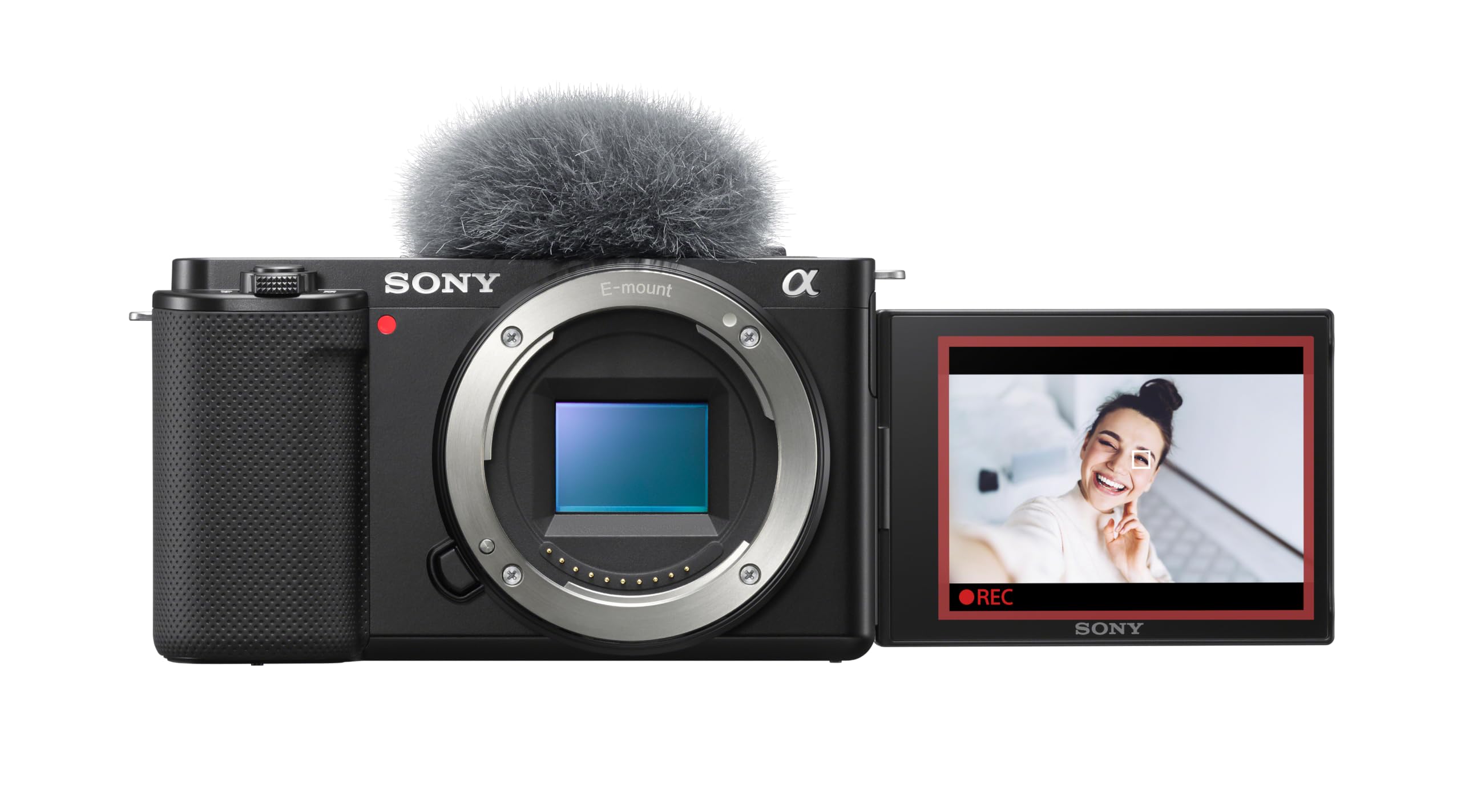
1. Sony ZV-E10 APS-C Mirrorless Camera Body Black
Sharp footage, no hunting, and it never quits mid-stream — the creator’s default.
For anyone filming themselves, streaming, or posting video weekly, this is the smoothest entry point in the whole roundup. The heart of it is a 24.2MP APS-C Exmor CMOS sensor (the light-catching chip) paired with the fast BIONZ X processor — that combination is what gives you the clean detail you see in your clips. Video is recorded in 4K that is oversampled from 6K with full pixel readout and no pixel binning, which means the camera reads every pixel it can and downsamples for a sharper, less noisy frame. Oversampling is the difference between footage that looks stretched and footage that looks crisp on a big screen.
Two touches make it genuinely easy to run alone. Holding one USB cable to your computer gives you live streaming with no extra hardware or software to install, and the Background Defocus button toggles the blurry-background look on and off with one press — no menu digging when you are on camera. The Product Showcase Setting shifts focus from your face to whatever you hold up, which is exactly what you want when you unbox something on stream. This matters because its 425 autofocus points — the number of spots the camera can lock onto across the frame — keep you sharp as you move.
Where it separates from the Fujifilm X-M5 above is focus reliability under pressure: this body carries 425 autofocus points against the X-M5’s 425 on the same count, but the Fujifilm’s sensor is rated a 24.2MP-versus-26.1MP gap in the other direction. The practical read is simple — if your priority is 4K video that streams without drama, this edges it; if you want the higher-resolution stills, the X-M5 pulls ahead. What owners consistently rave about is the overall build quality and finish, which is the thing that keeps coming up in the feedback.
What makes it run so clean
- 4K footage oversampled from 6K with full pixel readout and no pixel binning — detail holds up in the final edit
- 425 autofocus points with Eye Detection, so your face stays in focus while you talk and move
- Live streaming over a single USB cable, no capture card or extra software in the chain
Where it asks for patience
- It is sold as a body, so you buy a lens separately — a first-timer can be caught out by that
- Reliability feedback is mixed rather than uniformly glowing
Reach for this one if: you post video or stream regularly and want focus you can trust without babysitting the camera.
The one snag: it ships as a body only, so price the lens into your plan before you commit.
2. Sony Alpha A6100 Mirrorless Camera
5-Axis In-Body Stabilization16MP Micro Four Thirds
Hold a four-hour 4K shoot steady without a gimbal — and without a heat warning.
Run long video sessions and this is the one that just keeps rolling. Its 5-axis in-body dual image stabilization (a sensor that physically shifts to cancel handshake) works in both photo and video, including 4K, so handheld shots stay clear in dim rooms where other cameras go soft. That is the feature that makes a four-to-five-hour 4K session actually possible without rigging up support gear.
The sensor is a 16MP Micro Four Thirds unit with no low-pass filter, which Panasonic states produces a near 10 percent boost in fine-detail resolving power over previous 16MP Micro Four Thirds sensors. In plain terms, skipping the low-pass filter lets more micro-detail reach the file. Video records in 4K QFHD at 3840 x 2160, and 4K Photo modes let you grab stills at up to 30fps and even pick your focus point after the shot. The 12-60mm Power O.I.S. lens adds optical stabilization on its own, which stacks with the in-body system for even steadier results.
Be honest about the resolution limit: at 16MP, this trail behind the APS-C picks for big prints and heavy cropping. Its 16-bit depth is also a step above the 14-bit of the Sony ZV-E10, giving files more color data to work with — a 14% more rating — so the trade is resolution for tonal depth and stabilization. Autofocus also lands as a mixed bag rather than the highlight. What wins people over is sheer overall quality and image quality for the outlay.
The long-haul video pick: 5-axis in-body stabilization plus a 4K record that holds up over hours is what makes this the safest handheld video body on the list.
Set expectations on reach: 49 autofocus points is modest next to the Sony bodies, so fast tracking is not its game.
Built for: video-first shooters who record long sessions and want clean handheld footage without extra rigging.
Look elsewhere if: you print large or crop hard — 16MP leaves less room than the 24MP-and-up options here.
3. Fujifilm X-M5 Mirrorless Digital Camera
A 26.1MP APS-C sensor with color worth keeping unedited.
If you would rather shoot and share than sit in editing software, this body is designed around that. It packs a 26.1MP APS-C X-Trans CMOS 4 sensor — the highest sensor resolution in this roundup, ahead of the 24.2MP Sony ZV-E10 and the 24.5MP Nikon Z 6II. With the XC 15-45mm lens included and Fujifilm’s X Mount open to more lenses later, you start with a versatile zoom and grow from there. Low light is handled by an ISO range of 160-12800, expandable to ISO 51200, so dim rooms and evening streets still return clean files.
The autofocus pairs contrast and phase detection in one hybrid system, with a rating down to -7.0EV — meaning it can still lock in near-dark conditions where your eye struggles. Video climbs to 6.2K resolution at 30fps, a step above the 4K ceilings on most bodies here, and the 3.0-inch tilt touchscreen handles shooting, playback, and focus with a tap.
The caveat is real but narrow: as a newer body it carries a thin review history so far, and the higher 6.2K recording will demand larger, faster cards than 4K shooting. Neither is a flaw in the camera — they are things to plan for. If video at the highest resolution and a bigger APS-C sensor are your two priorities, this leads the pack on both.
The pick for stills-first shooters: 26.1MP and the largest sensor in this group make it the resolution leader for photos and color.
Plan ahead if: you intend to push 6.2K video — you will want a fast memory card ready before you start.
4. Sony Alpha a6000 Mirrorless Digital Camera

Two lenses in one box — wide and telephoto covered from day one.
Buying your first camera usually means paying for a lens later. This kit skips that step: you get the Sony E PZ 16-50mm f/3.5-5.6 OSS lens for everyday wide shots and the Sony E 55-210mm f/4.5-6.3 OSS lens for zooming in on distant subjects, both in the same box. The OLED electronic viewfinder shows 100% coverage at 1.4 million dots, so what you see is what you frame. Its 11fps continuous shooting catches action, and the 25 autofocus points handle the tracking.
It takes fantastic quality images and holds up in low light, which is why it has stayed a favorite long-term starter body. Battery life is the known weakness — one buyer laid out the math bluntly: “kit lens + 50-210mm; battery drains fast.” Buy spares and the problem is solved for a fraction of what a body costs. The bundled kit lens is serviceable rather than exceptional, so pairing the body with a better prime down the road is where the real jump in sharpness comes from.
This is the widest-reach starter kit on the list, which is why it earns its spot; where it trails the Sony ZV-E10 is focus coverage, 25 points versus 425 on the newer body. If getting both focal lengths immediately is the priority, nothing else here bundles as much glass from the start.
Two lenses, zero extra shopping: the 16-50mm and 55-210mm cover wide to telephoto, so you start shooting both ends of the range the day it arrives.
Charge it first: plan for a second battery — long shooting days will outlast a single charge.
Skip if: you already know you want one great lens rather than two serviceable ones.
Grab this when: you want both focal lengths in hand from the first day and flexibility above all.
5. FUJIFILM X-T30 III Mirrorless Camera

Pocketable, dial-driven, and 20 film looks baked in before you edit.
For photographers who want a camera they will actually carry every day, the compact body and tactile dials here are the draw. It offers 20 built-in Film Simulations — preset color profiles inspired by classic film stocks that Fujifilm is known for — so you can shoot straight to JPEG with a look already applied. AI-powered subject detection autofocus keeps up with motion, and the Auto mode lets you hand off the technical decisions when you just want the shot. The bundled FUJINON XC 13-33mm F3.5-6.3 OIS lens adds optical stabilization and covers a useful everyday range.
The camera is noticeably compact, and owners describe it as a strong travel companion and easy going for anyone stepping up from a phone. Fast subject detection handles moving subjects well — one parent using it on a one-year-old described the autofocus as fast and reliable even on a toddler who would not sit still.
Two honest notes before you commit. There is no in-body stabilization, so smooth handheld video depends on the lens or careful technique, and the kit lens is slow in low light. A couple of buyers also flagged the absence of an included charger and short battery life — pack a spare battery and a charger. If portability and out-of-camera color top your list, this earns its place.
Carry-everywhere strengths
- 20 Film Simulations for shoot-and-share color with no editing step
- Compact, dial-forward body with a stabilizing 13-33mm kit lens
- AI-powered subject detection autofocus that handled a moving toddler
Weigh these before buying
- No in-body stabilization — plan on lens-based or careful handheld shooting for video
- Battery life is short, and no charger ships in the box
Where it belongs: in a small bag that leaves the house daily, for photographers who live in JPEG and love film-inspired color.
Not the one for: heavy handheld video — the lack of in-body stabilization and the slower kit lens push you toward support or a better lens.
6. Nikon Z 6II mirrorless Camera

A full-frame hybrid built to be handed-down-to-someone-else reliable.
This is the step-up body for someone who has outgrown a starter camera and needs one tool that does serious stills and serious video. The 24.5MP BSI full-frame sensor (backside-illuminated, which gathers more light per pixel) excels in low light, and 14 FPS continuous shooting handles fast action. Video runs 4K UHD 60p with full pixel readout — no cropping or line-skipping, so the whole sensor’s field of view stays in play. It also carries a 3.5x-more buffer capacity than the original Z 6, so bursts clear faster.
Wedding and event shooters will appreciate the dual card slots (CFexpress/XQD plus UHS-II SD), which let you write to two cards at once for backup — a real safety net on a day you cannot reshoot. USB-C constant power and charging mean you can run it off a cable during long livestreams, video shoots, and timelapses instead of swapping batteries mid-take. And one mount accepts them all: it works with the growing line of NIKKOR Z lenses plus roughly 360 F-mount NIKKOR lenses with the FTZ adapter (sold separately).
The genuine gap to weigh is focus tracking, which some owners find loses subjects in difficult scenes — that is the honest trade you make for the full-frame image quality. It also carries 273 autofocus points against the Canon EOS R8’s broader AF zone coverage, so action tracking is not its strongest suit. What owners value most is overall quality and image quality, which makes this a camera people keep for years rather than outgrow.
The assignment camera: dual card slots plus USB-C constant power are the two features that make this the safest full-frame choice when a shoot cannot be repeated.
Honest limit: if you shoot fast, unpredictable subjects, its focus tracking can lose them — that is the compromise at this price.
Who it suits: event and portrait shooters who need redundant card backup and full-frame low-light reach in one body.
Skip if what you shoot: moves erratically and fast — tracking is not this body’s strongest hand.
7. Nikon Z50 II mirrorless Camera

A 20.9MP sensor that detects nine subject types and ships with two lenses.
Casual shooters who want everything in one box should start here. The 20.9MP DX-format sensor (Nikon’s name for the APS-C size) is several times larger than a typical smartphone sensor, which is what lets it capture lifelike color and detail from dawn to dusk while staying light enough for a small bag. You get both the NIKKOR Z DX 16-50mm f/3.5-6.3 VR and the NIKKOR Z DX 50-250mm f/4.5-6.3 VR lens in the box, both stabilized — so your near and far shots are covered without extra shopping.
Color presets are a standout here: a single button opens 31 built-in Picture Controls, and you can save your own or download new ones through Nikon Imaging Cloud. Autofocus automatically detects and tracks nine distinct subjects, including people, dogs, cats, birds, and vehicles, with dedicated bird and airplane modes for extra precision. Video reaches 4K UHD/60p with in-camera 120p slow motion in Full HD, and a built-in electronic VR mode supplements the stabilized lenses.
The built-in flash is a real convenience for indoor and night shots, and the free Nikon SnapBridge app sends photos and video to your phone in seconds. On autofocus, a small number of users report it stopping after a few weeks of use, so buy from a source that stands behind its returns. Where this body trails the Sony ZV-E10 in the lineup is the lower count of autofocus points — 231 against 425 — so the Sony’s tracking on fast subjects is the stronger tool.
Ideal for: casual and travel shooters who want two stabilized lenses and one-button color right from the start.
Worth knowing: the built-in flash and 31 Picture Controls add convenience, but the autofocus point count trails the more action-focused picks here.
8. Canon EOS R8 Mirrorless Camera (Body Only)

Canon’s lightest full-frame body with the focus system borrowed from a pricier sibling.
For full-frame image quality without the flagship bulk, this is the value play. It pairs a 24.2MP full-frame CMOS sensor with the DIGIC X processor, and its Dual Pixel CMOS AF II covers up to 100% x 100% of the frame with 1,053 autofocus zones — the broadest focus coverage in this entire roundup. That system uses deep-learning subject detection for people, animals, and vehicles, now including aircraft, trains, and horses. Against the Sony Alpha A6100’s 425 points, this body’s 1,053 AF zones give it far wider tracking reach across the frame. It shares the sensor, autofocus, and video internals with the more expensive R6 Mark II, which is why shooters keep calling it the same camera minus one feature.
Video is uncropped 4K at up to 60fps, oversampled from 6K, with Full HD high-frame-rate recording at up to 180fps and Canon Log 3 or HDR PQ profiles for grading. Max record time is 2 hours, and UVC/UAC support means it doubles as a webcam or streaming camera over USB. The 0.39-inch OLED viewfinder refreshes up to 120 fps and the 3.0-inch vari-angle touchscreen flips for any angle.
The trade-offs are specific and worth knowing up front: no in-body stabilization, one card slot, and battery life that owners single out as the weak point — buy spares and toggle airplane mode to stretch it. It can also overheat during long 4K60 sessions. None of that undercuts its value as a compact full-frame stills and video hybrid; it just tells you which jobs it suits.
Why full-frame buyers pick it
- 1,053 AF zones covering 100% x 100% of the frame with deep-learning subject detection
- Uncropped 4K60 oversampled from 6K, plus 180fps Full HD and Canon Log 3
- Shares sensor, autofocus, and video internals with the pricier R6 Mark II
The catches to plan around
- No in-body stabilization — lean on stabilized lenses or careful technique
- One card slot and short battery life; long 4K60 runs can trigger overheating
Choose this if: you want full-frame quality, the widest autofocus coverage here, and pro-grade video without moving into the next tier.
Bring backup: a single card slot and soft battery life mean spare batteries and a spare card are non-negotiable for paid work.
Know the Specs
Autofocus points and subject detection
Autofocus points are the spots across the frame the camera can lock onto, and the count tells you how densely it can track a moving subject. A body with 759 points (like the Sony a6700) can follow a subject across far more of the frame than one with 25 points (like the Sony a6000). Subject detection is the companion feature — it recognizes people, animals, or vehicles automatically instead of making you pick. For photographing kids, pets, or sports, these two numbers together matter more than sensor megapixels.
Sensor size and low-light performance
Sensor size describes the physical area of the light-capturing chip, and it sets how much light the camera gathers per shot. Full-frame sensors (Canon R8, Nikon Z 6II) are the largest here, so they handle dim rooms and separate a subject from a busy background more easily. APS-C sensors (Sony ZV-E10, Fujifilm X-M5) are smaller, which keeps bodies and lenses compact. Micro Four Thirds (Panasonic G85) is smaller still, giving longer reach from the same lens at the cost of ultimate low-light headroom.
Common Questions
Are Sony E-mount lenses from the a6000 compatible with the ZV-E10 and a6700?
Do these cameras record true 4K or upscaled video?
Does any camera here have in-body image stabilization?
How many photos can I get on one battery charge?
Can I stream live video straight from these cameras without extra gear?
Is a full-frame camera like the Nikon Z 6II or Canon R8 better than APS-C for beginners?
Do these cameras overheat during long video shoots?
What does 10-bit versus 14-bit bit depth mean for my footage?
Can I use my old DSLR lenses on these mirrorless cameras?
How many autofocus points do I need for photographing moving kids or pets?
Does the Fujifilm X-T30 III or X-M5 include a battery charger?
The Bottom Line
For most people buying a mirrorless cameras under 1500, the winner is the Sony ZV-E10 because it nails the modern essentials — 4K oversampled from a 24.2MP APS-C sensor, 425 autofocus points that hold you in focus, and live streaming over a single USB cable. If full-frame image quality and the widest autofocus coverage in this roundup matter more to you, reach for the Canon EOS R8. And for long handheld video sessions where heat and shake are the enemy, the Panasonic LUMIX G85 is the one to grab — its 5-axis in-body stabilization and steady 4K recording make it the safest pick for the marathon shooter. Whichever mount you choose, commit to it with an eye on the lens family, because that is the decision you will live with for years.
How we choose
We do not accept paid placement. Every pick is matched to a real buyer and a real use-case; we do not hands-on test units.
Sources
Specifications: manufacturer listings and product documentation. Review insights: verified customer reviews, as of October 2026. Pricing: not shown on this page (it changes often); check the current price via the retailer link.
As an Amazon Associate, Home Digitized earns from qualifying purchases. This does not affect which products we feature.