
Disclosure: This post contains affiliate links. As an Amazon Associate I earn from qualifying purchases, at no extra cost to you. Learn more
Specs are compiled from manufacturer listings and verified buyer reviews and can change over time — please confirm the key details on the product page before buying.
Black and white photography is unforgiving. Color hides flaws — a muddy sky, a soft corner, a washed-out highlight can all pass as “moody” once saturation is doing the heavy lifting. Strip the color away and everything is exposed: contrast, grain, tonal rolls from shadow to highlight, and how cleanly the sensor renders uninterrupted gradients. That is why the camera you choose matters so much more here than in color work, and why this guide picks apart exactly which models actually reward the switch to monochrome.
This guide is built by comparing the manufacturers’ published specifications and the patterns across verified customer reviews, so you get each pick’s real strengths and trade-offs instead of marketing spin.
The difference between a sensor that captures twelve stops of usable gray and one that crushes shadows into ink is what separates the two — so the picks below are sorted by what they actually do in monochrome. If your aim is cameras for black and white photography, the honest answer is that tonality, not color science, should drive the decision.
Top Picks


How To Choose Cameras for Black and White Photography
Gray is not one shade — it is a thousand, and the gap between a camera that renders them smoothly and one that lumps them into bands shows up the moment you convert a color file. Choosing well depends on three things: how much tonal data the sensor records, how the camera handles contrast in the field, and whether the controls let you see the monochrome result before you press the shutter.
Bit depth and the smoothness of gray
Bit depth is the number of distinct brightness values each pixel can store. A 14-bit file carries far more tonal steps than an 8-bit one, which is exactly what prevents an overcast sky from turning into a stair-stepped patchwork of grays once you pull the shadows up. It also gives you more room to push contrast without the file falling apart into noise.
Autofocus points and the contrast problem
Black-and-white scenes often have less color contrast for the camera to latch onto, so autofocus systems that rely on detecting edges and patterns tend to be more reliable. More autofocus points generally means the camera can hold a moving subject in a busier frame, which matters for street work where you cannot reshoot the moment.
Viewfinder and stabilization
A high-magnification viewfinder makes it easier to judge framing and focus precisely, which is critical when you are composing for shapes and leading lines rather than color. In-body image stabilization — a system that physically shifts the sensor to counter handshake — lets you hand-hold slower shutter speeds in dim light, so you can keep the ISO low and the grain fine.
Side-by-Side Comparison
| Model | Best For | Sensor / Resolution | Autofocus Points | Bit Depth | Amazon |
|---|---|---|---|---|---|
| Fujifilm X100V★ Best Overall | Everyday carry with film simulations | 26.1MP APS-C X-Trans CMOS 4 | 179 | 14 Bit | Amazon |
| Panasonic Lumix 4K Point and ShootZoom Champion | Long-zoom travel and hiking | Micro Four Thirds, 3.58–215mm lens | 39 | 8 Bit | Amazon |
| Canon EOS RP with RF24-105mmFull-Frame Entry | Entry into full-frame stills | Full-frame, 24-105mm kit lens | Phase Detection | 14 Bit | Amazon |
| Sony Alpha a7 III | Versatile full-frame hybrid | 24.2MP full-frame BSI | 693 | 14 Bit | Amazon |
| Sony Alpha a6700 | Compact hybrid with fast tracking | 26.0MP APS-C Exmor R | 759 | 14 Bit | Amazon |
| FUJIFILM X100VI | High-resolution fixed-lens classic | 40.2MP with 6-stop IBIS | 425 | 10 Bit | Amazon |
| Nikon Z f | Retro-styled full-frame stills | 24.5MP BSI full-frame | 273 | 10 Bit | Amazon |
| Canon EOS R6 Mark III | Speed and stabilization for action | 32.5MP full-frame CMOS | 393 | 14 Bit | Amazon |
| Sony Cyber-Shot DSC-RX1 RII | Maximum resolution in the smallest body | 42.4MP full-frame Exmor R | 399 | 14 Bit | Amazon |
| Nikon D6 | Pro sports-burst DSLR | FX-format SLR body | 105 | 14 Bit | Amazon |
| Leica Q3 | Fixed-lens flagship with digital zoom | 60MP BSI CMOS Triple Resolution | 256 | 10 Bit | Amazon |
Detailed Reviews
1. Fujifilm X100V Digital Camera – Black
Our pick — 4.5+★ from 550+ verified ratings; the strongest balance of quality and price.
The one you grab on the way out the door, and the one that renders gray with intent.
If black-and-white is your default rather than an occasional mood, this is the camera that makes the habit stick. The X100V pairs a 26.1MP back-side illuminated X-Trans CMOS 4 sensor (a chip that captures 26.1 million pixels of detail) with the X-Processor 4 chip, and it carries 14-bit depth — meaning each pixel stores a huge number of brightness steps, which is exactly what keeps a monochrome sky smooth instead of blotchy. Owners describe the image quality as landing close to a processed RAW file right out of the camera, and the in-camera film simulation modes are the reason why: you can dial in a monochrome look and preview it live.
The viewfinder is the sleeper feature for tonal work. Flip a switch and you move between a 0.52x magnification optical viewfinder, which uses frame lines to show you what sits just outside the shot, and a 3.69M-dot OLED electronic viewfinder that previews your exposure in real time. There is even an electric rangefinder mode that drops a mini EVF window inside the optical view. For monochrome street shooting, that preview is the difference between guessing at gray and seeing it.
Autofocus is the sharpest tool of its kind on this list: 179 autofocus points (the spots on the sensor the camera uses to lock focus) against just 39 on the Panasonic Lumix point-and-shoot further down — a 4.6x gap in how much of the frame the camera can actively track. The 23mmF2 lens is a fixed wide-angle, so you compose with your feet, and the tilting touchscreen folds flat into the slim body when you are done.
What earns the top spot
- 14-bit files with the 26.1MP X-Trans CMOS 4 sensor keep tonal gradients clean through heavy contrast pushes
- 0.52x optical viewfinder plus a 3.69M-dot OLED EVF lets you preview the monochrome conversion before you shoot
- 179 autofocus points — the widest tracking coverage in this lineup
- Optional adapter ring opens up weather sealing (sold separately), and the slim body slips into a jacket pocket
Where it asks something of you
- The lens is fixed at 23mm, so reach is not adjustable — portraits and distant subjects need a different tool
- Weather sealing requires the separate adapter ring and protection lens
- The interface splits opinion among owners, so budget a learning day
Made for: the photographer who wants one camera, one lens, and monochrome tones dialed in before the shutter fires — with rated 4.5+ stars by 500+ owners.
Think twice if: you need interchangeable lenses or longer reach; the 23mmF2 is the whole optical story here.
2. Panasonic Point and Shoot Digital Camera
Reach for this when the wildlife is 1200mm away and you are the one hiking toward it.
The lens here does what no fixed-lens pick on this list can: 3.58 to 215mm, which works out to a 20–1200mm equivalent field of view — roughly 60x zoom. That kind of reach in a body this size is rare, and owners who shoot trail scenarios lean on it hard. A representative owner noted: “Superzoom ideal for outdoor wildlife/hiking. Cons: occasional misfocus at full zoom (screen tap lock helps), poor low light. Shoots RAW; Lightroom denoise fixes most artifacts. ~90% good shots. Burst helps.”
Black-and-white shooters get an unexpectedly useful tool in the viewfinder. The 2,360K-dot LVF runs at 0.74x magnification — against 0.52x on the Fujifilm X100V — so framing a distant subject in the finder shows noticeably more separation and detail, and glare-prone outdoor scenes stay readable. POWER O.I.S., Panasonic’s optical stabilizer, fights handshake at the long end so a 1200mm-equivalent frame stays reasonably steady.
The trade-off is real and worth naming up front. At 8-bit depth, this camera stores far fewer tonal steps per pixel than the 14-bit Canon EOS RP — and in monochrome, that shows up most in the shadows and skies you want to pull. Owners do report RAW capture saves the day, with a good denoise pass cleaning up the worst artifacts, but graininess and low-light performance are recurring notes. This is a bright-light, distance-first camera.
Where it shines: that 1200mm-equivalent reach and the 0.74x viewfinder magnification make it the obvious pick for distant subjects in daylight.
The honest limit: 8-bit files and split opinions on image quality mean the smoothest gray gradients are not what you are buying here.
Buy it when: reach and portability matter more than tonal precision — hiking, wildlife, travel, bright light.
Look past it if: low-light or fine-art monochrome is the goal; 8-bit capture with likely grain is a mismatch.
3. Canon EOS RP Mirrorless Camera
The least expensive way onto a full-frame sensor, and the tonal step up that comes with it.
Full-frame matters in monochrome for one blunt reason: bigger photosites collect more light, and more light means smoother grain when you push the exposure around. The bundled RF 24-105mm f/4-7.1 lens covers portrait through landscape distances without swapping glass.
The owner consensus is that this is the gateway pick, and not a compromised one. Users describe crisp photos, working Wi-Fi and Bluetooth, and full manual control via the multi-function button. The face-detect autofocus earns steady praise, low light handles well, and the touchscreen interface draws repeated compliments for being intuitive at any skill level.
Where it asks for patience is speed and glass. Autofocus and battery life both come in mixed in owner feedback, the burst is on the slow side, and the kit lens is soft at the edges until you stop down to around f/8. Sports and bird photography sit outside its lane.
Why it earns its slot: 14-bit full-frame capture with a versatile 24-105mm kit lens, a solid choice for stills shooters stepping up from APS-C.
What to expect on day one: vibrant color files and fast autofocus for non-action subjects; plan on an f/8 aperture habit for edge sharpness.
Reach for it if: you want the tonal ceiling of a full-frame sensor and the flexibility of a 24-105mm zoom without a premium-tier commitment.
Pass if: you shoot fast-moving subjects or need edge-to-edge sharpness wide open.
4. Sony Alpha a7 III Mirrorless Camera with 28-70mm Lens Black

Fifteen stops of dynamic range is the number that separates this from everything below it.
Dynamic range is the span between the brightest highlight and the darkest shadow a sensor can hold onto at once — and at 15 stops, the a7 III captures more of that span than any other body here. In black and white, that translates directly into how much detail survives in a blown-out sky and how clean the shadows stay when you lift them. The 24.2MP back-illuminated full-frame sensor pairs that with 14-bit uncompressed RAW and an ISO range from 50 to 204,800.
The autofocus system is where it laps most of the field: 693 phase-detection points alongside 425 contrast-detection points, covering 93% of the image. That coverage is nearly four times the 179 points on the Fujifilm X100V, and it means the camera can track a subject that moves anywhere in the frame. Owners consistently describe fast focus and versatility across both stills and 4K video.
It shoots up to 10fps with either a silent or mechanical shutter while maintaining AE and AF tracking, which keeps the camera locked on through a burst. The bundled 28-70mm f/3.5-5.6 lens is a fine starting point but the FE mount opens up a deep pool of alternatives if you outgrow it.
The numbers that carry it
- 15-stop dynamic range — the widest tonal span in this lineup for stretched monochrome skies
- 693 phase-detection / 425 contrast AF points covering 93% of the frame
- 14-bit uncompressed RAW with ISO 50–204,800 headroom
- 10fps silent or mechanical burst with AE/AF tracking
Fine print worth knowing
- Kit lens aperture range (f/3.5–5.6) is modest for low-light monochrome work
- Body is heavier than the APS-C alternatives above
- Menu system takes some getting used to
The case for it: the strongest tonal range per frame of any body here, with tracking coverage that keeps up with almost anything you point it at.
The catch: full-frame glass and body weight are both more than an APS-C setup — plan for it.
5. Sony Alpha a6700 Mirrorless Camera with 18-135mm Lens Black

The tracking machine that punches above its sensor size on fast, contrasty street work.
Fresh off the spec sheet, the a6700 leads this entire lineup on autofocus point count: 759 of them, against 693 on the full-frame a7 III and 273 on the Nikon Z f. That density matters in monochrome street work where subjects cross busy, low-contrast backgrounds. The dedicated AI processor drives real-time recognition, and a 26.0MP APS-C Exmor R back-illuminated sensor sits behind it, feeding 14-bit files.
The compact build is the quiet advantage. You can carry it all day without the shoulder fatigue that follows a full-frame body, and the 18-135mm f/3.5-5.6 kit zoom covers a genuinely useful travel range in one lens. Video-side, it records 4K/60p oversampled from 6K in 4:2:2 10-bit, with Long GOP or All Intra options and 4K 120p high frame rate.
Two things to weigh honestly. First, battery life is a real weakness in owner feedback — the camera sometimes ships without a charger or USB cable, so budget for both. Second, heat: one owner noted it “Overheats at ~40min 4K60p.” For stills-first monochrome shooters, neither is a dealbreaker, but they are the reasons this is not the hybrid above it.
Best-in-lineup tracking: 759 autofocus points and AI subject recognition make this the most responsive body here for grab shots.
Pack a spare battery: charging accessories are not always included, and the battery behavior draws recurring note.
Buy it for: all-day carry with the strongest autofocus density on this list, shooting stills in changing light.
Skip if: long-form 4K capture is your priority — heat and a single SD slot will get in the way.
6. FUJIFILM X100VI Black

Forty-two megapixels and six stops of stabilization in a body that disappears in a jacket pocket.
Resolution is the headline here: the X100VI captures 40.2MP stills (40.2 million pixels), roughly 1.5x the pixel count of the original X100V, and it delivers up to 6 stops of in-body image stabilization (a system that steadies the sensor to cancel out hand shake) by way of internal gyro sensors that read movement across five axes. That stabilization is the reason you can walk a dim street at dusk, keep the ISO low, and still hand-hold a clean frame — and in monochrome, low ISO means fine grain.
The camera includes an internal 4-stop ND filter, which is genuinely useful when you want to keep a wide aperture open in bright light and control how the highlights roll into gray. Its 23mm fixed lens matches the X100V’s focal length, and there are 20 film simulation modes, including REALA ACE, for controlling the tonal look in-camera.
The trade-off to understand before buying is the file format ceiling. At 10-bit depth, this produces fewer tonal steps per pixel than the 14-bit Canon EOS RP — so heavy shadow recovery in monochrome has less room to maneuver. Beyond that, owner sentiment is genuinely split: plenty describe it as an excellent learning camera and worth the money, while others find it feels less substantial than its tier suggests and note inconsistent autofocus.
Why monochrome shooters want it
- 40.2MP resolution — the highest of any APS-C-style compact here — gives you margin for cropping
- Up to 6 stops of in-body stabilization across five axes for low-light handheld work
- Internal 4-stop ND filter for wide-aperture work in bright light
- 20 film simulation modes, including REALA ACE
What to weigh first
- 10-bit depth caps how far tall shadows and highlights can be pushed before they break up
- Owner views on overall quality and value split in both directions
- The 23mm lens is fixed, matching the X100V’s focal length exactly
Worth it if: you prioritize resolution and in-body stabilization in a compact, and you want the film simulation catalog built in.
Rethink it if: your monochrome workflow lives in heavy shadow recovery — 10-bit files limit the headroom.
7. Nikon Z f Full-Frame Mirrorless Stills/Video Camera

Built for shooters who care about tone before they care about speed — and it shows in the file.
The Z f carries a 24.5MP BSI full-frame sensor (a 24.5 million pixel chip that captures more light for cleaner shadows) backed by the EXPEED 7 processor, and its most distinctive monochrome feature is pixel shift shooting: it captures 96MP stills built from multiple frames, which trades action speed for the deepest resolution and lowest noise in the file. For studio or architectural monochrome, that is a genuinely different tool.
Subject recognition locks onto nine different categories of subject with 3D tracking, and 273 autofocus points handle the coverage. The real draw for black-and-white work, though, is what owners keep coming back to: the color rendering. Reviewers single out its clean color rendering and excellent black-and-white tones specifically, which is rare praise for any camera on this list. Manual focus gets a green confirmation box that lets you nail critical focus by eye — a genuinely useful feature for deliberate tonal work.
The 3.2-inch vari-angle touchscreen adds a Touch Fn mode that lets you move focus points, select a subject, and toggle display modes on the screen while you are still looking through the viewfinder. The catch sits in the file format: at 10-bit depth, it holds fewer tonal steps than the 14-bit Canon bodies here, so the pixel-shift mode is what earns you back the headroom.
Why it fits monochrome: clean color rendering and excellent black-and-white tones are exactly what owners highlight, plus 96MP pixel-shift capture for still subjects.
Know before you commit: 10-bit depth means less shadow headroom than the 14-bit Canon options, so lean on pixel shift to compensate.
Pick it when: your monochrome work is deliberate and composed — portraits, architecture, controlled environments — and you want the tonal rendering reviewers highlight.
Not for: high-speed action shooting, where the pixel-shift workflow and 10-bit files are the wrong fit.
8. Canon EOS R6 Mark III Body, Full-Frame Mirrorless Camera
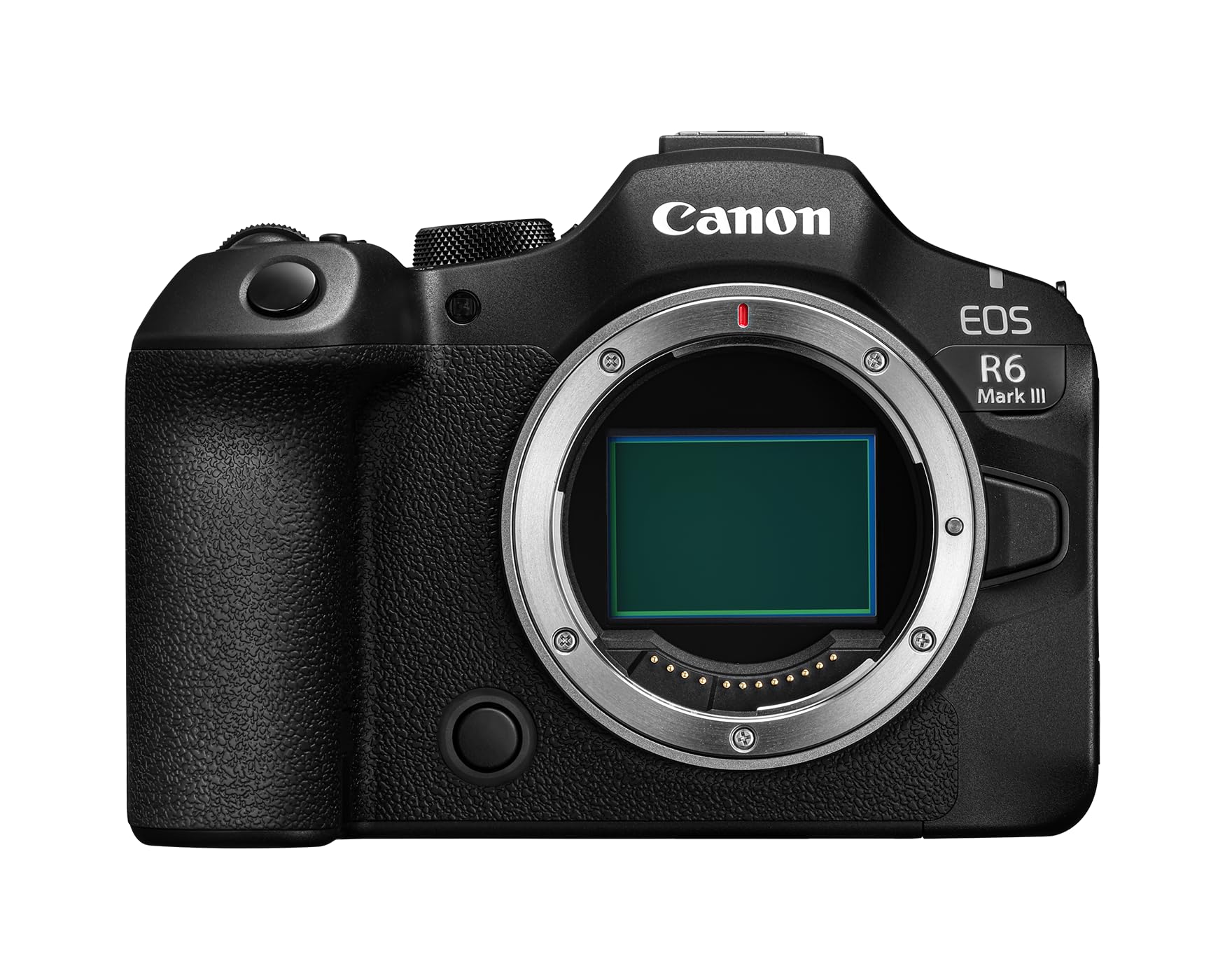
Forty frames a second and eight and a half stops of stabilization, for the moment it happens once.
The R6 Mark III opens with two numbers that reshape what a monochrome camera can do. The first is 40 frames per second with 20 frames of pre-continuous shooting — meaning the camera is already recording before you press the shutter, so you can capture the instant that happened just before your reaction. Combine that with 14-bit depth and a 32.5MP full-frame CMOS sensor, and you get deep tonal files at a speed nothing else in this set approaches.
The second number is stabilization: up to 8.5 stops of coordinated shake correction at the center of the frame and 7.5 stops at the periphery. That is the strongest stabilization on this entire list, and in black-and-white work it means you can hand-hold in conditions that would otherwise force a noisy ISO push. Dual Pixel CMOS AF II handles People, Animal, and Vehicle detection with a Register People Priority mode, and 393 autofocus points cover the frame.
Two configurable card slots — one CFexpress Type B and one UHS II SD — let you shoot RAW to the fast card while writing backups to the other. The energy that makes this camera feel easy is also why it is not the compact choice; it takes up space and expects a working bag.
What it does no other pick here can
- 40 fps with 20 frames of pre-continuous shooting catches moments you could not pre-plan
- Up to 8.5 stops of IBIS at center and 7.5 stops at the periphery
- 14-bit files from a 32.5MP full-frame sensor
- Dual card slots (CFexpress Type B + UHS II SD) for redundancy
The honest cost of buying in
- Larger, heavier body than every compact pick here
- The speed you are paying for is overkill for static monochrome work
- Body-only — no lens included
Tailor-made for: action and event monochrome where the shot happens once, or any work where 8.5 stops of stabilization saves you a tripod.
Overkill if: you shoot slow, deliberate monochrome — the speed premium is hard to justify for static subjects.
9. Sony Cyber-Shot DSC-RX1 RII Digital Still Camera, Black

A full-frame sensor and a Zeiss 35mm f/2.0 in a body that still calls itself pocketable.
Very few cameras compress a full-frame sensor this far. The RX1 RII packs a 42.4MP back-illuminated Exmor R CMOS sensor behind a 35mm f/2.0 ZEISS Sonnar T lens with macro capability, and it carries the same 14-bit depth as the premium Canon and Nikon bodies. For monochrome, that combination of resolution and glass quality gives you detailed, gradable files with real depth-of-field control at f/2.0.
It was also the world’s first camera with a user-selectable optical variable low-pass filter (a glass element that can soften fine detail to prevent color artifacts), which you can switch between Off, Hi, and Standard. In practice you simply leave it off, and with no moiré issues (false color patterns that appear on fine textures) you get maximum fine-detail sharpness. The retractable 2.4-million-dot XGA OLED Tru-Finder (an electronic viewfinder with 2.4 million pixels of resolution) carries ZEISS T coating, and there is a fast hybrid AF system with 399 focal plane phase-detection points. Owners describe the out-of-camera JPEG files as beautiful and the autofocus as quick — but they also describe the battery life as genuinely poor, and the market data bears that out: value and size both split opinion, with ease of use and battery life taking the most lumps.
What makes this a niche tool is the 35mm fixed focal length. It will not zoom to a distant subject and it will not reach the 1200mm-end coverage of the Panasonic point-and-shoot. You are buying it for the files at 35mm, not for range.
The monochrome case for it: 42.4MP of tonal detail behind a ZEISS 35mm f/2.0 with real macro capability, in a genuinely small body.
The recurring complaint: battery life is repeatedly flagged as weak, so carry spares, and the 35mm fixed lens rules out zoom work.
Right for you if: the 35mm focal length is your language and you want the highest resolution here in a form factor that fits a bag.
Wrong for you if: you need zoom range or long battery life — both are genuinely limited.
10. Nikon D6 FX-Format Digital SLR Camera Body, Black
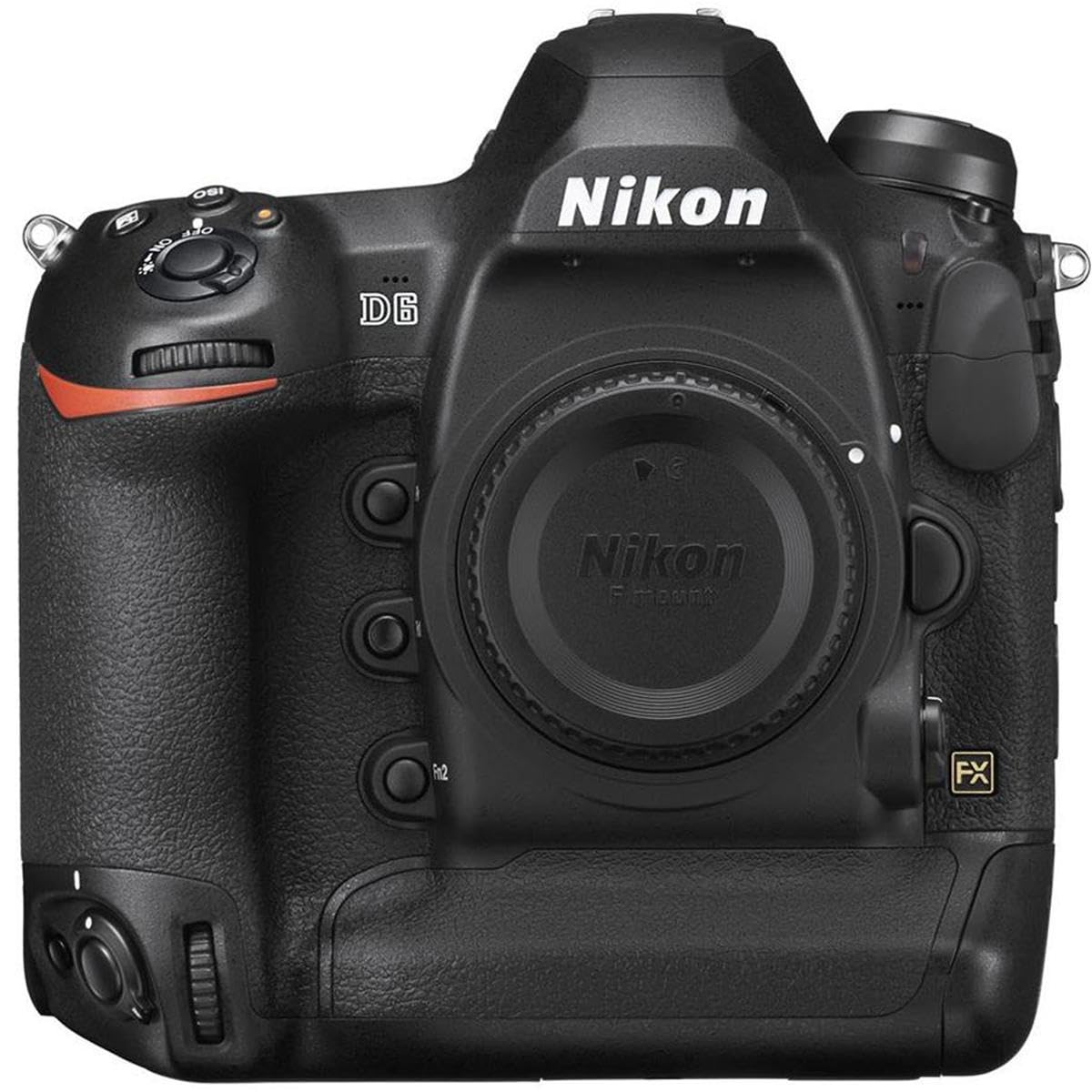
A pro sports body that nails nearly every frame — and knows it.
The D6 is a flagship DSLR (a camera with a mirror that flips up when you shoot) built around tracking speed and reliability, not around the size or weight of the package. It draws 14-bit files and mounts to the vast Nikon F system, so glass options are effectively unlimited. Autofocus performance is the standout: reviewers describe it as outstanding, capable of tracking moving subjects cleanly at the full 14fps burst (14 frames per second) — the kind of lock-on that puts the D6 closer to the 693-point a7 III than to the 39-point Panasonic for fast subjects. In-camera WiFi is limited to close range, and GPS is built in.
What the D6 does not deliver is a meaningful tonal upgrade over its predecessor. One assessment — from a reviewer who returned it — reported about 15% faster autofocus than the D5, with no high-ISO gain, only slightly better white-balance retention, and IQ that is marginally better. The camera adds 14fps, GPS, longer battery life, touch menus, and better customization on top of the D5 platform, but for what you are gaining in speed, the tonal difference in monochrome is thin.
The other consideration is packaging quality. Multiple reviewers describe boxes arriving open and missing documentation, with no user manual in the box. The camera itself draws praise as a professional tool, but the delivery experience does not match the flagship reputation.
What it nails: AF tracking that holds full lock through a 14fps burst, built-in GPS, and 14-bit files — a genuinely capable pro action body.
The honest limit: no meaningful monochrome improvement over the D5 sensor, and inconsistent packaging quality in delivery.
For you if: you are a working sports, news, or event photographer who needs the tracking and burst speed a DSLR flagship provides.
Look elsewhere if: monochrome tonality is the driver — this generation does not move the needle there.
11. Leica Q3 Compact Digital Camera (19080) (Black)
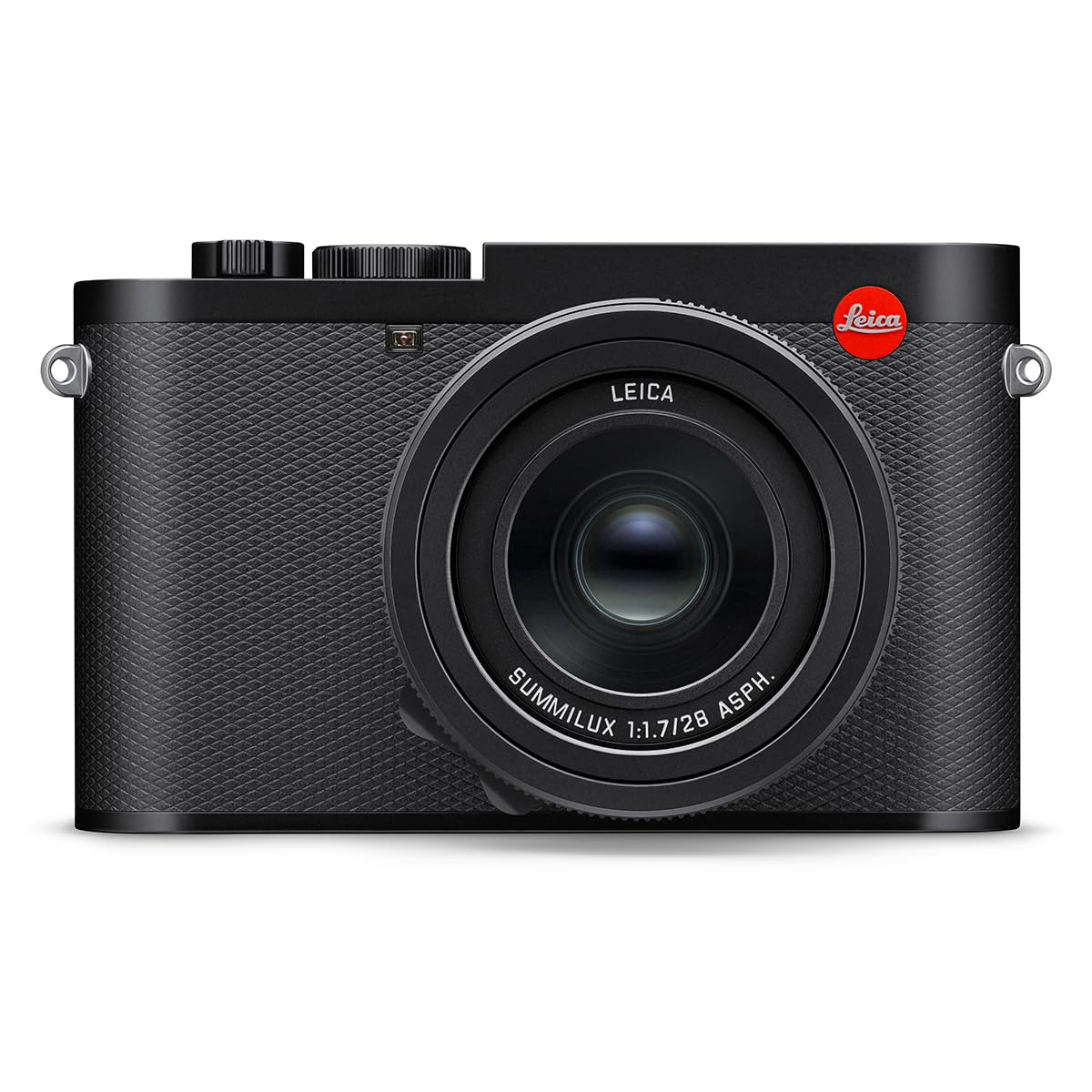
Sixty megapixels and a Summilux lens, in a body photographers describe as a Swiss Army knife.
The Q3 makes its case with the highest pixel count in this entire lineup: a 60MP back-side illuminated CMOS sensor (a 60 million pixel chip that captures more light) with Triple Resolution Technology, paired with the Maestro IV processor and 8GB of memory. Resolution is the argument for monochrome use — 60MP of grayscale data gives you cropping room and a level of fine-detail rendering that nothing else here approaches, and the Summilux 28mm f/1.7 ASPH lens with optical stabilization handles the glass side. Owners describe it as combining excellent image quality with genuine portability, and the sharpness of the 28mm lens is a recurring point.
The camera is built for framing flexibility, with digital zoom options reaching up to 90mm, and a hybrid autofocus system combining contrast and phase detection with 256 tracking points. A photographer running multiple systems noted that it works well for street shooting and became “one camera for everything” for day-to-day use.
The honest caveats are worth stating plainly. The Q3 is not a replacement for a full interchangeable-lens system — owners say so themselves — and it is not for anyone who needs zoom through optics rather than digital crop. Verified buyers rate it 4.0+ stars, but the experience depends heavily on the seller: at least one listing arrived used and damaged with missing accessories, so buy from an authorized source you trust.
Why it earns a premium slot: 60MP Triple Resolution capture, a Summilux 28mm f/1.7 ASPH lens with OIS, and digital zoom out to 90mm.
What to check first: the fixed 28mm lens is the whole optical story, and seller condition varies — verify before you commit.
Buy it if: you want maximum monochrome resolution in a fixed-lens body and you shoot street or travel that fits a 28mm frame.
Choose something else if: you need interchangeable glass, physical zoom, or a more forgiving starting price point.
Know the Specs
Bit Depth and What It Means for Gray
Bit depth is the count of distinct brightness levels each pixel can record. The Fujifilm X100V, Sony a7 III, Sony a6700, Canon EOS RP, Canon EOS R6 Mark III, Sony RX1R II, and Nikon D6 all capture 14-bit files — the highest tonal resolution represented in this group. The Panasonic Lumix point-and-shoot records 8-bit files, which is far fewer steps. That gap only shows when you push a monochrome file hard: lift the shadows on a 14-bit file and detail holds; do the same on an 8-bit file and banding and noise creep in.
Autofocus Point Count and Coverage
Autofocus points are the individual points on the sensor the camera can use to lock focus. More points generally means tighter coverage of the frame, which matters most when you are tracking a subject against a busy monochrome background. The Sony a6700 leads this group at 759 points, followed by the Sony a7 III at 693, the FUJIFILM X100VI at 425, the Sony RX1R II at 399, the Canon EOS R6 Mark III at 393, the Nikon Z f at 273, the Leica Q3 at 256, the Fujifilm X100V at 179, the Nikon D6 at 105, and the Panasonic Lumix point-and-shoot at 39. For still subjects, fewer points are perfectly workable; for moving subjects in cluttered scenes, the wider coverage pays off.
Dynamic Range and Monochrome Headroom
Dynamic range is the span between the brightest highlight and the darkest shadow a sensor can hold at once, and it decides how much tonal detail survives a heavy contrast push. The Sony a7 III states a 15-stop dynamic range, the widest figure in this set, which is why its monochrome files hold sky detail and shadow separation that narrower sensors lose. If you routinely convert color files to black and white and stretch the contrast, dynamic range is the number to weigh first.
Stabilization and Viewfinder Magnification
In-body image stabilization shifts the sensor to cancel handshake, letting you hand-hold slower shutter speeds and keep ISO low for fine monochrome grain. The Canon EOS R6 Mark III offers up to 8.5 stops of correction at center and 7.5 stops at the periphery, the strongest here, while the FUJIFILM X100VI provides up to 6 stops across five axes. Viewfinder magnification decides how much of the scene you can judge while framing — the Panasonic Lumix point-and-shoot runs 0.74x, against 0.52x on the Fujifilm X100V — so a higher figure makes precise composition in monochrome easier.
Common Questions
Do I need a dedicated black and white camera to shoot monochrome well?
Is 14-bit better than 10-bit for black and white photography?
Will a full-frame sensor give me better gray tones than APS-C?
How many autofocus points do I need for monochrome street photography?
Does in-body image stabilization matter for monochrome shooting?
Can I preview a black and white look before I take the shot?
Which of these cameras has the highest resolution for cropping monochrome files?
Do I need a zoom lens for black and white photography?
Is a DSLR like the Nikon D6 still a good choice for black and white work?
What should I check before buying a used fixed-lens camera for monochrome?
The Bottom Line
The strongest all-rounder for cameras for black and white photography remains the Fujifilm X100V — 14-bit files from a 26.1MP X-Trans CMOS 4 sensor, a 0.52x optical viewfinder with a 3.69M-dot OLED preview, and 179 autofocus points in a body you will actually carry. It carries the highest rating of the most-reviewed cameras here, and if you want the deepest tonal headroom for stretched monochrome skies, the Sony a7 III leads on dynamic range at 15 stops with 693 autofocus points. And for reaching distant subjects in daylight, the Panasonic Lumix point-and-shoot delivers a 20–1200mm equivalent range at 0.74x viewfinder magnification. Any of these will reward the switch to gray — match the tonal ceiling and focal length to how you actually shoot.
How we choose
We do not accept paid placement. Every pick is matched to a real buyer and a real use-case; we do not hands-on test units.
Sources
Specifications: manufacturer listings and product documentation. Review insights: verified customer reviews, as of October 2026. Pricing: not shown on this page (it changes often); check the current price via the retailer link.
As an Amazon Associate, Home Digitized earns from qualifying purchases. This does not affect which products we feature.