
Disclosure: This post contains affiliate links. As an Amazon Associate I earn from qualifying purchases, at no extra cost to you. Learn more
Specs are compiled from manufacturer listings and verified buyer reviews and can change over time — please confirm the key details on the product page before buying.
If your wiring loom is unraveling or a splice is open to the weather, the fix is the right tape — not just any roll from the drawer. The picks below split into two honest camps: vinyl tape that insulates live splices, and cloth harness tape that wraps looms so they look factory and stop rattling. Pick the camp, then pick the roll.
This guide is built by comparing the manufacturers’ published specifications and the patterns across verified customer reviews, so you get each pick’s real strengths and trade-offs instead of marketing spin.
What matters is whether a tape holds up where you actually use it — engine heat, weather, vibration. This breakdown ranks six solid options for electrical tape for automotive.
Top Picks

How To Choose The Best Electrical Tape for Automotive
The first fork in the road is job type, not brand. If you are insulating a live splice or wrapping a connection you want sealed, you want vinyl electrical tape. If you are dressing a loom to look stock and stop rattles, you want woven cloth or felt harness tape. Buying the wrong type is the single most common mistake — a stretchy vinyl roll will not give you the factory look, and a cloth roll is not built to seal a bare splice.
Heat rating: the number that decides where a tape can live
Engine bays and exhaust-adjacent runs get hot, so the temperature rating on the roll is your ceiling. Vinyl tapes here top out around 176°F, while the cloth harness tapes reach 257°F — meaning cloth is the only option for wrapping right against a hot component. If your tape is going somewhere cool like a cabin wire run, that ceiling barely matters.
Vinyl or cloth: matching the material to the job
Vinyl tape is a stretchy PVC backing with a rubber-resin adhesive, and its job is electrical insulation and moisture protection — think sealing a splice or patching a frayed conductor. Cloth harness tape is a woven fabric with a self-adhesive backing, and its job is abrasion protection, noise dampening, and that tidy OEM loom look. Keep both types on the shelf.
Residue tells you a lot about adhesive quality
Cheap tape leaves a sticky goo behind when you peel it, which matters if you ever need to rework a connection six months down the line. The better tapes here are built to remove cleanly, and that clean-removal behavior shows up again and again in what buyers report. If you redo wiring often, prioritize residue-free removal over a lower price.
Side-by-Side Comparison
| Model | Best For | Type | Temp Range | Roll Count | Amazon |
|---|---|---|---|---|---|
| Scotch 3M Super 33+★ Best Overall | Sealing splices that stay clean | Vinyl | 0°F–221°F | 10 rolls | Amazon |
| XFasten Cloth Harness TapeBest for Big Builds | Rebuilding whole looms | Cloth | -40°F–257°F | 5 rolls | Amazon |
| 3M Temflex 175 | Bulk insulation work | Vinyl | 14°F–176°F | 10 rolls | Amazon |
| GTSE Wide Electrical Tape | Wide coverage on big bundles | Vinyl | up to 176°F | 3 rolls | Amazon |
| RED WOLF Wire Harness Tape | Engine-bay loom wrapping | Felt cloth | -40°F–221°F | 5 rolls | Amazon |
| Trazon Wire Harness Tape | Clean removal on reworked looms | Cloth | -40°F–257°F | 5 rolls | Amazon |
Detailed Reviews
1. Scotch 3M Super 33+ Vinyl Electrical Tape
Our pick — 4.5+★ from 950+ verified ratings; the strongest balance of quality and price.
The splice-sealing workhorse that keeps every connection bone-dry.
For anyone insulating a live splice or covering a frayed conductor, this is the vinyl tape that earns its keep. It is a rubber-resin adhesive on a PVC backing (a stretchy plastic film), built for both electrical and mechanical protection. Rated for protective jacketing up to 600V, it is the pick that suits a wiring repair you actually want to last.
It will not let weather win either. The roll is water resistant, rated for indoor and outdoor use, and it hangs on through temperatures from 0°F to 221°F. UV rays, abrasion, corrosion, alkalies and acids all get shrugged off. Then there is the stretch — elongation up to 250% means you can pull it tight around awkward corners and get a snug, conforming wrap.
The thing owners swear by is the clean peel. As owners mention: “it’s the only electrical tape that I know of that will not leave a sticky mess on the wires when you remove it six months later.” That is the real payoff for anyone who reworks wiring — no glue scrubbing next time you open a loom. The honest catch is cost: this ten-roll pack sits at the top of the price range here, and the DIY one-splice-a-year buyer may not need that many rolls.
What makes it the benchmark
- Clean 600V jacketing with a water-resistant, flame-retardant vinyl body
- Stretches up to 250% so it hugs tight corners and stays snug
- Removes without leaving a sticky residue on the wires
- Made in the USA, UL Listed and CSA Certified
The trade you accept
- Priced at the premium end for a ten-roll pack
- Vinyl type is for insulation, not the OEM cloth-loom finish
Reach for this if: you seal splices often and hate cleaning glue off old connections.
Think twice if: you only need tape for dressing a loom to look factory — a cloth roll does that job better.
2. XFasten Black Cloth Electrical Tape
The long-run loom tape that turns messy wiring into a factory finish.
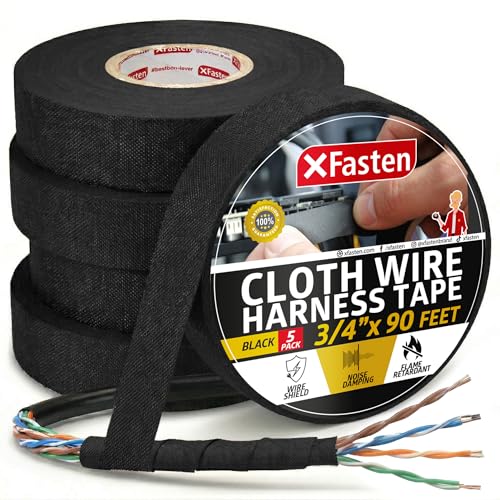
When you are rebuilding an entire harness, footage is what saves you from running out midway. Each roll here runs 90 feet — that is 80% more tape per roll than the Trazon cloth rolls, which come in at 50 feet each. Five rolls means a big bumper-to-bumper wrap job without stopping to reorder. It is the pick for a project truck or a full loom rebuild, not a single splice.
It handles the heat and the rough stuff. The cloth backing is rated from -40°F to 257°F, so it shrugs off engine-bay temperatures that would soften a vinyl roll. The bi-directional weave makes it puncture-, abrasion-, and corrosion-resistant, and the maker rates the cloth backing to last up to 6 years and 150k miles of driving. It even tears by hand — no scissors needed, which matters when you are reaching into a tight loom.
What wins people over is the professional look. Customers note it is “as good as name brand at half the cost,” and one buyer rebuilt an injector harness on an ’05 Power Stroke to factory specs with it. The recurring gripe is peel-ability — the extra-sticky adhesive grabs hard and can be tough to start and remove if you misplace a wrap. Plan your run before you commit the tape.
Where it earns its place
- 90 feet per roll suits long loom runs and full rebuilds
- 257°F cloth backing survives engine-bay heat without melting
- Tears by hand for fast work in tight spots
Where it asks for care
- Very strong adhesive is hard to remove if you misapply it
- Being a cloth tape, it is for wrapping not for sealing a live splice
The call: buy this when the job is measuring in feet, not inches — a full harness refresh.
Match the roll to the task: keep a vinyl tape on hand for the actual splices and let this handle the loom.
3. 3M Temflex Vinyl Electrical Tape 175

Ten rolls of everyday vinyl for anyone who keeps a stocked toolbox.
Ten rolls at a mid-tier price is where this one lives, and its job is bulk insulation and wire bundling. It is vinyl tape with a pressure-sensitive adhesive, rated for primary insulation up to 600V at 176°F on joints and splices, and it is flame-retardant while it inhibits corrosion of the conductors underneath. If you solder or repair wiring regularly, this is your refill pack.
The numbers behind it are straightforward. It carries a 5-year shelf life from the date of manufacture, so a spare box does not go bad sitting in the garage. It is UL Listed and CSA Certified, and it is compatible with rubber and synthetic splicing compounds — useful when you are sealing a joint that already has compound on it.
The everyday grab: this is the roll you replace without thinking twice — enough rolls to last and enough rating to trust on a standard splice.
Honest limit: the 176°F ceiling and 14°F floor are narrower than the cloth tapes here, and the listing itself flags it for industrial and occupational use rather than consumer sale.
Stock it if: you want a dependable vinyl roll on the shelf for routine electrical work.
Pass for: high-heat engine-bay wrapping, where a 257°F cloth tape is the safer ceiling.
4. GTSE Black Wide Electrical Tape
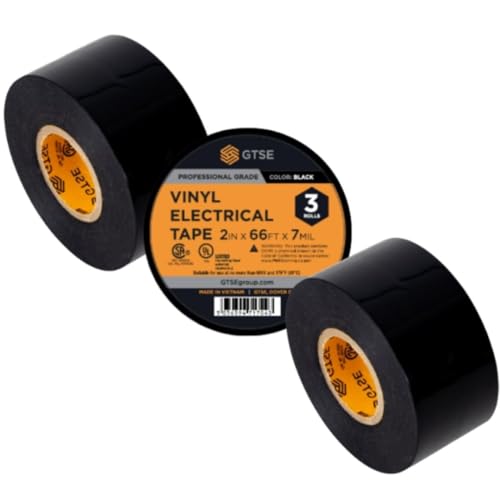
A double-wide roll that powers through big bundles in fewer passes.
If you have ever wrapped a thick wiring bundle and lost count of the passes, this width is the fix. Each roll runs 2 inches wide — that is 33% wider than the 0.75-inch Scotch Super 33+, so you cover more surface per wrap and finish a big loom job faster. It is a rubber-based adhesive on PVC, UL and CSA Listed, and rated up to 600V and 176°F.
It is built tough for outdoor and hard-wearing duty. The PVC body is moisture-resistant, UV resistant, and flame-retardant, and reviewers point out it holds up well on outdoor garden-light connections and on metal surfaces. One buyer fixed a spraying water-pipe leak with only four wraps, which speaks to how thick and grippy the rubber adhesive is.
Where the width pays off: bundling several wires or taping sharp corners gets finished in fewer laps, and the strong stretch lets it seal complex shapes.
The catch: that width and tack work against hand-tearing — the roll needs scissors or a blade to cut cleanly, unlike the hand-tearable cloth tape above.
Best for: anyone covering wide bundles or big joints who wants speed over a narrow strip.
Weigh instead if: you tape one-handed in tight spots and want to tear by hand.
5. RED WOLF Wire Harness Tape

A felt cloth wrap made for the heat and grime of the engine compartment.
This one is aimed squarely at engine-bay work — insulating and protecting wiring near the battery and under the hood. It uses a polyester non-woven felt with a strong acrylic adhesive, rated from -40°F to 221°F for heat resistance, and it is built with stain and aging resistance so it keeps looking tidy. Five rolls, each 1 inch wide and 50 feet long, gives you a wide strip for wrapping looms quickly.
It is the easy one to apply. The roll is hand-tearable with no tools needed, so you can decide the length as you wrap and snap it off with your fingers. A wide 1-inch face means fewer passes than a narrow loom tape, and the felt weave also helps reduce noise and vibration from the wires. Shoppers say it works well wrapping car stereo wires and general loom covering.
What stands out is that the stickiness actually grows with time — the listing notes the longer the tape sits, the stronger the adhesion becomes. The flip side is the foil-thin 0.03-millimeter build: it conforms nicely but is not a structural wrap, so it is for dressing and protecting a loom rather than patching a conductor.
Pick it when: you are tidying an engine-compartment loom and want a quick, no-tool wrap.
Look elsewhere if: the job is sealing a damaged wire — that calls for a stretchy vinyl tape, not felt.
6. Trazon Wire Harness Tape
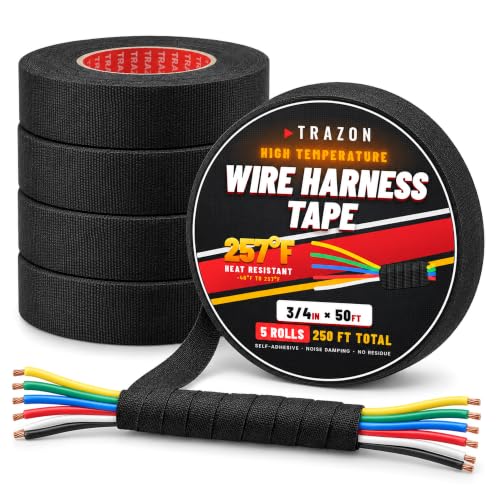
The loom tape you can peel back clean when you need to rework wiring.
For anyone who strips a harness back to fix a fault, clean removal is the feature that saves a headache. This woven cloth tape is self-adhesive and built to come off without leaving residue, so reworking a connection does not mean scraping glue off the wires. It is rated from -40°F to 257°F, handling engine-bay heat, and the dense cloth weave helps reduce rattles and wire vibration for a quieter install.
Footage-wise it is the shorter roll of the cloth group — 50 feet per roll versus the 90 feet on the XFasten rolls — but you still get 250 feet across the five-pack, enough for a solid loom job. It is abrasion- and corrosion-resistant, cuts cleanly with scissors or a blade, and suits automotive, motorcycle, marine, and RV wiring. Its adhesion is the trait buyers like most, and it covers wire looms neatly.
Why it earns a spot: clean removal plus a 257°F heat ceiling make it a smart pick for looms you expect to open again.
Know before you buy: at 50 feet per roll it runs out sooner on a long harness than the 90-foot cloth rolls, so grab a second pack for a full vehicle.
Choose it if: you rework wiring often and want tape that peels back without a mess.
Go bigger if: you are wrapping an entire vehicle and would rather not run short.
Know the Specs
Temperature rating (°F)
This is the range a tape can handle without melting, hardening, or coming loose. A wider range means more places it can live. Vinyl tapes here cover roughly 0°F to 221°F or 14°F to 176°F, while cloth harness tapes reach 257°F — which is why cloth is the safer choice right against a hot engine component. Match the rating to where the tape sits, not the whole car.
Voltage rating (V)
The voltage figure tells you how much electrical load the tape is rated to insulate, usually shown as a splice-insulation ceiling. The vinyl tapes here are rated up to 600V, which covers standard automotive circuits. If you are sealing a splice on a 12V car system, that headroom is far more than you need — but it is a good sign of the tape’s insulating quality.
Adhesive type and residue
Rubber-resin and acrylic adhesives grab hard and hold through heat, water, and vibration. The trade-off is residue: a cheap adhesive leaves a sticky film when peeled, while a good one removes cleanly. If you rework wiring, clean removal matters more than raw stickiness, so check whether a roll is built to come off without a mess.
Width and roll count
Width decides how many passes you make — a 2-inch roll covers far more surface per wrap than a 0.75-inch strip, so wide tape finishes big bundle jobs faster. Roll count and footage decide how far one order goes. A 5-pack of 50-foot rolls and a 10-pack of 66-foot rolls are very different amounts of tape, so total footage matters more than pack size alone.
Common Questions
Can I use cloth harness tape to insulate a live splice?
What temperature rating do I need for engine-bay wiring?
Will electrical tape leave sticky residue on my wires?
How much tape do I need to wrap a full wiring harness?
Is wider tape better for automotive wiring?
What is the difference between vinyl electrical tape and cloth harness tape?
Does automotive electrical tape need to be UV and moisture resistant?
Can I hand-tear these tapes or do I need a tool?
How long does automotive electrical tape last on a wire harness?
The Bottom Line
For most people sorting through the electrical tape for automotive picks, the winner is the Scotch 3M Super 33+ because it seals splices up to 600V, stays put from 0°F to 221°F, and peels clean without leaving residue — the quiet reason owners keep rebuying it. If you are rebuilding a whole loom, grab the XFasten Cloth Harness Tape for its 90-foot rolls and 257°F rating. And for tidy engine-bay wrapping you might open again, the Trazon Wire Harness Tape and its clean-removal cloth build is the one to reach for.
How we choose
We do not accept paid placement. Every pick is matched to a real buyer and a real use-case; we do not hands-on test units.
Sources
Specifications: manufacturer listings and product documentation. Review insights: verified customer reviews, as of October 2026. Pricing: not shown on this page (it changes often); check the current price via the retailer link.
As an Amazon Associate, Home Digitized earns from qualifying purchases. This does not affect which products we feature.