1- Small Cordless Tiller vs Larger Cordless Hand Tiller Comparison
This head-to-head comparison examines two cordless hand tillers: the compact GARDTECH 21V Cordless Tiller Cultivator and a higher-capacity 21V Cordless Tiller Cultivator with dual batteries and larger tines. The review highlights power, tilling width and depth, battery life, portability, and user suitability. It helps gardeners choose between a lightweight mini tiller and a more powerful handheld cultivator.
⚡ Quick Verdict
For tight raised beds and users needing an ultra-light one-handed tool, choose the GARDTECH for maneuverability. For faster, deeper cultivation across bigger plots, choose the 350RPM, dual-battery 9-inch cultivator. The second product wins overall due to stronger motor, greater tilling width, deeper penetration, and much longer runtime.
Analysis: GARDTECH 21V Cordless Tiller

Ideal for gardeners who need a lightweight, one-handed cordless cultivator for small beds and delicate areas, this tool prioritizes maneuverability and ease of use over raw power. Suited to seniors, beginners, and container gardeners, it aims to reduce fatigue while providing efficient soil loosening in tight spaces without cords or gas.
The GARDTECH 21V Cordless Tiller features a compact motor and four hardened 65Mn steel tines. It spins at 235 RPM and tills up to 4 inches wide and 4 inches deep. The small footprint makes it suitable for flower beds, raised beds, and garden rows where a full-size tiller is impractical.
Battery runtime is rated between 40 and 60 minutes from a 2.0Ah 21V battery. The design emphasizes safety with a dual-switch start and a debris guard to limit splash. The entire tool weighs 2.05 pounds, making it exceptionally portable for short, light-duty tasks and frequent repositioning.
Build Quality & Design
Construction uses hardened 65Mn steel tines and lightweight housing to keep overall mass low. The compact ergonomic body allows one-handed operation and reduces wrist strain. Materials appear optimized for light-duty home use rather than heavy commercial workloads. The debris guard and dual switch add user protection, but the lightweight construction may trade off long-term durability under heavy loads.
Performance & Speed
A 235 RPM rotation rate and four hardened tines provide modest torque suitable for loose or moderately compacted soil. The 4-inch width and 4-inch depth limit coverage per pass, increasing time for larger areas. The motor and tine combo perform well for surface aeration and small bed preparation, but struggle on heavy clay or deeply compacted ground.
Features & Functionality
Key features include one-handed operation, dual-start safety switches, a debris guard, and an included 2.0Ah battery with overheat protection. The tool eliminates cords and fuel. Functionality targets spot tilling, bed refresh, and weed disruption. It lacks multiple speed settings, auxiliary handles, or detachable gears for clearing tangled weeds, limiting use cases to lighter chores.
User Experience
The ultra-light weight and one-handed control make the unit easy to position in narrow beds and between plants. Start procedures require pressing two switches for safety, which reduces accidental starts. Battery changes are simple but the single 2.0Ah cell limits continuous operation when tackling multiple beds. Noise and vibration remain low compared with larger electric models.
Value for Money
Value depends on needs; small-space gardeners gain high convenience from low weight and cordless freedom. The included battery and 60-minute runtime give adequate performance for small plots. For larger gardens, the limited width, depth, and single lower-capacity battery reduce value compared with deeper, wider, dual-battery models offering faster work at similar price points.
✅ Advantages
❌ Disadvantages
Analysis: 21V 350RPM Cordless Tiller

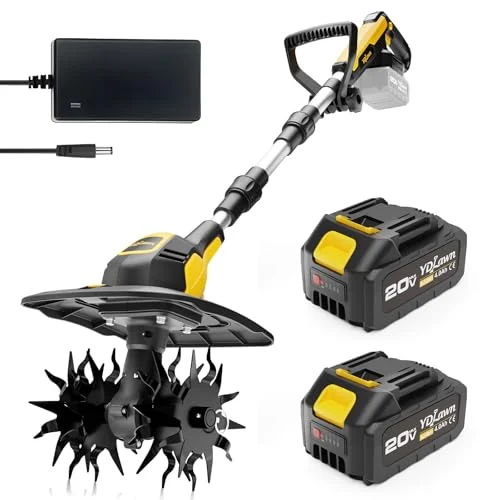
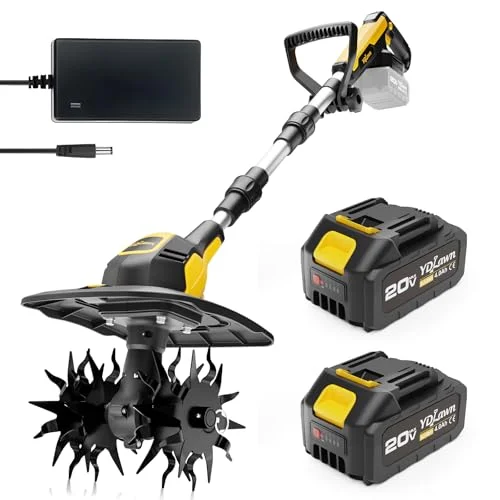
Designed for gardeners who need higher throughput and deeper penetration without sacrificing cordless freedom, this model suits small-to-medium plots and heavier soils. The dual 3.0Ah batteries, 1200W brushless motor claim, and larger 9-inch width aim to speed up soil preparation while remaining portable and relatively easy to handle for two-handed operation.
This 21V cordless cultivator combines a brushless 1200W-rated motor, up to 350 RPM, and 48 steel tines to deliver a 9-inch tilling width and up to 7-inch depth. Two 3.0Ah batteries extend runtime to around 90 minutes. The larger footprint and stronger motor enable faster, deeper cultivation for more substantial garden areas.
Safety features include a dual-safety start and an adjustable auxiliary handle to reduce fatigue. The unit weighs approximately 10 pounds, balancing portability and user stability. Detachable gears simplify cleaning tines after hitting weeds. It targets users preparing larger raised beds, compost areas, or patching lawns, where efficiency matters.
Build Quality & Design
The cultivator uses numerous steel tines and a robust brushless motor design intended for sustained operation. The auxiliary handle adds control when working denser soils. Though heavier than mini models, the construction supports greater torque and deeper penetration. Detachable gears and serviceable parts indicate a focus on maintainability and longer-term durability for regular garden use.
Performance & Speed
A 350 RPM top speed with 48 steel tines and 1200W brushless motor enables faster soil turnover and deeper cultivation up to seven inches. The larger tilling width reduces passes and overall job time. Brushless technology enhances torque and motor life, while dual batteries sustain longer continuous operation for larger projects and tougher ground conditions.
Features & Functionality
Notable features include two 3.0Ah batteries for extended runtime, detachable gears for cleaning, an adjustable auxiliary handle, and a safety unlock plus start switch. The machine supports plowing, aerating, weed removal, and compost mixing. The broader 9-inch cutting width and deeper depth expand the range of tasks compared with compact mini tillers.
User Experience
At roughly 10 pounds, the unit requires two-handed operation but remains manageable for most users. The auxiliary handle reduces vibration and fatigue during extended sessions. Dual batteries minimize downtime. The unlock-and-start safety flow protects users. Noise and torque are higher than mini models, so users should expect stronger vibrations and need to maintain a firmer grip.
Value for Money
Value centers on greater capability: wider coverage, deeper tilling, brushless motor longevity, and long runtime from two 3.0Ah batteries. For medium gardens, the time savings and expanded functionality justify higher cost relative to mini models. Budget shoppers with very small beds may find the larger unit less economical despite superior performance.
✅ Advantages
❌ Disadvantages
Major Factors to Consider
Selecting a tiller requires weighing performance, runtime, build quality, and ergonomics. The following factors highlight what matters most. Consider garden size, soil type, mobility, and maintenance when choosing between a compact one-handed tool and a larger cordless cultivator with greater coverage.
Performance
Performance measures torque, tine count, and RPM to determine soil penetration and turnover. Higher RPM and more tines increase throughput and handle denser soils. Choose a model whose motor and tine configuration match garden soil: light rototilling benefits from compact models, while clay and larger plots need higher torque and wider tines.
Speed & Efficiency
Speed & efficiency depend on tilling width, depth, and battery runtime. Wider tines and deeper penetration reduce passes and total time. Longer battery life sustains longer sessions. For medium plots, prioritize wider tillers with dual batteries; for small beds, a compact, quick-to-maneuver unit may be faster overall in tight spaces.
Price & Value
Price must be judged against runtime, motor quality, and extras like multiple batteries or brushless motors. Higher upfront cost often buys better coverage and longevity. Budget buyers with tiny gardens can opt for compact models; those preparing larger areas get better long-term value from a more capable machine that saves labor and time.
Build Quality
Build quality covers tine material, motor type, housing robustness, and serviceability. Hardened steel tines and brushless motors offer longer life. Removable gears and replaceable batteries simplify maintenance. Lighter housings trade durability for portability, so match construction to intended usage frequency and soil hardness.
Design & Aesthetics
Design affects ergonomics, handling, and storage rather than looks. One-handed lightweight tools excel in narrow beds. Two-handed units with auxiliary handles improve control on tougher soil. Consider how grip shape, guard placement, and overall balance influence comfort during repeated use, especially for users with joint issues.
Durability
Durability depends on motor type, protective features, and construction materials. Brushless motors, hardened tines, and serviceable parts last longer. Battery quality and overheat protection also affect lifespan. For frequent heavy-duty use, choose more robust designs; for occasional light jobs, a lighter unit delivers acceptable longevity.
Feature Comparison
This feature table maps core capabilities and practical differences between the GARDTECH mini tiller and the larger 350RPM dual-battery cultivator. It highlights which unit includes key items, safety features, and operational capabilities. Use it to quickly see which model aligns with priorities like runtime, width, depth, and maintainability.
| Feature | GARDTECH 21V Cordless Tiller | 21V 350RPM Cordless Tiller |
|---|---|---|
| Cordless Operation | ✓ | ✓ |
| Brushless Motor | ✗ | ✓ |
| Dual Batteries Included | ✗ | ✓ |
| Single-Hand Operation | ✓ | ✗ |
| Tilling Width ≥ 8 inches | ✗ | ✓ |
| Tilling Depth ≥ 6 inches | ✗ | ✓ |
| Overheat Protection | ✓ | ✓ |
| Detachable Gears for Cleaning | ✗ | ✓ |
| Auxiliary Handle | ✗ | ✓ |
| Safety Dual-Switch Start | ✓ | ✓ |
Specifications Comparison
Key specifications influence suitability. The following comparison lists practical metrics such as typical runtime, tilling dimensions, motor type, and weight. Use these specs to match the tool to garden size, soil type, and user strength or mobility constraints.
| Specification | GARDTECH 21V Cordless Tiller | 21V 350RPM Cordless Tiller |
|---|---|---|
| Price | N/A | N/A |
| Weight | Approx. 2.05 lbs | Approx. 10 lbs |
| Tilling Width | 4 inches | 9 inches |
| Tilling Depth | 4 inches | Up to 7 inches |
| Motor Speed (RPM) | 235 RPM | Up to 350 RPM |
| Battery Configuration | 21V 2.0Ah single battery | 21V 2×3.0Ah dual batteries |
| Tine Material/Count | 4 hardened 65Mn steel tines | 48 durable steel tines |
| Motor Type | Brushed/standard motor | Brushless motor (1200W rating) |
🏆 Winner: 21V 350RPM Cordless Tiller
Score Breakdown
8.7/10
9/10
9/10
8.5/10
8.6/10
8.4/10
The 21V 350RPM cultivator wins due to substantially higher tilling width, greater depth, brushless motor longevity, and dual 3.0Ah batteries for up to 90 minutes runtime. These features reduce job time and handle tougher soils, offering a stronger all-around solution for medium gardens while maintaining cordless convenience and serviceable parts.
Choose GARDTECH 21V Cordless Tiller If…
Budget-Conscious Buyers
Choose product 2 when the budget allows slightly higher initial spend for better long-term efficiency. The dual batteries and brushless motor reduce downtime and maintenance costs. Time savings on medium-sized gardens offset the price. This unit delivers stronger value for frequent use across larger plots rather than occasional small-bed chores.
Specific Use Case
Choose product 2 for deeper bed preparation, compost mixing, or patching lawns where 7-inch depth and a 9-inch width speed work. The brushless motor and high tine count handle compacted soil better. This model suits small vegetable plots, raised beds spanning multiple rows, or frequent soil renovation tasks.
Preference Scenario
Choose product 2 when preference leans toward higher performance, fewer passes, and less manual fatigue. The auxiliary handle improves control and reduces strain for longer sessions. For gardeners who prioritize job speed and deeper cultivation over absolute lightness, this cultivator aligns with those ergonomic and efficiency preferences.
Value Seekers
Choose product 2 if value is measured by time saved and lower maintenance. Brushless motors and two batteries increase usable life and reduce replacements. For users tackling larger areas often, higher upfront cost becomes an investment in faster, less strenuous work and greater long-term reliability.
🎯 Final Recommendation
Small-space gardeners, seniors, or those needing a very light, one-handed tool should choose the GARDTECH mini tiller. Gardeners with medium plots, compacted soil, or a need for faster bed preparation should choose the 350RPM dual-battery cultivator. The larger model wins overall for power and runtime, while GARDTECH excels in maneuverability and simplicity.
Summary
- GARDTECH offers exceptional portability and one-handed control suitable for tight beds and occasional spot tilling. Its small size and safety features make it ideal for seniors and container gardeners.
- The 350RPM dual-battery cultivator delivers wider coverage, deeper penetration, and substantially longer runtime. Brushless motor and detachable gears suit frequent use on larger or tougher plots.
- Performance scales with garden size: GARDTECH fits small plots; the larger cultivator suits medium plots and heavier soils. Choose based on area and soil hardness.
- Runtime matters: single 2.0Ah battery gives 40–60 minutes on the mini tiller; dual 3.0Ah cells provide up to 90 minutes on the larger unit, reducing downtime.
- Ergonomics differ: GARDTECH supports one-handed precision but limited power; the larger unit uses an auxiliary handle for control during heavier work and increases operator stability.
- Maintenance and longevity favor the brushless motor and serviceable parts of the larger cultivator, while the lightweight GARDTECH trades some durability for easier maneuverability and storage.
Frequently Asked Questions
Which product is better overall?
The larger 350RPM dual-battery cultivator is better overall for most gardeners. It provides greater tilling width, deeper penetration, brushless motor durability, and longer runtime. The GARDTECH mini excels for very small beds and one-handed precision tasks.
Is the price difference worth it?
Value depends on garden size and frequency of use. For larger plots, the higher cost of the more powerful cultivator pays back in time saved and longevity. For occasional small-bed work, the cheaper, lighter mini tiller may be more economical.
Which has better build quality?
The 350RPM cultivator shows stronger construction cues with a brushless motor, many tines, and detachable gears. The GARDTECH uses hardened tines but prioritizes lightness, so it may not withstand heavy, frequent use as well as the larger model.
Which is better for beginners?
Beginners with small raised beds benefit from the GARDTECH mini tiller due to its light weight and simple controls. For beginners tackling larger gardens, the larger cultivator offers easier results but requires learning two-handed operation and handling more torque.
Which offers better value for money?
For moderate to heavy use, the dual-battery brushless cultivator offers superior value through higher efficiency and longer service life. For infrequent, light-duty users, GARDTECH provides adequate performance at likely lower cost and simpler maintenance.
What are the main differences?
Main differences include tilling width (4 inches versus 9 inches), depth (4 inches versus up to 7 inches), motor type (standard versus brushless), battery configuration (single 2.0Ah versus dual 3.0Ah), weight, and target use cases. Those differences shape speed, durability, and suitability.

- Cordless Tillers vs Hard Soil: Power, Limits, and Techniques - April 5, 2026
- Cordless Tillers vs Hard Soil: 7 Tips to Break Compaction - April 5, 2026
- Battery Tiller Digging Depths: Typical Depths & Limits - April 5, 2026