
Specs are compiled from manufacturer listings and verified buyer reviews and can change over time — please confirm the key details on the product page before buying.
You need one bag that swallows a helmet, cleats, a glove and a bat — and survives being dragged across a parking lot every Saturday. The short answer: the KAVIGOR Youth Baseball Bag is the safest buy for most families, because it holds a full set of gear in a 30-liter body and has a two-year guarantee behind it. Below are nine youth bat bags ranked by what actually matters on a muddy field, from helmet room to whether the fence hook is where you expect it.
This guide is built by comparing the manufacturers’ published specifications and the patterns across verified customer reviews, so you get each pick’s real strengths and trade-offs instead of marketing spin.
A kid’s bag gets dropped, kicked and hung on a chain-link fence in the rain, so the details you ignore at checkout are the ones that decide the season. Every pick here is sized for youth players, not adult travel-ball rigs. Here is how each one handles a full load of gear and a rushed morning: a practical walkthrough of every youth bat bag worth putting on your shortlist.
Top Picks

How To Choose The Best Youth Bat Bag
Your young player needs four things from a bat bag: a helmet that fits, bats that stay put, a load a small kid can carry, and seams that hold until the season ends. A bag that gets all four right beats one with a bigger number printed on the tag. Three picks here share the same 4.5+ rating, so capacity, weight and the small hardware details decide the split.
Match the bag to your kid’s height, not just their age
A bag rated for ages 8-12 is not automatically right for a seven-year-old. A short player will drag a tall pack through the dirt, while a taller one will complain about a bag that barely clears the shoulder blades. Look at the dimensions, then picture it on your child’s back: a 17-inch-tall body sits closer to a small frame, and a 20-inch body fits a bigger kid who is already hauling their own gear. Adjustable shoulder straps help here, since they let the same bag grow with a player for a season or two.
Count bats before you trust the listing
Bat capacity is the number families compare first, because the sleeve count decides whether the whole team’s spare bats can ride along. Two bat sleeves is the common youth setup, four is generous, and some bags tuck a bat into a side water-bottle pocket as a workaround. If your player carries a bat plus a spare for a sibling, favor a bag with dedicated sleeves rather than a bag that technically fits a bat only when nothing else is packed.
Why the shoe compartment matters more than you think
Cleats come off covered in mud and grass, and a separate shoe compartment keeps that mess off helmets and jerseys. A ventilated shoe pocket adds airflow so wet cleats dry instead of festering overnight in the car. Not every bag here has one, and a few place the shoe pocket in an awkward spot, so check where it sits before you commit.
Side-by-Side Comparison
| Model | Best For | Capacity | Weight | Bat Holders | Amazon |
|---|---|---|---|---|---|
| KAVIGOR Youth Baseball Bag★ Best Overall | Best all-round youth bag | 30 liters | — | 4 bats / bottles | Amazon |
| Baseball Softball Gear Bag for Boys Girls Ages 8-12Lightest Hauler | Lightest full-featured pick | 28 liters | 1.1 pounds | 2 bat sleeves | Amazon |
| DAFISKY Baseball Bag Softball BackpackMost Room | Most room for big gear loads | 40 liters | 1.4 pounds | Bat holders | Amazon |
| DAREKUKU Youth Baseball Backpack | Budget teeball starter | 18 liters | — | 4 bats / bottles | Amazon |
| Easton MOXIE Backpack Equipment Bag | Smallest kids, easiest carry | — | — | 2 side sleeves | Amazon |
| Goloni Softball Bag | Multiple sports, one bag | 30 liters | — | 2 side holders | Amazon |
| Baseball Bag for Boys 8-12 (VIGEGARI) | Biggest load for older kids | 42 liters | — | Bat sleeves | Amazon |
| Rawlings R400 Backpack Equipment Bag | Brand-name starter bag | — | 16 ounces | 2 bat sleeves | Amazon |
| Softball Bag / Baseball Equipment Backpack (AI EN JIU) | Long-haul durability pick | — | 16 ounces | Side bat holders | Amazon |
Detailed Reviews
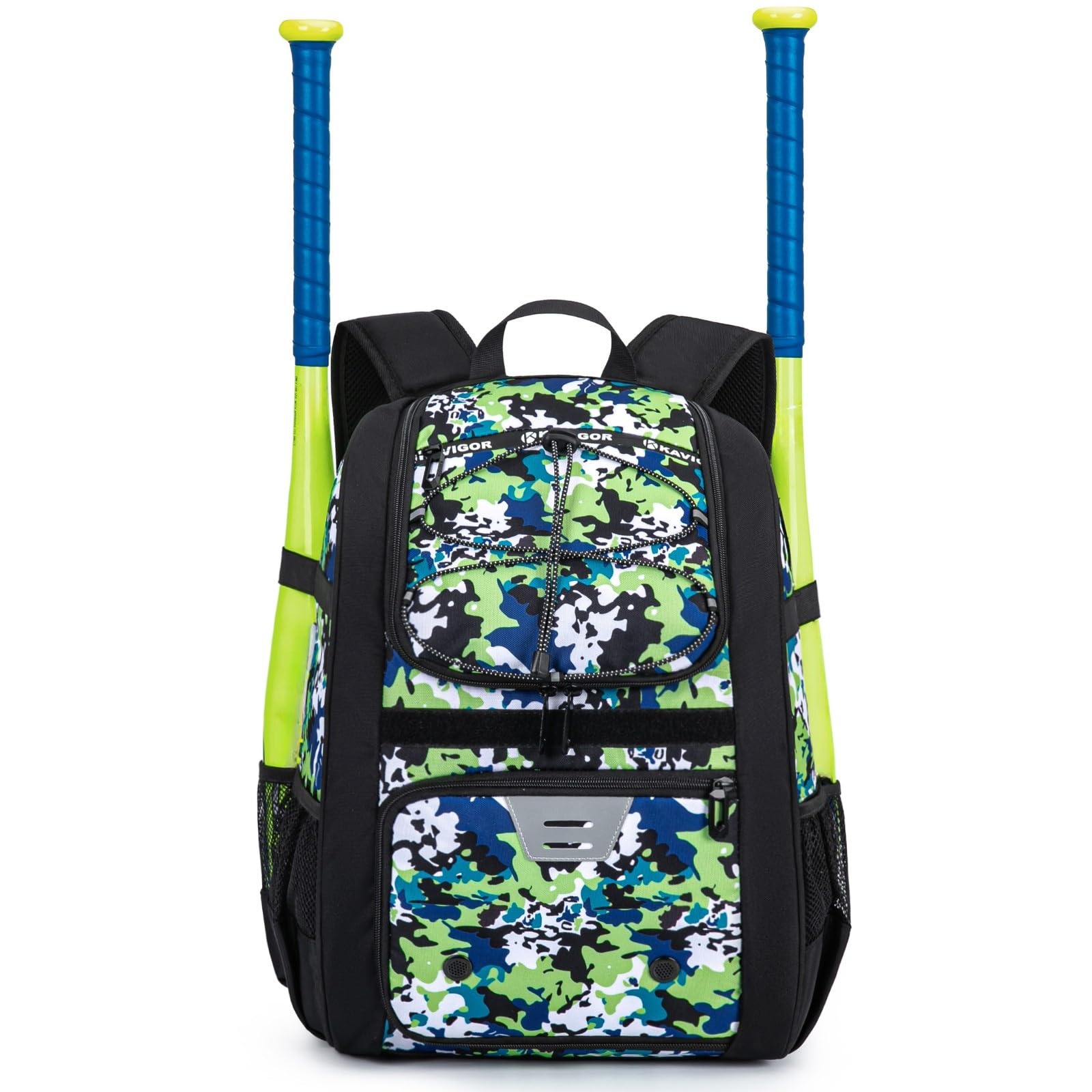
1. KAVIGOR Youth Baseball Bag
Our pick — 4.5+★ from 800+ verified ratings; the strongest balance of quality and price.
A 30-liter youth bag with four bat slots and a separate shoe compartment.
Four bat and bottle slots on a bag this size is the number that sells it. Most youth packs stop at two sleeves, so the KAVIGOR gives you room for a game bat, a practice bat and a sibling’s spare without anyone’s gear getting left in the car. The main body is 17.5 by 12 by 9 inches, which is a shape that fits a helmet, a glove, a face guard and a change of clothes at the same time.
Inside, there are four separate compartments. The independent shoe compartment keeps mud and grass off clean clothes, the front pocket handles phones and wallets, and a mesh pocket in the main body holds snacks. The whole thing is tear-resistant 600D Oxford fabric — a tightly woven polyester that resists rips when the bag is dragged — with cotton padding behind it. KAVIGOR also backs it with a two-year guarantee and lifetime consultation, which is a rare thing in a bag this size.
What wins people over is the build quality: this is the best-loved pick on the list and the crowd favorite at 4.5+ stars across 800+ ratings. Buyers report it surviving two full T-ball seasons of weekly practices and games. The honest trade-off is that it runs slightly large for a six-year-old, so a small player may find the pack rides low on the back until they grow into it. If your player is on the shorter side, size down your expectations rather than skipping this one.
Where the KAVIGOR earns its place
- Four bat and bottle slots — more than most youth bags at this capacity.
- Independent shoe compartment keeps mud away from jerseys.
- 600D Oxford fabric and a two-year guarantee for long-term confidence.
What to know before ordering
- Runs a touch large for a very small six-year-old.
- At 30 liters, it is a mid-size bag rather than a travel-ball rig for older players.
Grab this one if: your player is 8-12 and hauls a helmet, cleats and more than one bat to every game.
Size down if: your child is kindergarten-age and only carries a glove and a single bat.
2. Baseball Softball Gear Bag for Boys Girls Ages 8-12
Barely over a pound, yet it still fits the helmet and the cleats.
Weighing in at 1.1 pounds, this bag is easier for a small kid to carry than anything else on the list. Put it next to the DAFISKY’s 1.4 pounds and the difference tells on a walk to the field. Capacity is 28 liters against the DAFISKY’s 40, so you give up some room for that lightness, but it still holds the full practice kit — helmet, cleats, glove, balls and water.
The shoe compartment sits above the main one, not below it, which means your kid can pull cleats out without unpacking the whole bag. It holds up to a US size 10.5 shoe and has two mesh vents to move air through wet cleats. Two bat sleeves and two bottle pockets each have securing straps so bats stop swinging around as the bag bounces. The S-curve straps carry EPE foam padding and mesh lining, which spreads the weight across the shoulders instead of digging in.
Owners describe the zippers as better than the bags they had before, and the wipe-clean 600D polyester makes short work of field dirt. Fence hooks can be a weak point on budget packs, but here it is reinforced, and it hangs a loaded bag off the dugout chain without sagging. The catch: 28 liters fills up fast once a player adds a jacket or a second change of clothes, so plan to pack light. Pick it if a lighter load matters more than squeezing in everything.
The strap story: EPE foam under mesh lining turns a fully packed bag into something a nine-year-old can carry without shoulder complaints.
One honest catch: the 28-liter body has less slack than the 40-liter DAFISKY, so a heavy travel-ball load will not fit.
Reach for this if: your player walks to practice and you want the lightest bag that still handles a full helmet-and-cleats load.
Look elsewhere if: you regularly pack for a tournament weekend with extra layers.
3. DAFISKY Baseball Bag Softball Backpack
Forty liters of gear space that still weighs less than a water bottle.
At 40 liters, this is the bag you want when a helmet, a glove, cleats, a bat and a change of clothes all need to travel together. The capacity jump over the 28-liter gear bag above is real: you get 40 liters against 28, and the DAFISKY still weighs only 1.4 pounds against that bag’s 1.1. That extra volume is what turns a practice bag into something you can pack for a doubleheader weekend.
The water-resistant exterior keeps gear dry when a shower hits mid-game, and the separate shoe compartment keeps cleats away from jerseys. There is a fence hook, and it is deep and sturdy enough that buyers call it out as comfortable and durable. Adjustable straps and padded back support let the bag ride on a youth player or an adult without complaint. The main compartment takes a helmet, gloves, cleats and more without a struggle.
The recurring gripe is worth knowing before you buy. Some owners mention that the fence hook, while described in the listing, is not as easy to find or use as expected — a small annoyance, not a reason to walk away. With quality as the most-praised theme in the reviews, the rest of the bag holds up its end. Shop this one if raw capacity is your priority and you want to stop juggling three separate bags.
The practical wins
- 40 liters fits a full practice kit plus a change of clothes.
- Water-resistant exterior keeps gear dry in the rain.
- Separate shoe compartment contains muddy cleats.
Where it falls short
- The fence hook draws mixed feedback — check it is easy to reach before game day.
- The bigger body suits older players better than small ones.
The capacity choice: a doubleheader weekend with a jacket, cleats and two bats fits without forcing the zipper.
Think twice if: your player is six and the extra volume would just ride too low.
4. DAREKUKU Youth Baseball Backpack

An 18-liter t-ball starter with four bat slots and a J-style fence hook.
Stores up to four bats or water bottles, and the J-style fence hook keeps it off the ground on a wet dugout floor. Those two details are the ones that separate a starter bag from a joke bag, and for a t-ball or rookie-league first season they cover 90 percent of what a family needs.
The 18-liter body is 18 by 12.5 by 6.5 inches, and the main pocket takes a batting helmet and gloves while the shoe compartment holds cleats separately. A front zipper pocket handles keys, phone and wallet. Built from 600D Oxford cloth with a PVC coating, it shrugs off dirt, rain and mud without tearing. Padded back support and adjustable shoulder straps mean the same bag fits a young player and grows with the adult who carries it.
One small snag to plan around: little hands can struggle with the zippers at first, so expect a few weeks of helping your player open the bag. The rest of the story is happy — parents of first-year players call it perfectly sized and durable, and the two extra bat holders over a bigger name brand are the reason it punches above its bracket. If your player has never carried a bag before, this is the one to hand them.
The value read: 18 liters of space, four bat or bottle slots and a PVC-coated 600D shell for a starter that a family can hand down.
Plan for this: zippers are tough for a three-year-old to work solo at first, so budget a few weeks of assistance.
Your first-season pick: a t-ball player who needs a helmet, glove and two bats and will not carry much else.
Go bigger if: your player is already 10 and hauling a full travel-ball kit.
5. Easton MOXIE Backpack Equipment Bag

A compact five-compartment Easton light enough for a three-year-old to carry alone.
Five compartments in a compact pack is the Easton’s defining trick. There is a large interior pocket for the helmet and gloves, a valuables pocket for a phone, two side sleeves for bats or bottles, and an adjustable external gear pouch that clips on for extra kit. For a small player, that layout keeps everything findable without digging.
Parents of three-year-olds describe it as easy for a small child to carry and well made, with a fence hook, working zippers and room for a bat, glove, balls, water and a change of clothes. The kids who use it like the sublimated graphic design, offered in each MOXIE colorway so your player can pick one that stands out on the field. It measures a compact size designed for t-ball, rec and travel use.
Be realistic about the size. The same compactness that makes it perfect for a preschooler means it is too small for a high school player or a big load of travel-ball gear. A few mention shoulder straps letting go within two months, which is the one weak spot to monitor. It is built to hold up for multiple seasons for a small player, and it does that job well. Buy it for a young kid who wants to carry their own bag.
What kids like about it
- Compact and light enough for a three-year-old to carry alone.
- Five compartments keep small gear findable.
- Sublimated graphics give each colorway a distinct look.
What parents flag
- Too small for a high school player’s full load.
- Shoulder straps are the weak point to watch over a full season.
The preschooler’s fit: a t-ball player age three to six who wants to carry their own bag to the field.
Outgrown when: your player is old enough to haul a full travel-ball kit with a couple of bats.
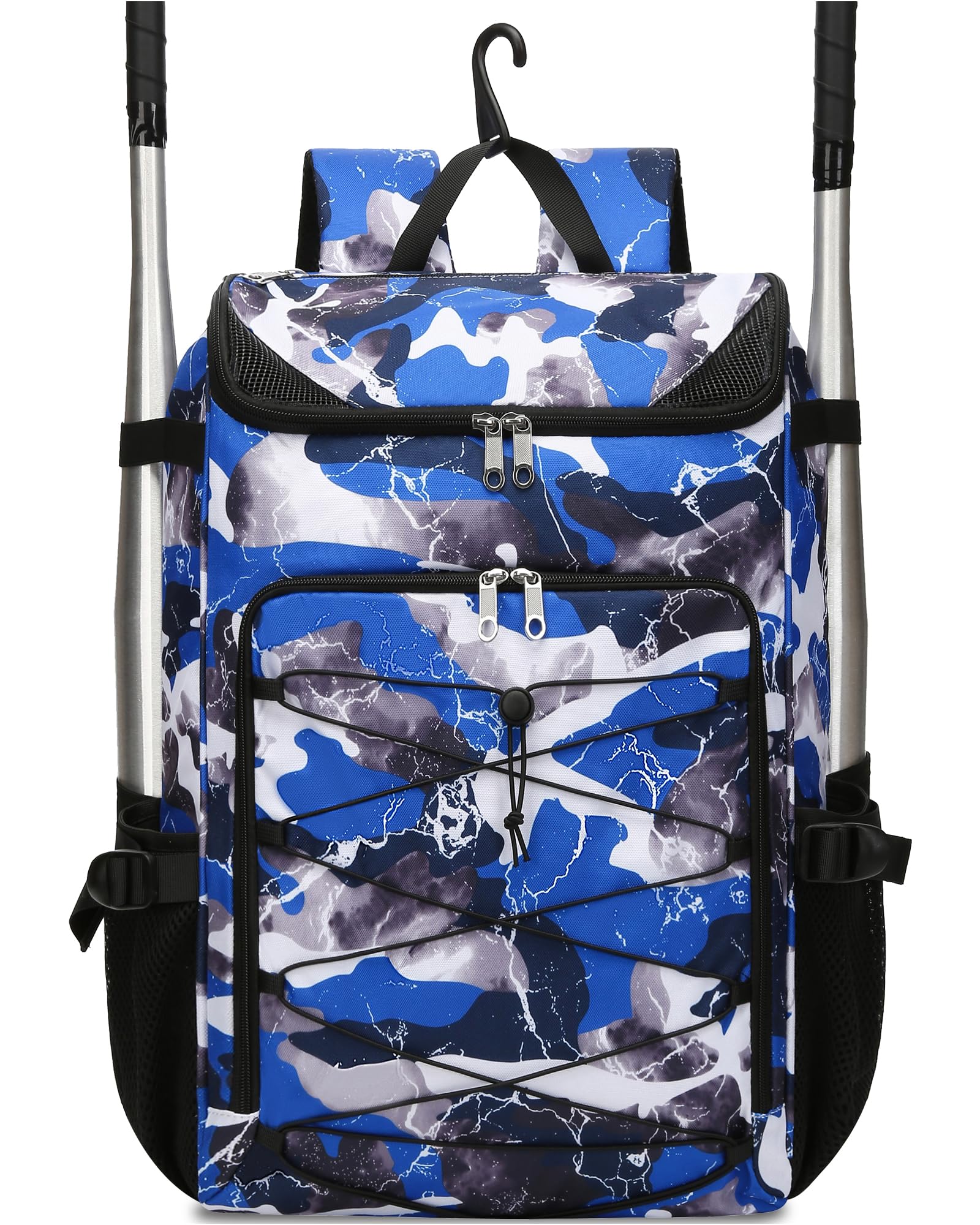
6. Goloni Softball Bag with Shoes Compartment and 2 Bat Holders
A 30-liter bag with six compartments that also works for soccer or volleyball.
Six compartments is unusual for a bag this size, and that is the reason the Goloni stretches across seasons. A front shoe compartment separates cleats, two side bat holders keep bats out of the main bay, two mesh bottle holders keep drinks upright, and an elastic band on the front panel clamps a glove in place. When baseball season ends, it works as a soccer, basketball or volleyball bag.
The body measures 17.7 by 13.4 by 8.7 inches and is cut from high-density 600D Oxford, a tight woven fabric that is easy to wipe clean and built to last several seasons. The back panel uses breathable mesh straps, so a player’s shoulders do not turn into a sweat sponge in summer. A fence hook keeps the bag off the dugout floor. It is designed to fit youth players and adults both, which helps if a sibling or a coach ends up carrying it.
There is an honest size question to settle before you buy. Owners split on whether 30 liters is enough — for a helmet, gloves, water and a change of clothes it works, but a full travel load can feel tight. Some note that a small pair of cleats barely fits and that the fence hook is tucked into a tiny pocket you have to dig out. Treat those as fit notes rather than flaws. Quality is the most-praised thing about the bag, and that is the part that lasts.
The flexibility factor: 600D Oxford and six compartments let one bag cover baseball, soccer and volleyball without a second buy.
The size caveat: 30 liters is a comfortable youth load, but a player who packs for a travel doubleheader may want more room.
A good fit for: the multi-sport household where one bag needs to work across seasons.
Pause if: you need to fit oversized cleats on top of a full helmet-and-glove load.
7. Baseball Bag for Boys 8-12

The 42-liter pick, with an external helmet holder and a separate shoe compartment.
At 42 liters, this is the biggest bag on the list, and the extra room is the whole point. It takes up to three gloves, two bats, a helmet and cleats with room to spare, which means a player who coaches or carries a sibling’s kit does not need a second bag. The 20 by 13 by 10 inch frame is taller than the KAVIGOR’s 17.5-inch body, so it sits higher on the back.
The shell is ripstop polyester and Oxford — a woven fabric with a reinforced grid that resists tearing when the bag catches on a fence or a car seat. A large padded back panel has ventilation built in to cut down on sweat on hot days. The external shoe compartment keeps muddy cleats away from clean gear, and there is a dedicated helmet holder outside so the shell does not have to swallow it. Everything zips shut and the bright blue-and-black colorway stands out in a crowded dugout.
Customers note the ripstop shell holding up through travel-ball seasons and wiping clean without fading. Zippers are the one mixed note — a few find them less smooth than the rest of the build, so close them gently. Otherwise, the durability and capacity are what makes this the pick for an older kid or a player who hauls gear for other people. This is the bag for a 10-to-12-year-old who packs everything.
Why it handles big loads
- 42 liters is the largest capacity here — three gloves, two bats, helmet and cleats fit.
- External helmet holder and shoe compartment keep the main bay free.
- Ripstop polyester resists tearing when the bag snags.
What to watch
- Zippers draw mixed feedback — more care than the rest of the build needs.
- The taller frame suits older, bigger players better than small ones.
The heavy-hauler pick: a 10-to-12-year-old who packs a helmet, several gloves and two bats for every game.
Overkill if: your player is a six-year-old with one bat and a glove.
8. Rawlings R400 Baseball & Softball Backpack Equipment Bag

A company name families know, in a bag built for the very first season.
The R400 is a starter bag, and it is honest about that. It is 16 inches tall by 12 long by 7.5 deep, with one large main compartment that holds a helmet, glove and cleats, plus a bat sleeve on each side for two bats total. The main bay also converts into a gametime shelf, so you can set the bag on the bench and reach straight in.
The tarpaulin bottom is the practical touch here — it is a tough waterproof sheet, and it wipes clean after practice so the bag does not carry mud home. It weighs 16 ounces, so a young player can carry it without a struggle. The padded handle and shoulder straps make short walks to the field comfortable.
The one thing to settle is size. Parents of young softball and t-ball players call it an excellent starter bag, while a few with older players say it is too small once the gear gets bigger. Rawlings frames this one for t-ball, rec and travel use, and that is the space it fills well. If your player is 13 or older and packing a full travel kit, size up. For a first or second season, it is a solid choice from a brand that has been in the sport for a long time.
The clean-up advantage: the tarpaulin bottom is waterproof and wipes clean in seconds, so mud never makes it into the car.
The size reality: this is a starter bag — a player past 13 with a bigger load will want more room.
Made for: a first- or second-season t-ball or rec player who needs a reliable, easy-to-clean bag.
Not the one if: your player is already 13+ with oversized gear and two bats.
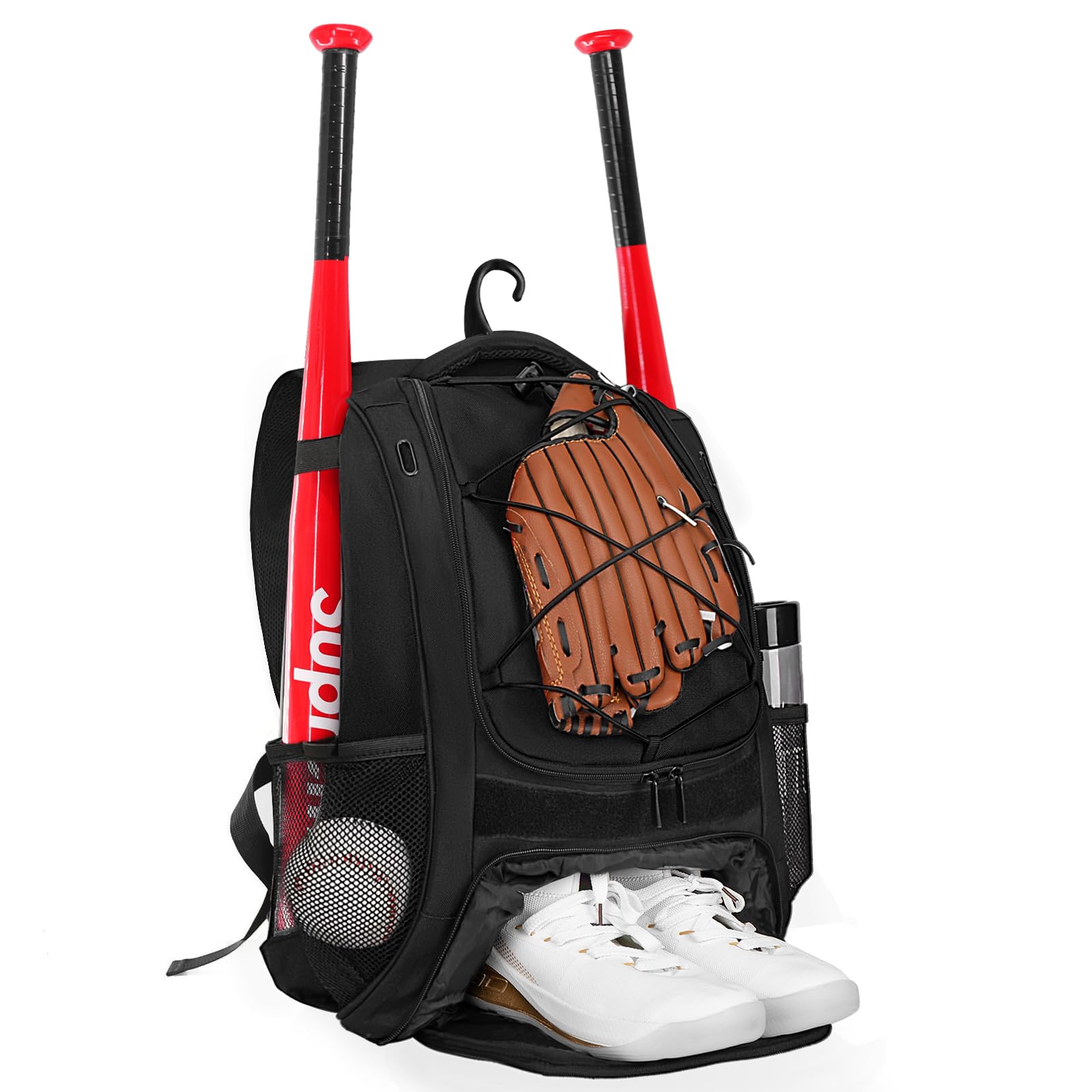
9. Softball Bag Baseball Equipment Backpack

Six seasons of softball and still going — that is the whole pitch.
Reviewers point out this bag keeping its shape through six years of spring and fall community-league softball. The build is 600D polyester — a dense woven fabric — with a waterproof top, designed to be used for a long time without tearing.
The main compartment takes a helmet, glove and cleats, and a front pocket holds a glove separately. Two side pockets carry bats and small bottles with straps to keep the bat steady. The shoe compartment has two ventilation holes so wet cleats dry and the bag does not hold moisture. A hidden zip pocket at the bottom has a net to hold a batting helmet, and it can also swallow a basketball, soccer ball or volleyball when the season changes. The 13.3 by 7.8 by 19.6 inch shape is roomy without being a pack mule.
The one thing to know: a fence hook is not included, and a few buyers wish it were. That is a small miss for a bag that otherwise holds up well. If you want the fence hook, add a cheap clip. If you want a bag that will survive several seasons of two-a-week league play, this is the one — it also works as a school bag for a binder, books and gym shoes between seasons.
The endurance case
- 600D polyester shell lasted six seasons of spring and fall league play.
- Two ventilation holes in the shoe bay keep it from holding moisture.
- Doubles as a school or gym bag between seasons.
The missing piece
- No fence hook included — add a clip if you hang the bag in the dugout.
- The 19.6-inch height runs tall for a small player.
Buy it for: the family that wants one bag to last through several seasons of community league play.
Budget a fix: the fence hook is not included, so plan on adding a clip if your dugout hangs the gear.
Know the Specs
Capacity in liters
Liter capacity is the volume of the main body — how much gear the bag can swallow. A youth bag in the 18-to-30 liter range fits a helmet, glove, cleats and a bat. Bags at 40 liters and up take a helmet, several gloves, two bats and a change of clothes with room left. Bigger capacity also means more weight when the bag is full, so match the size to how much your player actually carries, not to how much you could pack.
Bat holders
Bat holders are the sleeves or side pockets that keep bats out of the main bay. Two sleeves is the common youth setup, four is generous, and a side bottle pocket can double as a bat slot in a pinch. Dedicated sleeves with securing straps stop bats from swinging around as the bag moves, and they keep the main bay free for a helmet and glove.
The shoe compartment
A shoe compartment is a separate bay for cleats, usually with vents to move air through. It keeps mud and grass off helmets and jerseys, and it stops wet cleats from making the whole bag smell. Some bags place it above the main body for easy access, others at the bottom. Either works; the venting matters more than the placement.
The fence hook
A fence hook is a clip that lets the bag hang off a chain-link dugout fence instead of sitting in the dirt. It keeps gear dry and off the mud, and it makes a loaded bag easier to grab. Not every youth bag includes one, and on some models it is tucked into a small pocket you have to dig out. If your dugout hangs bags, check that the hook is there and easy to reach.
Common Questions
How many bats fit in a youth bat bag?
Will a youth bat bag fit a helmet and cleats at the same time?
Is a youth bag big enough for an older travel-ball player?
Do youth bat bags come with a fence hook, and do I need one?
What is the difference between a bat backpack and a bat duffel?
How do I stop my kid’s bat bag from smelling like old cleats?
Can a youth bat bag double as a school backpack?
What material holds up best for a youth bat bag?
How much should a youth bat bag weigh?
Is a bigger capacity always better for a young player?
The Bottom Line
For most families, the youth bat bag to beat is the KAVIGOR Youth Baseball Bag — four bat slots, an independent shoe compartment and a two-year guarantee in one 30-liter body. That combination of build quality and honest support is what makes it the safest buy.
If your player walks to practice and you want the lightest full-featured carrier, the FOKDUVB gear bag at 1.1 pounds is the one. For a bigger player hauling for the whole team, the VIGEGARI 42-liter bag gives you the most room on the page. And if you are buying for a preschooler’s first t-ball season, the Easton MOXIE is the compact pick a three-year-old can carry alone.
Start with the KAVIGOR if you want one bag to do everything for a youth player, and let the lighter or bigger picks fill in around the edges of how your family actually plays.
How we choose
We do not accept paid placement. Every pick is matched to a real buyer and a real use-case; we do not hands-on test units.
Sources
Specifications: manufacturer listings and product documentation. Review insights: verified customer reviews, as of October 2026. Pricing: not shown on this page (it changes often); check the current price via the retailer link.
As an Amazon Associate, Home Digitized earns from qualifying purchases. This does not affect which products we feature.