
Specs are compiled from manufacturer listings and verified buyer reviews and can change over time — please confirm the key details on the product page before buying.
You dip a brush loaded with wet paint and slide it along a ceiling line. Halfway across, a blob drips onto the wall and the edge frays into a wave. That is the exact pain cutting in paint tools exist to kill. The fix is a short, angled brush with a controlled release and a handle that stays steady in your hand — and this guide ranks nine real options by how cleanly they cut that line, how long they last, and what they cost.
This guide is built by comparing the manufacturers’ published specifications and the patterns across verified customer reviews, so you get each pick’s real strengths and trade-offs instead of marketing spin.
Every brush here leans on the same three traits: an angled head for tight corners, synthetic filament that holds a paint load without dripping, and a ferrule that keeps bristles locked in. Below you get a full comparison of the cutting in paint tools worth buying, plus the specs that decide a clean edge.
Top Picks


How To Choose The Best Cutting in Paint Tools
Cutting in means painting a straight, clean line along a ceiling, baseboard, or window frame without taping it off first. A dedicated cut-in brush is shaped and tuned for exactly that job, so the line stays crisp and you spend less time masking. The right pick depends on three things: the angle of the head, the width of the brush, and how the bristles hold and release paint.
Why the angled head matters
The angled tip lets you lead the brush with the narrow corner while the wider body trails behind, so you control the edge with the tip rather than the whole brush. That is what makes cutting in around trim and corners cleaner. A 2-inch angled sash brush is the everyday workhorse for doors, baseboards, and window frames, while a wide 2.5-inch head covers more wall in one stroke on big flat surfaces.
Brush width and where it helps
Narrow brushes — 0.5-inch, 0.75-inch, and 1-inch — reach into cabinet gaps, crown molding, and touch-up spots where a wide brush just smears paint past the line. A multi-size set hands you the small detail brush and the larger cutting-in brush in one kit, so a single purchase covers both fine lines and broad coverage. If you mostly paint trim and ceilings, a variety pack saves you from buying two separate brushes.
Bristle type and the ferrule
Synthetic filament — usually nylon or a nylon-polyester blend — holds a load of paint and rinses clean under water. The ferrule is the metal band that joins the bristles to the handle, and a brass-plated or stainless steel ferrule resists rust so the brush survives being left wet. Look for firm, tapered filaments that spring back into shape rather than splaying flat after a few strokes.
Side-by-Side Comparison
| Model | Best For | Brush Width | Bristle Type | Handle Type | Amazon |
|---|---|---|---|---|---|
| Wooster Q3211-2 Shortcut Angle Sash★ Best Overall | Everyday trim and edging | 2 inches | Angled brush | Shergrip handle | Amazon |
| GACDR Slant Lining Fitch Trim BrushesDetail Set | Fine detail and cabinet edges | 0.5 inches | Angled | Wood | Amazon |
| Zibra Angled Paint Brush 2.5-inchPro Grade | Wide trim and flat surfaces | 2.5 inches | Flagged Bristle | Hourglass | Amazon |
| Purdy XL Glide 2 in. Angular Trim | Long-lasting pro-grade cutting in | 2 inches | Flagged Bristle | Fluted Handle | Amazon |
| ROLLINGDOG 2.5″ Adjustable Angled | High walls and out-of-reach edges | 2.5 inches | Premium Synthetic Filament | Rubber, Ergonomic | Amazon |
| 360° Rotation Handle Paint Edger | Beginners wanting tape-free edges | — | Paint pad | 360° rotating | Amazon |
| Bates 2.5-Inch 12 Pack Angle Brushes | Big projects and disposables | 2.5 inches | Angled brush | Wooden Handle | Amazon |
| Wooster G4174-2 1/2 GripTech MAX | Professional repeated use | 2 1/2″ | Angled Bristle | Sash Handle | Amazon |
| Pro Grade 2 Inch Angle 12 Pack | Bulk cut-in on walls and trim | 2 inches | Angle Bristle | Wooden | Amazon |
Detailed Reviews
1. Wooster Brush Q3211-2 Shortcut Angle Sash Paintbrush, 2-Inch
Our pick — 4.5+★ from 850+ verified ratings; the strongest balance of quality and price.
The short-bodied angle brush that made free-hand edging the easy path for first-timers.
If you want one brush for trim, doors, and ceiling lines without masking tape, this is the crowd favorite at 4.5+ stars across 800+ ratings. The flexible purple Shergrip handle is the reason. It is built short so your hand sits close to the work, and the rubbery grip keeps your wrist steady through a long afternoon. That short handle is also what lets you slide the brush into narrow gaps a full-length brush cannot reach.
The head is a 2-inch angled sash cut with synthetic blend filaments, so it works across all paints and water-based stains, and the brass-plated steel ferrule holds the bristles tight. What wins people over is the quality of the finish — it puts down a thick, even layer of paint and still lays a straight line along trim and baseboards. One painter of two decades put it plainly: “They are a standout for me.” The three-pack means you can keep one loaded for trim, one for doors, and one clean while the others work.
The recurring gripe is bristle shedding on the first few uses, so give each brush a rinse before it touches the wall. On the plus side, they wash easily under a spray hose and come back ready for the next project. Compared with the Zibra below, this head is narrower at 2 inches versus 2.5 inches — sharper for tight trim, but slower across a whole wall.
What earns its keep
- Short Shergrip handle eases wrist strain and reaches tight spaces
- 2-inch angled head lays a straight line with no tape
- Brass-plated ferrule keeps the bristles locked in
- Three-pack covers trim, doors, and touch-ups
Worth knowing first
- A few loose bristles break free early — rinse before first use
- At 2 inches it covers less wall per stroke than a 2.5-inch head
Grab this one if: you are cutting in trim, doors, and ceiling edges and want a grip that fights hand fatigue.
Think past it if: your main job is slapping paint across large open walls, where a wider head finishes faster.
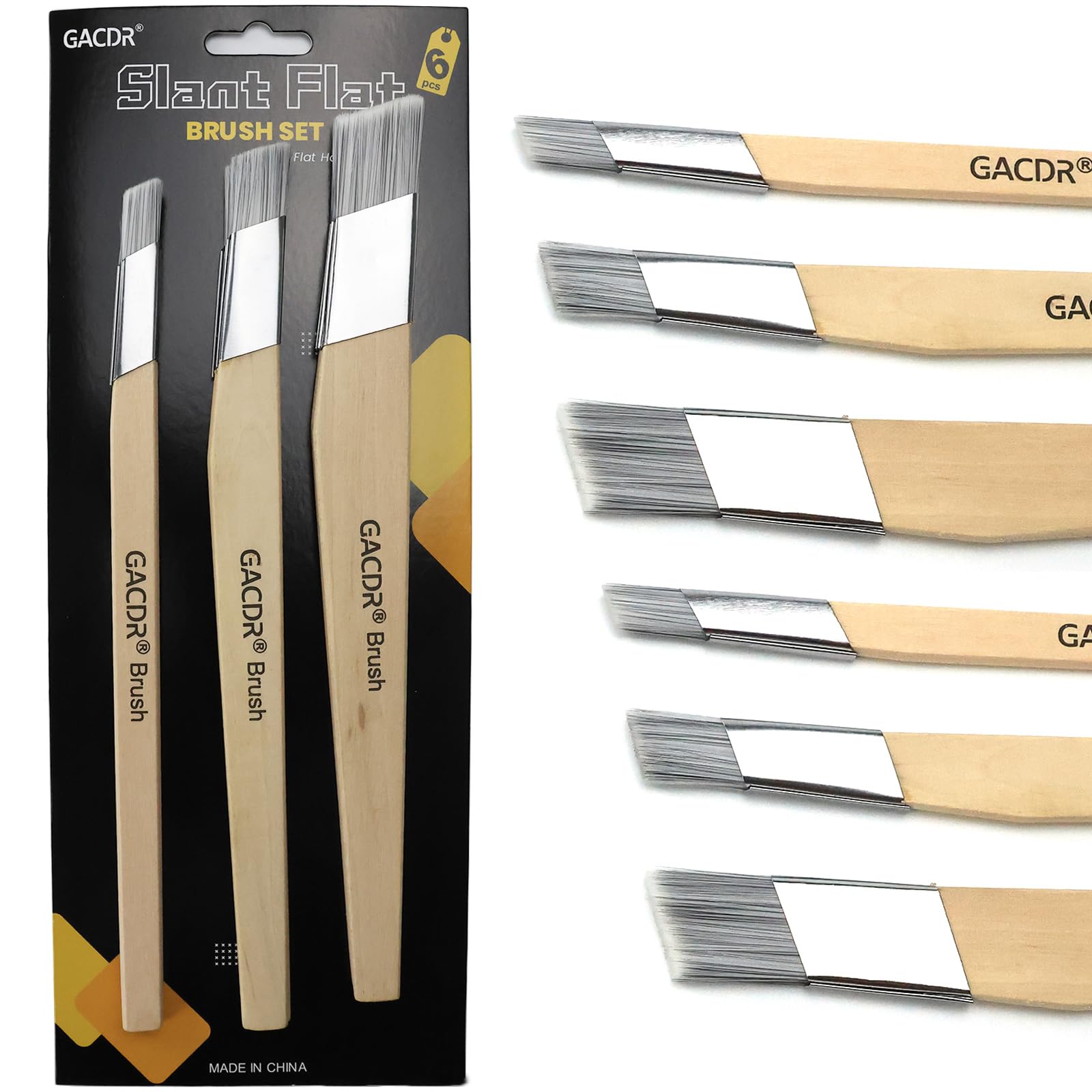
2. GACDR Slant Lining Fitch Trim Paint Brushes, Pack of 6
Six slim angled heads that slip into cabinet gaps a wide brush can only smear paint across.
Cabinet frames, crown molding, and window corners are where a wide brush gives up. This set answers with six thin angled brushes — two each in 0.5-inch, 0.75-inch, and 1-inch widths — so the smallest handles touch-up and the 1-inch becomes your main cut-in brush. That pack of six is double the three brushes you get in the Wooster Q3211-2 above, which is why this kit suits a whole detail project rather than a single wall.
The firm, micro-tipped synthetic bristles are engineered for control, and the high-density filament head resists splaying so it keeps a sharp edge profile. Users report that cutting in around cabinets becomes simple with these. What buyers mention most is the build quality, followed closely by precision. The wooden handle keeps fatigue down on longer jobs, and the rust-proof stainless steel ferrule locks the bristles in place so the brush lasts.
One thing to plan for: the bristles run firmer and larger than some buyers picture, so they suit trim and edging far better than delicate watercolor work despite the listing’s paint type. If you want a brush for fine craft painting rather than walls and trim, look elsewhere in this list. For cutting in around cabinetry and baseboards, the slim tips reach spots the bigger heads cannot.
Where it shines: two brushes in each of three sizes means you always have the narrow tip for tight corners and the 1-inch for steady trim lines, all in one kit.
Heads-up: the firm, larger-than-expected bristles are built for trim and edging, not soft detail painting, so match it to the job.
Pick it when: cabinets, molding, and tight corners are the bulk of your cutting-in work.
Move on if: you need a single wide brush to cover a big flat wall fast.
3. Zibra Angled Paint Brush, 2.5-inch
Fine filaments pack in more paint, so one dip keeps a long trim run going.
The widest head in the everyday tier, this 2.5-inch angled brush is built for anyone covering trim and big flat surfaces — doors, walls, ceilings, and furniture — with a single tool. Zibra’s Smooth Filament Technology packs 25% more paint into the bristles than standard brushes, so you dip less often and the paint releases evenly. That is the spec to remember here: more pack-out, smoother lay-down, less dripping.
The angled trim head is flagged bristle, firm enough to cut a clean line yet flexible enough to smooth the paint out. The hourglass handle is shaped to sit comfortably and cut down on hand cramping during all-day work. A twenty-year painter who switched to it said the Zibra “cuts laser lines” in tight spaces with no uneven flaring. Everything about it — aluminum inserts, epoxy glue, threaded nails — points to pro-grade construction meant to survive repeat use, all while staying easy to clean and holding its shape.
The weight difference versus the Purdy below is real: at 0.12 kg this head is heavier than the Purdy’s 0.1 kg, so if a feather-light brush in hand matters most to you, factor that in. For most cutting-in jobs the extra filament load more than earns the slight heft, and the soft-but-not-too-soft bristles lay paint down cleanly around windows and doors.
The reasons it stays in the bag
- 2.5-inch head covers more wall per stroke than a 2-inch brush
- Smooth Filament Technology packs in 25% more paint for fewer dips
- Hourglass handle eases cramping on long jobs
- Pro-grade build: aluminum inserts, epoxy glue, threaded nails
Small print to weigh
- Slightly heavier in hand than the Purdy at 0.12 kg versus 0.1 kg
- A wide head is overkill for slim cabinet and molding gaps
This is your brush if: trim, doors, and open walls all live on the same to-do list and you want one head to handle them.
Better to pass if: you are chasing the lightest possible brush for hour after hour of overhead work.
4. Purdy XL Glide 2 in. Angular Trim Paint Brush – 1 Each

A single 2-inch brush that painters buy once and rinse for years of trim work.
What stands out here is how long it lasts. Owners say it works like new after many uses and holds its bristles through repeated cleanings. This 2-inch angular trim brush carries a nylon and polyester blend with flagged bristles and a fluted hardwood handle, made in the United States, and it works on trim and broad areas alike without leaving brush lines.
The blend is the key detail. Nylon and polyester together handle thick paint and push it smoothly out to a clean edge, and the longer handle reaches into spots a stubby brush cannot. Buyers report it spreads paint evenly with no clumping or dripping, and the flag-tipped bristles leave a neat, accurate line. It outlasts the lower-cost picks on this list in real use.
The one honest caveat: the dense bristles hold onto paint, so it takes longer to clean than a thinner brush, and one reviewer noted it can still show faint brushstrokes on semi-gloss even with the recommended paint. Soak it in water right after you finish and those bristles come back fine. Compared with the Wooster GripTech MAX further down, this is the more forgiving everyday all-rounder.
Built to outlast: a nylon and polyester blend with flagged bristles that pushes thick paint to a clean edge and rinses back to shape for the next job.
One caution: those dense bristles retain paint, so it demands a prompt clean — and on semi-gloss it may still leave the faintest strokes.
Reach for it if: you paint often and want one brush that stays sharp through many projects instead of wearing out.
Shop on if: you want the fastest possible cleanup and rarely touch a brush twice.
5. ROLLINGDOG 2.5″ Adjustable Angled Paint Brush
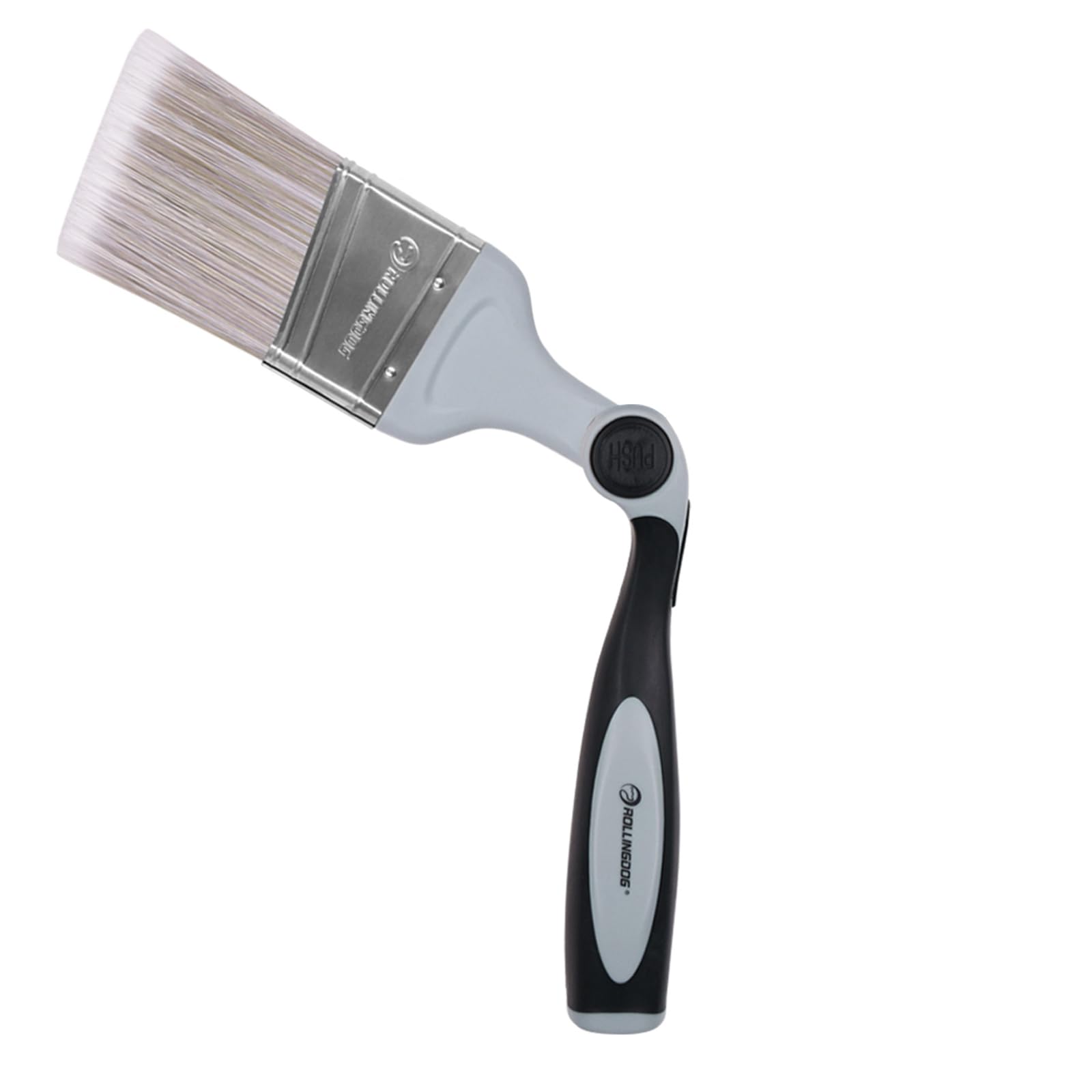
Six locking angles that let one brush paint over shelves, stairwells, and ceilings.
Hard-to-reach edges are the whole point of this brush. A push button in the rubber handle locks the head into six different positions, so you can angle the 2.5-inch synthetic filament head over and around obstacles instead of contorting your wrist. The threaded end also takes an extension pole, which is how you reach high ceilings and low baseboards without a ladder scramble. A buyer described the time saved getting up to paint upper edges and down for the lower edge as the reason it became a must-have.
The 63.5mm angular head is made from solid round tapered filament — a smooth, detailed synthetic that holds a good load of paint. What buyers praise most is the bristle quality. The stainless steel ferrule is corrosion-resistant, so it holds up to repeated cleaning. It handles oil and latex, and the whole brush balances well enough to cut in along a staircase where a fixed brush would fight you.
The trade-off is weight. The adjustable mechanism adds metal and a joint to the handle, and one owner found it heavier than expected. Over a long stretch overhead that heft registers. If your cutting-in stays at eye level, though, the adjustment is the feature you will use — set an angle once and the locking design keeps it from slipping mid-stroke.
What makes it different
- Six push-button locking angles reach over and around obstacles
- Threaded fit accepts an extension pole for high and low spots
- 2.5-inch head with solid round tapered filament holds paint well
- Corrosion-resistant stainless steel ferrule
The catch to plan for
- The adjustable joint adds weight — heavier in hand than a basic brush
- One size only, so no slim tip for tight cabinet gaps
Best pick for: stairwells, high ceilings, and any edge that your arms simply cannot reach straight on.
Skip it when: all your cutting-in is at comfortable height and you would rather not carry the extra weight.
6. 360° Rotation Handle Paint Edger Trimmer

An edger that rolls a straight line so beginners skip the tape and the brush entirely.
Not everyone wants to free-hand a line with a brush. This edger uses guide wheels to keep the pad tracking straight along a ceiling or baseboard, which is why beginner-friendly edges are its draw. The 360° rotating handle adjusts for left, right, vertical, and diagonal passes, and a locking design is meant to hold the angle steady. It ships with three dense paint pads, and the adjustable extension rod reaches high ceilings without a ladder.
The appeal is simple: load a pad, roll it along the edge, and the wheels keep the line clean. Owners mention it works for edging jobs and recommend it for angled ceilings above cabinets. The rotating handle is the standout — it reaches walls from floor-level side angles where a fixed edger cannot. When it works, it is fast and it keeps your hands clean of free-hand cutting-in.
Here is the honest part, sized fairly: the components are the weak link. Some pads slide off the rollers, and the handle can slip, which sends paint onto the wrong surface. The quality and the value split opinion — this is the budget-tier edger in this lineup, and it works best if you keep a light touch and check the pad is seated before every pass. It suits a careful beginner or a one-off room, not a heavy professional workload.
What it does well: guide wheels and a 360° rotating handle make a straight edge possible for someone who has never cut in by hand.
The honest limit: the connecting mechanism is the weak point — pads can slide off and the handle can slip, so seat everything firmly and go easy.
A good fit for: a first-time painter doing one or two rooms who wants tape-free edges without learning brush technique.
Look past it if: you are a working pro who needs a tool that survives heavy daily use.
7. Bates- Paint Brushes, 2.5-Inch, 12 Pack Angle Brushes
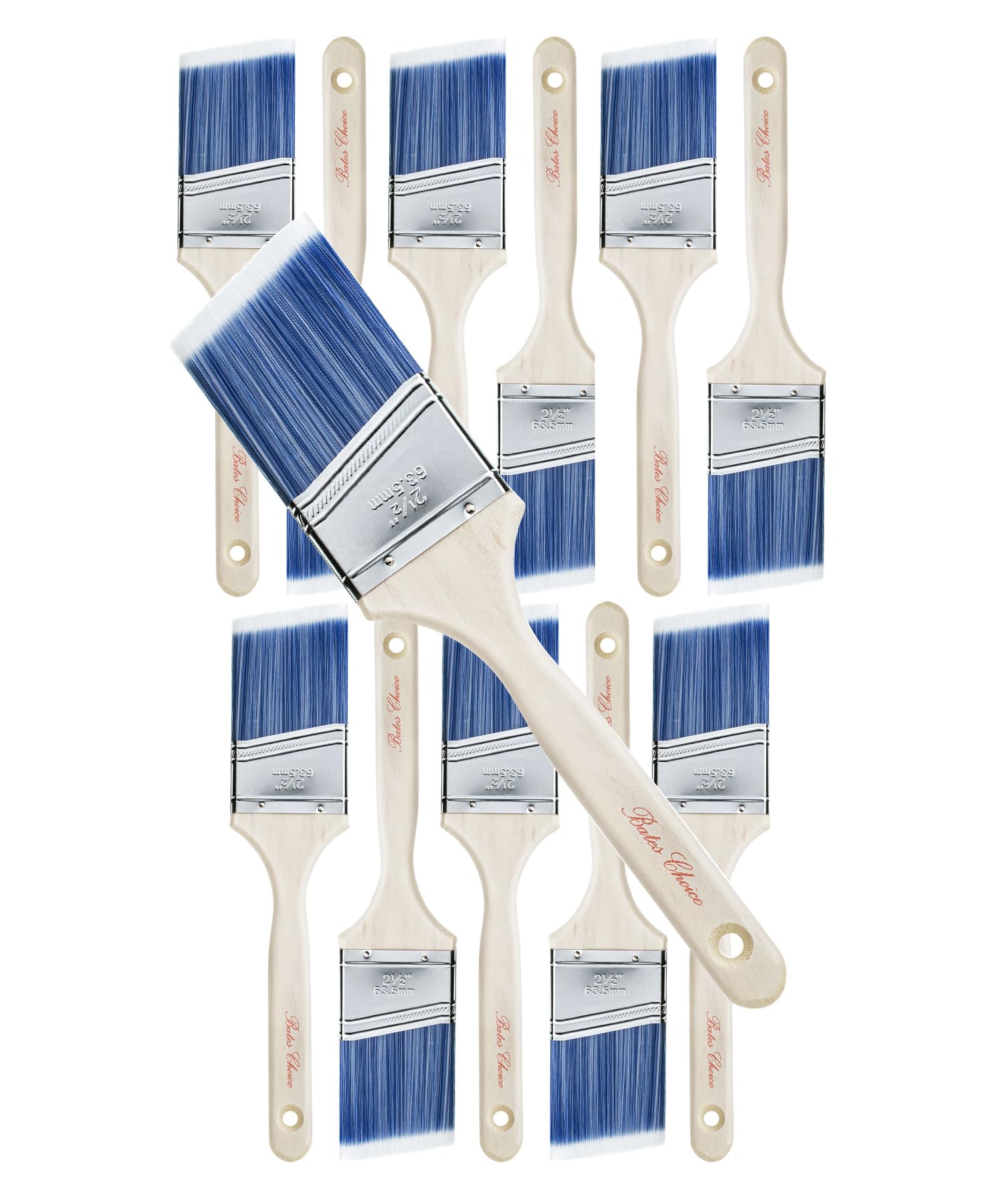
Twelve 2.5-inch angle brushes you can treat as disposable and never feel bad about it.
For a whole-house repaint where brushes get gunned up and tossed, this twelve-pack is the practical answer. Each brush has a 2.5-inch angled head with durable synthetic bristles, a lightweight wooden handle, and a rust-resistant stainless steel ferrule. That wide 2.5-inch head covers a lot of trim in one stroke. A professional painter found the chiseled tips lay great lines on exterior walls and trim, and liked that the low per-brush cost let them throw each one away instead of washing it.
The bristles are soft and easy to clean, and the brushes hold together and keep their shape through a job. Owners who bought them as disposable spares ended up reaching for them constantly. Quality is the trait buyers mention most, with value close behind. On something as brutal as an oil primer over old siding, customers note these kept working where pricier brushes quit.
Two things to expect: the bristles shed, mainly on first use, and the ferrule will rust if you leave a brush soaking overnight — so dry it off rather than soak it. Some note they need more frequent dipping than a denser brush. Set against the Pro Grade set further down, these are the softer, cheaper-per-brush option for the same disposable strategy.
Why the pack wins
- 12 brushes means you can swap to a fresh one instead of stopping to wash
- 2.5-inch angled heads cover trim fast
- Soft synthetic bristles rinse clean and keep their shape
- Rust-resistant stainless steel ferrules
Set your expectations
- Bristles shed on the first use or two
- Ferrules rust if soaked overnight — dry them instead
Made for: a big interior or exterior repaint where the per-brush cost is so low you can throw each one out.
Not the one if: you want a single heirloom brush to wash and reuse for years.
8. Wooster G4174-2 1/2 Ultra/Pro Firm GripTech MAX Angle Paintbrush 2 1/2″
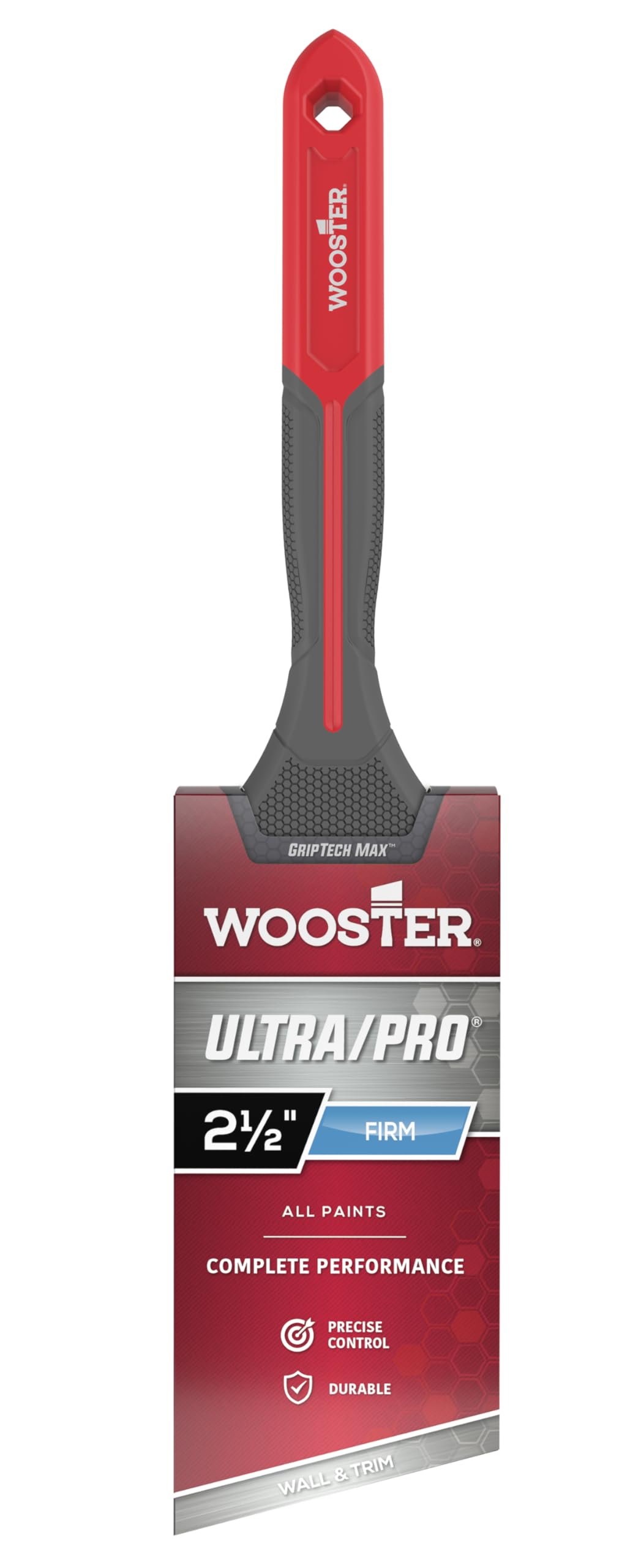
A rubberized grip and firm 2 1/2-inch head for painters who cut in all week long.
This is the brush for someone who paints for a living and cares most about control in the hand. The composite handle is wrapped in rubber for maximum grip and control, and the firm mix of nylon and polyester filaments lays paint out smooth and even. The 2 1/2-inch angled head with a round ferrule and sash handle is built for all paint types, indoors and out. Owners describe it as well balanced and comfortable — the kind of brush that disappears into your hand.
Durability is the other draw. Reviewers point out it withstands repeated washing and reuse while keeping its form, making it a natural fit for steady professional use. The size sits at the wide end — 2 1/2 inches — which is ideal for cutting in borders and covering broad trim in fewer strokes. The rubberized composite grip is what separates it from a plain wooden handle, especially on long days.
The trade-off to name: the grip adds weight and heft. At 5.44 ounces this head is heavier in hand than the lighter Purdy XL Glide above, so if you favor a featherweight brush, that difference shows up. For control-focused work, though, the firm, well-balanced build is the point, and the same design that makes it a favorite on a professional bag carries it through repeated use.
Where it wins: a rubberized composite handle plus a firm nylon-polyester mix give pro-level balance and a smooth, controlled lay-down across all paint types.
What to keep in mind: the grip makes it heavier than a simple wooden-handled brush at 5.44 ounces, and this one runs on the wider 2 1/2-inch end.
Choose it if: you want a firm, balanced pro brush with a grip that stays put through hours of cutting in.
Leave it if: you prefer the lightest brush in your hand or you need a narrow head for slim gaps.
9. Pro Grade Paint Brushes, 2 Inch Angle Paint Brush, 12 Pack

Twelve 2-inch angle brushes with a thick filament blend built for fast, high-volume cutting in.
Batch cutting-in is what this set is made for. You get twelve 2-inch angle brushes, each with a thick synthetic filament blend that holds more paint for fewer streaks and less time spent dipping. The thinner tip at the end of each head gives better precision for edges and touch-up, and the wooden comfort-grip handle keeps each stroke steady. On an oil-based polyurethane over maple, shoppers say a finish that looked sprayed on, not brushed — that is the smoothness this blend is chasing.
The 2-inch head is the classic cut-in width for walls and trim, and the material list — synthetic bristles on a wooden handle with stainless steel in the build — points to brushes made to be washed and reused rather than tossed after one job. Value and quality are the two traits buyers highlight most. For a big project where one brush after another gets loaded, having twelve on hand keeps you painting instead of cleaning.
The honest limit is consistency: tips vary from brush to brush, some shed a little at first, and a few angles need correcting for stiff edge trimming. Give each brush a pre-wash and expect a break-in on the first few. Compared with the Bates 12-pack above, these lean firmer and slimmer at 2 inches, which suits tighter, more precise trim work.
Why pick the dozen
- 12 brushes keep a big job moving with no mid-project cleaning halt
- Thick filament blend holds more paint for fewer dips and streaks
- Thin tips sharpen edge and touch-up work
- Can deliver a near spray-like finish on the right surface
Honest fine print
- Some tips run slightly off-angle for stiff edge trimming
- A little shedding early — pre-wash before the first coat
The right buy for: a large job or crew that goes through one brush after another and needs a dozen on standby.
Better to skip if: you want one precision brush tuned to a single perfect line.
Know the Specs
Brush width in inches
Width is the first number to check, and it decides how a brush behaves. A 2-inch head is the everyday cut-in size for doors, baseboards, and trim — wide enough to cover a line in a stroke, narrow enough to steer. A 2.5-inch head, like the Zibra or the Bates set, covers more flat wall per pass but is clumsier in tight corners. Slimmer heads at 0.5-inch, 0.75-inch, and 1-inch, like the GACDR set, are for cabinet gaps, molding, and touch-up where a wide brush would smear past the edge. Match the width to the job and you waste less paint and less time.
Bristle type and the ferrule
The bristle type sets how the brush holds and releases paint. Synthetic filaments — nylon, polyester, or a nylon-polyester blend — are the standard for cut-in work on walls and trim, and flagged bristles have split tips that splay slightly to smooth the finish. Firm blends push thick paint to a clean edge; softer filaments rinse faster. The ferrule is the metal band that joins bristles to handle — a brass-plated or stainless steel ferrule resists rust, so a brush left damp does not corrode. Filament pack-out, or how densely bristles are packed, decides how much paint the brush carries before you dip again.
Common Questions
Do I need tape if I use an angled cut-in brush?
What brush width should I use for cutting in around cabinets?
How long does an angled paint brush last?
What bristle type is best for cutting in with latex paint?
What is a ferrule and does it matter for cutting in?
Is a paint edger easier to use than a brush for cutting in?
Can I use one cut-in brush for both trim and walls?
How do I clean and store an angled paint brush so it lasts?
Is a 2-inch or 2.5-inch angled brush better for cutting in?
Why did my new brush shed bristles on the first use?
Can I attach an angled brush to an extension pole for high ceilings?
The Bottom Line
For most people cutting in, the cutting in paint tools winner is the Wooster Q3211-2 Shortcut Angle Sash Paintbrush because its short Shergrip handle fights fatigue and its 2-inch angle head lays a straight line without tape. If you want one brush that survives years and covers trim plus open walls, grab the Purdy XL Glide. And for cabinets and crown molding where a wide head cannot reach, the GACDR Slant Lining Fitch set is the one to reach for. Its 4.5+ star rating across 800+ ratings is the highest of the group, which makes it the safest first pick.
How we choose
We do not accept paid placement. Every pick is matched to a real buyer and a real use-case; we do not hands-on test units.
Sources
Specifications: manufacturer listings and product documentation. Review insights: verified customer reviews, as of October 2026. Pricing: not shown on this page (it changes often); check the current price via the retailer link.
As an Amazon Associate, Home Digitized earns from qualifying purchases. This does not affect which products we feature.