
Specs are compiled from manufacturer listings and verified buyer reviews and can change over time — please confirm the key details on the product page before buying.
If you are shopping for the world’s most expensive coffee, the honest answer is that a rare bean and a great cup are two different things. Some of these coffees are genuinely rare and genuinely delicious. Others are rare, pricey, and land in your mug tasting plain. This guide walks through the real picks, what each one actually tastes like, and which rare coffee is worth your money.
This guide is built by comparing the manufacturers’ published specifications and the patterns across verified customer reviews, so you get each pick’s real strengths and trade-offs instead of marketing spin.
Below you get nine rare coffees sorted from best overall down through the ultra-premium splurges. Every pick is judged on what actually lands in the cup, not on the story printed on the box, so you can see the best world’s most expensive coffee worth buying.
Top Picks


How To Choose The World’s Most Expensive Coffee
Buying rare coffee is not like buying a daily bag of beans. The top-shelf price is set by scarcity and story, and the cup in front of you can still disappoint. Read the fine print on the bag before you spend, because that is where the real value sits.
Check the bag size against the price tier
Two luxury coffees can sit at similar price tiers but arrive at wildly different sizes. A 40g treasure box and a 1 Kilogram (35.27 Ounce) bag both cost real money, but the bigger bag stretches across special occasions while the tiny gift box is nearly a one-sitting pour. Look at the actual units printed on the listing. That number tells you how long the bag lasts, not the sticker.
Wild civet versus blended rare coffee
Kopi Luwak is made when a civet eats coffee cherries and the beans are later collected, cleaned, and roasted. Some bags spell out “wild” and “cage-free” sourcing, and some are blends of rare beans with standard Thai Arabica. A strict wild-civet bag is a pure experience. A blend introduces the rare flavor gently, which is friendlier if you are new to any of this.
Roast level changes everything you taste
The roast level controls how much of that rare taste you capture. Medium and medium dark roasts keep the bean’s own flavors forward — the jasmine on a Geisha, the caramel on a Luwak. Darker roasts can bury the bean’s own character under roast flavor. If a description reads “medium roast” or “light roast,” the maker intends for the origin’s flavor to lead. That is the little detail a serious rare-coffee buyer checks before buying.
Side-by-Side Comparison
| Model | Best For | Package Size | Bean Type | Roast | Amazon |
|---|---|---|---|---|---|
| Monkey Business Wild Kopi Luwak★ Best Overall | Best overall value | 1 Kilogram (35.27 Ounce) | Ground | Roasted | Amazon |
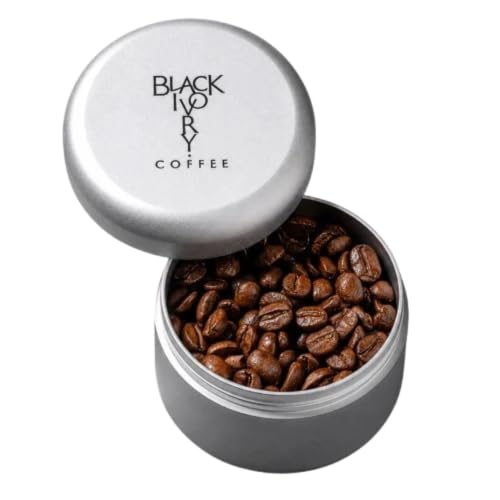
| Mahout’s Blend by Black IvoryBest Gift Box | Gift-first buyer | 1.4 Ounce (40g) | Whole bean | Blended | Amazon |
| Kaya Kopi Premium Kopi LuwakMost Flavor-Forward | Most flavor-forward pick | 7.05 Ounce | Whole bean | Medium | Amazon |
| Cafés Granell Kopi Luwak | Small batch taster | 3.53 Ounce | Whole bean | Roasted | Amazon |
| Coffee Roasters of Jamaica Blue Mountain | Splurge for espresso | 2 pound | Whole bean | Roasted | Amazon |
| Hayman 100% Panama Geisha | Pour-over connoisseur | 24 Ounce | Whole bean | Medium | Amazon |
| Black Ivory Coffee | Rarest harvest collector | 1.4 Ounce (40g) | Whole bean | Elephant-refined | Amazon |
| Stoneleigh Jamaica Blue Mountain | Weeks of Blue Mountain | 80 Ounce (5 x 16oz) | Whole bean | Roasted | Amazon |
| Kona Earth 100% Kona | Highest rated pick | 80 Ounce (5 lb) | Whole bean | Medium Dark | Amazon |
Detailed Reviews
1. Monkey Business Coffee – Wild Kopi Luwak Ground Beans
Our pick — 4.0+★ from 750+ verified ratings; the strongest balance of quality and price.
The full-kilo wild civet bag that turns a rare brew into a shareable occasion.
A full 1 Kilogram bag — that’s 35.27 Ounce of wild-sourced ground Kopi Luwak — is the rare-coffee pick a buyer can actually share. That weight matters because it carries the entire table for weeks, not a single pour. The tasting notes read smooth and not bitter, with caramel and chocolate underneath and a complex aroma. It comes imported from Indonesia with ethically sourced wild beans.
What wins people over here is the smoothness and the caramel-forward flavor. Buyers drink this one unsweetened, since the wild-civet processing strips the harshness out, and low-acid drinkers find it gentler than everyday coffee. The brew is best in a French press at a hotter water temperature than a standard drip maker puts out. As buyers put it: “–40 price acceptable; 8.8 oz makes ~2 pots (10 cups each), shared with co-workers.”
The honest catch is cost and value perception. Half of this crowd finds the money justified for occasions, while the other half feels it is simply too much for a daily cup. Authenticity also splits the room. The size is the real edge here: this bag holds 35.27 Ounce, against the 1.4 Ounce treasure box on the elephant-refined pick further down, so a single kilo stretches across holidays and guests. Treat it as a special-occasion staple and the math works.
What earns the top spot
- 35.27 Ounce of wild Kopi Luwak ground beans — enough to share and stretch
- Smooth caramel and chocolate notes with a complex aroma
- Low-acid feel that unsweetened drinkers enjoy
- Ethically wild-sourced and imported from Indonesia
What to weigh before buying
- Daily use pushes the budget; it’s really an occasion coffee
- Authenticity opinions split among buyers
- A few find the flavor too mild for their liking
Reach for it if: you want the rare Luwak experience stretched across guests and holidays.
Think twice if: you drink a strong, piercing cup every morning and expect a rare coffee to be bold.
2. Mahout’s Blend by Black Ivory Coffee – Elephant-Refined
A gentle introduction to elephant-refined coffee, boxed to hand over as a gift.
The first thing you notice is the size — a 40g treasure box, which is 1.4 Ounce of coffee. Compare that to the 35.27 Ounce wild Luwak bag in the best-overall spot and the difference in scope is stark. That gap puts this squarely in gift and tasting territory, not a daily supply.
Inside is a deliberate blend of elephant-refined beans and Thai Arabica. Over 10 to 72 hours the elephant’s slow, plant-based digestion gently works on the coffee cherries. Then the beans are blended with standard Thai Arabica for a balanced cup. Expect chocolate, malt, and almond, with a subtle hint of grass and a clean finish. It arrives in a custom Mahout’s Blend box, and it supports elephant-caring families in Surin, Thailand.
What wins people over is the zero-bitterness character — a smooth cup with a lovely aroma and no roast bite. It also lacks a strong caffeine kick, and the experience is meant to be savored slowly rather than chugged. The trade-off is that outer box taking a beating in transit, which happens at this size; and with 1.4 Ounce in the tin, you are buying a few indulgent pours, not a stockpile. As one buyer put it, “At plus I would have expected better to give and receive.”
Who this suits: a buyer choosing a rare-coffee gift who wants the story and the presentation to do the work.
The trade-off: a small 1.4 Ounce box with no strong caffeine hit — closer to a tasting flight than a morning routine.
Pick this for: the presentation and the ethical sourcing on a gift.
Look past it if: you want a bag that keeps your mornings running for weeks.
3. Kaya Kopi Premium Kopi Luwak From Indonesia
Wild-civet beans from a high-altitude farm, roasted to keep every drop of character.
Kaya Kopi grows its beans at 4,000 feet (1,200 M) above sea level in the Pangalengan Highlands of West Java, Indonesia. The coffee is 7.05 Ounce of whole-bean wild-palm-civet Kopi Luwak, medium roast. That altitude and growing region matter because high-elevation beans tend to pack more complexity into the cup, the character this one is known for.
Flavor leads in how buyers describe it, and it earns that reputation. The cup arrives intensely aromatic and complex, smooth and earthy with a chocolate edge and no need for sugar. It brews beautifully in a French press. The wild-civet sourcing means the animals roam free and pick only the ripest berries, which the maker credits for the depth of flavor. “Best coffee ever” is the short version a lot of buyers land on, and notes of fresh berry come through when brewed traditionally.
Where it can trip you up is the dose. A few buyers used 10g of beans and found the cup pale and unimpressive — that is under-dosing, not a bad bean. Resteep with more ground per cup, and the flavor returns. The 7.05 Ounce bag is a sensible size for trying a rare coffee without committing to a full kilo, and the medium roast keeps the chocolate and earthy notes intact. Its 4.0+ stars across 450+ ratings suggest most buyers found the cup worth repeating.
What stands out: high-altitude wild-civet beans with a medium roast that keeps flavor at the front — mix in the right dose and the cup justifies the label.
The honest limit: too little ground coffee per cup flattens it, so treat the bag as a dial you have to tune.
Best for: a buyer who wants wild civet flavor and doesn’t mind dialing in the dose.
Not ideal if: you want a bag that forgives a weak brew — this one rewards proper measure.
4. Cafés Granell Kopi Luwak Coffee Beans

A three-and-a-half-ounce taste of wild civet coffee with a nutty, velvety finish.
Cafés Granell packs 3.53 Ounce of whole-bean wild Kopi Luwak in a vacuum-sealed bag. The wild Asian palm civets roam freely in the Indonesian highlands and pick the ripest berries, which are then hand-collected, washed, dried, hulled, and roasted. The maker has been family-run in Valencia, Spain since 1940, and every bag is described as coming from free-range, cruelty-free wild civets.
The cup leads with a velvety-smooth body and a nutty core, with a slight hint of spice. The natural fermentation process strips out the bitterness, so it drinks well without sugar or cream. Coffee quality is what buyers rate highest — the coffee itself arrives fresh, and a lot of buyers report it brews up smooth but bold. If you are converting someone to rare coffee, this small bag is a safe place to start because it delivers real spice and nuttiness at a modest quantity.
The flavor is where opinions diverge the most with this one. Some buyers find the brew sour or plain beside the Kopi Luwak brands they know from Asia, so it suits a palate that likes its rare coffee bright and nutty rather than deep and earthy. The 3.53 Ounce bag limits you to a few pours, so it is the low-commitment trial rather than the long-term bag. At 4.0+ stars across 300+ ratings, most buyers came away with a solid cup.
Why it earns a slot
- 3.53 Ounce wild civet beans, vacuum-sealed for freshness
- Velvety body with nutty and spice notes, no sugar needed
- Head-to-head the coffee quality is the strongest part
- Small-batch size makes it a low-risk trial of rare coffee
Where it isn’t for everyone
- Taste splits: some find it sour versus Luwak they know from Asia
- The small bag runs out quickly
- Flavor expectations need to align with bright, nutty notes
Try it if: you want a small, fresh tasting bag with nutty sweetness before committing to a full kilo.
Pass if: your ideal Luwak is deep, earthy, and bold in every sip.
5. Coffee Roasters of Jamaica – 100% Jamaica Blue Mountain

Two pounds of whole-bean Blue Mountain inside a burlap bag, built for espresso pulls.
What you actually get is a 2 pound bag of 100% Jamaica Blue Mountain whole-bean coffee, vacuum packed and tucked inside a burlap outer bag. That two-pound haul is real volume for a rare bean, so it covers many espresso sessions before it runs low. The beans are grown in the Jamaican Blue Mountains and packaged for freshness.
The flavor is what carries it — strong, smooth, and succulent, and a little goes a long way per cup. A lot of buyers describe a full, rich, non-bitter cup and fresh beans that outclass cheaper, stale alternatives. It pulls a great espresso with a good machine and grinder, and the vacuum-sealed zip-lock inside the burlap keeps it dialed in. Buyers looking for something closer to the old “pure” Blue Mountain era say it delivers on that score.
The two real limits are delivery and consistency. A few mention shipping dates getting pushed out before the bag finally shows up. And this is not a value coffee where every cup is a revelation — one buyer found it tasted no better than budget beans in an automated espresso machine, which can be water-dependent. Still, for a 100% Blue Mountain pour at 2 pounds, the volume per cup here is generous relative to the 3.53 Ounce sample on the Granell pick.
Standout spec: a full 2 pound vacuum-packed bag of 100% Jamaica Blue Mountain, more rare coffee per buy than almost anything else here.
Realistic caveat: shipping can lag, and in a super-automatic machine the flavor edge may not show through.
The right buy for: espresso lovers who want genuine Blue Mountain by the pound.
Skip if: you brew through an automated machine and want an obvious flavor jump every cup.
6. Hayman 100% Panama Geisha Coffee Beans

Pure Panama Geisha with jasmine, mango, and mandarin — roasted on shipping day.
This is 24 Ounce of whole-bean Panama Geisha, and it is not a blend — it is 100% pure Geisha coffee. That distinction matters because blends mix rare beans with cheaper coffee. A pure single-origin Geisha keeps the floral jasmine and fruit notes whole. Hayman roasts it in small batches on the same day it ships, and prints the roast date on the packaging so you can verify freshness.
The aroma and the silky texture are the story. Medium roast keeps the mango and mandarin notes at the front, and a lot of buyers find the cup smooth enough to drink without cream. Use a pour-over or a quality drip machine and a 15:1 water-to-coffee ratio — 1L of water to 60g of coffee — as the brewing notes suggest. The flavor opens up as the cup cools, a hallmark of a bright, high-acidity Geisha.
The catch is the character itself. Geisha is light, floral, and tea-like, not a bold dark roast, so a buyer expecting a heavy cup will feel short-changed. Some buyers also hit a tart edge if they brew too soon after roast — a few days of rest settles it. It ships whole bean in a boxed gift presentation, and the 24 Ounce size stretches across many session brews at 7–10 cups per bag. Compared to the 1.4 Ounce Black Ivory tin, this bag gives you actual volume for the flavor.
What buyers prize: jasmine, mango, and mandarin in a pure 100% Geisha, roasted to order — a cup that shifts as it cools.
The thing to know: this is a light, tea-like coffee, so dark-roast drinkers should not expect a heavy body.
Made for: pour-over brewers chasing floral complexity and a silky mouthfeel.
Not for: anyone who drinks dark, bold roasts and wants that punch.
7. Black Ivory Coffee – Elephant-Refined Thai Coffee
Fewer than 500 pounds a year, and one kilogram of cherries for every kilogram of beans.
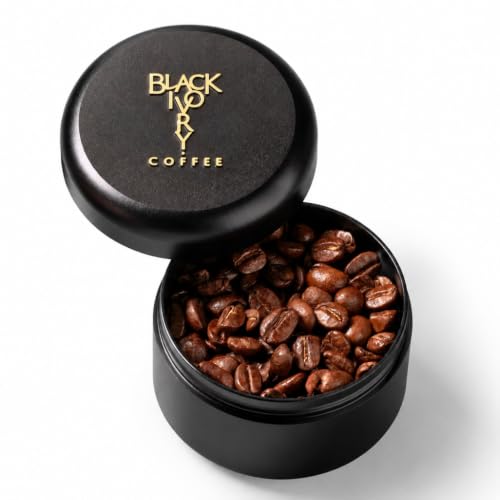
Black Ivory is limited to fewer than 500 pounds annually, and a single kilogram requires 33 kilograms of hand-selected coffee cherries. That is what makes it one of the rarest coffees in the world. The beans are naturally refined by elephants in Thailand over 10 to 72 hours. You get 1.4 Ounce of whole-bean coffee sealed in a matte black and gold canister inside a hand-wrapped Japanese-paper gift box.
The flavor runs deep and different: rich cacao, date, plum, and tamarind, with a touch of Pu-erh tea and a clean sugarcane finish. The cup lands smooth and low in bitterness compared to conventional coffee, which the maker credits to the elephant digestion. It holds flavor with milk and brews well in a moka pot. The whole production supports elephant-caring families and an after-school program in Surin, Thailand.
You pay a lot for very little coffee. A few buyers find the taste fair but the cup count painful — very small output, closer to a couple of espressos than a week’s supply. It also isn’t bitter, so if you love a cutting edge to your coffee, this one will feel soft. Against the 1.4 Ounce Mahout’s blend, this tin runs rarer still — under 500 pounds a year — but the two sit at a similar cup count, so choose on if you want the pure elephant experience or the blended intro.
What makes it collectible
- Fewer than 500 pounds produced each year
- 33 kilograms of cherries per kilogram of beans — genuine rarity
- Notes of cacao, date, plum, and tamarind with a sugarcane finish
- Gift-boxed canister with brewing guide and cupping journal
Where the money pinches
- Very low cup count — a couple of mugs from the tin
- Not bitter, which some strong-coffee drinkers dislike
- Hard to justify as anything but an occasional indulgence
Choose it when: you want the rarest cup you can get and the story matters as much as the sip.
Leave it when: you expect a bag to carry you through the month.
8. Stoneleigh Coffee Five Pack Jamaica Blue Mountain
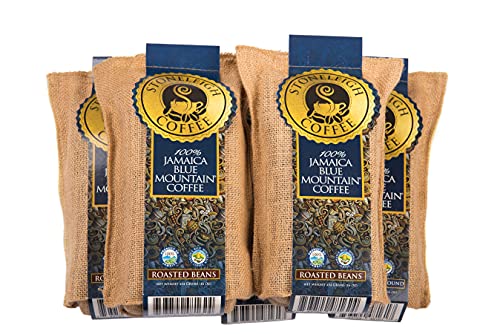
Five burlap bags of certified Jamaica Blue Mountain — 80 Ounce to work through.
Five 16-ounce bags add up to 80 Ounce of 100% Jamaica Blue Mountain beans. Each is a Typica Arabica, hand-selected, roasted, and packed in a traditional Jamaican crocus burlap bag. The whole lot is certified by the Coffee Industry Board of Jamaica, so the origin is provable. That is far more Blue Mountain volume than the 2 pound bag on the Coffee Roasters pick, if quantity is what you need.
You get a smooth cup with top-notch quality. It pulls a rich, long, flavorful finish that Blue Mountain fans rate as tough to top. If you splurge on Blue Mountain, this is a clean, certified version of that experience. The burlap packaging also makes each bag a ready gift.
Where it goes sideways is flavor consistency. The coffee quality is solid, but a slice of buyers find the taste unremarkable next to regular store beans, and the value question follows. This is a coffee for someone who loves Blue Mountain’s style and wants five bags deep. If you are still deciding whether Blue Mountain is your thing, the smaller 2 pound bag lets you test the style first. At 4.0+ stars across 150+ ratings, the quality votes outweigh the flavor gripes.
The draw: 80 Ounce of certified Jamaican Blue Mountain in five burlap bags — serious volume and clear origin.
The limit: a mixed flavor reception means some buyers find it strong and smooth, others plain.
Reach for it if: Blue Mountain is your preferred cup and you want a certified five-bag stash.
Start smaller if: you’re new to Blue Mountain and want to confirm the style suits you.
9. Kona Earth 100% Kona Premium Coffee, 5 lb
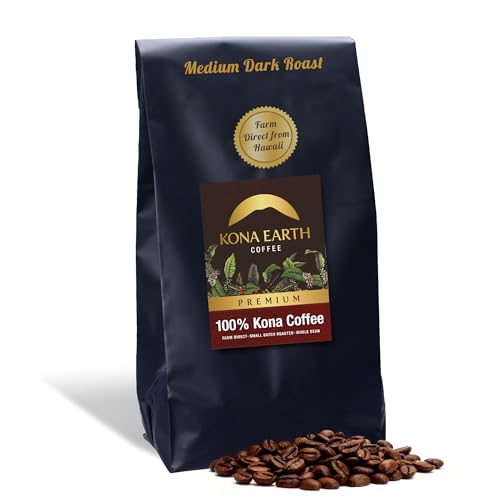
Five pounds of farm-direct Hawaiian Kona, and the top-rated pick on this whole list.
Kona Earth ships 80 Ounce of 100% Kona whole-bean coffee, medium dark roast, grown on a family farm in the Kona coffee belt on Hawaii’s Big Island. Authentic 100% Kona makes up less than 1% of the world’s coffee production, which is what keeps it exclusive. A 5 lb bag is a serious quantity for a rare bean, and this is the highest-rated coffee here at 4.5+ stars across 20+ ratings.
The flavor notes run molasses, pipe tobacco, baked fruit, and baker’s chocolate. Buyers who favor Kona over acidic South American beans find this balanced and very smooth, with no detectable acidity. It’s grown in volcanic soil at high altitude, hand-picked, washed, and sun-dried on the farm. The roast date is printed on the packing slip, and buyers like having a roasted-on date instead of a best-by date.
The one hitch is the bag itself. One buyer felt the bag came underfilled — weighing in at 74oz including the packaging — though Kona Earth stepped in with a replacement bag and an apology. That’s a rare miss, and the customer service follow-through is what stuck. One note: with just 20+ ratings, this Kona has far fewer reviews than the big-volume Luwak and Blue Mountain picks, so its 4.5+ star score rests on a smaller sample. Still, for the small crowd that bought it, five pounds of farm-direct Kona is tough to match.
Why it rates highest: 80 Ounce of real 100% Kona, roasted in micro-batches with the roast date printed on the slip — the pick with the cleanest freshness signal.
The small print: it carries far fewer ratings than the volume leaders, and one bag arrived underfilled before the farm made it right.
Suits you if: you drink Kona as a daily habit and want a farm-direct five-pound supply.
Hold off if: you want the feedback of a huge buyer base before committing.
Know the Specs
Package size and why it drives value
Package size tells you how many cups you actually get, and it varies more in this category than almost any other. The bags here run from a 40g (1.4 Ounce) treasure box up to a 1 Kilogram (35.27 Ounce) bag, so you have to read the units, not just the tier. A small tin is a tasting flight; a full kilo is a stash you share. Look at the weight printed on the listing, and you can guess how many mornings one purchase covers.
Wild civet versus elephant-refined and beyond
The processing method is the heart of rare coffee, and each one leaves a different fingerprint. Kopi Luwak comes from civet cats eating coffee cherries, with the beans collected, cleaned, and roasted afterward — the wild versions pick only ripe berries. Elephant-refined coffee uses a 10 to 72 hour digestion that softens the bean. Panama Geisha and Jamaica Blue Mountain skip the animal step and lean on the growing region instead. Pick based on the flavor you want, not only the method.
Common Questions
Is Kopi Luwak actually the world’s most expensive coffee?
Does elephant-refined coffee taste different from Kopi Luwak?
How many cups can I get from a 40g treasure box?
Why does my rare coffee taste weak or pale?
Does Panama Geisha need a special brewing method?
How should I store an expensive bag of coffee?
Is a blend cheaper than a pure single-origin rare coffee?
Can I use expensive coffee in an espresso machine?
Is wild-sourced civet coffee better than caged?
Do rare coffees come whole bean or ground?
The Bottom Line
For most buyers hunting the world’s most expensive coffee, the pick that balances rarity and real volume is the Monkey Business Wild Kopi Luwak, because its 35.27 Ounce bag gives you the wild-civet experience across guests and holidays rather than one pour. If you want 100% farm-direct rarity and the top-rated cup on the list, grab the Kona Earth 100% Kona. And for a gift that carries the rarest-harvest story, the Black Ivory Coffee is the one to reach for. One honest nudge: start with the Luwak bag before you climb the price ladder.
How we choose
We do not accept paid placement. Every pick is matched to a real buyer and a real use-case; we do not hands-on test units.
Sources
Specifications: manufacturer listings and product documentation. Review insights: verified customer reviews, as of October 2026. Pricing: not shown on this page (it changes often); check the current price via the retailer link.
As an Amazon Associate, Home Digitized earns from qualifying purchases. This does not affect which products we feature.