
Specs are compiled from manufacturer listings and verified buyer reviews and can change over time — please confirm the key details on the product page before buying.
If you want a shoe where your heel and your toes sit at the same height off the ground, this is the shortlist that matters. The catch most buyers hit is that “zero drop” on the box does not always mean a roomy front, and a roomy front does not always mean enough cushioning under the ball of your foot. The six picks below cover trail, road, gym and barefoot-style training, so you can match the shoe to how you actually move.
This guide is built by comparing the manufacturers’ published specifications and the patterns across verified customer reviews, so you get each pick’s real strengths and trade-offs instead of marketing spin.
The picks below are split by surface and by how much shoe you want underfoot. Read the numbered list in order and you will land on a pair that matches your training surface, your toe width and your cushioning preference — that is exactly how I have framed this breakdown of the zero drop sneakers field.
Top Picks

How To Choose The Best Zero Drop Sneakers
Start with the surface, not the brand. A trail shoe built around a 25 mm stack and canted lugs will feel clumsy on pavement, while a road shoe with soft foam will roll on loose rock. The four levers below are the ones that actually change how a zero drop shoe feels on your foot.
Stack Height Tells You What The Shoe Is For
Stack height is the amount of foam between your foot and the ground, measured in millimeters. Zero drop means the heel and forefoot sit level, but the total stack still decides comfort. The Altra Timp 5 sits at 29 mm, while the Altra Lone Peak 8 sits at 25 mm. More stack soaks up rocks; less stack lets you feel the trail and keeps your foot low to the ground. If you run long rocky descents, the higher number wins. If you want ground feel and stability on technical singletrack, take the lower one.
Toe Box Width Decides Whether You Can Wear It All Day
A wide toe box is space at the front that lets your toes spread instead of stacking. It sounds minor until you are 6 miles in with a hot spot. Zero drop shoes often pair a level platform with a roomy front, but fit still varies model to model. Two shoes can both be marked 0 mm drop and still feel completely different across the metatarsals. Try the shoe with the same sock you race in.
Outsole Rubber And Lugs Match The Ground
Trail traction comes from the rubber compound and the lug shape. Canted lugs are angled blocks sitting under the ball of the foot, and they bite into dirt and mud. A road shoe usually skips aggressive lugs in favor of flat rubber contact. Pick the rubber to your most common surface, then accept that the other surface will be a compromise.
Cushioning Is A Taste Call, Not A Ranking
Some runners want a firm, close-to-ground ride. Others want a soft landing under a heavier body or a longer distance. The Lone Peak 8 draws a split reaction on cushioning precisely because zero drop plus a moderate stack is a taste call. If you are moving from a conventional cushioned shoe, expect your calves to notice the level platform for the first few runs.
Side-by-Side Comparison
| Model | Best For | Drop | Stack Height | Weight | Amazon |
|---|---|---|---|---|---|
| ALTRA Women’s Lone Peak 8★ Best Overall | Trail running and thru-hiking | 0 mm | 25 mm | 10.7 oz | Amazon |
| ALTRA Men’s Torin 7Most Cushioned Trail | Road miles and all-day wear | 0 mm | — | — | Amazon |
| Flux Adapt Graphene XT | CrossFit and lifting | 0 mm | — | 10.2 oz | Amazon |
| Vivobarefoot Primus Lite III | Barefoot-style training | 0 mm | — | — | Amazon |
Detailed Reviews
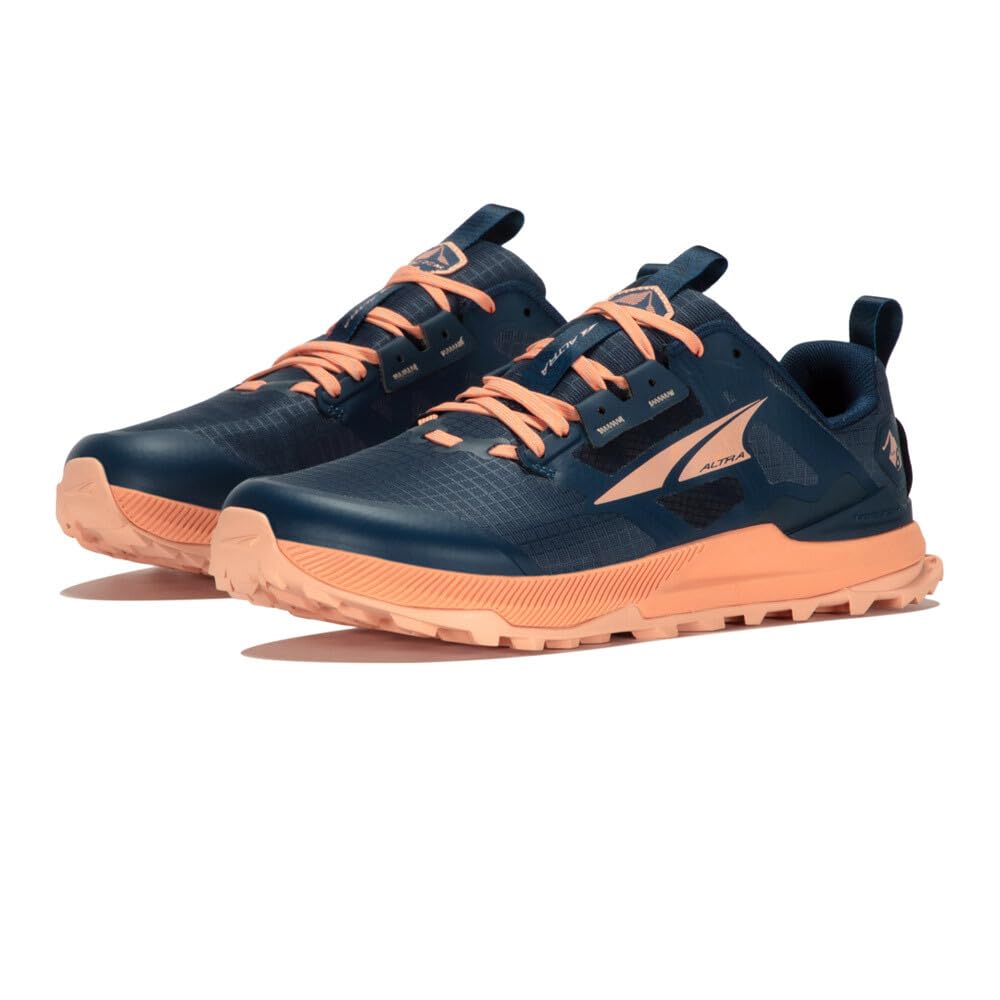
1. ALTRA Women’s Lone Peak 8 Trail Running Shoe
Our pick — 4.5+★ from 800+ verified ratings; the strongest balance of quality and price.
The trail shoe that keeps your toes spread and your heel flat on rocky ground.
You get a shoe that puts your heel and forefoot at the same distance from the ground — the 0 mm drop that defines this whole category. The stack sits at 25 mm, which is enough foam to blunt sharp rocks without hiding the trail under you. At 10.7 oz it is not the lightest shoe here, but that weight carries a MaxTrac outsole (Altra’s sticky trail rubber) and canted TrailClaw lugs (angled blocks placed under the ball of the foot for extra bite).
What wins people over is the front of the shoe. A 25 mm stack and a roomy toe box is a combination that lets your toes spread on long descents instead of jamming together. The refined ripstop mesh upper (a woven, tear-resistant fabric) holds up against brush. Compare it to the Timp 5 below: the Timp sits higher at 29 mm for softer landings, while this Lone Peak keeps you 4 mm closer to the dirt for stability and feedback. If you want to feel the trail for balance, the lower shoe is the better call.
The recurring gripe is cushioning — a fair split of owners find it enough for comfort and a fair share want more under the ball of the foot. Some also prefer a firmer heel for very long road stretches, where a trail shoe is simply the wrong tool.
What earns the top spot
- 0 mm drop paired with a 25 mm stack keeps the platform level and low.
- MaxTrac outsole and TrailClaw lugs give real grip on loose dirt and rock.
- Ripstop mesh upper resists scuffs on brush-heavy singletrack.
- Wide toe box lets toes splay, which is why most owners keep buying it.
Where it asks something of you
- Cushioning splits opinion — some want more foam under the forefoot.
- 10.7 oz is heavier than the 9.8 oz Timp 5 in this same lineup.
- Trail lugs feel clumsy and noisy on pavement.
Reach for this if: you want a level, ground-connected trail shoe with a wide front for hiking or technical running.
Look elsewhere if: you want deep, soft cushioning or you mostly run on roads.
2. ALTRA Men’s TIMP 5 Trail Running Shoe
The pavement pick that gets the flat heel platform right for daily wear.
Altra rebuilt this one around a 0 mm platform and a redesigned tongue, and added 2 mm more of EGO MAX foam (their lightweight midsole compound) to the midsole for extra bounce. The upgraded mesh upper breathes, and the molded heel collar — the padded ring around your ankle — locks your foot without pinching. A level platform plus a standard FootShape front means your toes spread without the shoe feeling like a boat.
Owners wear this one everywhere, not just on runs. It handles work days, gym sessions and walk-run days in the same shoe, which is rare for a true 0 mm design. The wide front converts people who have been squeezing into narrow running shoes for years. The honest limit is durability of the upper: the fabric has been a weak spot over the last few model years, with cracking after about a year of heavy use reported. That points at a rotation habit — don’t make this your only pair if you log serious daily miles.
On comfort, the foam is adequate rather than plush, and that trade keeps the shoe stable and light underfoot. If you want a firmer-feeling zero drop shoe with a generous front and a road-ready outsole, this is the one to compare against the Paradigm 8 below — the Paradigm adds medial guidance, while the Torin keeps things neutral.
The value read: a level platform, roomy front and daily-wear comfort in one shoe, which is a lot of ground covered.
The catch: the upper has cracked for some heavy users after a year, so treat it as a rotation shoe, not a single workhorse.
Pick it when: you want one neutral zero drop shoe for pavement, the gym and everyday standing.
Pass if: you need medial support or extra-durable uppers for year-round heavy miles.
3. Flux Footwear Adapt Graphene XT Cross Training Shoes
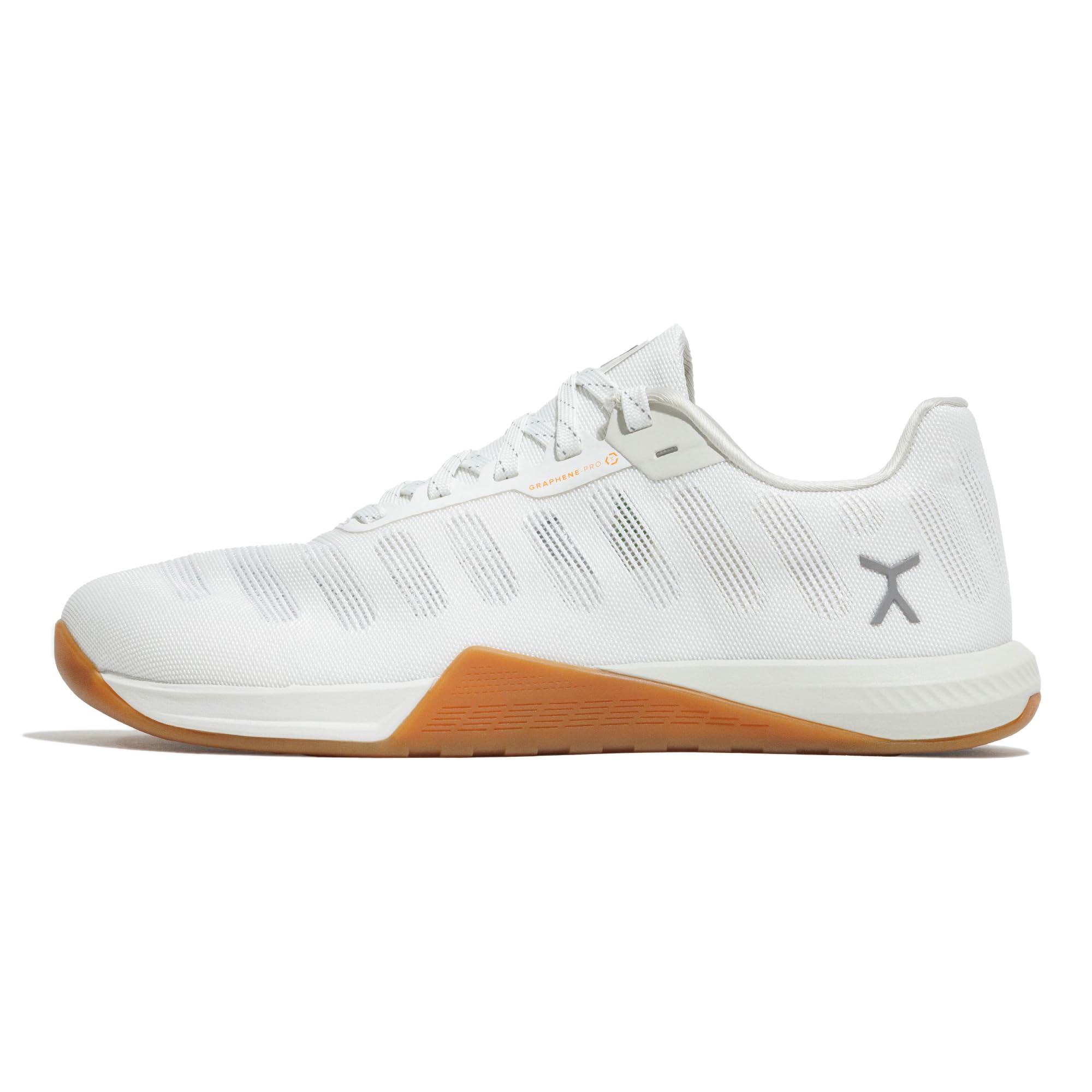
A flat, grounded platform built for barbells first and running second.
The graphene in the name is a one-atom-thick carbon layer that Flux claims is 200x stronger than steel while staying thin and flexible. In practice you get a stable, sturdy upper over a level 0 mm base — a raised heel is the last thing you want under a loaded squat. What buyers care about most is how locked in their feet feel under a bar. The wide toe box lets your toes spread for balance, and the level platform makes the floor feel like a direct base under you.
This is a cross-training shoe, not a running shoe. Owners take it to CrossFit, lifting sessions and travel, and it handles all of that well. It is light at 10.2 oz and sturdy enough to hold up over repeated sessions. The foam and outsole are built for ground contact and lateral stability rather than shock absorption over miles.
The genuine catch is sizing and limited use. It fits small for most foot shapes, and Flux advises going up a half size. The heel is on the wide side for some feet and can slip, which matters if you plan to run in it. A few colors are limited to black, charcoal gray and white, so style choice is narrow.
The standout spec: a graphene-reinforced upper over a 0 mm platform at 10.2 oz — sturdy without bulk.
What to plan for: it runs small, so add a half size, and keep it for the gym rather than the pavement.
Suits you if: you lift, do CrossFit or want a grounded shoe with toe room under load.
Not your shoe if: you need a daily runner or a narrow, snug fit.
4. Vivobarefoot Primus Lite III Mens Barefoot Shoes

The thinnest sole here, built to let your foot feel the floor and work.
Vivobarefoot built this around a thin, flexible sole so your foot gets sensory feedback from the ground and can move through its natural range. That is a different job from the cushioned shoes above — there is no tall foam stack to absorb impact. The wide fit and spacious toe box let your toes spread and push, which is what the Primus Lite III is for: gym training, walking, running and everyday wear with as little shoe between you and the floor as possible. The build uses recycled plastics, bio-based materials and responsibly sourced leather, and the shoe is vegan.
Flexibility is the trait owners value most — a soft sole that bends with your foot and lets your squat depth open up. For lifting, balance work or mobility sessions, that closeness to the ground is the whole point. It is minimalist by design, not by cutting corners.
The honest limits are real. Fit runs large for a fair share of buyers, and durability has been a repeated point — soles separating and laces coming undone show up in owner feedback. That is the price of a shoe this thin and flexible. If you want maximum longevity from one pair, this is not the one; if you want the barefoot feel and accept the wear, it delivers.
The mic-drop spec: a thin, flexible sole that gives ground feedback no tall foam shoe can match.
The real caution: it runs large and durability is mixed, so check the size chart and plan for sole wear.
Go here if: you want the barefoot experience for lifting, mobility and walking.
Skip if: you need cushioning for long road miles or durability from one hard-worn pair.
Know the Specs
Drop (Measured in Millimeters)
Drop is the height difference between your heel and your forefoot, measured in millimeters. A 0 mm drop means the two sit level, so your foot lands flat instead of tilted forward. Every shoe here is 0 mm, which is the core trait you are shopping for. The level platform asks more of your calf and achilles than a raised heel does, so build up your mileage gradually.
Stack Height (Foam Under Your Foot)
Stack height is how much foam separates your foot from the ground. A 25 mm stack feels close and lets you sense the trail; a 30 mm stack cushions more but sits higher. The numbers in this lineup run from 25 mm to 30 mm. Higher is not better — it is a trade between ground feel and impact absorption, and your surface and distance decide which you want.
Toe Box Width and FootShape
Toe box width is the space at the front of the shoe. A roomy front lets your toes spread, which improves balance and cuts pressure on the toes. Altra’s FootShape design and Flux’s wide toe box both target this. A shoe can still fit narrow through the midfoot while staying roomy at the front, so check both zones before you buy.
Outsole Rubber and Lugs
The outsole is the bottom of the shoe. Lugs are the raised blocks that bite into dirt. Sticky rubber compounds like Vibram Megagrip hold on wet rock and roots, while flatter road soles give smooth pavement contact. Match the outsole to your most common ground — a lugged trail shoe rolls and wears fast on pavement.
Common Questions
Will zero drop sneakers hurt my calves at first?
What is the difference between zero drop and barefoot shoes?
Should I size up in a wide toe box running shoe?
Can I run on pavement in a trail shoe with lugs?
Which zero drop sneaker is best for the gym and lifting?
How long do zero drop running shoes last?
Are zero drop shoes good for wide feet and bunions?
Which shoe should I pick for trail versus road?
Do I need to break in zero drop sneakers?
The Bottom Line
The zero drop sneakers winner is the ALTRA Women’s Lone Peak 8 because it pairs a true 0 mm platform with a 25 mm stack, a MaxTrac outsole and a front roomy enough to keep your toes spread on the trail. If you want more foam under a rocky descent, grab the ALTRA Men’s TIMP 5 and its 29 mm stack. For lifting and gym work, the Flux Adapt Graphene XT is the grounded platform to reach for. And if the barefoot feel is the goal, the Vivobarefoot Primus Lite III is the most minimal pick here. Pick your surface first, then your stack height — the right shoe follows from those two choices.
How we choose
We do not accept paid placement. Every pick is matched to a real buyer and a real use-case; we do not hands-on test units.
Sources
Specifications: manufacturer listings and product documentation. Review insights: verified customer reviews, as of October 2026. Pricing: not shown on this page (it changes often); check the current price via the retailer link.
As an Amazon Associate, Home Digitized earns from qualifying purchases. This does not affect which products we feature.