
Specs are compiled from manufacturer listings and verified buyer reviews and can change over time — please confirm the key details on the product page before buying.
Buying a walking pad for a child or a teenager is mostly a question of belt length, not motor power. A 15″ x 36″ belt fits a child’s stride with room to spare and still clears a taller sibling’s heels. Buy too short a deck and the user’s heels hit the rear roller on every step. The picks below were chosen for compact footprints, low decks and speed ranges that suit shorter legs.
This guide is built by comparing the manufacturers’ published specifications and the patterns across verified customer reviews, so you get each pick’s real strengths and trade-offs instead of marketing spin.
You want a low deck a child can step onto without help and a motor quiet enough for a shared room. This list covers the compact machines that fit that job, from a true toddler-sized first treadmill to a full-size pad that adults can share. These are the youth walking pad picks with the belt length, speed floor and weight capacity that keep a child walking past the first month.
Top Picks

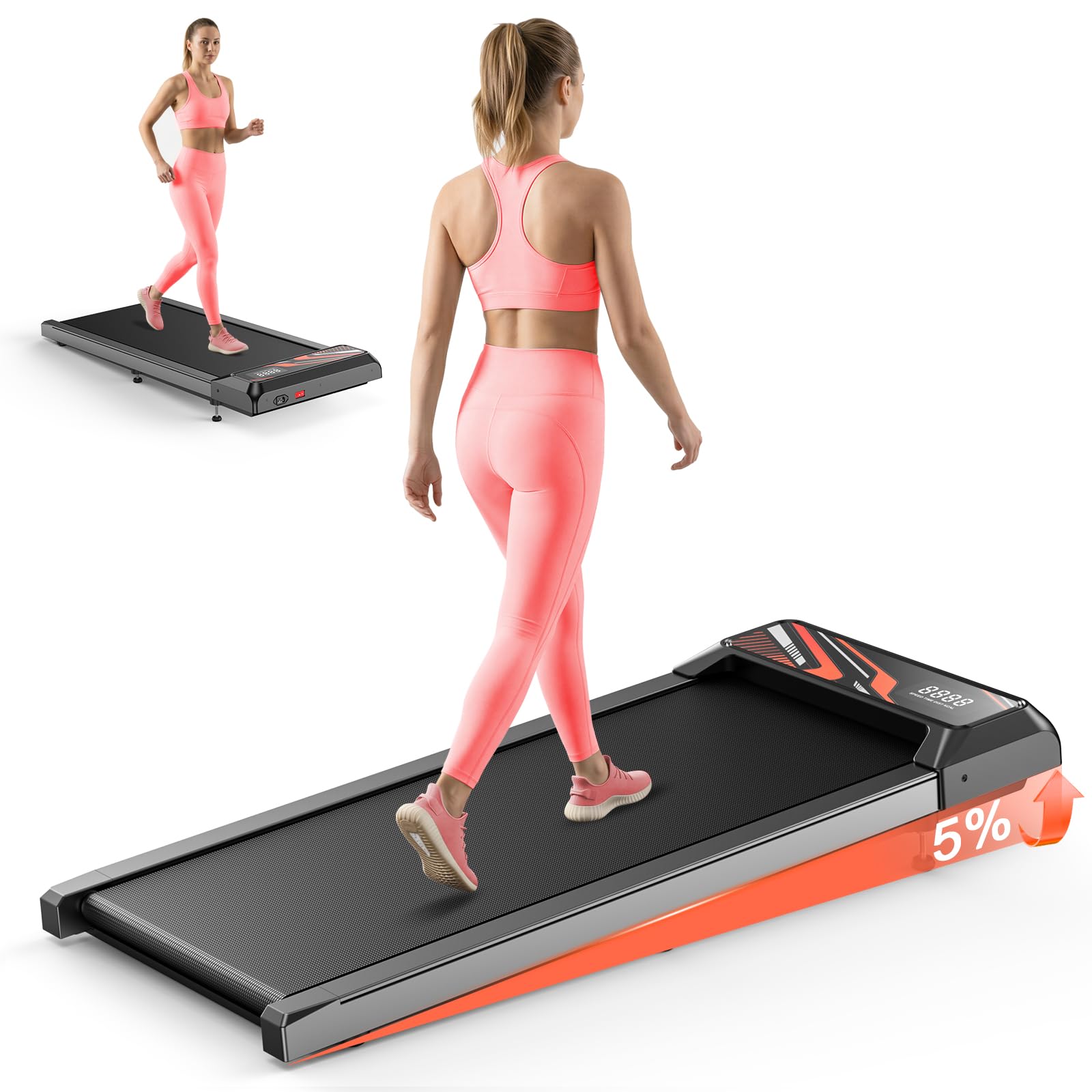
How To Choose The Best Youth Walking Pad
A nine-year-old does not need a 3.0HP motor or a 350 lb frame; belt length and a low starting speed matter far more. Instead, start with the user’s stride length and weight, then pick the belt and capacity that fit.
Belt length comes first
Measure the longest stride the user will take. A teen with a full adult stride needs a deck long enough that their heel does not land on the rear roller, and the belt on one of these pads is listed at 15″ x 36″. A shorter child has room to spare on a belt that size. If the pad will be shared across a family of different heights, size the belt for the tallest person who will use it.
Match the speed floor, not just the ceiling
Young walkers start slow, so the lowest speed the pad will run is more useful than the highest. A pad that starts at 0.6 MPH is friendlier for small legs than one that kicks in at 1.0 MPH. The top end matters for teens who want to jog, and 4 MPH is a good brisk-walk ceiling for most younger users.
Check the deck height and the handrail
A low deck sits closer to the floor, which shortens the step-up and feels less intimidating. Handrails are optional on a walking pad, but if you want one, look at where the bar sits relative to the user’s chest height — a bar designed for an adult will not help a small child. That is the main reason a purpose-built kids treadmill exists as a separate category.
Weight capacity tells you who can share it
The load limit is the number to read if more than one person will use the pad. Ratings on this list run from 150 lbs on the child-specific unit up to 350 lbs on the premium pick. A 300 lb rating instead of 150 lb adds little to the price and lets a parent or older sibling step on.
Side-by-Side Comparison
| Model | Best For | Speed Range | Weight Capacity | Belt / Deck | Amazon |
|---|---|---|---|---|---|
| Cybergoing T10★ Best Overall | All-rounder for kids and teens | 0.6–4 MPH | 300 lb | 15″ x 36″ | Amazon |
| HCOIW 2.5HP Walking MatBest Value | Smallest footprint and budget | 1–3 MPH | 265 lbs | 15 x 35.4″ belt | Amazon |
| RJOP Walking Pad | Young joggers who want a handrail | 1–5 MPH | 270 lbs | — | Amazon |
| ANCHEER Walking Pad | Compact second machine for teens | 0.6–4 MPH | 300 lbs | — | Amazon |
| Jogwell Walking Pad | Shared family use and taller teens | — | 350 lbs | — | Amazon |
| Hey Play Kids Treadmill | Toddlers and young children | Self-propelled | 150 lbs | — | Amazon |
Detailed Reviews
1. Cybergoing T10 Walking Pad Treadmill Powered By Bosch®
Our pick — 4.0+★ from 100+ verified ratings; the strongest balance of quality and price.
The belt long enough for a growing teen and quiet enough for a shared room.
This is the pick that makes the fewest compromises for a younger walker. The belt measures 15″ x 36″, which gives a short stride plenty of room and still leaves space for a taller sibling to walk without clipping the rear roller. The speed range runs from 0.6 MPH up to 4 MPH, so a cautious nine-year-old can start at a crawl and a fourteen-year-old can push into a brisk walk.
Where it earns its place at the top is the build. Owners describe a solid, stable deck that feels heavier than the price suggests, and the quiet motor even at higher speeds is what wins people over again and again. One buyer compared the construction to a far pricier NordicTrack, which tells you how the frame reads in person. The body weighs 36.4 pounds versus the Jogwell’s 51 pounds, so sliding it under a desk or against a wall is a one-person job. The fixed 7% manual incline is the other useful trick: set the feet before you walk and you get a steeper feel without a bulky powered incline mechanism that could fail.
The honest catch is the remote control. The pairing process requires holding the power button within 5 seconds of switching the unit on, and that is fussier than most people expect — enough that some units just refuse to pair, while others link instantly. It is not a dealbreaker, and the pad still runs fine from the deck controls, but do not count on the remote being the primary way a child operates it. Owners also flag the start-up beeps, which is normal for the category but worth knowing in a quiet house.
What holds up
- 15″ x 36″ belt leaves real stride room for shorter and taller users
- 0.6–4 MPH range suits a first-time walker and a brisk teen
- 300 lb capacity means an adult can share the pad
- Fixed 7% manual incline adds challenge without a bulky frame
What to plan around
- Remote pairing is fiddly and inconsistent between units
- Start-up and speed-change beeps are noticeable in a quiet room
- The incline is manual, so it is set before use rather than on the fly
Go for this one if: you want one pad that a young child, a teen and a parent can all use without tripping over a short deck.
Think twice if: the remote has to be the main way the pad is started and stopped, because pairing is the one recurring headache here.
2. HCOIW 2.5HP Walking Mat with Incline Pad
A slim, silent mat that fits where a full treadmill never could.
If the pad is going in a bedroom or under a low desk, this is the one to look at first. The body is only 4.5″ tall, which means it slides under furniture with room to spare and does not turn the corner of a small room into a trip hazard. The belt runs 15 x 35.4″, so a child’s stride fits comfortably and a shorter teen will not feel cramped. At 28.7 pounds it is the lightest full-size pad on this list — versus the 36.4-pound Cybergoing above.
The 5° incline is the feature that gets used most in practice. A knob lets you raise the front without any motor, and owners say the extra challenge is a genuine step up from flat walking rather than a gimmick. The 2.5HP motor runs quietly, and the deck uses a six-layer non-slip belt with dual shock absorbers — the kind of cushioning that matters when a smaller walker is putting less weight through each step. It arrives fully assembled, so there is no weekend lost to bolts and Allen keys.
The one thing to measure before buying is stride length. A 5’10” user found the deck too short to take a full stride at 3.0 MPH, with their feet hitting the back roller on each step. That is fine for a child, and the pad was never built for a tall adult jogging fast. It is also worth knowing the pad has no wheels, so moving it between rooms takes a lift rather than a roll.
Quietest of the budget bunch: The motor hums rather than roars, and the low deck keeps floor noise down, so a child can walk while someone else reads or watches TV in the same room.
Where it gives ground: The short deck rules out lanky teenagers at speed, and the missing wheels make it a stay-put machine rather than a room-to-room one.
Right for small spaces: a low deck and the lightest body here make it the natural pick for a bedroom or apartment floor.
Wrong for tall teens: anyone much past average height will want the longer belt on the Cybergoing instead.
3. RJOP Walking Treadmill Pad with Incline and Handlebar

The only pad here with a handlebar a young walker can actually hold.
Most walking pads are bare decks, which leaves a first-time child walker with nothing to grab. This one ships with a foldable handlebar, and for a nervous parent standing nearby that single feature changes the whole proposition. The speed range runs 1–5 MPH, so the fast end reaches a jog that will keep a teenager interested, and the 0–8% incline adds a real hill for anyone who wants one. It is the widest speed spread of the budget picks, with a 5 MPH top end versus the Cybergoing’s 4 MPH ceiling on the fast end.
The build quality is the thing that keeps buyers happy. Owners describe a sturdy deck that holds steady under a 230-pound user with no lag, and the 2.5HP motor runs quietly under 45 dB. Assembly is minimal because it arrives mostly put together, and the deck is slim enough to store against a wall. A 2.5 HP motor and a 270 lb capacity make it a machine a young teen can grow into rather than out of.
Now the part that will decide whether it suits your child: this deck is short, and the handlebar sits low. A 5’8″ owner described the deck as shorter than a traditional treadmill with a real learning curve, and a 5’10” owner found it too cramped to walk without watching their feet constantly. Someone under four feet will find the front bar at chest height, which is exactly right for small hands — but a taller teen will be hunched. Buy it for a shorter kid and the geometry works; buy it for a tall one and you will both fight it.
The case for it
- Foldable handlebar gives younger walkers something to hold
- 1–5 MPH speed range covers walking and jogging
- 0–8% incline adds difficulty beyond flat walking
- 270 lb capacity and a 2.5HP motor handle a growing teen
The catch to know
- Short deck is tight for anyone near five foot ten or taller
- Handlebar sits low for adults, high-for-nothing at shorter settings
- There is no pause button, so stopping resets the tracking numbers
Pick it for balance: a young walker who wants a bar to hold and a parent who wants a sturdier deck under them.
Leave it for tall teens: the short deck and low bar are built for smaller bodies, not full-grown ones.
4. ANCHEER Walking Pad with Vibration Plate
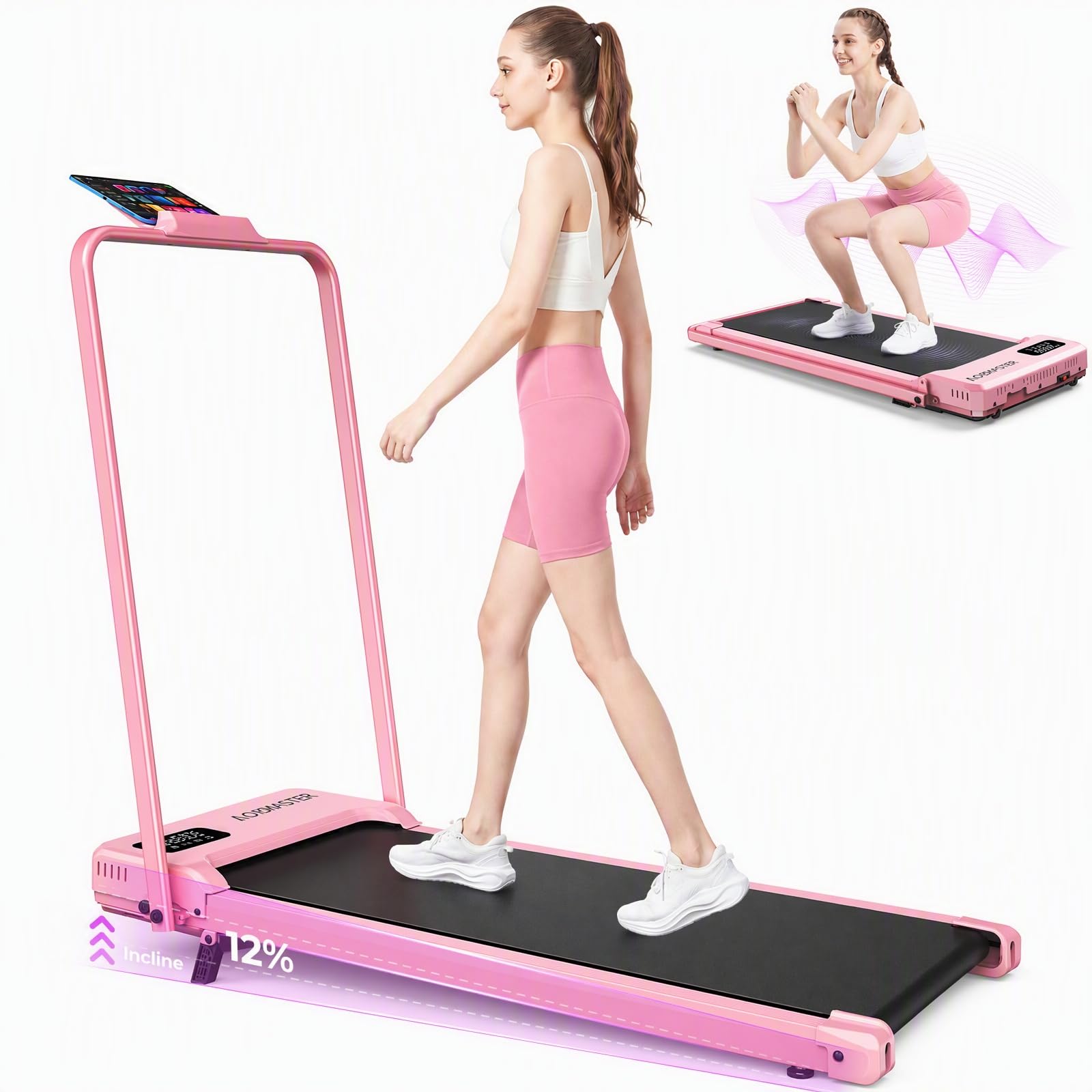
A slim, portable deck that tucks under a bed when the walk is done.
This one is a little different from the rest of the list. It pairs a walking deck with a vibration plate and eight intensity levels, so a teen who gets bored of plain walking has something else to do on the same footprint. The walking half runs 0.6–4 MPH, the same range as the Cybergoing, and the 2.5HP brushless motor keeps it under 40 dB. A brushless motor is the kind without carbon brushes rubbing inside, which is the usual reason cheap pads get loud over time.
The size is where it shines for a smaller household. The deck is 40.8″ long and 3.5″ tall, so it slides under a bed, a sofa or a desk with ease, and four wheels let you roll it rather than drag it. At 29 lb it is light enough for one person to move without strain — the review pages say the same thing in plainer words, with buyers calling it easy to move and the size perfect for their space. There is a 5% incline when you raise the support feet, and the LED panel tracks time, speed, distance and calories.
Be clear-eyed about the name, though. Some buyers expected a handrail and a powered vibrating plate and found neither, because the vibration function and the incline both depend on how you set the machine up rather than a motor doing the work for you. The beeping when you turn it on and change speeds is also louder than the motor itself, which is a small annoyance in a shared room. Read the setup notes before you buy and the experience matches expectations.
What gives it an edge: The vibration plate and eight-level setting add variety a plain walking pad cannot offer, and the thin deck stores almost anywhere.
What to read carefully: The vibration and incline are manual features, and the beeps are audible — worth knowing before you expect a powered massage plate.
Worth it for variety: a teen who wants more than walking and a household with almost no floor space to spare.
Not the one if: you need a handrail or a self-powered vibrating plate, since this model provides neither.
5. Jogwell Walking Pad with 15% Auto Incline
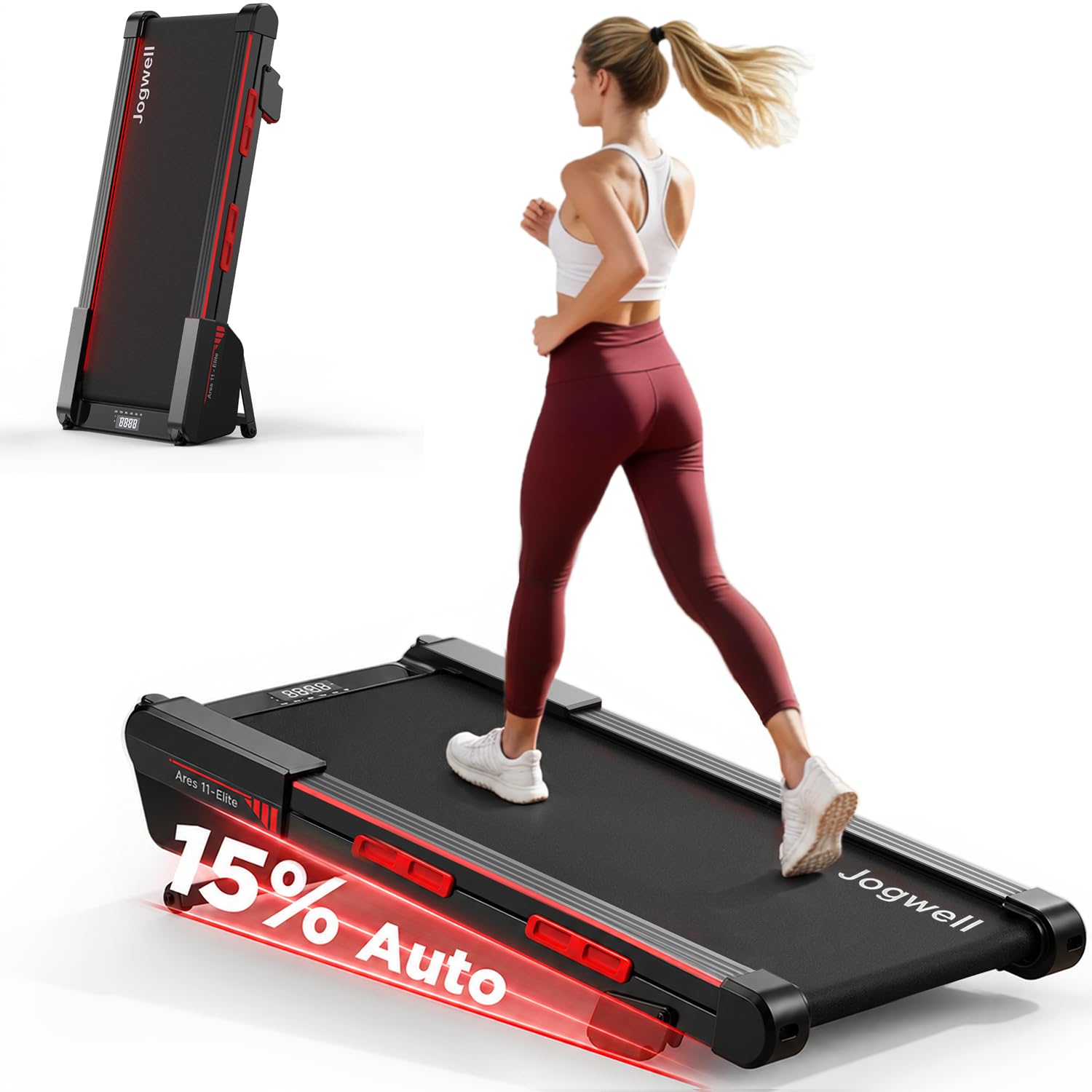
The full-deck build that keeps up with a growing teen and a parent.
This is the machine to buy if the pad will be shared rather than handed down to one child. The reinforced dual-steel frame carries up to 350 lbs, the most of anything on this list, and the full-deck design moves the drive system underneath the belt instead of behind it. That means more of the footprint is walking surface, so a taller teen gets a more natural stride than on a pad with a bulky front housing. The 3.0HP brushless motor runs below 35 dB, and a one-touch mute button on the remote silences the beeps for quiet-house use.
The incline is the headline. A 15% auto incline with 6 adjustable levels lets you change intensity on the move, and the motor does the lifting rather than a manual knob — a genuine step up from the fixed 7% incline on the Cybergoing. When you are done, the pad stands vertically on its own without leaning against a wall and stores in about 1.5 sq. ft., and four wheels roll it both ways so you can move it between rooms without lifting. An 8-point cushioning system and a 7-layer belt absorb the vibration that normally travels into the floor below.
Two things to weigh. First, the deck is modest for a full-grown user: tall buyers report it feels cramped, and the fix is to buy it for a teen who still has growing room rather than for a six-foot adult. Second, the body weighs 51 pounds versus the Cybergoing’s 36.4 pounds, which makes it a stay-in-one-room machine despite the wheels. Owners also flag the occasional belt squeak after months of use, though the seller has been responsive when contacted.
Why the premium buys you more
- 15% auto incline with 6 levels changes intensity without a manual knob
- 350 lb capacity handles a teen and an adult on the same deck
- Vertical storage takes about 1.5 sq. ft. with no wall to lean on
- Below 35 dB with a mute button for calls and quiet rooms
What you give up
- 51 pounds is the heaviest body here, so moving rooms takes effort
- Deck feels tight for men over 5’10”
- Some units develop a belt squeak over time
Buy it for the shared deck: the auto incline and 350 lb frame suit a family where a teen and a parent both walk every day.
skip it if: portability between rooms is the priority, because this is a heavy machine that prefers one spot.
6. Hey Play Kids Treadmill
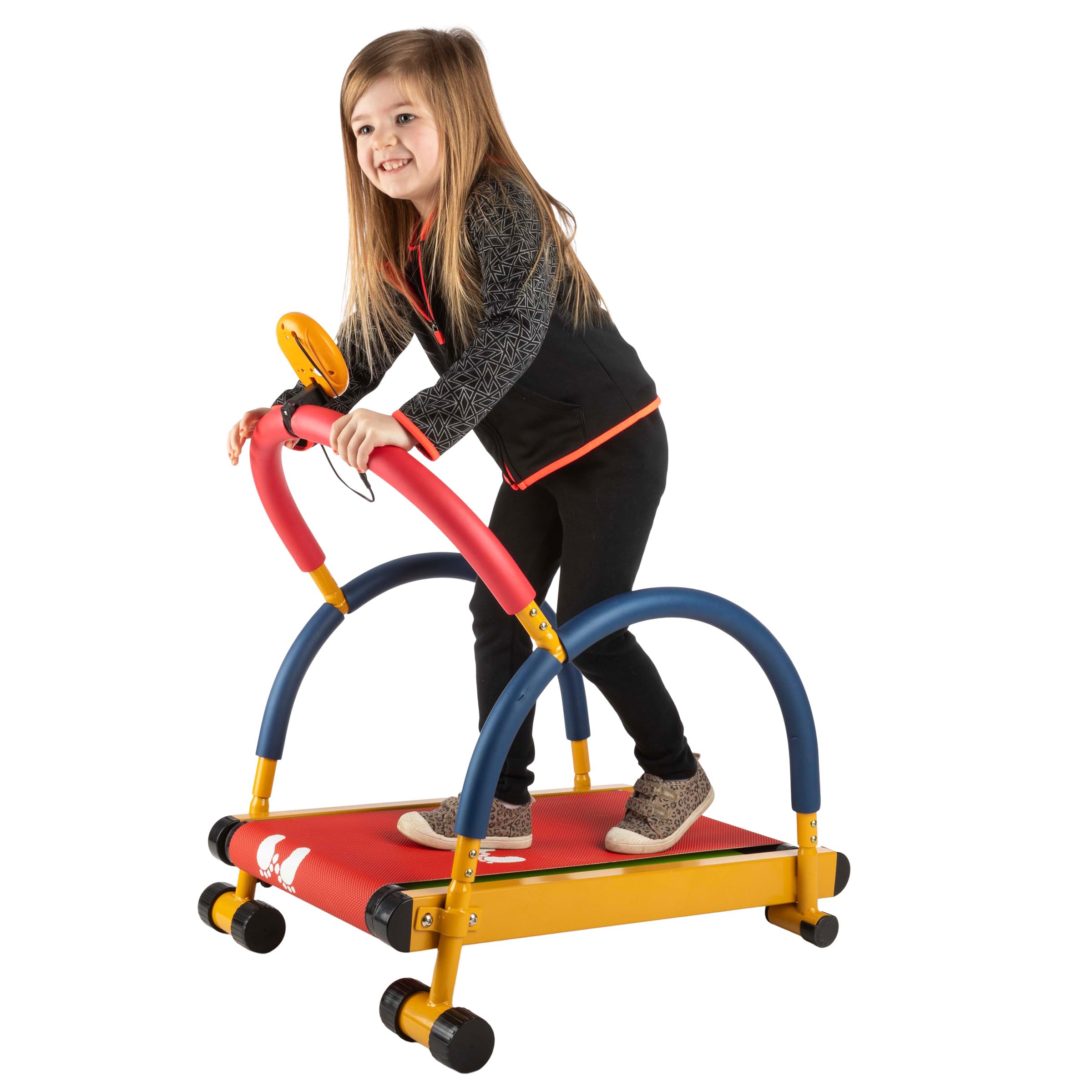
The only true toddler-sized treadmill here, and it moves only when the child does.
This is not a motorised walking pad. It is a play treadmill built for children aged 3–7, with no motor at all: the belt turns because the child walks and pushes it. That non-motorised design is the whole point. There is nothing to plug in, nothing to accidentally speed up, and no way for a small child to get ahead of a belt that keeps turning. The whole unit is child-sized at 20.25″ long, 27″ wide and 20.5″ tall, and the foam-padded rails are at a height a toddler can actually reach.
The safety features are what a parent will care about most. The LED monitor shows exercise time and shuts the unit off automatically after 10 minutes of no activity, so it does not keep counting while a child wanders off. Footprints on the walking pad give a child something to march along, and the powder-coated alloy steel frame is rated for children up to 150 lbs. A 5-star review described it being used daily by a seven-year-old and being the perfect size for them.
There is a real caveat that a buyer needs to hear clearly. The belt on a non-motorised treadmill depends on momentum, and some buyers find it too stiff for a small child to get moving at all. A five-year-old may need help to shift the belt at first, and the unit needs two AA batteries for the display, which are not included. One arrived with a broken part, and the assembly can be fiddly. This is a first treadmill for a young child, not a training machine for a teen.
The safety case: No motor means no runaway belt, and the 10-minute auto shutoff keeps the display honest when the play session ends.
The honest catch: The stiff belt and the manual push means the youngest users may need a hand to get going, and the display needs two AA batteries you supply yourself.
Reach for this if: you have a toddler or early primary-age child and want a safe, non-motorised introduction to walking for fitness.
Look elsewhere if: the user is past about seven or wants a motorised pad for real step-counting walks.
Know the Specs
Belt length and deck size
The belt length is the number of inches from the front roller to the back roller — the space your feet actually travel over. A 15″ x 36″ belt is the common size here, and it is long enough for a child’s stride but snug for a tall adult walking fast. Deck width matters less, but a wider deck gives a wobbly beginner more room to stay upright.
Speed range in MPH
Miles per hour is how fast the belt moves. A low end of 0.6 MPH is a gentle first step for a small child, and 4 MPH is a brisk walk that will tire most kids out. A range of 1–5 MPH covers walking and light jogging for older children. The floor of the range matters more than the ceiling when a beginner is learning.
Incline percentage
Incline is how much the front of the deck rises, expressed as a percentage of the belt length. A fixed 7% incline means the deck is set at that angle before you start, while an auto incline changes with the push of a button while you walk. Higher incline makes the same speed feel harder, which is useful when a child wants more challenge without going faster.
Weight capacity
The capacity is the maximum user weight the frame and belt are rated for. On this list it ranges from 150 lbs on the child-specific unit up to 350 lbs on the premium pick. Extra capacity lets a parent or older sibling use the same pad, and it also means the frame has less flex under a child’s step.
Common Questions
What age is a walking pad suited to for a child?
Is a walking pad safe for a young child to use alone?
How long is the belt on a youth walking pad compared to a full treadmill?
Can a teenager use a walking pad at jogging speeds?
How noisy is a walking pad for a bedroom or apartment?
Do walking pads need to be assembled?
Can two people of different heights share one walking pad?
How do I store a walking pad in a small home?
What does the incline actually do on a walking pad?
The Bottom Line
For most families, the youth walking pad to buy is the Cybergoing T10, because its 15″ x 36″ belt gives a child room to walk and a teen room to grow, and its 300 lb capacity lets a parent step on without worry. If space is the deciding factor, grab the HCOIW 2.5HP Walking Mat with its 4.5″ low deck and 28.7-pound body. And for a shared family machine that will see a teen and an adult every day, the Jogwell Walking Pad with its 15% auto incline and 350 lb frame is the one to reach for. Size the belt for the tallest regular user and the capacity for the heaviest, and the rest of the list narrows fast.
How we choose
We do not accept paid placement. Every pick is matched to a real buyer and a real use-case; we do not hands-on test units.
Sources
Specifications: manufacturer listings and product documentation. Review insights: verified customer reviews, as of October 2026. Pricing: not shown on this page (it changes often); check the current price via the retailer link.
As an Amazon Associate, Home Digitized earns from qualifying purchases. This does not affect which products we feature.