
Specs are compiled from manufacturer listings and verified buyer reviews and can change over time — please confirm the key details on the product page before buying.
Your hands give out before your legs do. That is the blunt truth of cross-country skiing in real cold — you grip poles for an hour or two, knuckles facing the wind, and a thin glove turns a good track day into a countdown to numbness. A mitten fixes the physics: four fingers sharing one warm pocket hold heat far better than four separate finger tubes. So the short answer up front is that the Kinco 901T is the pick most XC skiers should start with. It has a 4.5+ star record across hundreds of ratings, and its waxed pigskin build keeps working when it gets wet.
This guide is built by comparing the manufacturers’ published specifications and the patterns across verified customer reviews, so you get each pick’s real strengths and trade-offs instead of marketing spin.
Mittens matter more on a groomed track than on a lift-served hill, because you never get a warm-up ride back up. Below you will find picks sorted by what they actually do on snow, so you can weigh warmth, grip and fit before choosing from these xc ski mittens.
Top Picks


How To Choose The Best XC Ski Mittens
Cross-country skiing asks something different from your hands than downhill does. You are working — poling, striding, sweating — so a mitten has to breathe as well as trap heat. The wrong pair either soaks through from the inside or leaves your fingertips stinging on the first downhill tuck.
Mitten Versus Glove, And The Liner Question
A mitten puts four fingers in one compartment, so they share warmth, and that is why cold-handed skiers convert. Some mittens hide a five-finger liner glove inside, which restores dexterity for pole straps and zippers. That inner glove is a real feature — it is not the same as a loose separate liner you buy yourself.
Waterproofing You Can Trust At Track Speed
Wet snow is the enemy on a groomed loop, because you brush it constantly. Look for a named waterproof insert — Gore-Tex, Dryfinger II, infiDRY — or a leather shell you treat with wax. Untreated leather is warm but not sealed, and several owners note you need to apply the included wax or a product like Sno-Seal before the first wet day.
Insulation Weight And Sweat
Insulation is measured in grams per square meter, and the number tells you the intended cold. A 150g 3M Thinsulate build suits active skiing on a cold day without cooking you. A 220g back-of-hand and 100g palm layout like the Flylow is mapped warmth, heavier where the wind hits. Heavy insulation on a hard-working XC skier can mean overheating, so a removable liner lets you shed a layer.
Grip, Cuffs And Pole Feel
Your palm meets a cork or foam grip for miles, so palm material matters. Reinforced leather palms hold up better than thin synthetic, and an elastic or adjustable cuff keeps snow out at the wrist. A wrist leash is genuinely useful on a track, because dropping a mitten at the trailhead is a cold walk back.
Side-by-Side Comparison
| Model | Best For | Palm / Shell | Insulation | Waterproofing | Amazon |
|---|---|---|---|---|---|
| Kinco 901T★ Best Overall | All-round XC value | Pigskin suede and grain | Heatkeep thermal | Nikwax wax included | Amazon |
| Supertrip Ski MittensTouchscreen Pick | Touchscreen use on the trail | PU leather, TPU shell | 3M Thinsulate | smooth sealing, waterproof fabric | Amazon |
| SKYDEER SD8753MSoftest Leather | Soft leather feel | Genuine deerskin leather | 150g 3M Thinsulate | Windproof thermal bladder | Amazon |
| MCTi Ski Mittens | Women’s fit | Reinforced leather palm | Heavy back-of-hand insulation | Membrane insert | Amazon |
| 686 Lander Mitt | Style plus touchscreen | DuraGrain synthetic leather | infiLOFT 160g | infiDRY 10K fabric + DWR | Amazon |
| Dakine Titan Gore-Tex | Storm-day warmth | Rubbertec palm | Gore Warm insert | GORE-TEX insert | Amazon |
| Flylow Unicorn | Deep cold, mapped warmth | Pigskin leather + upcycled canvas | 220g back / 100g palm | 10K/10K + PFAS-free DWR | Amazon |
| Burton GORE-TEX Mitt | Liner versatility | Screen Grab synthetic leather | Thermacore | GORE-TEX membrane | Amazon |
| Swany X-Cell 2.1 | Long-haul durability | Leather-shield and nubuck | Tri-Plex Alpha | Dryfinger II insert | Amazon |
Detailed Reviews
1. Kinco KIN-901T Premium Leather Ski Mitt
Our pick — 4.5+★ from 350+ verified ratings; the strongest balance of quality and price.
The work-glove that ski racers quietly steal for the coldest mornings on the track.
Kinco built this as a work mitt and skiers adopted it, which tells you most of what matters. The shell is a mix of suede and grain pigskin — a tough leather that stays flexible when wet rather than stiffening up like rawhide. Inside sits heavyweight Heatkeep thermal insulation in a five-finger layout, so you get the warmth of a mitten with the dexterity to work a pole strap without stripping down.
Warmth is the headline here and it is not subtle: 52 separate mentions of warmth in the review data, the most-discussed thing about the mitt by a wide margin. The build is meant for real weather, with Draylon thread reinforced patches at the wear points. A stretch-fit knitted cuff can sit inside or outside your jacket sleeve, depending on if you want a snow seal or a vent. And the Omni-Cuff design lets you regulate temperature rather than committing to one setting all day.
The honest catch is the waterproofing routine. The mitt arrives with a packet of Nikwax Waterproofing Wax for Leather, and the leather wants that treatment applied before serious wet snow — buyers report the mitts turn genuinely waterproof once coated, with some preferring Sno-Seal instead. Sizing is the other wrinkle: the fit runs large, so a snug hand should consider dropping a size. The mixed size feedback in the reviews backs that up. For an entry-level price you are getting a leather mitt that snowblowers, ski racers and trail skiers all reach for.
Where the Kinco Delivers
- Pigskin shell stays flexible when wet instead of going board-stiff
- Five-finger liner restores pole-strap dexterity inside mitt warmth
- Knitted cuff wears inside or outside the sleeve for seal or vent
- Wax packet included, so you can treat it before the first wet day
What To Know Before You Buy
- Leather needs waxing with the included Nikwax to reach full waterproofing
- Fit runs large — the size feedback is genuinely mixed
- Palms wear faster with tow-rope use, per long-term ski racers
Reach for this if: you want a leather mitt that works on poles, snowblowers and cold dog walks without paying premium-tier money.
Size down if: your hands sit on the smaller side of the chart — this one is generous.
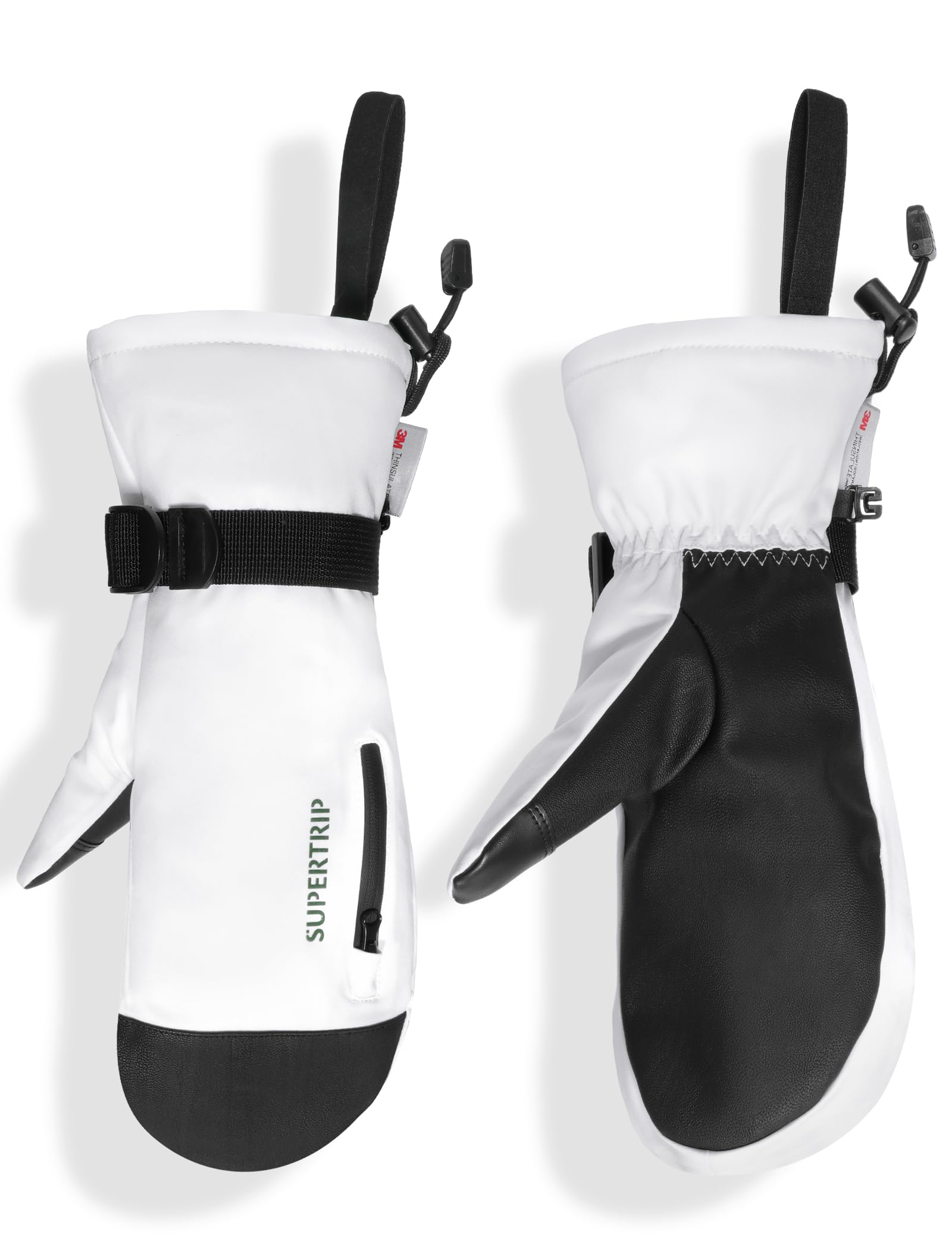
2. Supertrip Ski Mittens Men Women
A mitten that lets you check your split time without pulling a hand out into the wind.
Most mittens ask you to choose between warmth and a phone screen. This one does not. The thumb tip carries conductive fiber, so you can tap a watch or phone without exposing your fingers at a windy trailhead. The shell layers a high-density waterproof fabric over TPU (a thin, flexible plastic film that blocks water), with 3M Thinsulate (a synthetic insulation that traps body heat) in between — the same insulation brand used in far pricier mittens — and smooth sealing at the seams to stop snow working in.
Inside there is a surprise: separate finger slots, essentially a glove hidden within the mitten. That addresses the biggest mitten complaint, which is that your fingers slide together and you lose the feel of a pole grip. The lining is built to absorb moisture for sweaty hands, which matters when you are working hard on a track. An adjustable cuff and wrist strap cinch the sleeve down. The white colorway looks sharp on snow but shows dirt fast — several owners say so plainly, and it does not clean up easily.
The water resistance is the split verdict. Some skiers call it fully waterproof; others find moisture creeping in. Where the sizing truly bites is for cold-sensitive hands: the inner finger slots run narrow, and a buyer with a 7.5-inch hand and 7.5-inch circumference found the wrist tight. If you have circulation issues or broad hands, size up. As an entry-level price point with touchscreen and inner fingers, it earns its place.
Warmth you can feel: a skier with Raynaud’s took these out on Vermont cross-country and snowshoe trips and had to pull them off because the hands got too hot — the sign of a genuinely warm mitt.
Dry-down caveat: once moisture gets in, the liner holds it. The fix is to hang them overnight in a warm room, which the maker itself recommends.
Best for: the skier who checks a watch mid-loop and wants inner finger separation without spending premium-tier money.
Think twice if: you have wide hands or poor circulation — the finger slots run narrow.
3. SKYDEER Warm Ski Mittens SD8753M
Deerskin so soft it feels broken-in on day one, with layers stacked like a coat of armour.
Deerskin is the story here. It is naturally soft and flexible with good abrasion resistance, and it absorbs impact and vibration — a small thing that matters when you have been gripping poles for miles. SKYDEER rates the leather as more wearable and comfortable than common synthetic palms. Stacking on top of that is 150g 3M Thinsulate, described as warm yet lightweight, plus a thermal jersey sock lining that traps heat while letting moisture escape.
The layering is unusually specific: deerskin on the outside, then thermal bladders, then the 3M Thinsulate, then a breathable windproof layer, then the skin-friendly lining. That kind of stacking is what keeps a hand warm in conditions below 25 degrees, and owners confirm it — one shovelled snow at minus 8F without frozen hands, and it lasts an hour of snowblowing below 0F. The double shirred elastic wrist fits most hands and the deerskin stretches, so it goes on without a fight.
The recurring note is size. Unisex sizing runs large, and several women report the medium is too big for normal women’s hands — sizing down is the move. A few also find the mitten cuff competes with a coat cuff, making the thumb hard to seat. That is a fit quirk, not a defect. Given the warmth numbers here, it is a strong mid-range call for a cold-weather commuter as much as a skier.
Reasons This One Sticks
- Genuine deerskin palm feels soft and broken-in from the first wear
- Five-layer thermal stack including 150g 3M Thinsulate
- Machine washable — rare for a leather mitten
- Double shirred elastic wrist fits a wide range of hands
Honest Trade-Offs
- Unisex sizing runs large; many women should size down
- A bulky coat cuff can crowd the mitten cuff and thumb
The verdict: a leather mitten that punches above its tier on warmth and softness, best bought a size down.
4. MCTi Ski Mittens Women

Built for a woman’s hand shape, with a hidden pocket for a pass and a strap that saves your glove.
MCTi cut this mitt for women specifically, and it shows in the segmented block palm — a reinforced leather panel split into sections so the hand moves naturally. Heavy insulation sits on the back of the hand where cold hits hardest, backed by a membrane insert to block wind and wet. The hidden zipper pocket holds a lift pass, cash or a credit card, and the wrist strap is a nice safety net for skiers who lose a glove at the trailhead.
Warmth is the most-discussed feature here, with 42 mentions, and quality comes second at 23. Owners mention warm, dry hands for up to 45 minutes of snow shovelling in a colder-than-normal winter. It is not built for deep cold, though — one cross-country skier at 14 degrees found fingers chilling rather quickly and thinks it shines above freezing. On a mild groomed day, that is plenty.
Sizing runs small and the fit feedback is genuinely mixed. One buyer found the thumb sewn too close to the palm center and had to return. For most women who match the chart it works, but the wrong size is a real risk. As a budget-adjacent pick with touchscreen (clumsy but workable, per owners) and a secret pocket, it is a solid choice for mild-winter loops and everyday cold.
Warm, not arctic: treat this as your above-freezing and mild-cold mitt, and check your forecast before committing to a sub-zero track day.
The fit question: order carefully and be ready to exchange if the thumb placement does not line up with your hand.
Who it suits: women skiing mild to moderate cold who want a pocket, a leash and a hand-shaped fit without stretching the budget.
The limit: it is not a deep-cold mitt — below freezing, expect to feel it.
5. 686 Men’s Lander Mitt
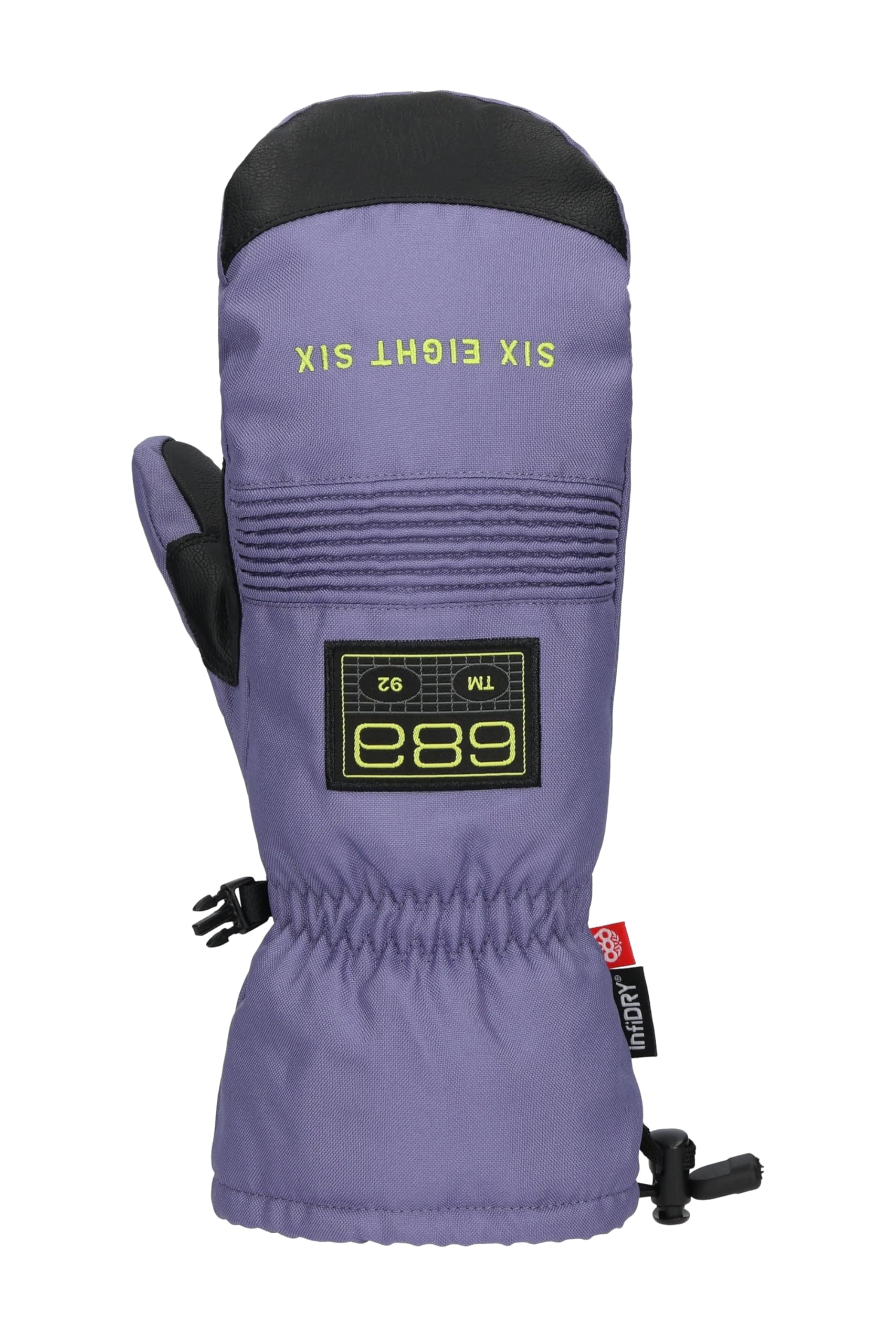
The mitten people buy for the colorway, then keep for the warmth.
686 built the Lander with a 2-layer Dense Oxford infiDRY 10K fabric rated for waterproof-breathable performance, sealed with a DWR coating and backed by an infiDRY waterproof insert. Inside sits infiLOFT 160g insulation — a solid midweight. The palm and thumb crotch are reinforced DuraGrain synthetic leather, which is where the grip against a pole or tow rope gets its bite. Micro Tricot lining handles the feel against your skin.
Two features stand out for XC use. Soundtouch touchscreen technology lets you operate a phone without baring a finger. Movement Fit hand articulation plus an accordion stretch panel means the mitten flexes with your grip rather than fighting it. There is also an elastic cord wrist adjust and cuff closure, and a wrist leash for the trailhead. The purple colorway earns real fan mail, and parents note the brand’s popularity among younger skiers.
Warmth runs hot — one owner sweated after a single wear, which tells you it is tuned for cold, not mild. Sizing runs large; a buyer in XL had extra room at the fingertips though the mitt stayed put. Two honest gripes show up: the elastic cord tightener can come unknotted and get lost, and tow-rope use wears the palm through within a week. Neither kills the mitt, but for pole-heavy XC days, expect the wrist adjust to need a careful knot now and then.
Why Skiers Pick It
- 10K waterproof-breathable fabric with a sealed insert
- Soundtouch thumb and finger for phone use without bare skin
- Accordion stretch panel flexes with pole grip
- Colors that draw compliments on the hill
Small Things To Expect
- Cord tightener can loosen and get lost — knot it carefully
- Palm wears on tow ropes; pole use is gentler
- Runs large — an XL leaves fingertip room
Grab these if: you want a warm, stylish mitt with touchscreen and real pole grip for mid-range money.
Skip if: you ski tow ropes hard — the palm takes a beating there.
6. Dakine Men’s Titan Gore-Tex Mitt
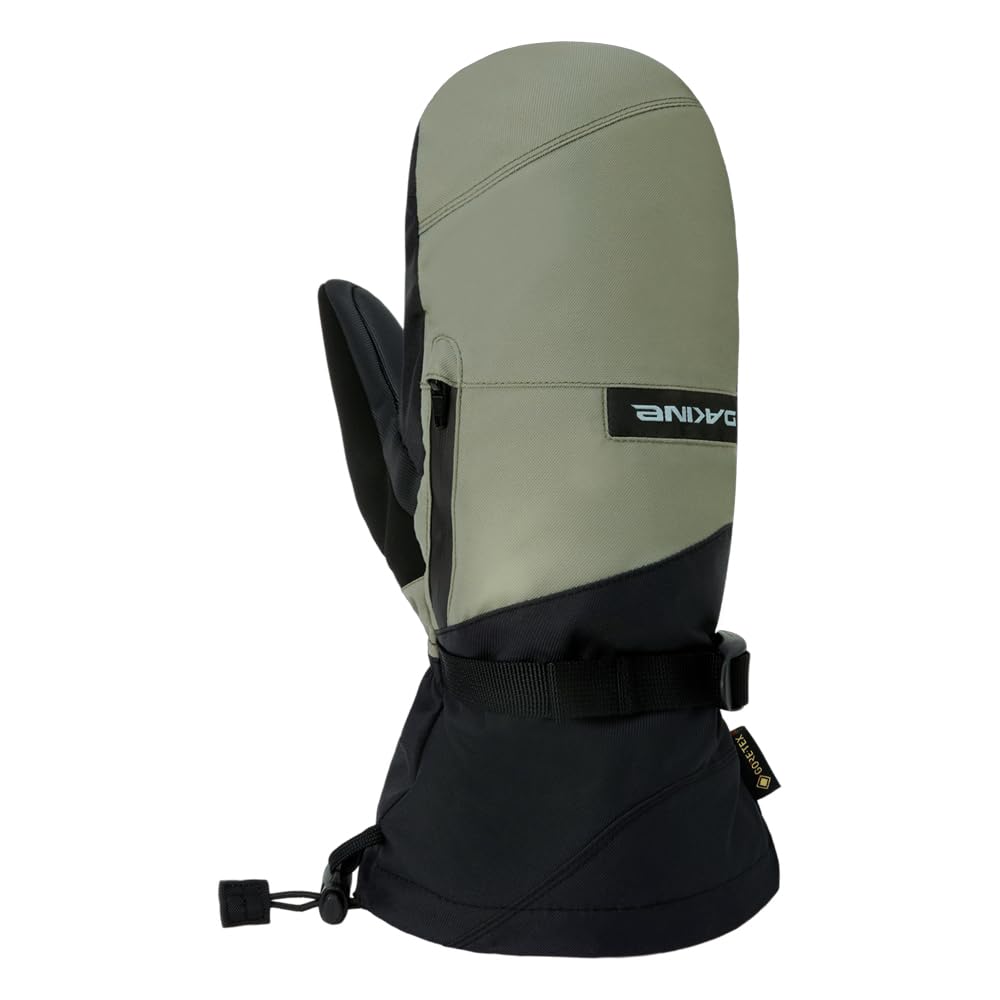
A GORE-TEX shell with a liner you can pull out — the drying advantage is underrated.
GORE-TEX is the waterproofing standard serious buyers pay for, and the Titan pairs a GORE-TEX insert with Gore Warm technology to boost both warmth and waterproofing inside a water-repellent, durable shell. The part that matters most on a track day: the Storm Liner is a removable glove, touchscreen compatible, and it dries faster than a fixed liner because you can take it out. After a sweaty loop, being able to dry the liner separately is the difference between a fresh mitt tomorrow and a damp, clammy one.
The Rubbertec palm gives a rugged grip with confident hold on a cork grip. An external water-resistant zipper stash is designed to hold a locker key and cash, and it doubles as a heat pack pocket when the thermometer drops. Owners confirm the pocket works for hand warmers and provides just-right heat on top of the hand. Fit is the most-discussed thing here at 34 mentions — the mitt slips on and off easily, which matters when you are switching between mitt and bare hand at a rest stop.
The one honest limit shows up on rope tows. Durability is a mixed verdict, and a buyer who tried these on tow-rope skiing had a fair word of caution — for a piston-grip tow, this is not the mitt. One sizing note: the included liner makes the thumb snug, so a buyer between L and XL should size up. For storm-day warmth on a groomed track, the GORE-TEX layering is exactly what you want.
Liner logic: a removable inner glove that dries fast and works with a touchscreen — genuinely useful when you want phone access and warm fingers at the same time.
The rope-tow warning: skip tow-rope use; the design favours ski poles and lift-served skiing.
Top choice for: skiers who want GORE-TEX protection and a removable, dryable liner on storm days.
Look elsewhere if: your trails are serviced by rope tow — the palming takes wear there.
7. Flylow Unicorn Insulated Mittens
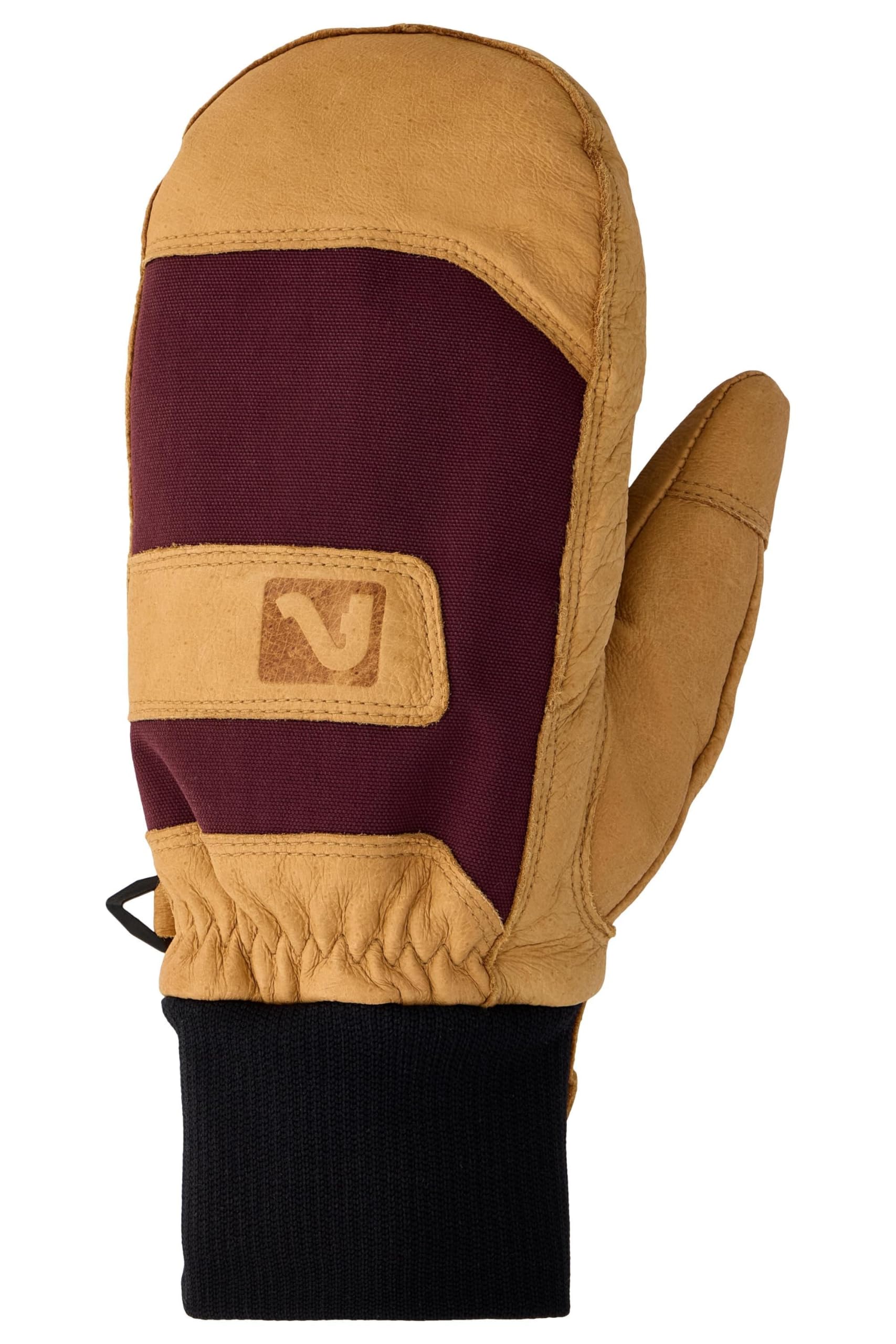
Mapped insulation with 220g on the back of the hand versus 100g on the palm, where wind does its work.
Flylow’s approach to warmth is the most interesting in this list. The Greenloft insulation is mapped, with 220g on the back of the hand and 100g on the palm. That layout gives you extra padding behind the knuckles, where cold hits first, and a thinner palm so grip feel survives. The shell is pre-treated waterproof pigskin leather paired with upcycled nylon canvas from the brand’s own production — scrap fabric turned into a tough, patchwork-styled panel that adds durability.
The insert is a 10K/10K waterproof-breathable membrane, rated for both resistance to wet snow and letting sweat out, which is the right spec for active XC skiing. A rib knit cuff and brushed tricot polyester lining seal in heat. Everything is hand-wash only. Customers note warm hands at minus 20 and on zero-degree dog walks, and one skier rated it above a premium GORE-TEX mitt over a three-day lodge trip with no handwarmers.
Two things to know. The mitt runs small, so plan to size up if you wear liners. The leather is thin and slightly stiff from the start, and it needs the included waterproofing wax applied before wet days. That wax routine is a small price for the warmth — a 10-minute job that turns a good mitt into a sealed one.
What Earns Top Marks
- Mapped 220g back-of-hand / 100g palm insulation for smart warmth
- 10K/10K waterproof-breathable membrane with PFAS-free DWR
- Pre-treated pigskin and upcycled canvas for tough, unique styling
- Keeps hands warm at minus 20 without hand warmers
Fit And Upkeep Notes
- Runs small — size up when wearing liners
- Hand wash only; the leather needs the included wax before wet snow
- Thin, stiff leather needs breaking in
The pick for you if: deep cold is your baseline and you want mapped warmth that keeps the palm sensitive.
Prepare for: sizing up and keeping the wax handy.
8. Burton Men’s GORE-TEX Insulated Mittens

One mitt, three configurations — liner only, shell only, or both when the mercury drops.
Burton’s flexibility is the whole case for it. A removable four-way stretch fleece liner dries quickly and lets you ski in three modes: the liner alone for mild laps, the shell alone in sloppy spring conditions, or both together for midwinter warmth. The outer is DRYRIDE 2L fabric with a GUARANTEED TO KEEP YOU DRY GORE-TEX membrane, and Thermacore insulation sits between. That guarantee language is Burton’s own, and it reflects the tier this mitt belongs to.
The Screen Grab synthetic leather palm carries touchscreen capability built into the fabric itself, so it will not wear off or wash out. Reviewers point out using the removable liner alone for texting while the outer stays warm on the outside — a real convenience on trail. The fit is the most-discussed feature (32 mentions), and it works for a range of hand sizes. One cold-sensitive buyer wore these through a Svalbard winter with a thin liner plus heat packs inside, so the fingertips have generous room.
The honest wart: it is described by a polar user as somewhat water-resistant rather than fully waterproof, though that same tester called them top-tier overall. If you ski deep slush for hours, expect to feel it eventually. For most groomed-track days, the triple-mode liner system more than earns its premium-tier spot.
The do-anything mitt: three setups from one purchase covers cold mornings, warm afternoons, and every trailhead in between.
The real caveat: if you are in wet, heavy snow all day, the shell reads more water-resistant than waterproof.
Chosen by: skiers who want one premium mitt that adapts to whatever the forecast throws at a long day out.
Not for: the slush-bound skier who needs proven waterproofing through hours of wet snow.
9. Swany Men’s X-Cell 2.1 Mittens
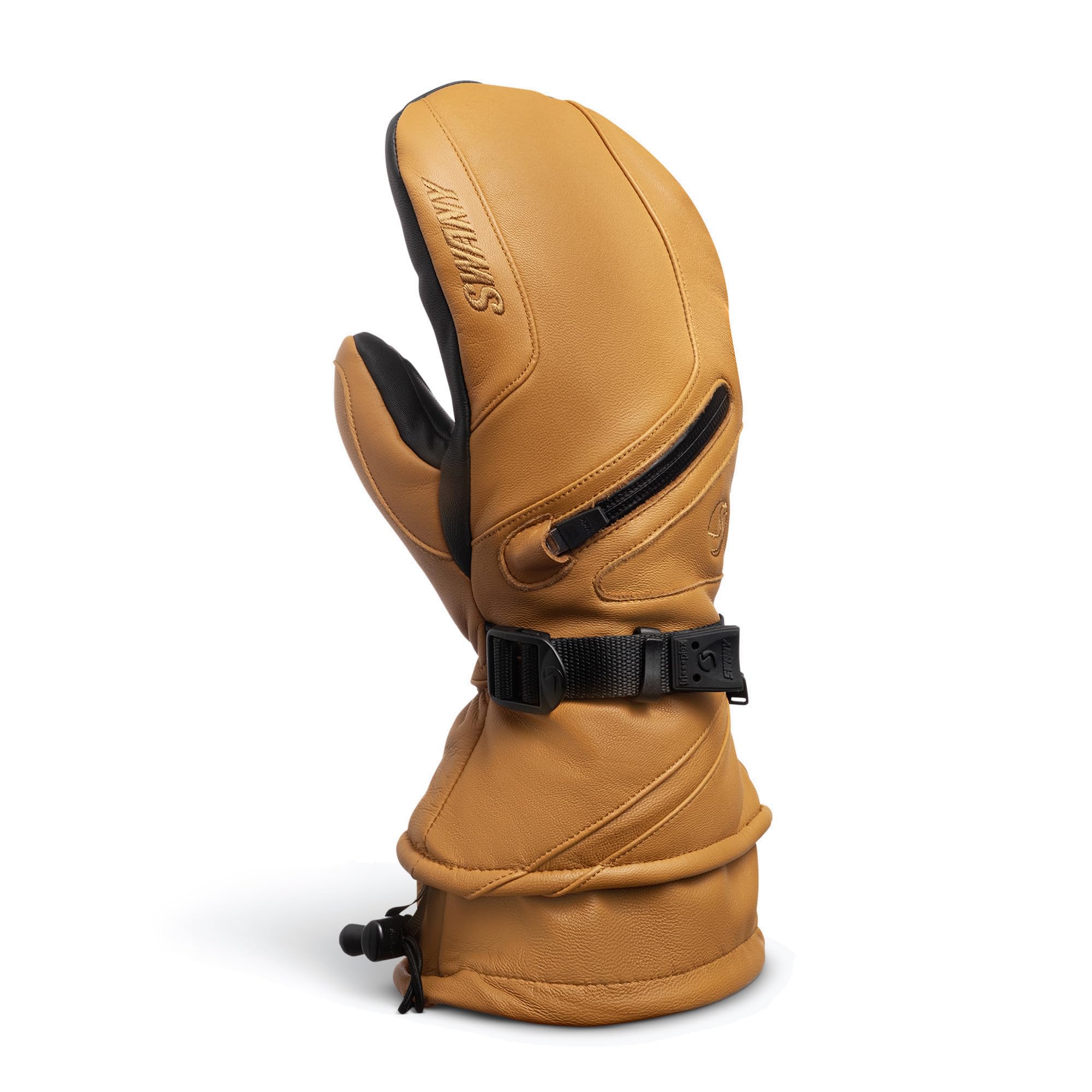
A leather-shield mitt built to outlive several pairs of whatever you wore last.
The Swany X-Cell 2.1 is the premium build of this group, and it is designed for durability first. The shell mixes smooth grain leather-shield with nubuck leather and a reinforced digitized palm, so the grip area is armoured against pole wear. Insulation is a Tri-Plex Alpha system of Volcotek heat shield and DynaTherm lining, backed by a Dryfinger II waterproof and breathable insert. That insert is the reason your hand stays dry even when you are working up a sweat on a hard track.
The features are genuinely useful on a loop. A stem finger construction keeps the mitten shaped to the hand. The SpeedDraw system cinches the cuff quickly and doubles as a connector to hold the pair together in your pack. A quick-release strap gets them off without a fight. And the utility heat pocket has an AquaGuard Lock-Down zipper — vent to cool off, or drop in a hand warmer for extra heat, with the Dryfinger II membrane keeping moisture out of the pocket. Shoppers say using these comfortably in sub-zero skiing conditions.
The real story is longevity. Buyers report their first pair lasting 20 years, which reframes the premium price. The trade-off is dexterity — mitten warmth comes at the cost of finger feel, and the finger separators inside are not for everyone. If you ski hard and hate replacing gloves, this is the long game.
Why The Premium Makes Sense
- Durability owners describe in decades, not seasons
- Dryfinger II insert keeps hands dry and warm in sub-zero skiing
- SpeedDraw cuff cinch doubles as a pair connector
- Utility heat pocket with vent for cooling or a hand warmer
The Honest Trade-Offs
- Less finger dexterity than a glove by design
- Finger separators inside the mitt bother some skiers
- White palms discolour quickly; black holds up better over years
The long-term play: skiers who would rather buy once and ski a decade than replace a cheap pair every season.
One caution: if you need finger-level dexterity, this mitt asks you to give that up.
Know the Specs
Insulation Weight (Grams)
Insulation weight is measured in grams per square meter and tells you the cold it is built for. A 150g 3M Thinsulate layer suits active skiing in cold weather. A mapped 220g back-of-hand with 100g palm, as on the Flylow, puts extra warmth where wind hits and keeps the palm thinner for grip. Higher grams mean warmer, but on an XC track where you are working hard, too much insulation means sweat. That is why a removable liner or a venting heat pocket can matter as much as the gram count.
Waterproof Ratings And Inserts
A rating like 10K/10K describes how much water the fabric resists and how much vapour it lets out, in grams per square meter over 24 hours. Named inserts — GORE-TEX, Dryfinger II, infiDRY — are the actual waterproof membranes inside the shell. Many leather mittens, including the Kinco and Flylow, need a wax treatment to seal properly. Treat that wax as part of ownership, not an optional extra: it is what turns a warm leather mitt into a waterproof one on a wet-snow day.
Common Questions
Are mittens actually warmer than gloves for cross-country skiing?
Do I need to waterproof new leather mittens before using them?
Will a touchscreen mitten work on a phone with the mitt on?
How should I choose a mitten size when I plan to wear a liner?
Can I use ski mittens for snowblowing and shovelling?
What is the difference between a mitten with a liner glove and a mitten with finger slots?
How long should a good pair of XC ski mittens last?
Are these mittens breathable enough for hard cross-country skiing?
Which mitten works best for cold-sensitive hands or Raynaud’s?
Should I pick a mitten with a wrist leash?
The Bottom Line
The best overall XC ski mittens for most skiers are the Kinco 901T, because a waxed pigskin shell and heavyweight Heatkeep insulation handle a cold track without a premium-tier price. If you want a removable liner you can dry separately and GORE-TEX protection for storm days, the Dakine Titan is the one. And for durability that lasts decades and mapped warmth in deep cold, reach for the Swany X-Cell 2.1 or the Flylow Unicorn. One honest nudge: fit is the wild card across all nine — the Kinco, SKYDEER and 686 run large, the Flylow and Burton run small. Get the size right and you get warm fingers all season.
How we choose
We do not accept paid placement. Every pick is matched to a real buyer and a real use-case; we do not hands-on test units.
Sources
Specifications: manufacturer listings and product documentation. Review insights: verified customer reviews, as of July 2026. Pricing: not shown on this page (it changes often); check the current price via the retailer link.
As an Amazon Associate, Home Digitized earns from qualifying purchases. This does not affect which products we feature.