
Specs are compiled from manufacturer listings and verified buyer reviews and can change over time — please confirm the key details on the product page before buying.
You want to know what actually happened while you were asleep — how long you spent in deep sleep, whether you woke up, how your breathing looked. A wrist watch sleep monitor does that by reading your movement and heart rate overnight and turning it into a sleep score each morning. The short answer: the Samsung Galaxy Watch Ultra is the strongest all-round pick here, because it pairs a titanium body with sleep tracking, an Energy Score built from last night’s rest, and an honest all-day battery.
This guide is built by comparing the manufacturers’ published specifications and the patterns across verified customer reviews, so you get each pick’s real strengths and trade-offs instead of marketing spin.
You can wear a hybrid analog watch for weeks on one charge, or a full smartwatch for about a day. Which one fits you depends on if you want a sleep lab on your wrist or a classic face that quietly logs your nights. Here is how to choose the best wrist watch sleep monitor without paying for features you will never open.
Top Picks
How To Choose The Best Wrist Watch Sleep Monitor
A sleep-tracking watch lives on your wrist all night, every night, so the two things that decide whether you keep wearing it are overnight comfort and how often you have to take it off to charge. Nail comfort and charging rhythm and the sleep data takes care of itself.
Sleep stages versus a single sleep score
The most useful reading is the breakdown: time in light sleep, deep sleep and REM, plus any interruptions. A watch that only reports total hours tells you very little. Look for one that names the stages and gives a morning score you can compare day to day, like the Sleep Coach on the Garmin vivoactive 6 or the Sleep Quality Score on the Withings ScanWatch Nova.
How long it lasts between charges
Charging is the hidden catch with overnight tracking. A watch that runs for up to 11 days or up to 21 days lets you top it up at a convenient moment and forget about it. A watch that barely clears a day forces a daily charging habit, which is exactly when people start skipping nights. Decide honestly which rhythm fits your life before you buy.
Band fit and wear comfort overnight
A watch that presses into your wrist bone at 3 a.m. will not stay on. Band material matters, and so does case size. A 40mm case sits closer to average wrists than a 47mm one, and a soft silicone or rubber band is easier to wear through the night than steel. Check the band width and material on each listing before you commit.
What the sensors can realistically tell you
Wrist sensors read movement and blood-flow changes, then estimate stages from that data. SpO2 is a blood-oxygen estimate, and HRV is heart-rate variability. These are estimates, not medical readings, and tightness of the band plus skin features like tattoos can affect them. Treat the numbers as trends over weeks, not as a diagnosis of any single night.
Side-by-Side Comparison
| Model | Best For | Stated Battery Life | Sleep Feature | Case / Build | Amazon |
|---|---|---|---|---|---|
| Samsung Galaxy Watch Ultra (2024) 47mm LTE★ Best Overall | All-round sleep and fitness tracking | 60 hours | Sleep monitor plus Energy Score | Titanium, 47mm | Amazon |
| Garmin vivoactive 6Best Battery | Long battery plus sleep coaching | Up to 11 days | Sleep Coach and Body Battery | AMOLED display | Amazon |
| Withings ScanWatch 2Best Hybrid | Classic looks with month-long battery | Up to 35 days | Sleep stage tracking | Stainless steel, sapphire glass | Amazon |
| Amazfit Balance 3 | Big screen and offline maps | Up to 21 days | Sleep quality and stress insights | 1.5″ AMOLED, sapphire glass | Amazon |
| Samsung Galaxy Watch9 40mm | Overnight vitals tracking | Not stated | Vitals plus Advanced Sleep Coaching | 40mm, 1.1 oz | Amazon |
| Garmin Instinct 3 Solar 50mm | Rugged outdoor wear with solar top-ups | 40 days | Advanced sleep monitoring | Fiber-reinforced polymer, 50mm | Amazon |
| Google Pixel Watch 5 (45mm) | Android owners wanting a Sleep Score | Up to 40 hours | Sleep stages plus Sleep Score | Gorilla Glass dome, 45mm | Amazon |
| Withings Scanwatch Nova | Premium hybrid with temperature tracking | 30 days | Sleep Quality Score | Stainless steel | Amazon |
Detailed Reviews
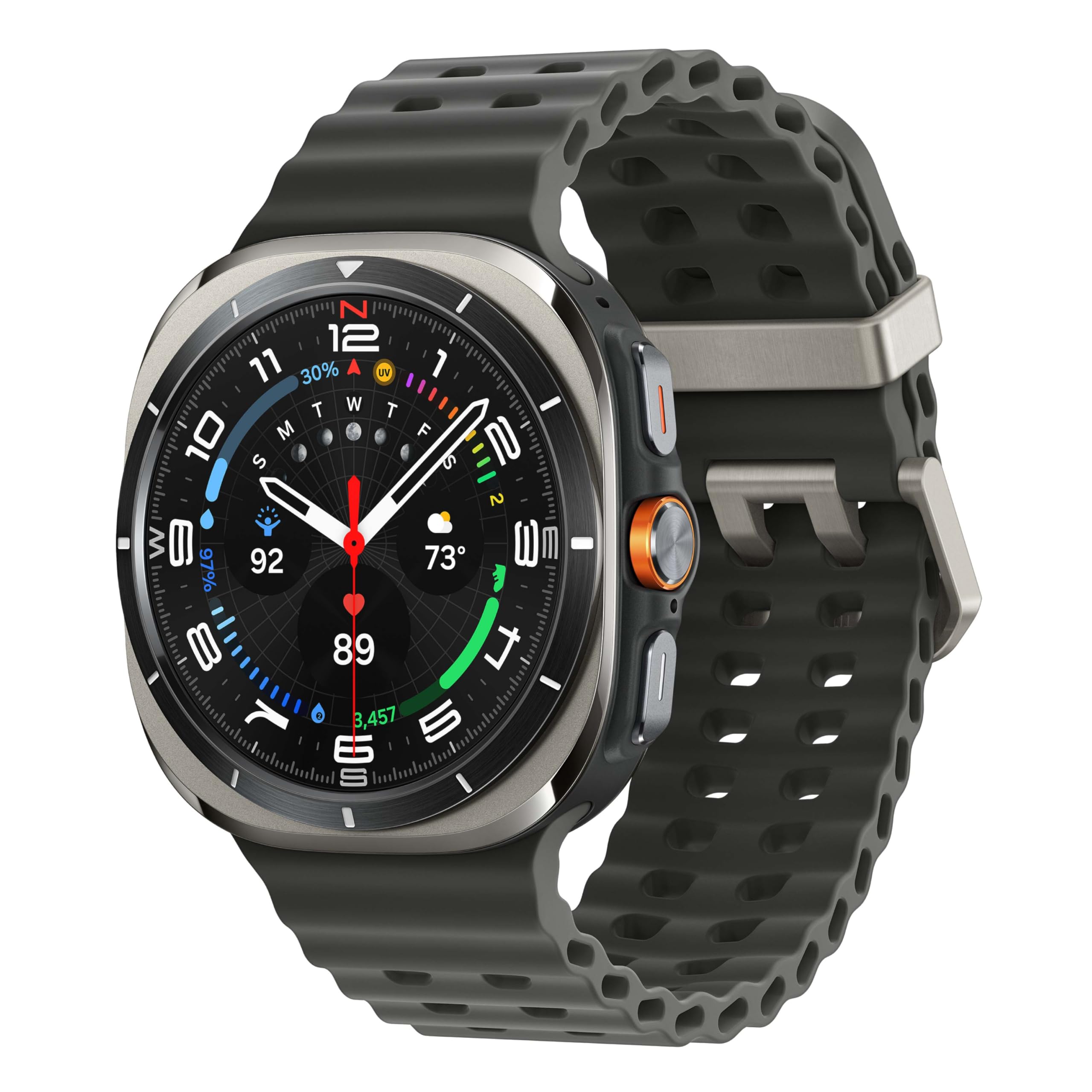
1. Samsung Galaxy Watch Ultra (2024) 47mm LTE Smartwatch
Our pick — 4.5+★ from 950+ verified ratings; the strongest balance of quality and price.
A titanium tank that turns last night’s sleep into a morning readiness number.
The Ultra is built for people who want a serious smartwatch first and a sleep tracker second. Its Energy Score combines last night’s sleep, heart rate and steps into one readiness number on the morning screen. That means you are not squinting at four separate graphs to work out whether to push a hard workout or take it easy — the watch tells you in one number.
The hardware is genuinely tough. A titanium case, a 60-hour stated battery life and a 590 mAh cell that charges in 2 hours give you a watch you can swim in and wear through the night without babysitting the charger. What wins people over most, though, is the look — the appearance is the thing this watch is loved for far more than any single metric, and it earns a lot of that praise. Buyers report it holds up well: as they put it, “Nice wacth have over a year with it, baterry last the all day.”
It is not a dedicated fitness lab, and that is the honest trade-off. Compared with the Garmin vivoactive 6, the Ultra leans smartwatch — calls, texts, payments and a bright screen — while the Garmin leans pure training and sleep coaching with an 11-day battery. The Ultra is also bulky on the wrist, and heavier than the smaller 40mm Galaxy Watch 8. If deep training analytics are your priority, the Garmin is the sharper tool; if you want one device for your whole day, the Ultra is the better all-rounder.
Where it earns its keep
- Energy Score fuses sleep, heart rate and steps into one daily readiness number.
- Titanium case and 60-hour battery hold up to sweat, rain and overnight wear.
- Full LTE smartwatch functions — calls, texts, payments, GPS — on the wrist.
What to weigh first
- The 47mm titanium case is bulky for smaller wrists.
- Health analytics are broad but not as training-focused as Garmin’s.
- Battery life is mixed depending on how hard you lean on LTE and the screen.
Made for: buyers who want one watch to track sleep, workouts and notifications without charging every day.
Think twice if: a slim, understated watch matters more to you than a big bright screen.
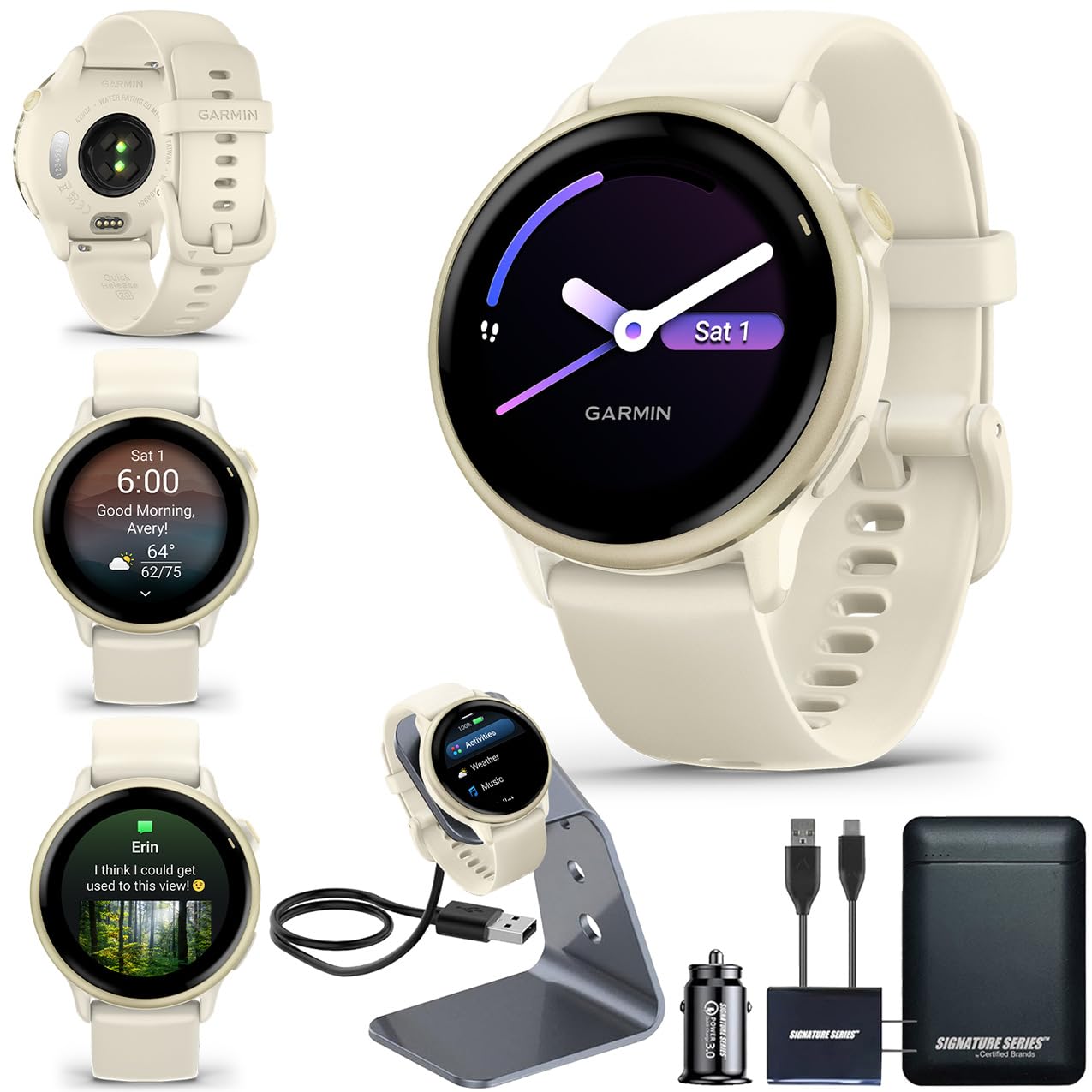
2. Garmin vivoactive 6 GPS Smartwatch with AMOLED Display
A sleep coach that stays on your wrist for over a week without a charger.
If you have ever skipped tracking a night because the watch was dead, this is the fix. The vivoactive 6 is rated for up to 11 days in smartwatch mode, so charging becomes a weekly errand rather than a nightly ritual. Owners back it up: owners mention it “charge last several days- much better then my Apple Watch I had,” and the long-run experience holds — a full week without charging is the norm with normal use.
The sleep side is where it earns its place. Sleep Coach pulls your nights into a tailored sleep score, auto nap detection catches daytime dozes, and Body Battery monitoring reads HRV status and stress so you can see whether you are charged up or running down. A smart wake alarm gently vibrates at the optimal moment inside your sleep cycle. The AMOLED display is bright and readable, and the 5 ATM water rating means it stays on through swims and showers.
The catch is setup and sensor limits. It takes longer to get going than an Apple Watch, and skin features can interfere — one owner with tattoos found the readings were not always accurate because of the ink. Compared with the Galaxy Watch 8, the Garmin wins clearly on battery, while the Samsung offers a more phone-like interface. For a pure overnight tracker that you rarely charge, the Garmin is the better sleep companion.
What buyers keep coming back to: the battery is the standout — a full week of wear between charges, with a bright customizable AMOLED face and daily step and sleep tracking that actually nudges you toward your goals.
The honest caveat: pairing and setup take more patience than an Apple Watch, and sensor readings can be thrown off by wrist tattoos.
Reach for this if: you want accurate sleep coaching and a battery that survives a long trip without a charger.
Look elsewhere if: you want the simplest possible setup from the start.
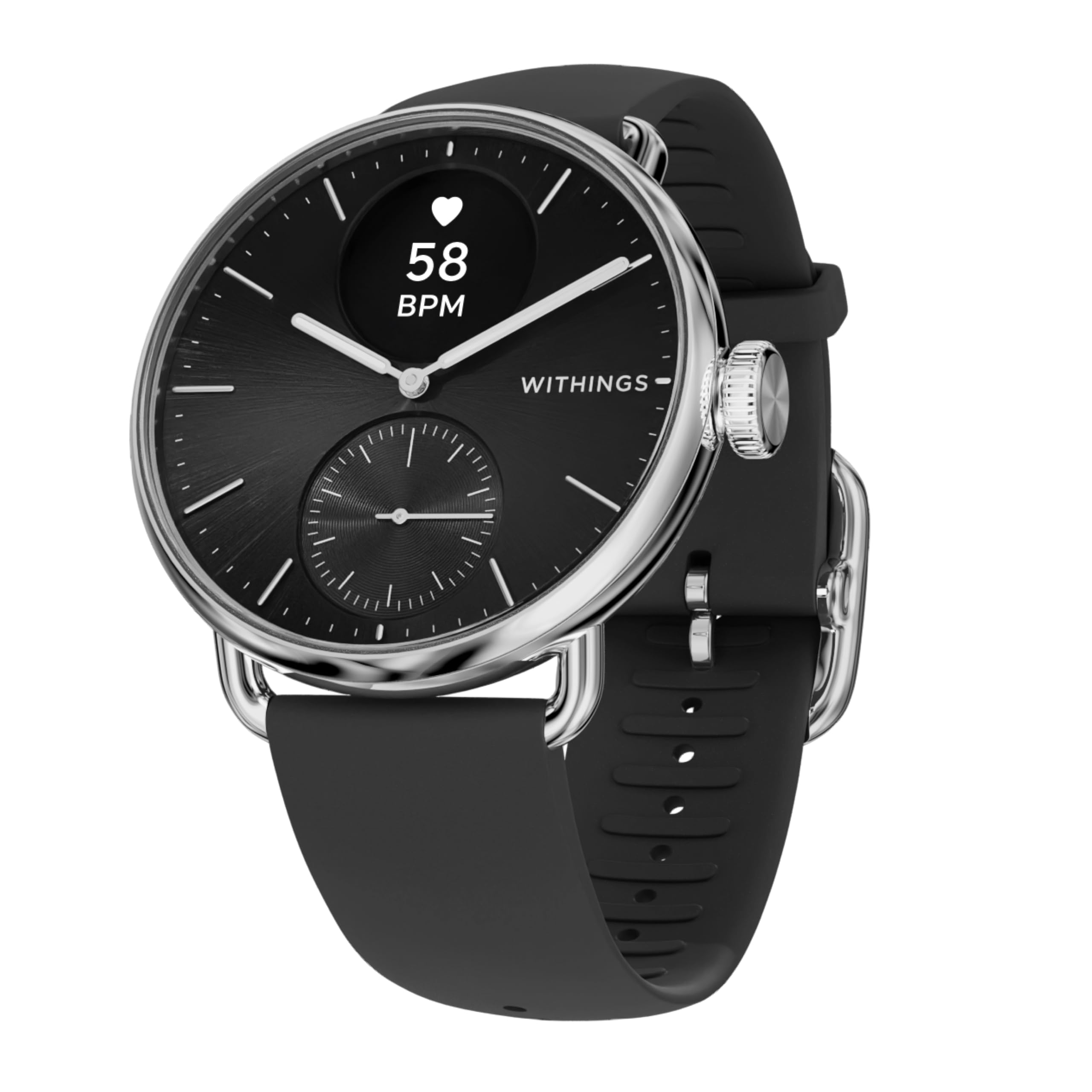
3. WITHINGS ScanWatch 2 Hybrid Smart Watch
Analog hands on the front, a sleep tracker working quietly underneath.
The ScanWatch 2 solves the problem most smartwatches create: it looks like a watch, not a computer on your wrist. A stainless steel case and sapphire glass over analog hands give you a classic face, while the digital layer underneath tracks sleep stages, breathing and over 40 sports. The most striking number is the battery — up to 35 days of continuous use on one charge, which means nights of tracking without a single cable in sight.
Health tracking goes well beyond sleep. A 30-second ECG and continuous heart-rate tracking with AFib detection run through the Withings ECG App, plus high and low heart-rate alerts. Overnight you get a Vitality Score plus stage breakdowns. It connects to both Android and iOS, and the sapphire glass rates as durable against daily knocks.
The honest limits are real and worth weighing. The digital display is tiny and hard to read for some, and the crown has been reported to fail after around a year for a few owners from wrist-bend pressure. Sleep accuracy has also drawn mixed feedback — a handful of nighttime readings felt off. Compared with the Garmin vivoactive 6, the Withings wins on looks and battery length, while the Garmin wins on sleep-coaching depth. If a traditional face matters to you, this is the pick.
Where it shines: weeks of wear between charges, ECG and SpO2 readings, and a steel-and-sapphire body that reads as a dress watch.
What to go in knowing: the digital readout is small, and a few customers note crown wear over long-term use.
Choose this one: if you want a real watch face that tracks sleep for a month per charge.
Pass on it: if you need a big, bright screen you can read at a glance.
4. Amazfit Balance 3 Smart Watch
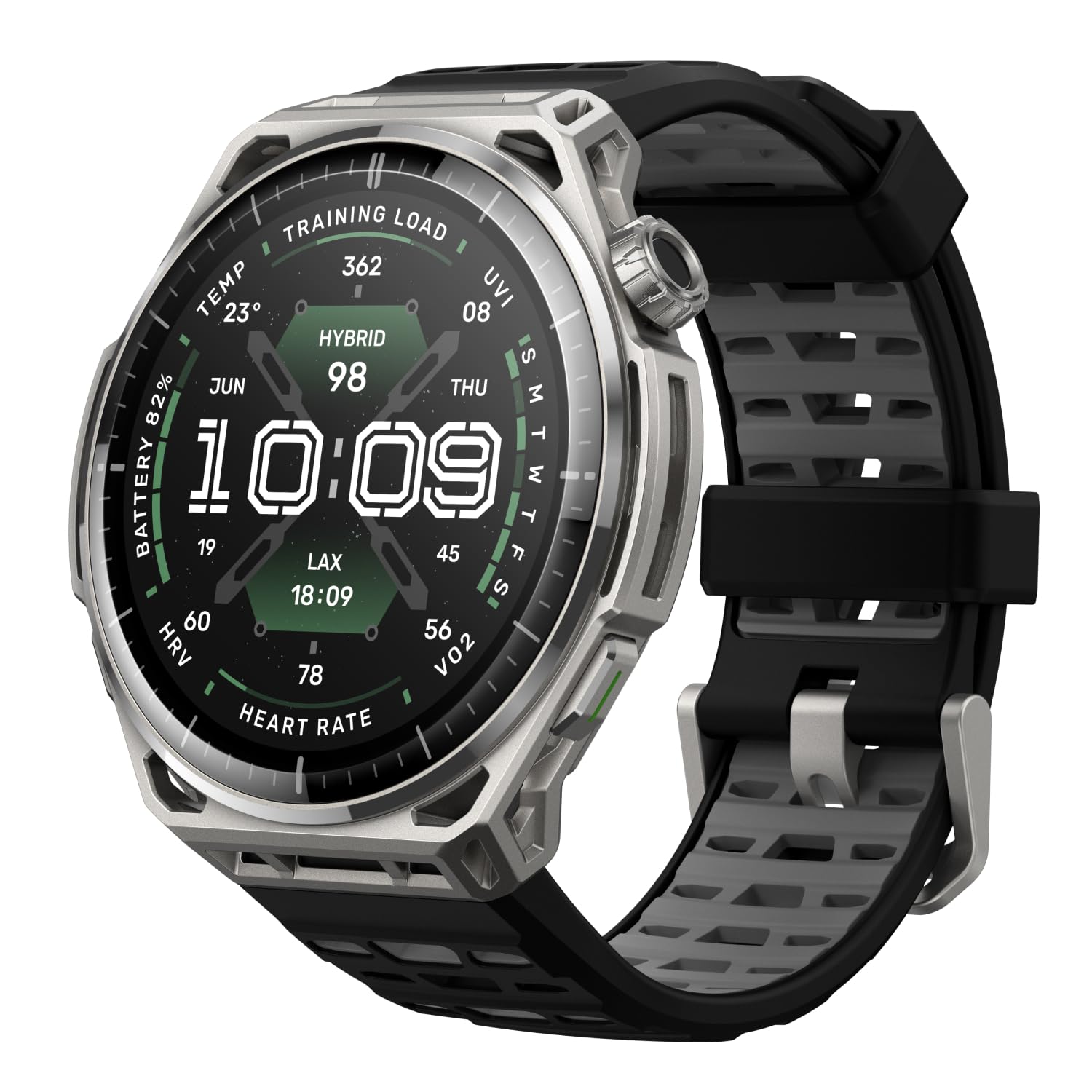
A 21-day battery, a 1.5-inch sapphire screen and full sleep analysis with no subscription.
The Balance 3 gives you the most screen and the most runtime for the outlay here. A 1.5-inch AMOLED sapphire glass display stays readable in bright daylight, and the watch is rated for up to 21 days on a charge from a 658 mAh cell. You get continuous heart rate, HRV, blood oxygen, sleep quality, stress and breathing-rate readings, and the Zepp App charges no subscription to see them.
Functionality is what buyers praise most, with battery life close behind. Owners highlight accurate workout and sleep tracking, bright crisp screens that read in direct sun, and comfort through all-day and overnight wear. HybridCharge shows when to push hard and when to prioritize recovery, which is a useful counterweight to sleep alone. Dual-band GPS, offline maps and a built-in flashlight round out a genuinely loaded package.
The gap versus an Apple Watch is messaging — the Balance 3 cannot text without a companion app, whereas Apple’s can. On sleep, HR and SpO2 tracking in daily use, though, several owners find it matches or beats the bigger names. Against the Galaxy Watch 8, the Amazfit wins clearly on battery and display size while the Samsung wins on phone-ecosystem polish. For value and all-night comfort, it is hard to argue with.
What stands out: the 1.5-inch AMOLED sapphire display is bright in sunlight and sharp at night, and 21 days of battery means you stop thinking about charging altogether.
The trade-off: texting needs a companion app, so it is not a full phone replacement on your wrist.
Ideal for: nightly sleep trackers who want a big bright screen and weeks of battery at a reasonable price.
skip it if: you need standalone text replies from your wrist.
5. Samsung Galaxy Watch9 40mm Bluetooth Smartwatch
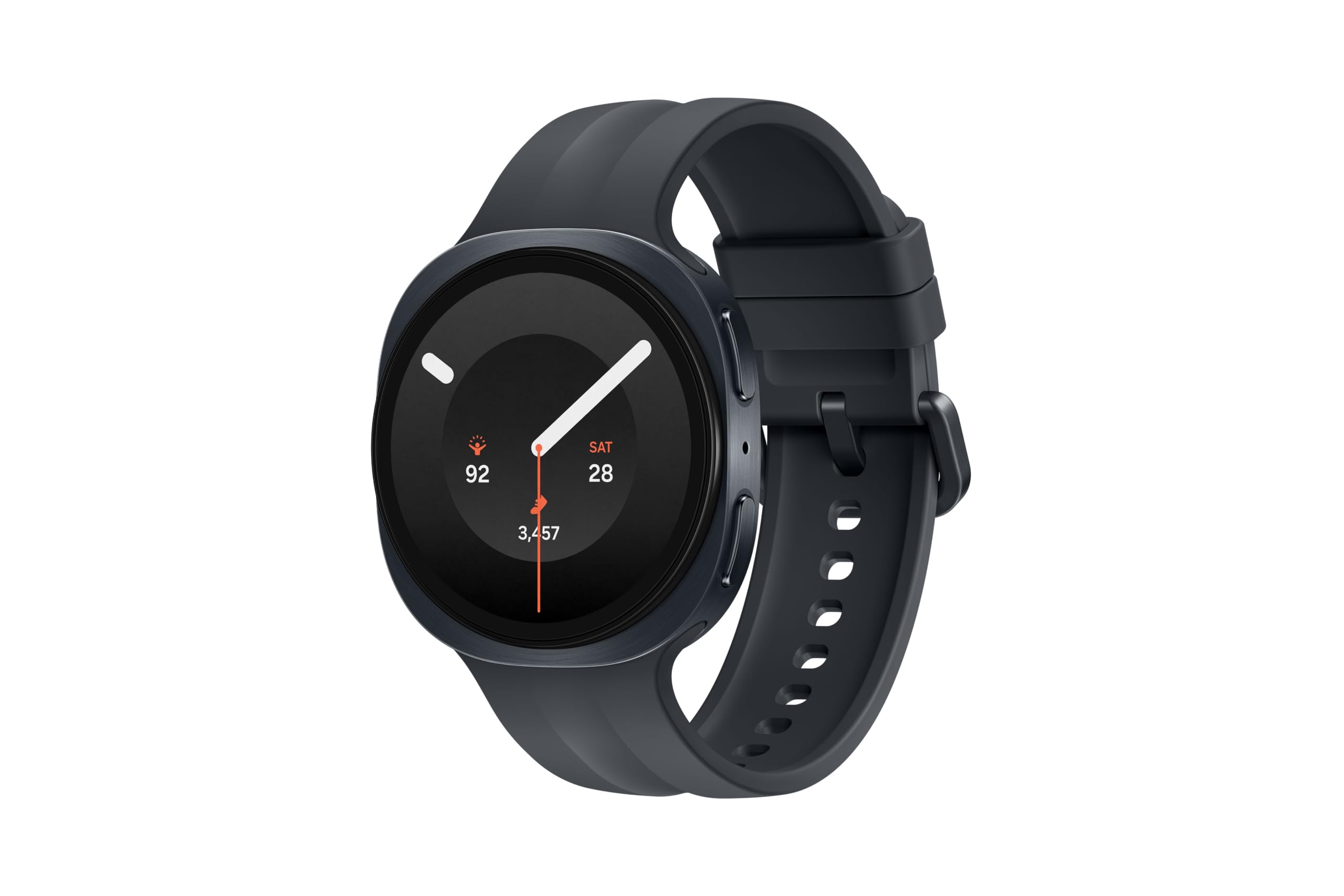
The featherweight that watches your vitals while you sleep and stays out of the way.
At 1.1 ounces, this is the watch here that you genuinely forget is on at 3 a.m. Its Vitals feature is the sleep story: the watch tracks health metrics through the night, catches shifts from your usual patterns, and gives tailored guidance based on what it finds. On top of that, Advanced Sleep Coaching and Bedtime Guidance work together to get you to bed at a consistent hour.
A soft sports band with a breathable air pocket design keeps the 40mm case comfortable for hours of wear. The bright display reads well in daylight, and the auto workout detection and blood-pressure tracking add useful daily context. Heart Health Score pulls sleep time, BMI, activity and vascular load into one figure, so you are not juggling separate readings.
The honest pressure point is battery. Overnight wear plus a full day of notifications drains the cell fast — one owner tracked it from 100% at 9am down to 52% by early evening with the always-on display off. A full charge in 1 to 1.5 hours during a shower keeps it usable, and one owner happily reports about 3 days of battery. Compared with the Garmin vivoactive 6, the Watch9 wins on comfort and phone integration but loses on battery by days.
The comfortable pick: a 1.1 oz, 40mm case with a breathable band that suits overnight wear better than most of the lineup.
The trade to accept: plan on a daily charge, and check the band length — the stock band runs small on some wrists.
The right match: Android users who prioritize comfort and overnight vitals tracking.
Not ideal for: anyone with a larger wrist who wants the stock band to fit from the start.
6. Garmin Instinct 3 Solar Rugged GPS Smartwatch

Solar charging and a 40-day battery that shrugs off mud, rain and a night’s sleep.
The Instinct 3 Solar is built for people who wear a watch hard and want tracking to keep up. A 50mm fiber-reinforced polymer case with a metal-reinforced bezel, 10 ATM water rating and MIL-STD-810 thermal and shock resistance mean it survives anything short of a catastrophe. It is rated for 40 days on a charge, longer with solar top-ups, so overnight sleep tracking never competes with the charger.
Advanced sleep monitoring sits alongside wrist-based heart rate, Pulse Ox, HRV and Body Battery, giving you a full overnight picture with personal baselines. Buttons work when wet or dirty, which matters if you are outdoors in the dark. A built-in LED flashlight with strobe modes is genuinely useful at the campsite, and multi-band GPS with SatIQ keeps navigation sharp while protecting battery.
There is a trade-off to the toughness: this is a big, tool-like watch, and the non-touchscreen interface takes getting used to. Sleep detection can occasionally misread quiet waking as sleep. Compared with the Amazfit Balance 3, the Instinct wins on durability and raw battery at 40 days versus 21, while the Amazfit wins on screen brightness and smartwatch polish. For the outdoor type, the Instinct is the one you stop worrying about.
Built for the long haul: a solar-assisted 40-day battery, a bright built-in flashlight and a body spec’d to MIL-STD-810 and 10 ATM.
The honest limit: a 50mm tool-like case and non-touch controls that take a few days to learn.
For the outdoor crowd: hikers, anglers and hard-wear users who want sleep tracking that never needs a nightly charge.
Consider another pick if: you want a slim, touch-first smartwatch rather than a rugged tool.
7. Google Pixel Watch 5 (45mm) Android Smartwatch
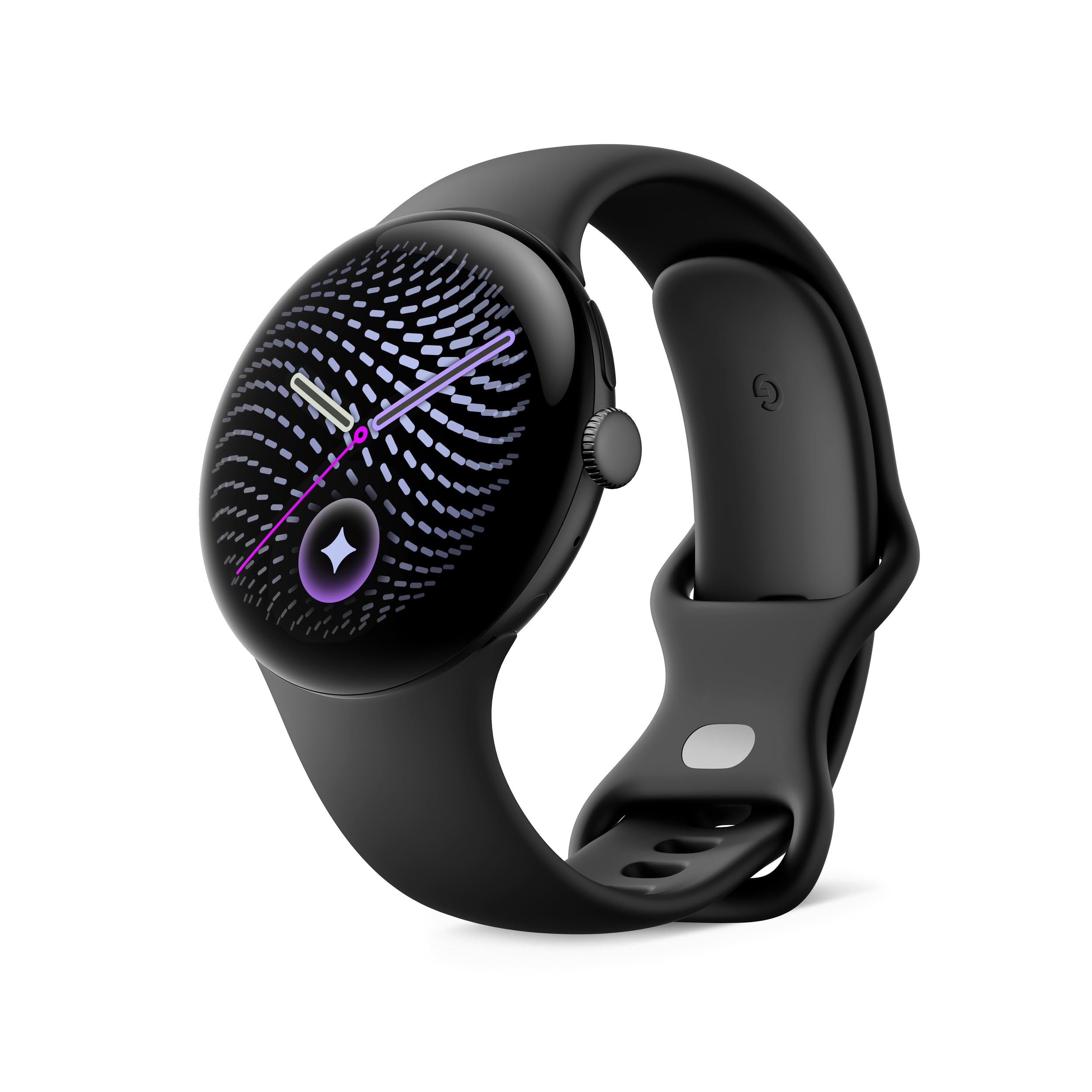
Turns your night into a single Sleep Score and charges while you shower.
The Pixel Watch 5’s sleep pitch is simple: it captures the time you spend in each sleep stage plus your breathing regularity, then rolls it all into a personalized Sleep Score each morning. Google’s heart-rate tracking is fine-tuned for your activity, and the sensors are described as its most accurate yet. Paired with a Pixel or other Android phone, it is the smoothest Google experience you can wear.
A domed Actua 360 display with scratch-resistant Gorilla Glass gives you a bright, sharp face, and the 45mm case stays comfortable despite its size. The battery is rated for up to 40 hours, and owners note it charges back up fast — one reports averaging around 30% battery use per day. Loss of Pulse Detection is listed as a feature that can prompt a call to emergency services.
The big caveat is compatibility: this is Android only and will not pair with iOS. Navigation also lacks GPS on this model, so if you want the watch to track your outdoor routes without a phone, that is a real limit. Compared with the Garmin vivoactive 6, the Pixel wins on Google-app integration and rapid charging, while the Garmin wins on battery length and fitness focus. For Android users who value a clean interface, the Pixel is the natural pick.
What it does well: a bright Gorilla Glass face, a real Sleep Score with stage and breathing detail, and charging that finishes in minutes.
What to check: it is Android only and lacks built-in GPS on this listing.
The natural fit: Android owners who want a polished Google watch with a clean morning sleep readout.
Look past it if: you use an iPhone or need built-in GPS.
8. WITHINGS Scanwatch Nova Hybrid Smart Watch

A dress watch that tracks temperature, breathing and sleep for a full month.
The Scanwatch Nova takes the hybrid idea and pushes the health side harder. Its TempTech24/7 module tracks baseline body temperature and fluctuations overnight, respiratory insights follow your blood oxygen and breathing disturbances while you sleep, and the Sleep Quality Score summarizes duration, light and deep sleep, interruptions and regularity. A stainless steel body and 30-day battery keep it a watch first.
Heart health is equally detailed — 24/7 heart-rate monitoring with high and low notifications, overnight HRV, and 40+ auto-recognized activities with heart-rate zones and VO2 max. It connects to both Android and iOS via the Withings App. Quality is the strongest positive notes here, with appearance close behind, so the physical watch itself earns solid praise.
The trade-offs are real. Battery reports vary — some see a full month, while others land closer to a few days per charge — and sleep tracking and notifications have drawn mixed feedback. The domed crystal catches glare in some light. Compared with the ScanWatch 2, the Nova adds temperature and respiratory tracking but costs more and is heavier. If premium health data in a classic case is what you want, the Nova delivers.
Where the Nova leads: temperature, respiratory and HRV tracking in a hybrid body with 30-day battery life.
What to weigh: battery runtime varies more than the headline suggests, and the domed crystal can glare.
Designed for: buyers who want the deepest hybrid health data with a luxury analog look.
Worth a second look only if: you are happy paying for premium health features over smartwatch apps.
Know the Specs
Sleep stages and sleep scores
A sleep stage is a phase of the night — light sleep, deep sleep or REM — that the watch estimates from your movement and heart rate. A sleep score condenses those stages plus interruptions into one number. The Garmin vivoactive 6’s Sleep Coach and the Withings ScanWatch Nova’s Sleep Quality Score both do this. Use the stage breakdown when you want detail and the score when you just want a quick read each morning.
Battery life in days versus hours
Battery life here ranges from days to weeks. The Garmin Instinct 3 Solar is rated at 40 days, the Amazfit Balance 3 at 21 days, the Withings ScanWatch 2 at up to 35 days. The Samsung Galaxy Watch Ultra lists 60 hours and the Pixel Watch 5 up to 40 hours. Longer runtime means fewer nights off the wrist for charging, which is the whole point of an overnight tracker.
SpO2, HRV and temperature sensors
SpO2 estimates blood-oxygen level, HRV tracks heart-rate variability over time, and temperature modules follow baseline body temperature. These are estimates from wrist sensors, not medical readings. Tightness of the band, wrist tattoos and movement can all affect accuracy. Track trends across weeks rather than reading any single night as gospel.
Common Questions
How accurate is a wrist watch sleep monitor compared to a sleep lab?
Will a sleep-tracking watch work if I wear it loosely at night?
Do I need a subscription to see my sleep data?
Can a hybrid watch like the ScanWatch track sleep stages without a big screen?
Which sleep watch lasts longest between charges?
Does the Samsung Galaxy Watch Ultra track sleep on a single charge?
Is the Google Pixel Watch 5 compatible with an iPhone?
What does SpO2 tracking actually measure overnight?
Do wrist tattoos affect sleep tracking accuracy?
Which watch is best for tracking sleep and blood pressure together?
The Bottom Line
For most people, the wrist watch sleep monitor winner is the Samsung Galaxy Watch Ultra, because its Energy Score turns last night’s sleep into one readiness number and the titanium body is built to wear overnight. If a week-plus of battery and deep sleep coaching are what you want, grab the Garmin vivoactive 6. And if a classic face with a month of tracking is the goal, reach for the Withings ScanWatch 2.
How we choose
We do not accept paid placement. Every pick is matched to a real buyer and a real use-case; we do not hands-on test units.
Sources
Specifications: manufacturer listings and product documentation. Review insights: verified customer reviews, as of October 2026. Pricing: not shown on this page (it changes often); check the current price via the retailer link.
As an Amazon Associate, Home Digitized earns from qualifying purchases. This does not affect which products we feature.