
Specs are compiled from manufacturer listings and verified buyer reviews and can change over time — please confirm the key details on the product page before buying.
You want to sit still in 20-degree air for four hours and still be able to walk back to the truck. The nine picks below cover the full layering system, from a heavyweight merino pant that pulls its weight down to a shooting breeks made for driven days.
This guide is built by comparing the manufacturers’ published specifications and the patterns across verified customer reviews, so you get each pick’s real strengths and trade-offs instead of marketing spin.
Wool does one trick no synthetic matches: it keeps warming you even when it takes on damp. Below you will find your next set of wool hunting clothes sorted by where each piece sits in a real layering system.
Top Picks
How To Choose The Best Wool Hunting Clothes
Hunting is a stop-start sport. You walk in hot, then you sit cold, then you walk again. Wool handles that swing better than cotton or polyester because it moves moisture away from your skin and holds heat even when damp. The trick is picking the right weight for the job and building a stack of layers.
Match the fabric weight to the way you hunt
A 400g merino (the number is grams per square meter, a measure of how thick and dense the knit is) is a heavyweight layer built for long sits and deep cold. A midweight around 250g is more of a walk-and-stalk layer, warm when you stop but not so heavy you overheat on the move. If you hunt mostly from a blind or a tree stand, go heavier; if you cover ground, go lighter and add a midlayer.
Look at the blend, not just the wool percentage
Pure merino feels soft and warm against your skin, but it stretches and wears faster where gear rubs. Adding a little nylon fixes that: it adds strength and stretch, which is why some hunting layers blend 84% merino with 12% nylon and 4% spandex. A wool-and-polyester tweed (a woven wool blend) holds its shape and shrugs off brush. Both work. Pick the blend for maximum next-to-skin comfort, or the tweed for a rugged outer shell.
Plan the whole system
Most hunters end up with three zones: a base layer against the skin, a midlayer for insulation, and an outer shell for wind and weather. Wool base layers do the sweat management, midlayers add warmth, and a wool vest or quarter-zip bridges the gap when the temperature drops at last light. Buy one good layer at a time rather than a single all-in-one piece.
Side-by-Side Comparison
| Model | Best For | Fabric | Layer | Wool Content | Amazon |
|---|---|---|---|---|---|
| MERIWOOL Heavyweight 400g Thermal Pants★ Best Overall | Deep-cold sits from the waist down | 400g merino | Base | 100% Merino | Amazon |
| merino.tech Base Layer Set & BeanieBest Starter Set | One-box starter kit for cold mornings | Midweight merino | Base | 100% Merino | Amazon |
| Minus33 Woolverino Micro ¼ Zip HoodieBest for Early Season | Early season and active climbing | Micro weight | Base/Mid | 84% Merino, 12% Nylon, 4% Spandex | Amazon |
| First Lite Kiln Hoody | Layering with a hood for glassing | Midweight merino | Base | Merino wool | Amazon |
| Minus33 100% Merino Wool Bottoms | All-rounder leg layer for cold-weather hunts | 400g merino | Base | 100% Merino | Amazon |
| Minus33 Wilderness Expedition Vest | Core warmth without sleeve bulk | 380 g/m² Ponte de Roma | Mid | 100% Merino | Amazon |
| Canadian Merino Cargo Hunting Pants 234MER | Burr-country pants that survive brush and snow | Wool cargo | Outer | Merino wool | Amazon |
| Walker and Hawkes Derby Tweed Breeks | Driven days and formal country shooting | Tweed | Outer | 60% Wool shell | Amazon |
| First Lite Furnace Quarter Zip | Late-season stand warmth | Wool fleece | Mid | Merino wool | Amazon |
Detailed Reviews
1. MERIWOOL Mens Base Layer Thermal Pants
Our pick — 4.5+★ from 700+ verified ratings; the strongest balance of quality and price.
Four hundred grams of merino that turns a frozen treestand into a comfortable sit.
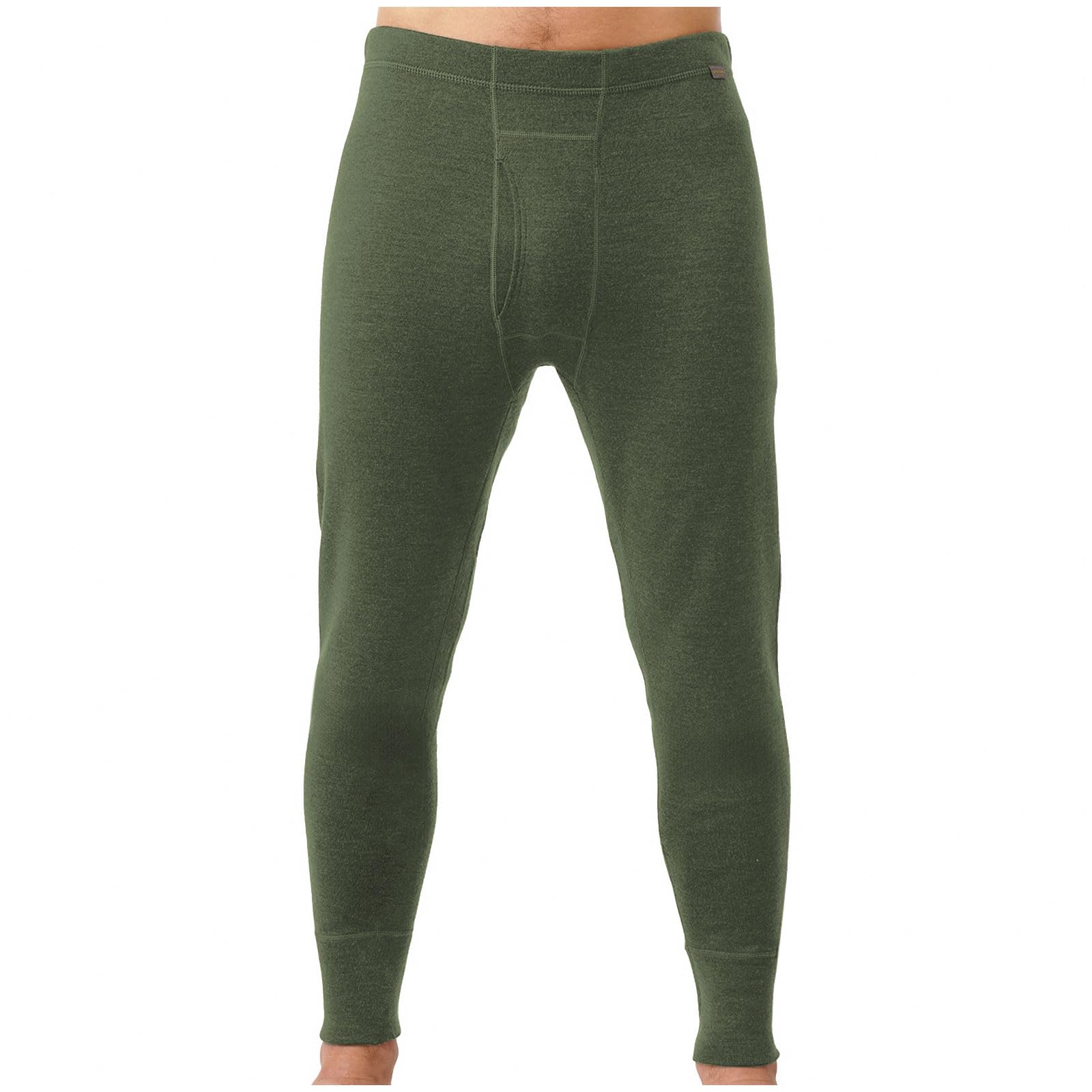
The number that matters on these pants is 400g — that is grams per square meter, which tells you how dense and warm the knit is. Four hundred grams is a true heavyweight, the kind of layer you pull on for a late-season sit or a dawn-to-dusk watch in the snow. It is built from 100% merino wool, so the fabric sits against bare skin without the itch that coarse wool brings. Weave that fine also means the pants breathe instead of turning clammy when you overheat.
Buyers who wore these below freezing say the 400g knit delivers the warmth. One buyer wrote they wore them under light jeans at 16°F and the legs stayed comfortable with only a slight chill. That is the exact scenario most hunters face: a thin outer layer and a long stand. The pants also carry a comfortable, low-profile waistband and slide easily under a heavier trouser without bunching at the knee.
The honest catch is fit and the lack of a drawstring. The waist band sits where it sits, and if you are very tall you may find the rise short. Sizing runs generous, so a buyer who wants a snug under-layer fit often drops a size. Reviewers repeatedly note the smooth, non-itch knit against bare skin. If you are wading through wet brush, you will still want a waterproof shell over the top — merino keeps you warm when damp but it is not a windproof outer shell.
Where it earns its place
- 400g merino knit delivers heavyweight warmth without bulk
- 100% wool construction keeps odor and clamminess at bay
- Low-profile waistband layers cleanly under outer pants
Worth knowing before you buy
- No drawstring, so the waist can ride down while you hike
- Sizing runs generous — a size down often gives a truer base-layer fit
- Not windproof; it needs an outer shell for exposed ridgelines
Buy it if: you want one leg layer that does the heavy lifting on long, cold sits.
Hold off if: you run hot or hunt mostly on the move — go lighter and add a midlayer instead.
2. merino.tech Merino Wool Base Layer Thermal Set
A top, a bottom, and a beanie in one bag — the fastest way into a wool base layer.
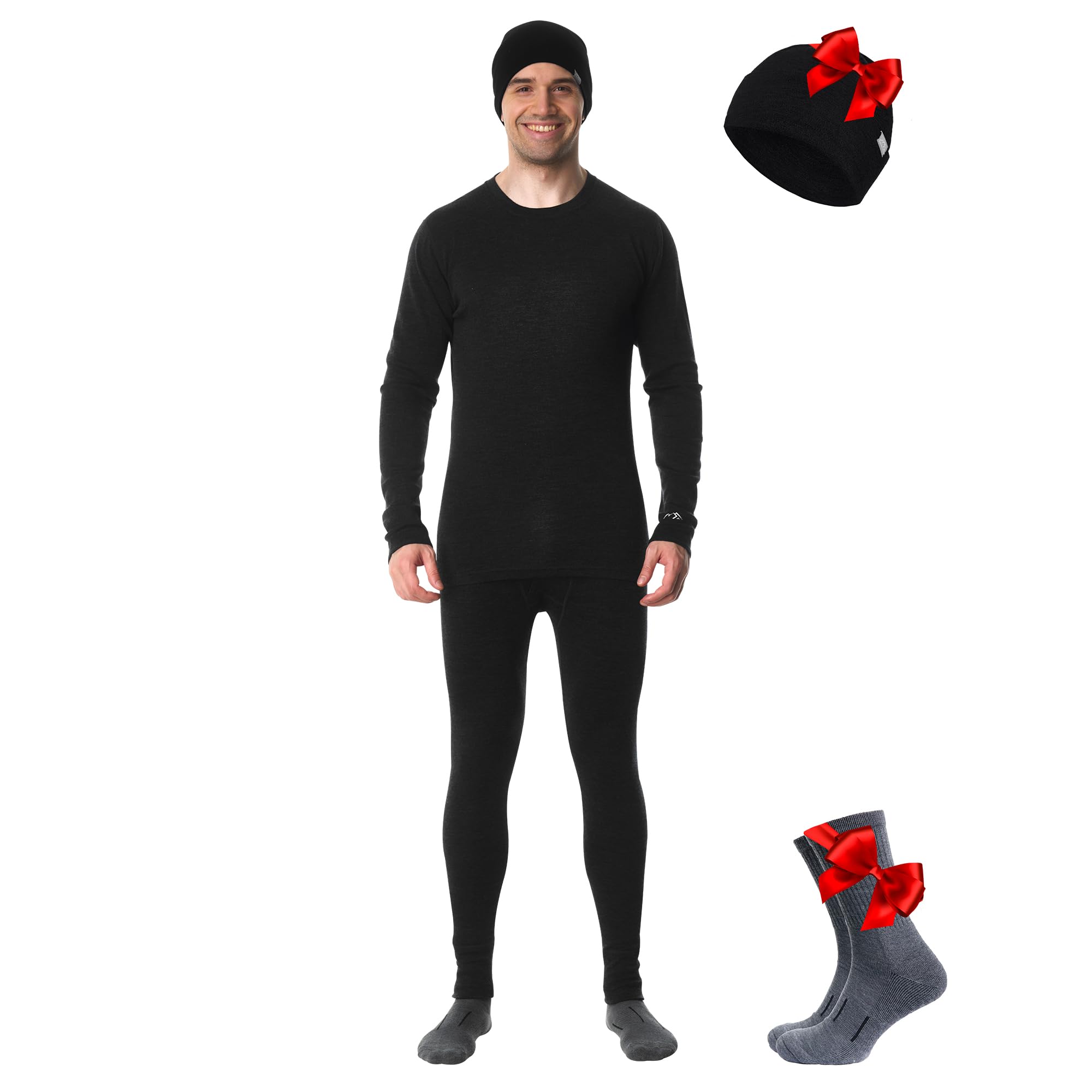
For a hunter building a system from scratch, a matched set removes the guesswork. This midweight merino set comes with a beanie, so one order covers the torso, legs and head. The fabric is 100% merino, knit tightly enough to hold its shape and lay flat under a shirt without a bumpy seam showing through. One reviewer who owns a 5’9″, 168lb frame said the medium fit well and stayed warm down into single digits with a jeans-and-coat outer layer.
The set also earns praise for how well it blocks wind at the skin. A buyer described the knit as blocking the air that passes through standard apparel, which is the difference between a cold morning that feels tolerable and one that feels brutal. The wool is soft enough for daily wear, and it does not develop the stink that synthetics collect after a few hours of sweat.
Two honest notes. The pilling is the most common gripe — some wearers find lint and small bobbles after the first wash, which a fabric shaver handles. And the fit runs a touch large for some buyers, so check the chart before ordering. Neither issue touches the warmth, which is why the set stays a strong first purchase for a hunter who wants a complete layering foundation without buying pieces one at a time.
Set value: The bundle of top, bottom and beanie makes it the simplest way to kit out a first wool system, and the 100% merino construction is the same material used in far pricier single pieces.
Care routine: Wash it cool and lay it flat to dry, and the knit keeps its shape. Skip the fabric softener, which coats the fibers and cuts down on wicking.
The right call for: a first-time wool buyer who wants a complete head-to-toe base in one order.
Look elsewhere if: you already own a merino base and only need one specific piece — this overlaps with what is already in your bag.
3. Minus33 Mens Micro Weight Woolverino ¼ Zip Sun Hoodie
A featherweight merino hoodie for the hot September walk in, not the December sit.
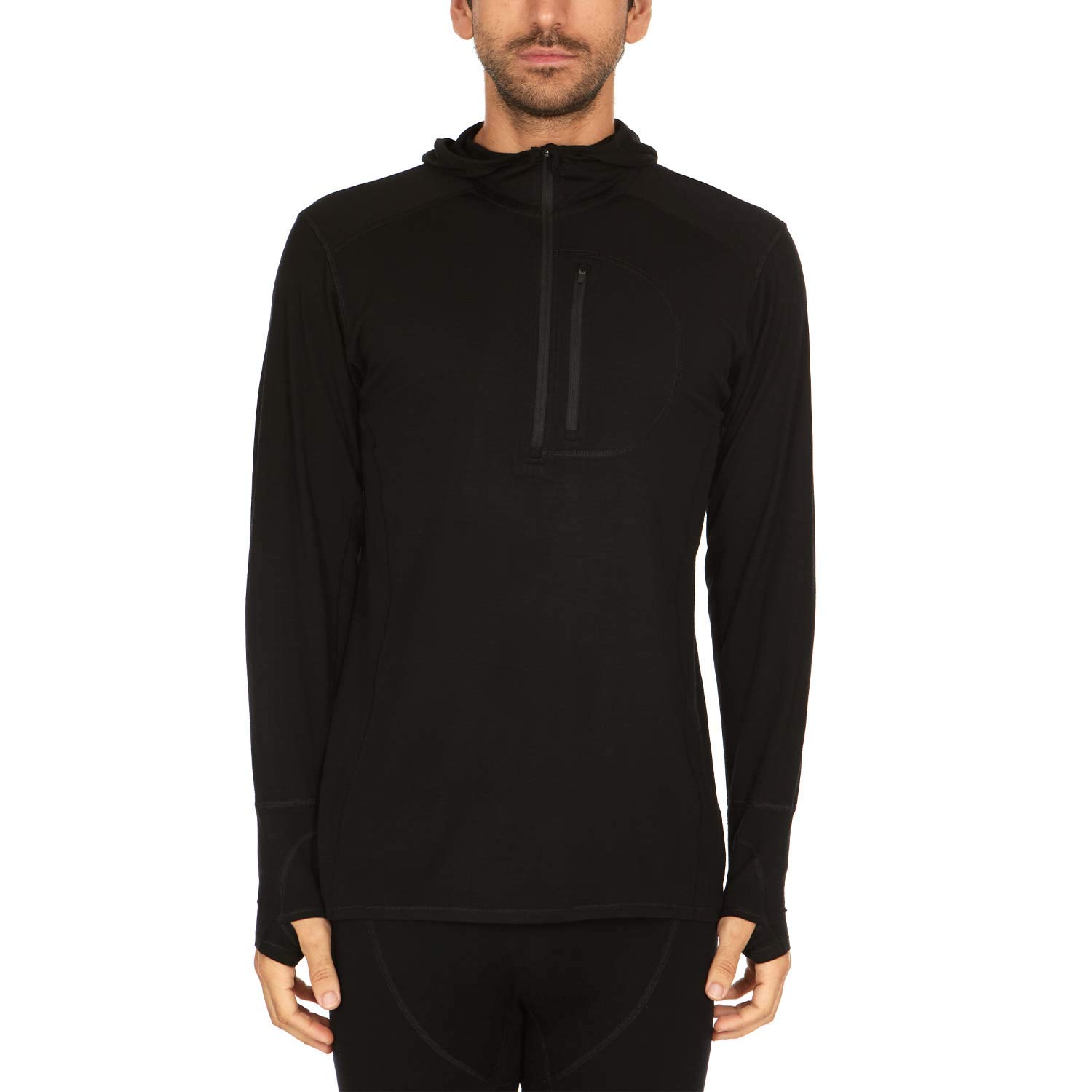
September archery season is a sweat problem, not a cold problem. This hoodie handles it with a micro weight blend of 84% merino, 12% nylon and 4% spandex — the nylon core adds strength and stretch, while the merino outer sheath moves moisture and regulates temperature next to your skin. The light knit carries a UPF 25 rating (UPF measures how much UV sun protection a fabric gives), so it filters a portion of the sun’s UV rays. That helps on an exposed ridge at midday.
What owners notice most is the range. It stays cool when you are climbing and warm when you stop, so you are not stripping layers on every switchback. Thumbholes keep the sleeves anchored, a chest pocket swallows a snack or a tag, and the quarter zip lets you dump heat in seconds. The hood folds flat and covers the neck when the wind picks up. One hiker wore it as a base for a three-night trip without taking it off and reported it never picked up an odor.
Compared with the heavier wool layers here, this one is deliberately thin. That is its strength in warm weather and its limit in the cold — it is a base or light mid, not a stand-alone winter layer. There is also a durability question: the sweater-weight weave is looser than a technical hunting shell, so snagging it on thorny brush is a real risk. A buyer who wants one wool piece for both September and December should pair it with a heavier layer rather than expecting it to do both jobs.
Worth it if: your season starts hot and you want a wool layer that vents instead of baking you.
Pair it with: a heavyweight merino base underneath once the temperature drops below freezing.
4. First Lite Men’s Kiln Hoody – Camo Merino Wool Base Layer

A camo merino hoody that covers your neck and ears without fogging your glasses.
Most base layers stop at the collar. The merino knit is midweight, so it regulates temperature rather than trapping heat the way a heavy fleece would. Owners describe the hood as a close, hugging fit that stays put without blocking peripheral vision, which is exactly what you need when you are glassing a treeline.
Hunters who wear this in the field talk about the stretch and the thumbholes most. The fabric moves with your shoulders when you draw or climb, and the thumb loops stop the sleeves from riding up under a jacket. A buyer who wears it in temperatures from 20°F up to about 45°F with just a t-shirt underneath found it comfortable across that whole range. The camo print is subtle enough to read as a normal hoody off the hill.
The trade-off is drying time and the price of the brand. Merino absorbs moisture well, but it does not release it quickly, so a soak-through can leave the hoody feeling damp for a while. It also carries a premium label, and a hunter who only needs a plain base can find a cheaper alternative. The hooded design, though, is harder to replace than a standard crew — that extra coverage is the reason this one holds its place.
What stands out
- Integral hood seals the neck without a separate gaiter
- Thumbholes stop sleeves riding up when you layer
- Midweight merino regulates heat across a wide temperature swing
The trade-offs
- Slow to dry once soaked through
- Premium pricing for a single base layer
The pick for: hunters who want a hooded base to bridge the gap between jacket and hat.
Think twice if: you need something that dries fast on multi-day backcountry trips.
5. Minus33 100% Merino Wool Bottoms Men’s Base Layer Pants

The heavyweight leg layer that shrugs off wind and keeps working when you sweat.
Minus33 has been making merino since 2002, and these bottoms show the experience. The fabric is 100% merino at a heavyweight knit, and the brand builds its whole line around wool’s ability to insulate when wet. A tester who wore them for six hours in a 24°F deer stand with a light wind reported a slight chill but nothing intolerable. The wool also wicked away a heavy sweat on the walk in instead of letting it freeze against the skin.
The fit is cut for real bodies. An XL suited a 6-foot, 230-pound hunter with a 36-inch waist and 33-inch inseam and still had a spare inch or two in the leg. The waistband holds its shape overnight, and the fabric doesn’t shrink after a normal wash and dry. These are not built as outerwear — the brand markets them as bottoms, and wearing them alone in public is not the move.
One clear limit: wool does not stop wind. A buyer noted that in 20-plus mph winds the cold cuts straight through, so these are a layer under a windproof shell, not a substitute for one. In still air and while active, though, the warmth is considerable. A hunter working chores at -20°F with proper layers said the bottoms kept him warm, which is about as cold as a base layer should be asked to handle.
Built to last: Heavyweight merino, flat-lock seams and a proven pattern make these a buy-once pair of long johns. Buyers report the heavyweight knit holds its shape and warmth after several winters of washing.
Fit note: These run true to the size chart but are roomier than a sleek athletic cut, which is good for layering and less good if you want a skin-tight fit.
Best matched with: a windproof outer pant for exposed, windy hunting days.
Skip if: you run warm on the walk and only need a light leg layer — the heavyweight knit can be too much.
6. Minus33 100% Merino Wool Mens Vest – Expedition Heavyweight

Warm the middle, free the arms — a heavyweight wool vest for the sit before the jacket goes on.
There is a temperature band between “cold enough for a jacket” and “too warm for one” where a vest does the job. This one is built from 380 g/m² of 100% merino in a Ponte de Roma knit — a double-knit construction where two layers of fabric are knitted together, which gives it durability, stretch and a clean drape. The yoked shoulder seams are shaped so a pack strap sits without bunching.
Owners mention it looks dressier than most wool vests. The full-length zipper is backed by a strip of wool for warmth, and the cut runs long enough to cover your belt line without bunching when you sit. It packs small for its warmth and works as a midlayer under a parka or on its own in mild weather. In the cold it does what a vest should: keeps your core warm while your arms stay free for a rifle or a bow.
Two things to weigh. Some buyers expected a thicker, more traditional wool vest and found the fabric thinner than they imagined, so if you want a stiff vintage feel, this is not it. And the fit runs long and form-fitting; a shorter hunter may find the hem sits lower than expected. For layering under a hunting coat, though, that extra length is an advantage rather than a problem.
Reach for this if: you want core warmth and packability without a full jacket.
Be sure of your fit: it runs long and trim, so check the chart if you usually size up.
7. Merino Wool Hunting and Shooting Cargo Pants 234MER

Canadian-made merino cargo pants cut for big and tall frames and burr-filled brush.
Most hunting pants are nylon with a wool base hidden underneath. These flip that order: the outer pant itself is merino wool, made in Canada and offered in a regular and big-and-tall range up to size 52. The cargo pockets are a highlight in the reviews, with hunters stashing tools, calls and gloves where they can reach them without digging through a pack. The open leg bottoms come in 31-inch or 33-inch lengths so a tailor can dial in the fit.
Field reports make the warmth case. One camper spent a night in the upper 20s°F and found that long johns plus these pants made insulated snow pants unnecessary. Another wore them through a nine-day wilderness trip and said they came out looking brand new, with strong stitching and no pilling. The wool breathes well enough that heavy activity does not turn into a sauna, which is unusual for pants this warm.
The most-mentioned issue is the cut. These pants are baggy — buyers regularly note they are wide through the leg and long in the inseam, so expect to pay a tailor for hemming and taking in. A 6’4″, 315-pound hunter still found them extremely baggy even after a hot wash. If you want a trim, athletic pant, this is not that. If you want room to layer, room to move, and warmth that holds up in snow, the generous cut is part of the point.
Why hunters choose them
- Merino outer pant insulates in wet snow without a synthetic layer
- Cargo pockets hold calls, tools and gloves close at hand
- Made in Canada with sizing up to 52
The fit reality
- Baggy through the leg — tailoring is likely
- Runs long in the inseam unless you order the shorter option
Made for: big-and-tall hunters who want an outer pant that stays warm in snow and brush.
Budget a tailor’s visit: the cut is generous, so hemming is part of the ownership cost.
8. Walker and Hawkes Derby Tweed Breeks Trousers

Real country tweed breeks for driven days — heavy, sharp and built for the line.
These breeks are the one piece here made for a specific kind of day: a driven shoot or a formal country day, not a solo stalk. The shell is a 60% wool, 25% polyester, 11% acrylic tweed, lined in 100% cotton for warmth. The fabric has been treated with Teflon, which the maker describes as protection against oil- and water-based stains, dust and dry soil — useful when you are kneeling in wet grass. Hardware includes a strong brass front zip, two side pockets, a back pocket with a buttoned flap, velcro calf straps and an elasticated grip waistband.
Owners who shoot in them praise the cut and the feel. The tweed is described as heavy, rugged and genuinely country, with knees that flare correctly and a waist that fits as expected. The Teflon coating earns its keep on muddy days, and the velcro calf straps make it easy to dial the leg in over boots. It looks the part next to a shooting jacket in a way a nylon pant never will.
One warning matters more than any other: the sizing runs small, and it is the number one issue in the reviews. Buyers who normally take a 34 have needed a 40 or a 42, and one who sized up still found the fit tight. Order a size up, or two, and expect to return if it does not land. Beyond sizing, the breeks are well made and the tweed is the real deal. Fit is the only reason to hesitate.
Ordering advice: Ignore your usual size and check the chart against your actual waist measurement. The reviews are consistent that these run small, so a size up is the safer bet.
The look: Real tweed, correct breeks cut, proper brass hardware — it is a country piece, not a technical pant, and it delivers on that promise.
The one to buy for: driven days, formal shoots and anyone who wants a proper tweed breeks.
Size up, not down: the fit is the known weak point, so plan for an exchange if you guess wrong.
9. First Lite Furnace Quarter Zip
The fleece midlayer for the stand when the temperature drops and the action doesn’t.
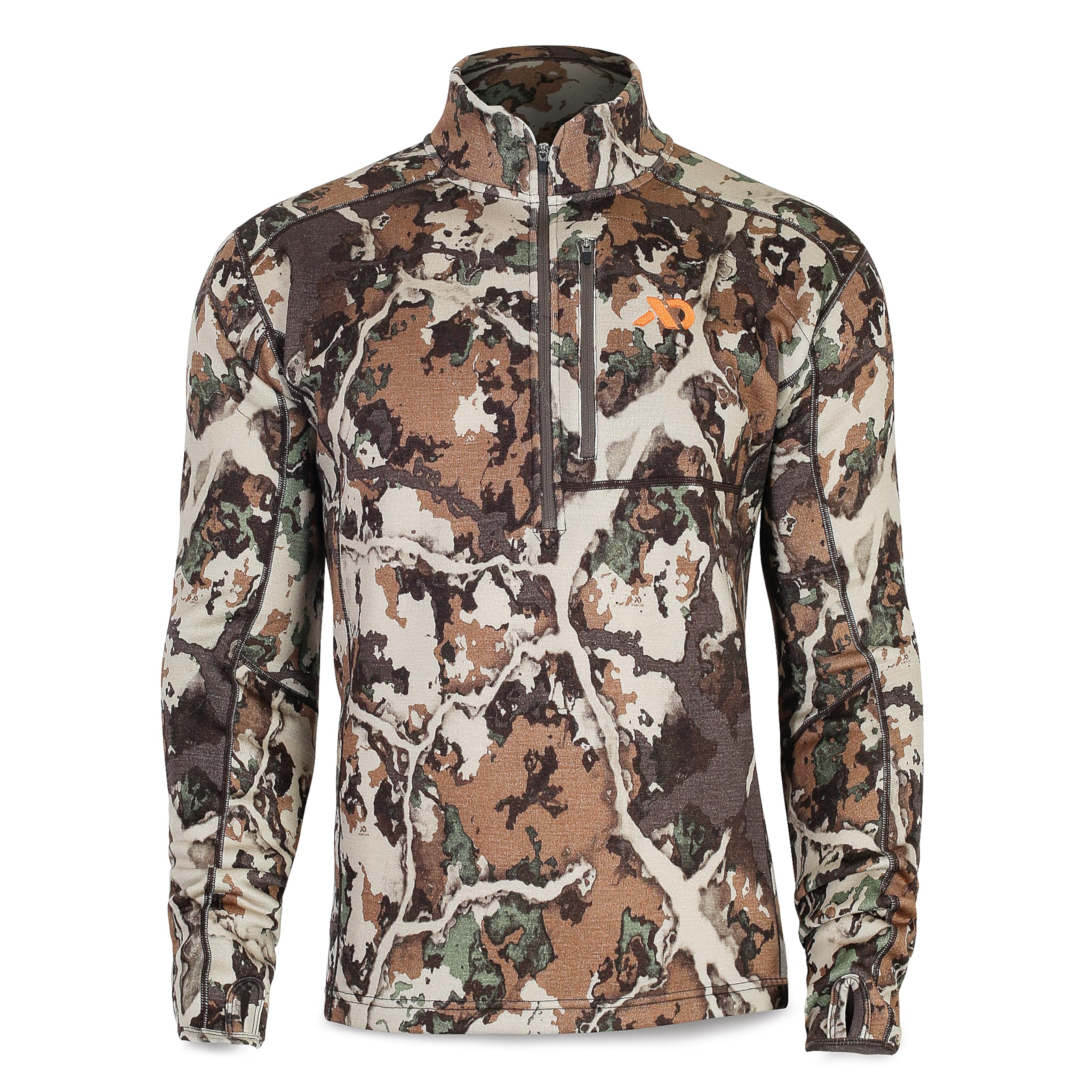
Once you are sitting still in freezing air, a base layer alone is not enough. The Furnace is a merino wool fleece, a heavier, lofted knit that traps warm air between its fibers, and it is cut for the tree stand rather than the hike. Owners describe it as the equivalent of two thermal tops stacked together, and one hunter who wore it at 23°F on stand reported staying warm until radiant heat nearly made it too much. In rain and 30 mph wind at 49°F, it stayed comfortable through a full day.
The quarter zip is the useful detail: you can dump heat on the walk in and seal it up once you are settled. A chest pocket is deep enough for a hand warmer, and the merino keeps odor down over multi-day hunts. The fleece texture is soft against the neck, and the zipper is a smooth pull rather than the sticky plastic kind.
The catch is that this is a warmth piece, not an action piece. A hunter who paced his walk in to avoid sweating shows the limit — you would overheat climbing in this midlayer alone. It also runs slightly big, so an athletic frame may want to check the size. For the late-season sit, though, the Furnace turns a cold stand into a comfortable one. Pair it with a merino base underneath and a windproof shell over the top, and it covers the coldest sits of the year.
Reach for it when: you sit still in freezing weather and want the warmest layer in this guide.
Not for the climb: it is too warm to hike in — save it for once you are settled.
Know the Specs
Fabric Weight (g/m² or g)
The gram rating tells you how much wool sits in a square meter of fabric, which is the clearest signal of warmth. A 400g merino is a heavyweight built for long cold sits; a midweight in the 250g range is a walk-and-stalk layer; a micro weight is for warm-weather activity and sun protection. If you see “380 g/m²” on a vest, that is a dense, warm knit for core insulation. The higher the number, the warmer and heavier the piece feels.
Wool Percentage and Blends
100% merino gives you the softest feel against the skin and the best next-to-skin moisture control. A blend with nylon adds durability and stretch, which matters in friction areas like shoulders and knees; an 84% merino, 12% nylon, 4% spandex mix is a common formula for that reason. A tweed shell with 60% wool and a polyester-acrylic content is built for a rugged outer look and weather resistance rather than next-to-skin softness. Read the label to know which job the piece is designed for.
Layer Position
Base layers sit against skin and manage sweat; midlayers add insulation over a base; outer layers handle wind and rain. A merino base pant under a heavy outer pant is warmer than a single thick pant. A vest or quarter-zip mid is best when you need warmth without bulk. Match the position to the weather and the way you hunt, and the stack will do more for you than any single expensive piece.
Care and Odor Resistance
Merino resists odor naturally, so it can be worn several times between washes. Wash it cool and lay it flat to dry to protect the fibers. Skip fabric softener, which coats the wool and reduces its wicking. Line-drying inside out reduces pilling. Follow that routine and a merino base layer keeps its softness and shape for many seasons.
Common Questions
Is merino wool actually warm enough for late-season hunting?
Do wool hunting clothes actually itch?
How should I wash and dry merino wool hunting clothes?
Does wool keep you warm when it gets wet?
Should I buy a merino base layer set or separate pieces?
What is the difference between wool base layers and wool midlayers?
How do I size wool hunting clothes correctly?
Do wool hunting pants block wind on their own?
Are merino wool hunting clothes worth the higher cost?
The Bottom Line
For most hunters, the wool hunting clothes winner is the MERIWOOL Heavyweight 400g Thermal Pants because a 400g merino base under your outer pant does the hardest job of the whole system. If you want a complete base in one order, the merino.tech set covers top, bottom and beanie. And for the coldest tree stand of the year, the First Lite Furnace quarter zip is the warmest layer here.
Build the stack one piece at a time: start with the base that matches your season, add warmth only where you need it, and use the care routine in the specs section so the wool lasts. A well-chosen merino base is a genuine long-term buy.
How we choose
We do not accept paid placement. Every pick is matched to a real buyer and a real use-case; we do not hands-on test units.
Sources
Specifications: manufacturer listings and product documentation. Review insights: verified customer reviews. Pricing: not shown on this page (it changes often); check the current price via the retailer link.
As an Amazon Associate, Home Digitized earns from qualifying purchases. This does not affect which products we feature.