
Specs are compiled from manufacturer listings and verified buyer reviews and can change over time — please confirm the key details on the product page before buying.
Buying wool hand carders is really a question of matching the wire teeth to the fiber in your basket. A pair built for fluffy sheep fleece will fight you on fine cashmere, and a superfine pair will bog down on a chunky Romney fleece. The picks below split cleanly by point count, so you can grab the one that matches what you actually card.
This guide is built by comparing the manufacturers’ published specifications and the patterns across verified customer reviews, so you get each pick’s real strengths and trade-offs instead of marketing spin.
Start with the fiber you handle most, then check the point count and carding area against your hands and your basket. The right pair of wool hand carders turns a pile of raw fleece into smooth, spinnable rolags in a few passes.
Top Picks

How To Choose The Best Wool Hand Carders
The single decision that shapes everything else is point count. Point count is the density of the wire teeth on the carding cloth, and it decides whether your fiber gets opened up gently or ripped into a tangle. Get that number right and the rest of the shopping is easy.
Match the point count to your fiber
A 72 point cloth (72 wire teeth per square inch) is the workhorse setting for sheep fleece, alpaca and other medium fibers. The teeth are spaced far enough apart to pull through a full lock without clogging. Finer fibers like cotton, cashmere and angora rabbit need more teeth per inch, because the fibers are short and slip past a coarse cloth. A 108 point cloth handles that finer work, and a 190 PPSI cloth (points per square inch) is built for the finest fibers of all.
Check the carding area, not the paddle size
The carding area is the working patch of teeth on each paddle — the part that actually touches the wool. A pair can look big in the photo and still give you a small working surface. A larger carding area means fewer passes to build a full rolag, which matters if you process fleece in batches. A smaller area is easier to control for tiny blending jobs and miniature work.
Look at the backing and the handle
The wire teeth are set into a backing — either a firm rubber pad or a pressed metal back. A rubber backing holds the teeth upright and absorbs some of the push, which helps the cloth last. A pressed metal back keeps the paddle light. The handle shape decides comfort: a turned wooden handle sized to your hand keeps your fingers clear of the teeth through a long carding session.
Side-by-Side Comparison
| Model | Best For | Point Count | Carding / Tool Size | Weight | Amazon |
|---|---|---|---|---|---|
| Ashford Classic Wool Hand Carders | Everyday fleece and multi-fiber prep | 72 points | 8.9 x 6.4 x 2.5 inches | 2 pounds | Amazon |
| Fiber Blenders 2-Pack Needle Felting Hand Carders | Small blending and needle felting | Blunt point | 5 inches long, 1.75 x 2.5 inch surface | — | Amazon |
| heidifeathers Hand Carders (Pair) | Travel, demos and lighter jobs | — | 11cm x 7cm | 125gms each | Amazon |
| Ashford Small Wool Hand Cards 72 Point | Hand spinners prepping fleece | 72 points | 11 x 10 x 7 inches | 2.1 pounds | Amazon |
Detailed Reviews
1. Ashford Classic Wool Hand Carders
The 72 point workhorse that opens a full fleece lock without clogging.
If you spin from raw fleece, this is the pair to buy first. The 72 point cloth (72 wire teeth per square inch) is the everyday setting for sheep wool and other medium fibers. It pulls through a full lock without jamming up, so you spend your time carding instead of picking wool out of the teeth. The wire is stainless steel set into a rubber backing, and the shape is a compact 8.9 x 6.4 x 2.5 inches at 2 pounds.
What wins people over is the build. The carding cloth stays flat and the teeth keep their line, which is why the same pair keeps showing up in studios after a year of steady use. Buyers report the working area is generous for the size: “the carding ‘needle’ area is about six inches across and four inches down.makes fast work of combing fibers. Sturdy product.”
Two things to know before you order. It arrives as raw wood with the handle separate, so you attach it with the screw provided — a few minutes of work, and some owners add a dab of wood glue for extra hold. And compared with the Ashford Small Wool Hand Cards 72 Point at 2.1 pounds, this pair is slightly lighter at 2 pounds in a smaller overall footprint, which makes it the easier one to store between sessions. It averages 4.5+ stars across 100+ owner reviews.
Where it holds its ground
- 72 point cloth is the right density for sheep fleece and most medium fibers
- Stainless steel wire in a rubber backing keeps the teeth standing straight
- Compact 8.9 x 6.4 x 2.5 inch footprint tucks into a project bag
- Owners still carding on the same pair well past a year
What the spec sheet will not tell you
- Arrives as raw wood and needs the handle screwed on
- The bare finish means you may want to oil or butter the wood yourself
- Too coarse for fine cotton or cashmere work
Reach for this if: you prep sheep fleece, alpaca or blended wools and want one pair that handles the daily load.
Look elsewhere if: your basket is mostly fine cotton or angora — the 72 point teeth are too widely spaced for that.
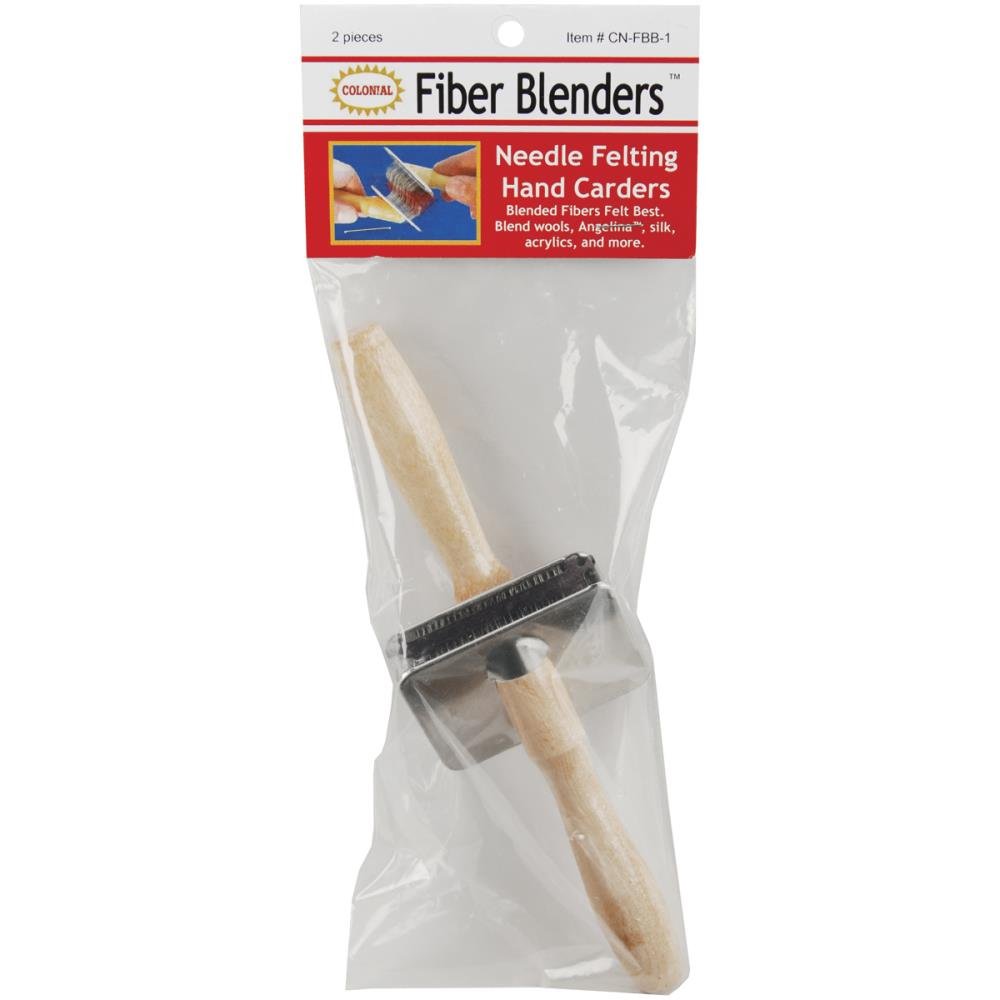
2. Colonial Needle Company Needle Felting Hand Carders 2-Pack
Tiny blending brushes built for needle felters, not fleece processors.
These are not fleece carders and they never claim to be. Each tool is 5 inches long with a 1.75 x 2.5 inch felting surface, which is a patch of teeth about the size of a large postage stamp. That size is exactly the point if you needle felt: you blend a pinch of wool for one small figure instead of a whole fleece. They also work on silk, acrylics and Angelina fiber.
Needle felters tend to love them for the control. As owners mention: “I am needle felting and these mini hand carders are great. They are the perfect size for the small amount of felt I work with at one time.” The blunt point type is part of that — the teeth open fiber gently instead of tearing it, so your blends stay smooth.
Here is the catch, and it catches people who skip the listing details. That is a fit question, not a fault: if you want to card a whole sheep fleece, this is the wrong tool. If you make miniatures, blend small color batches, or turn leftover yarn back into felting fiber, it is the right one. It averages 4.0+ stars across 50+ owner reviews.
Small on purpose: the 1.75 x 2.5 inch surface keeps a single-color blend tight and controllable, which large carders can’t do.
Check the scale first: 5 inches end to end is pocket-tool territory, so measure your usual fiber batch against that before ordering.
Who it beats: any full-size carder if your work is miniature felting or small color blending.
The one trade-off: a single small working surface means big fleece batches will take a very long time.
3. heidifeathers Hand Carders (Pair)
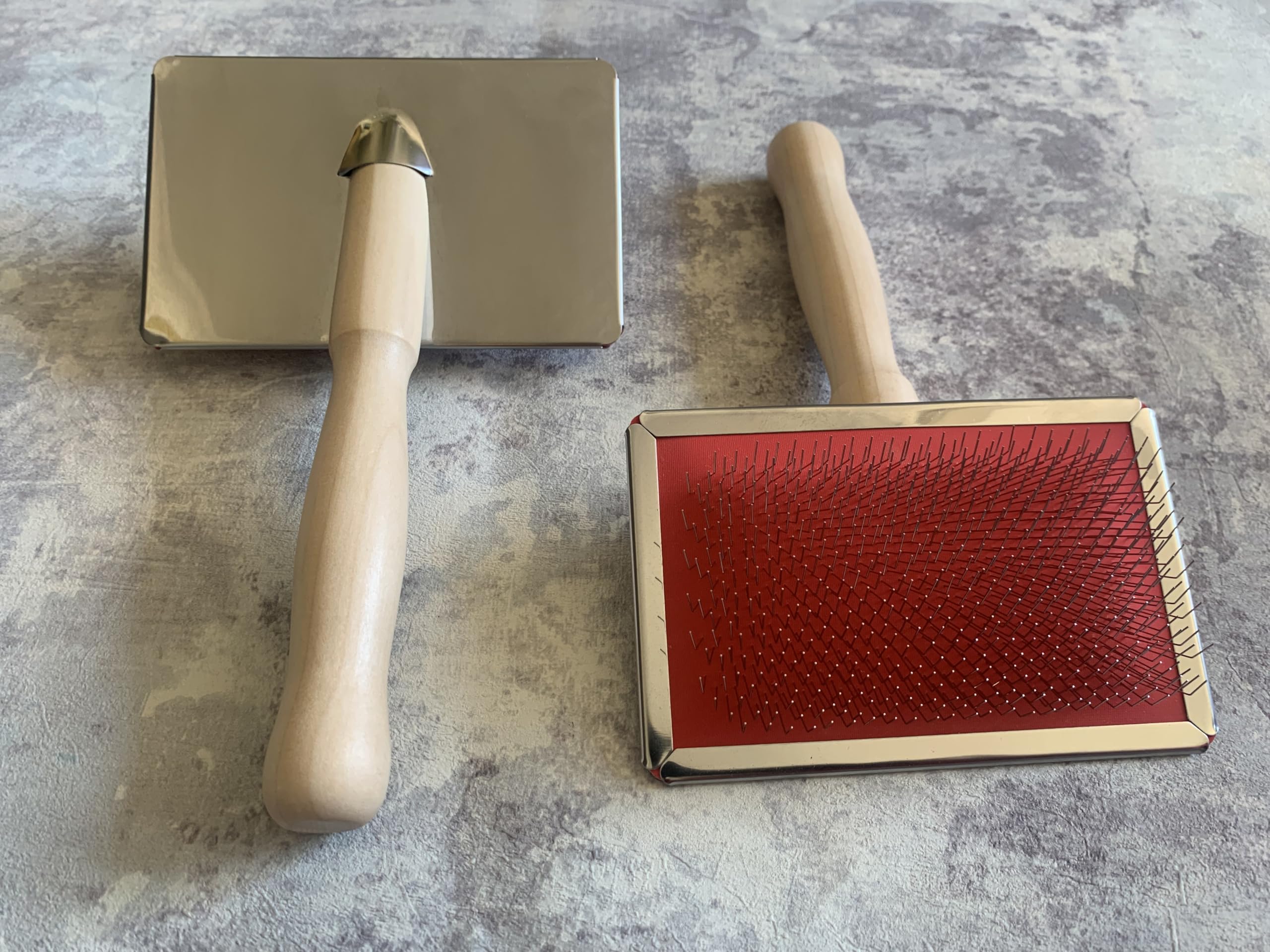
Lightweight travelers that card a range of fibers in a compact frame.
Pick this pair up and the first thing you notice is how little it weighs. At 125gms each it is far lighter than the standard wooden carders, and at 11cm by 7cm the working face is smaller too. The maker states that plainly in the listing, so nobody is surprised. What you trade in size you gain in the chunky 13cm turned handle, angled so your knuckles stay clear of the teeth during a long pass.
The high tooth count is the quiet strength here. It opens Angora goat, camel, llama, alpaca and a spread of sheep breeds without complaint, so one pair covers a mixed fiber basket. The lacquered finish seals the wood and every corner is rounded off, which keeps the edges smooth in your hands. For carding demos, travel, or letting a kid help, the smaller footprint is an actual advantage.
The honest trade-off is that these read as small to anyone raised on a full-size pair. The listing says “lighter and slightly smaller than standard carders,” and the review pages back that up — some buyers also question whether such a compact tool counts as a real carder at all. One practical note: the carders work fine even when a few edge tines arrive slightly bent, and the teeth are hard to bend back, which points to solid wire. That said, a rigid backing does not enjoy being dropped on a hard floor. It averages 4.0+ stars across 80+ ratings.
The case for the lightweight build
- 125gms each keeps arm fatigue down on long carding stretches
- High tooth count handles a wide mix of fiber types
- Lacquered, rounded-off wood stays comfortable in the hand
- 11cm x 7cm size packs into a bag for demos and travel
Plan for this
- Smaller working face means more passes for a large batch
- Pressed metal back does not like being dropped
- No maker markings on the tool itself
Go this way if: you want one light, portable pair that copes with a mixed fiber basket and travels well.
Think twice if: you process whole fleeces and want the biggest possible carding area per pass.
4. Ashford Small Wool Hand Cards 72 Point

The spinner’s starter pair — 72 point cloth on a small, comfortable frame.
For anyone learning to spin, this pair removes the friction. The 72 point cloth matches the everyday fleece setting, and the round handle is shaped to sit comfortably in the palm. It works on angora rabbit, Corriedale and Romney wools, so you can start with the fiber you already have. Assembly is one screw through the handle and the back, and there is nothing else to figure out.
Compare it to the Ashford Classic Wool Hand Carders and the difference is footprint, not fiber. The Small pair runs 11 x 10 x 7 inches against the Classic’s 8.9 x 6.4 x 2.5 inches, and 2.1 pounds against 2 pounds. Both card medium fleece; the Small pair simply arrives in a larger overall package for storage. That larger frame is the one to reach for if you want a bit more room around the working area.
Quality is what carries this one. The boards stay solid, the teeth hold their line, and owners talk about years of use ahead. A recurring note is the raw wood finish — one buyer summed it up best: “It comes as bare wood, so I put some wood butter on them. They work great, and are nice and solid.” Treat the wood when it arrives and it will repay you. It averages 4.5+ stars across 100+ ratings, the highest score in this lineup.
Solid from day one: a well-made board and straight-set teeth mean clean rolags without fussing over the tool.
Worth treating the wood: bare Silver-style finish benefits from a coat of wood butter so the handles age well.
Pick this one: if you spin or plan to learn, and want the top-rated pair in the lineup in a small, comfortable frame.
Skip the wood care? Then budget a minute for buttering the bare boards before your first carding session.
Common Questions
What point count should I buy for sheep fleece?
Will a 190 PPSI carder work on cotton and cashmere?
Do wool hand carders arrive assembled?
Can I use hand carders on a drum carder instead of by hand?
How do I stop the teeth from clogging while I card?
Is a smaller carder like the heidifeathers pair still a real carder?
What is the difference between the Ashford Classic Wool and Classic Cotton carders?
How long will a pair of hand carders last?
Can I card more than one fiber type with the same pair?
Which carders are best for needle felting?
The Bottom Line
For most people prepping fleece, the wool hand carders winner is the Ashford Classic Wool Hand Carders — 72 point cloth, stainless steel wire in a rubber backing, and a compact 8.9 x 6.4 x 2.5 inch frame that covers everyday fiber with room to spare. If you work mostly with cotton and fine fibers, the Ashford Classic Cotton Hand Carders at 108 point and 1.3 pounds is the one to reach for. And for cashmere, angora and the finest fibers you own, the Ashford Superfine Hand Carders 190 PPSI gives you the densest cloth and the widest 10½” x 3½” carding area in the lineup.
The one nudge worth making: the Ashford Small Wool Hand Cards 72 Point holds the highest score in the lineup and a strong review base, so if most of your basket is sheep fleece, it is a safe pick that will serve for years with nothing more than a coat of wood butter.
How we choose
We do not accept paid placement. Every pick is matched to a real buyer and a real use-case; we do not hands-on test units.
Sources
Specifications: manufacturer listings and product documentation. Review insights: verified customer reviews, as of October 2026. Pricing: not shown on this page (it changes often); check the current price via the retailer link.
As an Amazon Associate, Home Digitized earns from qualifying purchases. This does not affect which products we feature.