
Specs are compiled from manufacturer listings and verified buyer reviews and can change over time — please confirm the key details on the product page before buying.
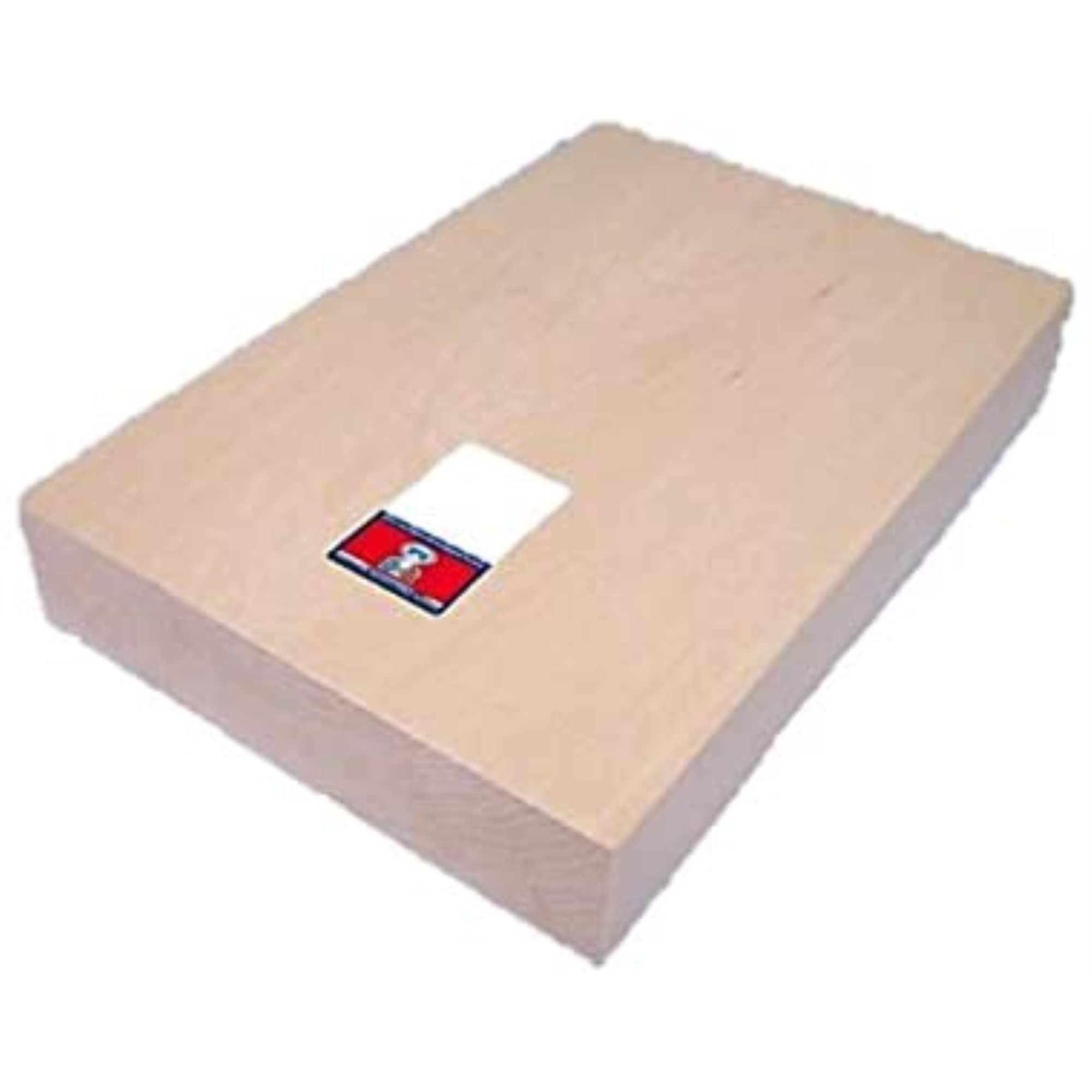
If you want one answer: basswood is the wood to buy for sculpture, and the Midwest Products 4431 block is the safest place to start. It is a 2x8x12-inch basswood block that carves cleanly, holds fine detail, and takes paint without a fight. Everything below explains exactly which basswood blank fits your project — from a 4-inch whittling block for a first gnome to a thick 4×4 block for a full figure.
This guide is built by comparing the manufacturers’ published specifications and the patterns across verified customer reviews, so you get each pick’s real strengths and trade-offs instead of marketing spin.
Below you will find nine basswood blocks ranked by how they actually carve, cut, and hold up in the hand. The goal is simple: match each blank to your project size and how cleanly it carves, so you can compare real choices in this roundup of the best wood for sculpture.
Top Picks


How To Choose The Best Wood For Sculpture
For sculpture, you want a wood that gives way predictably under your knife and holds a crisp edge. Basswood does both. Its grain is fine and close, so a gouge slices through without splitting ahead of the blade. That is why it dominates carving blanks and why every pick here is basswood.
Match the block size to the figure you plan to carve
A small whittling piece in your hand needs a blank that fits your palm — something around 1 inch square is comfortable for a first attempt. A larger sculpture needs a thick blank with room for waste, because you remove material, never add it. The 4x4x8 block here is the largest single piece on the list and is sized for a full figure. Sizing is the first decision you make, and the wrong size is the most common beginner mistake.
Read the grain and watch for knots
Basswood’s advantage is an even, knot-free grain that cuts the same in every direction. A knot interrupts that — the blade hits a hard spot and jumps, and your detail line wanders. Most blank sellers market their wood as knot-free, but the reviews tell you whether that holds in the bag you receive. Check the grain on arrival and put any knotty piece aside for rough work rather than fine detail.
Dry wood and smooth surfaces save you hours
Kiln-dried wood has been heat-treated to stabilize it, which reduces warping, cracking, and splitting after you carve. A green or poorly dried block can move weeks after you finish, and a crack through a finished face ruins the piece. Sellers that surface and sand their blocks save you the planing step, so your first cut is the first real cut of the sculpture. Look for a smooth, unfinished surface and straight, square edges.
Side-by-Side Comparison
| Model | Best For | Block Size | Piece Count | Material | Amazon |
|---|---|---|---|---|---|
| Midwest Products 4431★ Best Overall | Large single blocks you cut to size | 2 x 8 x 12 inches | 1 | Basswood | Amazon |
| BeaverCraft BW19Best For Beginners | Beginners and small whittling projects | 1.97 in and 0.98 in squares | 19 | Basswood | Amazon |
| WYKOO 10 PackBest Consistency | Consistent practice blocks | 4 x 2 x 2 inches | 10 | Basswood | Amazon |
| ACXFOND 2 Pack | Carving large pieces from one blank | 12 x 4 x 2 inches | 2 | Basswood | Amazon |
| JAPCHET 12 Pieces | Family carving and group classes | 6 x 2 x 2 inches | 12 | Basswood | Amazon |
| BeaverCraft BW24 | Crafters who want size variety | Mixed sizes, 1 in thick | 24 | Basswood | Amazon |
| GNIEMCKIN 4 Pack | Advanced carvers and bigger figures | 6 x 3 x 3 inches | 4 | Basswood | Amazon |
Detailed Reviews
1. Midwest Products 4431 Basswood Block Bundle
Our pick — 4.5+★ from 250+ verified ratings; the strongest balance of quality and price.
One big block that becomes any blank you need, carved clean at every cut.
The defining number is the 2 x 8 x 12-inch size. That is a single basswood block, not a bag of presized pieces, and it means you decide what the blank becomes. Carve a relief panel straight from the face, or saw it down into custom blocks and get a dozen small carvings from one source. Sawing your own blanks from one block wastes less wood and needs fewer glue-ups than assembling presized pieces.
What wins people over is how it carves. The wood has the fine, even basswood grain that lets a knife slice rather than fight, and the quality of the material is the trait owners bring up more than anything else — a whole cluster of comments circle around it. Owners also note a generous face area and a clean look that takes stain or paint to mimic another wood. One buyer used a block for a scroll saw blank source and called the quality very good.
The catch is shipping. Some blocks arrive loose in a plain box rather than wrapped, and the review pages carry a story of a large block showing up with gashes on the face. Order it and inspect it on arrival, and keep the gift project for a piece that arrives clean. Given how much carving one 2 x 8 x 12-inch block yields, the shipping risk is a small but real trade-off.
What earns it the top spot
- A 2 x 8 x 12-inch face gives you room for a relief panel or a stack of custom blanks
- Fine, even basswood grain carves smoothly without tearing ahead of the blade
- Takes stain and paint, so one block can stand in for other woods
Where it gives you pause
- Comes as one solid block, so you need a saw to get smaller blanks
- Shipping can leave surface marks — check it closely when it lands
Made for: carvers who want control over blank size and are happy to cut it themselves.
Think twice if: you want presized pieces ready to carve straight from the box.
2. BeaverCraft Basswood Carving Blocks Whittling Wood BW19
Nineteen pre-sanded blocks in two sizes, ready to carve the day they arrive.
Count the pieces and you see the appeal: 19 basswood blocks, with sixteen small ones at 0.98 x 0.98 x 3.93 inches and three larger ones at 1.97 x 1.97 x 3.93 inches. That spread covers a first gnome in your palm and a slightly bigger figure without reaching for a saw. And unlike the Midwest block, these arrive sanded and ready, so your first tool is a knife, not a saw.
The softness is the thing carvers praise most after quality. It carves easily with a sharp knife and takes detail without much push, which is exactly what a beginner needs. Still, softness is where opinions split. The size leaves some buyers wanting more — the small squares feel tiny in a large adult hand, and a few carvers found the larger pieces harder going than the small ones because knots turned up in the batch. The soft, easy cutting is the core reason to buy this set.
Buy it knowing the sizes are deliberately small. If you have big hands or want a substantial sculpture, look at the large-block picks below instead. As a starter set for whittling small figures, 19 pre-sanded blocks in two sizes is hard to argue with on value.
Beginner’s honest math: a pre-sanded, two-size set removes the prep step and lets you practice on cheap wood before you commit to a large block.
The sizing caveat: the 0.98-inch squares are small in a grown hand, so plan your projects around small figures or pair the set with a larger blank.
Reach for this if: you are learning to whittle and want ready-to-carve blocks in a hand-friendly size.
Look elsewhere if: you need large timber for a full sculpture.
3. WYKOO 10 Pack Basswood Carving Blocks
Ten identical blocks, cut square, so every practice piece starts on level ground.
For a carver who wants to repeat a project, identical blocks matter. This set gives you ten basswood blocks at 4 x 2 x 2 inches, all the same size, so you can carve the same small figure ten times and watch the skill build. Buyers describe the wood as solid and even, with edges and right angles matching from block to block — the workmanship reads as precise rather than rough-cut.
Quality is what buyers praise most about the pack. Five of the comments single out value for money, and another five flag the wood quality itself. If you are carving ornaments, small figures, or relief on a 4-inch face, this is a steady supply of reliable blanks.
Not every block wins everyone over on carvability, and that is fair to say. Basswood varies piece to piece, and a knot can stiffen a section. Treat that as a reason to sort your blocks before a detailed piece and keep the free-cutters for fine work. For consistent practice, ten matched 4 x 2 x 2-inch blocks is a smart buy.
Why the set earns its place
- Ten blocks cut to 4 x 2 x 2 inches, matched in size for repeatable practice
- Even color and grain across the pack, so no surprise hard pieces
- Sizable face for small figures and carved ornaments
Things to keep in mind
- Carvability is the split opinion — some blocks cut freer than others
- All ten are the same size, so no variety for larger projects
Best for: a practice supply of uniform 4-inch blocks for repeated small figures.
Not ideal for: anyone carving a large single sculpture who needs varied blank sizes.
4. ACXFOND 2 Pack Unfinished Basswood Carving Blocks

Two long 12-inch blanks that give you room to carve big or cut down to many.
Length is the reason to buy this pair. Each block runs 12 inches long, 4 inches wide, and 2 inches thick — three times the 4-inch length of the WYKOO blocks, and twice their 2-inch thickness. That is a blank long enough for a relief, a walking stick section, or a run of small pieces sliced from one end. Two blocks mean two chances if one develops a flaw.
Carvers describe the wood as smooth and true to size, with tight dimensions that cut well. Whether you cut it into a prop, a jig, or a carving blank, the same basswood qualities — fine grain, easy cutting, glue-and-nail-friendly — carry over. Owners pass along the pieces as good value and say they would order again.
This is a blank you cut down, not a presized carving block. You need a saw to break a 12-inch piece into smaller blanks, and having only two pieces means a flawed block costs you half the order. If you want a large blank to work from or plan to resaw for many projects, this is the efficient way to buy basswood.
The size advantage: a 12 x 4 x 2-inch block gives you a long, wide face that smaller blocks cannot offer.
The catch: just two blocks per order and no saw in the box, so you are cutting your own pieces down.
For the carver who: needs a long blank or wants to saw several blanks from one source.
Skip if you need: presized blocks ready to carve with no cutting at all.
5. ACXFOND 40PCS Basswood Carving Blocks

Twelve mid-size blocks with a solid 6-inch run for carving and painting detail.
A dozen blocks at 6 x 2 x 2 inches is a practical middle size — long enough for a small figure and thick enough to hold a carved shape, without being so big that a beginner feels lost. That size was right for third-grade hands in one carving group, and it suits family and club projects where you hand out a block to each person.
The wood is consistent and takes both knife and paint well. One surprising point: a customer found it dense enough to hold crisp detail, which tells you the basswood here runs on the firmer side. Opinions on hardness are mixed — a few carve it as hard as a rock, others as soft and easy. If your knives are sharp, most batches fall in the easy-to-moderate range.
Two things to plan around. Packing can be light, so blocks occasionally arrive with dents at the corners — check them before you gift or start a detailed piece. And very soft-cut carvers may find this batch firmer than cheaper sets. For a 12-block supply in a versatile 6-inch size with a 30-day refund behind it, it is a fair deal.
Why a group leader likes it: twelve 6 x 2 x 2-inch blocks matches a whole class or family, with room to carve and paint.
The planning note: hardness varies and packing is light, so inspect each block and sharpen your tools before a detailed piece.
Worth grabbing if: you want twelve mid-size blocks for family or club carving.
Look at the BW19 instead if: you prefer pre-sanded, palm-size blocks for a first try.
6. BeaverCraft Basswood Carving Blocks BW24

Twenty-four blocks in assorted sizes, the set that grows with what you carve.
Twenty-four pieces with a size spread is the sell here. Instead of one uniform block, you get variety — the right blank for a small figure, then a larger block for a project that needs more room. That means one order covers several different carving ideas rather than locking you into one format, which is why buyers keep calling the collection versatile.
The basswood is very pale and soft, with almost no grain, so it takes paint and stain evenly and carves with little resistance. For a beginner learning to carve, that low resistance is a real advantage — tool control comes faster when the wood gives way predictably. Crafters gave these as gifts to people just taking up the craft and report they were received well.
Two honest notes. Some blocks show splits when they arrive, so inspect the set and set any split piece aside for rough cutting. And the 24-block count is generous, but different sizes in one bag makes it less predictable for anyone who wants twenty-plus identical blanks. For a versatile starter stock, the mixed sizes are the point.
The size-spread payoff: one order gives you small and large blanks, so you can try different carvings without buying more.
Check on arrival: occasional splits turn up, so sort the set and keep the clean pieces for detailed work.
Pick it when: you want one bag of assorted basswood to cover several projects.
Pass on it when: you need a batch of identical blanks for a repeatable product run.
7. GNIEMCKIN 4 Pack Basswood Carving Blocks

Four chunky 6 x 3 x 3-inch blocks, kiln-dried and sanded for figures with real volume.
At 6 x 3 x 3 inches, these blocks carry more cross-section than most picks here — 3 inches square instead of the 2-inch span on the WYKOO and JAPCHET blocks. That extra thickness matters when you are carving something with real depth, like a bird, a figure, or a face with hollows. And each block is kiln-dried and sanded smooth before it ships, which reduces warping and cracking after the carve.
Quality is the note buyers strike most — smooth, consistent grain that carves well, plus one buyer who found basswood lighter than poplar and easier to work with. Packing gets mentioned too, and in a good way: the blocks arrived well packaged with no dents or damage, and the grain ran close and consistent across the four.
The known catch: these are big blocks, and big means more wood to remove. Some beginners say these are tougher to carve than pre-shaped blanks and want a saw to trim the excess — so if you are brand new, plan on roughing the block down before fine work, or practice on a smaller piece first. Advanced carvers will appreciate the volume.
What makes it a big-carving pick
- 4 blocks at 6 x 3 x 3 inches — a thick cross-section for figures with depth
- Kiln-dried and pre-sanded, so less warping after the carve
- Packaged well, arriving without dents or damage
Where it asks more of you
- Large blocks mean lots of material to remove, and a saw helps before carving
- Some beginners find the bare block harder to start than a pre-shaped blank
Best suited to: carvers who want thick blocks for figures with volume, birds, and faces.
Not the starter choice: brand-new carvers who would do better with a small, soft practice block.
Know the Specs
Block size
The listed dimensions are length x width x thickness, and they decide what you can carve. A 4 x 2 x 2-inch block fits a small figure in the hand. A 4 x 4 x 8-inch block gives a thick column for a full figure. Remember that you remove wood, so a bigger blank leaves room for waste while a small one limits detail. Match the size to the project, not the other way round.
Kiln drying
Kiln drying is a heat treatment that pulls moisture out of the wood so it stops moving. Dry wood is far less likely to warp, crack, or split after you carve it. Green or poorly dried wood can shift weeks later and ruin a finished face. For any sculpture you plan to keep, choose a block the maker lists as kiln dried.
Grain and knots
Basswood is prized for a fine, even grain that cuts the same in every direction. A knot interrupts that — the blade hits a hard spot and your detail line wanders. No seller can promise a perfectly knot-free bag, so scan each block as it arrives and save the knotty ones for rough work rather than fine detail.
Surface finish
Surfaced and sanded blocks save you the planing step, so your first cut is the first real cut of the sculpture. A block sold as “surfaced hit or miss” may need flattening before fine work. If you do not own a plane or a saw, pick a pre-sanded block that arrives carve-ready.
Common Questions
Is basswood actually the best wood for sculpture?
What block size should a beginner start with?
Why do some basswood blocks have knots that ruin the carve?
Does kiln-dried wood really prevent cracks after carving?
Can I carve basswood blocks with a pocket knife?
How much does grain direction affect a carving?
Is it cheaper to buy pre-sized blocks or one big block I cut myself?
What is the difference between a 1-inch block and a 3-inch block?
Can I paint or stain basswood, and does it hold color evenly?
Do these blocks arrive ready to carve or do I need to prep them?
The Bottom Line
After sorting the whole field, the best wood for sculpture winner for most people is the Midwest Products 4431 block, because its 2 x 8 x 12-inch basswood face carves cleanly and lets you cut custom blanks from one generous source. If you are learning and want ready-to-carve pieces in hand, grab the BeaverCraft BW19. And for a single thick block you can carve a full figure from, the Barrington Hardwoods 4 x 4 x 8-inch block is the one to reach for.
How we choose
We do not accept paid placement. Every pick is matched to a real buyer and a real use-case; we do not hands-on test units.
Sources
Specifications: manufacturer listings and product documentation. Review insights: verified customer reviews, as of October 2026. Pricing: not shown on this page (it changes often); check the current price via the retailer link.
As an Amazon Associate, Home Digitized earns from qualifying purchases. This does not affect which products we feature.