
Specs are compiled from manufacturer listings and verified buyer reviews and can change over time — please confirm the key details on the product page before buying.
You want the look of real timber underfoot without tearing out the floor you already have. That is exactly what wood floor coverings do: they lay straight over concrete, old tile, or worn linoleum and change the whole room in a weekend. The guide below sorts the nine strongest options by where they actually belong — damp patios, rented bedrooms, basements turned gyms — so you pick the right surface instead of the prettiest photo.
This guide is built by comparing the manufacturers’ published specifications and the patterns across verified customer reviews, so you get each pick’s real strengths and trade-offs instead of marketing spin.
Start with the surface you are covering and how much moisture it sees, because that one detail eliminates half the field. The rest is thickness, coverage, and how the edges finish against your walls. Here are the wood floor coverings that earn their place once you match them to the job.
Top Picks

How To Choose The Best Wood Floor Coverings
The first question is not which wood tone you like. It is whether the surface underneath stays dry. A shower floor or an open balcony needs water to escape, and a solid sheet traps it. A climate-controlled bedroom does not. Decide that first and the shortlist shrinks fast.
Indoor versus wet-area construction
Peel-and-stick vinyl is a flat sheet you press onto a clean, level surface. It works beautifully in a kitchen or hallway and stays put underfoot. On a patio or around a pool, water needs a path out, which is why deck tiles sit on a raised base with channels underneath. Those channels let rain drain away instead of pooling under the plank.
How thick the plank should be
Thickness does two jobs: it hides small imperfections in the subfloor and it decides how the floor feels under a chair leg. Vinyl planks here run from very thin sheets up to a rigid hard core, while the foam options go considerably deeper for shock absorption. If your existing floor has cracks or grout lines, a thicker, more forgiving plank covers them better.
Adhesive or interlocking base
Self-adhesive planks call for a clean, dry, flat surface and rely on pressure-sensitive glue that bonds harder with each footstep. Interlocking tiles click together and pull apart again, which makes them the choice for renters, trade-show booths, and anyone who wants to take the floor with them. Neither approach needs nails or a professional.
Side-by-Side Comparison
| Model | Best For | Coverage | Thickness | Install Type | Amazon |
|---|---|---|---|---|---|
| INMOZATA 36 Pack Peel and Stick Floor Tile★ Best Overall | Bathrooms and kitchens | 54 sq.ft | 0.08 inches | Peel and stick | Amazon |
| Acacia Wood Interlocking Deck TilesBest for Outdoors | Patios and balconies | 9 Sq. Ft. | 0.9 inches | Interlocking | Amazon |
| Art3d Wood Textured Peel and Stick Vinyl TilesBest for Tight Budgets | Cabinets and walls | 60 sq.ft | 0.02 inches | Peel and stick | Amazon |
| NewTechWood UltraShield Naturale Composite Tiles | Pool surrounds | 10 sq. ft. | 0.88 inches | 4-way interlocking | Amazon |
| Happygrill Wood Grain EVA Foam Tiles | Home gyms and playrooms | 100 Sq. Ft. | 0.4 inches | Interlocking foam | Amazon |
| SULSUMIC Peel and Stick Vinyl Plank | Whole-room redos | 54 sq. ft. | 0.06 inches | Peel and stick | Amazon |
| MULGREAT 36-Pack Peel and Stick Floor Tile | Kitchen refreshes | 54 Square Feet | 1.5 millimeters | Peel and stick | Amazon |
| Mysflosy Vinyl Plank Flooring | Sunrooms and studios | 54 Sq.Ft | 1.5 millimeters | Peel and stick | Amazon |
| Sorbus Interlocking Wood Grain Foam Tiles | Laundry rooms and basements | 144 Sq ft | 0.38 inches | Jigsaw interlocking | Amazon |
Detailed Reviews
1. INMOZATA 36 Pack Peel and Stick Floor Tile
Our pick — 4.5+★ from 250+ verified ratings; the strongest balance of quality and price.
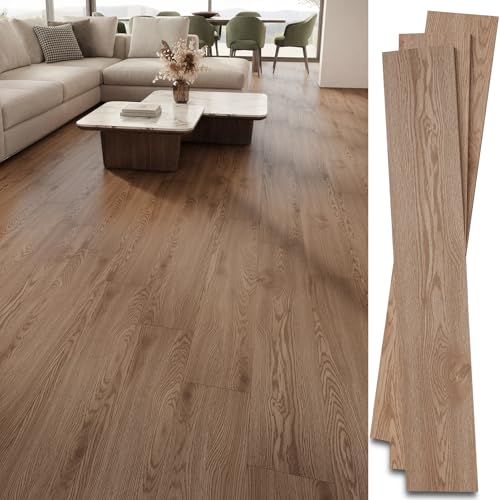
The waterproof vinyl that turns a tired bathroom floor into honey-oak timber in an afternoon.
If you have been staring at grey flooring you hate and you are not ready to rip anything out, this is the pick that stops the bleeding. Each plank is a 6-inch by 36-inch sheet with a self-adhesive back, and a 36-piece pack lays 54 sq.ft in total — roughly the footprint of a small bathroom or a galley kitchen. You clean, peel, and stick. No underlayment, no tools, no waiting for glue to cure.
The core is what separates it from a flimsy sticker floor. It is rigid and hard-cored, rated 100% waterproof, fireproof, and scratch-resistant, and the maker says it will not expand or warp even in tough conditions. That matters in a bathroom where steam and splashes are constant. One pack spread across an entire floor with no lifting at the edges and no odor is the pattern that keeps showing up in the feedback — which is why this one sits first. It also holds the steadiest rating on this list: 4.5+ stars across 270+ reviews.
waterproof peel stick
- Rigid, hard-cored vinyl rated 100% waterproof, fireproof, scratch- and abrasion-resistant — so splashes and dropped tools do not wreck the finish.
- 54 sq.ft from 36 planks at 6″ x 36″, enough to cover a compact room in one box.
- Goes on floors, walls, ceilings, or cabinets (with extra glue for vertical surfaces), so one pack dresses a whole room.
- No underlayment and no tools — clean, peel, stick, done.
adhesive limits
- The surface has to be clean, flat, and dry before you stick — bumps telegraph straight through.
- Vertical surfaces such as cabinet fronts or walls need extra glue, which is not in the box.
renter friendly: you want a rental-safe, waterproof timber look for a bathroom, kitchen, or basement without a single tool.
subfloor prep: the wall and cabinet use case, since that extra adhesive is a separate purchase.
2. Acacia Wood Interlocking Deck Tiles 9 PCS
Real hardwood slats that snap together over concrete and drain a rainstorm underneath.
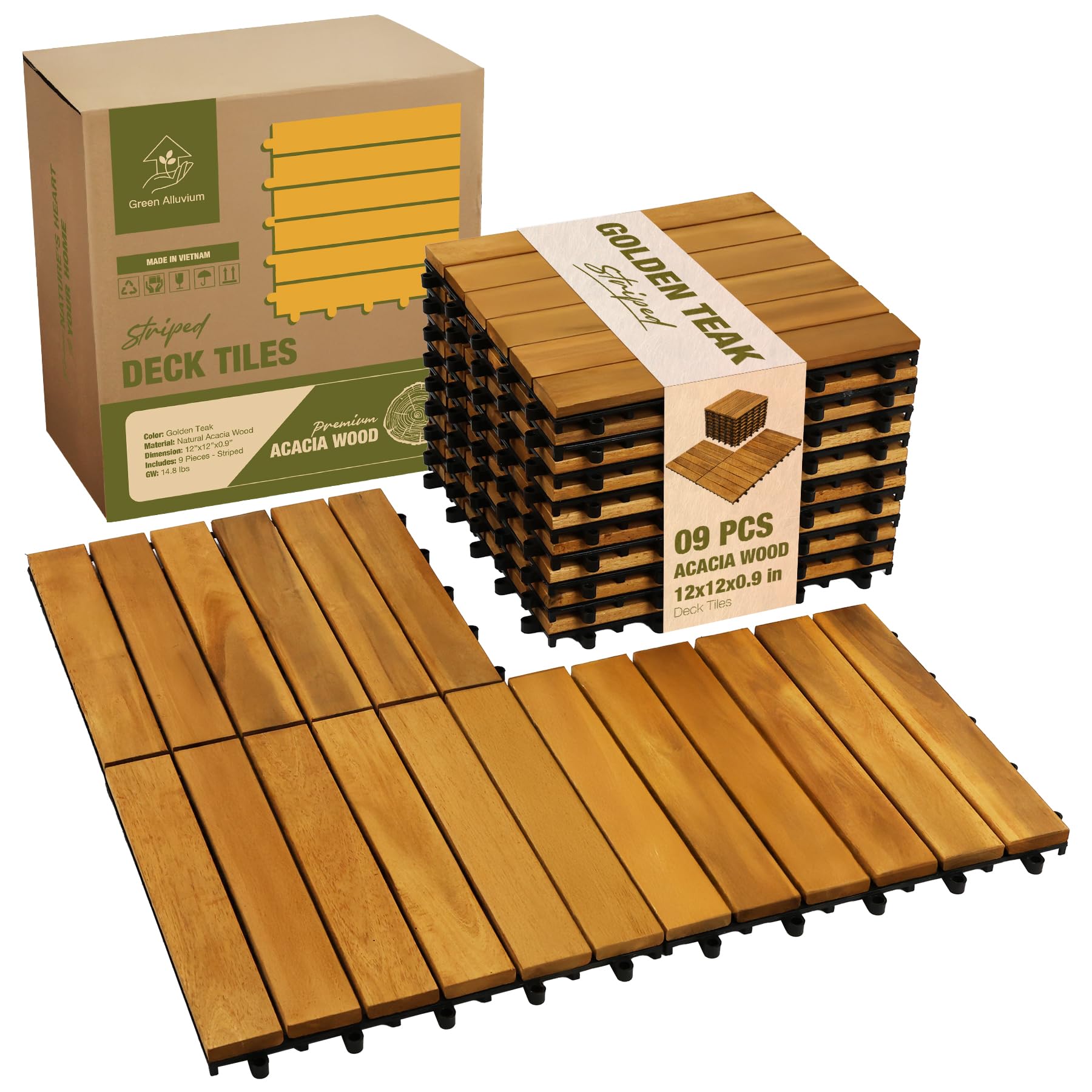
This is the only genuinely solid-wood option on the list, and that changes what it is good for. The slats are solid Vietnamese acacia, pre-finished in cured linseed oil — a natural plant-based wood finish — so you pull them from the box and set them down with no sealant and no wait. A raised base channels water underneath rather than trapping it, which is exactly what a patio, balcony, pool surround, or outdoor shower needs. Twelve-inch tiles lock together without nails or adhesive and pull apart just as easily for storage.
Reviewers consistently praise the acacia’s build quality and its deep-oil wood look. The deep-oil finish holds its rich wood tone through sun and rain, and 9 tiles cover about 9 Sq. Ft., so you buy in small increments and expand as you go. Where this differs sharply from the indoor vinyl picks is thickness: these run 0.9 inches vs the Art3d tiles’ 0.02 inches — a solid wood plank sitting well above the concrete, not a film pressed onto it. Each tile is 12 x 12 x 0.9 inches and trimmable with a wood saw for edges and corners.
acacia wood decking: the wet-area build. Water passes under the slats instead of sitting on them, so a rainy patio does not become a shallow pool, and the acacia holds up under foot traffic and standard patio furniture.
outdoor upkeep: buyers report mixed reactions on durability and value, though the looks get consistent praise. Cutting is the fiddly part — heavy-duty scissors or a garden shear works, but plan the edge pieces carefully because a smooth border can eat a full box.
patio upgrade: you have a balcony, patio, or pool deck that gets wet and you want wood, not plastic.
wet sealing: your project is an indoor floor — you would be paying solid-wood prices for something a vinyl plank handles for less.
3. Art3d Wood Textured Peel and Stick Vinyl Floor Tiles 40-Pack
A thin, cheap, wonderfully forgiving sheet that shines on cabinets and walls more than on floors.
Owners mention: “Self adhesive floor tiles the size of each piece is 36 x 6 inch. 40 pieces can cover 60 sq.ft.” That is generous coverage — 60 sq.ft from 40 pieces, against the Acacia tiles’ 9 Sq. Ft. from 9. If you are lining shelves, backing a wall, or wrapping a cabinet run, that math is hard to argue with. Each sheet is 0.02 inches thick, which means standard scissors cut it clean.
The surface itself is rigid and hard-cored, waterproof, fireproof, and wear-, scratch-, and abrasion-resistant, and it holds that shape without expanding. The maker also states that walls, ceilings, and cabinets need extra glue such as liquid nail. Do not skip that step — the factory backing alone is the weak point on vertical and hard surfaces, and weighting pieces down while they dry makes the bond permanent.
Here is the honest fork in the road. As a floor covering in a high-traffic room, this is the thinnest sheet here and it can lift at the edges without extra adhesive. As a cabinet liner or wall skin, it draws steady praise for being easy to cut, washable, and genuinely nice-looking. Pick your surface and this is a smart, budget-tier buy.
budget refresh: cabinet liners, garage counters, and wall panels where a thin, washable, easy-to-cut sheet saves real money.
heavy traffic: you are flooring a busy hallway and want a rigid plank that stays locked down on its own.
4. NewTechWood UltraShield Naturale Composite Deck Tiles

Wood-fiber composite squares that shrug off fading, cracking, and a soaking pool deck.
Where the acacia tiles are real timber, these are engineered: high-density polyethylene plastic mixed with wood fibers and wrapped in a polymer coating. That coating is the whole point. It resists fading, cracking, and bending, and it is rated waterproof for both indoor and outdoor use, from pool surrounds to outdoor kitchens. Each box holds 10 pieces at 1 sq. ft. each for 10 sq. ft. of coverage, and the boards run 0.88 inches thick.
The 4-way interlocking design lets you align and snap tiles in any arrangement, then lift and rearrange them for events. A raised base lets water drain and cuts down on pooling, which the maker links to slip risk and surface damage. Cleaning is a wipe or a rinse, plus a household cleaner a few times a year. Reviewers praise the composite build first and the install second — tiles snap together tool-free and lock tight on all four sides.
The recurring gripe is cost, and there is a real constraint to note: these tiles only work with other NewTechWood deck tiles. So the interlocking system is closed. If you want a unified look at scale, that is a feature. If you planned to mix brands, it is not. One practical note from owners: boards come out for cutting, so edges are easier than they look.
composite durability: fade, crack, and bend resistance from the polymer coating — a deck tile designed to sit in sun and water season after season rather than a season.
premium price: a closed interlocking system plus premium-tier pricing means you commit to the brand’s whole tile line, not just this box.
long term deck: pool surrounds, outdoor kitchens, and event spaces where you set up, tear down, and reset the floor often.
tight budget: you want to blend tiles from different makers — the interlocking only mates with NewTechWood.
5. Happygrill Interlocking Wood Grain EVA Foam Floor Tiles 25 PCS
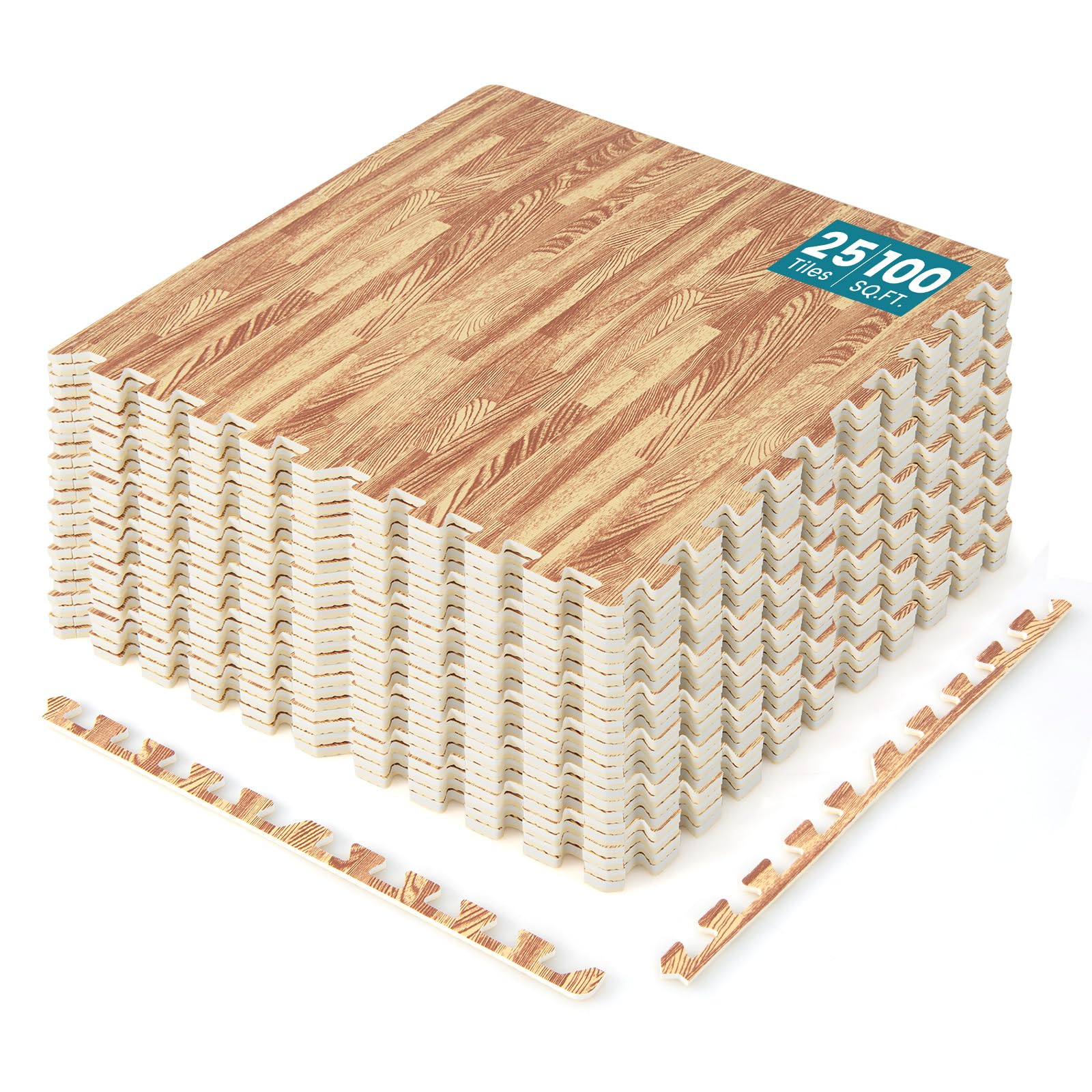
A hundred square feet of wood-look foam that makes a concrete basement feel like a room.
At 0.4 inches thick, this is the deepest cushion on the list, and it is built for standing and playing rather than mopping. A 25-piece set covers 100 square feet, and you get 50 border pieces so the edge finishes clean against a wall. Each tile is 24″ L x 24″ W. The EVA foam — a dense rubbery material that absorbs impact — delivers shock absorption, noise reduction, and floor protection. The dual-sided anti-slip surface keeps footing secure during exercises or games.
Reviewers single out durability: the foam holds its shape through daily workouts and repeated wipe-downs. The foam also carries no odor and wipes clean easily, so a kid’s play space or a long-standing trade-show booth stays presentable. The wood-grain finish is the sleeper feature — it turns a drab storage room into a space guests actually walk into.
Be honest about the pattern. The interlocking layout has a fixed orientation, and the edge pieces only pattern-match where the manufacturer placed them, so a perfectly continuous grain is not guaranteed. And if the room sees heavy daily traffic, a thicker option may wear longer. For a gym, playroom, or temporary floor, the comfort wins hands down.
play areas: home gyms, playrooms, basements, and rental rooms where no glue or tacks can touch the floor.
furniture dents: the fixed-direction pattern means border pieces will not always line up grain-perfectly.
6. SULSUMIC Peel and Stick Vinyl Flooring 36 Pack
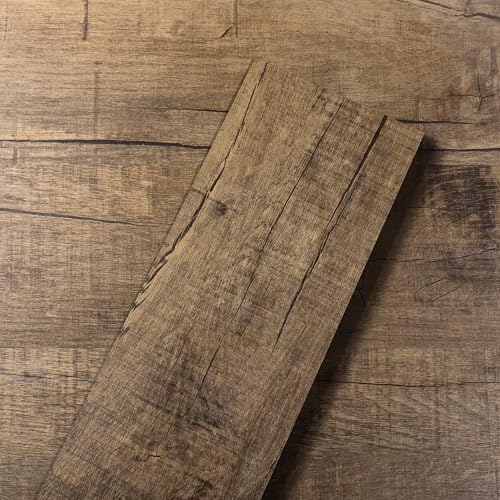
The forgiving plank that hides an ugly subfloor and warms a room in a weekend.
Each box holds 36 planks at 6″ x 36″ for 54 sq. ft. coverage, and the one number to digest is 1.5 mm of thickness. That is enough body to cover small dips and imperfections in the subfloor rather than molding to them. The surface is genuinely waterproof, heat-resistant, and wear-proof, and it handles liquid spills, hot items, and pet scratches. The maker lists tile, wood, marble, terrazzo, and concrete as compatible subfloors, provided the surface is clean, dry, and level.
Reviewers rank the plank’s material quality first and its easy peel-and-stick install second. The pressure-sensitive adhesive bonds harder with each step, so the floor locks up over the first week of use. The visual result reads as real wood — a bathroom redo looks like timber rather than vinyl — and the planks cut cleanly with a utility knife, which makes a beginner feel capable.
One planning tip that shows up in feedback: butt only factory edges on the long side, reuse your row-end cuts to stagger the seams, and you waste far less of the box. Fit edges and corners tight before pressing down, because once that adhesive grabs, repositioning is a chore. Skip the extra glue and the floor still holds.
wide coverage: you are redoing a whole room on a budget and want a forgiving 1.5 mm peel-and-stick plank.
uneven floors: a careful layout — the adhesive grips fast, so plan your cuts and seams before you peel.
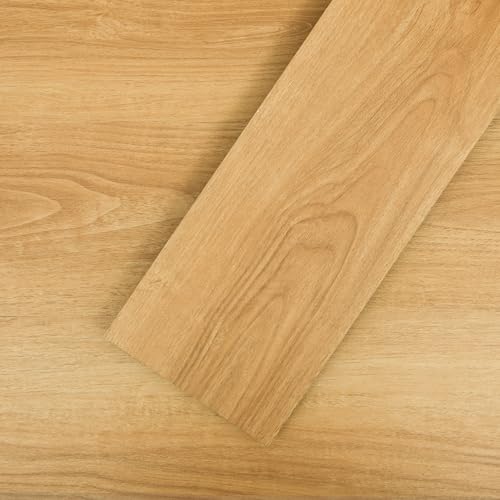
7. MULGREAT 36-Pack Peel and Stick Floor Tile Warm Oak
Deep embossed grain you can feel underfoot, for a fraction of the price of solid timber.
Warm Oak is the color, and the texture is the point. The surface is deep embossed with a low-glaze printing film that takes the look of real wood — not a flat printed picture. Each plank measures 6 inch x 36 inch and 1.5 mm thick, and a 36-plank box covers 54 square feet. The wear layer is cut for scratch and abrasion resistance under foot traffic, so it stands up to scuffing and daily walking.
Adhesion is the engine. A rigid hard core and strong self-adhesive backing hold the planks flat and stable, and the maker rates the surface water-resistant, so a busy kitchen can survive a spill wipe-down. It cuts and lays easily and cleans up without much fuss — the planner in a family kitchen notices that after a month. Where the matching planks win out over a thin sheet is in the core stability: it holds the surface flat over modest bumps.
One honest boundary: heavy appliances and furniture dragged across these planks can scratch them, so slide pads or a helping hand for moves matter. Treat the floor as a durable cosmetic surface and it rewards you. Treat it like real hardwood and it will show you the difference.
quick install: a kitchen or dining refresh where you want wood grain with texture, not a printed film.
moisture spots: moving heavy furniture without lifting it — slide protection keeps the wear layer intact.
8. Mysflosy Vinyl Plank Flooring 36-Pack

Blonde oak planks whose adhesive actually gets stronger the more you walk on them.
The color is the hook: American Oak’s honey hue and realistic knots carry bright warmth through a sunroom or studio, and the planks resist heat, water, and daily wear. A quality edge means it looks like real blonde oak and, by all accounts, the grain holds with no obvious pattern repeat across a room. Each plank runs 6” x 36” at 1.5 mm / 0.06″ thick, and 36 planks cover 54 Sq.Ft / 5 ㎡.
What seals it is the pressure-sensitive adhesive. It gets stronger as it is walked on and adapts to tiled, wooden, terrazzo, marble, and concrete surfaces. Install is DIY-friendly, and it can even go over existing flooring if the surface is prepped. Prep and acclimation are the two steps worth taking seriously — a roller helps but is not strictly needed. Where the quality is genuinely good, durability feedback splits: sturdy under normal use, but a few buyers find it breaks more easily than expected under hard impact.
self adhesive planks
- Pressure-sensitive adhesive strengthens with foot traffic — the floor bonds tighter over time.
- American Oak honey finish with realistic grain reads as genuine wood in person.
- 54 Sq.Ft coverage from 36 planks at 1.5 mm thick — enough for a full small room.
- Installs over tile, wood, terrazzo, marble, and concrete with no nails.
peel strength
- Durability feedback is split: fine under normal traffic, but a few report it breaks more easily under hard impact.
- Surface prep and acclimation are non-negotiable for the adhesive to hold.
diy friendly: sunrooms, studios, and bedrooms where the blonde oak tone does the decorating for you.
high humidity: a floor that takes heavy impact — a workshop or play room — may want the thicker, more impact-tolerant plank instead.
9. Sorbus Interlocking Wood Grain Foam Floor Tiles 36 Pack
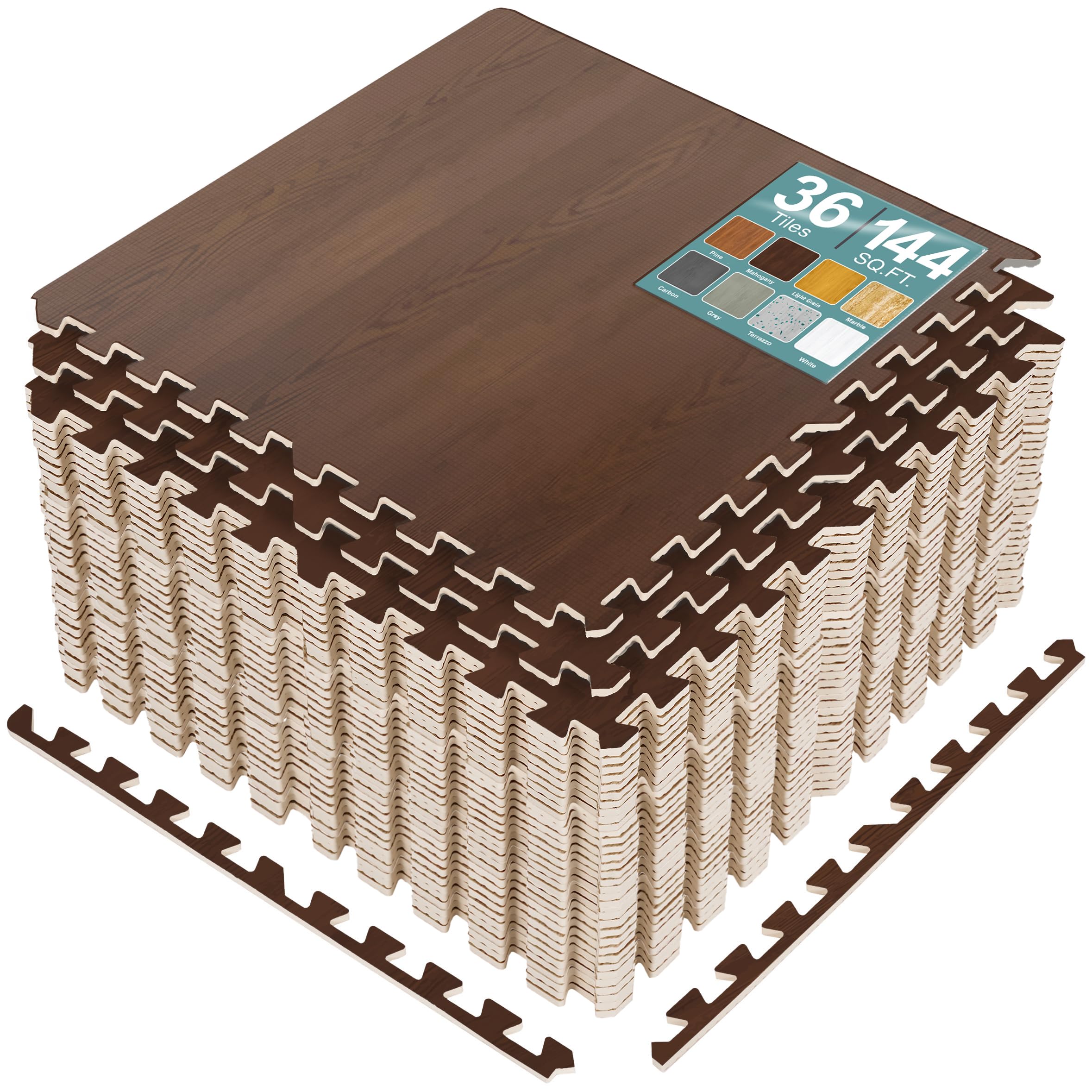
Thirty-six faux-wood squares that cushion a cold concrete floor across 144 square feet.
You get the biggest coverage set on the list: each tile measures approximately 24″ L x 24″ W, and the 36-piece set covers 144 Sq ft — versus the 54 sq.ft you get from a standard plank box. That is enough to wrap a laundry room, a dorm, or a full exercise room wall to wall. The foam is 0.38 inches thick, and the mahogany wood-grain finish gives a room that finished look without a single nail.
The interlocking base is jigsaw-style, and edge pieces are detachable, so any tile can be a corner, a border, or a center piece. It can be expanded with more tiles as your space grows, and you can install in specific zones or across the whole floor. It works as an anti-fatigue mat underfoot for long standing, which is why it shows up in trade shows and offices as well as homes.
Reviewers praise the foam’s build and its look — the mahogany grain reads as real tile and the detachable edge pieces finish seams cleanly. The cushioning earns its keep on hard concrete studio floors, and cleanup is a damp cloth. The trade-off is softness itself: foam is not a wood plank, so a chair leg or heavy dropped tool will dent it.
gym corners: you need the floor of a large room covered in one order and you want comfort over rigid plank.
pets claws: foam dents under sharp heavy loads, so keep pointed furniture feet off it.
Know the Specs
Coverage in square feet
Every floor covering here is sold by how much area a pack covers, and that number is the single biggest way to waste money or make a second trip. A 36-plank box typically lays about 54 square feet, while a 25-piece foam set can reach 100 square feet and a 36-piece foam set 144. Measure your room’s length times width and add a little for cutting waste on corners and edges, then divide by the coverage figure on the box.
Thickness and what it hides
Thickness is measured in inches or millimeters, and it decides how well a floor covers imperfections and how it feels underfoot. Thin vinyl sheets press straight onto bumps and grout lines; thicker planks with a hard core smooth them over. Foam options run from 0.38 to 0.4 inches for cushion. A 1.5 mm plank covers more bumps than a very thin sheet, and a solid wood tile sits 0.9 inches high for drainage.
Install method and surface fit
Peel-and-stick planks rely on a pressure-sensitive adhesive that bonds harder with pressure and needs a clean, dry, flat surface. Interlocking tiles click into a base and pull apart again with no adhesive. Both need careful prep, but only the adhesive version cares what the subfloor is made of — tile, wood, marble, terrazzo, and concrete all work if they are prepped. Foam uses a jigsaw connection with detachable edges.
Waterproof rating and wet areas
A 100% waterproof rating means spills and splashes will not swell or warp the surface. But for a patio, balcony, or shower floor, you also need a drainage path. That is why outdoor deck tiles use a raised base with channels to let water pass underneath, whereas a flat vinyl sheet traps water and needs a sealed, dry climate instead. Match the waterproof claim to the real moisture your floor sees.
Common Questions
Can peel and stick wood floor coverings go over old tile or linoleum?
How do I calculate how many boxes of planks I need?
Will a wood-look vinyl floor survive a bathroom?
What is the difference between peel and stick and interlocking tiles?
Can foam wood-grain tiles be used on a concrete basement floor?
Do deck tiles need sealant or special prep before use?
Which wood floor covering hides an uneven subfloor best?
Are wood floor coverings removable if I rent?
Can I use wood floor coverings on a wall or cabinet front?
How do I clean wood-look vinyl or foam floor coverings?
The Bottom Line
For most rooms, the wood floor coverings pick is the INMOZATA 36 Pack Peel and Stick Floor Tile: it is waterproof, scratch-resistant, and lays 54 sq.ft of honey-oak vinyl with no tools or underlayment. If your project is outside and gets wet, the Acacia Wood Interlocking Deck Tiles give you solid hardwood slats that drain underneath and install with no sealant. And for cushioning a whole basement or playroom, the Sorbus Interlocking Foam Tiles cover 144 sq ft and snap together without a single nail.
How we choose
We do not accept paid placement. Every pick is matched to a real buyer and a real use-case; we do not hands-on test units.
Sources
Specifications: manufacturer listings and product documentation. Review insights: verified customer reviews, as of October 2026. Pricing: not shown on this page (it changes often); check the current price via the retailer link.
As an Amazon Associate, Home Digitized earns from qualifying purchases. This does not affect which products we feature.