
Specs are compiled from manufacturer listings and verified buyer reviews and can change over time — please confirm the key details on the product page before buying.
Cold feet ruin a whole walk, and the wrong boot turns a snowy pavement into a skating rink. What actually matters here is simple: a boot that stays dry, holds warmth on a long slow stroll, and grips packed snow without turning your ankle. Everything else is decoration. This guide covers nine women’s winter walking boots that do those three jobs properly, and tells you plainly which ones suit a city pavement, a snowy trail, or a deep-freeze commute.
This guide is built by comparing the manufacturers’ published specifications and the patterns across verified customer reviews, so you get each pick’s real strengths and trade-offs instead of marketing spin.
You will see how insulation ratings, waterproof membranes, and outsole grip compare across the shortlist, plus which boots run narrow or small before you order. Keep reading for a straight breakdown of the womens winter walking boots that hold up on ice, slush, and long cold walks.
Top Picks
How To Choose The Best Womens Winter Walking Boots
A winter walking boot has to do three jobs at once: keep water out, hold heat in, and grip a surface that wants to slide you over. Most buyers get one of those right and lose the other two. The order you should shop in is grip first, waterproofing second, warmth third — because a cold foot is uncomfortable, but a slipping foot is a fall.
Waterproof membrane versus water resistance
A waterproof membrane is a thin layer inside the boot that blocks liquid water but lets sweat vapour pass out — that is what KEEN.DRY and similar branded linings do. Water resistance is a weaker promise: the outer material sheds light rain but can soak through in a deep puddle. For a daily winter walk on wet pavements, look for the word waterproof in the listing, then make sure the seams are sealed too.
Insulation weight in grams
Insulation is measured in grams, and the number tells you how much fill sits between your foot and the cold air. A boot listed with 200g of insulation is set up for genuine freezing weather; a lightly lined boot is fine for damp autumn walks. Some listings also carry a temperature rating in degrees, which is the maker’s claim for the coldest air the boot is built for — treat it as a ceiling to stay well inside, not a target.
Outsole grip and lug pattern
Grip comes from the rubber compound and the lugs — the raised blocks under the sole. Multi-directional lugs point in several directions so you get bite when you push off and when you brake. A soft, sticky compound holds packed ice better than a hard one, which is why cold-weather soles are often formulated differently from summer hikers.
Shaft height and ankle support
A mid-height boot covers the ankle and gives you sideways stability on uneven slush and snow banks. A higher shaft adds warmth and keeps snow out when you step deep, but it can press on short calves. If you want one boot for both pavement and trail, mid-height is the safer middle ground.
Side-by-Side Comparison
| Model | Best For | Insulation | Waterproofing | Weight | Amazon |
|---|---|---|---|---|---|
| KEEN Women’s Revel III★ Best Overall | All-round winter walking | KEEN.Warm plus tri-layer underfoot | KEEN.DRY waterproof membrane | 1 lb (listed) | Amazon |
| ANJOUFEMME Winter Snow BootsStyle Champion | Stylish everyday warmth | Fur lined | Waterproof | — | Amazon |
| HOBIBEAR Winter BootsWarmest for Less | Budget cold-weather daily wear | 200g, rated -25 degrees | Water-resistant upper | — | Amazon |
| PROJECT CLOUD Waterproof Snow Boots | Short city outings | Insulating properties (no figure listed) | Waterproof | 1 lb (listed) | Amazon |
| Columbia Newton Ridge Omni-Heat II | Walking and light trails | Omni-Heat reflective lining | Waterproof | — | Amazon |
| SOREL Out N About IV Chillz | Long walks and travel | Insulated (no figure listed) | Waterproof | 3.38 lb (listed) | Amazon |
| Columbia Bugaboot III | Deep cold and snow | 200g insulation | Waterproof, seam-sealed | 1.44 lb (listed) | Amazon |
| The North Face Thermoball Progressive Zip II | Easy on-and-off city wear | ThermoBall insulation | Waterproof | — | Amazon |
| KEEN Revel 4 Mid Polar | Ice, snow, and hard winter | 200g rated to -25°F | KEEN.DRY waterproof membrane | 20.32 oz / 576g | Amazon |
Detailed Reviews
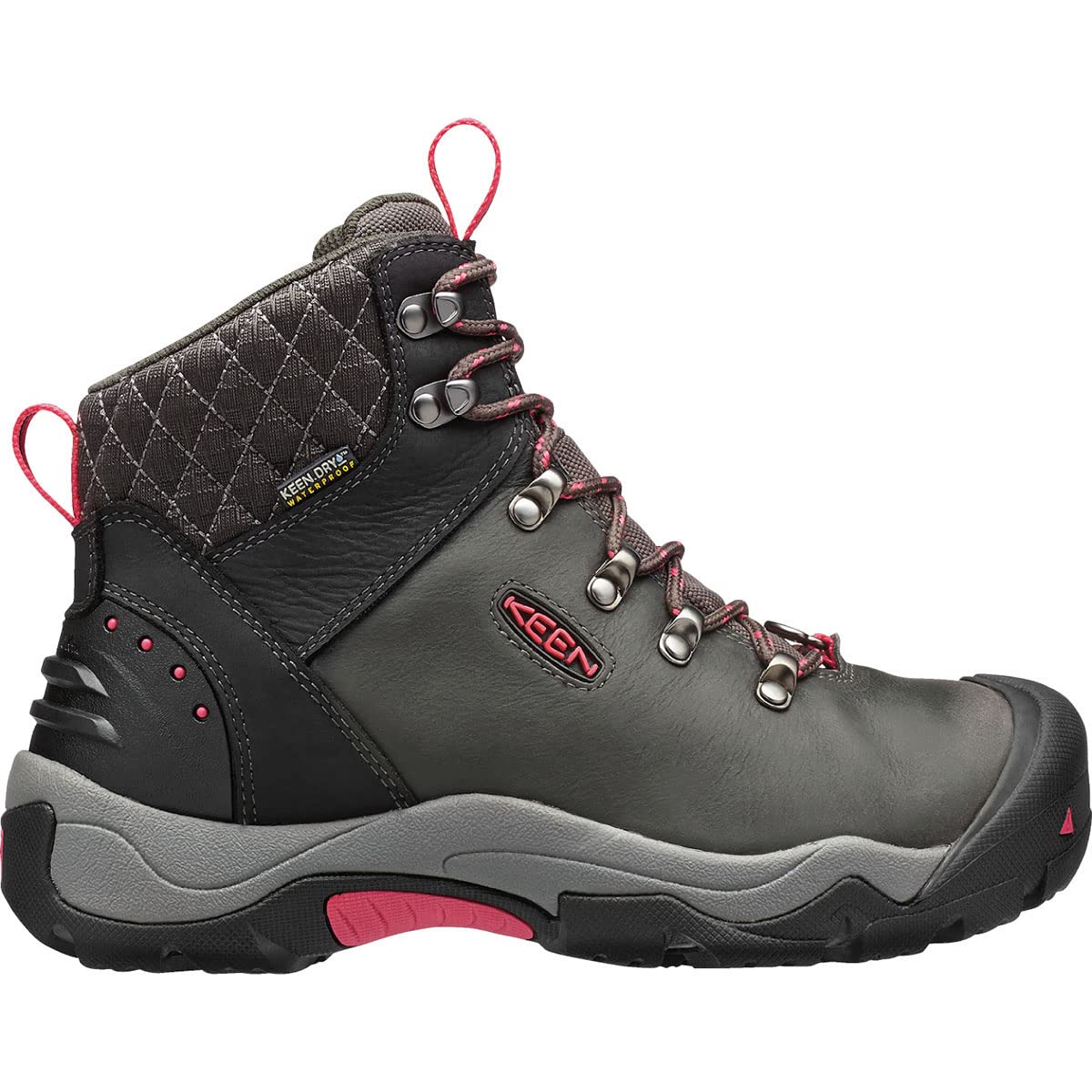
1. KEEN Women’s Revel III Cold Weather Hiking Boot
Our pick — 4.5+★ from 850+ verified ratings; the strongest balance of quality and price.
Nubuck leather outside, two kinds of insulation inside, and a sole built to hold snow and ice.
The Revel III is the pick that covers the widest range of winter walks, because KEEN stacks the warm layers rather than relying on one. The upper is nubuck leather — a lightly sanded leather that shrugs off scuffs — and it wraps a KEEN.DRY membrane, a waterproof layer that blocks slush but still lets sweat escape so your socks stay dry on a long march. Up top you get KEEN.Warm insulation, and underfoot a tri-layer heat trapolator system traps warmth where your foot loses it fastest.
The thing that wins people over is fit. A generous forefoot gives your toes room to spread, and that room is exactly why the boot stays comfortable over miles rather than clamping down after ten minutes. Buyers report dry feet through wet Wisconsin winter and spring weather, standing water included. The dual-compound snow and ice outsole then handles the ground under you, with a softer compound that bites instead of skidding.
The honest catch is the dead weight. KEEN lists this boot at 1 pound, and the leather build and underfoot heat layers mean it feels like a proper hiking boot rather than a squishy snow boot. That structure is what gives you the ankle support and grip, so it is a fair bargain — just do not expect to slide it on like a slipper. Break-in is gentle, and it runs close to true to size, though anyone planning thick wool socks should go up half a size.
Where it earns its keep
- KEEN.DRY waterproof membrane with breathable nubuck leather upper
- Layered underfoot heat trapping keeps chill off the sole
- Generous forefoot room for toes to spread on long walks
- Dual-compound snow and ice outsole for packed-snow grip
The honest trade-off
- At 1 pound listed, it carries real heft compared with light snow boots
- Leather needs a soft brush and occasional care to stay looking good
Reach for this if: you want one boot for pavement, park path, and snowy trail, and you value a roomy toe box over feather weight.
Look elsewhere if: you want a quick slip-on for the school run — the laced leather build takes a moment longer.
2. ANJOUFEMME Winter Snow Boots
A fur-lined boot styled enough that strangers stop owners to ask where it came from.
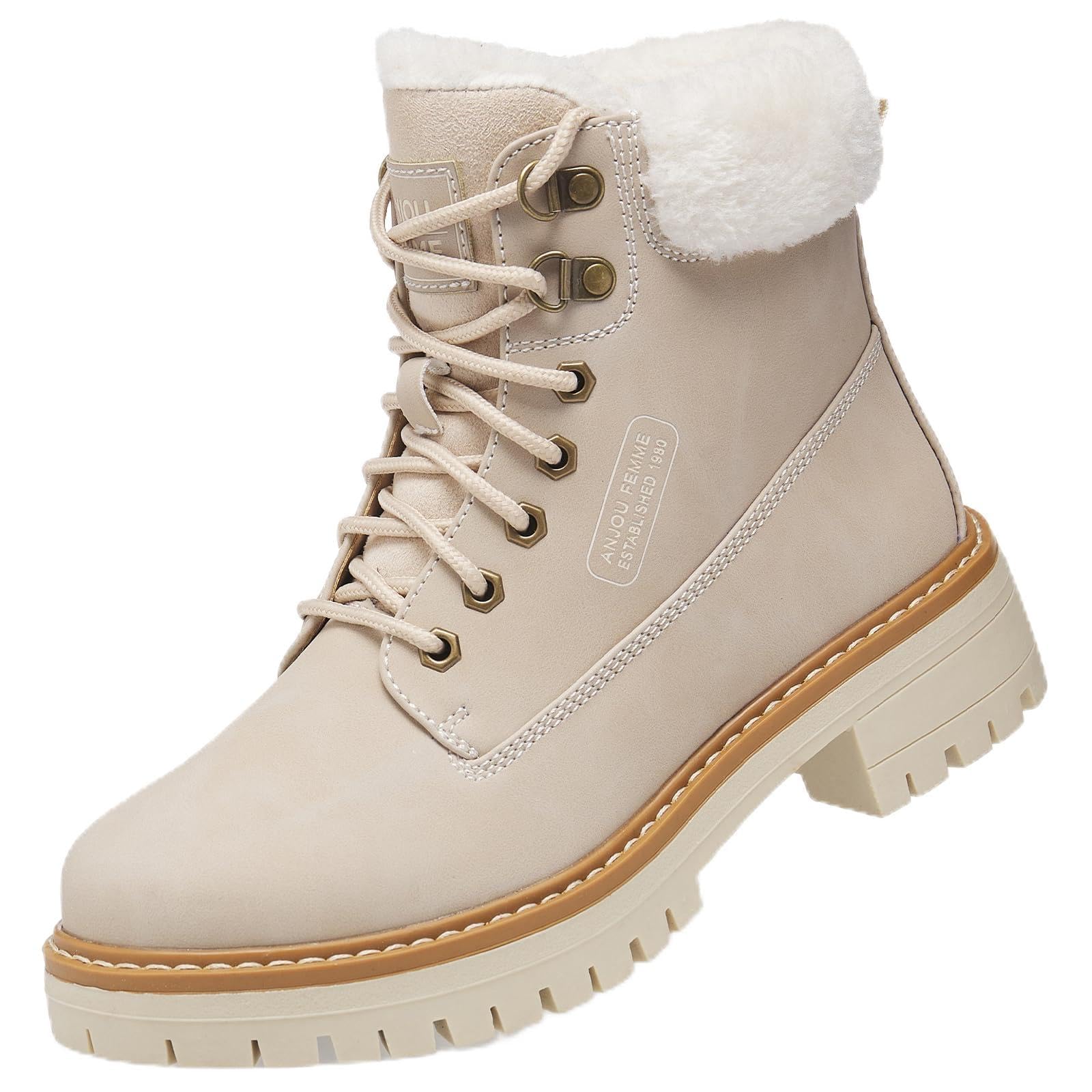
Appearance is what this boot trades on, and it delivers — a fur-lined winter boot that reads as a styled city shoe rather than a lump of technical gear. The lining is the practical half of that story: a soft fur interior that holds warmth against your foot, so a winter walk with a thick sock stays comfortable even when you are standing about. The listing calls it waterproof, and owners mention it holds up in real snow rather than just looking the part.
One thing to know before you order: the colours read darker in person than the photos suggest, so a black pair can arrive looking closer to charcoal. Fit is the split point. A good number of owners describe a snug, slightly narrow cut — some find their normal size perfectly fine, others want a half size up or a thin sock. One buyer sized up to 10 from 9.5 and stayed warm and dry through a Minnesota winter, and also praised how the boot looks.
Build quality is decent rather than spectacular — a pair used for a couple of weeks reads as sturdy but not yet proven over seasons. Toe tips feel firm without a cushioned sock underneath, so pair it with wool and you get the warmth the fur lining promises. It is the boot for someone who wants winter warmth without looking like they raided a mountaineering kit bag.
What it sells on: a fur-lined, waterproof winter boot that looks styled in the city and still holds warmth on a long cold walk.
Ordering note: colours run darker than shown and several owners want a half size up — try both if your normal size feels snug on arrival.
Worth it for: anyone who walks to work or the shops and wants warmth plus a bit of style.
Skip if: you need a boot proven over multiple winters — this one is comfortable but its long-term durability is not yet established.
3. HOBIBEAR Womens Winter Boots
Faux fur collar, fleece-lined insides, and a warm fill rated for deep winter.
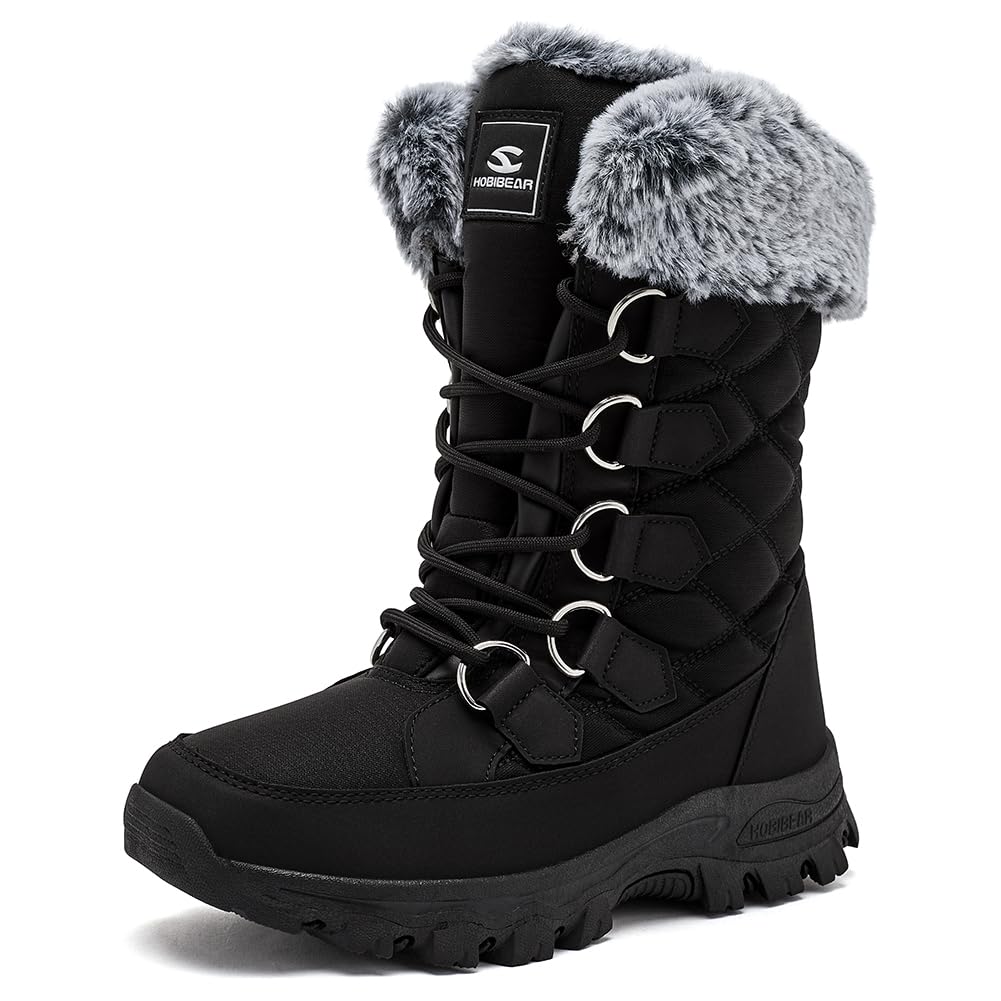
Here is a budget boot that punches well above its price on warmth. HOBIBEAR uses a water-resistant upper that the listing describes as umbrella-like fabric, paired with a faux fur snow collar that keeps the cold off your ankle. Inside, the boot holds 200g of insulation with a temperature rating to -25 degrees — the same healthy fill figure you would expect from boots costing far more. The lace-up design lets you cinch it tight for shovelling the drive and loosen it for a daily walk.
The cut is forgiving and comfortably soft, with the fur lining running through the whole inside rather than just the cuff. Owners tend to say it runs slightly large, so a thick sock fits without a fight, and one wearer only needed a thin sock while brushing heavy snow off a car. What is worth appreciating is the easy on-and-off — you can slide in, tighten the laces, and go, which matters on a busy cold morning. The softness of the lining is what earns the most remarks; these are the boots you look forward to reaching for.
The trade-off is a slightly stiff ankle that resists flexing at first, and owners say it loosens up after break-in. The sole is not deeply cushioned either, so an insert helps if you walk a lot. Salt should be wiped off after each wear to keep the upper looking sharp. Still, this is the sensible budget choice if warmth is the first thing you want and the word “technical” puts you off.
Why budget buyers cheer
- 200g of insulation with a -25 degree rating for the money
- Faux fur lining through the entire inside, not just the collar
- Easy lace-up cinch for shovelling or a relaxed walk
- Runs a touch large, so thick socks fit easily
What you might notice
- Ankle flexibility is limited until the boot breaks in
- Sole cushioning is thinner than the warm lining suggests — an insert helps
Your pick if: you want real winter warmth on a budget and do not mind wiping the salt off.
Think twice if: you plan miles of walking daily — the softer sole is built for errands and slow strolls.
4. PROJECT CLOUD Waterproof Snow Boots
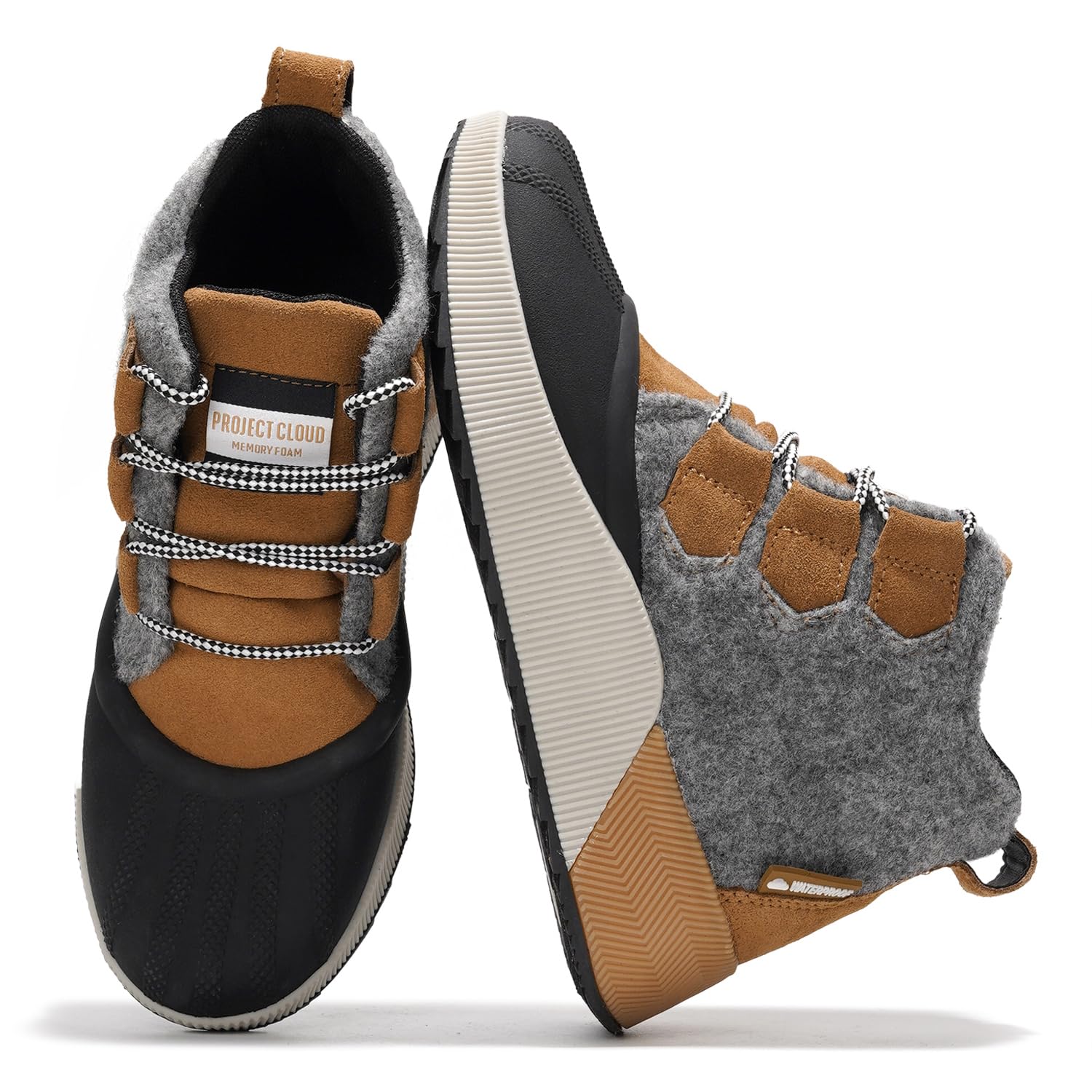
A laced duck boot with a memory foam insole, made for short trips in cold wet weather.
The PROJECT CLOUD boot is built around comfort on arrival rather than on the trail. The memory foam insole — a cushioning layer that slowly shapes to your foot — makes the first few steps feel soft, and the waterproof lace-up design handles slush on the pavement. A non-slip outsole is designed to grip wet and dry ground. Weighing in at 1 pound listed, it feels light on the foot for a boot of this shape.
Where it needs a warning is long distances. Owners who wore it on multi-mile city walks found the toe box pressed on the pinky toes and the heel lacked support, so this is a boot for the commute and errands, not for a full day of hiking. Sizing also runs small — customers note being a 7.5 normally and needing an 8.5 with heavy socks. Over a couple of months, some owners saw the rubber bottom lining crack and the sole start to wear, so treat it as a budget boot that will serve a season or two rather than a years-long investment.
The upside: the toe is held fully waterproof, the boot looks good with winter layers, and the light weight makes it easy to wear for a quick outing. If your winter walking is mostly from the car to the shop door and back, the cushioning and the price make it a reasonable bet.
Best for short trips: a light, laced boot with a soft memory foam insole and a waterproof toe for snowy commutes.
Where it struggles: long city walks and multi-winter durability — it is a one-pair-per-season boot, not a lifetime one.
Fits the bill: for drivers and commuters who want warmth and a waterproof toe on a light budget boot.
Not for: anyone planning long walks on foot — the heel support and toe box width come up short over the miles.
5. Columbia Newton Ridge Waterproof Omni-Heat II
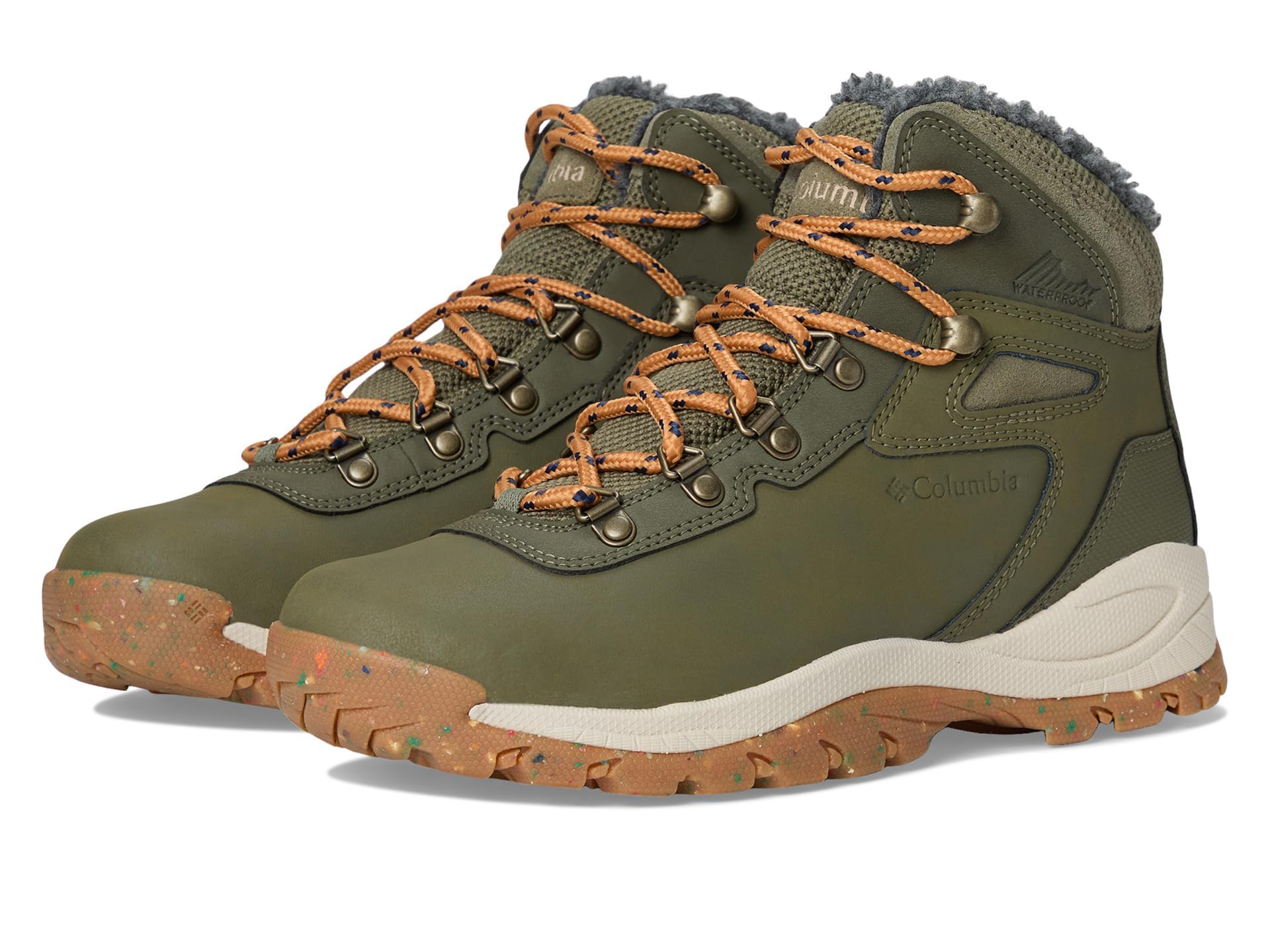
A reflective heat lining that turns your own body warmth back onto your toes.
The Omni-Heat lining is the headline here. It is a heat-reflective material that bounces your body heat back into the boot, so thin socks can stay warm where a padded snow boot would need thick wool to do the same. Add a waterproof build and a sole with good support, and you get a boot that walks on paved roads and gravel with cheer. Owners tend to describe it as working equally well on cement and tile as on a trail, which is a rare compliment for a winter boot.
It is also lighter than you might expect for a lined hiking boot — owners keep calling that out. It runs true to size, and one buyer found extra room in the toe without the boot binding, so thick socks fit nicely. The faux shearling at the top adds a soft edge against your ankle, and it comes with spare laces. Reviewers point out dry, warm feet through Michigan snow, with traction holding on gravel and light snow.
There is a break-in cost. A crease that forms over the toes can dig in while you walk, which a few owners hit across different sizes. Some wide feet needed a half size up, and the fit took a few weeks to soften. The colour range is also narrow. For a boot that does walking and light trails through winter, it is a strong middle-ground pick — just budget a short settling-in period.
What makes it a walker
- Heat-reflective Omni-Heat lining keeps feet warm with thin socks
- Waterproof build that stays dry in snow and cold
- Light on the foot for an insulated hiking boot
- True-to-size fit with room for thick socks
The settling-in cost
- A crease over the toes can press on some feet before break-in
- Wide feet may want a half size up
- Limited colour choices
Go for it if: you want one boot for everyday walking with a bit of trail ready for cold weather.
Bear in mind: a few weeks of break-in are needed before the crease stops pressing.
6. SOREL Women’s Out N About lV Chillz Waterproof Boot
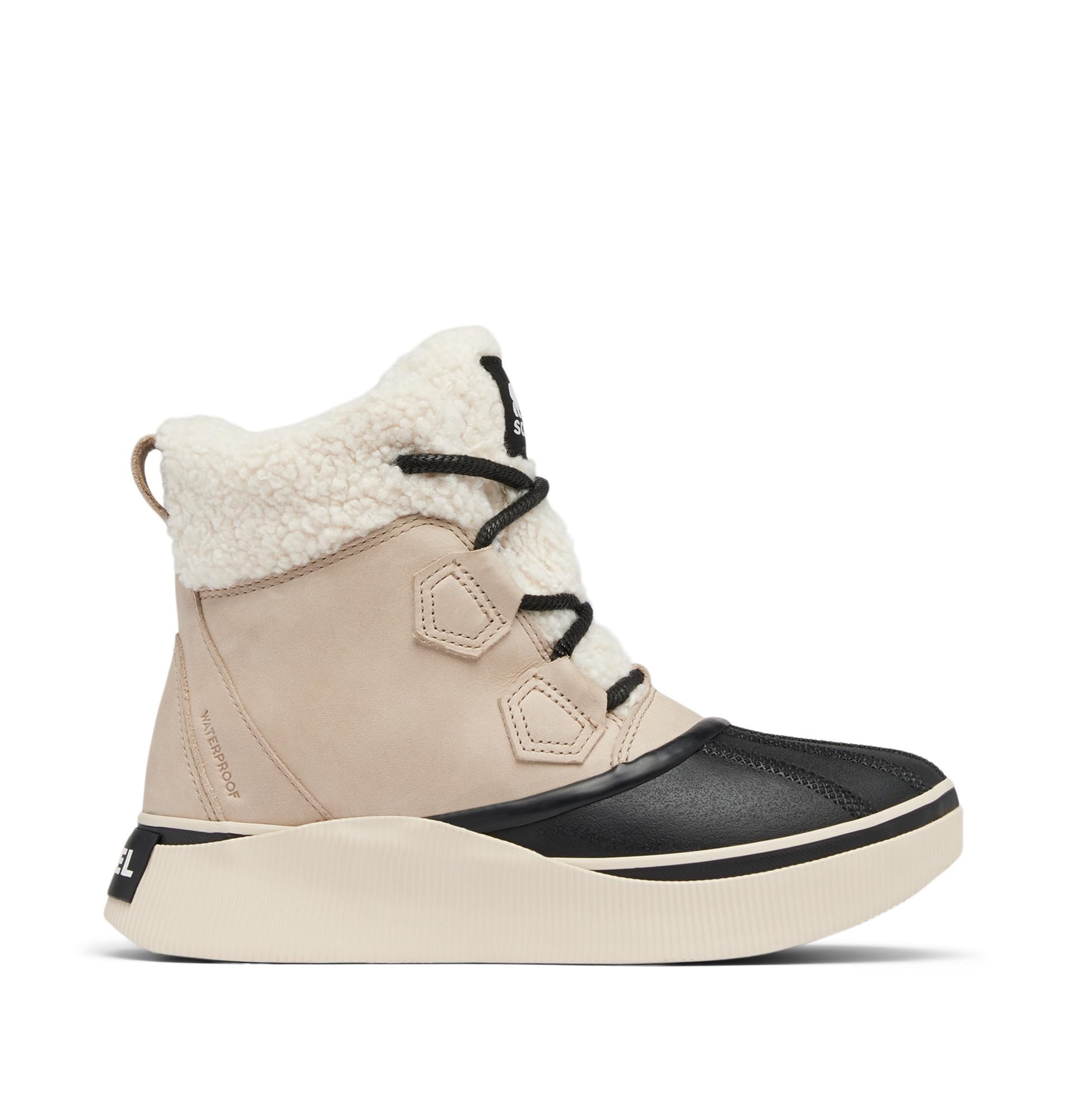
The boot you wear all day and forget you have on.
Comfort is the whole point of the Out N About IV Chillz, and it earns that reputation on long walks. A rubber toe cap guards the front against slush and scuffs, the shaft rises above the ankle to keep snow out, and adjustable laces let you dial the fit to your sock thickness. One owner logged roughly 30 miles through Seattle and Vancouver mud, sand, and wet terrain with warm, dry, pain-free feet. That is the sort of run this boot is built for.
There is a lighter feel than its listed heft suggests. Unusually, the specification lists a package weight of 3.38 pounds, yet owners describe it as lightweight and comfortable, and the boot moves easily on a long walk. Waterproofing holds up in rain and snow alike. What wins people over is the sheer wearability — the kind of boot you do not think about after the first mile.
Sizing is the catch. A lot of owners go up half a size or a full size for thick socks, and a few say it runs small even with a narrow foot. Order with that in mind and the boot rewards you. Durability opinions split — many report it lasting years, while a few had problems early — so treat it as a long-lived boot that still wants reasonable care.
The all-day argument: a waterproof, above-ankle walking boot with a rubber toe and adjustable laces, comfortable enough for real travel days.
Size-up reality: owners consistently want a half or full size up for thick socks — order accordingly and you get the comfort these are known for.
Top choice for: long days on foot in wet cold weather, from city breaks to muddy trails.
Better elsewhere if: you want a boot that needs no thought about sizing — this one rewards ordering up.
7. Columbia Bugaboot III
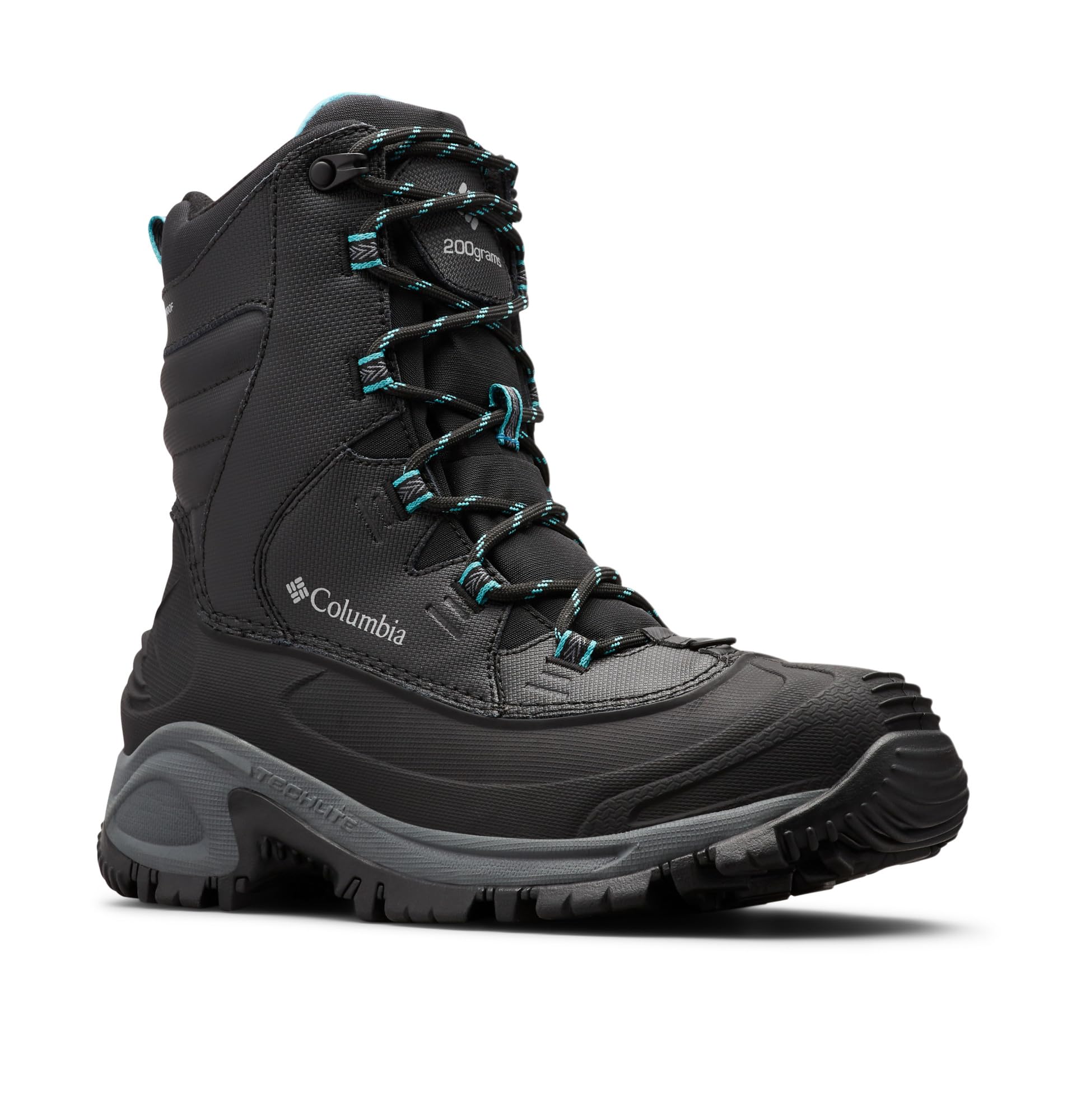
Built for a full winter workday standing in snow, not just the walk there.
The Bugaboot III brings a thermal-reflective lining, 200g of insulation, and a seam-sealed waterproof PU shell together in one boot. The shell is the feature that matters most if you stand around in slush: an injection-moulded rubber lower that keeps water out where ordinary leather would soak. A wide toe box lets your foot spread naturally, which owners call out as the reason toes stay warm and uncrowded, and the deep lugs hold traction in snow.
Weighing 1.44 pounds listed, it carries some heft — but owners are split on whether that reads as bulky or fine, which tells you it is on the beefy side rather than featherlight. What is clear is the support: an excellent arch support and a curved sole make long winter walks comfortable. Shoppers say warm, dry feet through constant snow with no break-in stiffness. One owner wore it for a snowmaking job, with the 200g insulation keeping feet warm on the move.
The caveats: the outer material starts stiff and needs a wear or two to soften. Some find the boot too warm once the temperature climbs above 20°F, and one wearer noted the soles protrude enough to make fitting snow cleats awkward. Laces can want double-knotting. For deep cold and standing snow, it is one of the sturdiest choices on this list.
Why it handles deep cold
- 200g of insulation plus thermal-reflective lining
- Seam-sealed waterproof shell keeps standing water out
- Wide toe box keeps toes uncrowded and warm
- Traction and arch support suited to long snowy days
Where it wants care
- Stiff upper needs a few wears to soften
- Too warm for mild winter days above 20°F
- Laces need a double knot to stay tight
The right boot if: you stand or walk in deep snow for long stretches and want serious warmth and support.
Not ideal if: you walk mostly on mild winter pavements — this one runs hot.
8. THE NORTH FACE Thermoball Progressive Zip Up II

A zip-up snow boot that feels like a sneaker and slips on in seconds.
The zip is what makes this boot distinctive. Rather than lacing up on a freezing morning, you pull the zip and go, which is the detail owners mention most after the quality itself. The boot is insulated with ThermoBall — a synthetic fill that traps warmth in small clusters — and wrapped in a waterproof build with a rubber outsole. Owners describe it as very light, and it has the kind of simple shape that works with jeans or leggings without looking like gear.
The catch is fit and the zip. This boot is prone to running small even before you add socks, and several owners who went up full sizes still found the toe tight. One buyer who normally wears an 8 to 8.5 needed a 10 for thick socks to fit, and another exchanged for a larger size before a trip. The zip can also be stiff at first. Once you get the right size, owners call it warm and easy to walk in, and it keeps feet dry on wet grass.
This is a real quality boot from a serious brand — the build reads well — but the sizing makes it one to try with care. Order a size up, or two if you wear thick wool, and you get a light, warm zip boot that is genuinely quick to put on. If you have a wide foot, it may not be the right shape at all.
What makes it useful: ThermoBall insulation in a lightweight, waterproof zip boot that slips on without laces.
Order carefully: this one runs small and narrow — go a full size up and expect the zip to be stiff at first.
Suits you if: you want a quick zip-on boot for cold city days and prefer a narrow fit.
A different pick if: you have wide feet or want room for thick socks — the fit runs tight enough to make that hard.
9. KEEN Revel 4 Mid Height Polar
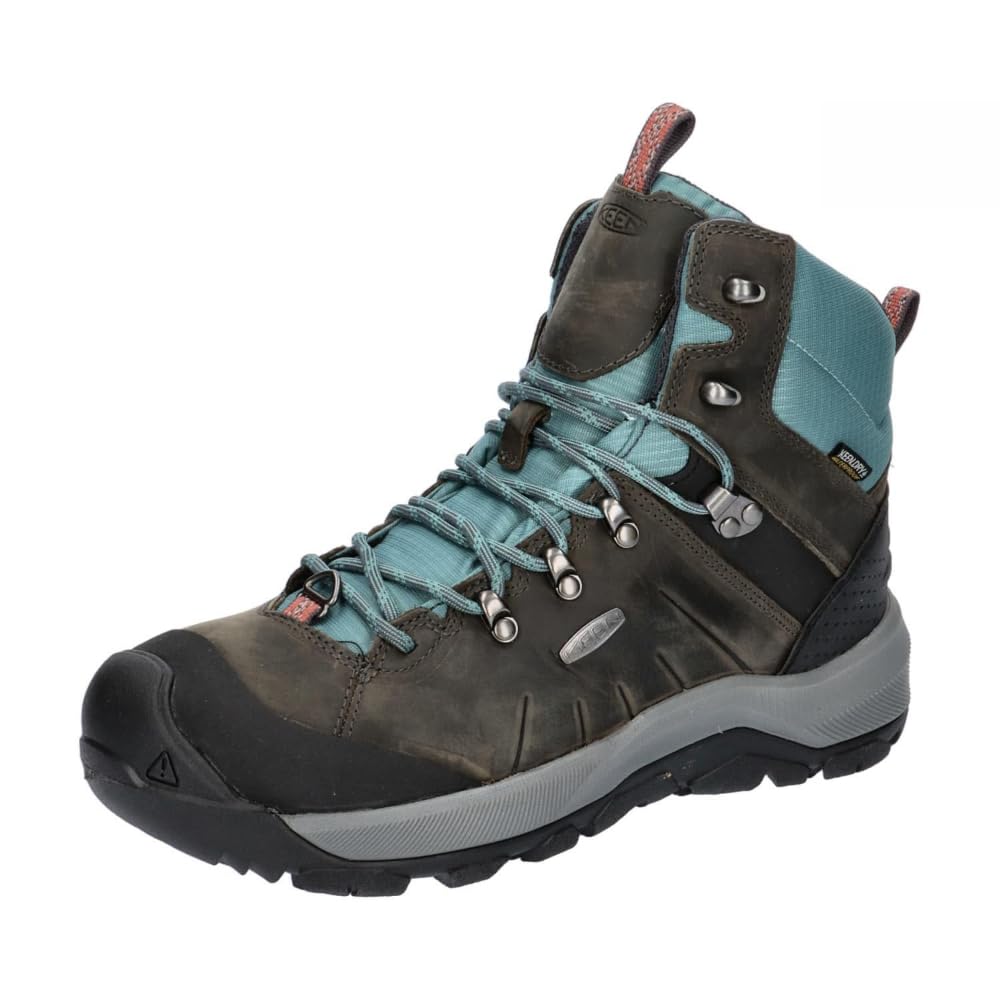
Warmth rated to -25°F and a sole engineered to bite into icy ground.
This is the boot for the coldest walks on the list. KEEN packs in 200g of recycled P.E.T. insulation rated to -25°F/-32°C, plus three layers of heat-trapping material underfoot, so both your toes and the soles of your feet get protection. The KEEN.DRY membrane keeps water out, and the KEEN.POLAR TRACTION outsole is built with tiny shards in the rubber to grip packed snow and ice. It weighs 20.32oz / 576g, which is light enough for a boot carrying this much warmth.
Comfort is the thing owners return to. The KEEN original fit gives generous room across the forefoot, the compression-moulded midsole cushions each step, and a notch at the back of the heel frees your Achilles so you can walk without fighting the boot. Traction earns real praise — buyers report it gripping packed snow and ice, and preventing falls in the city. The waterproofing and warmth hold up at genuinely cold temperatures with just thin socks.
The notes worth knowing: the toe box is generous but not truly wide, so very broad forefeet may still find it snug with thick socks. A few owners saw durability issues like an eyelet popping, and while most find the warmth rating accurate, a wearer in a truly extreme cold spot found it did not hold heat as expected. Treat the rating as a guide and size up for thick socks. For ice and deep cold, this is a serious boot.
Built for the cold
- 200g of recycled insulation rated to -25°F/-32°C
- KEEN.POLAR TRACTION outsole with shards in the rubber for ice
- Three-layer heat trap underfoot warms the whole foot
- Comfortable KEEN fit with an Achilles notch for movement
Points to weigh
- Toe box is generous but not truly wide for very broad feet
- Few owners saw eyelet durability issues
- In extreme cold, the warmth rating can feel optimistic — size up for thick socks
Made for: icy pavements and genuinely freezing walks where grip and warmth matter most.
Worth knowing: order up half a size for thick socks — the toe box is roomy but not wide.
Know the Specs
Waterproof membrane
A waterproof membrane is a thin inner layer that blocks liquid water but lets sweat vapour escape, so a slushy commute does not leave you with damp socks. Look for a named membrane such as KEEN.DRY, because a boot that only says water resistant on the label can soak through in a deep puddle. Seam-sealed construction adds another layer of protection at the joins.
Insulation weight in grams
Insulation is measured in grams of fill, and a figure like 200g signals a boot set up for genuine freezing weather. Some listings also carry a temperature rating in degrees, which is the maker’s claim for the coldest air the boot is meant to handle. Treat it as a guide and keep thick socks in reserve for the worst days, since how warm you feel also depends on how much you are moving.
Outsole traction and lugs
The lugs are the raised blocks under the sole, and multi-directional lugs point in several directions so you get grip when pushing off and braking. A softer rubber compound holds packed ice better than a hard one, which is why winter soles are formulated differently from summer hiking soles. Some boots add microscopic shards to the rubber for extra bite on frozen ground.
Ankle support and shaft height
Shaft height is how far the boot rises above your foot, and a mid-height shaft covers the ankle to give sideways stability on uneven slush. A notch at the back of the heel frees the Achilles tendon so walking does not feel stiff. Higher shafts add warmth and keep snow out when you step deep, but they can press on short calves, so try before committing if you are shorter in the leg.
Common Questions
Do I need waterproof or just water resistant for winter walking?
What does 200g of insulation actually mean for a winter boot?
Should I size up for thick wool socks?
Will these boots grip on packed ice and frozen pavements?
How do I stop salt stains ruining my winter boots?
Is a mid-height boot warm enough for a deep-freeze commute?
What is the difference between a snow boot and a winter walking boot?
How long should a pair of winter walking boots last?
Will a waterproof membrane boot make my feet sweat indoors?
The Bottom Line
For most people, the womens winter walking boots winner is the KEEN Women’s Revel III because it covers the full range of winter walking — a waterproof membrane, layered underfoot warmth, a roomy toe box, and a sole built for snow and ice. If you want ice-specific grip and warmth rated to -25°F, the KEEN Revel 4 Mid Polar goes further in the cold. And for long days on foot in wet weather, the SOREL Out N About IV Chillz is the boot that carries you comfortably from mile one to mile thirty.
How we choose
We do not accept paid placement. Every pick is matched to a real buyer and a real use-case; we do not hands-on test units.
Sources
Specifications: manufacturer listings and product documentation. Review insights: verified customer reviews, as of October 2026. Pricing: not shown on this page (it changes often); check the current price via the retailer link.
As an Amazon Associate, Home Digitized earns from qualifying purchases. This does not affect which products we feature.