
Specs are compiled from manufacturer listings and verified buyer reviews and can change over time — please confirm the key details on the product page before buying.
If you are buying your first pair of women’s climbing shoes, the short answer is this: buy the La Sportiva Tarantulace Woman and spend your first six months learning technique on rubber you can trust. It is the friendliest all-rounder here, and it laces tight enough to fix the fit problems that ruin beginner sessions. The rest of this list covers every foot shape and budget above and below it.
This guide is built by comparing the manufacturers’ published specifications and the patterns across verified customer reviews, so you get each pick’s real strengths and trade-offs instead of marketing spin.
Climbing shoes are the one piece of kit where a wrong size ends your session early, so sizing is the theme that runs through everything below. Here is the honest breakdown of women’s rock climbing shoes.
Top Picks


How To Choose The Best Women’s Rock Climbing Shoes
The most common beginner mistake is ordering your street shoe size and assuming a comfortable fit from the start. Climbing shoes are built to hold your foot firm so your toes can press into small holds — a snug, slightly curled toe is the design working, not a defect. Get the size right and the rest of the shoe’s fit falls into place.
Start with the fit, not the colourway
Your heel should sit locked at the back with no lift when you stand on your toes, and your toes should touch the front without being folded double. A shoe that pinches hard enough to make you pull it off after ten minutes is too small. A shoe you can slide your heel out of is too big. Lace-up models give you the most adjustment, which is why they suit beginners with uneven feet so well.
Match the outsole to where you climb
The outsole rubber is what touches the wall, so its thickness and stickiness decide your grip and how long the shoe lasts. A thicker sole such as 5mm lasts longer for a beginner logging gym laps, while a thinner softer sole feels the holds more. If you mostly top-rope and boulder indoors, a flat, neutral profile is kinder to your feet than an aggressive downturned toe.
Know how much the shoe will stretch
Leather and hemp linings soften and give a little with use, so a leather shoe that is only mildly snug on day one often becomes comfortable within a few sessions. Synthetic uppers and knit uppers hold their shape much more. This is why the advice flips from model to model — some here want a half size up from street, others a full size down.
Side-by-Side Comparison
| Model | Best For | Closure | Upper / Lining | Outsole | Amazon |
|---|---|---|---|---|---|
| La Sportiva Tarantulace Woman★ Best Overall | Best overall for beginners | Lace | — | — | Amazon |
| Black Diamond Women’s Momentum StrapBest for Comfort | All-day comfort, breathable knit | Strap | Engineered knit | 4.3mm rubber | Amazon |
| Butora Women’s EndeavorBest for Wide Feet | Wide feet and odour control | Elastic | 100% organic hemp lining | Neo Fuse sticky rubber | Amazon |
| SCARPA Women’s Helix Lace | Adjustable lace fit, neutral profile | Lace | Suede (1.8mm) | Vibram XS Grip 2 (3.5mm) | Amazon |
| Evolv Elektra | Casual climbers wanting a tight fit | Velcro | — | — | Amazon |
| La Sportiva Tarantula | Durable beginner sport climbing | Hook and loop | — | — | Amazon |
| EVOLV Defy | Downturned toe for power transfer | — | — | — | Amazon |
| La Sportiva Tarantula Boulder | Bouldering on a budget | Hook and loop | No lining | 5mm FriXion RS | Amazon |
| La Sportiva Finale | Improving climbers wanting versatility | Lace | No lining | 5mm Vibram XS Edge | Amazon |
Detailed Reviews
1. La Sportiva Womens Tarantulace Rock Climbing Shoe
Our pick — 4.5+★ from 200+ verified ratings; the strongest balance of quality and price.
The laced all-rounder that fixes uneven feet and forgives first-year mistakes.
What makes the Tarantulace Woman the safest first purchase here is the lace closure. You can tighten one side and leave the other looser, which is exactly what a foot with a size difference needs. That adjustability is why it holds 4.5+ stars from a large body of owners — the crowd favourite of this whole list.
The grip does the rest. Buyers report solid traction on boulder problems and rubber that holds small footholds — exactly what you need while your footwork is still rough. Expect it to feel tight at first; that is normal for climbing rubber, and it softens after a few sessions. Most buyers find it true to size, with one noting she “didn’t have to size up” at her usual 8.5.
The honest catch is the heel. Some owners find it cuts in, and those with the widest feet are the ones most likely to feel it. If your heel is broad, try half a size up if your size is in stock, because exchanges are not always available. Everyone else gets a sturdy, good-looking shoe that grips well enough to make a beginner feel secure on the wall.
What earns it first place
- Laces let you fine-tune each foot separately — ideal when your feet differ in size.
- Grip holds on small footholds, so beginners trust their feet earlier.
- True-to-size for many buyers, which cuts the guesswork out of ordering.
- Sturdy build and a look owners genuinely like.
Where it can bite
- The heel can press on wider feet — the main fit complaint.
- Snug on arrival; needs a few sessions to settle.
Buy it if: you want one dependable beginner shoe and your feet are average to narrow width.
Think twice if: you have an unusually broad heel or need a wide-size chart.
2. BLACK DIAMOND Women’s Momentum Strap Rock Climbing Shoes
Knit-upper comfort for the climber who wants one pair for gym laps and weekends outside.
The Momentum Strap is the shoe for someone who climbs twice a week and refuses to start every session in pain. Its knit upper breathes where a leather shoe traps heat, and the 4.3mm rubber outsole is thick enough to take a beating on gym walls. What wins most people over is the build quality — it is the single thing owners praise above anything else. The straps also let you cinch a foot that sits between sizes.
Sizing is where you must pay attention. It runs tight and narrow, and several owners note the size is far off their street shoe. One buyer reports the straps let her fit an 8.5 comfortably after a 9 proved too big, and others find a half to a full size down from street works best. The knit will not stretch much, so measure rather than assume.
The trade-off is honest: the pointed, firm toe helps on small holds, but the narrow last squeezes wider feet. If your foot is broad, this is not the model for you. If your foot is narrow and you value breathability, it is a strong second place.
Why it climbed this high: knit upper plus adjustable straps give a breathable, tuneable fit that suits climbers who hate hot, stiff leather.
The honest snag: it runs tight and narrow — wider feet should look at the Butora Endeavor instead.
Great match for: narrow-footed indoor climbers who want breathability.
Not for you: a broad forefoot or anyone who wants a roomy fit from the start.
3. BUTORA Women’s Endeavor Rock Climbing Shoe
The wide-fit answer for bunions, hammer toes and feet that hate being pinched.
The Endeavor is the one to hunt down if every other shoe in the shop felt like a vice. It comes in a true wide width, and a buyer with bunions reports a 9.5 matching her perfectly in length and width — snug without crushing her toes. The 100% organic hemp lining is the other standout: it controls stretch and odour, and owners notice the shoe does not sour after regular gym sessions.
Grip comes from Butora’s Neo Fuse sticky rubber over a 3D injection molded midsole, a stiff base that keeps the shoe from twisting when you stand on a small edge. Owners who climb in the 5.10 to 5.11 range describe good edging and smearing, though a few note it is less suited to highly technical routes. The full-width fit is what keeps it in the conversation.
The caveat is sizing confusion, because this model runs a dual men’s and women’s chart. One owner had to size up a full size past her street 7 even in the wide cut. Buy from a seller with easy returns, and expect the fit to ease only slightly once the hemp settles.
The fit story: genuine wide-width sizing with a hemp lining that resists odour — a rare combination for bunion-prone feet.
What to plan around: the dual men’s/women’s size chart confuses buyers, so order with room to exchange.
Worth reaching for when: your feet are wide or your toes hate being curled.
Look elsewhere if: you want a rock-solid size chart you can trust on the first try.
4. SCARPA Women’s Helix Lace Rock Climbing Shoes

A neutral, lace-up shoe with a suede upper that gives as you break it in.
The Helix Lace runs a flat, neutral profile — no aggressive downturn, just a shape that supports your foot for hours of top-roping and bouldering. Its suede upper is 1.8mm thick and the outsole is Vibram XS Grip 2 at 3.5mm, a softer compound built for smear and feel rather than hard edging. The laces let you dial in pressure where a strap cannot.
Expect it to run small. Most buyers size up half a size from their true size, unlike other Scarpas, and one had to jump from 8.5 to 9.5 to get the shoe on at all. The leather stretches over time, so start snug and let it ease. That adjustability is why many owners call it the most comfortable neutral shoe for an average-shaped foot.
Two things to weigh. The grip is solid on a climb, though a couple of owners find it less sticky than other compounds. And once, a pair showed up looking used — a delivery issue, not a design one. For a beginner who wants a forgiving lace fit, it is a fine stop.
What makes it a keeper
- Laces plus a soft suede upper give a fit you can fine-tune.
- Flat, neutral profile supports your foot through long sessions.
- Leather stretches into a personal fit with wear.
The honest edges
- Runs small — most people need to size up half a size.
- Softer rubber edges less precisely than a stiffer sole.
A smart fit for: first-timers who want a laced, forgiving shoe that ages into comfort.
Skip the hassle if: you want a rock-hard edge for technical footwork from day one.
5. Evolv Elektra Climbing Shoe – Women’s

A snug, good-looking shoe for the weekend climber who wants a secure foot.
The Elektra is aimed at the casual climber, and its build quality is what stands out. Owners describe it as gorgeously made with good materials, and the tight fit — when you get the size right — grips like a glove on the wall. One buyer who sized up half a size from her street 7.5 reports it fitting perfectly and improving her bouldering.
Sizing is the one big wrinkle. The Elektra runs small, and quite a few owners had to go up considerably — some up to two sizes — to get their foot in. If the size runs out, you may be stuck. Order from a seller with a clear returns policy and try it on before you climb.
Fit aside, it is a purpose-built shoe: tight by design, not built for walking around the gym floor. That is the trade-off. You get a secure, grippy foot on the wall and a shoe you will want to take off between attempts.
Where it shines: a snug, purpose-built fit with clean looks and quality materials for casual gym climbing.
The sizing gamble: it runs small, so size up and buy where exchanges are easy.
Reach for this if: you want a tight, secure shoe and are willing to sort out the sizing.
Think twice if: you have no patience for an exchange or a narrow foot that hates being squeezed.
6. La Sportiva Womens Tarantula Rock Climbing Shoes
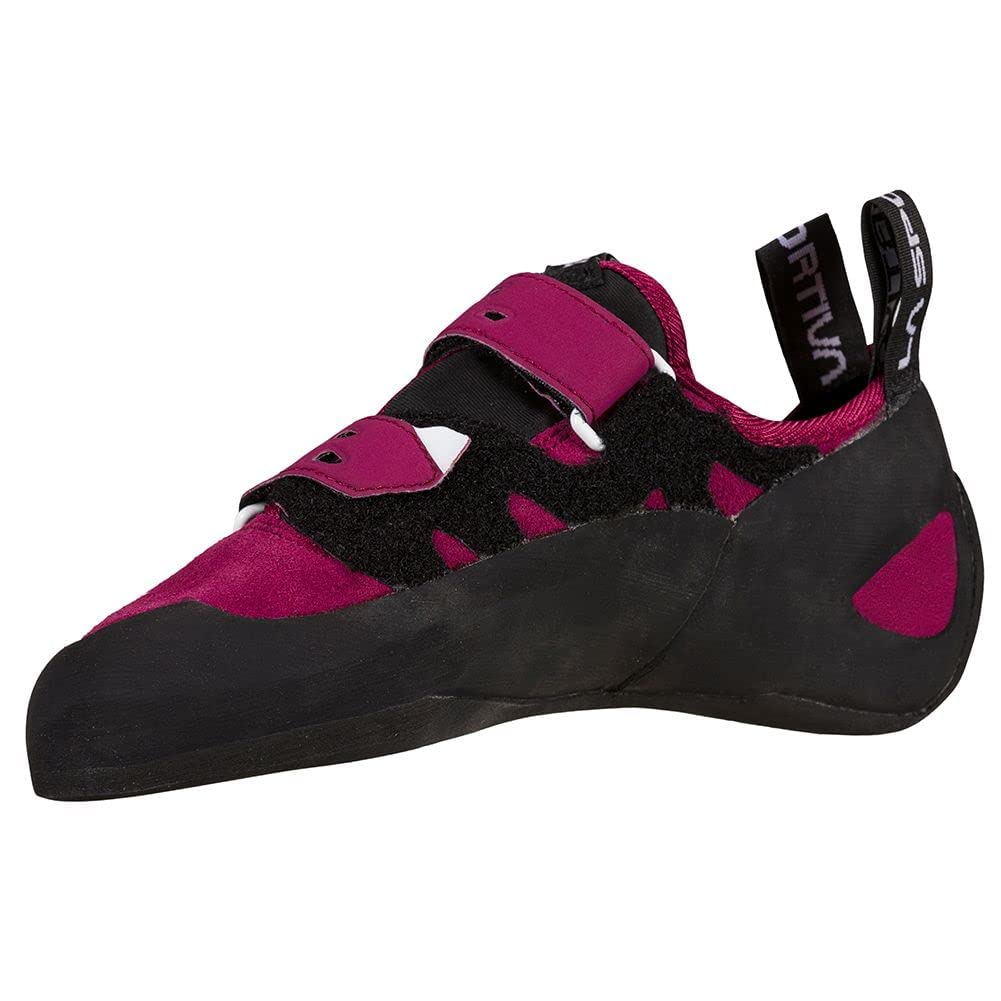
The durable Velcro beginner shoe that takes a whole season of gym abuse.
The Tarantula is the version of the Tarantula family for climbers who want to get in fast. Its hook-and-loop straps go on in a second between burns, and the build is the thing owners rate most — it holds up over months of regular sessions. One owner reports it staying durable across three months of use on the white leather, with no break-in needed.
Sizing here runs the opposite direction from the Elektra. Many beginners size down a whole size from their street shoe for a tighter fit, and one narrow-footed buyer went from 8.5 to 7.5. The shoe stretches a little as it warms up, so a snug start is right. That adjustability is why it suits climbers working through the 5.9 to 5.10 grades.
The honest catch is a couple of annoying details. One owner found the inner lining peeled and left orange dye on her feet after many wears, with no effect on climbing. Others found a high heel that blistered before break-in. Neither is a dealbreaker for a shoe this capable, but it is why it sits behind the laced version.
The draw: quick straps, a durable build and a tight fit that beginners can trust on sport routes.
Worth knowing: a higher heel and possible dye transfer are the small gripes owners raise.
Built for: sport climbers who want a fast-on shoe that lasts the season.
Pass if: you are sensitive to heel rub or prefer a laced, forgiving break-in.
7. EVOLV Defy Rock Climbing Shoes
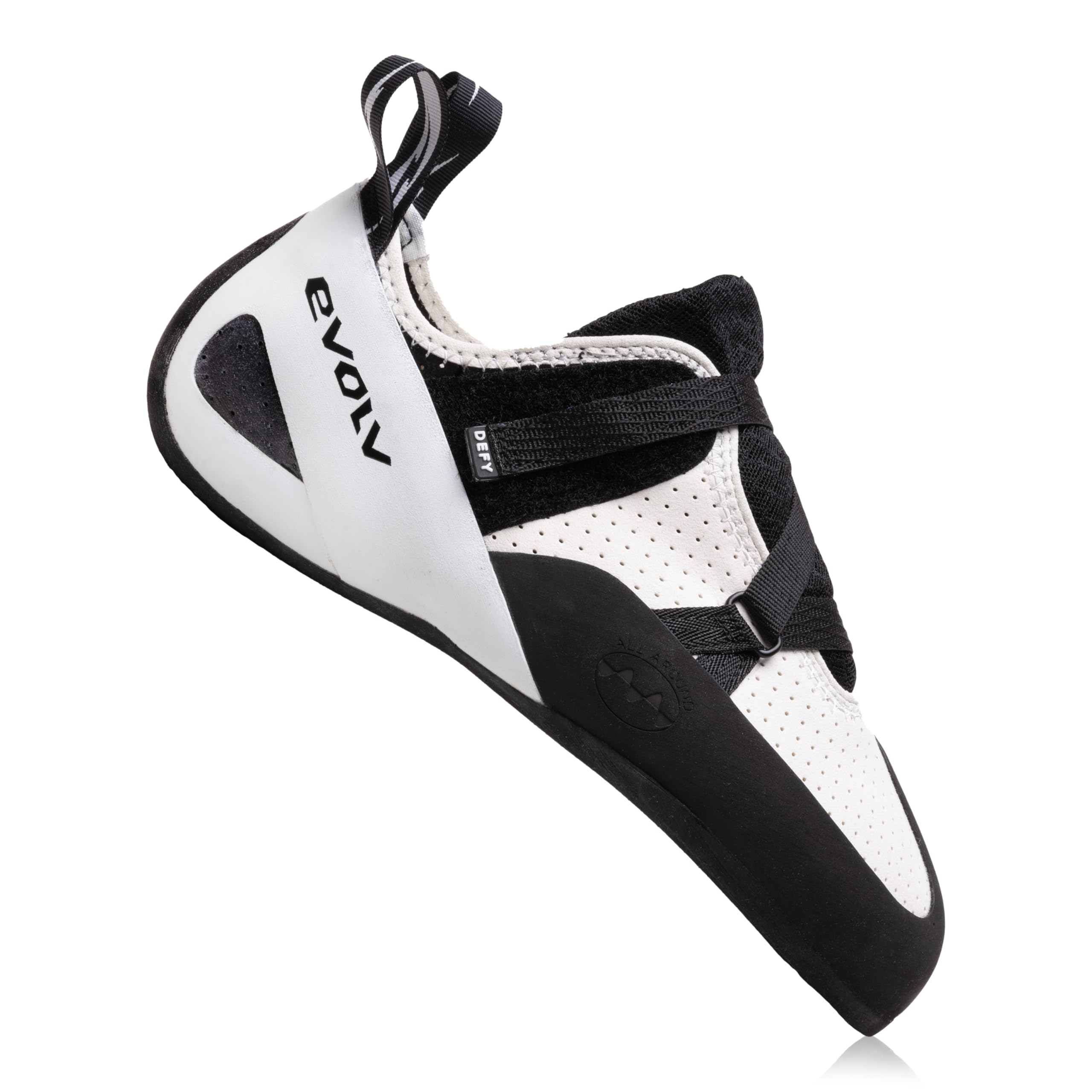
A soft, downturned shoe that hooks holds and stays comfortable for hours.
The Defy earns its spot with a downturned toe (a toe that curls downward), and that curl pushes power into small edges and hooks so you get more bite on steep boulders. Buyers rate its build quality highest of the shoes here, with comfort a close second. One buyer reports wearing it all day indoors and out for months at three or four climbs a week, with minimal wear.
You must size up, and not a little. This is one of the smallest-running shoes on this list. Several owners needed at least a full size above street, and one street 9.5 had to move all the way to a 12. Order from a seller with free returns, and expect the soft sole to give with use.
Once seated, it is a comfortable, capable shoe for getting into the sport. The heel sits slightly loose for some feet, but that is barely felt on the wall. A soft sole means it feels less precise than a stiff edging shoe — another reason it suits the improving climber rather than the project-chaser.
Why climbers like it
- Downturned toe drives power into edges and hooks.
- Build quality and all-day comfort both rate high with owners.
- Soft sole feels gentle for long gym sessions.
The catch to plan for
- Runs very small — most buyers size up one to two full sizes.
- Soft sole gives up some precision on hard technical edges.
Made for: the improving climber who wants power and comfort together.
Not your shoe if: you climb hard, precise routes where a stiff edge matters.
8. La Sportiva Womens Tarantula Boulder Climbing Shoe
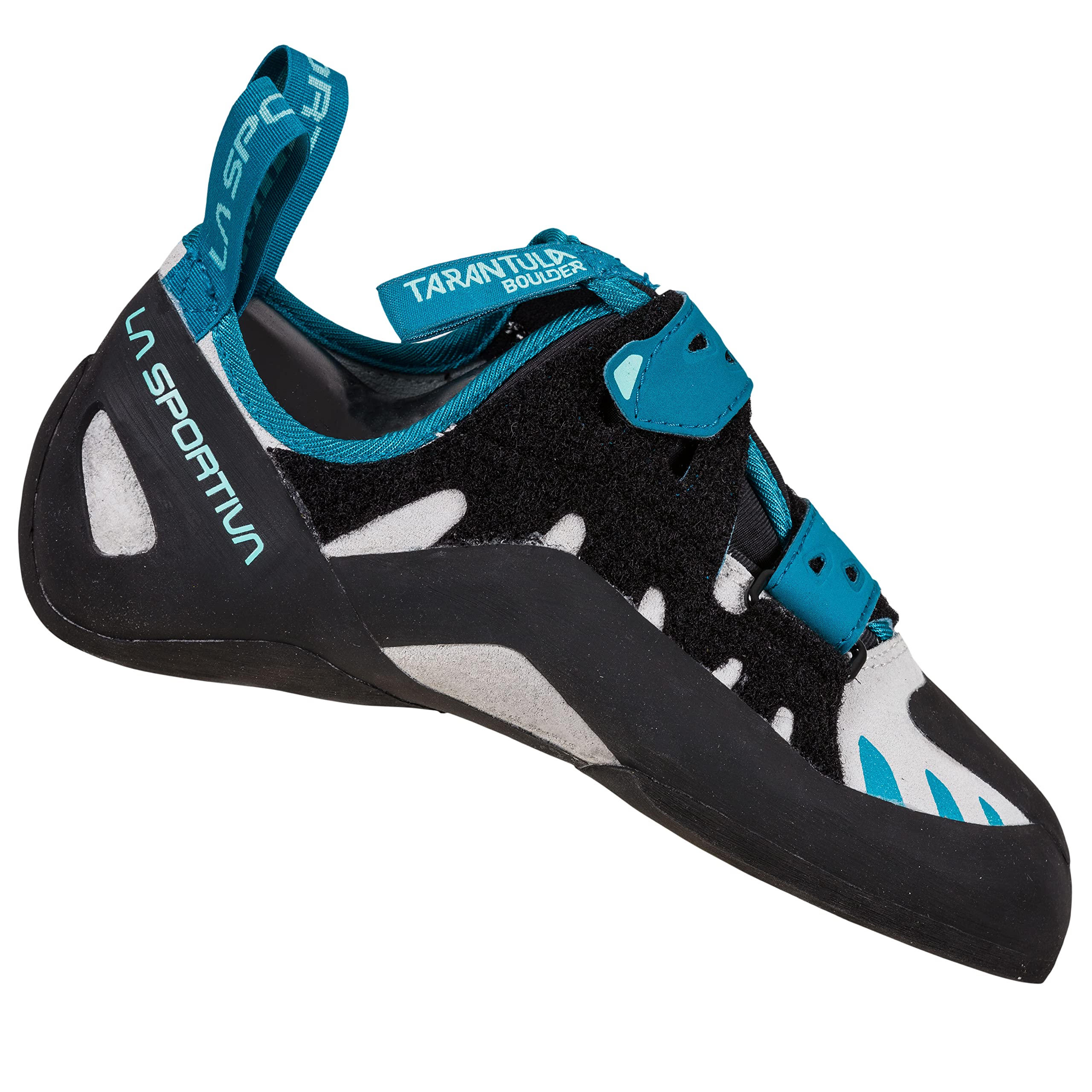
A flat, high-volume bouldering shoe built for the first year on plastic.
The Tarantula Boulder is the high-volume, medium-wide fit of the family, with a rounded toe and no downturn — gentle for a foot that is not yet used to climbing rubber. Its 5mm FriXion RS sole is thick and built to last, and no lining means it takes on the shape of your foot over time. It uses a hook-and-loop closure for quick changes.
Sizing wants half a size up for many owners, though the fit can be finicky. One buyer found a size 5.5 too small and settled comfortably into a 6.5 at a 36 street size, and others report a snug half-size-up result. The lack of lining means it will stretch, so a very tight start is fine.
Two things to watch. The heel can bite into the ankle before break-in, which a couple of owners noticed. And one pair had soles come unglued after just a few uses — a rare failure that the warranty window should cover. For a flat bouldering shoe that suits wide feet, it is an honest value buy.
Why it fits a new boulderer: high volume and a flat, rounded toe are kind to untrained feet, and a 5mm sole lasts.
The rare snag: a heel that can rub early on, and an occasional sole-separation issue.
Best for: wide-footed beginners wanting a flat, durable bouldering shoe.
Maybe not if: you want a precision downturn or a guaranteed flawless first pair.
9. La Sportiva Womens Finale Rock Climbing Shoes

The lace-up step up for the climber ready to move past the beginner wall.
The Finale is built for climbers who are improving their technique, and its 5mm Vibram XS Edge sole is the reason. That thicker, firmer rubber edges hard and lasts, a genuine upgrade in precision over the softer beginner soles on this list. The laced closure holds your foot steady for long sessions, and no lining lets it mould to your foot. Owners rate its comfort highest of all — it stays comfortable from day one.
Sizing is more forgiving than some here. Most find it true to size or want to size down about half a size from street, with one buyer at a street 8/8.5 choosing an 8 and finding it snug but ready to expand. A leather upper stretches, so start on the tight side.
The one honest limit is durability at the toe. A few owners mention a hole at the toe after heavy use, though another got around a year and a half before replacing an identical pair. It is a comfortable all-rounder, not a stiff project shoe — which is exactly why an improving climber will get so much out of it.
What sets it above the beginner crowd: a firm 5mm Vibram XS Edge sole and lace fit make it a true next-step shoe.
Where it wears: heavy toe-draggers can wear through the front — resole before it gets there.
A strong pick if: you are ready to upgrade from a beginner shoe and want precise edging.
Hold back if: you want a beginner’s soft, forgiving feel for your first season.
Know the Specs
Outsole rubber and thickness
The outsole is the rubber layer that touches the wall, and its thickness (often 3.5mm to 5mm) trades feel against longevity. A thinner, softer sole like the 3.5mm Vibram XS Grip 2 feels the holds and smears well, while a thicker 5mm sole lasts longer and edges harder. The compound matters too — sticky rubber grips well but wears faster; a firmer compound holds its edge.
Upper and lining
The upper is the shoe’s outer body, and the lining is the inner layer that controls how much it stretches. A leather or hemp lining softens and gives with use, so you can start snug; a knit or synthetic upper holds its shape and barely stretches. That is why the same size advice differs from one pick to the next. A lined shoe also resists odour better than an unlined one.
Closure type
Laces give the most fine-tuning, ideal for uneven feet or a broad heel. Hook-and-loop straps go on fast between attempts but adjust in one or two spots. Elastic slip-ons pull on quickly with no adjustment at all. For a beginner, laces are the safest because you can fix a fit that is not quite right.
Profile and downturn
A flat, neutral profile keeps your foot in a natural position and stays comfortable through long gym sessions. A downturned toe curls your foot into a springy position that adds power on steep, small holds but tires your feet faster. Beginners usually do best on a flat profile, then move to a downturn later.
Common Questions
Should women’s climbing shoes be tight or comfortable?
Do I size up or down for climbing shoes compared with my street shoes?
How do I know if a climbing shoe is too small?
Are lace or Velcro climbing shoes better for beginners?
How long do climbing shoes last?
Will leather climbing shoes stretch out?
Can I wear socks with women’s climbing shoes?
What is a downturned toe and do I need one?
How do I stop my climbing shoes from smelling?
The Bottom Line
For most buyers, the women’s rock climbing shoes winner is the La Sportiva Tarantulace Woman, and it holds the top spot because of one thing: the lace closure lets you fix an uneven fit. If you have wide feet or bunions, reach for the Butora Endeavor — its true wide cut and organic hemp lining are a rare match. And for your next step up in precision, the La Sportiva Finale is the one to reach for.
Before you buy, treat the size chart on any listing as a starting point, not a promise. Get your width right first, and length and volume are easier to sort out.
How we choose
We do not accept paid placement. Every pick is matched to a real buyer and a real use-case; we do not hands-on test units.
Sources
Specifications: manufacturer listings and product documentation. Review insights: verified customer reviews, as of October 2026. Pricing: not shown on this page (it changes often); check the current price via the retailer link.
As an Amazon Associate, Home Digitized earns from qualifying purchases. This does not affect which products we feature.