
Specs are compiled from manufacturer listings and verified buyer reviews and can change over time — please confirm the key details on the product page before buying.
Waterproof is the most over-used word in hiking footwear, and it is the one thing you cannot judge from a product photo. What you actually want is a boot that keeps your socks dry through a wet stream crossing, stays light enough that your knees do not ache on the descent, and fits a woman’s foot without heel slip. This guide sorts eight real women’s boots that state waterproofing outright and stay built for light, fast days on trail.
This guide is built by comparing the manufacturers’ published specifications and the patterns across verified customer reviews, so you get each pick’s real strengths and trade-offs instead of marketing spin.
You will see how each boot handles weight, ankle support and wet ground, and which models suit narrow or wide feet. Here is how the Women’s Lightweight Waterproof Hiking Boots compare before you commit to one.
Top Picks


How To Choose The Best Women’s Lightweight Waterproof Hiking Boots
Most people shopping this shelf make the same mistake: they buy for the hiking they plan on doing in summer, then wear the boots through a wet spring and find out the hard way. The second mistake is sizing up for thick socks without checking where the toe box actually sits. Below are the four things that decide whether a pair works for you.
Waterproofing that comes from the build, not the spray
A waterproof boot uses a membrane inside the upper — a thin layer that blocks water from getting in while still letting some moisture out. Danner’s version is called Danner Dry. Oboz uses a membrane they name B-DRY. Both are built into the shoe, so the protection survives a wet walk through tall grass in a way a surface spray does not. If a listing only says “water resistant,” treat that as splash protection, not stream-crossing protection.
Weight in ounces, and what it costs you by mile ten
Light boots like the 14-ounce Columbia Crestwood Mid are lighter because of thinner midsoles, less rubber, and simpler construction. Columbia publishes 14 ounces per boot. Oboz lists 19 ounces, or 538 grams. That difference shows up as fatigue on a long descent, because every extra ounce is a foot you lift thousands of times. Light comes at a cost: a thinner midsole protects you less from sharp rocks.
Ankle height and the heel lock
A mid-cut boot rises above the ankle to add lateral stability on uneven ground. The trade-off is that a stiff ankle collar can dig in if your heel does not sit back firmly in the heel cup. Look for padded collars and lacing that reaches high enough to lock the heel down before the boot is even fully tight.
Sizing for a woman’s foot and thick socks
Women’s lasts — the shape the boot is built around — are narrower than unisex or men’s versions. If your normal size runs tight with wool socks, going up half a size is the usual fix. Some of these boots deliberately run roomy, which is a help for wide feet and a problem for narrow ones. Read the individual reviews below for which way each model leans.
Side-by-Side Comparison
| Model | Best For | Stated Boot Weight | Waterproof System | Ankle Height | Amazon |
|---|---|---|---|---|---|
| Danner Mountain 600★ Best Overall | Long wear and heritage style | — | Danner Dry | Mid | Amazon |
| ANJOUFEMME Lightweight Non-SlipBudget Pick | Tight budgets and light trail days | — | Waterproof build (no membrane named) | Mid | Amazon |
| R CORD Ankle SupportWidest Fit | Wide feet and everyday trail use | — | Waterproof membrane | Mid | Amazon |
| R CORD Outdoor Trekking | First-time buyers and gift pairs | — | Waterproof build | Mid | Amazon |
| NORTIV 8 Armadillo FieldLite | All-day comfort on a budget | — | Waterproof build (mixed feedback) | Mid | Amazon |
| Oboz Bridger Mid B-DRY | Serious multi-day trekking | 19.0 oz / 538 g | B-DRY membrane | Mid | Amazon |
| Columbia Crestwood Mid | Wet weather on a light foot | 14 ounces | Waterproof build | Mid | Amazon |
| Merrell Speed Strike 2 Mid | Athletic pace and ankle protection | 2 pounds (pair) | Waterproof build | Mid | Amazon |
Detailed Reviews
1. Danner Mountain 600 Women’s Hiking Boots
Our pick — 4.5+★ from 650+ verified ratings; the strongest balance of quality and price.
The boot that pairs heritage leather with a modern waterproof membrane and zero break-in.
The Mountain 600 is the strongest all-rounder on this list because it nails the one thing most buyers worry about first — fit. What wins people over is how it sits on a woman’s foot: heel locked back, no rubbing on the collar, no sore spots after a full day. Owners also say it takes no break-in period at all, which means you can wear it from the start on a real hike rather than pacing the hallway first.
The waterproofing comes from Danner Dry, a membrane built into the upper to block outside water while letting sweat escape. The upper is smooth suede or full grain leather, which is what gives the boot its tall, classic look and its abrasion resistance on brush and rock. Underneath, the Vibram SPE midsole and Fuga outsole combine for grip on both wet and dry ground — the outsole rubber is the part that actually touches the trail. Cushioning is generous without the boot feeling like a plank.
The honest trade-off is weight and upkeep. Leather uppers are heavier than the mesh and synthetic builds further down this list, and a light mesh boot from Merrell will feel quicker on hot climbs. Danner buyers report the leather holding up for up to three years, so the extra weight buys you service life. It suits someone who wants one pair to do everything — trail, town, wet weather — rather than a single-purpose racer.
What earns it the top spot
- Fit is the runaway favorite — the boot stays comfortable through a full hiking day with no soreness or blisters.
- No break-in period reported, so it works from the first wear.
- Ankle and arch support called out repeatedly as firm and stable on uneven ground.
- Vibram Fuga outsole holds traction on wet rock, caves and grottos.
- Durability reported stretching to three years of regular use.
Where it gives ground
- Leather uppers add heft next to mesh boots — noticeable on long climbs.
- Suede and full grain leather need brushing and occasional cleaning to stay water-repellent.
Take this one if: you want a single waterproof pair that spans trail days, wet commutes and weekend trips, and you value a fit that will not need breaking in.
Leave it for another: you plan to run fast and hot on summer ascents and want the absolute lowest weight on your feet.
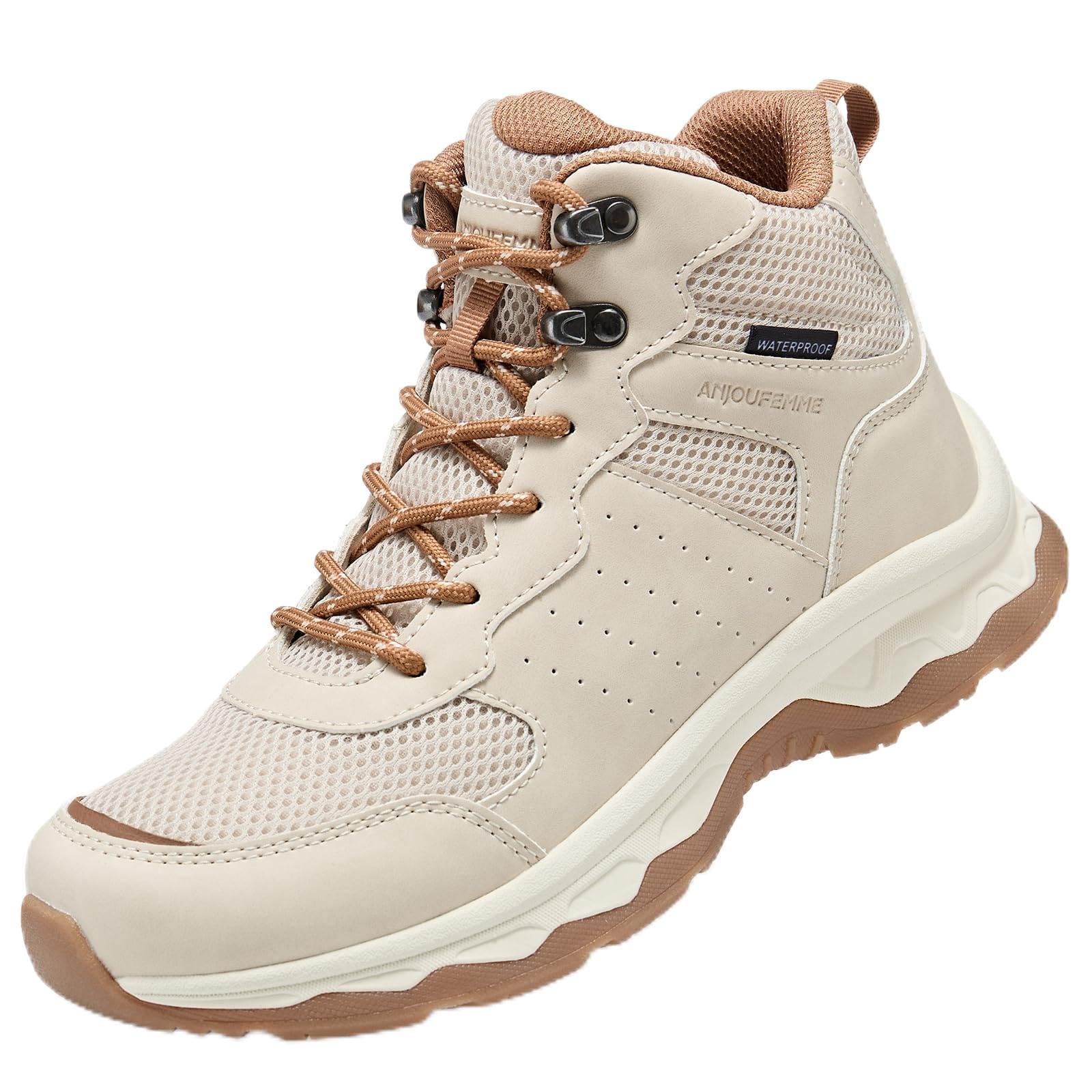
2. ANJOUFEMME Women’s Waterproof Hiking Boots
The entry-level boot that skips the break-in and starts comfortable on day one.
If you hike a few weekends a year and do not want to spend serious money on boots you will wear eight times, this is the pair to check first. Comfort is the clear headline here — a cushioned, shock-absorbing ride that owners describe as supportive even on long days. The listing is built around a “zero leaks” pitch, and there are real-world accounts of feet staying dry through varied weather.
The tread does more work than the price suggests. Owners describe the grip holding on wet grass and uneven ground, and the boot has been dragged through waterfall hikes, volcano climbs and crater trails without issue. Durability shows up in a buyer who logged over 25 miles in canyon lands. Sizing leans true, and a few buyers go up half a size for heavy wool socks.
There is one honest limit to know about. The build is best described as splash-and-stream resistant rather than designed for sustained deep water or thick mud — that territory is not tested in the reviews. A handful of owners also found the ankle collar rubbed when brand-new, so try them with a thin and a thick sock before your first long trip. For the money, though, it covers the light-trail niche well.
What you are buying: a lightweight, cushioned mid boot with a genuine waterproof build, a grippy sole, and an easy break-in that most owners mention takes a single wear.
The one caveat: treat it as a trail and light-hike boot rather than a mountaineering one — the sole and upper are built for lighter loads.
Reach for this if: you want real waterproofing on a tight budget and mostly walk groomed trails, park paths and wet grass.
Look elsewhere if: you plan multi-day trips through deep mud and standing water where a heavier, purpose-built boot earns its keep.
3. R CORD Hiking Boots Women Waterproof Ankle Support
A roomy-toed ankle boot built for wide feet and long weekends on rough ground.
This is the boot to look at if every “women’s” hiking shoe you try pinches across the ball of your foot. The fit is the draw — enough room in the toe box even for wide feet, with room left over, and a memory foam insole sitting on top of a cushioned EVA midsole. Owners describe the comfort holding over a full day of hiking without blisters.
On the technical side, the upper mixes suede panels with mesh to vent heat while the waterproof membrane blocks moisture from puddles and light rain. The mid-cut height adds ankle support for uneven ground, and the non-slip rubber outsole uses deep lugs — raised rubber blocks — for grip on wet rock. A reinforced toe cap protects against stubbed rocks, and the listing includes two shoelace colors.
Weight is where opinions divide most. Some owners find these boots reasonably light; others find them a little cumbersome on hot days, which is consistent with a suede upper and a reinforced build. Sizing runs roomy for a fair number of buyers, several going up half a size — though at least one went down a full size and still found room. If you have very narrow feet, plan to size down or add a thicker insole. For wide feet and long weekend hikes, though, this is a reliable pick.
Why buyers stick around: the ankle support and durable build hold up over a year and many hikes, which is rare at this tier.
The size question: run roomy with extra width, so try on with your actual hiking socks before committing.
Go with these if: you have wide feet and want a mid-cut boot with real ankle support at a budget-friendly price.
Try another route if: you want the lightest boot on the shelf for fast, hot-weather hiking and have a narrow foot.
4. R CORD Hiking Boots Women Waterproof Outdoor Trekking

A zero-break-in boot that shows up with spare laces and insoles already in the box.
Buying your first real pair of hiking boots is a sizing gamble, and this model softens it in two ways. First, it comes with extra laces and insoles, so if the factory insole does not suit your arch, you can swap it before your first hike. Second, break-in is genuinely easy — comments and reviews describe comfort from day one, no padding down, no blisters on the test walk.
Build quality is what owners talk about most. Suede and mesh upper, padding through the ankle and arch, and a tread that gets a striking amount of confidence out of owners. It has kept feet dry in rain, held grip on glacier hikes and cobblestone streets, and prevented ankle twists even for a hiker who describes weak ankles. For a first pair, that combination of easy fit and stable footing is exactly the reassurance you want.
The catch is the stock insole. It runs thin on arch support and cushioning, which several buyers with plantar fasciitis or sensitive arches fixed by dropping in a thicker one. That is a small extra cost rather than a dealbreaker, and it is offset by the spare insoles already included. Sizing runs true for most, with a few finding it a little large — so check your heel lock before taking the tags off.
The first-pair advantage: extras included in the box mean you can tune the fit without ordering aftermarket parts on day one.
Be aware: some feet need a thicker insole straight away, so plan for that if you have a sensitive arch.
Best if: this is your first hiking boot purchase and you want the option to fine-tune the insole from the start.
Skip if: you already have strong opinions about insole arch support and prefer to buy a boot that gets it right from the start.
5. NORTIV 8 Waterproof Women’s Hiking Boots Armadillo FieldLite
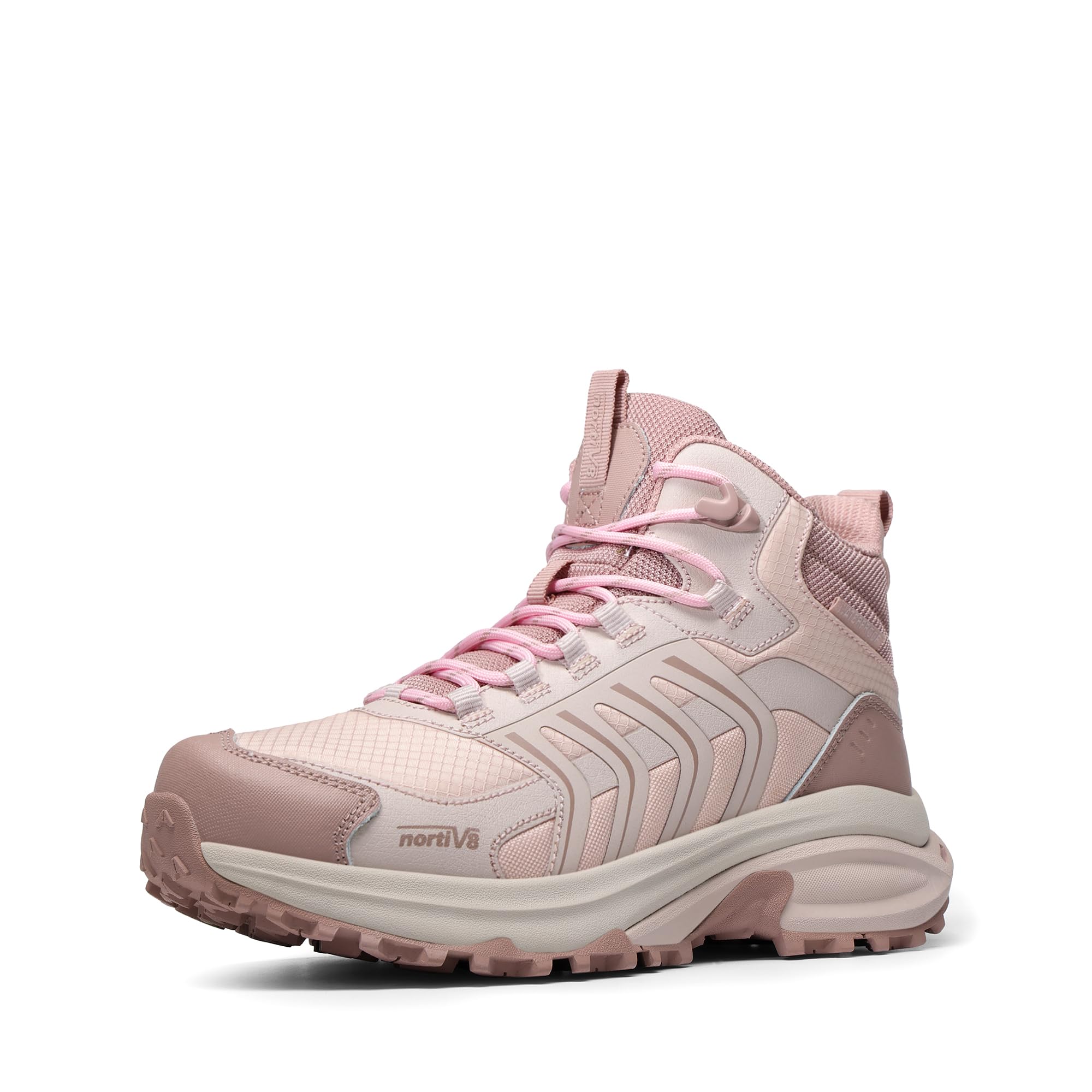
Built around soft, stable support for joints that want less shock on the trail.
The FieldLite’s main pitch is a build the brand calls 4-in-1 Rebound Tech, designed to blend stability with cushioning so the boot feels steady without feeling stiff. That combination works best for anyone whose joints want a softer landing. Owners describe the arch support as the thing they did not know they needed — one buyer with surgically repaired ankles and back surgeries said the 4-in-1 Rebound Tech cushioning made long days possible. Another described the walk as lighter than expected after a full day.
What owners praise most is the build quality, followed by fit — true to size, roomy in the toe even with thick socks, and no hard heel counter to dig into your heel. The style also earns consistent compliments, and the light-colored uppers clean up easily when mud dries and drops off.
Now the honest part. Waterproofing is not this boot’s strongest claim — some owners find it truly waterproof through all-day rain, while others find it only water resistant at best. If you hike in persistent wet weather, treat the outer as a barrier against mud and splashes rather than proof against standing water. The footbed is also firm for some, and break-in can start stiff around the ankle. Given how comfortable this boot is day to day, that is a fair set of trade-offs for the price.
Where this boot lands clean
- Sock-friendly toe box, roomy even with thick wool socks.
- Comfort that holds for an all-day wear and on hard ground.
- Easy to clean when mud dries and drops off the light-colored upper.
The matters-to-watch list
- Water resistance gets mixed reports — reliable for rain, less so for sustained puddles.
- Factory insole runs firm; several owners swap in a thicker one.
- Ankle collar can feel stiff for the first few wears.
Fits best if: you want a supportive, roomy-toed all-day boot for trail walks and everyday wear.
Not your pair if: you are going out in heavy rain and standing water where a guaranteed waterproof membrane comes first.
6. Oboz Women’s Bridger Mid B-DRY Hiking Boot
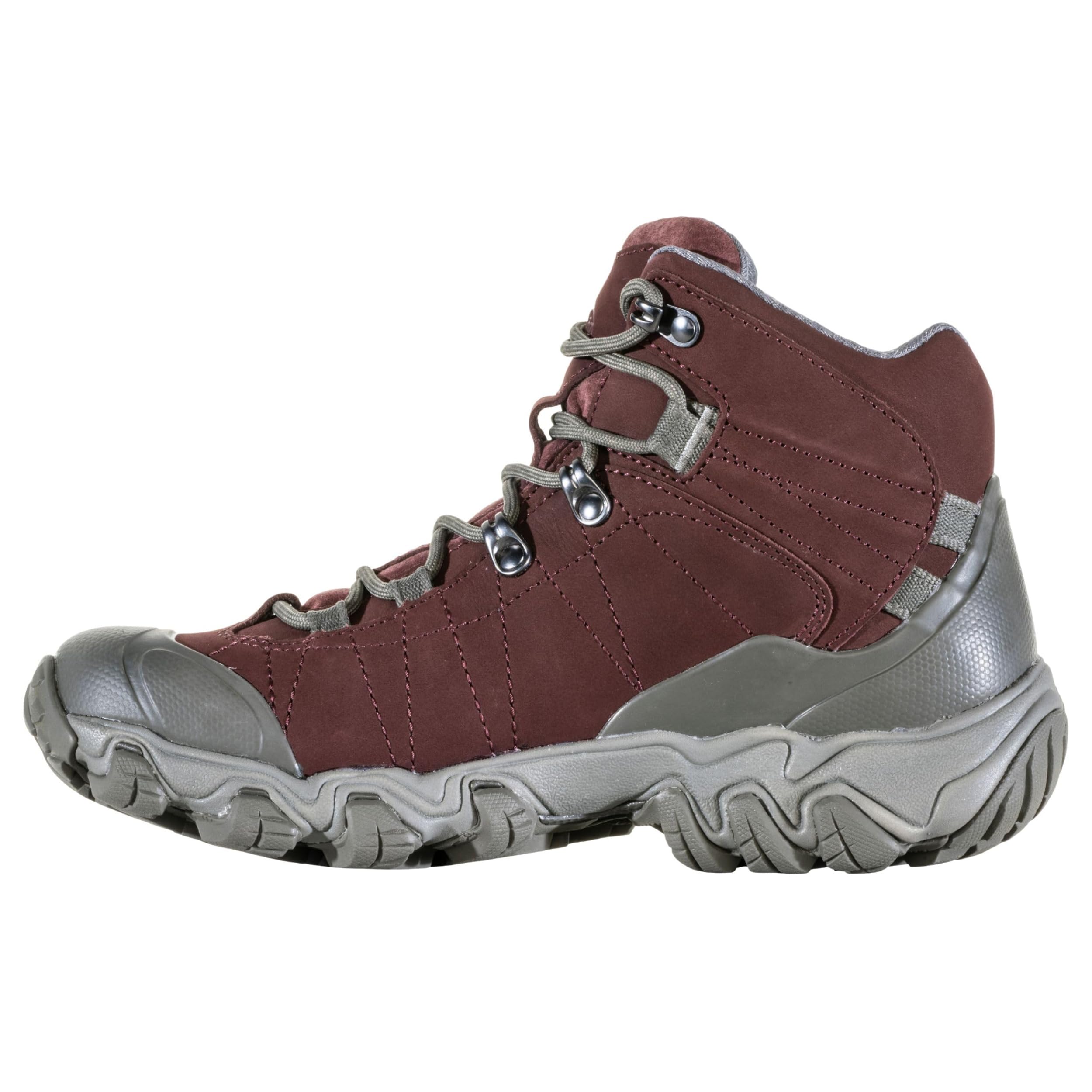
The heavy-lifting boot for multi-day treks, at 19.0 oz / 538 g per boot.
Everything about the Bridger Mid is built around the long haul. It lists 19.0 oz / 538 g per boot and a 12 mm heel drop, which is the vertical difference between heel and toe — a drop that puts more of your weight forward and gives a settled, stable stride on descents. The upper is waterproof nubuck leather under an Oboz B-DRY membrane, with a molded rubber toe cap and heel counter to shrug off rock strikes.
Underfoot, the Granite Peak midsole pairs a TPU chassis — a stiff plastic plate that keeps the boot from twisting — with EVA cushioning to soften the walk. The proprietary O-FIT insole is molded to each shoe, which is the main reason the boot fits so cleanly on a long hike. Trail Tread rubber on the outsole is designed for a range of surfaces, from mud to loose rock.
Customers note a short break-in and boots lasting up to seven years, which makes the nubuck leather and TPU chassis worth the extra weight. The trade-off is straightforward: at 538 g per boot, this is not a featherweight trail boot and your legs will feel it on long climbs in the heat. It is also a serious leather boot, so a light wash and occasional re-waterproofing keeps the surface at its best. Skip the Bridger if speed and low weight top your list.
The trade this boot makes: it exchanges featherweight speed for a leather, membrane and chassis build that holds up over years.
Keep in mind: leather needs a periodic clean and re-waterproof to stay effective, and the weight is real on climbs.
Worth it for: multi-day treks and long days where rock protection and a supportive midsole matter more than grams.
Pass if: you want something to slip on for short day hikes and nothing more.
7. Columbia Women’s Crestwood Mid Waterproof Hiking Boots

A 14-ounce waterproof mid boot that keeps its grip in rain, snow and mud.
At 14 ounces per boot, the Crestwood Mid is the lightest declared boot here, and Columbia uses that weight to keep your feet moving easily across varied terrain. Owners describe the grip as one of its strongest traits — steady on wet rock and icy ground, and capable of keeping footing even when rain turns the trail slick. The waterproof build holds dry through rain, snow and mud, and the boot does not need much breaking in.
Comfort is the number one reason people keep buying it. The midsole and padding are described as slipper-like, plenty for all-day wear on your feet, and the arch support is met with steady praise. It also handles the in-between: light enough for a nursery worker on her feet all day, sturdy enough to feel like a serious step up from a trail runner.
The recurring issue on this boot is the fit around the toe box. It runs narrow, and several buyers need to go up half a size or a full size to avoid a pinch — some stacking socks only adds to the problem. Durability also earned mixed marks, with a few people reporting the upper at the toe area falling apart faster than expected. If you have wide feet, size up and check the toe room before your first hike. For narrow and average feet, it is a comfortable, honest performer in wet weather.
The water-and-weight win: at 14 ounces per boot, this one lets you move fast through muck without feeling slow on descents.
The size call: the toe box runs narrow, so plan on going up half a size to keep pressure off your toes.
Choose it when: you want a very light waterproof boot for wet, muddy day hikes and need grip you can trust.
Think twice if: you have wide feet — the narrow toe box is the most common fit complaint.
8. Merrell Women’s Speed Strike 2 Mid Waterproof

An athletic mid boot for hikers who want to move fast without losing ankle coverage.
The Speed Strike 2 Mid is built for a faster, more athletic stride than the traditional leather hikers on this list. Ankle and arch support are frequently the deciding factor for buyers, and this boot delivers support without feeling stiff — so you get the ankle protection of a mid-cut boot while still moving at a trail-runner’s pace. Quality is what owners mention most, and it shows in the construction as much as the feel.
On waterproofing, the build uses a protective layer that keeps feet dry on wet ground. Since it is built around mesh and synthetic materials, this boot is lighter and more breathable than leather boots — but the same lightness means less cushioning underfoot on very sharp rocks. Traction comes from the sticky rubber outsole, which grips on rock and firm dirt, and the deep lugs help bite into loose ground. The tongue also needs to sit flat to avoid pressing on the ankle.
Comfort depends on fit, and this is where a few buyers hit friction: the boot runs narrow, so wide feet may need a half-size up. Reviewers point out the ankle support and cushioning more than make up for it, and one pair of buyers swapped up a half size without issue. The build also uses 100% recycled materials through the laces, webbing, mesh lining and footbed cover — an easier call for anyone trying to shop more carefully.
Built for pace: athletic mid-cut design gives you ankle coverage without the bulk of a traditional hiking boot.
Worth knowing: the boot runs narrow, so wide feet should size up and break it in with the tongue flat.
Made for: hikers who want ankle support while moving quickly on a mix of rock and loose ground.
Not the first choice if: you want space across the toe box for wide feet, since this one runs narrow.
Know the Specs
Boot weight in ounces and grams
Weight is measured per boot for most brands and sometimes per pair, which is why the numbers are not directly comparable unless you check. Columbia lists 14 ounces per boot, while Oboz lists 19.0 oz / 538 g per boot. A difference of that size means your legs lift meaningfully more weight with each step over a long hike. Light boots suit quick day hikes; heavier ones suit multi-day treks where protection and durability pay for themselves.
Waterproof membrane versus water-resistant surface
A membrane is a layer built inside the upper that blocks outside water while letting some sweat escape. Danner names theirs Danner Dry, Oboz names theirs B-DRY. A “water-resistant” upper is a surface treatment — it shrugs off splashes and light rain but is not built for sustained wet ground. Look for the word waterproof in the listing if you care about dry feet, and treat water-resistant as a light-weather label.
Ankle height and heel drop
Mid-cut boots rise above the ankle to add lateral support on uneven ground, which is why most models here use that height. Heel drop is the height difference between the heel and the toe; Oboz lists 12 mm. A generous drop settles your weight toward the heel, which can help on descents but takes getting used to. If you have trouble with ankle stability and a tall boot pushes on your shin, a lower drop may feel more natural.
Toe box shape and women’s sizing
Women’s-specific lasts are shaped around a narrower foot than unisex lasts, but the toe box still varies a lot between brands. Some models in this list run roomy for wide feet; others, like the Crestwood, run narrow. The fix is to read the model-specific sizing notes and then check the heel lock — if your heel lifts when you walk, size down or try another model, no matter the size label.
Common Questions
How do I know if a boot is truly waterproof rather than just water resistant?
Do women’s hiking boots run true to size with thick wool socks?
How long should a women’s hiking boot last?
Is a mid-cut boot better than a low-cut trail shoe for ankle support?
What is the difference between a boot’s weight per boot and weight per pair?
Can I wear women’s hiking boots on icy or wet rock?
Do these waterproof boots breathe well enough for summer hikes?
How do I break in women’s leather hiking boots?
Should I choose a narrow toe box for a snugger fit or a roomy one for comfort?
Are waterproof boots warmer in cold weather?
The Bottom Line
For most people, the strongest women’s lightweight waterproof hiking boot is the Danner Mountain 600. It stacks the best all-round package — leather comfort that needs no break-in, Danner Dry waterproofing, and a Vibram Fuga outsole that grips in wet and dry conditions. If a wide toe box matters more to you than anything else, the R CORD Ankle Support gives you room across the foot with a reliable membrane and deep lugs. And for anyone who wants to move fast with ankle coverage, the Merrell Speed Strike 2 Mid pairs lightweight athletic support with a sticky rubber outsole. Whichever you pick, budget a little time to test the heel lock before your first real hike — it is the fit detail that decides how the whole weekend feels.
How we choose
We do not accept paid placement. Every pick is matched to a real buyer and a real use-case; we do not hands-on test units.
Sources
Specifications: manufacturer listings and product documentation. Review insights: verified customer reviews, as of October 2026. Pricing: not shown on this page (it changes often); check the current price via the retailer link.
As an Amazon Associate, Home Digitized earns from qualifying purchases. This does not affect which products we feature.