
Specs are compiled from manufacturer listings and verified buyer reviews and can change over time — please confirm the key details on the product page before buying.
You want to see who is at your door without paying a subscription forever, and you do not want to run new wiring to do it. A budget smart doorbell needs three things: a rechargeable battery, a phone alert when someone walks up, and footage saved to a microSD card you own instead of a cloud plan you rent monthly. Cheap doorbells now match pricier models on 2K resolution and human detection. The tricky parts are battery stamina, Wi-Fi stability, and apps that actually cooperate.
This guide is built by comparing the manufacturers’ published specifications and the patterns across verified customer reviews, so you get each pick’s real strengths and trade-offs instead of marketing spin.
Night vision, human detection, local storage, and battery life are where these units quietly separate from each other. Getting the right one means matching those four specs to your porch, not chasing the biggest number on the box. That is why this breakdown of budget smart doorbells lines up the real-world trade-offs first.
Top Picks

How To Choose The Best Budget Smart Doorbells
The cheap end of this shelf is not short on features. What separates a doorbell you keep from one you return is the basics: does it stay online, does the battery survive a month, and can you read a face at night.
Battery or hardwired, and what each one costs you
A battery doorbell installs in minutes with no electrician, which is why renters and brick-walled homes gravitate to it. The trade-off is recharging — sometimes twice a winter if your camera sees heavy foot traffic. A wired or PoE (Power over Ethernet, where one cable carries both data and power) doorbell never needs a recharge and can record nonstop. But it means working with your existing doorbell wiring or running a network cable to the door.
Resolution and the head-to-toe view
2K resolution means roughly double the pixels of standard 1080p, so a zoomed-in frame keeps a face or a license plate readable. Just as important is the shape of the frame. A tall head-to-toe view shows a person from hat to shoes plus any package sitting on the step. A wide 16:9 view gives you more of your yard and street. Neither frame is better in the abstract — the tall one guards deliveries, the wide one watches the approach.
Local storage and the subscription question
Many budget models let you drop in a microSD card and skip the monthly plan entirely, so recordings live on hardware you own. Cloud plans add longer history and richer AI alerts, but free microSD storage is usually enough to prove what happened at your door. Check whether the card is included or sold separately — most are not.
Side-by-Side Comparison
| Model | Best For | Video | Field Of View | Power | Amazon |
|---|---|---|---|---|---|
| Taishixing HD Wireless Doorbell★ Best Overall | Tight budgets | 1080P | — | Rechargeable battery | Amazon |
| Chamberlain myQ Video DoorbellAlso Great | Detailed day-and-night clarity | 2K | 150° | Battery or wired | Amazon |
| Tapo D210 (with Chime)Top Performer | Long battery life and local storage | 2K | 160° | 6,400 mAh battery | Amazon |
| Tapo D205 | Head-to-toe porch coverage | 2K | 160° | 5,200 mAh battery | Amazon |
| KAMEP Video Doorbell | Seeing packages at the doorstep | 2K | 180° | Rechargeable battery | Amazon |
| eufy C31 | Hardwiring for nonstop recording | 2K FHD | 4:3 | 6,500 mAh battery or wired | Amazon |
| Aqara G400 | Apple HomeKit households | 2K | 165° | Wired or PoE | Amazon |
| Blink Battery Doorbell 2K+ | Blink app households | 2K | Head-to-toe | 3 AA lithium batteries | Amazon |
| SwitchBot Video Doorbell with Monitor | A separate indoor screen | 2K | 165° | 5,000 mAh battery | Amazon |
Detailed Reviews
1. Taishixing HD Wireless Video Doorbell Camera
A 1080P doorbell that skips the subscription and keeps the basics.
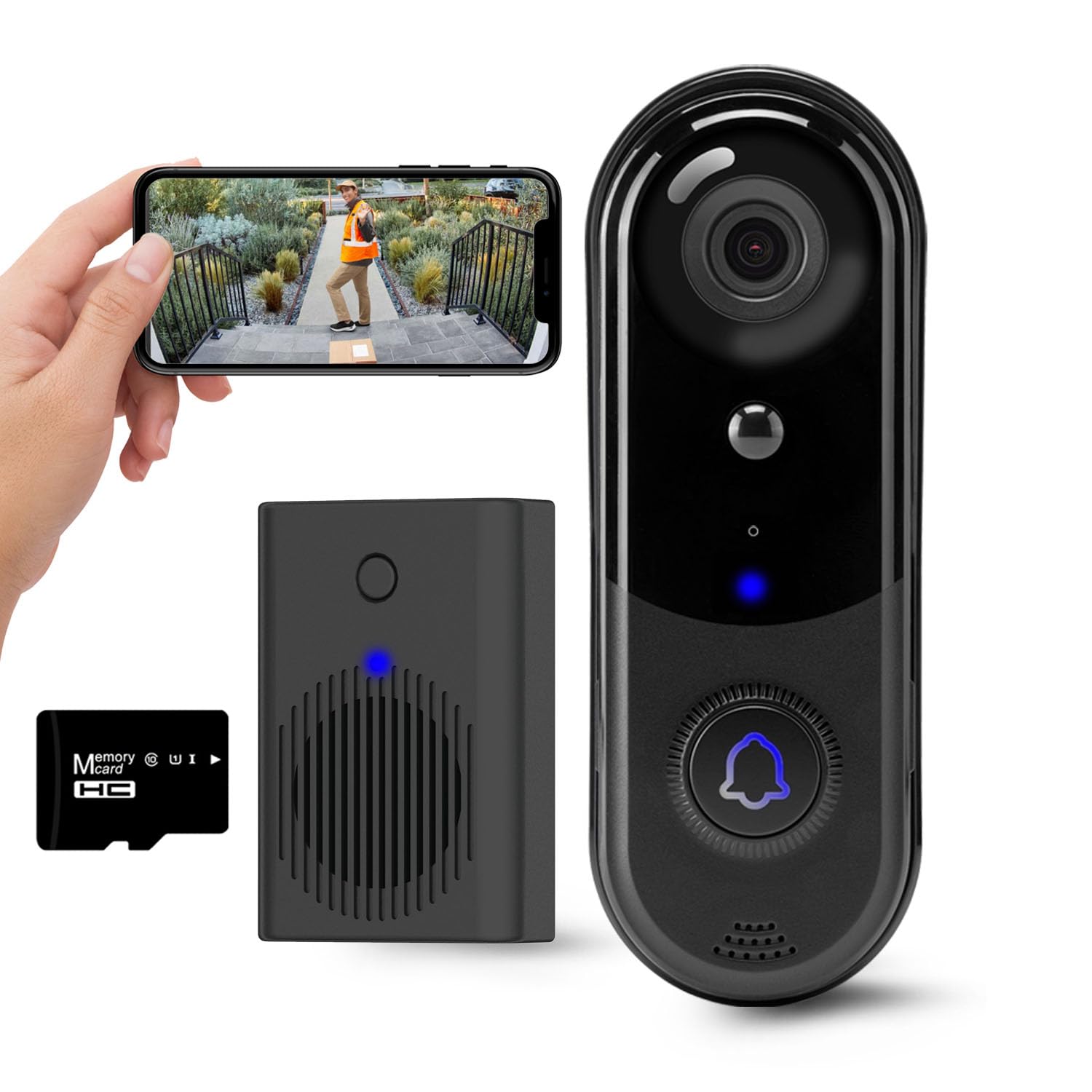
Buy this if the monthly fee is the thing you refuse to pay at any price. The 1080P HD lens gives you the standard resolution you need to see a face, and a built-in microSD slot plus cloud option means you can store the footage locally and never subscribe. PIR human-shape detection is the smart bit — it reads body heat and motion to reduce false alarms from cars, insects, and animals, and pings your phone only when something human shows up. IP65 protection covers rain, snow, and high heat.
Setup stays simple on the 2.4GHz Wi-Fi band. Family sharing lets you hand the feed to a partner or housemate so more than one person gets the alerts, and the built-in infrared lights switch to night mode automatically when the sun goes down. This is the value entry point in this lineup — it wears a 1080P sensor where the D210 and D205 above run 2K, so if zoom-in detail matters you take a step up.
The caution is real and worth hearing. A minority of owners have reported units failing to capture critical events and producing distorted images under hard conditions, while the connectivity and battery hold a mixed reputation. Buy it understanding what it is: a cheap doorbell that does the basics, not a substitute for a 2K step-up if video reliability at the edge cases is important to you.
The 1080P reality check: this shoots Full HD, not 2K, so it is a better fit for close-up doorbell use than long-range detail. The subscription-free local storage remains its single best reason to exist.
The obvious pick if: your budget is tight and you simply want a working camera doorbell with SD-card storage and no monthly plan.
Where it fits least: expect a sharper image at night and steadier connectivity from the 2K picks higher up this list.
2. Chamberlain myQ Video Doorbell
The 150° eye that reads a face in full color after dark.
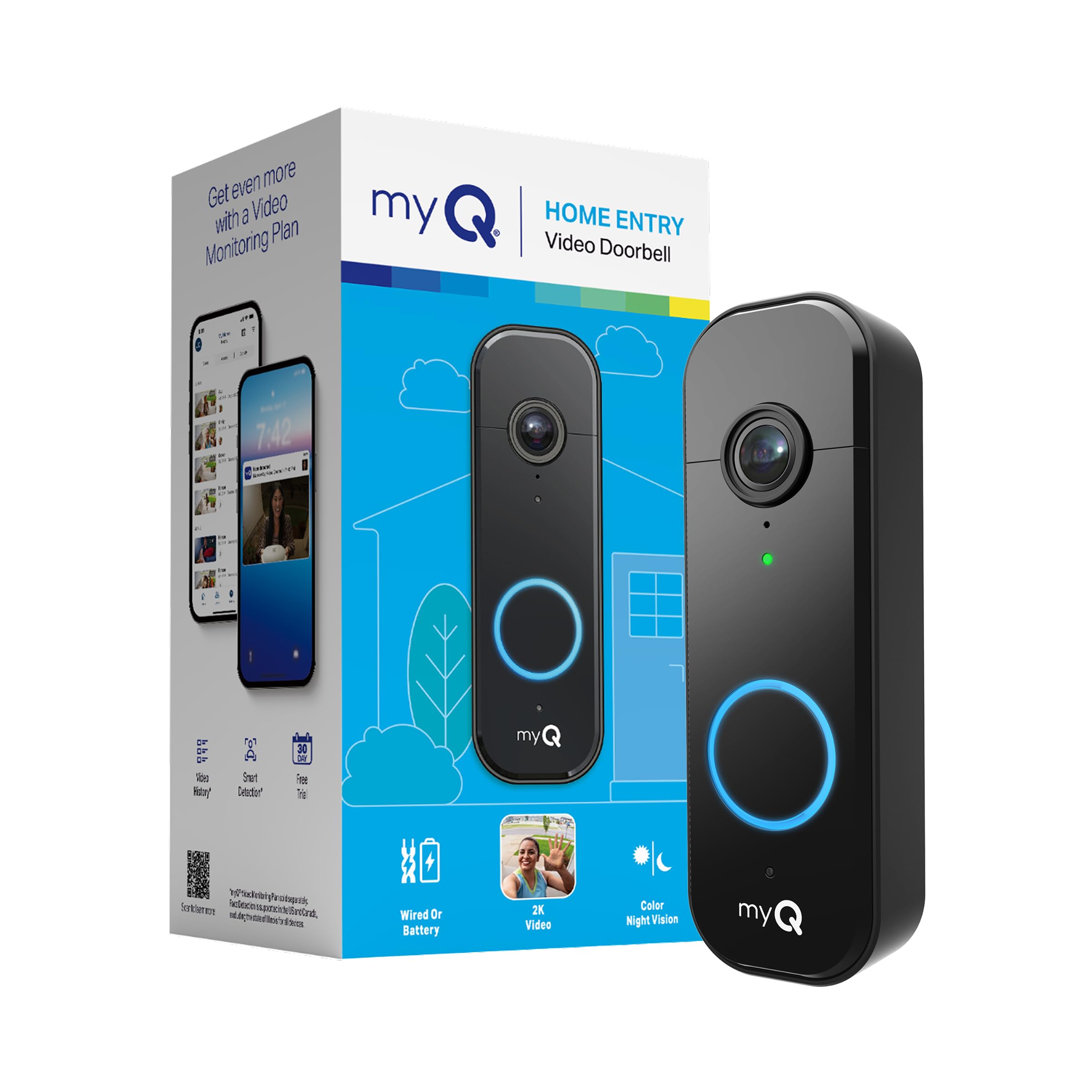
This is the one to pick if you want the sharpest picture at the door without climbing the price ladder. It records in 2K — twice the pixel detail of the standard 1080p you see on cheaper units — and pairs that with Color Night Vision, so the porch light failing does not turn your visitor into a grey silhouette. The 150° wide-angle lens takes in a broad slice of your entry. The housing mixes metal with plastic for a feel that reads sturdier than the plastic-only crowd.
Setup is the easy part: it runs on battery or wires into your existing chime, and the engineers clearly thought about the swap for people. Topping it up means pulling the doorbell off its mount and plugging in the included USB-C cable — no screwdriver, no battery hatch to fight. That same design is why it jumps out against the Taishixing HD Wireless Doorbell below, a 1080p unit listed as 5.51 x 1.77 x 1.18 inches versus this doorbell at 5.71 x 1.89 x 1.34 inches. If your porch has a spot near the door frame that has held older equipment for years, the extra trace of size here still slides into the same real estate.
What owners keep coming back to is how clear the feed looks in both daylight and darkness, which is exactly the two moments your doorbell has to perform. Face recognition through the myQ app is the feature that splits opinions — it exists, but the real value is the plain motion detection and live two-way talk, which is where most people actually live. The recurring reality check is the ecosystem: the richer AI alerts and area monitoring that make this doorbell feel smart are tied to a Video Monitoring Plan sold separately. If you want the full toolkit, you are back on a monthly bill.
Where this doorbell shines
- 2K video with Color Night Vision that keeps a face in color after sundown
- Battery or wired install, with a USB-C recharge you can do without tools
- 150° wide-angle lens covers the whole entry, not just the doorstep
- Metal-and-plastic build feels more durable than the all-plastic budget set
The honest trade-offs
- The best AI alerts and area monitoring need a Video Monitoring Plan sold separately
- Recharging means taking the unit off its mount
- Face recognition is the shakiest part of the feature set
Reach for this if: you want color night video and a 2K image at the door, and you are happy with plain motion alerts plus possible local storage.
Look elsewhere if: advanced AI person-recognition alerts are a must for you, since those sit behind a paid plan.
3. Tapo 2K Wireless Smart Video Doorbell D210
The head-to-toe watcher that stays awake for months at a time.
Start here if long battery life and no monthly fee are your two non-negotiables. This Tapo packs a 2K-resolution camera with a 160° ultra-wide head-to-toe field of view, which means the frame stretches from a visitor’s face down to the package at their feet. A 6,400 mAh rechargeable battery pushes the interval between charges out to months rather than weeks. You can save every recording on a microSD card up to 512GB instead of renting cloud space — the card is sold separately. Store footage to the card and the subscription becomes optional rather than required.
The 2K sensor fixes the one weak spot the more affordable Tapo D205 shares. That model tops out at 2K too, but this version puts the same sharp clarity through a slightly different lens setup. Frame for frame, this doorbell is the more generous of the two on battery — the 6,400 mAh pack here is the larger of the pair.
What wins people over is that it works and stays working — the connection holds, and the 2K video backs it up. Two-way audio works in real time, and the included chime rings indoors like a normal doorbell. The recurring gripe is battery life: while the long-life battery is a standout for most, a handful of owners see faster drain with heavy traffic and frequent alerts. Add the fact it runs on the 2.4GHz Wi-Fi band, and you want a solid signal where the doorbell sits.
Day-or-night clarity: the 2K sensor plus a full-color night mode with a motion-triggered spotlight keeps a visitor’s face readable after dark, which is the moment that matters most.
The catch: a microSD card is needed for the no-subscription experience, and the 2.4GHz-only connection asks for a strong router signal at the door.
The one to carry home if: you want head-to-toe coverage, an included indoor chime, and the option of skipping the cloud bill entirely with a memory card.
skip it if: you need 5GHz Wi-Fi support or you want the cloud plan’s richer notification history.
4. Tapo 2K Wireless Smart Video Doorbell D205
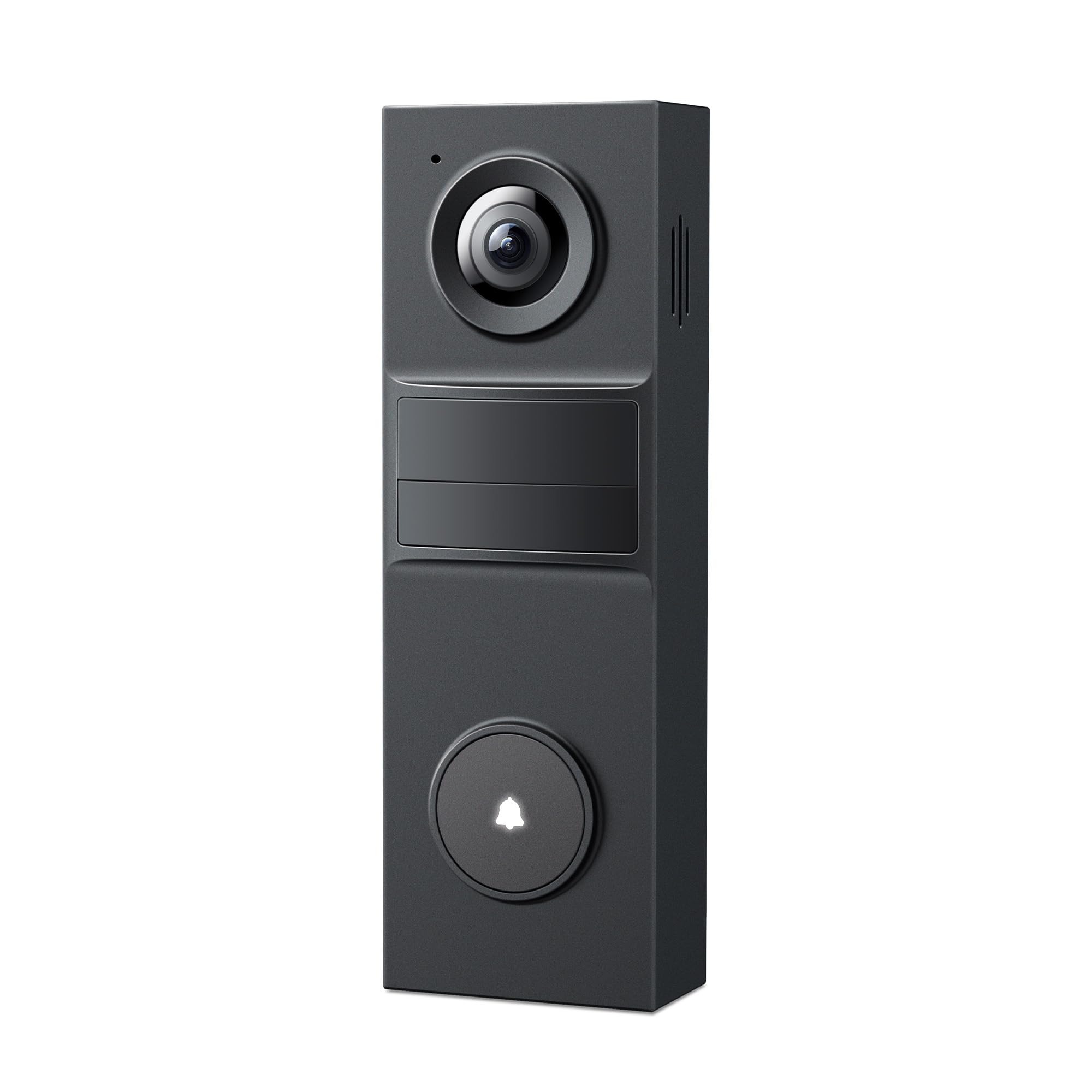
A 5200 mAh battery that runs for months between charges — but no chime in the box.
Skip straight to the doorbell if you want to skip the doorbell-flavored bills. This Tapo D205 relies on a 5,200 mAh built-in rechargeable battery rated for up to 180 days of use between charges, which lands it right between the cheapest units and the pricier premium set on stamina. The 2K lens matches the D210’s resolution, and the 160° field of view covers a broad entry. A high-end feature trickles in here too: person detection runs locally with no monthly fee, and custom activity zones let you tell the app which area of the porch deserves your attention.
The value proposition is unmistakable — 2K clarity plus free local storage for well under the price of most subscription-based doorbells. Drop in a microSD card (up to 512GB, sold separately) and push notifications to your phone as fast as any name brand.
Owners consistently praise the setup and the wide view, with the 160° lens catching the whole front porch without blind spots. The “no subscription needed” reality resonates hard here: microSD storage keeps your footage local and free, and video quality earns repeated praise. The honest gaps are the mixed reports on motion detection and the missing chime. An IP54 rating covers rain and dust, though it is a lighter weather shield than the IP65 units above.
Built for: anyone comfortable with a memory card and a phone app who wants a 2K picture with no monthly cost.
Heads up: there is no chime in the box and no fingerprint-resistance advantage — you supply the card.
Best for the budget-conscious camera-first shopper: buy the D205 if you already have a chime or only care about the phone alerts.
Skip if: you want the included indoor chime — step up to the D210 for that convenience.
5. KAMEP Video Doorbell Camera Wireless

The 180° lens that watches a package land — then keeps watching the porch.
Here is the pitch in one line: 2K clarity at up to a 180° field of view, so the frame catches a visitor head to toe and the box they set down, with no blind spot between them. That is verifiably wide for the price. The camera also runs head-to-toe with a tall aspect ratio. If porch piracy is your worry, the vertical framing here beats most of the competition for the simple reason that it actually shows the ground.
Setup is genuinely friendly. Adhesive pads mean rent-friendly install with no drilling at all, and a screw-in steel bracket option exists for anyone who wants an anti-theft mount. The 2.4GHz-only Wi-Fi restriction is a real constraint — you need a strong signal within roughly 10m of the router, and the setup notes are explicit about it. Two-way audio includes a voice-changer for talking to a stranger without giving away how you sound, plus preset quick replies like “Leave the package, thanks!” for when you are busy.
The wider view does cost something. At this width, the frame is more panoramic, which means faces sit a touch small unless you zoom in the app — the same trade every ultra-wide doorbell makes. The 2K sensor renders 33ft infrared night vision in near-total darkness, and the included chime takes care of indoor ringing. The bite: battery life gets mixed reports and a minority of units have drained quickly enough to demand frequent recharges, so if the camera placement sees heavy foot traffic, plan to plug it in.
Wins on the spec sheet
- 180° field of view catches a delivery and the front door in one frame
- 2K video with 33ft infrared night vision for pitch-dark porches
- Rent-friendly adhesive mounting with a screw-in anti-theft bracket option
- Works with both Alexa and Google for voice commands
What the reviews flag
- 2.4GHz-only Wi-Fi — you need a router within roughly 10m
- Mixed feedback on battery stamina under heavy use
- Panoramic framing makes faces small unless you zoom in
Grab it if: porch-theft coverage matters most and you want to see the ground, not just the visitor.
Think twice if: your router sits far from the door or your camera position sees constant traffic.
6. eufy Security Video Doorbell C31

Pair it with your wiring and it records around the clock.
Buy this one for the dual power design. Run it on the included 6,500 mAh rechargeable battery, or wire it into your existing doorbell circuit and it flips into 24/7 recording with a 5-second pre-roll on motion events — meaning it keeps the seconds leading up to an alert, not just the moments after. That 6,500 mAh cell is the largest capacity in this roundup. The 2K FHD sensor with a 4:3 aspect ratio leans its frame tall, so the view runs head to toe.
The head-to-head against the sibling eufy is worth spelling out. Compared with the E340, the C31 is sufficient video capture — the E340’s extra downward-facing camera reads as overkill for a normal porch, since the C31 already handles both the visitor and the ground with its tall 4:3 frame. Save the add-on spend for something else. Hardwiring also bypasses your existing chime, which some households count as a benefit and others as an adjustment.
The core wins are easy. Setup is straightforward and install takes about 15 minutes, video is sharp in day and night, two-way audio sounds good, and local microSD storage means no monthly fee is required. The recurring concern is Wi-Fi reliability — connectivity is the weak spot in the owner reports, with complaints about dropped signals and missed events. A reboot and careful placement near the router tend to help; the hardware itself earns praise for durable build and lag-free recording once it is wired.
Wired vs. wireless: hardwired open up continuous recording and a 5-second pre-roll buffered before each event — footage the battery-only doorbell above simply cannot capture.
The honest read: the 2K picture, the no-subscription local storage, and the biggest battery here all hold up; dependable Wi-Fi is the piece to verify before you commit.
Choose this if: you have existing doorbell wiring and want nonstop recording without a subscription.
Pass on it if: your door sits at the edge of your Wi-Fi coverage — the C31’s weakest link is connectivity.
7. Aqara Doorbell Camera G400

A wired front door for Apple HomeKit homes that never wants to leave it.
This is the choice you make when Apple HomeKit is already your smart-home hub. Aqara’s G400 supports HomeKit Secure Video for encrypted recording and iCloud storage, and it also plays with Alexa, Google Assistant, and SmartThings — rare breadth for a heavily HomeKit-leaning doorbell. Hardwired power over PoE (Power over Ethernet, where a single network cable handles data and electricity) or an existing 8–24V AC/DC line keeps the unit powered without a battery to think about. Wi-Fi 6 on 2.4GHz and 5GHz rounds out the connectivity piece.
The camera spec is the standout: 2K HD with a 165° ultra-wide field of view in a 3:4 aspect ratio. That tall frame sees packages at your feet and a face at eye level at once — the vertical look conventional 16:9 doorbells miss. A pair of nearly invisible 940nm infrared LEDs handles total darkness without visibly announcing the camera, so it monitors discreetly rather than lighting up your porch like a spotlight. An IP65 enclosure shrugs off rain, dust, and serious weather.
The reviewer pattern is clear: HomeKit integration is the reason buyers here show up, and reviewers reward the quality and setup. A fair caveat is the brightness cycle — some owners note that direct sunlight can wash the image out, a common reality of a camera pointed at a bright doorway. HomeKit integration also caps resolution at 1200p when running through Apple’s system, and full HSV use requires an iCloud+ plan plus an Apple home hub.
What earns the premium: Wi-Fi 6 with WPA3 security, local person and vehicle detection that runs on the device without cloud processing, and a durable IP65 housing built for weather.
Where it costs you: you supply a microSD card, and HomeKit Secure Video needs an iCloud+ subscription and an Apple home hub to work — plus resolution drops to 1200p through Apple’s pipeline.
The right doorbell if: you’re inside the Apple HomeKit ecosystem and want hardwired reliability with encrypted recording.
Honest limit: an Android-only household gets the hardware but loses the HomeKit advantage that justifies the premium.
8. Blink Battery Doorbell 2K+

Three AA batteries, a head-to-toe 2K view, and it plugs into your existing chime.
This slots into the Blink app like it was always there if you already run Blink cameras around the house. The 2K+ model shoots in 2K resolution with a head-to-toe view that catches faces up top and deliveries down low. It runs on three AA Energizer lithium batteries — a standardized power source you can buy anywhere, no proprietary pack to replace. The included Sync Module Core ties it into the Blink system. The whole thing withstands weather with an IP65 rating that covers rain, dust, and severe conditions.
Wire it to your existing doorbell circuit and the ring happens inside the house exactly like a normal doorbell, plus you get notifications on the Blink app. Run it entirely wire-free and the app carries every press. Battery life, on the doorbell versions, runs longer than Blink’s standard cameras according to owners, which matters because a front-door unit sees constant activity. Two-way audio with noise cancellation keeps conversations clear, and night vision shifts between color and black-and-white automatically as the light fades.
The recurring gripes are real but sized: the setup directions are minimal and can be confusing, and corners usually need a separate wedge adapter for the right angle. On the smart side, the useful AI alerts and clip history sit behind a compatible Blink subscription sold separately — person detection works from the start, but the richer event intelligence is a paid add-on. Physical detection area also tends to be smaller than expected, so placement matters.
Reasons owners stick with it
- 2K resolution with a head-to-toe frame that catches a package on the step
- Runs on three standard AA Energizer lithium batteries you can buy anywhere
- Sync Module Core included, so it fits straight into an existing Blink setup
- IP65 weather rating and 2-way audio with noise cancellation
Worth knowing before you buy
- Best AI alerts and longer clip history need a paid Blink subscription
- No indoor chime ships with this — add a wire or a module
- Detection area is smaller than some buyers expect
The natural upgrade if: you already live in the Blink ecosystem and want a cleaner 2K doorbell that plugs into your existing chime.
The trade for the price: advanced AI alerts sit behind a Blink subscription, so the smart layer is not free here.
9. SwitchBot Video Doorbell Camera Wireless

A doorbell that comes with its own indoor screen, not just a phone app.
Not everyone wants to dig out a phone every time someone knocks. This SwitchBot ships with a 4.3-inch color monitor that handles six functions through a single touch — answer or end a call, pull up live or recorded video, or fire off a quick response to a delivery without opening the door. The 5,000 mAh battery powers the outdoor unit. The 2K camera delivers a 165° ultra-wide head-to-toe view in a 16:9 frame. A free 4GB microSD card is included and the system supports cards up to 512GB, so the no-subscription model works from the start.
The monitor is the piece that stays nearby — it needs its own power cable, and SwitchBot recommends keeping it within a radius of about 5 metres of the doorbell for a strong, instant connection. Ideal for homes where a phone-first setup is awkward: it works even without home internet, which makes it practical for houses with kids or older family members who want a simple screen on the wall. A built-in Wi-Fi repeater in the monitor also helps the 2.4GHz link stay steady around the clock.
The honest trade-offs are on the connection and detection side. Some buyers report the monitor can be slow to wake and show the feed, with motion videos having playback issues on the screen. The aggressive fisheye angle occasionally misses ground-level or package detail. For people who want a physical screen and no monthly fee, though, the SwitchBot setup covers a niche no other pick here does — and the included card means the no-subscription promise is real from day one.
The screen is the point: a dedicated 4.3-inch monitor rings and shows your visitor without open up a phone, which matters when your hands are full.
Yes, it has limits: the monitor must sit close to the doorbell for the best connection, and live view can lag when it first wakes.
Worth having if: you want a physical screen by the door and local storage with no recurring fee.
The let-downs to weigh: the monitor needs power and a close signal to the doorbell, and a few owners find the wake-up laggy.
Know the Specs
Battery capacity in mAh and how long it really lasts
The mAh number (milliamp-hours — the total energy the battery can hold) is the single best predictor of how often you will climb up to recharge. Higher-capacity cells like the 6,500 mAh pack on the eufy C31 and the 6,400 mAh on the Tapo D210 tend to buy you months of ordinary traffic between charges. Actual life depends on how many alerts your camera fires each day, so a busy street tires a battery faster than a quiet cul-de-sac. Look for an app that warns you before the battery drops too low so you are not caught with a dead doorbell.
Local storage vs. cloud and what “no subscription” means
No-subscription doorbells save recordings to a microSD card you insert yourself, typically up to 512GB, which keeps your footage on hardware you actually own. Cloud plans add longer history, richer AI alerts, and remote playback, but they attach a recurring fee. The catch with local storage is that the card is almost never included — you supply it — and if the camera is removed from its mount, the footage goes with it. For most budget buyers, the memory card option is the right trade.
Common Questions
Will a budget smart doorbell work if I only have 2.4GHz Wi-Fi?
Do I need a microSD card for these doorbells to record without a subscription?
How long does the battery last on a rechargeable video doorbell?
What does the IP rating on a doorbell actually mean?
Will a video doorbell work with my existing doorbell chime?
Can I see packages on the doorstep, or just the visitor?
Do I need a subscription plan to get motion alerts?
Can I install a smart doorbell in a rental without drilling?
Which is sharper, 1080p or 2K, and does it matter at the door?
Does a hardwired doorbell record all the time?
The Bottom Line
For most people shopping for budget smart doorbells, the winner is the Chamberlain myQ Video Doorbell because it pairs 2K video and full-color night vision with the flexibility to run on battery or your existing wiring. If long battery life andan included chime are your priorities, grab the Tapo D210. And for seeing packages land at your feet, the KAMEP Video Doorbell is the one to reach for.
One honest nudge before you click: the Tapo D210 is the smartest pick in this lineup if you value staying off the cloud forever — its reliability and video quality are the twin reasons it belongs in so many homes. Buy the card once, recharge it a couple times a year, and a good budget doorbell quietly does its job for a long time.
How we choose
We do not accept paid placement. Every pick is matched to a real buyer and a real use-case; we do not hands-on test units.
Sources
Specifications: manufacturer listings and product documentation. Review insights: verified customer reviews, as of October 2026. Pricing: not shown on this page (it changes often); check the current price via the retailer link.
As an Amazon Associate, Home Digitized earns from qualifying purchases. This does not affect which products we feature.