
Specs are compiled from manufacturer listings and verified buyer reviews and can change over time — please confirm the key details on the product page before buying.
If you want your short film to look like a film and not a phone clip, the camera body matters less than three things: clean 4K, reliable autofocus, and a picture you can color-grade without it falling apart. The picks below range from entry-level kits to full-frame cinema bodies, and each one earns its place for a specific kind of shooter — a solo creator, a two-person crew, or someone building a rig for client work.
This guide is built by comparing the manufacturers’ published specifications and the patterns across verified customer reviews, so you get each pick’s real strengths and trade-offs instead of marketing spin.
Sensor size, codec, and lens mount decide how much you can push the footage in post. This breakdown of the best cameras for short films covers the specs that actually show up on screen.
Top Picks


How To Choose The Best Cameras for Short Films
Short films compress a lot of visual storytelling into a few minutes. That means your camera needs to hold detail in shadows, track a face as it moves, and give you enough data to grade your shots without banding or mush. Before you pick a body, decide what your final edit actually needs.
Sensor size and what it does for your frame
A full-frame sensor is larger than the image circle of most older lenses, so it captures more light per pixel and generally gives you shallower depth of field — the blurred-background look that helps separate your actor from the room. An APS-C or Super 35 sensor sits smaller, which crops your field of view but often pairs well with telephoto lenses for tight shots. Neither is wrong; they just set a different baseline for how your images render.
Bit depth, codecs, and room to grade
Bit depth is how much color and brightness data each pixel holds. A 14-bit file carries more tonal steps than a 10-bit one, which means smoother gradients in skies and skin tones after you push contrast. Most of these cameras shoot Blackmagic RAW, ProRes, or a log profile — a flat-looking recording mode you color-correct in editing to bring back contrast. If you plan to grade heavily, a body that records 12-bit or 14-bit files gives you more room to work before the picture breaks apart.
Side-by-Side Comparison
| Model | Best For | Sensor | Autofocus Points | Bit Depth | Amazon |
|---|---|---|---|---|---|
| Sony Cinema Line FX30★ Best Overall | Solo creators wanting cinema results | 20.1MP Super 35 (APS-C) | 495 | 14 Bit | Amazon |
| Nikon Z 30 KitBest Starter Kit | Vloggers and beginner filmmakers | 16-50mm kit, APS-C | 209 | 14 Bit | Amazon |
| Panasonic LUMIX GH4Best for Slow Motion | Budget 4K video with slow-motion | 16.05MP Micro Four Thirds | 49 | 14 Bit | Amazon |
| Blackmagic Pocket Cinema 4K | Raw footage and DaVinci editing | 4/3” 4096 x 2160 | — | 12-bit RAW | Amazon |
| Nikon Z 6II | Hybrid photo and video work | 24.5MP Full Frame | 273 | 14 Bit | Amazon |
| Canon EOS R8 | Lightest full-frame hybrid | 24.2MP Full Frame CMOS | 1,053 AF zones | 10 Bit | Amazon |
| Blackmagic Cinema 6K | Full-frame raw at scale | Full-Frame 6K (6048 x 4032) | — | 12-bit RAW | Amazon |
| LUMIX S5II | Handheld video without a gimbal | 24.2MP Full Frame | 779 | 10 Bit | Amazon |
| LUMIX S5IIX | ProRes to external SSD | 24.2MP Full Frame | 779 | 10 Bit | Amazon |
| Sony Alpha 7 IV | High-detail stills and video | 33MP Full Frame | 693 | 14 Bit | Amazon |
| Canon EOS R6 Mark II | Fast action and low light | 24.2MP Full Frame CMOS | — | 14 Bit | Amazon |
Detailed Reviews
1. SONY Cinema Line FX30 Super 35 Camera, Gray
Our pick — 4.5+★ from 500+ verified ratings; the strongest balance of quality and price.
A Super 35 cinema body a solo shooter can carry all day.
The FX30 is the camera to beat here, and the reason is simple: it puts a genuine cinema sensor into a body a solo shooter can carry all day. That sensor is a 20.1 MP Exmor R APS-C (Super 35mm format) — a chip roughly the size of a movie camera’s frame, large enough to capture plenty of light per pixel. Sony pairs it with S-Cinetone, a picture profile that gives you a cinematic look straight out of the camera without grading. If you have never color-corrected footage, that saves you an entire step in post.
Autofocus is where it separates itself from almost everything else on this list. It carries 495 autofocus points, and the Panasonic GH4 below runs just 49 — a gap that means the FX30 locks onto a moving actor far more reliably while you pull focus by touching the screen. The body also supports Flexible ISO, Cine EI Quick, and Cine EI Log shooting modes, plus user LUTs you can apply to the LCD and HDMI output and embed in your clips. In plain terms: you can see your final look on set, not just after editing. Dual Base ISO with a 14+ stop range (14-plus stops of brightness detail between shadow and highlight) keeps clean images in tricky light.
The trade-offs are real but manageable. Owners shooting long-form content for a living report the battery dying after one to two hours and recommend a spare battery pack for charging while shooting. It records to SD, SDHC, or SDXC cards and takes Sony E/FE mount lenses, so you are not locked into one glass family. That is also true of the Sony Alpha 7 IV further down, but the FX30 keeps its cinema-first menu and codecs.
What earns it the top slot
- 20.1 MP Super 35 Exmor R sensor with 14+ stop dynamic range for shadow control
- S-Cinetone and Cine EI modes give graded-looking footage straight from the card
- 495 autofocus points track moving talent without hunting
- User LUTs visible on the LCD and embedded in clips so you shoot the look you want
The honest cost of ownership
- Battery runs one to two hours when you shoot continuously — plan for spares
- Cine EI modes reward you only if you learn them first
- Super 35 crops your field of view, so wide shots need a wider lens
Grab this one if: you shoot solo, want pro-grade color and autofocus without a crew, and can budget for a second battery. It is what a high-volume content creator reaching for a Sony E-mount would pick.
Think twice if: you need all-day battery life straight from the start with no spares.
2. Nikon Z 30 with Wide-Angle Zoom Lens
A lens-included APS-C kit you can shoot with on day one.
What makes the Z 30 worth a look for a first film is that it arrives as a working setup, not just a body. The box includes the Nikkor Z DX 16-50mm f/3.5-6.3 VR lens, a rechargeable battery, charger, strap and USB cable — so you can shoot on day one without buying glass. The 16-50mm zoom covers wide to short portrait framing, which suits both establishing shots and closer dialogue coverage. The 209 autofocus points track people and pets with eye detection, and the flip-out touchscreen turns the camera into a self-monitor for solo shooting.
For streaming and simple capture, it does Full HD 60p over USB-C and 4K over HDMI, plus constant power over USB-C if you keep it wired to a wall. Video quality is capped at 4K 30p, and here is the catch worth flagging: shoot long 4K takes and the body can overheat. Buyers report: “I like everything about this camera, and I knew it would heat up on long 4k shots. I thought I could deal with it but shooting in 4k 30fps it overheats even more than I expected. I lost many good takes.” That makes it a strong choice for short, controlled clips but a poor match for long unbroken takes.
It mounts Nikon’s full NIKKOR Z lens line, so you can add fast primes or a macro later without changing bodies. The one thing that surprises beginners: there is no viewfinder, so you frame everything on the screen. Most adapt quickly, but if you shoot outdoors in bright sun, that glass viewfinder is gone.
What buyers love most: the sheer quality of the images for a starter kit keeps coming up in feedback, with autofocus close behind — a pairing that makes it easy to hand to someone who has never shot video before.
The trade-off to weigh: no electronic viewfinder and finicky heat behavior on long takes mean it suits quick, composed shots rather than marathon runs.
Reach for this if: you want a lens-included kit that doubles as a webcam and a vlogging camera for your first short film.
Look elsewhere if: you plan to roll 4K for 30 minutes or more without a break.
3. Panasonic LUMIX DMC-GH4KBODY Mirrorless Camera
An older Micro Four Thirds body that still shoots true 4096 x 2160 4K and 96fps slow motion.
If you are building a first rig on a careful budget, the GH4 is worth knowing about because it shoots 4K 24p cinematic video at 4096 x 2160 — true cinema resolution, not just UHD — plus 4K 3840 x 2160 at 30p and 24p. Its 49-area autofocus is a fraction of what modern bodies offer, but this camera has something else going for it: true 1080p slow motion up to 96 frames per second. You can stretch a one-second action beat into several seconds of smooth footage in an edit, which is a huge storytelling tool when your whole film runs a few minutes.
The body is a magnesium alloy shell with a metal lens construction, and a durable shutter rated for professional use. A 16.05MP Micro Four Thirds sensor and a 14-bit file depth give you gradeable footage, though the Micro Four Thirds mount means the sensor is smaller than full frame. The reviews are blunt about what that costs you: the 4K crop factor of around 2.5x can squeeze wide interior shots, and results fall apart in low light above ISO 1600. For a controlled, well-lit short film, neither limitation bites. Both the GH4 and the Blackmagic 4K below sidestep the overheating issues that plague smaller bodies, since they are built for continuous rolling.
Owners of long-standing Canon gear have called this a video-first upgrade, but the honest catch is that it has no 4K slow-motion frame rates beyond the standard list, so check your shot list before you commit.
The case it makes for itself
- True 4K cinema resolution at 24p and UHD at 30p from a proven shooting standard
- 1080p slow motion up to 96 fps gives you cinematic pacing tools
- Magnesium alloy build withstands a real production schedule
- Mirrorless Micro Four Thirds mount keeps lenses compact and affordable
Where it shows its age
- Heavy 2.5x crop in 4K forces you to go wider with your lenses
- Only 49 autofocus points, so face tracking relies on you
- Low-light image gets noisy above ISO 1600
Choose it for: controlled, well-lit shots where you want real cinema resolution and slo-mo without modern prices.
Move on from it if: your scenes lean on dark interiors or a wide field of view.
4. Blackmagic Design Pocket Cinema Camera 4K Power Bundle

A Micro Four Thirds body that records 12-bit Blackmagic RAW and ships with DaVinci Resolve Studio.
The reason a short filmmaker picks this camera over a hybrid is the file format. It records 12-bit Blackmagic RAW in all formats up to 4K, plus Apple ProRes, which means every frame carries enough color and light data for serious grading. A 4/3” (Four Thirds) image sensor with a native resolution of 4096 x 2160 sits at the heart of it, paired with a Micro Four Thirds active lens mount and 13 stops of dynamic range. Dual gain ISO up to 25,600 helps keep noise down when the room is dim.
What seals it for a lot of shooters: the bundle includes the DaVinci Resolve Studio editing and color-grading program — a tool that handles editing, color correction, visual effects and audio post in one place. That is a complete workflow before you have spent a cent on software. The body is a carbon fiber polycarbonate composite shell with a multifunction handgrip, and a 5” LCD that is bright enough to make an external monitor unnecessary. Storage runs to SD/UHS-II and CFast 2.0 cards, or to an external SSD over USB-C, and audio can come in through a built-in stereo mic or external mics over mini XLR or 3.5mm.
Battery life is the recurring gripe — one filmmaker shoots with three of these bodies and rates the internal power as questionable, buying a separate battery pack that runs 12 hours. That is a real cost, but the bundle already ships with two extra LP-E6 batteries and a dual charger. If you plan to grade heavily, this is one of the few bodies on the list that gives you that much room in a single file.
Straight from the review pages: shooters describe the image as clean and praise the range of settings that let you dial in any cinematic look you want — it is a body people buy again once they understand it.
One thing to plan for: with power this thirsty, a battery pack or long USB-C run should be in your kit budget from day one.
Built for: the shooter who wants raw files, grading control, and editing software without buying them separately.
Skip the bundle if: you would rather shoot in-camera and skip the color suite.
5. Nikon Z 6II Full-Frame Mirrorless Stills/Video Hybrid

A 24.5MP full-frame hybrid that shoots 4K 60p video and stills from the same body.
Filmmakers who also shoot stills find a lot to like here. The Z 6II packs a 24.5MP BSI full-frame sensor (back-illuminated, which means it gathers more light in dim rooms) and shoots 4K UHD 60p video with full pixel readout — every pixel on the sensor contributes to the frame rather than skipping rows. That matters for image sharpness and detail, and it is the same principle the Canon R8 below leans on with its 6K oversampling.
Two features make it crew-friendly. It has dual card slots running CFexpress/XQD plus UHS-II SD, and it takes a vertical battery grip plus USB-C constant power for long shoots. It carries 273 autofocus points with phase detection, and mounts Nikon’s NIKKOR Z lenses as well as around 360 F-mount NIKKOR lenses with the FTZ adapter (a ring that lets older Nikon glass fit the newer mount). 400+ ratings back its track record.
The honest limit for solo shooters: the screen does not tilt forward, so you cannot self-monitor while shooting to camera — you would use the app as a workaround. Also, the focus tracking is not the fastest here, with reviewers noting it can lose a subject in a busy frame.
Why it holds its ground
- 24.5MP BSI full-frame sensor performs well in low light
- Uncropped 4K UHD 60p with full pixel readout
- Dual card slots (CFexpress/XQD plus UHS-II SD) protect a shoot
- Accepts about 360 F-mount lenses with the FTZ adapter
The niggles to know
- Screen does not face forward — no easy self-monitoring
- Focus tracking can drift in busy, fast-moving frames
A natural fit for: the photographer who shoots a few films and wants one body that handles both without compromise. If you already own Nikon F-mount glass, the adapter is your gateway.
Look at the LUMIX S5II if: forward-facing monitoring and rock-solid tracking matter more to you.
6. Canon EOS R8 Mirrorless Camera Body

Canon’s lightest full-frame RF-mount body, with uncropped 4K 60p oversampled from 6K.
The R8 earns a place by being Canon’s lightest full-frame RF-mount mirrorless camera, with a 24.2 million pixel CMOS image sensor and a DIGIC X image processor. Cropped images suffer less when your sensor is bigger, and the R8 uses a full-frame sensor to keep noise low and detail high. For short films, its headline spec is uncropped 4K movie recording at up to 60 fps, oversampled from 6K. Oversampling means the camera gathers more data than the frame needs, then shrinks it down — which is why edges and fine textures look sharper than their resolution alone would suggest.
Autofocus is a genuine strength here. The Dual Pixel CMOS AF II system covers up to 100% x 100% of the frame with 1,053 AF zones and uses deep learning (software trained on images to recognize subjects) to spot people, animals, vehicles and even aircraft, trains, and horses. In practice, that means you can hand the camera to an actor and let it keep a face in focus. It also records Full HD high-frame-rate video at up to 180 fps for slow motion, and supports Canon Log 3 and HDR PQ for grading flexibility. The maximum record time is 2 hours.
Two things to know. The battery runs down faster than some owners expect, so a spare is wise. And this is a body-only listing with a crop sensor, so lens cost sits on you separately. That said, it stacks up well against the Sony Alpha 7 IV further down — both are full-frame hybrids, and while the Sony gives you a higher 33MP resolution, the R8 offers the lighter body and full-width autofocus coverage.
The takeaway: with 450+ ratings behind it, buyers consistently describe it as a superb full-frame value that handles video and stills with ease — you are not taking a risk on an unproven body.
Budget for: spare batteries, since owners are clear that runtime, not image quality, is the limiting factor in a long shoot day.
Best for: shooters who want a light full-frame hybrid and 4K 60p without hauling a heavy rig.
Not your pick if: you shoot full-day projects and want to run on one battery.
7. Blackmagic Design Cinema Camera 6K, Full Frame, L Mount

Full-frame resolution and raw file depth for a serious post workflow.
For a filmmaker who shoots for the edit rather than the card, this body is worth understanding. It carries a Full-Frame 6K image sensor with a native resolution of 6048 x 4032 and a Leica L lens mount, plus 13 stops of dynamic range and dual gain ISO up to 25,600. A built-in OLPF (an optical low-pass filter that softens fine patterns to prevent moiré shimmer) handles detail better than many counterparts. It records 12-bit Blackmagic RAW for cinema-quality images — and also real-time H.264 proxies (low-resolution copies that make editing faster on slower machines).
The workflow is where it wins. It records to a CFexpress Type B card or to external SSD storage over USB-C, mics plug in through mini XLR or 3.5mm, and it ships with the DaVinci Resolve Studio activation code for a full grading environment. The 5” HDR LCD is adjustable and rated at 1500 nits, so you can see your image even in daylight. It also shoots 18x digital zoom for punch-in shots and manages 6144 effective video resolution.
The honest trade-offs start with power and accessories. There is no in-body image stabilization, so handheld work relies on a gimbal or a post-stabilization step. It needs specific SSD models (check the compatibility list before buying), and CFexpress cards run pricey though they open up the maximum resolution and frame rate. That said, the full-frame sensor at this body’s price point is noteworthy.
What stands out
- Full-frame 6K sensor at 6048 x 4032 with 13 stops of dynamic range
- 12-bit Blackmagic RAW plus H.264 proxies for a fast edit
- L mount opens the door to many pro lenses
- 1500 nit tilt LCD makes on-set monitoring easier
What to budget for
- No in-body stabilization — plan a gimbal or post workflow
- Compatible SSDs are specific; CFexpress cards add cost
- Battery life is limited and a battery pack is worth considering
This is the one for: a filmmaker who wants full-frame raw and a proper color pipeline and treats lighting and stabilization as separate line items.
Walk away if: you want a grab-and-go hybrid with stabilization built in.
8. Panasonic LUMIX S5II Full Frame Mirrorless Hybrid

Handheld shots that look like they came off a gimbal.
The S5II is the pick for anyone who wants to move with the camera and keep the footage smooth. It has a 24.2-MP 35mm full-frame CMOS sensor and, crucially, Active I.S. — Panasonic’s stabilization system designed to keep walking shots steady in video. That means you can follow an actor down a hallway without a gimbal rig, which is a big deal for a short film made on a small crew. The 779 autofocus points use Phase Hybrid AF (a system that locks focus by comparing light from different angles) with subject detection that keeps tracking even when several people move at once.
It also records 6K 30p Open Gate video with unlimited recording — the heat dispersion mechanism combines a small fan with a high-efficiency heat sink to keep the camera running without a time cap. A 14+ stop V-Log/V-Gamut profile plus REAL TIME LUT lets you grade color in-camera. Video journals love this flexibility, and so do filmmakers who need speed. Compared to the Sony Alpha 7 IV, the S5II edges ahead on stabilized handheld work, while the Sony leads on resolution with its 33MP sensor against the S5II’s 24.2MP.
The one recurring complaint across reviews is battery drain. Owners suggest carrying spares or a battery pack, which is a fair note for anyone doing long days. The kit also bundles the S-R2060 lens, so you can start shooting immediately.
What stands out in real use: the autofocus has won over shooters who switched from other systems, and the built-in stabilization is strong enough that many describe it as gimbal-grade for handheld projects.
The honest catch: battery life is the most common complaint, and some shooters find their custom settings do not save between power cycles — note if you rely on specific profiles.
Best fit for: a solo filmmaker who shoots handheld dialogue scenes and wants solid autofocus with in-body stabilization.
Not your body if: you need the highest resolution or absolutely uncompromising runtime on a single charge.
9. Panasonic LUMIX S5IIX Mirrorless Full Frame Camera
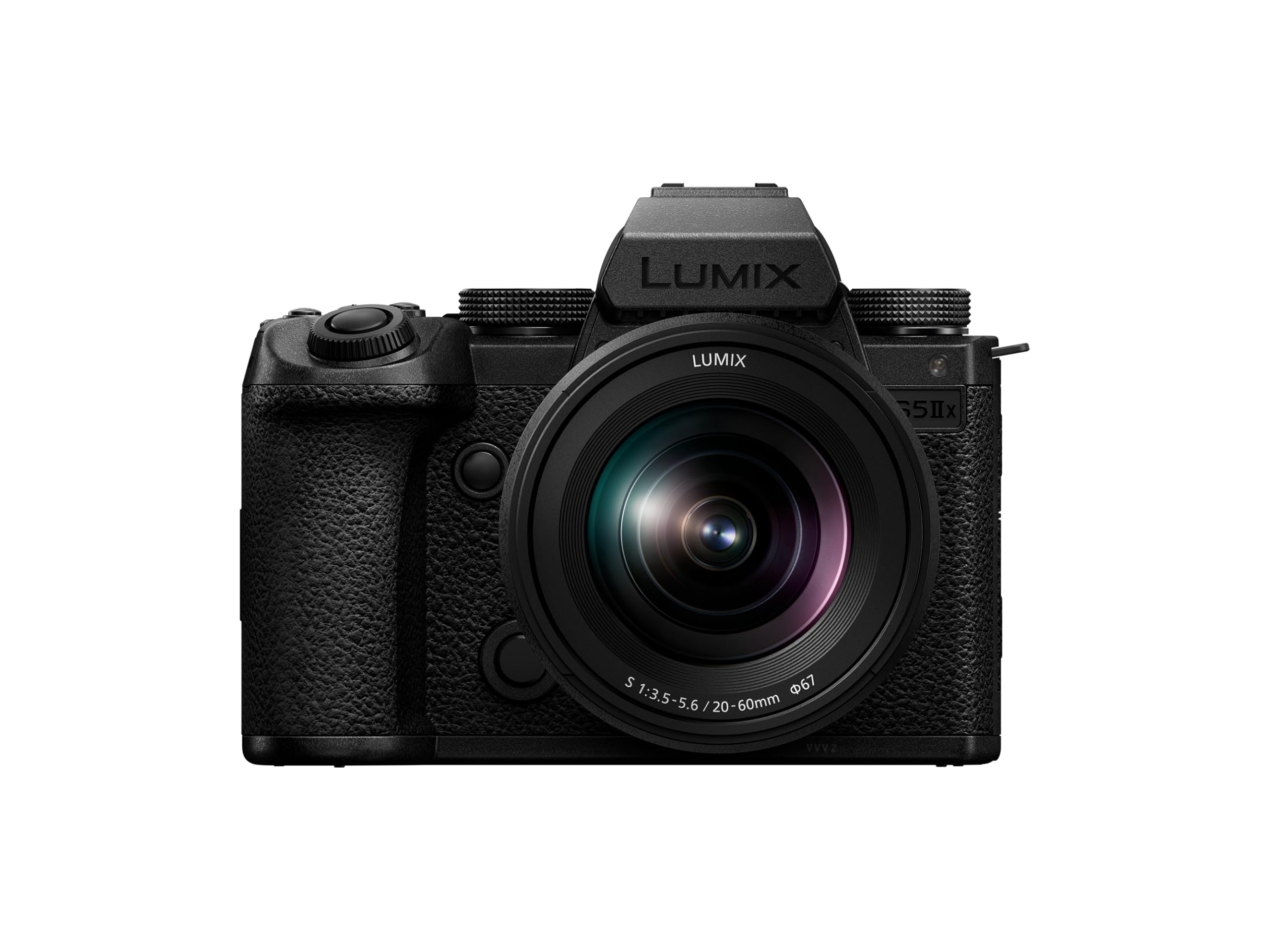
The S5II with the codecs a pro post-house wants to see.
Take everything that makes the S5II excellent and add a more professional set of recording formats, and you have the S5IIX. It shares the 24.2-MP 35mm full-frame CMOS sensor and 779 phase-detection autofocus points with its sibling, and adds ProRes and All-Intra recording to an external SSD over USB-C. All-Intra means every frame is stored whole rather than compressed between frames — better for editing and grading, and heavier on storage. The body ships with the Lumix S 20-60mm f/3.5-5.6 lens, which reaches from ultra-wide to short portrait framing and focuses close enough for near-macro work.
Its stabilization is equally strong, with Active I.S. supporting walking shots so handheld footage stays watchable. It records 6K 30p Open Gate video with unlimited recording, aided by that same fan-and-heat-sink cooling design. A 14+ stop V-Log/V-Gamut profile plus REAL TIME LUT handles in-camera grading. It carries 9 fps continuous shooting for stills too.
The battery is the tradeoff that keeps coming up — multiple shooters describe it as weak and recommend spares. The all-black design is a nice touch for discreet work, but if you want the exact same sensor and autofocus at a lighter price, the S5II above is the more economical twin.
Why pros gravitate here
- ProRes and All-Intra recording to external SSD over USB-C
- 24.2-MP full-frame sensor with 779 phase-detection AF points
- 6K 30p Open Gate unlimited recording with fan-assisted cooling
- Ships with the Lumix S 20-60mm lens for an instant shooting kit
What the reviews flag
- Battery runs out faster than ideal — buy spares
- The 800-plus page manual reflects a steep menu learning curve
- Body weight adds up with a rig
- Costs more than the near-identical S5II
Pick this if: your post pipeline wants ProRes files and you deliver pro-grade grading.
Save your money with: the S5II if you do not need ProRes or the all-black finish.
10. Sony Alpha 7 IV Full-frame Mirrorless Camera

The detail king — 33 megapixels and a faster processing engine under the hood.
If you want the most resolution for your money, the A7 IV stands out. It carries a 33MP full-frame Exmor R back-illuminated CMOS sensor — more pixels than the 24.2MP Canon R8 or the 24.2-MP LUMIX bodies here — and pairs it with a next-generation BIONZ XR image processing engine Sony calls 8x more powerful. More pixels mean you can crop into a shot in editing and still keep usable detail, which is a real advantage in a short film. Its 693 autofocus points use a fast, accurate real-time Eye AF system that tracks people and animals.
For video it records up to 4K 60p 10-bit 4:2:2 with full pixel readout in all formats, and 7K oversampling for 4K 30p with no pixel binning. There is also a S-Cinetone color profile for pleasing color straight out of camera. It shoots to CFexpress Type A, SDHC, or SDXC cards and takes Sony E-mount lenses. Support is strong here — 750+ ratings back this body, one of the largest communities on this list.
The honest catch is heat. Owners are split on performance, with some reporting overheating during longer shoots, which makes it best suited to shorter takes or controlling your environment. Battery life is also described as slightly short by some.
The standout: image quality is what people praise most here, with autofocus and value close behind — a combination that has kept this body popular among hybrid shooters.
The recurring note: the menu system is deep, and some shooters report the body running warm on extended 4K takes, so plan shorter clips rather than marathon recordings.
Ideal for: the hybrid shooter who wants maximum resolution for both stills and video and is willing to manage heat on longer recordings.
Skip it for: uninterrupted session-length 4K shoots that leave the camera rolling for long stretches.
11. Canon EOS R6 Mark II Mirrorless Camera Body

The action and low-light specialist with a 40 fps electronic shutter.
The R6 Mark II is built to keep up with anything that moves. It uses a 24.2 effective megapixel full-frame CMOS sensor with a DIGIC X image processor, and shoots up to 40 fps with the electronic shutter at 20MP for stills — fast enough to catch a split-second expression or a runner mid-stride. For video, it records 6K oversampled uncropped 4K movies up to 60 fps, or Full-HD high-frame-rate video up to 180 fps, all without overheating. Its headline strength is subject detection. Beyond people, animals, cars and motorcycles, it recognizes horses, trains, and aircraft, and can auto-select the subject type without you switching modes mid-shoot.
Autofocus here is genuinely strong. It detects a person’s head, face, or eye — even telling left from right eye — and tracks an animal’s whole body, face, or eye. In real use that means you can shoot a chase scene and let the camera hold the actor’s eye. It’s also a marquee pick for wedding and event shooters, with a durable body, weather sealing, and an 8-stop IBIS system that keeps handheld footage steady without a gimbal.
650+ ratings back this body, and the feedback consistently points to a user-friendly interface and an intuitive menu system. Battery life is the one thing several owners mention — heavy still shooters can burn through a charge faster than they would like.
Why owners keep it: the image quality holds up in low light, the autofocus locks on subjects fast and stays locked, and the handling feels familiar to anyone coming from an older Canon body.
The thing to plan around: if you shoot fast, long bursts, keep a second battery on hand — that is the one limitation that surfaces most in owner feedback.
For the filmmaker who: shoots action, wildlife, or low-light scenes and needs autofocus and stabilization that work together without a rig.
Only rule it out if: the higher price tag pushes you past the Sony Alpha 7 IV, which offers more resolution for similar shooters.
Know the Specs
Sensor size and dynamic range
Sensor size sets your baseline for light and depth of field, but dynamic range decides how much of that image you can save in editing. Dynamic range is the gap between the brightest and darkest detail a sensor can hold at once — the bridge lights and the shadowed doorway in the same frame. The Blackmagic Cinema 6K and Pocket Cinema 4K both list 13 stops, the FX30 lists a 14+ stop range, and the LUMIX S5II reaches 14+ stops in V-Log. More stops mean you can lift shadows or pull highlights back without grey mush or blown-out windows.
Autofocus points and tracking
Autofocus points are the spots across the frame where the camera can lock focus, so more of them generally means a smoother lock on a moving face. The FX30 carries 495 points, the Nikon Z 6II 273, the Sony Alpha 7 IV 693, and the LUMIX S5II and S5IIX 779 each — while the Canon R8 works differently, covering up to 100% x 100% of the frame with 1,053 AF zones. The GH4’s 49 points look thin beside those numbers, which is why older bodies ask more of your own focus-pulling skill.
Common Questions
Do I need a full-frame sensor to make a short film look cinematic?
Will the Nikon Z 30 lens fit on a Nikon Z 6II body?
How long can the Blackmagic Pocket Cinema 4K record on one battery?
Is 12-bit Blackmagic RAW better than 10-bit 4:2:2 for grading a short film?
Can the LUMIX S5IIX record directly to an external SSD?
Why does the Nikon Z 30 overheat on long 4K takes?
What lens mount do each of these cameras use for building a lens kit?
Do I need in-body stabilization for handheld short film work?
Is the Panasonic GH4 still worth buying for a first short film?
What is the maximum video record time on the Canon EOS R8 and R6 Mark II?
The Bottom Line
For most filmmakers building a short film from scratch, the cameras for short films winner is the Sony Cinema Line FX30 because it pairs a 20.1 MP Super 35 sensor and S-Cinetone color with 495 autofocus points, so your footage looks graded before you ever open an editor. If your priority is handheld movement without a gimbal, reach for the LUMIX S5II, whose 779 autofocus points and Active I.S. keep walking shots steady. And if you want raw files and the grading suite bundled in, the Blackmagic Pocket Cinema 4K gives you 12-bit Blackmagic RAW and DaVinci Resolve Studio in one box. If you already own Nikon F-mount glass, the Nikon Z 6II is the natural next step, since the FTZ adapter opens around 360 lenses to a single body.
How we choose
We do not accept paid placement. Every pick is matched to a real buyer and a real use-case; we do not hands-on test units.
Sources
Specifications: manufacturer listings and product documentation. Review insights: verified customer reviews, as of October 2026. Pricing: not shown on this page (it changes often); check the current price via the retailer link.
As an Amazon Associate, Home Digitized earns from qualifying purchases. This does not affect which products we feature.