
Specs are compiled from manufacturer listings and verified buyer reviews and can change over time — please confirm the key details on the product page before buying.
You want to carve a bedroom out of a studio, hide a litter box, or block a nosy neighbour’s view — without building a wall. A wood folding screen does exactly that, and the right one stands on its own, folds flat for storage, and needs no tools. The tricky part is that “wood” covers everything from solid frames to paper panels, so two screens that look alike online can behave very differently once they are standing in your hallway. This guide sorts that out and points you to the one worth buying.
This guide is built by comparing the manufacturers’ published specifications and the patterns across verified customer reviews, so you get each pick’s real strengths and trade-offs instead of marketing spin.
Below are the differences that matter — panel count, height, weight, and how much light each one actually blocks — so you can pick with confidence. Every pick here was checked against verified owner reviews to find the best wood folding screen for your space.
Top Picks

How To Choose The Best Wood Folding Screen
The first thing to settle is what the screen has to do. Blocking a doorway gap needs far less width than hiding a whole bed or a bank of windows. Get the job clear in your head before you look at finishes.
Panel count sets your coverage
More panels mean more width and more folding options. A 3-panel screen folds into a tight zigzag for a corner. A 4-panel spreads wider to cover a window or split a room. Measure the gap you need to hide, then match it to the unfolded width — not the folded size.
Height decides real privacy
A screen around 67 inches tall hides a seated person and most clutter. The 70.9-inch screens stand closer to eye level, which matters if you are blocking a sightline from a doorway or a patio. Shorter screens work for low furniture but leave more visible above the top edge.
Wood frame versus woven or paper panels
A solid wood frame gives you a screen that stays square and holds its hinges. The panel material inside decides how much light and shadow get through. Woven paper rope and bamboo let air and light pass, while louvered slats and painted panels block more of the view. Pick the panel style by how much you need to actually conceal.
Weight and hinges for standing firm
A screen you can lift with one hand is easy to move but easier to knock over. Heavier builds sit steadier on plush carpet. Two-way hinges let panels swing both directions, which is handy for wrapping around a corner. One-way hinges hold a fixed zigzag.
Side-by-Side Comparison
| Model | Best For | Panels | Height | Material | Amazon |
|---|---|---|---|---|---|
| FDW 4 Panel Room Divider with Three Shelves★ Best Overall | Storage plus privacy | 4 | 66″ | Wood | Amazon |
| HOMCOM 3 Panel Room Divider 5.6′Lightest Pick | Light, woven look | 3 | 67″ | Wood frame, paper rope and bamboo | Amazon |
| JOSTYLE 4 Panel Bamboo Screen 6ftWidest Coverage | Widest coverage | 4 | 70.9″ | Bamboo | Amazon |
| VEVOR 3 Panel Japanese Divider | 360° hinging | 3 | 66.9″ | Tung wood, MDF | Amazon |
| FDW 6Ft Shoji Screen 4 Panel | Decorative statement | 4 | 70.9″ | Wood, Shoji paper | Amazon |
| Svimi Louvered 4 Panel Divider | Ventilated privacy | 4 | 67″ | Paulownia wood | Amazon |
| Furnnylane 3 Panel Bamboo Divider | Apartment tight spots | 3 | 67″ | Bamboo, pinewood | Amazon |
| Svimi 3 Panel Carved Screen | Carved centrepiece | 3 | 67″ | Paulownia wood, MDF | Amazon |
| Svimi 4 Panel Screen with Shelves | Display and storage | 4 | 68.9″ | Wood | Amazon |
Detailed Reviews
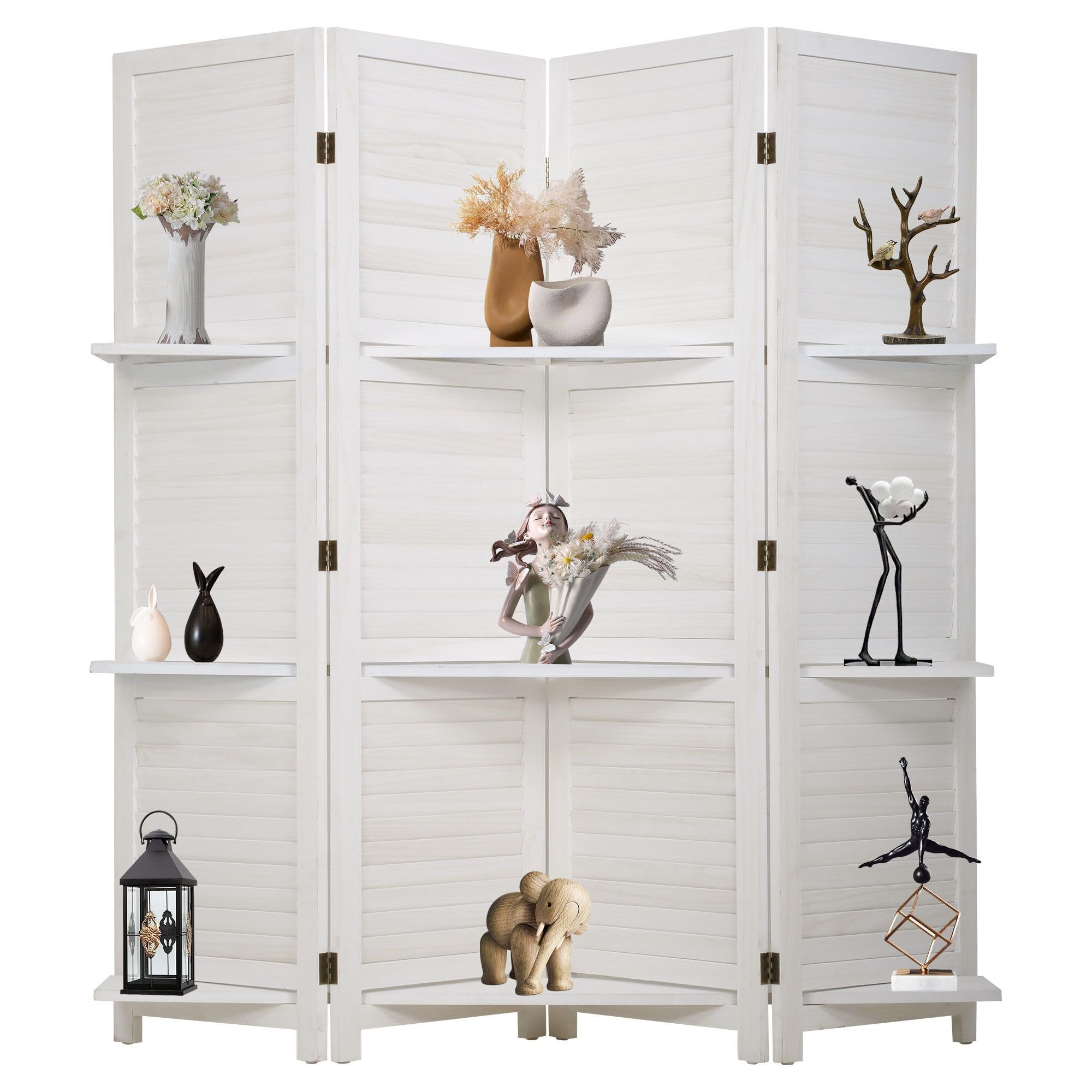
1. FDW 4 Panel Room Divider
Our pick — 4.5+★ from 750+ verified ratings; the strongest balance of quality and price.
A folding screen that doubles as a two-sided shelf, so your plants hide the clutter and hold it too.
What wins people over here is the three solid shelves running straight through the four panels. They are real storage, not decoration: photo frames, potted plants and books sit on both sides, and the panels get more rigid once the shelves are threaded through. That shelf design is the single reason this one leads the pack — it does the job of a divider and a display ledge at once.
The panel dimensions run 15 inches wide by 66 inches tall, which puts the top edge above the seated sightline of most rooms. It weighs 18 pounds, so one adult can unfold it in a hallway and walk it into place. The wood is finished with paint and arrives largely assembled — you slot the shelves through and you are done. Buyers describe it as a lightweight yet sturdy piece that carries easily to art fairs and folds flat to store.
The honest catch is the build. This is budget-tier wood with a light, quick paint job, and the slats do not want heavy weight — think small pots, not a big ceramic planter. It can shift a touch on deep carpet. Fold all four panels out fully before you thread the shelves, and it lines up cleanly. It pulls 4.5+ stars across 700+ owners, and the appeal is the package: shelves, width and portability in one.
folding wooden panels
- Three through-panels of shelving on both faces for plants, frames and books
- 66-inch height hides clutter from a standing or seated view
- 18 pounds and tool-free assembly make it easy to move and store
hinge wear over time
- Light slats want small, light items — buyers report keeping potted plants around six inches
- Budget paint and wood, with a slight shift on plush carpet
tight spaces: you want a divider that displays your things and hides the mess behind them.
flimsy hinges: you plan to load the shelves with anything heavy or want a solid, furniture-grade build.
2. HOMCOM 3 Panel Room Divider
At 6.4 pounds, this is the screen you can pick up with two fingers and move mid-conversation.
If you are constantly shifting furniture around a small apartment or porch, lightness is not a compromise here — it is the whole point. At 6.4 pounds, this one comes in well under the 18-pound FDW shelf divider above, which is the difference between needing both hands and just grabbing a corner. It folds to a 15.5-inch-wide stack, so it tucks against a wall or slides into a closet when you need the floor back.
The panel is a wood frame wrapped in hand-woven paper rope and bamboo sticks, finished with a bent-wood arched top. That woven weave does what a wall cannot: it lets air and light move through while softening the view, so a sunroom stays bright rather than boxed in. Its 47.25-inch unfolded width suits a doorway, a laundry alcove or a window line. The one thing buyers come back to most is the construction quality, with the woven look close behind. Owners describe the woven look as resort-style, the kind of screen that makes a plain porch feel finished.
The trade-off is stability. It is tall at 67 inches and light, so it can tip if you leave it standing on its own in a high-traffic spot — set it in a zigzag against a wall and it holds fine. A few owners mention stray fibres or loose strings on the weave and a price that feels high next to the materials. Sized as a fit note, it is best against a wall or in a corner, not free-standing in the middle of a busy room.
small rooms: you want a light, woven-look screen you can move by yourself and store flat.
tall privacy needs: you need it to stand alone squarely in the open or block a full sightline.
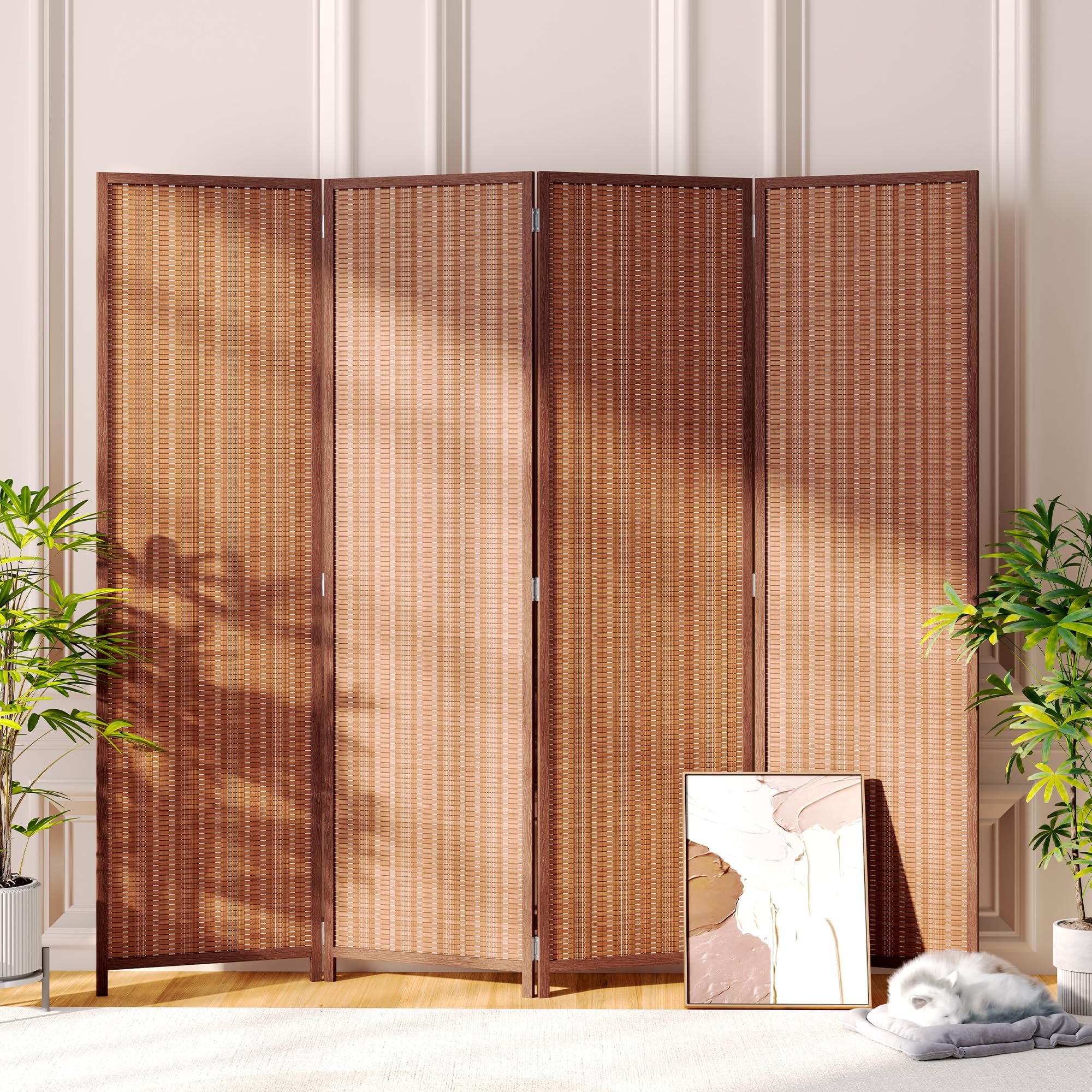
3. JOSTYLE 4 Panel Folding Privacy Screen
The widest screen in this lineup — 79.9 inches unfolded, enough to wrap a whole window or single bed.
Coverage is the reason to look here. Fully opened, this bamboo screen spreads to 79.9 inches wide, versus the 15-inch panels on the FDW shelf divider, which turns a narrow gap into a full room wall. In height it stands 70.9 inches, versus the 66-inch FDW shelf model, so the top edge sits well above eye level. Each of its four panels is 19.8 inches wide, and the natural bamboo frames come FSC-Certified and arrive assembled.
What owners praise most is the quality, and the build backs it up: stainless steel hinges, a solid frame, and a matte finish that keeps its clean look without fuss. It arrives ready to stand and folds complete for storage. Bamboo is also light enough to shift from a balcony to a bedroom without a second pair of hands.
The recurring honesty note is privacy. This bamboo is slightly sheer, so a bright window or lamp behind it will show silhouettes. Treat it as a soft divider, not a blackout wall. A few buyers mention small splits forming at the hinge drill points over time — the wood there can look unfinished. For sun blocking and gentle separation it shines; for full concealment, pair it with something denser.
bamboo freestanding build: natural bamboo lets light and air pass, so a divided room never feels shut in.
lightweight tips easily: that same sheer weave means a strong backlight will let shapes through — best for directional privacy, not a dark curtain.
wide room splits: at 79.9 inches it covers more than any other pick on this list.
rough handling: it is a see-through bamboo, so use it where soft privacy is enough.
4. VEVOR 3 Panel Room Divider

Three panels on hinges that swing a full 360 degrees, so it wraps corners and folds any way you like.
Most screens lock you into one shape. This one connects each panel with three two-way hinges that rotate all the way around, which means you can bend it in a zigzag, wrap it around a corner, or flatten it against a wall without fighting it. Set it in a zigzag and it holds itself up without leaning. The whole build weighs 8.9 pounds and needs no assembly — it comes from the start and stands.
The frame is solid tung wood with MDF board and a water-based paint finish that resists splinters. The panel inserts are non-woven fabric, which blocks visibility but lets air through. That makes it a sensible pick for a home office you want to divide off from a bedroom, or a spot where you still want a breeze. Owners describe it as sitting well on the floor or a rug and not feeling flimsy.
The catch is the base. The panels are thin and the wood can feel dry, and on carpet a few buyers want it heavier so it does not lean. Some glue seams are visible up close. Stand it in a zigzag and it behaves; leave it flat-footed in the open and it wants a wall behind it. The Japanese grid look earns the space it takes up.
calm interiors: anyone who wants to shape the screen around their room instead of the other way round.
heavy daily use: on carpet it stands best in a zigzag — a flat single line wants extra support.
5. FDW 6Ft Folding Privacy Divider
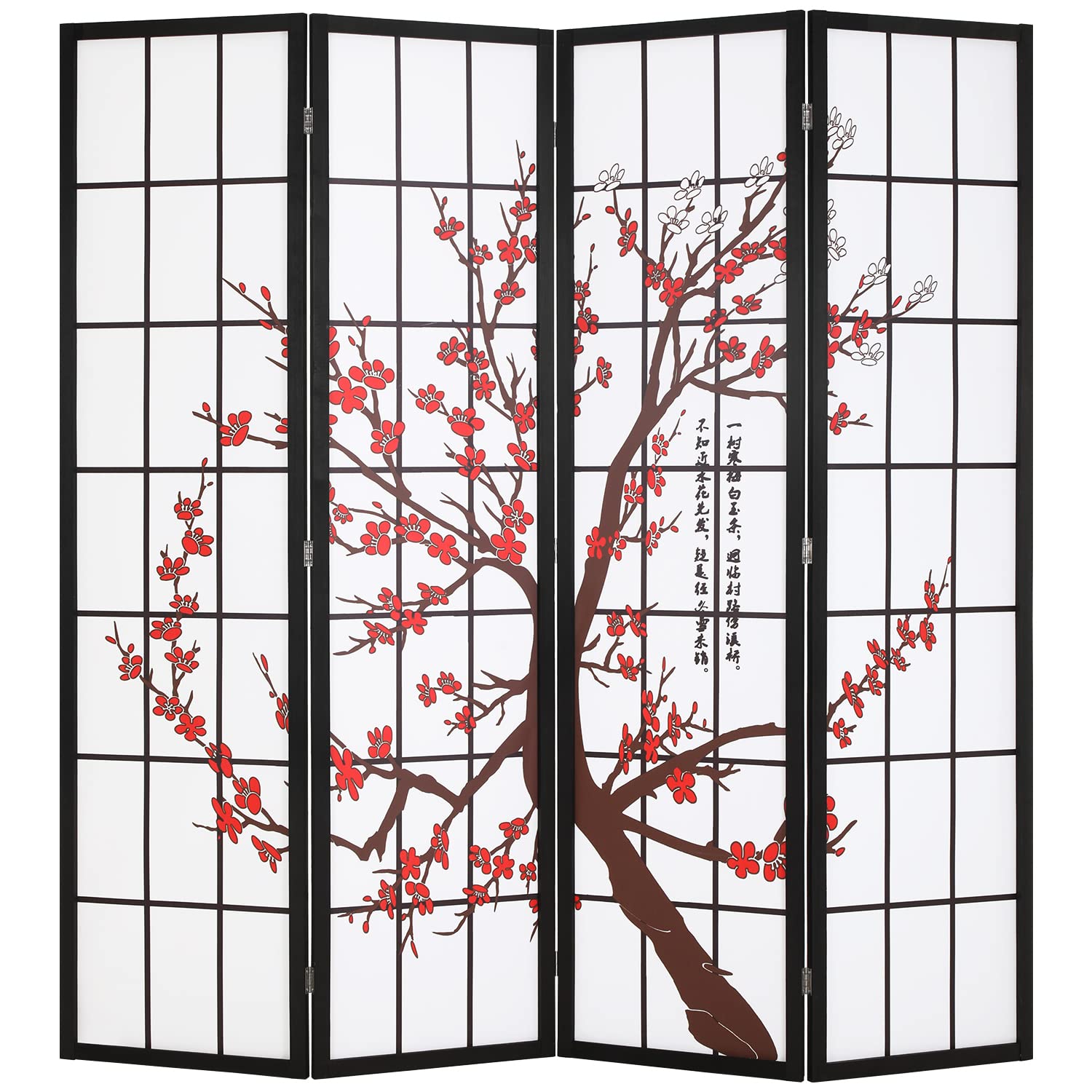
A painted plum-blossom shoji screen that behaves like a wall-sized piece of art you can fold up.
This is the pick for the buyer who wants the screen to be the decor, not just the divider. Four panels of traditional shoji rice paper sit in a solid wood frame, and the plum-blossom print glows when light comes through from behind. Unfolded it reaches 70.9 inches tall by 70.9 inches wide, which is room enough to dress a blank wall or set a photo backdrop for a party.
The construction is solid wood with a natural finish, and it arrives essentially put together — unfold and place. At 10 pounds it is light enough for one person to reposition, and buyers mention it is even manageable for a smaller frame. What earns the most praise is the overall quality of the art and the frame together; owners describe it as simply beautiful and as exactly what the photos promised.
Set your expectations on the paper. This is a translucent shoji panel, not a solid wood board, and it will not take a knock the way a heavier divider might — set it so it cannot be bumped over. That is the honest trade for the look and the light. Keep it where the glow is a feature, not where it needs to stop a breeze.
six foot height: a full 70.9-inch square of illuminated shoji art that turns an empty wall into a focal point.
bulky when folded: rice paper is delicate, so position it away from doorways and busy foot traffic.
full body cover: you want a decorative centrepiece and light-filtering privacy in one.
narrow doorways: you need a rugged screen that shrugs off bumps and knocks.
6. Svimi Louvered 4 Panel Wood Room Divider, 67 x 60 inch
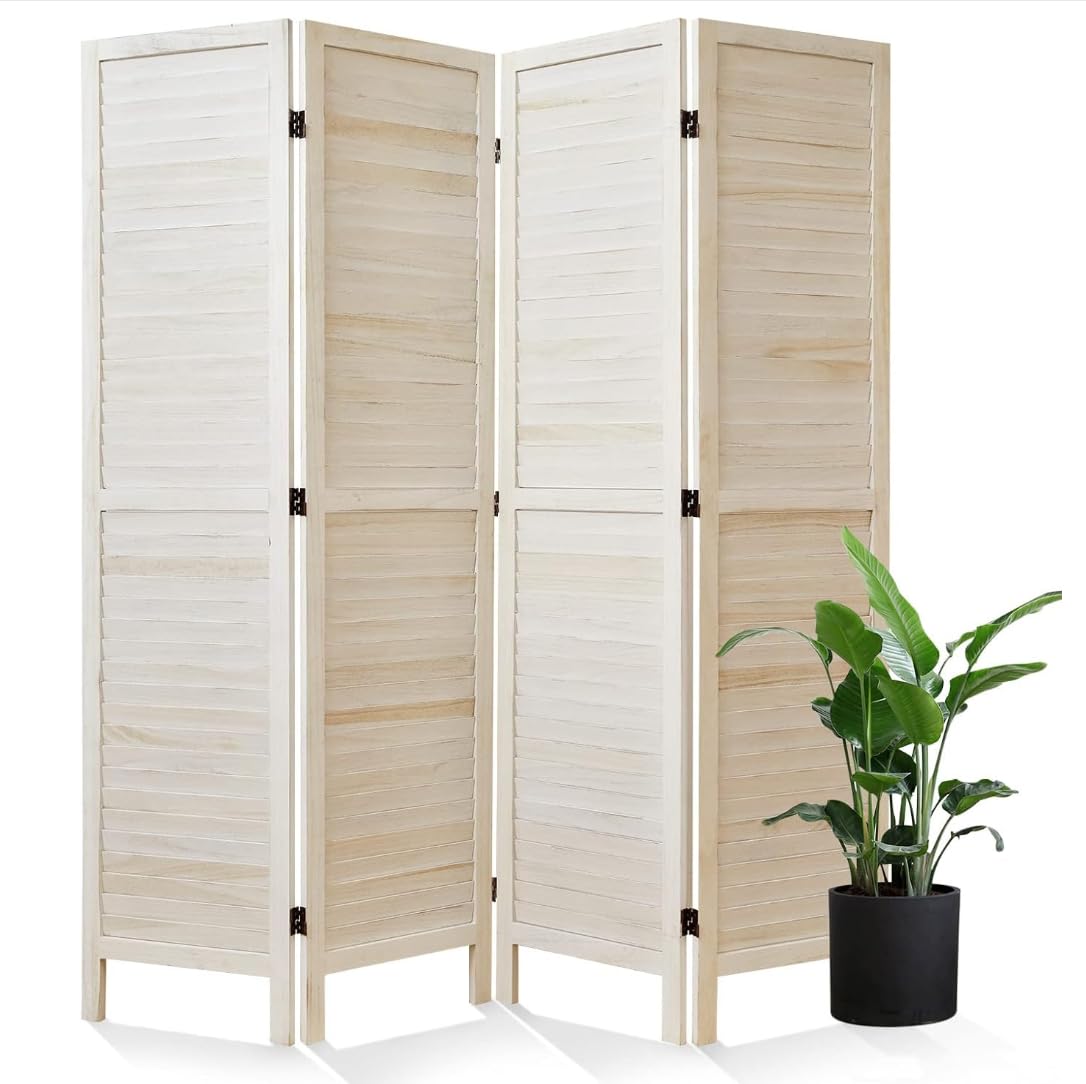
Louvered slats that block the direct line of sight but still let the room breathe.
The louvered design is the whole reason to consider this one. The horizontal slats with gaps between them cut most of the direct sun and stop a straight view through, but air still moves — so a stuffy bedroom or a home office with one window does not turn into a box. It also means you can use it to soften harsh light rather than black it out. Unfolded, the four panels span 60 inches wide by 67 inches tall, and each panel is 16 inches.
The frame is paulownia wood, which the maker notes is about 40% lighter than common wood, so it moves easily and stores without strain. Two-way metal hinges link the panels, and you can remove or add them with a screwdriver to shorten the run to fit a narrow gap. Owners most often call out the value — it delivers real separation for a small-space budget, and it serves well as a doorway stand-in where a room has no door.
One thing to plan for: this wood can carry a noticeable smell when it first arrives, and a few buyers notice it lingering for a stretch. Air it out in a garage or by an open window before it goes into a bedroom. Otherwise it is a sturdy, movable screen that suits open floor plans and studios.
airflow rooms: small spaces and open plans where you want privacy without blocking airflow.
full blackout: let it air out for a while before it moves into a sleeping area.
7. Furnnylane 3 Panel Bamboo Room Divider, 5.6 ft

A slim 46-inch bamboo divider built for tight apartments where every inch of floor counts.
Not every room can spare the width of a four-panel screen. This three-panel folds to a W and expands to 46 inches wide by 67 inches tall, each panel 15.35 inches, so it defines a workspace in a studio without swallowing the floor. It weighs under 11 pounds and needs no tools — unfold and place. Buyers mention it going up in about a minute.
The frame is hand-sanded pinewood with non-slip mats and reinforced hinges, and the panels are bamboo with no chemical paints or synthetic adhesives called out by the maker. Owners describe the hand-sanded pine and bamboo finish as tasteful rather than cheap-looking. It suits separating a desk from a bed, or screening a staff area from a waiting room. The build quality is what buyers mention most, and the finish holds up to regular shuffling.
Privacy is where you set your hopes sensibly. Strong backlight will let silhouettes and lamp shapes through — this is a semi-opaque screen, best for directional privacy. The hinges run one way, so you get fewer fold shapes than a two-way build. And the natural wood can carry a strong off-gassing smell for the first few weeks; let it settle before it goes into a small closed room.
quick setups: a small apartment or open studio that needs a light, movable divider.
kids around: full blackout privacy — a bright window behind it will show through.
8. Svimi 3 Panel Carved Wood Privacy Screen, 66.9 inch

Hand-carved detail in the centre panels that turns a divider into a decorative focal piece.
Most folding screens leave their panels plain. This one centres each of its three panels on a carved MDF insert set into a paulownia-wood frame, so light and shadow play across the pattern. It arrives fully assembled and folds flat for storage, and it works indoors or in a sheltered outdoor spot. Expanded, it runs 67 inches tall, and it stands on its own when set at a slight bend.
The whole design leans classic — the carved centrepiece is why buyers stop at this one rather than a plain louvre. Owners describe the carved panels as surprisingly sturdy and well-cut, standing without a separate base, with clean joints. It is light enough for one person to fold and move, which helps in a sunroom or a corner behind a fireplace where you might rearrange often.
The caveat is on the panels themselves — the wood has a slightly thin, delicate feel, so handle it with care and keep it inside when rain is due, since the MDF centre does not want water. Used as an accent and a light screen, it earns its spot; used as a rugged, knockabout divider, it is not that.
decor focal point: a decorative panel that doubles as a privacy screen.
damp spaces: the MDF carving should stay indoors and away from rain.
9. Svimi 4 Panel Room Divider with Shelves, 5.6 ft
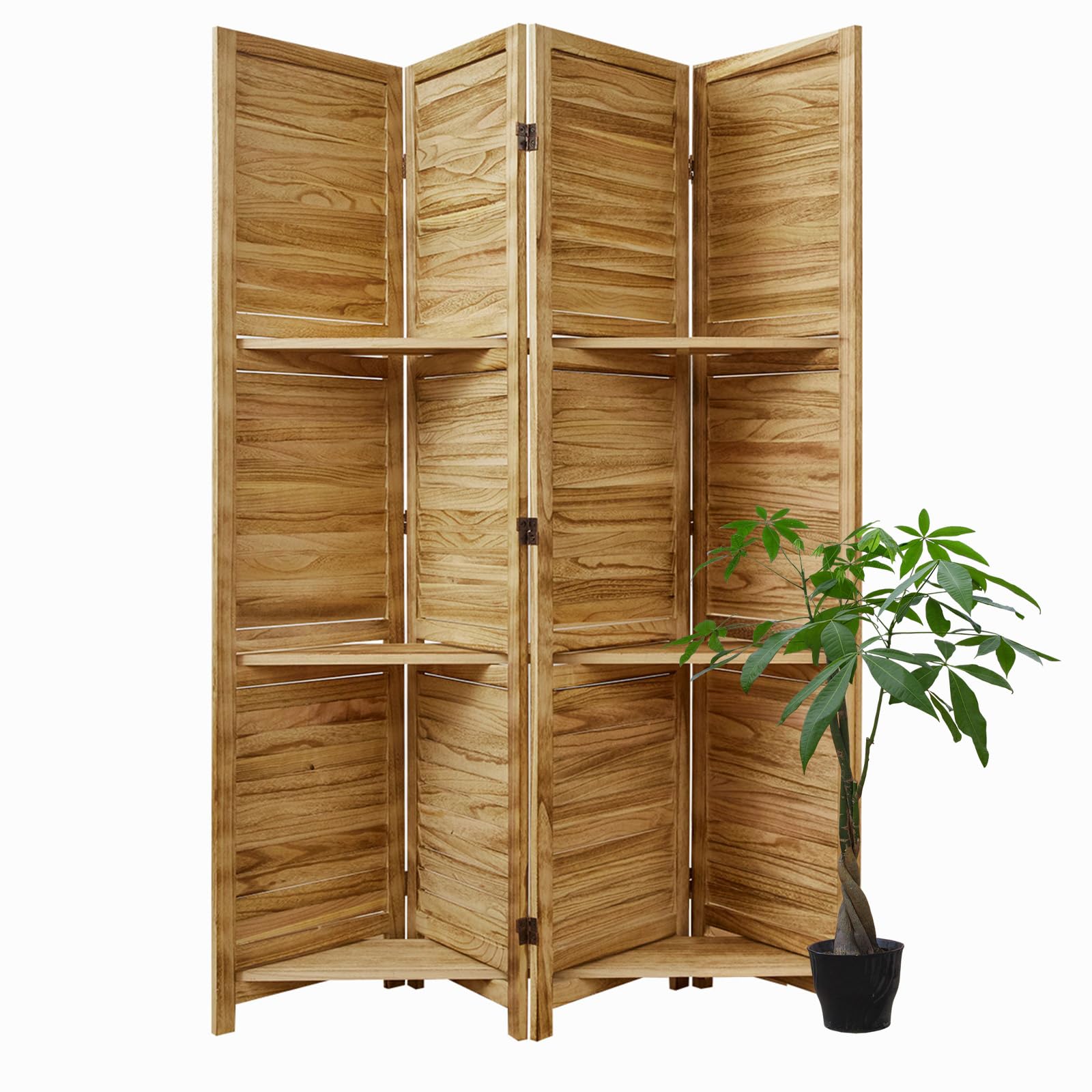
Carved louvered panels with little shelves built in, so your display does double duty as separation.
The shelves are the reason this one stands out. Small ledges set into the louvered, carved panels give you a spot for photo frames, potted plants and candles while the screen itself splits the room. It arrives fully assembled and the panels link with two-way hinges, so you can fold, angle or shorten the run by removing a panel. Each panel is 68.9 by 15.75 inches, and the four together make a 5.6-foot-tall divider.
For a shared room or a studio, that combination of separation with a place to put things is genuinely useful. Owners describe it as easy to set up and versatile, with plenty of compliments on the carved design. It works as a display shelf as much as a privacy screen, which makes it a smart pick for an assisted-living room or a studio where wall space is scarce.
Keep an eye on how light it is. This is a featherweight wood build, and a few buyers find it wobbles or can be knocked over, so stand it where it will not get bumped and treat the shelves as display-only. The lighter build is what makes it easy for one person to move up several flights of stairs — just do not expect it to feel like heavy furniture.
display storage: a shared room where you want privacy plus a built-in display ledge.
heavy books: the lightweight build wobbles if bumped — anchor it away from foot traffic.
Know the Specs
Unfolded Width vs Folded Width
A screen’s unfolded width is how much wall or window it actually covers — the number that matters when you measure your gap. The folded width is only its storage size. Check both: a 4-panel bamboo screen can spread to 79.9 inches open but fold to a slim stack for the closet.
Panel Height and Eye Level
Height decides how much it really hides. A screen near 67 inches blocks a seated sightline and most clutter from a standing view. The taller screens at 70.9 inches rise closer to eye level, which helps when you are cutting off a view from a doorway or patio. Match the height to the sightline you want to break.
Hinge Direction
Two-way hinges swing both directions and let panels wrap a corner or flatten against a wall. One-way hinges hold a fixed zigzag and give you fewer shapes. If you plan to reconfigure the screen often or fit an odd corner, look for two-way metal hinges with a solid pin.
Panel Material and Privacy
The frame is wood on all these screens; the panel insert is what changes the privacy. Woven paper rope and bamboo stay semi-translucent, letting light and air pass while softening a view. Louvered slats and painted or carved panels cut more of the direct line of sight. Pick by how much you truly need to conceal.
Common Questions
How wide should a wood folding screen be to cover a window?
Will a bamboo folding screen give me full privacy?
Do these folding screens need assembly?
How do I keep a lightweight screen from tipping over?
Can I use a wood folding screen outdoors?
What is the difference between shoji paper and a louvered panel?
How much weight can a screen with built-in shelves hold?
Will a new wood screen have a smell?
Can I shorten a folding screen if it is too wide?
The Bottom Line
For most rooms, the wood folding screen worth starting with is the FDW 4 Panel Room Divider with Three Shelves, because it separates a space and gives you a two-sided display ledge at the same time. If covering the most ground matters more than storage, the JOSTYLE 4 Panel Bamboo Screen spreads to the widest 79.9 inches here. And when you want a screen you can lift with one hand and tuck away flat, the HOMCOM 3 Panel at 6.4 pounds is the easy reach.
How we choose
We do not accept paid placement. Every pick is matched to a real buyer and a real use-case; we do not hands-on test units.
Sources
Specifications: manufacturer listings and product documentation. Review insights: verified customer reviews, as of October 2026. Pricing: not shown on this page (it changes often); check the current price via the retailer link.
As an Amazon Associate, Home Digitized earns from qualifying purchases. This does not affect which products we feature.