
Specs are compiled from manufacturer listings and verified buyer reviews and can change over time — please confirm the key details on the product page before buying.
If your knives dull fast and your counter keeps puddling with chicken juice, the board is usually the culprit. A good wooden board is thick enough not to slide, dense enough to spare the blade edge, and grooved enough to hold the runoff. Below you’ll find the nine boards that hold up to real daily prep, sorted by what each one actually does well.
This guide is built by comparing the manufacturers’ published specifications and the patterns across verified customer reviews, so you get each pick’s real strengths and trade-offs instead of marketing spin.
Your knife stays sharp longer when the board gives under the blade, and that depends on wood type, thickness, and grain. The picks below run from a full 20-inch walnut block down to a 12-inch square that fits a two-person kitchen. That spread makes this list a practical map of the best wooden cutting board choices for prep, carving, and serving.
Top Picks

How To Choose The Best Wooden Cutting Board
The fastest way to narrow the field is to decide what the board has to survive. A board that lives on the counter as a serving piece has different demands than one that gets carved on every Sunday. Once you know your job, three specs do most of the deciding: grain construction, thickness, and wood species.
Grain construction decides how your knives age
End grain means the wood is cut so the fibers point up at you, like the bristles of a brush. A knife edge slips between those fibers instead of slicing across them, so the board marks less and the blade keeps its edge longer. Edge grain lays the fibers flat, which gives you a harder, stiffer surface at a lower cost. End grain boards are gentler on knives; edge grain boards are more budget-friendly and easier to keep flat.
Thickness and weight decide whether it stays put
A thin board walks across the counter while you chop. Heavy boards stay planted, and the weight figures here run from a 2-pound round board up to a 5.58 kg walnut block. Thickness also buys you room to resurface the board years down the line. Anything at 1.4 inches or better gives you a surface you can sand back into shape.
Wood species decides your oiling schedule
Maple is dense and bright, and it resists scoring well. Walnut is softer under the blade and darker in color. Teak brings natural moisture resistance. Acacia is a harder, more budget-friendly option that shows cut marks sooner. Denser woods hold up with less frequent oiling; softer woods want more regular feeding to keep from drying out.
Side-by-Side Comparison
| Model | Best For | Material | Dimensions | Thickness | Amazon |
|---|---|---|---|---|---|
| BABILONIA Large Walnut End Grain★ Best Overall | Everyday prep and knife care | Walnut Wood | 20″L x 16″W | 1.4″ | Amazon |
| GAOMON 24 x 18 AcaciaMost Versatile | XL jobs and turkey carving | Acacia Wood | 24″L x 18″W | 1.2″ | Amazon |
| John Boos B12S Square MapleCompact Pick | Small kitchens and display | Maple Wood | 12″L x 12″W | 1.5″ | Amazon |
| BEEFURNI Large Teak | Meat carving with juice control | Teak Wood | 22″L x 16″W | 1.25″ | Amazon |
| John Boos B12R Round Maple | Cheese and charcuterie service | Maple Wood | 12″L x 12″W | 1.5″ | Amazon |
| BABILONIA American Walnut End Grain | Compact prep with a slide-out plate | Walnut Wood | 15.7″L x 10.2″W | 1.7″ | Amazon |
| HexClad Medium Walnut | Reversible prep and serving | Walnut Wood | 15.75″L x 11.75″W | 1.25″ | Amazon |
| Sonder Los Angeles Winsome Maple | Charcuterie with a cracker well | Maple Wood | 17″L x 13″W | 1.5″ | Amazon |
| Bevel & Bond Maple End Grain | Heavy chopping and carving | American Maple | 17″L x 13″W | 1.75″ | Amazon |
Detailed Reviews
1. Walnut Wood Cutting Board
Our pick — 4.5+★ from 250+ verified ratings; the strongest balance of quality and price.
The end grain block that keeps a chef’s edge and still lifts one-handed.
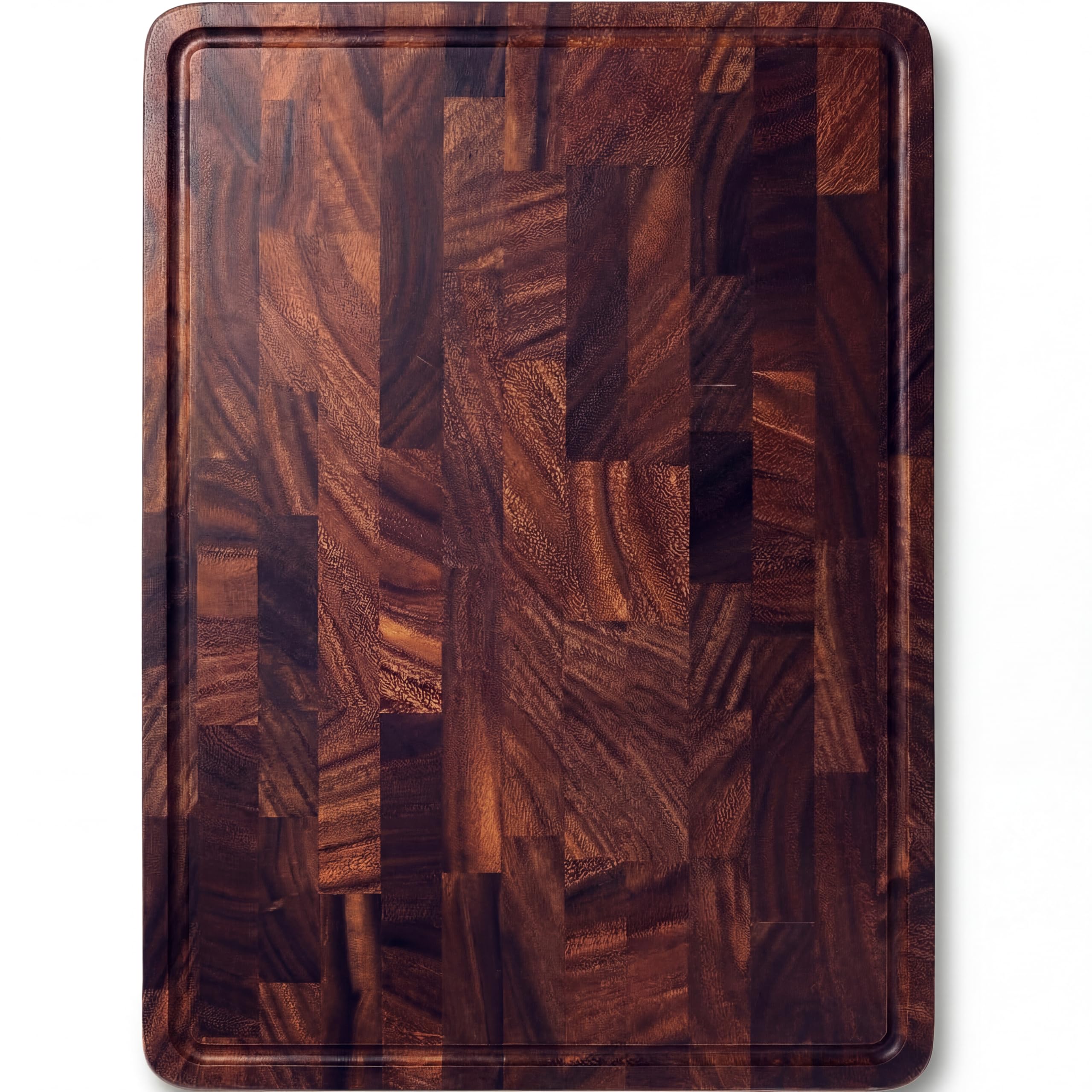
This is a 100% walnut end grain board, which means the wood fibers stand upright instead of lying flat. A knife edge slides between those fibers rather than slicing across them, so blades stay sharper longer and the surface closes back up after a cut. The board measures 20″L x 16″W at 1.4″ thick, and it comes with a free bottle of organic oil so you can season it the day it lands.
A lot of that dense construction is exactly what owners rave about. The board arrives pre-oiled and ready to use, with a built-in groove around the edge to catch juices and a built-in handle for lifting. One owner’s chicken-cutting session left the surface without a single knife mark, and the end grain markings stay faint as long as you keep it oiled. There’s also a plate notch on the reverse you can slide chopped veg toward your pot, plus a hidden handle so you can serve right off the board.
Weight is the trade-off you need to plan for. This block runs 5.58 kg, heavier than the GAOMON 24 x 18 Acacia at 4.15 kg — so if you routinely lift a board out of a low cabinet, that extra mass is real work. Hand-wash only, and never in the dishwasher. Against other wood boards it also measures smaller: 20″L x 16″W against the GAOMON’s 24″ x 18″, so it’s the better fit for a standard counter but not the board for a whole spatchcocked turkey.
Why it earns the top spot
- End grain walnut that heals around the blade and keeps the surface clean-looking
- Ships seasoned, pre-oiled, with an extra organic oil bottle and built-in handle
- 20″ x 16″ x 1.4″ of dense walnut that plants flat and doesn’t skid
- Non-toxic finish and a 2-year warranty from BABILONIA
Where it asks for care
- 5.58 kg makes it a two-hand lift; it’s not a flipper you spin around
- Hand wash only — running it through the dishwasher will dry the wood out
- Smaller footprint than the GAOMON, so big bird carving is tight
Ideal for: the home cook who preps nightly and wants a board that treats a good chef’s knife kindly — the 4.5+ star score across 250+ ratings backs that up.
Heads up on: the sheer weight — it’s a 5.58 kg block you’ll lift to wash, so plan a nearby drying spot.
2. GAOMON 24 x 18 In Acacia Cutting Board
A 24-inch acacia slab big enough to cover the stove and carve a turkey on.
The reason to buy this one is space. It measures 24″L x 18″W x 1.2″Th in solid acacia, which is large enough to serve as a stove-top cover, a noodle board, or a turkey carving station. You also get a reversible prep surface and a built-in juice groove along the edges that catches whatever runs off a roast. It’s the board for the cook who preps a whole Sunday spread in one pass and doesn’t want to work on two boards to get there.
Owners love the size and the value. One review puts it up as the answer for cutting XL pizzas, and other comments describe it fitting an entire stove top for rolling dough and cookies. Construction is well-regarded too — the board holds its shape without warping and has recessed handholds on the sides so you can shift it without fumbling. Acacia is a harder species than walnut, so it shows cut marks sooner; some buyers call that normal for the wood rather than a defect.
The honest catch is in the color and the surface. Because each board is real acacia, the shade varies — and a few buyers were surprised by how dark theirs arrived against the listing photo. Acacia also shows knife tracks faster than the softer end grain walnut on this list, so if you want a pristine surface after every use, that’s a real gap. The upside is you’re not paying end-grain money; value here is the headline.
The size argument: This board covers a stove top and handles a whole bird at 24″ x 18″ x 1.2″. You flip it over for a second cutting face, and the juice groove (a channel around the edge that catches drips) keeps runoff off your counter. Buyers keep raving about that footprint.
The real fit: it eats counter space and the acacia shade varies board to board, so measure first and expect a darker or lighter tone than the photo.
Reach for this if: your prep spans a whole turkey or a pizza night and you want one wide board to handle it all.
Look elsewhere if: you want a carved surface that stays knife-mark free — end grain walnut does that better.
3. John Boos B Series Square Wooden Maple Cutting Board 12”x12”
A 12-inch maple block on bun feet that doubles as a cheese display.
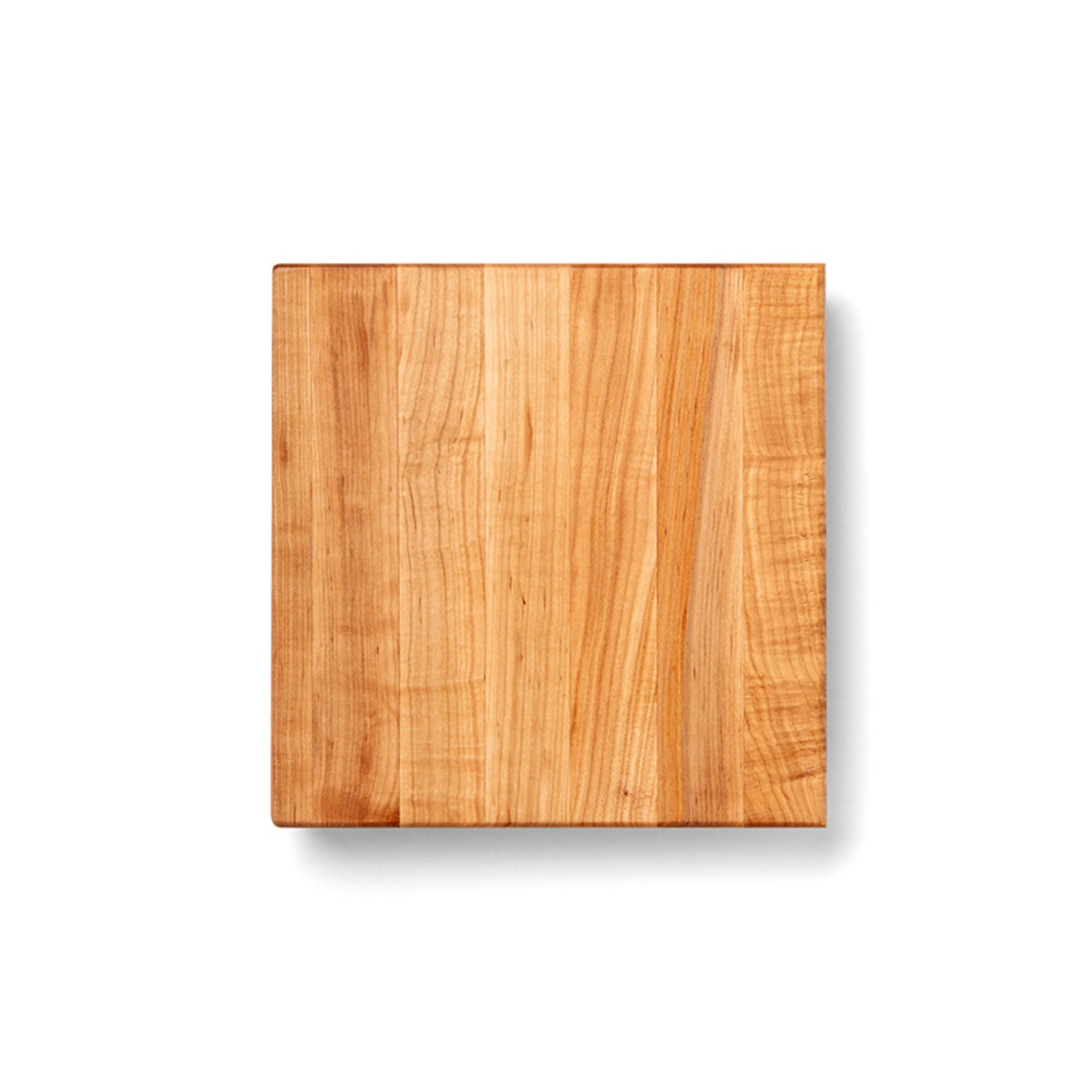
Small kitchens get a lot out of this one. It’s a 12″L x 12″W square in edge grain maple at 1.5″ thick, and it sits on four raised bun feet (about 1″H) that keep the wood out of whatever moisture is on the counter. That makes it a workhorse for a two-person meal — chopping herbs, a couple of chicken breasts, fruit — and a handsome thing to leave out with cheese or bread on it when guests arrive.
What owners single out is the maple surface itself. It’s knife-friendly, so blades dull less than on bamboo or plastic. One review tracks a full year of daily use and rates it the durable pick over bamboo boards that broke. The four feet keep water and juices off the bottom, and a little packet of Boos preserving oil comes in the box. John Boos has been supplying kitchens since 1887, and the craftsmanship shows in the smooth, warp-free surface.
The 12-inch footprint is the real limit — it’s a two-person board, not a carving station. Over time, the maple will show knife marks; that’s how the wood wears, not a flaw. You also need to hand-wash it, wipe it dry, and feed it oil or beeswax regularly, and never soak or use detergent. If you want a single large board for a big family, this one will feel cramped.
The small-kitchen case: 12″ x 12″ on 1″ bun feet fits where bigger boards crowd you, and the edge-grain maple is gentle on a knife — the thing that wins people over is that daily-use durability.
Suits a two-person kitchen: someone prepping a meal a few times a week with limited counter width and a taste for a board that can go straight to the table.
Think twice if: you carve whole roasts or cook for a family five — you’ll run out of surface by mid-recipe.
4. BEEFURNI Large Teak Wood Cutting Board

The teak board that reads the moisture in a roast before it hits your counter.
Southeast Asian teak is the reason this board exists — it’s a hardwood that resists moisture and stays solid through heavy use. The board measures 22″L x 16″W x 1.25″Th, with a deep juice groove on one face and a plain cutting face on the other. That reversible setup means it can take a carving job and then flip for everyday chopping without a re-clean in between. Handles on both sides let you carry it from counter to table when it’s loaded.
Appearance does a lot of the selling here. Teak’s grain is rich and warm, and the board is substantial enough to present on with cheese or charcuterie. It also comes with a free maintenance kit and a gift box, so it’s a good pick if you’re giving it or if you like having the conditioning oil on hand. A few reviewers settled into a routine of wiping it down after each use rather than washing it, and that’s the way teak holds up best.
The honest catch is warping. One review describes the board cupping within a month despite following care instructions. The seller’s fix — oil both sides, warped side up for 48 hours, and add non-slip feet — did flatten it again, but it’s the kind of reminder that a wood board needs symmetrical treatment on both faces. The plain side is the easier daily surface; don’t baby the grooved side and leave the reverse dry. Otherwise, for a carving board that looks like furniture, this one is a solid mid-range call.
Where it shines: a 22-inch teak board with a deep groove and handles — built for the roast or the whole smoked brisket, and just as happy serving.
What to watch: oil both faces evenly or risk the cup; the included kit and a bit of patience keep it flat.
Your board if: your Sundays involve carving meat and your table could use a serving piece with genuine looks.
Not for you if: a repeated oiling routine feels like a chore — a hard maple edge-grain board tolerates neglect better.
5. John Boos Block B12R Round Maple Wood Cutting Board
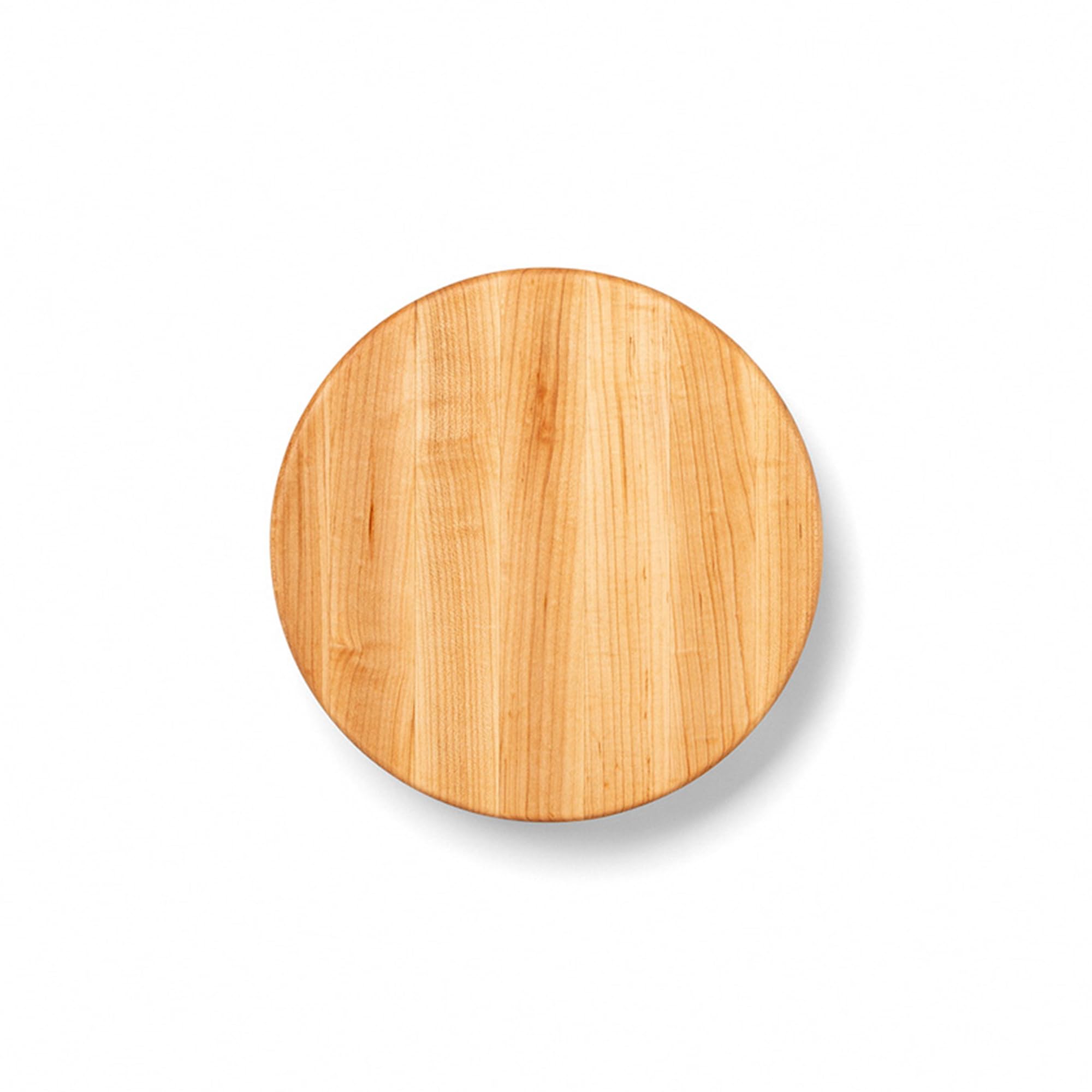
A round maple batch that’s a cheese board first and a cutter second.
The shape is the whole point. A 12-inch round in edge-grain maple at 1.5″ thick gives you a surface that looks like a serving piece on the counter, not a prep tool shoved in a cabinet. It sits on bun feet, so it lifts off the counter and stays dry underneath. You can chop a handful of herbs on it, then wipe it down and stack cheese, fruit, or bread without moving to another piece.
The maple is dense and cuts cleanly, and the edge grain gives you a smooth, level surface that holds up to daily small jobs. It weighs in at just 2 pounds, so you can lift it with one hand — a useful little board if you’re cutting small quantities and don’t want to haul out the big one. The level finish also means knife work stays steady on the round rather than sliding off a raised edge.
Round boards are a different beast to clean, though — there’s no corner to square up against, and you can’t flip it and use the reverse because it’s a non-reversible design. You also need to hand-wash and oil it on the same routine John Boos recommends across the B Series: Mystery Oil and Board Cream, sold separately. The 12-inch size is intentionally small, so if you want a full carving surface, this isn’t it. It’s the board for the guest-facing side of the kitchen.
The crowd-pleaser angle: round maple on feet looks like a serving piece first — the quality and appearance are what owners keep coming back to.
Pick it when: you serve cheese and small plates often and want a board that earns a spot on the counter.
Heads up on: the 12-inch round and 2-pound frame are for small jobs — a full bird or a big chop session needs a larger rectangular board.
6. American Walnut Wood Cutting Board
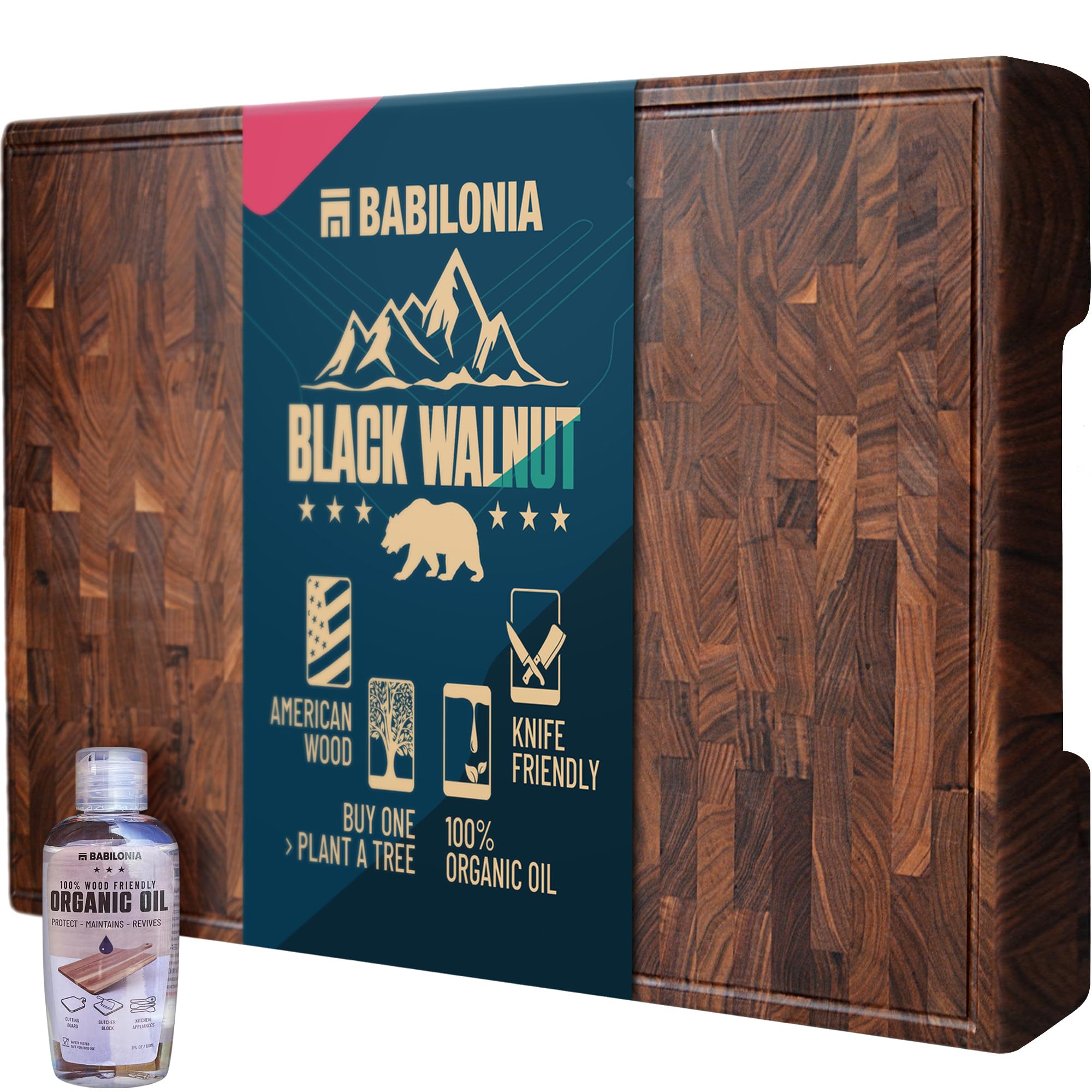
The end grain board with a built-in slide-out plate for moving chopped food.
At 1.7″ thick, this is one of the thickest boards on the list, and it’s made from 100% black walnut grown in America. That heft and the end grain construction give you a stable surface that stays put under a heavy chop. But the design detail is what makes it different: a notch with a matching plate lets you slide chopped produce straight into the pan instead of lifting the board. It’s reversible to a smooth serving face, and it comes pre-oiled with a free organic oil bottle in the box.
Owners praise the fit and finish. One review reports the surface feels like glass and the pre-oil made water bead on it from the first use. Another mentions using it for meal prep and finding it soft under the blade. The size comes out at 15.7″L x 10.2″W, so it’s compact — it fits on a small counter and is easy to carry. At 3.08 kg, it’s lighter than the 5.58 kg BABILONIA walnut block, if a one-hand lift matters to you.
The honest caveat is durability. Walnut is a softer hardwood, and a few owners note cracks developing within a month, so the maintenance routine isn’t optional. It’s hand-wash only and wants regular oiling to keep the wood from drying and splitting. The included plate is plastic, and so is the “plate garage” notch it docks into, which some buyers view as the weakest part of an otherwise handsome board. It’s still a strong value for walnut at this price tier.
Design detail worth the price: the 1.7-inch end grain slab and the slide-out plate turn prep into a one-hand motion — that’s what wins people over.
Good fit for: a compact kitchen where the board lives on the counter and the plate notch earns its place every dinner.
Worth knowing: walnut cracks if left dry, so keep it oiled — and the included plate is a basic plastic piece, not a serving platter.
7. HexClad Rectangle Medium Walnut Wood Cutting Board
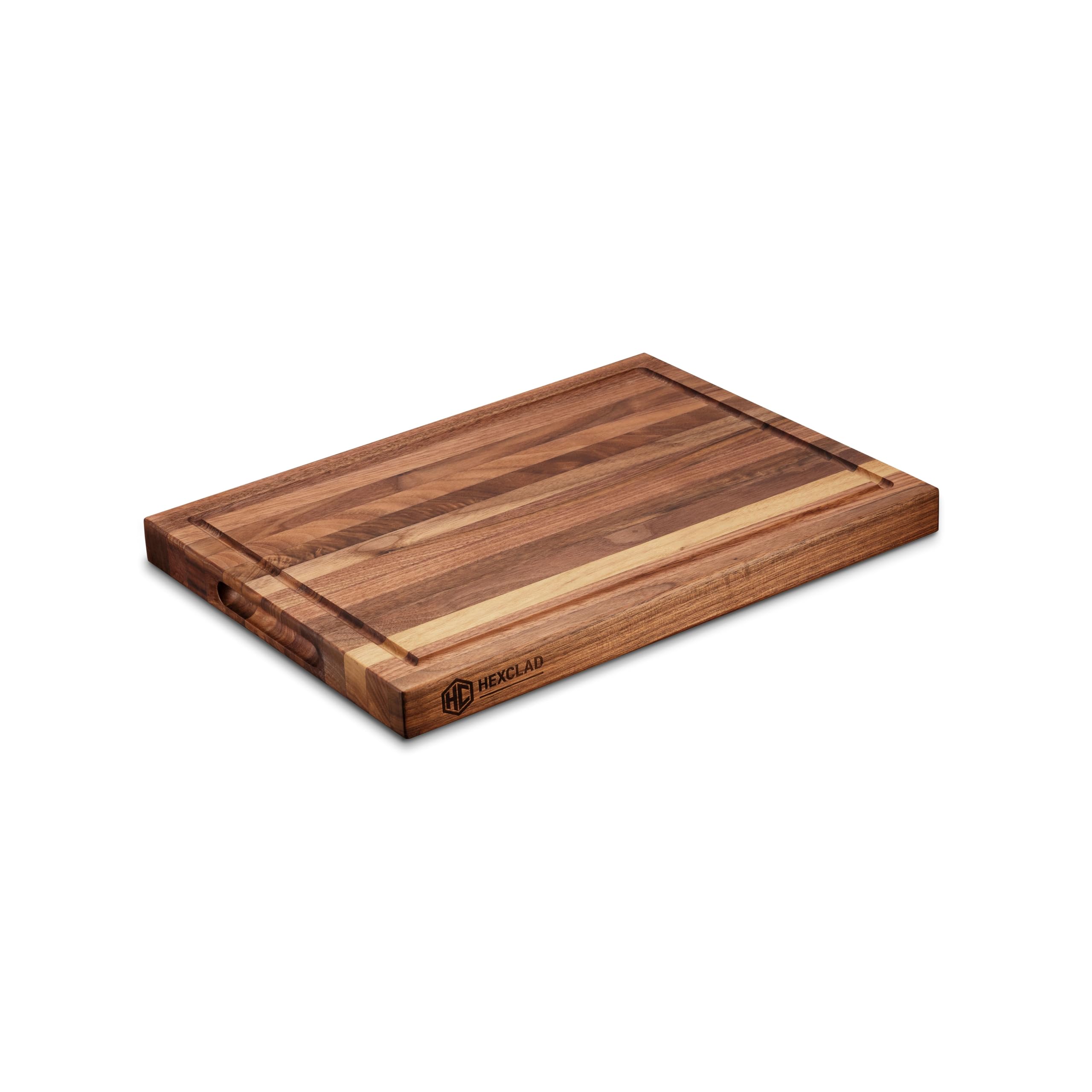
A reversible walnut board that looks built for the countertop, not the cabinet.
The first thing you notice is the walnut itself — dense enough to resist deep knife marks and dark enough to look like a showpiece. It measures 15.75″L x 11.75″W x 1.25″Th, and it’s set up as a two-faced board. The grooved side catches juices from a roast or cut fruit. The flat side is for slicing, dicing, and plating charcuterie. Recessed handles sit in the ends so you can flip and carry without a fumble, which matters when the board is loaded with a roast.
Walnut’s tight grain is the selling point. It’s a naturally dense surface that helps keep odors from settling in, and it self-heals somewhat when oiled, so the surface reads clean after use. The board is 5 pounds and sits flat on the counter, so it doesn’t scoot during a chop. The finish is hand-wash only, and it doesn’t need special oil beyond a normal wood conditioning routine.
Size is the honest catch. At 15.75 by 11.75 inches it’s a medium board, and a few owners found it larger than expected for a small kitchen — so check your counter before committing. It’s also not the lightest, at 5 pounds. On durability there are mixed signals; some owners expect the walnut to serve for years, while a couple report checking or splitting. Treat it as a premium board that wants its oiling schedule honored, not a set-and-forget slab.
Where it stands out
- 15.75″ x 11.75″ x 1.25″ walnut with a grooved face and a flat face
- Recessed handles make the flip-and-carry part easy
- 5-pound block stays planted on the counter mid-chop
- Odor-resistant tight grain is a real win for garlic, onions, and raw proteins
What it doesn’t do
- Medium footprint — a whole turkey won’t fit
- Hand-wash only, and it needs a consistent oiling habit
- Walnut is softer, so it will mark with heavy use
the balance: you want a good-looking walnut board for everyday prep and serving, and you don’t need to carve a whole turkey on it.
Skip the smaller counter: measure before you buy — this board will feel oversized if your prep space is narrow.
8. Sonder Los Angeles Winsome Maple Wood Cutting Board
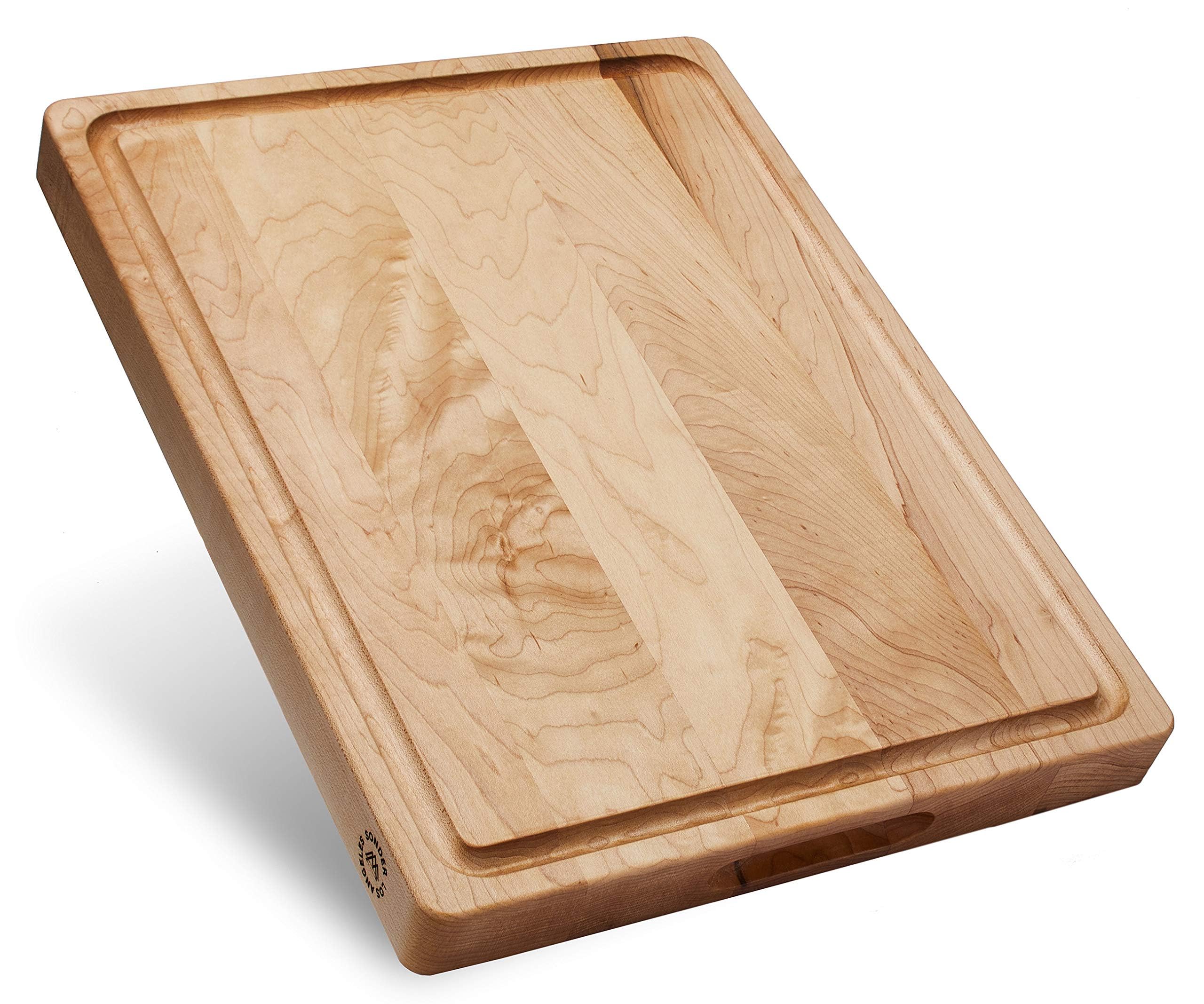
American maple with a cracker well carved in — the host’s board, not the prep hand’s.
The Winsome earns its spot on one feature no other board here has: a built-in cracker well. It’s a shaped groove sized for crackers, sliced baguette, nuts, or olives, so a charcuterie spread stays organized on the board instead of sliding around. The board itself measures 17″L x 13″W x 1.5″Th in edge-grain American maple, and it’s reversible. A deep juice groove rated at 3.5 fl oz catches liquid runoff on the other face, so it handles both a roast and a cheese display.
Maple is the classic kitchen wood, and Sonder uses a bright, fine-grain stock that resists scoring. The board arrives gift-boxed with a warranty registration card, and it ships from a small US business. Owners rave about the weight — it sits heavy and steady on the counter during a chop — and the finish feels smooth under hand. The brand asks for oiling every 2–3 weeks, which is a normal wood-care routine, and it’s hand-wash only.
The one thing to know going in: a new board arrives quite dry. Owners describe needing a few rounds of oil over the first weeks to get the wood to stop absorbing. Treat that as setup, not a defect, and it settles into a smooth, durable board. A few boards have arrived with a visible check or crack that needed the warranty (the brand replaces defects within a year), so inspect it closely on arrival. Otherwise, if you host regularly, the cracker well is the detail that sells it.
The host’s argument: a 17″ x 13″ x 1.5″ maple board with a cracker well and a 3.5 fl oz juice groove — it’s built to be carried to the table as much as chopped on.
Bring it home if: you entertain more than you chop, and you want the board that already has the cracker arrangement built in.
Plan on this: an initial oiling series over the first weeks, because a new delivery arrives on the dry side.
9. Maple End-Grain Cutting Board
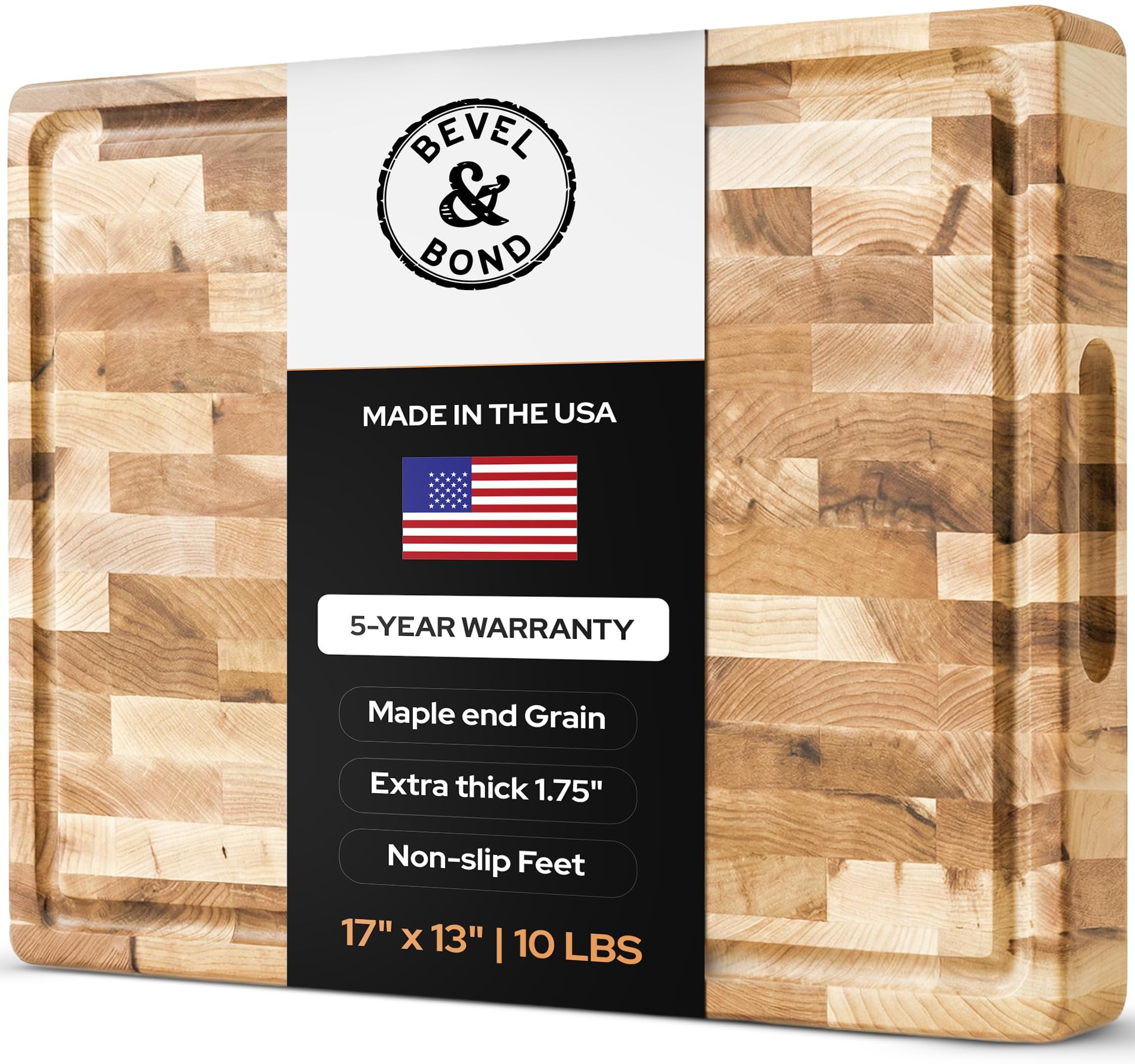
The 1.75-inch end grain maple block that doesn’t move when you chop.
This is the heaviest, thickest board on the list: 1.75 inches of end grain North American maple at 17″L x 13″W, weighing 10 pounds. That mass is the point. It sits firmly on four rubber non-slip feet, so you can break down a roast or a whole chicken without holding the board steady with your other hand. The deep juice groove on the edge catches the runoff, and finger grips on both ends make it liftable for cleaning.
End grain maple is the wood that professional kitchens have used for butcher blocks for a long time. The knife edge slips between the vertical fibers, so the surface self-heals and your blades stay sharp. Owners praise the furniture-grade finish and the density — they describe the surface staying clean-looking after repeated use with sharp knives, and the board holding its shape. The board is made in the USA by a small woodworking shop, and it ships in a gift box with a 5-year warranty against defects. The pre-oiled mineral-oil finish means it’s ready to use on arrival.
Weight is the honest trade-off. At 10 pounds, this board is a two-hand lift, and if you have weak wrists or a low cabinet, that’s a real daily burden. It needs consistent oiling and hand washing to keep the end grain from splitting. And while it’s rated for meat, one owner’s testing left the meat-cutting part untested in their review, so treat it as a veg-and-bread board until you establish your own routine. Worth the cost if what you want is a thick block that stays put.
The heavy-duty verdict: 1.75 inches and 10 pounds of end grain maple on non-slip feet — the board you can lean into without it shifting.
Where it costs you: the 10-pound lift and the oiling routine are the price of that stability, so it’s not the board for a low cabinet or a weak wrist.
Choose it when: you want a thick, planted end grain block for heavy chopping and you don’t mind the weight.
Pass on it if: you want a board you can pull out one-handed for quick jobs — this one wants a steady lift.
Know the Specs
End grain vs edge grain
End grain is wood cut so the fibers point up like bristles. Your knife edge slides between those fibers, so the surface self-heals and your blade keeps its edge. Edge grain lays the fibers flat, which gives you a harder, flatter surface that costs less. End grain boards are gentler on knives; edge grain boards cost less and stay flat more easily. Neither is wrong — it depends on how much you care about the edge on your knife.
Thickness and weight
Thickness is the spec that tells you how stable the board feels under a chop. Boards at 1.25 inches and under are lighter and easier to lift; boards at 1.5 inches and up feel planted but become two-hand lifts. Weight follows the same curve — a 2-pound round board is one-handed, while a 10-pound block is not. Heavier boards also hold more surface to resand later, so thickness is a longevity spec as much as a stability one.
Juice grooves
A juice groove is a shallow channel around the edge that catches runoff from a roast or ripe fruit. Some boards measure the groove by volume (the Sonder Los Angeles board’s groove holds 3.5 fl oz), which tells you how much liquid it can contain before it spills onto the counter. Most boards just describe the groove as “deep.” If you carve often, look for a groove rated in fluid ounces, like the Sonder’s 3.5 fl oz, so you know how much runoff it holds before spilling.
Wood species and oiling
Wood species decides your maintenance schedule. Dense maple resists scoring and holds up with less frequent oiling. Walnut is softer under the blade and wants regular feeding to keep from cracking. Teak brings natural moisture resistance. Acacia is a harder, budget-friendly option that shows cut marks sooner. Whatever the species, hand-wash only — never soak or use a dishwasher — and oil regularly to keep the wood from drying out and splitting.
Common Questions
Is end grain actually better for my knives than edge grain?
Will a wooden cutting board warp if I wash it in the sink?
How often does a wooden cutting board need oiling?
Can I cut raw meat on a wooden cutting board?
What size cutting board fits a standard kitchen counter?
Can I put a wooden cutting board in the dishwasher?
Is a heavier cutting board really more stable?
How long does a wooden cutting board last?
Should I buy a board with a juice groove or a plain one?
What’s the difference between walnut, maple, teak, and acacia boards?
The Bottom Line
For most kitchens, the wooden cutting board that gets the job done is the BABILONIA Large Walnut End Grain. It is end grain walnut at 1.4 inches thick, so it gives under the blade and keeps a chef’s knife sharper. It arrives pre-oiled, with an extra bottle of organic oil for upkeep. If you need a whole turkey to fit on one surface, grab the GAOMON 24 x 18 Acacia for its 24-inch footprint. And for a thick end grain block that plants itself under a cleaver, reach for the Bevel & Bond Maple End Grain at 1.75 inches and 10 pounds. The BABILONIA leads the list at 4.5+ stars across 250+ ratings, making it the default first board for most home cooks.
How we choose
We do not accept paid placement. Every pick is matched to a real buyer and a real use-case; we do not hands-on test units.
Sources
Specifications: manufacturer listings and product documentation. Review insights: verified customer reviews, as of October 2026. Pricing: not shown on this page (it changes often); check the current price via the retailer link.
As an Amazon Associate, Home Digitized earns from qualifying purchases. This does not affect which products we feature.