
Specs are compiled from manufacturer listings and verified buyer reviews and can change over time — please confirm the key details on the product page before buying.
Wet felting punishes the wrong wool. A lofty, slippery merino that needle-felts beautifully can refuse to lock together once soap and water hit it, leaving a loose, fuzzy sheet instead of solid fabric. What you actually want is a fiber with enough crimp and grip to bind fast — usually a Corriedale or a well-prepped merino in the 19 to 26 micron range — and enough cleanliness that you are not picking grass out of your layout. The nine picks below are sorted by exactly that job: which one locks together fastest, which one gives you the cleanest surface, and which one only makes sense for a specific project.
This guide is built by comparing the manufacturers’ published specifications and the patterns across verified customer reviews, so you get each pick’s real strengths and trade-offs instead of marketing spin.
Corriedale is the safe starting point, merino is the softness upgrade, and micron count plus staple length tell you more than any label ever will. Read on for the rovings that lock together fastest under soap and water.
Top Picks
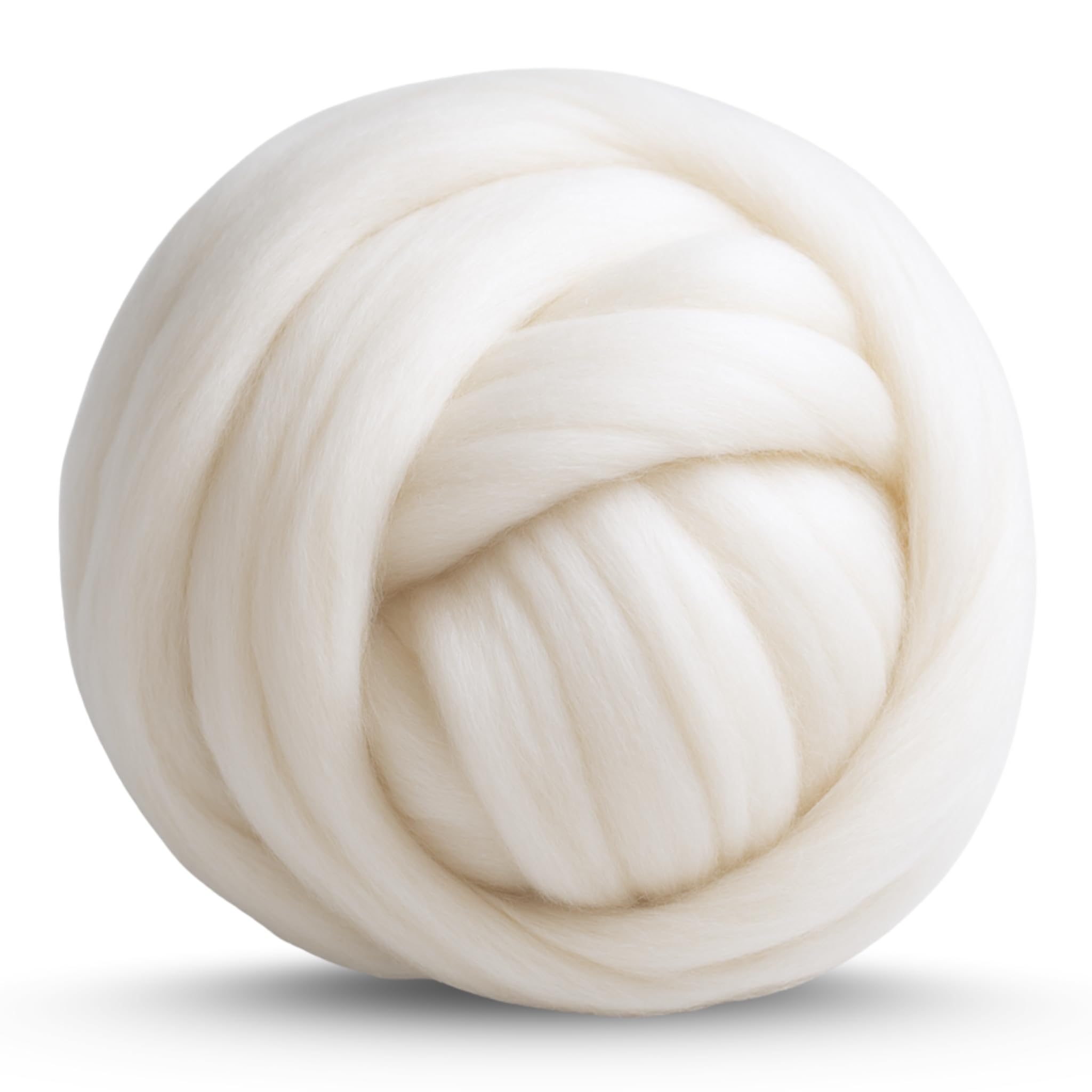


How To Choose The Best Wool Roving For Wet Felting
Wet felting is a mechanical process, not a chemical one. Warm water, soap, and friction make the scales on each wool fiber open up and grab their neighbors. A fiber with strong crimp and a longer staple has more chances to tangle, which is why the felting crowd reaches for Corriedale before anything else. Merino works too — it just needs the right prep and a bit more rolling.
Micron count: the softness dial
Micron is a measure of fiber diameter, and smaller numbers mean finer, softer wool. A 26 micron Corriedale feels springy and slightly crisp against the skin. A 19 micron merino feels substantially softer. For a wet-felted hat or slipper that sits on skin, the finer number wins on comfort. For a bag, a wall hanging, or a core layer buried under other fiber, the coarser number felts faster and costs less per ounce.
Staple length and why it matters at the rolling stage
Staple length is how long each individual fiber is. Anything in the 3 to 5 inch band gives the fibers enough overlap to interlock as you roll. Very short fiber slips apart. Very long fiber takes more work to full down. A 70mm staple (roughly 2.75 inches) is a practical middle for wet felting, and several picks here sit right in that zone.
Combed top versus carded roving
Combed top has all its fibers aligned in one direction, so it drafts smoothly and lays down a clean, even surface. Carded roving is fluffier and more chaotic, which felts quickly but can leave a slightly cloudier finish. Neither is better — they suit different stages. Combed top for the visible outer layer, carded for the core.
What a clean fleece saves you
Vegetable matter — hay seeds, burrs, bits of grass — is the quiet killer of a smooth felted surface. It does not felt, so it sits proud of your work and has to be picked out by hand. Washed, combed wool that arrives free of debris saves you an hour of tweezering before you even start laying out fiber.
Side-by-Side Comparison
| Model | Best For | Weight | Fiber / Micron | Staple | Amazon |
|---|---|---|---|---|---|
| Revolution Fibers Merino Roving 1 lb★ Best Overall | Core wool and fine detail work | 16 ounces | Merino, 23–26 micron | 3–4 inches | Amazon |
| Kondoos Natural Wool Roving 8 ozBest Core Wool | Large shapes and 3D cores | 8 ounces | Corriedale, 100% wool | — | Amazon |
| Kondoos Colored Roving Light BlueBest Color Range | Color work and armatures | 8 ounces | Corriedale, 100% wool | ~5 inches | Amazon |
| DICHA Merino Wool Roving | Skin-contact pieces and spinning | 5 ounces | Merino, 19–21 micron | — | Amazon |
| Revolution Fibers Dyed Corriedale | Vibrant color with no burs | 8 ounces | Corriedale, 26 micron | 3.15–4.75 inches | Amazon |
| Kondoos Corriedale 1 lb Bulk | Volume felting and learning | 0.45 kg | Corriedale, 100% wool | — | Amazon |
| Kondoos Multi Colored 1 lb | Color palettes for mixed projects | 16 ounces | Wool, 100% | — | Amazon |
| Kondoos Merino Roving 1 lb | Soft chunky wet felting | 16 ounces | Merino, 23 micron | 3–4 inches | Amazon |
| Desert Breeze Merino Roving | Premium color and dreadlocks | 8 ounces | Merino, 19 micron | 70mm | Amazon |
Detailed Reviews
1. Revolution Fibers Merino Wool Roving 1 lb
Our pick — 4.5+★ from 600+ verified ratings; the strongest balance of quality and price.
A whole pound of soft 23–26 micron merino, washed and combed, that felts fast and lays out clean.
If you want one bag that covers both the core of a project and the visible outer layer, this is the bag. You get 16 ounces of 100% merino in an off-white natural shade, with fiber diameter averaging 23 to 26 micron — fine enough that it feels gentle, coarse enough that it still grabs and binds under water. The 3 to 4 inch staple length gives plenty of overlap for wet felting, and the wool arrives washed, carded, and combed, which means minimal pre-drafting on your end. It also happens to be the crowd favorite here at 4.5+ stars across 600+ ratings, and what wins people over most is the quality of the fiber itself.
For wet felting specifically, the practical appeal is volume. A single pound is roughly 50 feet of wool, and the maker lists it as enough for 9 to 12 dryer balls — a useful gauge for how far the bag stretches. Toss in that it takes dye well and spins cleanly, and this becomes the bag that keeps giving across multiple projects instead of running dry halfway through a second hat.
The honest catch is weight. Buyers report the occasional bag arriving short — “Ordered 16 oz (454g), received only 14 oz (397g)” — so it is worth putting the bag on a kitchen scale when it lands. That is a shipping or packing variance, not a fiber problem, and the wool itself has drawn consistent praise for being clean and free of vegetable matter. For a heavy felting habit where one bag should last a season, this is the one to reach for.
What earns it the top slot
- 16 ounces of 100% merino at a 23–26 micron average that felts and spins equally well
- Washed, carded, and combed before packing, so you skip most pre-drafting
- One bag covers 9 to 12 dryer balls or a full hat with fiber to spare
Where it asks for a little care
- Occasional short-weight bags turn up — weigh yours on arrival
- Off-white only, so any color work means dyeing it yourself
The call: for a felted hat, slippers, or a big core-and-surface project, this pound of merino does both jobs without a second purchase.
Look elsewhere if: you need a saturated color straight out of the bag — this one arrives undyed.
2. Kondoos Natural Wool Roving, 8 oz
Eight ounces of Corriedale whose crimp locks fast and holds big 3D shapes at half the price of a merino pound.
This is the workhorse bag for anyone building a wet-felted hat, a slipper, or a 3D animal. Corriedale is the fiber the felting crowd reaches for first because it has more crimp and grip than merino, so the fibers lock together quickly and you spend less time rolling. The maker calls it an ideal core wool, and that is exactly the role it plays: it felts up fast, suits larger shapes, and holds its structure. It arrives at half the weight of the Revolution Fibers bag — 8 ounces against 16 — so it is the better test drive if you are still figuring out whether wet felting is your craft.
Quality is the thing buyers keep coming back to here, and it is the top reason this bag has held a 4.5+ star footing. Owners mention it “works well as core for 3-D needle felting” with minimal hay seed contamination, which is exactly the cleanliness you want before laying out fiber. One practical color note: it is not a bright white but closer to natural sheep color, an ecru tone that works beautifully as a base layer under dyed roving.
Where it asks for a little care: the wool is hand-wash only, so any felted garment you make from it needs gentle handling in the sink rather than a machine cycle. That is normal for raw wool, not a flaw. For the felter who wants a bag that does the heavy structural lifting and leaves the softness for a top layer, this is the sensible starting point.
How it earns its keep: Eight ounces of Corriedale that felts fast, holds large shapes, and blends cleanly into any color scheme.
What to plan around: Hand wash only, and the ecru tone is warmer and more natural than a crisp white — plan your color scheme around that.
Reach for this if: you are building a hat, slipper, or sculpted animal and want a fast-felting Corriedale core.
Think twice if: you want a bright white base tone — this one leans natural sheep.
3. Kondoos Colored Natural Wool Roving, 8 oz (Light Blue)
Dyed Corriedale with a ~5-inch staple that gives your layout finished color straight from the zip pouch.
Color work is the reason most people drift toward dyed roving, and this bag delivers it in a way that still felts properly. The fiber is Corriedale with a staple around 5 inches — long enough to wrap armatures cleanly and long enough that the fibers interlock well under water. The color is what the crowd notices first, with soft shades that read like cotton candy in the hand, and it is what sells this bag hardest.
What makes it a practical pick for wet felting is the versatility. It works for 2D flat pieces and for 3D shapes alike, and it wraps armature wire neatly if you are building a sculpted figure. It also spins up readily, so it earns its keep if felting is only part of your fiber habit. The 8 ounce bag arrives in an eco-friendly zip pouch, which is genuinely useful for keeping unused wool dust-free between sessions.
The trade-off to know about: this is Corriedale, so it is not merino-soft. One careful buyer describes it as “not merino—less soft, similar to bergschaf texture; unsuitable for close-to-body items.” That makes it a great outer layer on a bag or a wall piece, and a less ideal choice for a slipper that touches bare skin. Plan the color and the comfort level together and this bag performs beautifully.
Where it shines
- Dyed Corriedale with a ~5-inch staple that wraps armatures cleanly
- Arrives in a reusable zip pouch that keeps unused fiber dust-free
- Works for wet felting, needle felting, and spinning alike
What to weigh up
- Corriedale texture rather than merino softness — not the pick for skin-contact pieces
- Color shifts toward the pastel, so deep saturated tones may not match the photo
Best for: colored outer layers, armature wrapping, and any project where the look matters as much as the felt.
Pass on it if: you are felting something that presses directly against skin and want merino-level softness.
4. DICHA Merino Wool Roving, 5 oz (Dusty Pink)
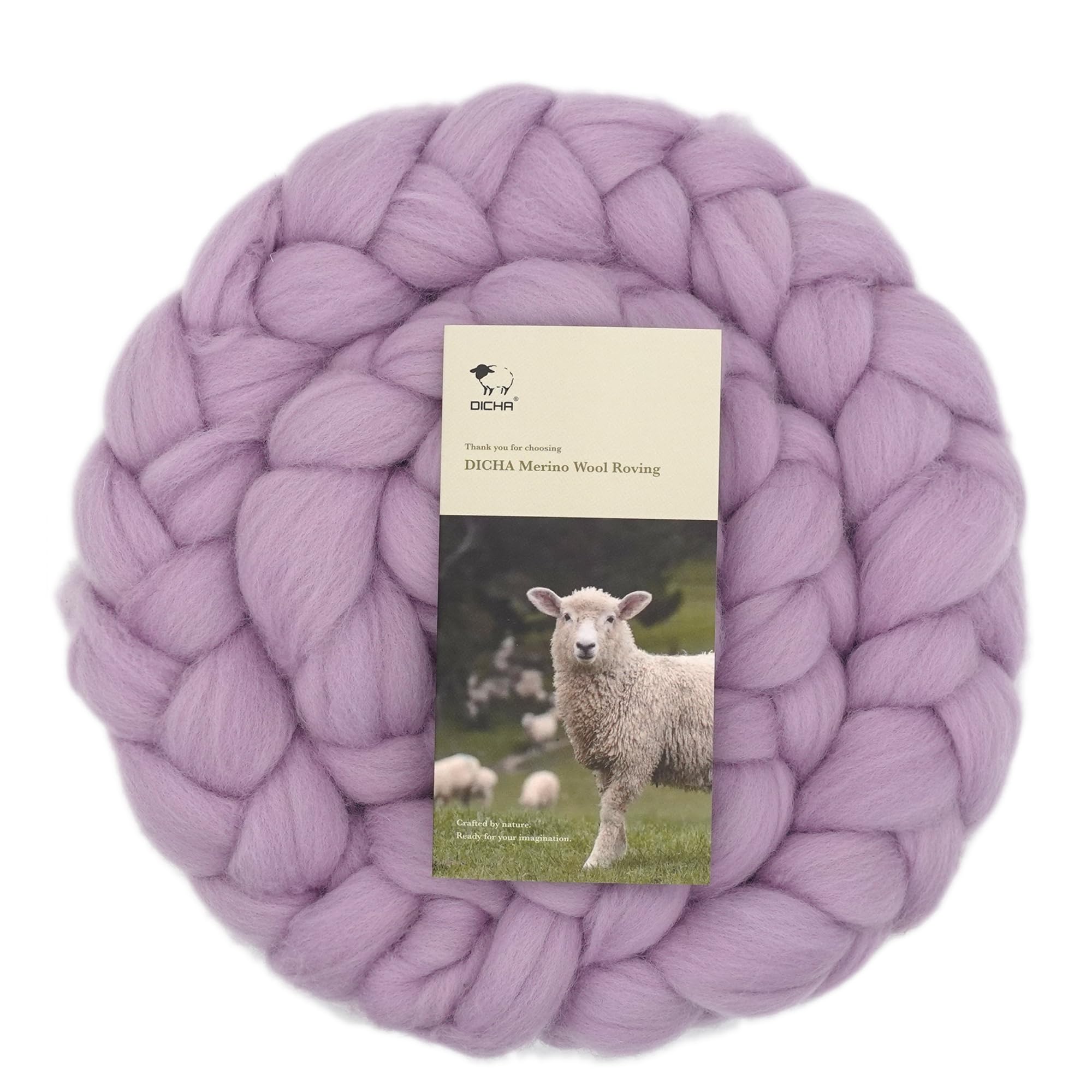
Hand-dyed 19–21 micron merino that drafts without pre-drafting and stays soft against bare skin.
If your wet-felted project is going to touch skin — a scarf, a hat, a pair of slippers you wear barefoot — the finer micron number is what buys the comfort. This bag sits in the 19 to 21 micron range, which is a noticeably finer fiber than the 23 to 26 micron merino in the top pick, and it shows in the hand. The wool arrives clean, fresh-smelling, and free of vegetable matter, and it drafts so easily that you can skip pre-drafting entirely.
The color is where this bag earns its niche. Dusty pink lands somewhere between a romantic blush and a muted rose, and it is hand-dyed for an even tone through the braid. That is the shade that makes a felted flower or a soft hat feel finished without extra work. Each bundle includes approximately 5 ounces of merino, so it handles a smaller project — a hat, a set of felted soap, a bag of detail work — comfortably.
Where it asks for a little care: 5 ounces is a lighter bag than the pound-sized options elsewhere, so a large garment means buying two. And at this fineness, merino felts a touch more slowly than Corriedale, so budget a bit more rolling time. Neither is a flaw — it is the price of softness. For a smaller piece where comfort and color both matter, this is the bag.
The reason to pick it: A 19 to 21 micron merino in a soft hand-dyed blush, with the cleanest drafting in the lineup.
The honest catch: Five ounces goes fast on a large garment, and fine merino needs more rolling to full than Corriedale.
Worth grabbing if: the piece touches skin and the color is the point — a hat, a scarf, felted soap.
Look elsewhere if: you need bulk for a big blanket — the pound bags below cover that better.
5. Revolution Fibers Dyed Corriedale Wool Lavender Purple

Oeko-Tex dyed 26 micron Corriedale with a 1-inch roving width and even color through the whole ball.
The appeal here is craft — this is Corriedale processed with real attention. The fiber runs approximately 26 micron with a 1-inch roving width and a 3.15 to 4.75 inch staple, which is a spec sheet built for hand spinning and wet felting alike. It has the crimp and silky touch Corriedale is known for, processed to an even texture so your layout looks consistent from edge to edge. The hues are set with Oeko-Tex 100 and EN71 certified dyes — the kind of dye credentials a crafter can genuinely care about when the piece is a gift.
What sells the color is how even it runs. Customers note “a beautiful red color that is very even through the whole ball of roving,” and that consistency matters when you are felting a large flat panel where any patchiness would glare. One owner felting a Santa figure found the color held from start to finish. The bag weighs in around 8.2 ounces and comes in at about 28 feet of wool.
The trade-off is that dyed Corriedale at 26 micron does not feel like a merino. It has a slightly crisp, springy hand, which is exactly what makes it felt fast — but it is not the bag for a skin-contact scarf. Where it belongs is anywhere color and structure both matter: a felted ornament, a bag, a wall panel. There is no burs or vegetable matter to pick out, so your time goes into the craft rather than the cleanup.
What makes it different: Genuine Corriedale crimp with a 1-inch roving width and Oeko-Tex certified dyes, in a bag that runs about 28 feet of wool.
Worth knowing: At 26 micron it has a springy, slightly crisp hand — excellent for felting, less soft against bare skin than a merino.
The pick for: felting where a saturated, even color is the whole point and the piece never touches skin.
Skip it for: a scarf or slipper lining where softness sits above color on the list.
6. Kondoos Corriedale 1 lb Wool Bulk Roving (Ecru)
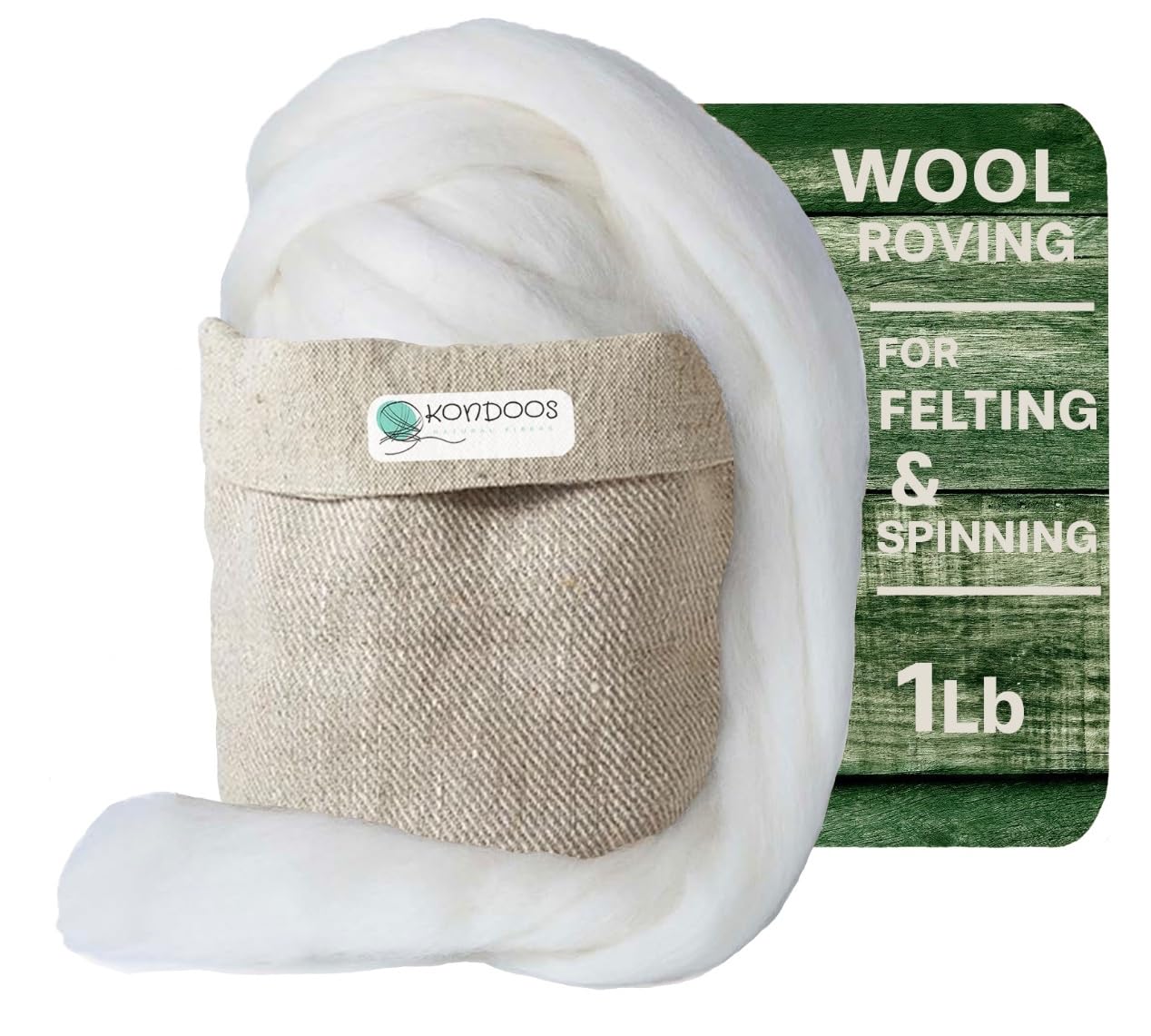
A full pound of washed, combed Corriedale that lets you practice wet felting without rationing fiber.
Learning to wet felt means ruining a few pieces, and this is the bag that makes that painless. It is 100% Corriedale, washed, carded, and combed before packing, in a bulk bag listed as approximately 1 pound with a stated variation of plus or minus 2%. The fiber is described as a consistent long-staple that spins easily and felts well, which is what you want when the goal is volume rather than a single showpiece. Think of it as the practice bench that also handles real work.
What earns it a following is how consistent the bag runs from one purchase to the next. One spinner who describes themselves as new effuses that “everything Ive received from Kondoos is consistent in texture and smells amazing,” with very few grass flecks turning up. A shepherdess who spent a career handling wool rates the quality perfect and plans to buy more. The color, as advertised, is off white — so if you want a natural tone under your dyed top layer, this reads right.
The honest catch is dirt. The wool arrives with a slight lanolin scent and a few flecks of the barn, which is normal for an unwashed-feeling natural fiber — you wash your hands after spinning or give the wool a wash before use. There is also a note that hot water can shift the natural tone toward brown when setting twist. Neither is a problem for wet felting; both are just things to know. For sheer volume per bag, this is the workhorse.
Why the pound bag has a following
- Approximately 1 pound of 100% Corriedale, with a stated plus-or-minus 2% variation
- Long-staple fiber that spins evenly and felts fast for large shapes
- Consistent texture between bags, so reordering carries no surprises
A couple of honest notes
- A slight lanolin scent and a few natural flecks — expected for a natural fiber
- Hand wash or dry clean only once felted into a garment
The value play: a pound of Corriedale that lets beginners practice and experienced felters build a full garment without opening a second bag.
Not for you if: a saturated color matters more than bulk — this one is bare ecru.
7. Kondoos Multi Colored Wool Roving, 1 lb (Candy)

A pound of colored roving in the Candy palette, with colors that stay fast once they are felted.
For anyone planning a multi-colored felted piece, having a pound of dyed fiber in a coordinated palette in one bag is a different kind of convenience. The Candy palette runs through a range of bright shades, and the bag arrives at 16 ounces with the manufacturer’s stated approximately 455 grams. Colors stay fast in this fiber — they do not bleed into each other during wet felting, which is what makes it workable for a piece with several shades pressed together under one layer of fabric.
What makes it a good pick for a spinner and a felter alike is the fiber consistency itself. Staple lengths run uniform, and it takes a fine draft without falling apart — which means you can spin it thin if you want yarn, then come back to the same bag for wet felting a project. The softness sits nicely in the hand without being so slippery that it refuses to grab onto the next fiber, and the colors make a standout felt base.
The trade-off to weigh: this is a mixed fiber, so the exact sheep breed is not listed. One experienced fiber artist flagged that it behaves more like a blend than a single-breed roving, which she noticed in how the fibers felt against her hand. It still works well for wet felting and spinning alike, but if you need to match a specific breed, that is worth knowing. For a coordinated color palette at a working-volume price, nothing here lines up better.
Where the value is: 16 ounces of color that holds fast through wet felting and drafts thin for spinning, all in one bag.
What to weigh: the sheep breed is not listed, and the fiber behaves more like a blend than a single-breed roving.
Worth grabbing for: multicolor pieces where you want a coordinated palette out of a single bag.
Think twice if: you want a fully traceable single-breed fiber — this bag leaves the breed undisclosed.
8. Kondoos Merino Wool Roving, 1 lb (Fine Ecru)
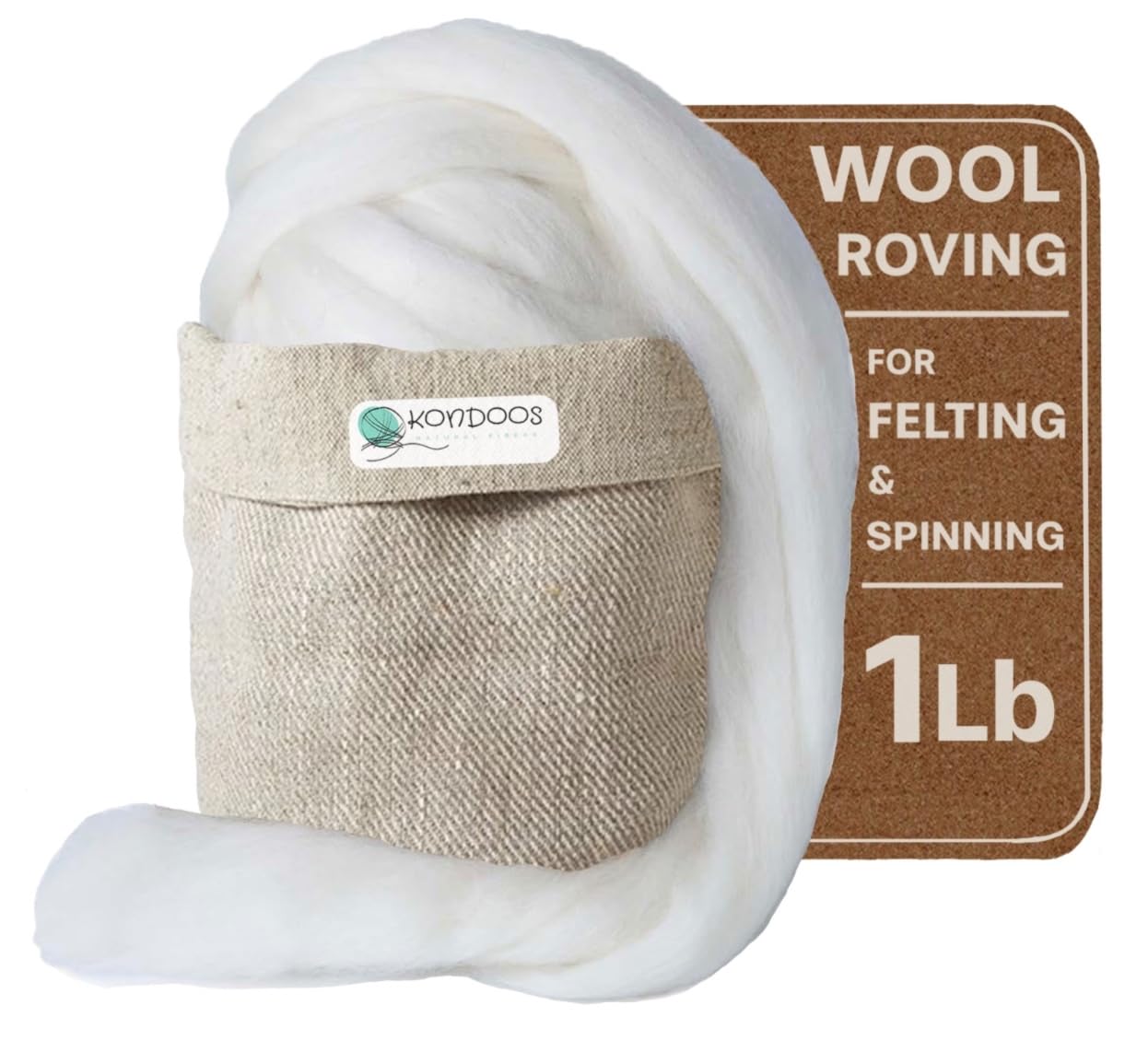
Fine merino at 23 micron in a full pound, soft enough for skin and strong enough to be spun.
This bag sits close to the top pick in spec — 16 ounces of merino with a listed staple of 3 to 4 inches (roughly 90mm) and an average of 23 micron — but leans softer. The fine merino fibers feel gentle to the touch, which makes the fiber suited to wet-felted garments that go against skin, and the long staple drafts cleanly enough that it also spins well. It is bundled and packaged as one continuous length, which saves you from splicing multiple short pieces while you lay out a large panel.
Spinners and felters with a hand-dyed habit keep coming back to this bag. One buyer who runs a small dyeing business has bought over 10 pounds and ordered 5 more, which is a useful signal that the fiber takes dye evenly and stays workable at volume. What makes the yarn stand out is the smooth, consistent staple that drafts without slubs, so your felted surface comes out even in thickness across the piece.
The honest catch is cleanliness specifics. The fiber is a fine ecru rather than a true white — and one reviewer noted it is not the snow white they expected. The bigger note, from a doll maker trying to make fair skin tones, is that some bags carry dark wavy hairs within the fleece that are hard to pick out; for a pale figurine that is a real mismatch. For a hat, blanket, or any piece where the surface gets covered, those hairs vanish into the felt. Plan the color match before you buy.
What the bag delivers
- 16 ounces of fine merino at 23 micron with a 3–4 inch staple, packed as one continuous length
- Soft enough for skin-contact felted garments and clean enough to spin thin
- One bag covers a full hat or a small blanket with wool to spare
Plan around this
- An ecru tone rather than a crisp white, so plan pale figurines accordingly
- Occasional dark hairs within the fleece that need picking out before a careful skin-tone project
Go for it when: you want a pound of fine merino for soft, skin-friendly wet felting and a bit of spinning on the side.
Give it a pass if: you need a true snow white for a pale skin tone — this ecru runs warm and darker.
9. Desert Breeze Merino Wool Roving, 8 oz (Cinnamon)

Italian-processed merino at 19 micron that felts, spins, and dreadlocks without a single hitch.
This is the bag for the crafter who wants the finest fiber and the cleanest color in one place. The merino is sourced and processed by DHG in Italy against Oeko-Tex Standard 100, in a 19 micron thickness with a 70mm staple — meaning the fibers are both fine and long enough to lock together hard under water. Each bag contains approximately 8 ounces, with a stated variation of plus or minus 0.3 oz. The Cinnamon shade runs warm and natural, and it blends well with dark and mid tones.
What makes this stand out for wet felting specifically is that the fibers are not fragile. They are soft, but they hold together as you handle them, so you can tear and divide sections cleanly without the fiber disintegrating. That is exactly the quality you need when you are wrapping a slipper or laying down an even surface across a broad area. The bag is mulesing-free and the sheep are raised in Australia and South America, which the maker lists clearly for anyone who cares about sourcing.
The honest catch is that at 8 ounces it sits at a different volume than a full pound, and the finer merino takes a little more rolling to lock than a coarse Corriedale. For a pair of slippers or a felted bag that is plenty of fiber — for a full sweater, more than one bag is the reality. For the fine color and the clean, graded fiber, this bag is worth it.
What you get: 19 micron merino with a 70mm staple, sourced from DHG in Italy and graded to Oeko-Tex Standard 100.
A caveat to weigh: Eight ounces is a single-project quantity, and fine merino needs more rolling time than coarse Corriedale.
The quality call: buy this when you want the finest fiber and a clean certified color for a single special piece.
Not the one for: a large volume project where a pound-plus bag of Corriedale covers more ground.
Know the Specs
Micron Count — How Soft the Fiber Feels
Micron measures the thickness of each individual wool fiber, and smaller means finer. A 26 micron Corriedale feels springy and slightly crisp against skin. A 19 micron merino feels noticeably softer and drapes more easily. For a wet-felted hat or slipper that sits on skin, finer is more comfortable. For a bag, a wall hanging, or a core layer buried under other fiber, the coarser fiber felts faster and costs less per ounce — both are right, they just suit different projects.
Staple Length — How the Fibers Lock
Staple length is how long each individual fiber runs. Anything from 3 to 5 inches gives the fibers enough overlap to interlock as you roll, which is what produces a solid felt. Very short fiber slips apart before it binds. Very long fiber takes more rolling to full down. A 70mm staple (roughly 2.75 inches) is a practical middle for wet felting, and several bags here sit in that range, so the fibers grab and hold as the soap opens the scales.
Combed Top Versus Carded Roving
Combed top has all its fibers aligned in one direction, so it drafts smoothly and lays down an even surface — ideal for the visible outer layer of a felted piece. Carded roving is fluffier and more tangled, which felts quickly but can leave a slightly cloudier finish. Neither is better on its own; many felters use a carded core under a combed top surface to get fast structure and a clean finish at once.
Cleanliness and How Much Prep You Do
Vegetable matter and dirt are the quiet time sinks in wet felting, because they do not felt and must be picked out by hand before you lay out fiber. Washed, combed wool that arrives free of debris saves real time. Some natural fiber arrives with a lanolin scent and a few flecks; that is normal, and a wash before use solves it. Check the bag on arrival by weight and by hand, then plan your layout with that in mind.
Common Questions
Is Corriedale or merino better for wet felting?
How much wool roving do I need to wet felt a hat?
Will 19 micron merino felt as fast as a coarser Corriedale?
Can I use merino roving for needle felting as well as wet felting?
What does it mean when a wool roving is “combed top”?
How do I store wool roving between projects?
Will the color of dyed roving bleed when I wet felt it?
Does wool roving arrive ready to use, or do I need to prep it?
What micron count should I pick for wet felting a slipper?
Is it normal for a wool roving bag to weigh slightly less than the label says?
The Bottom Line
For most felters, the wool roving for wet felting winner is the Revolution Fibers Merino 1 lb because a whole pound of clean, washed merino at 23 to 26 micron covers both the core and the visible layer in one bag, and it felts fast without fighting you. If you would rather start with a true Corriedale core that holdsbig shapes, grab the Kondoos Natural Wool Roving 8 oz. For larger projects, a full pound of Kondoos Corriedale Bulk gives you room to practice, and for fine skin-contact work the Desert Breeze Merino at 19 micron is the one to reach for. Any of these picks will felt properly — the fiber type just needs to match the job.
How we choose
We do not accept paid placement. Every pick is matched to a real buyer and a real use-case; we do not hands-on test units.
Sources
Specifications: manufacturer listings and product documentation. Review insights: verified customer reviews, as of October 2026. Pricing: not shown on this page (it changes often); check the current price via the retailer link.
As an Amazon Associate, Home Digitized earns from qualifying purchases. This does not affect which products we feature.