
Specs are compiled from manufacturer listings and verified buyer reviews and can change over time — please confirm the key details on the product page before buying.
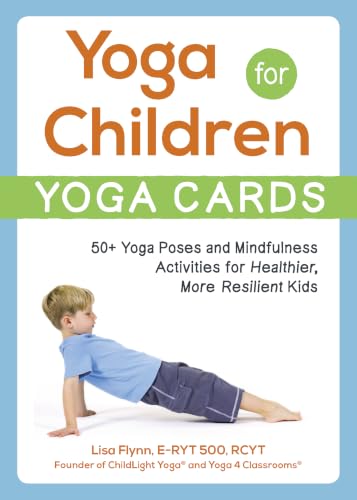
You want a screen-free way to get your child moving, stretching and settling down — without auditioning ten different decks. The short answer: Yoga for Children–Yoga Cards is the safest all-round pick for most families, because it packs more than 50 poses with real photos of real kids, clear written instructions and four colour-coded sections so you can jump straight to a calming pose or an energising one. Everything below covers nine tested-by-owners decks and exactly who each one suits.
This guide is built by comparing the manufacturers’ published specifications and the patterns across verified customer reviews, so you get each pick’s real strengths and trade-offs instead of marketing spin.
A kids’ yoga deck lives or dies on three things: whether the child can copy the picture, whether the instructions fit on the back, and whether the cards survive being yanked off a ring. The picks below differ wildly on all three, and this comparison of yoga cards for kids singles out which decks a three-year-old can actually follow.
Top Picks

How To Choose The Best Yoga Cards For Kids
The biggest mistake first-time buyers make is counting poses. A deck with 56 moves nobody can decode is worse than a deck of 20 with one clear photograph per card. What actually matters is whether your child can look at a card and copy the body shape without you reading every word aloud.
Picture versus illustration — and why it matters more than pose number
A photograph of a real child in a pose shows exactly where the knees, elbows and hips go. A cartoon leaves gaps. Several decks here lean on photos or detailed illustrations for that reason, and it is the reason a child can self-select a card. When the art is clear, the deck stops being a parent-led activity and becomes something a child reaches for alone.
What holds the cards together
Loose cards get scattered across the floor the moment you look away. A resealable plastic ring, a tin, or a fabric storage bag solves that. Cards on a ring also flip in sequence, which suits a ten-pose session, while boxed sets suit a teacher planning a full class. Decide if you want a pocket deck or an at-home collection before you compare pose counts.
Match the age band to the pose difficulty
A three-year-old can copy a cat stretch; a seven-year-old can hold a balance. Some decks here target 36 months to 5 years, others 4 to 8, and one is built for 5 and up. Buying within the band written on the listing saves you explaining a pose your toddler physically cannot hold. If you want one deck that grows, look for decks with an easy-to-hard progression built into the order of the cards.
Side-by-Side Comparison
| Model | Best For | Poses / Cards | Age Range | Card Format | Amazon |
|---|---|---|---|---|---|
| Yoga for Children–Yoga Cards★ Best Overall | Most families | 50+ poses | Children (young yogis) | Boxed set | Amazon |
| Little Yogi DeckBest for Feelings | Working through big feelings | Emotion-sorted poses | 4 – 8 years | Boxed deck | Amazon |
| Partner Yoga Poses Cards for Kids & ToddlersBest for Two | Two kids, one pose | 40 partner poses | 36 months – 8 years | Card deck | Amazon |
| Super Duper Yogarilla Exercise and Activities | Teachers and therapists | 100+ activities | Kid | Oversized cards in a box | Amazon |
| Yoga Cards for Kids, Pose Deck for Beginners | Calm corners and classroom resets | 32 poses, 34 cards + ring | 3 years and up | Cardboard cards on a ring | Amazon |
| Super Duper Yoga Body Awareness Fun Deck | Body awareness and OT work | 56 cards | 5 years and up | Cards in a tin | Amazon |
| MOLLYBEE KIDS Preschool Yoga Cards | Preschoolers on a ring | 40 poses, 20 cards | 36 months – 5 years | Cardboard cards on a plastic ring | Amazon |
| MOLLYBEE KIDS Preschool Dance Party Cards | Burning energy on rainy days | 20 double-sided cards | 3 years and up | Cardboard cards on a plastic ring | Amazon |
Detailed Reviews
1. Yoga for Children–Yoga Cards
Our pick — 4.5+★ from 600+ verified ratings; the strongest balance of quality and price.
The crowd favourite that turns a yoga session into a colour-coded pick-a-card game.
This is the deck the most families land on, and it earns that spot on breadth: more than 50 poses packaged as a boxed set, with the cards split into four named groups — Mindful Me, Time to Breathe, Strike a Pose, and Rest & Relax. That split is the whole trick. You never have to shuffle through the deck hunting for a wind-down pose after a meltdown; you go straight to the Rest & Relax colour.
What wins people over is the content itself. The deck covers the poses children already know from class plus several variations you will not find in a cheaper pack, and every card carries a written instruction short enough to read aloud in one breath.
The honest catch is card management with very small children. The cards are loose in the box, so a three-year-old who wants to spread them across the rug will do exactly that while you read the back. One measured suggestion from the review pages: clip the cards onto a ring or use the companion book if your child is at the scatter-everything stage. That is a card-management issue, not a quality one: the boxed set is rated 4.5+ stars across 600+ ratings, and buyers repeatedly describe the cards as beautiful and sturdy.
Where the deck pays off
- More than 50 poses sorted into four colour-coded categories, so a calming or energising session is one colour away
- Photographs of real children in each pose make copying visual rather than verbal
- Written instructions per card are short enough to read aloud while a child holds the stretch
- Boxed set format keeps the whole deck upright on a shelf between sessions
Where it asks for your help
- Cards sit loose in the box — expect to gather them up after a session with a toddler
- Younger children need an adult reading the back until they learn the poses
Reach for this if: you want one deck that covers energising poses for a restless afternoon and calming poses for bedtime, and you are happy to sit alongside a younger child at first.
Worth knowing: there is no ring in the box, so pair it with one if loose cards create chaos in your house.
2. Little Yogi Deck
A deck sorted by feeling, so a furious child picks the pose that matches the mood.
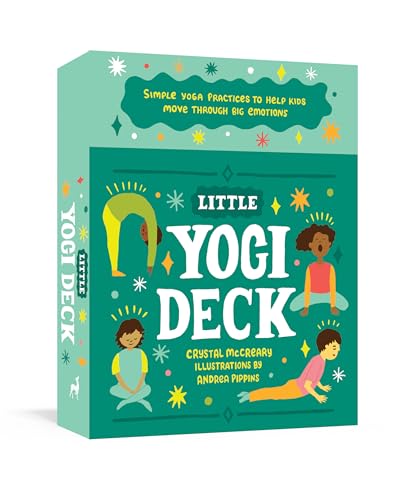
Here the organising idea is emotion, not exercise. The cards are colour-coded by feeling, which means a child who is wound up can find the angry stack and choose a pose from it instead of being told to calm down. That reframe is the reason this deck stands apart from every pure pose deck in this list — the yoga is the tool, and the feeling is the index.
Reading age runs 4 to 8 years, and the deck sits in the boxed-set league at 5.75 x 1.54 x 7.4 inches with a 1.42-pound heft, so it feels like a proper hardback companion on the shelf rather than a packet of flashcards. The illustrations get the credit in the review pages, along with the inclusivity: children of all skin tones appear across the cards, which quietly helps a child see themselves in the practice. Directions on the back are written at a length a young child can follow, and parents who have never done yoga themselves can read them cold.
What you should expect: this is a deck for a shared session, not a solo one for a pre-schooler. The emotional framing works best when an adult names the feeling out loud first. Turn that into the ritual rather than a chore and it becomes the deck your child picks on a hard day — which is exactly the point.
The emotional index: colour-coding by feeling turns a yoga deck into a regulation tool a child can self-select from, and the illustrated cards make the poses visible at a glance.
One honest note: it works as a two-person activity at the younger end of the 4-to-8 range, so budget for sitting down with your child rather than handing the deck over.
Pick it for: a household where big feelings are the daily reality and you want a physical object the child can reach for mid-meltdown.
Not the one for: a teacher who needs an instant ten-pose sequence, since the emotion groupings matter more than the flow here.
3. Partner Yoga Poses Cards for Kids & Toddlers
Forty poses that need two children and produce a lot of giggling.
Most kids’ yoga decks assume one child on one mat. This one assumes two, with 40 partner poses built so a pair of children hold a shape together. That single design choice makes it the pick for siblings close in age, play dates, or a classroom where you want cooperative movement rather than parallel stretching.
Age range is listed from 36 months to 8 years, and the deck carries 16pt card stock — a thicker board that shrugs off small hands. The pose index and detailed beginner instructions mean you can introduce a move you have never tried yourself, and the illustrations show realistic demonstrations rather than stylised cartoons, so a child can see how the two bodies fit together. A working children’s yoga teacher reports using a very comprehensive set with classes of 6-to-12-year-olds, and several students went on to invent their own partner poses after the session — that inventiveness is baked into the design, since the poses are meant to be mixed, matched and woven into a story.
The trade-off is that this deck does nothing for a child alone on the mat. Every pose requires a second body, which is wonderful when the mood and the company are right, and a non-starter when they are not. Pair it with a solo deck if your house has one-child days.
Built for connection: the school-age children in a class setting took to the partner poses and started creating their own, and the pose index lets you build a sequence without prior yoga knowledge.
Where it limits you: a solo child cannot use the deck at all, so treat it as a social activity rather than a quiet-time tool.
Best for: two siblings, a play date, or a yoga class where the aim is teamwork and empathy rather than a solo flow.
Skip if: your child practices alone, because every card here needs a partner to make the pose.
4. Yogarilla Yoga Fun Deck

A therapy-grade box of oversized cards with more than a hundred activities inside.
Nothing else on this list comes close on volume. OTis the OT gorilla demonstrates more than 50 yoga poses across 6″ x 8″ cards, and the set bundles over 100 different activities in total, organised as 10 standing, 10 seated, 10 prone, 10 supine, and 10 hands-and-knees poses. There are also 3 partner poses for two children working together and 2 breathing poses that build awareness of breath and breath support.
That organisation is what separates it from a casual family deck. A therapist or teacher can pull ten poses from one body position category and build a session with a clear arc, then reach for the breathing cards to close it. The oversized card size is deliberate too: a whole classroom can see the illustration without crowding around a table. One preschool teacher using it with ages 2 to 5 describes letting each child pick a pose to form the class, and notes you will want to add your own warm-up and cool-down — a fair hint that this is a pose library, not a scripted lesson.
The one real conversation is value. The cards are large and the box is sturdy, but at the premium end of this list you are paying for breadth and for the therapy pedigree. If you are a parent wanting a quick bedtime deck, the volume will sit largely unused; if you are planning sessions every week, the breadth is the point.
Why it earns the big box
- More than 50 poses grouped into five body-position categories of 10 each, so sessions build logically
- Over 100 activities in total, plus 3 partner poses and 2 breathing poses
- 6″ x 8″ cards stay readable for a whole classroom, not just one child
- Sturdy box keeps the oversized set organised between sessions
The honest limits
- Pose library, not a scripted sequence — you plan the warm-up and cool-down yourself
- Premium-tier spend for a family that only needs a bedtime deck
The right buy for: a yoga teacher, an OT, or a parent running a weekly class who needs a deep library of body positions and visible cards.
Think twice if: you want a small deck that fits in a bag for a five-minute stretch before bed.
5. Yoga Cards for Kids, Pose Deck for Beginners

Thirty-two poses on a ring, named properly, sized for a child to flip alone.
Two details earn this deck its slot. First, the ring: the 34 cards come already secured on one, so a seven-year-old can flip through poses independently instead of needing a parent to deal. Second, the naming — this deck teaches the real Sanskrit-derived pose names rather than made-up kid nicknames, which matters if your child is also taking classes and needs to recognise what the teacher calls out.
Card size is 5.63 x 4.5 inches on cardboard, roomy enough for an illustrated pose plus guided instructions, and the set includes 8 cards for the Sun Salutation sequence. There is a small quirk worth knowing: step 9 of that flow repeats the Low Lunge from step 4, so the deck includes that card only once and expects you to reuse it. Read the note on the box and it makes sense; skip it and you will spend a minute hunting for a missing card.
Where it fits best is the calm corner or the classroom reset. The deck’s own framing — releasing energy, resetting between school transitions, wind-downs at bedtime — matches how families actually use it, and one seven-year-old’s parent describes the ring holding well while the child flips the cards and works independently from the picture and description on the back. If you want a deck that becomes the child’s own tool rather than a parent-led lesson, this is the shape to buy.
Independence by design: 34 cards on a secure ring, 32 illustrated poses, and a picture-plus-description layout a school-age child can follow solo.
Small caveat: the Sun Salutation sequence intentionally repeats one pose card, so the count of unique poses runs slightly under the card total.
Suits: a child aged roughly six and up who wants to run their own practice, or a calm corner that needs a self-serve tool.
Less ideal for: a toddler, who will still need you beside them reading the pose names.
6. Yoga Body Awareness Fun Deck

Fifty-six compact cards in a tin, built around body awareness rather than pretty poses.
This is the practical, go-anywhere deck. It holds 56 cards at 3¼” x 4¼” — small enough for a tin you can drop in a work bag — and each card shows OTis the gorilla in a different body position. Recommended age starts at 5 years, which lines up with the way it is used: older children working on coordination, body awareness and crossing the midline, the movement of reaching across the centre of the body.
The tin is the standout piece of design. It survives being carried around, which is why therapists and play-therapy parents end up with it. The poses themselves mix standing and table positions, and the cross-body poses are called out as a deliberate feature rather than an accident. One parent of a child who works on body awareness notes the exercises give their child a reason to strengthen and visually process instructions at the same time — the gorilla character is doing real work there, turning a movement drill into a copy-the-monkey game.
Two small realities: the card stock is standard thickness with a coated finish rather than laminated, so it is not a chew-proof deck; and the tin lid notch is not the most secure, so keep the tin upright in a bag. Neither undercuts what the deck is for. It sits in the middle of the price spread and delivers a therapy-shaped set without the oversized-cards cost.
The OT angle: 56 cards built for body awareness, coordination and midline crossover, with a character children want to imitate.
The practical caveat: standard coated card stock and a tin lid that can pop open if the tin is carried upside down.
Choose it for: occupational therapy sessions, play therapy, or an older child who needs movement broken into clear visual instructions.
Not for: a toddler still mouthing cards, since the stock is coated rather than laminated.
7. MOLLYBEE KIDS Preschool Yoga Cards, 40 Poses and Activities

Twenty chunky ring-bound cards that turn a toddler’s yoga session into a themed story.
Here is the arithmetic that matters: 20 sturdy cardboard cards on a resealable plastic ring, holding 40 poses and activities because each card carries a pose on the front and a different one on the back. Squeezed down to 3.5 x 3.5 inches, they are sized for small hands to hold and flip unaided. For a three-year-old, that combination — chunky, ring-bound, hand-sized — is what prevents the floor-covering scramble.
The structure is genuinely different from a straight pose deck. Sessions are themed: In the Forest, Around the World, On the Farm, and At the Beach, with 10 poses per theme forming a complete sequence. Cat demonstrates each pose while Mouse plays in the background, and that character pairing does real work with a preschooler who needs a story thread to stay engaged. Listed age is 36 months to 5 years, and the fun factor is exactly what the review pages keep returning to — a three-year-old’s parent sums it up as “My daughter is 3 and loves these! I feel they are really helping her learn.”
What you will not get is pose depth for an older child. This is a deck built for the preschool years and it earns its keep there. Once a child is past five and knows the shapes, a bigger deck with named poses and harder balances will serve them further.
Preschool-first design: 40 poses across 20 double-pose cards on a plastic ring, grouped into four themed 10-pose sequences for ages 36 months to 5 years.
Where it runs out: a five-plus child who already knows the poses will outgrow its short, themed sessions quickly.
Built for: the three-to-five crowd who need cards they can physically hold and a story to hook them in.
Move on if: your child is already six and hungry for a longer, harder sequence.
8. MOLLYBEE KIDS Preschool Dance Party Cards, Everyday Moves

Not strictly a yoga deck — and the best rainy-day energy outlet on this list because of it.
Worth being clear: this is a dance and movement deck, not a yoga deck, and it earns its place on the list because a child who will not sit for a calm breathing pose will happily sweep the floor or row the boat. The moves are derived from everyday actions — sweeping, rowing, stirring a soup — on 20 double-sided cardboard cards, each 3.5 x 3.5 inches, secured on a plastic ring. No extra equipment required.
Three play modes do the heavy lifting: Follow the Leader, Dance Show, and Dancing Circle. That variety is why it survives repeat sessions. One family describes it as a repeat purchase and reports using it with children aged 2 to 6 on bad-weather days as a way to burn energy indoors. Another notes it works when relatives who are not confident with kids are visiting, because the cards hand them ready-made ideas.
The fair caveat is that you are buying 20 cards and a set of game rules, so the value read depends on how often you will use it. If it becomes your go-to rainy-day activity, 20 cards go a long way; if it sits in a drawer, it will feel thin. Rated at 4.5+ stars, it works best as a second deck beside a real yoga set, not as a replacement for one.
Why it gets pulled out again
- Three distinct play modes — Follow the Leader, Dance Show and Dancing Circle — keep repeat sessions fresh
- Twenty double-sided cards on a ring mean nothing goes missing between plays
- Every move comes from an everyday action a preschooler already recognises
- No props, no screens and no setup beyond pulling the ring out
What to keep in mind
- It is a dance game, not a yoga deck — do not buy it expecting breathing or balance poses
- A small card count means the value depends on how often you actually play
Pair it with: a calming yoga deck for a household that needs one tool for the wound-up afternoon and another for the wind-down.
Only skip if: you are specifically shopping for mindfulness and breath work.
Know the Specs
Pose count versus card count
A deck can list 40 poses on only 20 cards when each card carries a pose on the front and a different one on the back. That is how a small ring deck fits a full themed sequence. When you compare decks, read both numbers: a lower card count with double-sided printing can hold more poses than a heavier single-sided set. It also affects how much a child can flip through without help, since a bigger stack takes more hand strength.
Card stock and thickness
The material number tells you how the deck survives small hands. Cardboard is the standard for preschool decks; 16pt card is a thicker board that resists bending; coated card is wiped clean but not laminated, so it is not a chew-proof surface. A ring, a tin or a fabric bag is the other half of durability — the cards only stay usable if they stay together between sessions.
Age bands and what they really mean
Ranges like 36 months to 5 years, 4 to 8, and 5 and up signal how hard the poses and the instructions are, not just a marketing bucket. A preschool band builds in short, recognisable movements and character-led pictures; a school-age band assumes longer holds and more complex balances. Buying within the band the maker lists keeps you from handing a three-year-old a pose their body cannot hold.
Ideally sized for a small hand
A card around 3.5 x 3.5 inches fits a preschooler’s grip and lets them flip and choose alone. Oversized cards at 6″ x 8″ suit a teacher standing in front of a group, where every child needs to see. A pocket deck in a tin is a third size — the pick for a bag that travels. Pick the card size for how it will be used — small hands, a classroom, or a travel bag — and let storage follow.
Common Questions
What age should a child be before starting with yoga cards?
Are these yoga cards safe for children with autism or ADHD?
Do I need to know yoga myself to use these with my child?
How many poses does a good kids’ yoga deck really need?
Will the cards survive a toddler?
Do the cards come with a ring or a box?
What is the difference between a yoga deck and a partner yoga deck?
Can a yoga card deck help a child handle big feelings?
Are these decks a gift kids will actually use?
Do I need a mat or any other equipment?
The Bottom Line
For most homes, the yoga cards for kids winner is still the Yoga for Children–Yoga Cards — more than 50 poses split into four colour-coded groups, real-child photos and short written instructions, all in a boxed set the whole family can use. If big feelings are the daily challenge, the Little Yogi Deck gives a child a way to pick a pose by emotion. And if two children practice together, the Partner Yoga Poses Cards turns a mat into a shared game. One last nudge: the top pick costs more than the cheapest deck here, but its 4.5+ stars across 600+ ratings show it is the one families keep recommending.
How we choose
We do not accept paid placement. Every pick is matched to a real buyer and a real use-case; we do not hands-on test units.
Sources
Specifications: manufacturer listings and product documentation. Review insights: verified customer reviews, as of October 2026. Pricing: not shown on this page (it changes often); check the current price via the retailer link.
As an Amazon Associate, Home Digitized earns from qualifying purchases. This does not affect which products we feature.