
Specs are compiled from manufacturer listings and verified buyer reviews and can change over time — please confirm the key details on the product page before buying.
You want plants that survive a Zone 7a winter and still put on a show by July. Most of the picks below will do exactly that, so the real decision is matching the plant to your sun, your soil, and how much watering you actually want to do. Zone 7a means winter lows that can dip to around zero degrees Fahrenheit, so anything tender is out from the start. What is left is a shortlist of perennials that come back year after year without fuss.
This guide is built by comparing the manufacturers’ published specifications and the patterns across verified customer reviews, so you get each pick’s real strengths and trade-offs instead of marketing spin.
Below you will find the plants that reliably return in Zone 7a gardens, from a tough little tickseed to a towering rose of Sharon, each with its real mature size and light needs spelled out plainly. Every plant that ships into a Zone 7a garden needs three things to earn its spot: correct hardiness, honest mature size, and a bloom window you can count on. That is exactly how these nine were picked for this guide to the best Zone 7a perennials.
Top Picks


How To Choose The Best Zone 7a Perennials
Zone 7a is a specific slice of the country where winter lows reach roughly zero degrees Fahrenheit. That single number decides which perennials live and which quietly disappear by the second spring. A plant tagged for zones 3 through 8 will handle it easily. A plant tagged for zone 8 and warmer only is a gamble you will lose.
Start with the hardiness range, not the flower color
Every plant on this list carries a zone range in its own spec sheet, and you want 7a to fall inside it — not on the edge. The Coreopsis ‘Zagreb’, for example, is listed for zones 5-9, which puts 7a comfortably in the middle. The Balloon Flower is listed for zones 3-8. The wider the range, the more forgiving the plant is when a cold snap arrives late in April.
Match the mature height to the spot you actually have
Mature size is the number most buyers skip, and it is the one that causes trouble. The Stella Daylily tops out at 12 inches tall, so it belongs at the front of a border. The Blue Chiffon Rose of Sharon reaches a listed height of 96 inches, which is a small tree in practice. Read that number before you dig the hole.
Understand what arrives in the box
Live plants ship in a pot with soil, often trimmed back, and sometimes fully dormant between November and March. A dormant plant is alive — just sleeping. A well-rooted pot planted into warm soil at the depth on the grower’s guide recovers fastest.
Side-by-Side Comparison
| Model | Best For | Hardy Zones | Mature Height | Bloom Period | Amazon |
|---|---|---|---|---|---|
| Proven Winners 2 Gal. Double Play Doozie Spirea★ Best Overall | All-around color with little effort | 3-8 | 24 inches | Spring to fall | Amazon |
| Southern Living 1 Gal. Stella DaylilyBest Value | Front-border color on a budget | 3-9 | 12 inches | Spring to summer | Amazon |
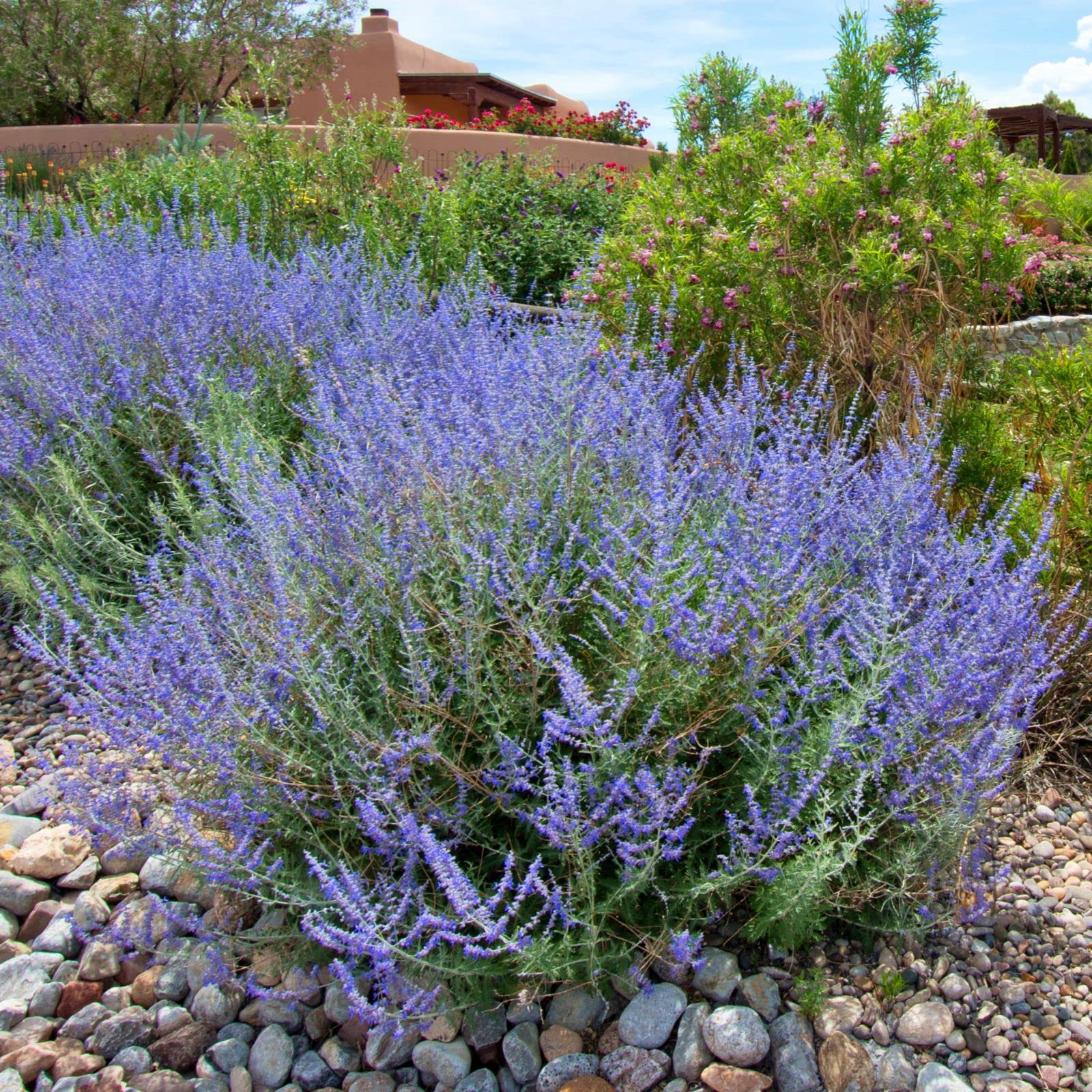
| Clovers Garden Russian Sage (2 Plants)Pollinator Magnet | Pollinator-friendly silver foliage | 4 and warmer | Up to 4 feet | Mid-summer to first freeze | Amazon |
| Perennial Farm Marketplace Coreopsis ‘Zagreb’ | Cheerful repeat bloom in poor soil | 5-9 | 18 inches | Summer | Amazon |
| Perennial Farm Marketplace Rudbeckia ‘Goldsturm’ | Long-season golden color, cut flowers | 3-9 | 24 inches | July through September | Amazon |
| Perennial Farm Marketplace Perovskia (Russian Sage) | Heat and deer-tolerant height | 5-9 | 48 inches | July to September | Amazon |
| Proven Winners 2 Gal. Blue Chiffon Rose of Sharon | A tall flowering anchor | 5-9 | 96 inches | Spring to fall | Amazon |
| Green Promise Farms Sweet Autumn Clematis | Fall bloom on a trellis | 4-8 | — | Fall | Amazon |
| Green Promise Farms Sentimental Blue Balloon Flower | A compact cottage-garden accent | 3-8 | 6-8 inches | Summer | Amazon |
Detailed Reviews
1. Proven Winners 2 Gal. Double Play Doozie Spirea Shrub
Our pick — 4.5+★ from 200+ verified ratings; the strongest balance of quality and price.
A two-gallon spirea that arrives with buds already on the branches and keeps color coming from spring right into fall.
Spirea is the plant you buy when you want a shrub that looks intentional without learning anything new. This one is listed for USDA zones 3-8, which places zone 7a dead center, so the cold side is settled. It grows to 24-36 inches wide and 24-36 inches tall, and Proven Winners recommends spacing plants 24 inches apart if you are running a hedge. It handles full sun to partial shade, which means a bed that gets dappled afternoon light is still fair game.
The weight and size of what lands on the porch is the first surprise. At 8.8 pounds and 24 inches of listed plant height, this is a substantial living plant in a 2-gallon pot — well ahead of the 4 pounds and 12 inches you get from the Stella Daylily. Reviewers mention the root system more than anything else, and it is what wins them over. Bloom carries through the whole season, and buyers report the plants settling in fast: “One month later they are thriving, and blooming.” One buyer specifically liked that there were no bare spots or lopsided areas when it went in the ground.
The catch is timing and packaging. Between late fall and early spring this ships dormant and trimmed back, so a bare pot in January is expected, not a dead plant. Once a 2-gallon pot is loaded into an oversized box, a few plants arrive with soil knocked loose and branches scrunched, though the roots usually shrug it off. Prepare the ground exactly as the planting guide says before it arrives, and you skip the awkward waiting period.
Where this shrub earns its keep
- Listed for zones 3-8, so zone 7a sits comfortably in its range
- Repeating bloom runs from spring through fall in red-to-purple flowers
- Ships as a real 2-gallon pot — 8.8 pounds of plant and soil arriving ready to plant
- Low-maintenance performer with a 24-36 inch mature frame that fits most beds
What to have ready before it ships
- Winter-through-early-spring orders arrive dormant and trimmed, which looks discouraging
- A full 2-gallon pot is heavy for its box, and loose soil in transit is a real possibility
- Flower color leans toward red-purple; some prefer a more vivid shade
Any fence-line you want filled: This is the shrub for a hedge you never want to fuss over, in a bed with full sun to partial shade.
Order it in the wrong season and you may worry: A dormant spring shipment looks like sticks, so plant it in warm soil and give the roots a few weeks before judging.
2. Southern Living 1 Gal. Stella Daylily Plant
The 12-inch yellow daylily that disappears into a border and reappears with flowers every summer.
This is a front-of-border plant, and the spec sheet says so plainly: mature size is 10 to 12 inches wide and 10 to 12 inches tall, and it is listed for USDA zones 3-9. Zone 7a sits comfortably inside that range. Full sun and deciduous are both listed, so expect it to go quiet in winter and push fresh growth in spring, and expect it to want the sunniest part of your bed.
Against the spirea in the top spot, this is the smaller house: 4 pounds versus 8.8 pounds and 12 inches of listed height versus 24 inches. What that buys you is a plant that tucks into tight spots where a shrub would overwhelm the space. It is also genuinely well-grown for a one-gallon pot — owners mention the plants “looks more like a 2Gal nice plants x2,” which on a 1-gallon listing is a pleasant overdelivery. Foliage arrives pretty and full, and some plants show flowers before you have even finished planting them.
Bloom timing is the one honest wobble. It is listed to bloom spring through summer, and the reviews split between plants already flowering on arrival and plants that need a few weeks in the ground first. Nothing is wrong with either — young divisions simply bloom on their own schedule. Plant it, water it in, and let the yellow arrive when the roots catch.
What you are getting: A compact 10-12 inch clump of grass-like foliage that fills a garden edge with bright yellow in the warm months, in the widest hardiness window on this list at zones 3-9.
The trade-off worth knowing: Bloom timing is a lottery during shipping, so plan for foliage this year and flowers on the plant’s own clock.
Reach for this if: You need a low, sunny border filler and want a reliable return next spring without any real care.
Look elsewhere if: You want instant height or a shrub-size presence — 12 inches is the whole plant.
3. Clovers Garden Russian Sage Plants – Two (2) Live Plants
Two starter pots of silver-leaved Russian Sage that smell like the herb garden and bloom until the first freeze.
Two plants, each 4 to 8 inches tall in a 4-inch pot, is the honest description of what lands. These are not one-season wonders and they are not instant structure — they are young plants that need a season to size up. What makes them worth the slot is the run time: Russian Sage is listed to bloom profusely from mid-summer to the first freeze, and the foliage stays attractive after the blue-purple spikes fade.
The plant is also a pollinator favorite, and that is the whole point of putting it in a zone 7a border. It is listed as hardy in zones 4 and warmer, growing to as much as 4 feet wide and tall, so give it room. One thing the listing hammers home: Russian Sage is not edible herbal sage, so keep it out of the kitchen and let it decorate instead. Buyers consistently report both plants arriving hydrated, going into containers, and thriving afterward.
Set your expectations on the size in the pot. A few buyers found theirs “very small and fragile” from the start, and a 4-inch pot is simply a young plant, so do not expect a shrub. There is also the odd case where the plants never take, which is the risk with any live start. The listing claims 10x root development and eco-friendly packaging, and most orders arrive in good shape.
The honest angle: Two live plants in 4-inch pots is a starter kit, not a finished border — the payoff is late-summer blue-violet color through the first freeze, plus all the pollinators it pulls in.
Give it a season: The young plants look underwhelming at 4 to 8 inches, but the same plant can reach 4 feet tall and wide once established, so space the pots accordingly from day one.
Reach for this if: You want a pollinator plant that shrugs off heat and keeps blooming into autumn.
Look elsewhere if: You want an instant full-size shrub on day one — these arrive as small starter pots.
4. Coreopsis verticillata ‘Zagreb’
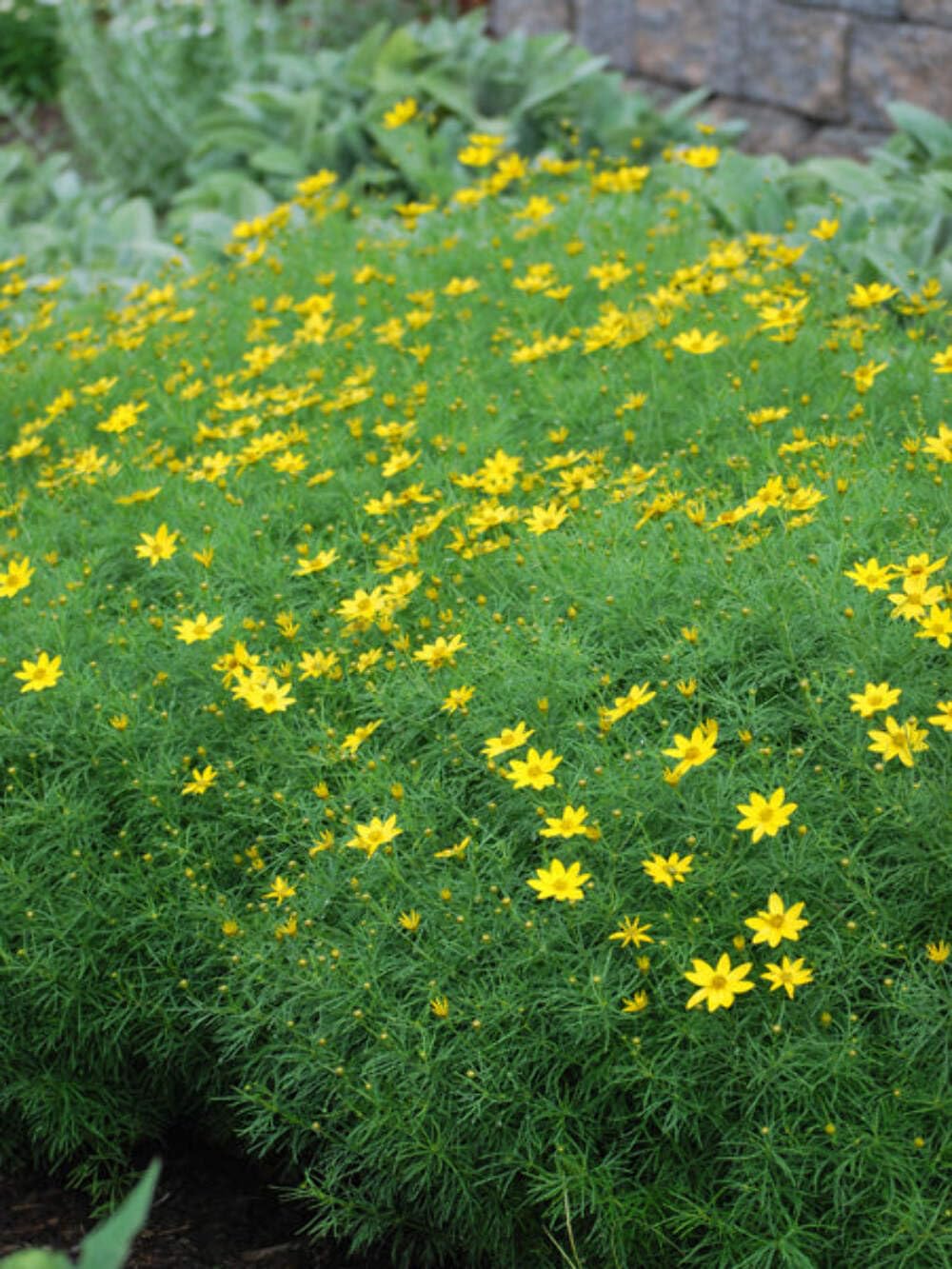
A golden-yellow native tickseed that ships rooted and ready, and takes less watering than almost anything else here.
Coreopsis ‘Zagreb’ is a quart-size perennial from a grower that specializes in natives, listed for zones 5-9 and expected to reach 18 inches tall. It is also listed for sandy soil, which tells you the drainage matters more than almost anything except sun. Zone 7a gives you both, so this is a plant that mostly takes care of itself once it is in the ground.
The state of the plant on arrival is what the grower is known for. The listing notes the plant is fully rooted in the pot and ready for immediate planting, and that a November-through-March order may arrive dormant and trimmed. Reviews focus on plant health, and customers note it arriving lush and mulched in a well-tended pot. One buyer had a branch break off in shipping and the whole plant was replaced, so the seller’s service backs the plant up.
The only real expectation to set is foliage-first shipping. Seasonal condition is normal for a live perennial and it is written right on the listing, so a trimmed, quiet-looking plant in early spring is not a problem — it is the plant’s own schedule. Give it full sun and let the golden flowers come in summer.
Why it earns a place: A 18-inch native that wants sandy, well-draining ground and full sun, and rewards that with bright golden-yellow summer flowers and almost no demands.
Set the expectation: Seasonal condition and dormant shipping between November and March are listed as normal, so judge the plant by its roots, not by its leaves on arrival.
Plant it here if: You have a sunny, sandy patch and want a native that blooms without coddling.
Pick something else if: Heavy clay sits under your beds — this one wants drainage it can feel.
5. Rudbeckia f. ‘Goldsturm’

Maryland’s state flower in a 2-foot package, with golden petals from July through September every single year.
Black-Eyed Susan ‘Goldsturm’ is a 1999 Perennial Plant of the Year, and that award is the honest reason it is still everywhere. It is listed for zones 3-9, reaches 24 inches, and carries golden yellow flowers 3 to 4 inches across on a black cone. The bloom window is listed as July through September, which is the late-summer slot most borders are short on. It is listed as a native cultivar, so butterflies come with it.
It handles any soil, takes a cut flower vase happily, and combines with almost everything — the grower names fountain grasses, liriope, sedum, and the deep blues of salvia and veronica. Reviewers most often praise plant health, with plants arriving root-bound, thick with green leaves, and packed to survive the trip. Ten plants in a single order is a normal buyer move here, and the flowers start mid-June to mid-August in most gardens.
Two real notes. The first: it ships dormant and trimmed if you order between November and March, so a bare pot in winter is the plant asleep. The second is a garden reality — one buyer in zone 7 reported a plant that bloomed well the first year and did not return. That is the nature of a live perennial; no grower can promise every root survives its first winter, and the vast majority here do.
The case for the Goldsturm
- North American favorite and Maryland state flower, listed for zones 3-9
- Golden 3-4 inch flowers with a black cone bloom July through September
- Golden-yellow bloom makes it a natural cut flower for a vase
- Grows well alongside grasses, liriope, sedum, and salvias
- Thrives in almost any soil, with very little fuss
What to plan around
- Dormant, trimmed shipping from November through March looks alarming
- Like any live plant, an occasional root does not survive its first winter
- Wilts in the hottest afternoon sun despite loving morning light
The reliable backbone pick: Plant a group of them and you have three months of golden color plus flowers to cut.
Give it morning sun: The one thing it dislikes is a full afternoon bake, so choose a spot where the worst of the heat comes late and light.
6. Perovskia atriplicifolia
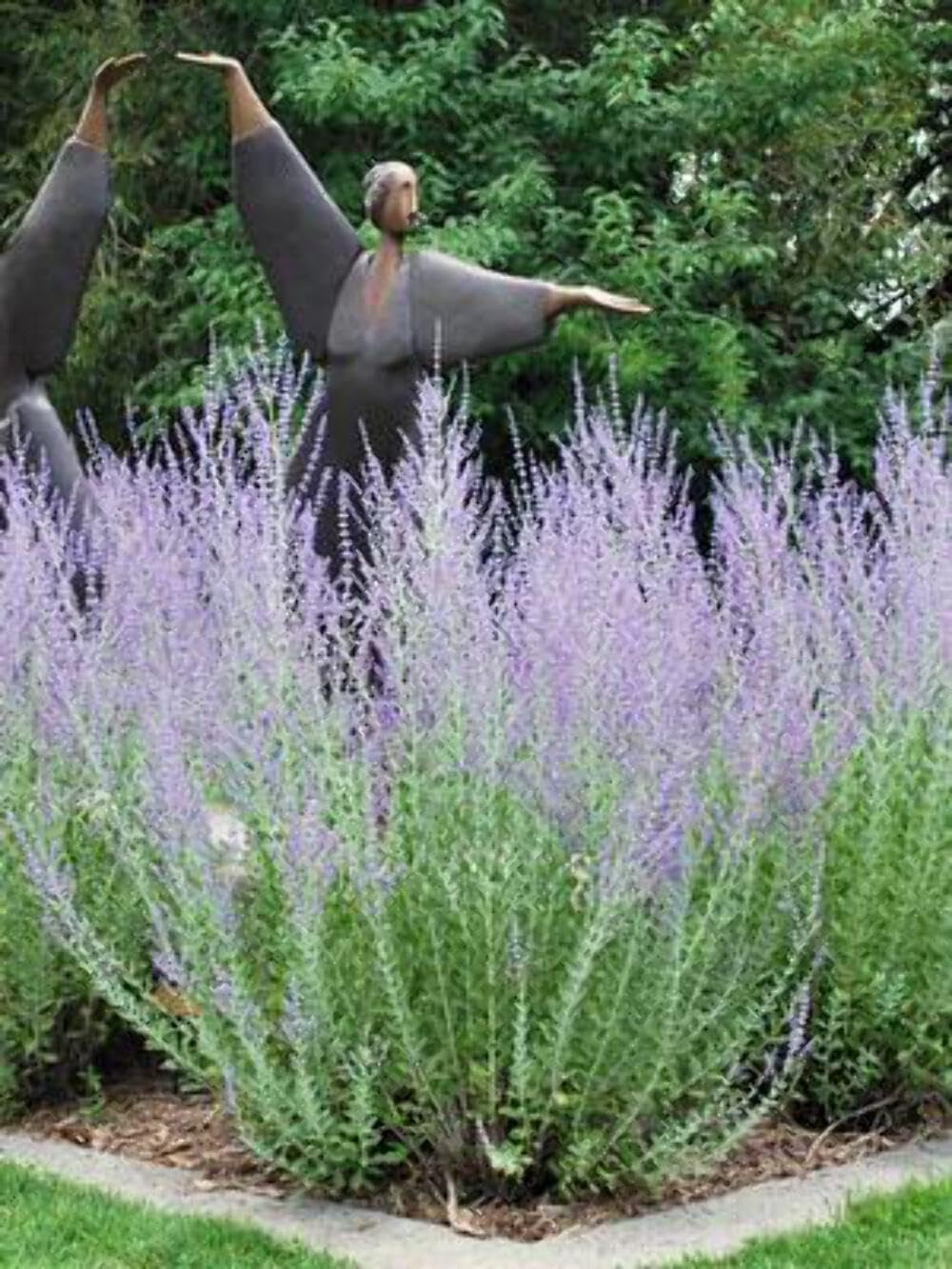
Four feet of blue-violet spikes on fragrant stems that deer walk past and heat cannot wilt.
This is the tall version of Russian Sage, and 48 inches of listed height is the number that decides where it goes. It is listed for zones 5-9, loves heat, wants good drainage, and blooms from July to September. The stems are gray-white and aromatic, which means the plant still looks and smells interesting long after the blue-violet spikes fade. It pairs with lower perennials as a vertical accent, and the grower suggests spacing plants 24 inches apart.
The rule that jumps off the listing is geographic: do not order this one if you live in Alaska, Arizona, California, Colorado, Idaho, Montana, Nevada, Oregon, Utah, Washington, or Hawaii. That is a plant import restriction, not a quality issue, so check it before you buy. Where it can ship, the plant arrives fast and healthy — under 48 hours in some cases — and the packaging is secure enough that most arrive without damage. The plant is also listed as highly deer-resistant, which is worth a lot in a zone 7a garden where deer roam.
If you are deciding between this and the Clovers Garden Russian Sage above, the difference is plant size and count. The Clovers order gives you two young 4-to-8-inch plants in 4-inch pots; this one arrives as a single #1 container plant that will reach the listed 48 inches. If you need immediate height, buy the bigger pot. One honest caveat on packaging: an occasional box arrives with broken stems, though the plant itself still takes off once in the ground and is reported to be thriving.
The vertical accent: A 48-inch plant with blue-violet spikes on gray-white fragrant stems, blooming July to September, and listed as highly deer-resistant — a strong fit for a hot zone 7a bed with sharp drainage.
The catch to check: Restricted from shipping to eleven states, and an occasional plant arrives with broken stems from transit.
Suits you if: You want height, heat tolerance, and deer resistance in one plant, and you live outside the restricted states.
Keep looking if: You garden in a restricted state, or you want a plant you can divide into more than one spot right away.
7. Blue Chiffon Rose of Sharon

A hibiscus that grows into a small tree — and this one carries ruffled blue flowers from spring through fall.
Read the spec first, because it changes your whole plan. The Blue Chiffon Rose of Sharon reaches a listed height of 96 to 144 inches, which is eight to twelve feet tall, and 48 to 72 inches wide. It is listed for zones 5-9, takes full sun to part shade, and blooms from spring through fall in soft blue flowers. Proven Winners suggests spacing plants 96 to 144 inches apart, which is the spacing of a small tree rather than a shrub.
Reviewers talk most about the flower quality and the ruffled blue look. The plant is listed as used in containers, landscapes, and as accents, and it earns its spot as a tall anchor at the back of a border. It blooms heavily in many gardens, and the ruffled flowers are the reason this rose of Sharon beats most hibiscus in the garden center. It is deciduous, so winter leaves nothing but the plant’s skeleton, and new growth comes back early in spring.
Given its size, order it in a 2-gallon pot for planting in a spot where full sun to part shade is available. It ships dormant between winter and early spring, so an apparently bare shrub in February is the plant asleep. Once it is in the ground, it is a tall, generous bloomer that will be the tallest plant on the list by a wide margin.
The height play: A 96-144 inch hibiscus in ruffled blue, hardy in zones 5-9 and flowering from spring through fall — the plant to anchor the back of a border you want to see from the street.
Give it real room: Spacing is listed at 96-144 inches and mature width can hit 72 inches, so this is not a plant for a narrow bed.
Right for: A spot where you actually want height and can give it a wide berth for decades.
Not for: A narrow foundation bed or a spot where you want a plant under four feet.
8. Clematis paniculata
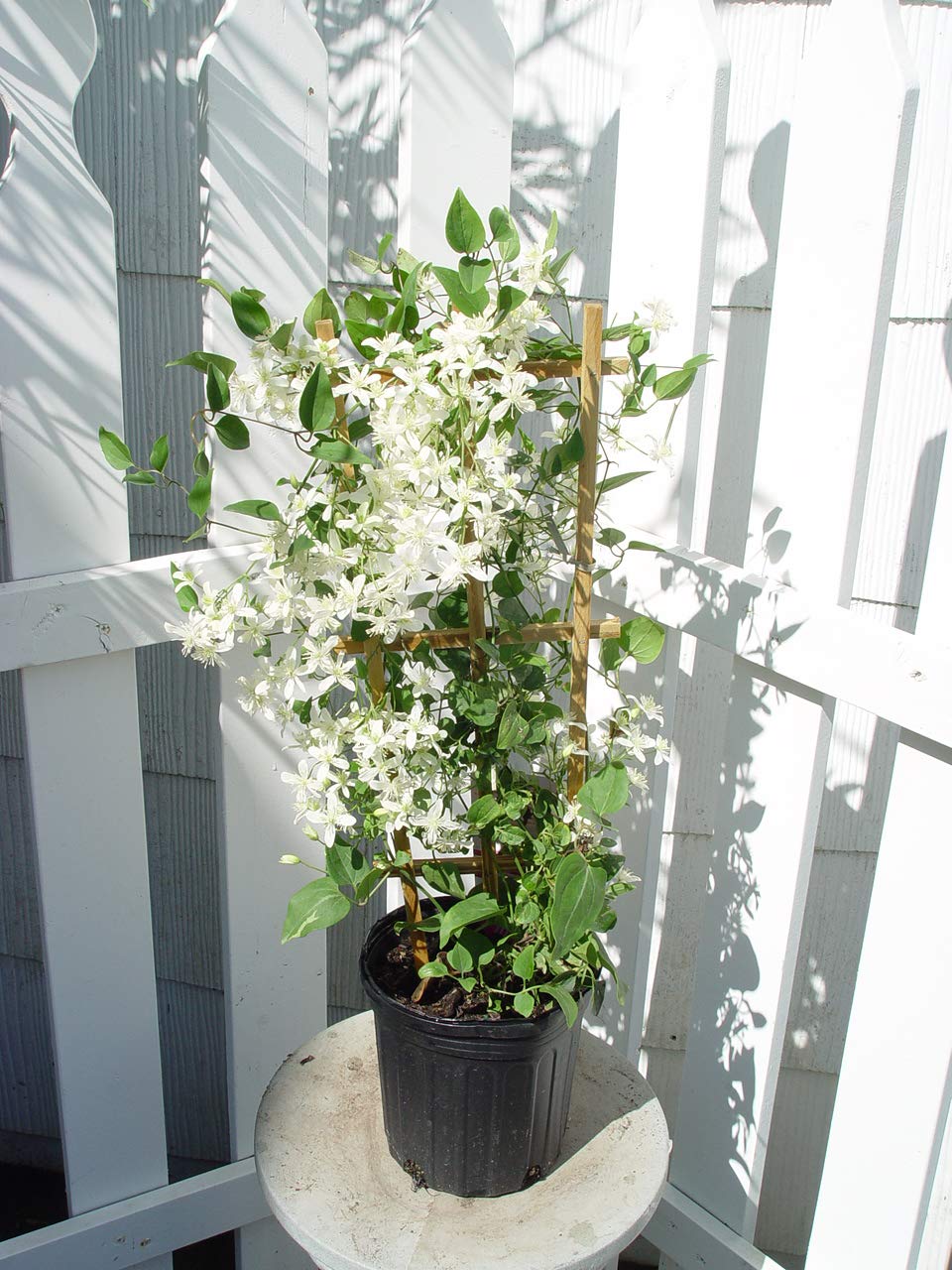
White fall flowers on a vine that arrives bigger and healthier than a clematis has any right to.
Clematis has a reputation for being fussy about arriving alive, and this one quietly ignores that. It ships in an 8-inch container, fully rooted and ready to plant, and it is listed for zones 4-8, which puts zone 7a well inside its range. It wants full sun and blooms in fall. It is listed as a low-maintenance plant that works well in groupings, which is the honest description of what you get.
The size is what sets this pick apart. A clematis in a full 8-inch pot frequently arrives already grown and ready to climb, and reviewers point out these coming in “quite grown up” with some at roughly 20 inches tall. One review described the plant doubling in size within a month. Against the 1-gallon Stella Daylily above, this is the more substantial plant from the start, and the strong quality of the two reflects it. Some listings even include a metal trellis, so check the product details on the one you are ordering.
The caveat is the same one that comes with any vine: figure out what it will climb on before it arrives. Full sun is listed, and a trellis is the natural partner. Plant it where the roots stay shaded and the top gets the sun, and the fall bloom is the reward.
What the clematis delivers
- Hardy in zones 4-8, so zone 7a sits in the middle of its range
- Ships in an 8-inch container, fully rooted and ready to plant
- White fall bloom extends the flowering season into September and beyond
- Arrives already grown, so it establishes far faster than a bare-root vine
- Often includes a metal trellis for its first season
Before you plant it
- Full sun is required, which limits shaded spots
- A vine needs a structure to climb — plan that before arrival
- Seasonal condition on arrival, so expect leaves to look a little tired
A strong pick for a fence or trellis: Pair it with a sturdy support, plant in full sun, and let the white fall bloom come.
Be realistic about the vine: It wants structure, so a bare patch of fence will not work.
9. Platycodon grand. ‘Sentimental Blue’

A six-to-eight-inch balloon flower that pops open in blue and looks hand-painted beside everything else.
This is the smallest plant here by a clear margin: mature size is 6 to 8 inches tall and 15 to 18 inches wide, which makes it a front-of-bed or container accent, not a filler. It is listed for zones 3-8 and ships in a #1 container, fully rooted and ready to plant. Loam soil is the listed preference, so a decent garden bed serves it better than gritty sand. It blooms blue in summer, and that compact frame is exactly what makes it worth growing.
The blue summer flowers are what sell this plant. Buyers describe the blue flowers as stunning, and the plant has a reputation with some for being planted in a wide-top pot so the crown stays high — that is the one planting tip worth pinning before it arrives. Packaging tends to be careful, and the plant comes from the start healthy and well-formed. It is an heirloom, organic plant, and it settles in fast when planted within a day or two of arrival.
The trade you make is size against presence. Leave it out and let the ground insulate it. Plant it in a wide-top pot or well-drained soil and give it a season to fill out.
What wins people over: The sheer charm of the blue summer flowers on a plant that stays small, plus its heirloom and organic pedigree and a wide hardiness window of zones 3-8.
Mind the size: At 6 to 8 inches tall this is a compact accent, not a border filler, and the crown prefers being left in the ground over winter.
Reach for this if: You want a small, distinctive accent at the front of a sunny bed.
skip it if: You want plants for a full border — this one is small and priced as a specialty accent.
Know the Specs
USDA Zones — the first number to trust
The USDA zone tells you the coldest winter a plant can survive. Zone 7a generally means a winter low around zero degrees Fahrenheit, so anything tagged 3-8 or 5-9 is a safe bet. Always read the tag or listing before you order, and if 7a is only on the far edge of the range, expect that plant to be more sensitive in a bad winter.
Mature Height and Spread
Mature height is how tall and wide the plant gets after several growing seasons, not the size of the pot it arrives in. Use it to space plants correctly — a 48-inch Russian Sage and a 6-to-8-inch Balloon Flower should not be planted the same distance apart. Spacing in the listing is usually a real growing distance, not a guess.
Bloom Period and Seasonal Condition
Every plant here lists the months it flowers. Stack plants with different bloom windows — daylilies in spring and summer, Russian Sage and Black-Eyed Susan in summer and fall — for continuous color. Seasonal condition means the plant may arrive dormant or trimmed in the cold months, which is normal and not a sign of failure.
Light and Soil Needs
Full sun means six or more hours of direct light; part shade means some of that is filtered. Sunlight is listed per plant, and so is the soil type when it matters — sandy soil for tickseed, loam for balloon flower. Getting light and drainage right matters more than any fertilizer you can add later.
Common Questions
Which of these perennials are actually hardy in zone 7a?
How do I choose between the two Russian Sage options?
What does it mean when a live perennial ships dormant?
How tall will each of these plants get in my border?
Do any of these bloom in fall instead of summer?
Will live plants survive being shipped in a box?
Is Russian Sage the same as the sage I cook with?
Can I plant these perennials in containers instead of the ground?
What kind of soil do these Zone 7a perennials want?
How much sun do these plants need to bloom?
The Bottom Line
For most gardeners, the zone 7a perennials winner is the Proven Winners Double Play Doozie Spirea, because it is rated for zones 3-8, reaches a manageable 24-36 inch frame, and blooms spring through fall instead of giving you one short burst. If the front of your border is the empty spot, the Southern Living Stella Daylily earns it at 12 inches tall with yellow through spring and summer. And for a fall bloom on a trellis, reach for the Sweet Autumn Clematis — it ships rooted in an 8-inch container and is listed for zones 4-8. Pick one of those three and you have covered the toughest of zone 7a winters; pick the Rose of Sharon if height is the whole point, but give it the wide berth its 96-144 inch mature frame demands.
How we choose
We do not accept paid placement. Every pick is matched to a real buyer and a real use-case; we do not hands-on test units.
Sources
Specifications: manufacturer listings and product documentation. Review insights: verified customer reviews, as of October 2026. Pricing: not shown on this page (it changes often); check the current price via the retailer link.
As an Amazon Associate, Home Digitized earns from qualifying purchases. This does not affect which products we feature.