
Specs are compiled from manufacturer listings and verified buyer reviews and can change over time — please confirm the key details on the product page before buying.
Cold feet ruin a whole day faster than almost anything else, and slush gets in through the seams before you are even halfway to class. The boots worth your money here do three things at once: keep water out, trap heat in, and stay light enough to actually walk in. Below you will find nine picks sorted by how they really behave on ice, on campus, and on a snowy walk home, with the sizing traps called out for you.
This guide is built by comparing the manufacturers’ published specifications and the patterns across verified customer reviews, so you get each pick’s real strengths and trade-offs instead of marketing spin.
Wet socks are the fastest way to end a winter day early, so every pick here is judged on grip, warmth and sizing rather than looks alone in this roundup of young men’s snow boots.
Top Picks
How To Choose The Best Young Men’s Snow Boots
Four specs decide this purchase: insulation grams, waterproofing, sole grip and sizing. Get those four right and the rest of the boot barely matters.
Start with how much insulation you actually need
Insulation is measured in grams, and that number is the easiest way to compare warmth across boots. For most young men walking to class, to work or around town in normal winter temperatures, a 200g boot (200 grams of insulation) is the balance. A 400g boot suits genuine deep cold, long hours outdoors, or someone who feels the chill easily. More grams means more warmth, but it can also mean more bulk and a hotter foot indoors.
Know the difference between waterproof and water-resistant
Waterproof means the water cannot get through the material or the seams. Water-resistant means the upper shrugs off light snow for a while but will eventually soak through. For deep slush, wet sidewalks and long walks, waterproof is the safer call. For a quick walk to the car in a fresh snowfall, water-resistant can be plenty.
Check the tread before you check the style
Ice causes more winter falls than snow does. A deep lug pattern on a rubber outsole grips snow and ice; a smooth or shallow sole slides. Look for an aggressive tread and, where the maker names it, a rubber compound built for cold surfaces. A thick tread also tracks snow indoors, so you will be stomping off at the door.
Read the sizing pattern, not just the size
Half of the boots here run small, narrow, or both. Most snowy-weather buyers want half a size up anyway so there is room for a thick wool sock. If a listing says order half a size up, take it seriously, and if you wear a wide, check whether a wide option exists at all before you commit.
Side-by-Side Comparison
| Model | Best For | Insulation | Upper | Standout Spec | Amazon |
|---|---|---|---|---|---|
| Columbia Expeditionist Shield★ Best Overall | Everyday winter wear | Insulated (grams not listed) | Waterproof-breathable | Thermal-reflective lining | Amazon |
| CARENURSE Snow BootsBest Value | Working outside all day | Faux fur lined | Water-resistant | Anti-collision toe cap | Amazon |
| Kricely Snow BootsColdest Weather | Deep cold and snow | 3M 400g Thinsulate | Waterproof | -40℃ / -40℉ rating | Amazon |
| FREE SOLDIER Snow Boots | Hiking and trails | Fleece lined to -25°F | Waterproof faux suede | 8.3-inch shaft height | Amazon |
| Columbia Bugaboot III | Cold-weather workhorse | 200g | Waterproof leather | Injection-molded rubber shell | Amazon |
| THE NORTH FACE Chilkat V | Lightweight winter hiking | 200g | Waterproof | Heel ridge for snowshoes | Amazon |
| SOREL 1964 Pac Nylon | Extreme cold and style | Insulated (grams not listed) | Waterproof, seam-sealed | Vulcanized rubber shell | Amazon |
| Merrell Coldpack 3 Thermo Mid | Ice rinks and packed snow | 200g | Waterproof | Vibram Arctic Grip | Amazon |
| KEEN Revel 4 Mid Polar | Snowshoeing and wide feet | 200g polar insulation | Waterproof, breathable | Thermal heat shield | Amazon |
Detailed Reviews
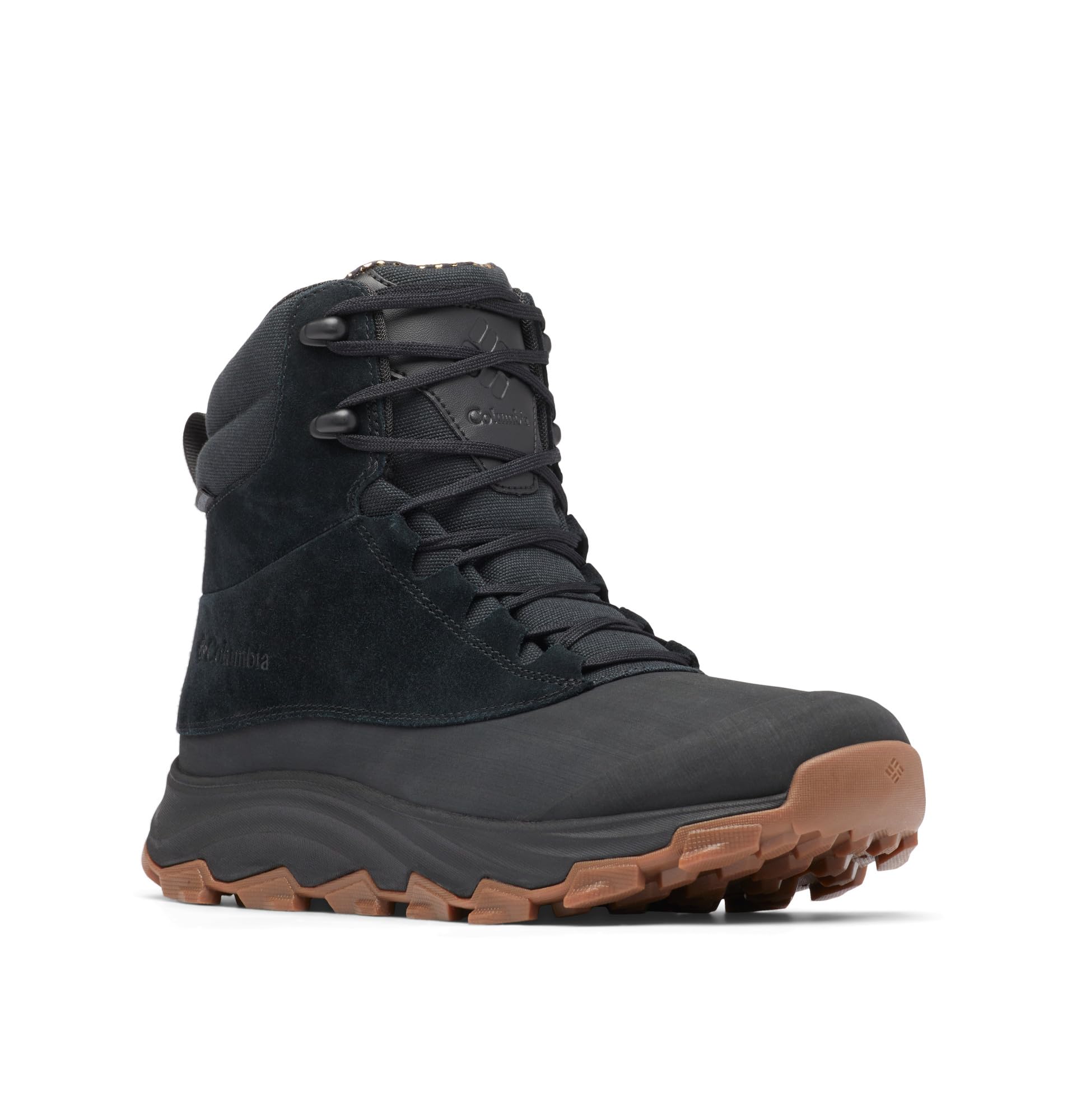
1. Columbia Men’s Expeditionist Shield
Our pick — 4.5+★ from 600+ verified ratings; the strongest balance of quality and price.
The everyday winter boot that walks like a hiker and grips like a snow tire.
The Columbia Expeditionist Shield is the pick that suits the most young men, most of the time. It pairs a waterproof-breathable build with Columbia’s thermal-reflective lining — a thin layer that bounces your own body heat back at your feet instead of letting it leak out. That combination means you get warmth without the greenhouse effect of a heavy insulated boot, which is why it works just as well on a commute as it does on a snowy walk.
This boot earns its spot on volume of owner feedback: it is the crowd favorite here at 4.5+ stars from 600+ owners. Warmth and water resistance come up again and again as the reasons people keep wearing them. One buyer put it plainly: “Light weight, comfortable, warm but not hot, great to walk in.” That matters, because a boot that feels clumsy over a mile gets left in the closet, and buyers describe this one as light enough to wear daily. The tread is aggressive enough that it tracks snow and sand indoors, so expect to knock your heels off at the door.
The catch worth knowing is sizing. This boot has a documented habit of running small and narrow, and the recommended fix is going up half a size so a thick wool sock fits without pinching your toes. Some owners also call the removable insole flimsy and the gold liner trim a bit loud, and the durability picture is mixed rather than spotless. None of that breaks the boot for normal wear; it just means you should order the size up and treat the insole as the first thing you might swap.
What earns it the top spot
- Thermal-reflective lining holds heat in without overheating your feet
- Waterproof-breathable build that resists water and dries fast
- Light enough to wear as a daily boot, warm down to around 10°F
- Cold-tune tread with genuine grip on ice and packed snow
The honest caveats
- Runs small and narrow, so go half a size up
- Removable insole feels cheap and is the first upgrade candidate
- Aggressive tread carries snow and sand indoors
Best for: the guy who wants one boot for campus, work and weekend snow without a break-in battle.
Order note: size up half a size and you get the fit most owners end up happy with.
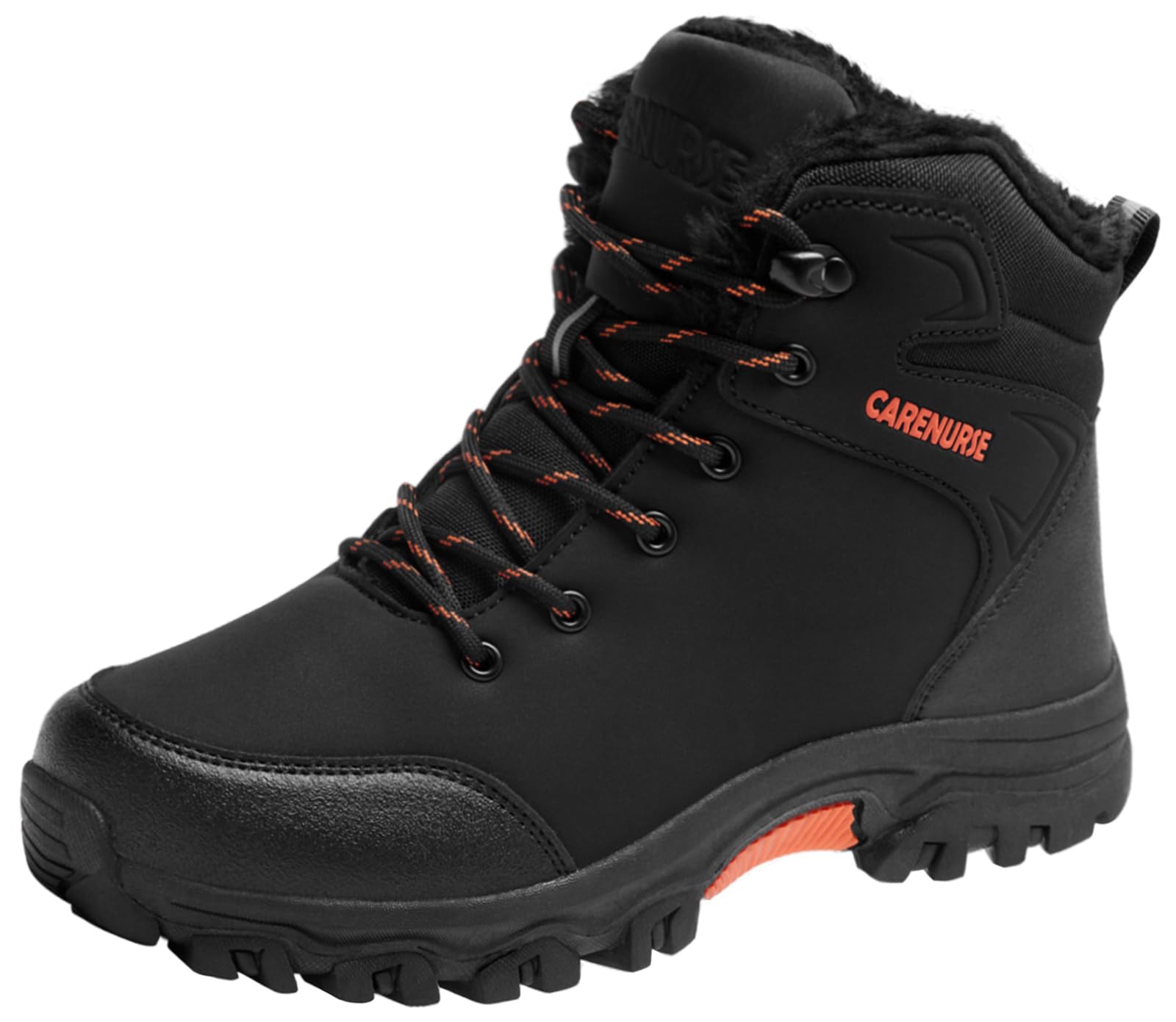
2. CARENURSE Mens Snow Boots
A soft-lined workhorse that arrives ready to wear straight from the start.
If your winter involves being outside for a living rather than a stroll, the CARENURSE is the value play here. A faux fur lining runs down to the ankle, a rubber toe cap takes the knocks that construction and roofing throw at it, and the lace-up closure lets you cinch the fit tight for warmth. There is no break-in period to survive, which is a real advantage for a boot you are wearing from day one.
Buyers talk most about how solid the build feels for the money — not flimsy the way cheap winter boots can be. Comfort is the close second. One reviewer, a husband who has done roofing and construction for 17 years, says these are the first boots that genuinely kept his feet warm through northeast Ohio winters, from single digits up to the thirties. Plenty of buyers also find them easy to pull on and off, which helps if bending over is a chore.
The fair caveat is that this is a water-resistant boot, not a fully waterproof one. It handles wet snow and slush fine, but standing water will eventually find a way in, and long hiking trips can wear it down faster than casual use. Treat it as an excellent everyday and jobsite boot rather than a backcountry expedition boot, and it delivers far more than its price tier suggests.
Where it shines: the combination of a cozy faux fur lining, a protective rubber toe cap and a price that lets you buy a backup pair. For cold, wet, working days, that is a lot of boot for the money.
Where it stops: water-resistant rather than waterproof, and durability on long trails is the one thing buyers describe as mixed.
Reach for this if: you work outdoors in the cold and want warmth you can trust without spending premium money.
Look elsewhere if: you need a boot you will submerge in slush on a long hike.
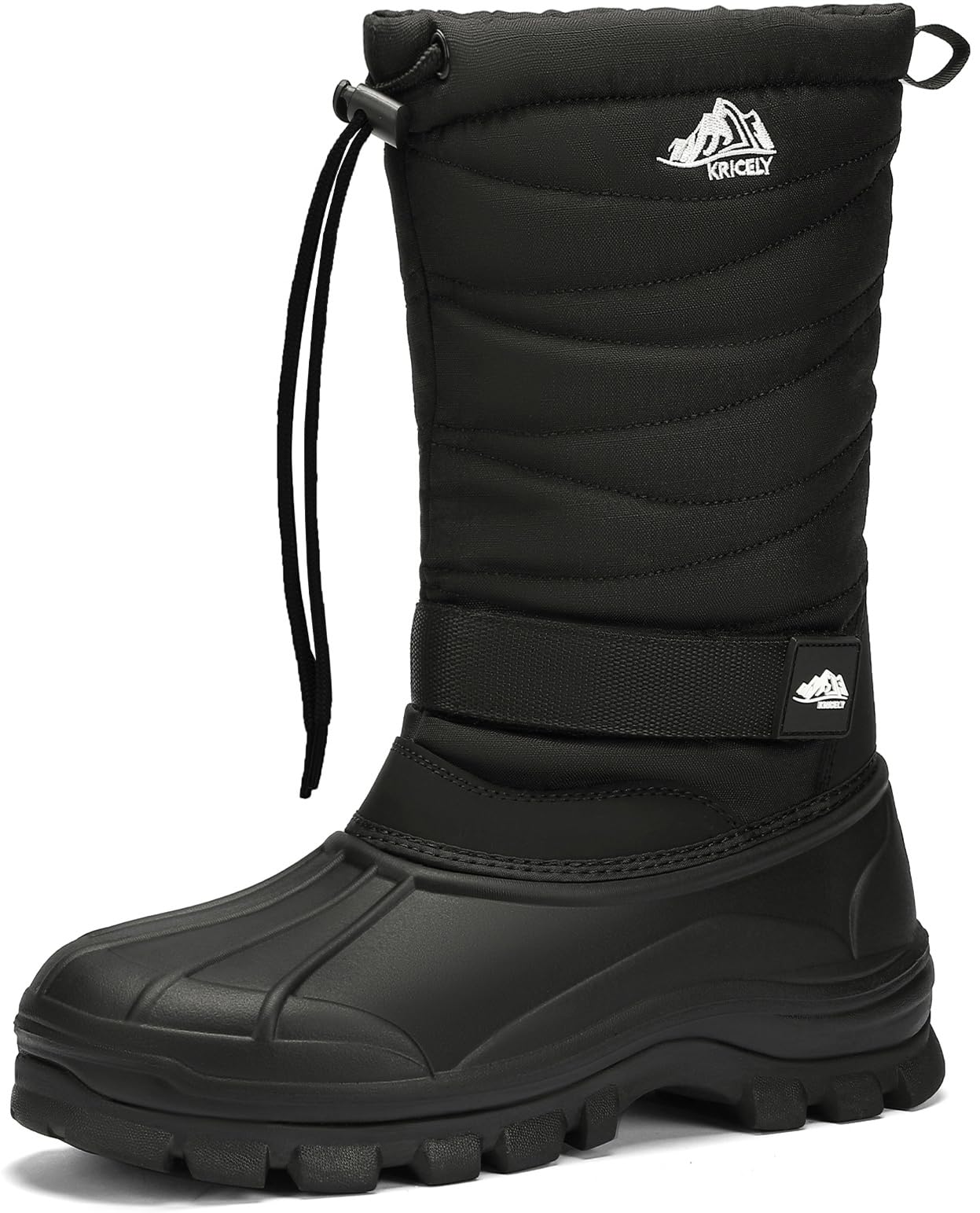
3. Kricely Men’s Snow Boots
Billed for minus-forty weather, with a fur lining and a zipper for quick exits.
On paper this is the coldest-weather boot in the whole roundup. Kricely packs in 3M 400g Thinsulate — a synthetic insulation that traps body heat — and rates the boot to -40℃ / -40℉. The waterproof upper and non-slip sole round out the package, and the hook-and-loop and zipper closure make getting in and out fast. For a young man heading into a genuinely brutal winter, that spec sheet is the reason to look here first.
Buyers describe it as well-made, warm and comfortable, with the fur lining and easy slip-on coming up as the details people like. One reviewer noted wearing them comfortably in snow at minus 15°C. Another flagged that the zipper catches on the expandable lining, so you have to zip carefully rather than yank it shut.
Fit is the real story to plan around. The sizing comes back mixed, and the common advice is to order half a size up — one buyer needed a full size up from the chart’s suggestion before the boot felt right. A few people who run hot found the warmth short of the deep-cold rating on longer outings. Treat the -40 rating as the outer edge of its comfort zone, not the temperature you will happily stand around in all afternoon, and you will be well served.
Pick this one if: your winter runs seriously cold and you want the highest insulation number here without paying premium money.
Size carefully: most owners land on half to a full size up, so check the chart before you order.
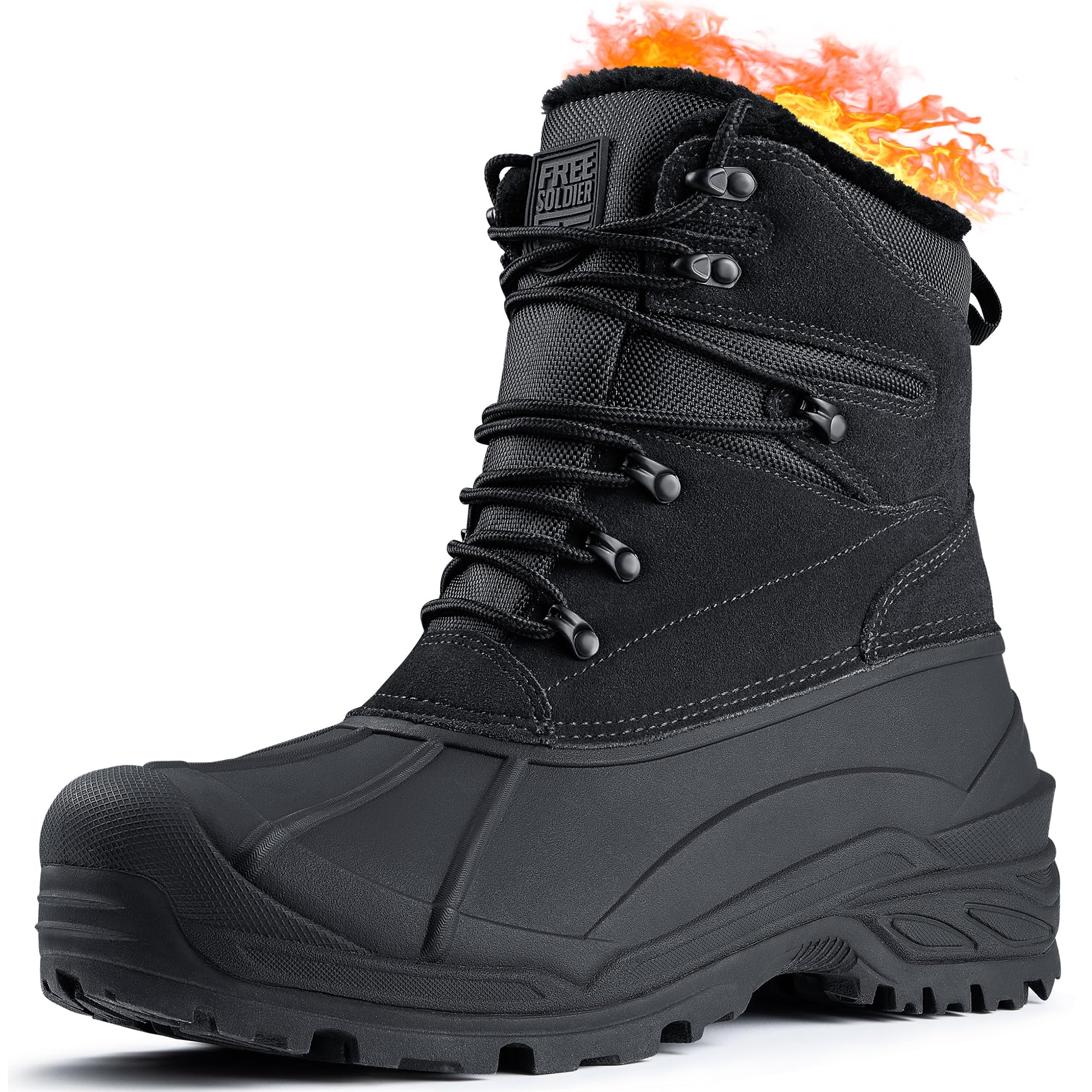
4. FREE SOLDIER Men’s Waterproof Fleece Winter Snow Boots
A fleece-lined hiker built to keep going when the trail disappears under snow.
The FREE SOLDIER leans into the trail side of winter. A soft fleece lining wraps your feet like a thick warm sock, and the maker rates it down to -25°F. The upper is waterproof faux suede with a gusseted tongue — the flap that stops snow sneaking in through the laces — and a composite-reinforced toe cap takes the bumps. The rubber outsole uses deep traction lugs for snow, ice, mud and wet pavement, so it is built for uneven ground rather than a cleared sidewalk.
Where this boot earns its spot is the fit and the adjustability. It has an 8.3-inch shaft height, so it comes up over the ankle and keeps snow out on the trail, and the quick-lacing system with sturdy hooks lets you tighten or loosen the fit in seconds. Buyers describe it as true to size and easy to get on and off, and a teenage grandson took a pair on a snow vacation and came back with warm, dry feet and a working nonslip tread.
The trade-off is that this boot feels sturdy rather than supple. One honest warning from the field: the thick tread can make deep, uneven snow harder to navigate for anyone with balance or mobility issues, so it rewards a confident walker. Also know that the sides feel a little thin to some owners and the upper looks better in photos, so treat it as a solid trail and shoveling boot rather than a polished town boot. It runs a touch big for some, so a half size smaller can be the better call if you are not wearing heavy socks.
The trail value: a fleece-lined, waterproof boot with genuine lug traction and a reinforced toe cap, all at a value-tier price. If your winter includes shoveling, dog walks or a snowy hike, it covers all three.
The honest limit: the rugged tread and sturdy build are not for shaky footing, and durability is the one thing owners describe as mixed rather than flawless.
Great match for: an active young man who hikes and shovels and wants a warm, grippy boot without the premium tag.
Think twice if: you need easy footing in deep, uneven snow or prefer a softer, lighter feel.
5. Columbia Men’s Bugaboot III Winter Boots
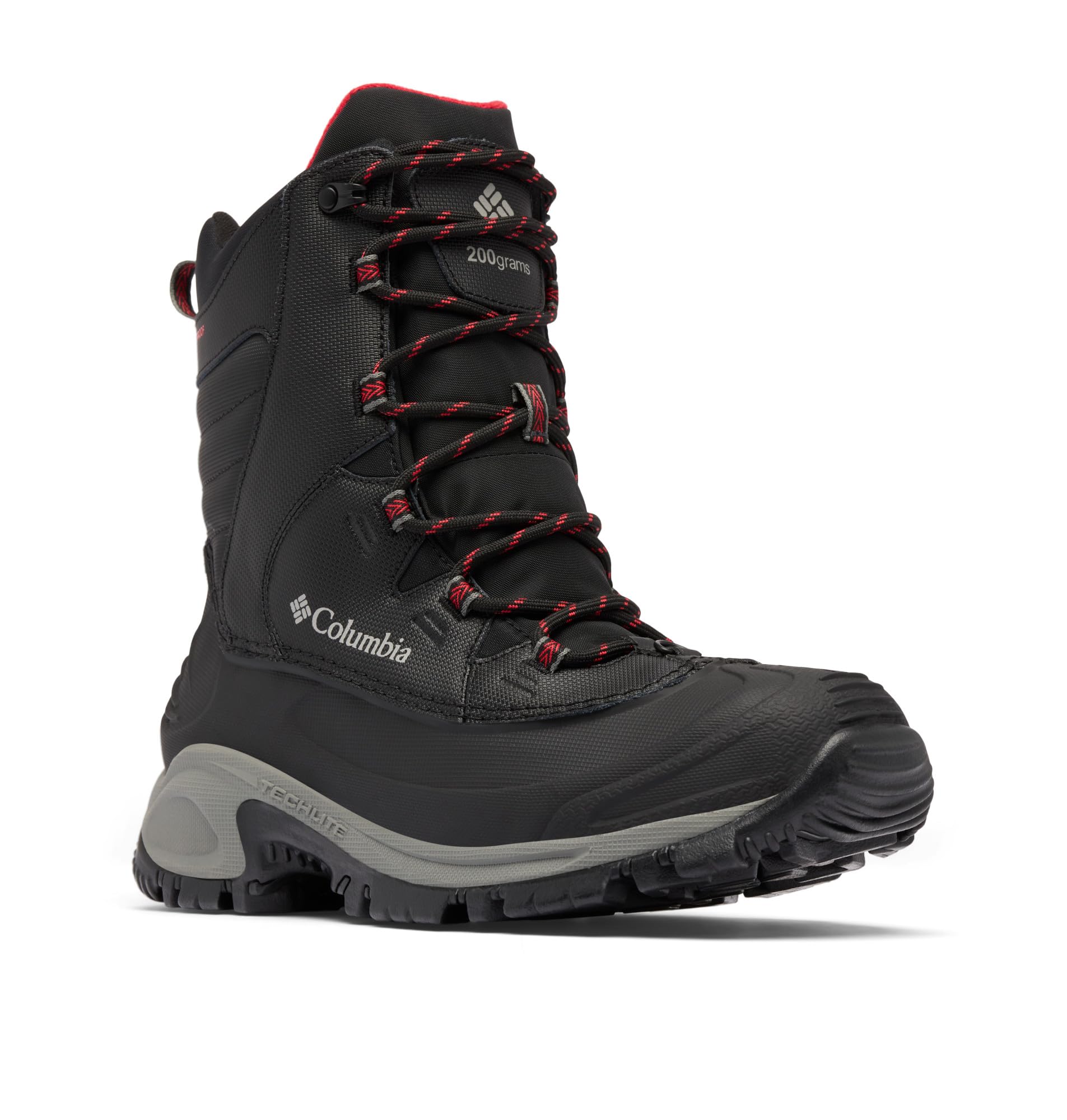
The leather-shell workhorse that shrugs off slush, ice and a long daily commute.
The Bugaboot III is the boot Columbia has been refining for years, and it shows. A waterproof leather upper with seam-sealed construction keeps water out at the stitching, 200g insulation warms your feet without turning them into a sauna, and the injection-molded rubber shell and outsole give the boot its durable, dent-resistant structure. The cold-tune tread handles ice and packed snow. If you want a boot that looks like serious winter gear and wears like it, this is the one.
Owners describe warmth that holds up in sub-zero temperatures without the sweat problem that heavy boots bring, and a soft sole with strong ankle support that suits long days on your feet. One owner reported wearing them for hours blowing snow with dry feet. Durability is a genuine selling point here — this is the boot people buy a second backup pair of, and people report it holding its shape over multiple winters rather than breaking down. The price beats most of the big-brand competition, too.
Sizing is where you need to pay attention. The fit feedback is mixed, and the safe move is going up at least half a size for thick winter socks. One unhappy buyer found the labeled wide size came in far too small, so if you wear a wide, check availability carefully before ordering. The lace hooks are also missing on this model, which slightly limits how tight you can cinch the top of the boot. Get the size right and this is a durable, warm boot that earns its keep for years.
Why it earns a spot
- Waterproof leather with seam-sealed construction keeps slush out
- 200g insulation warms feet in serious cold without overheating
- Injection-molded rubber shell adds durability and protects against bumps
- Holds its shape over multiple winters, and buyers come back for backup pairs
What to know first
- Runs small, so go up at least half a size for thick socks
- No lace hooks, which limits how snug you can tie the upper
- Feet can get cold after several hours in temperatures in the mid-teens or lower
Built for: the young man who wants a durable leather winter boot that will survive several seasons of daily wear.
Order note: go up half a size and skip this one if you wear a wide and cannot find that width in stock.
6. THE NORTH FACE Men’s Chilkat V Lace-up Waterproof Snow Boot

A light, nimble snow boot with a heel ridge built to hold snowshoes and spikes.
The Chilkat V is the boot for someone who treats winter as a season to move through, not hide from. It packs 200g of insulation into a waterproof upper, and the design includes a heel ridge that secures snowshoes, crampons and ice spikes, plus a lower D-ring that lets you clip on gaiters. That is a deliberate nod to real winter hiking, and it separates this boot from the town-and-campus picks here.
What people like most is how little it weighs for how much warmth it delivers. Owners describe it staying warm and comfortable through a northeast snowstorm and working well in dirt, mud, creeks and light snow. The build is quality-first, and one buyer mentioned the shoes lasting over a year on six-day workweeks with long hours, which says plenty about how it holds up to real use.
The two honest notes are sizing and the top loops. The fit feedback is mixed, and the common advice is to go a half or even a full size up if you plan to wear thick socks or add an insert. More than one buyer had to reorder larger before landing on the right fit. Separately, the top heel pull loops on some pairs have torn out, though the lower loops held firm. None of that changes the fact that this is a light, warm, capable winter boot — just size up and use the bottom loops as your pull point.
You will love it if: you snowshoe, hike or spend winter weekends on trails and want a boot that moves with you.
One caution: order a size up and pull from the lower loops, since the top ones can give way.
7. SOREL Men’s 1964 Pac Nylon Waterproof Boot
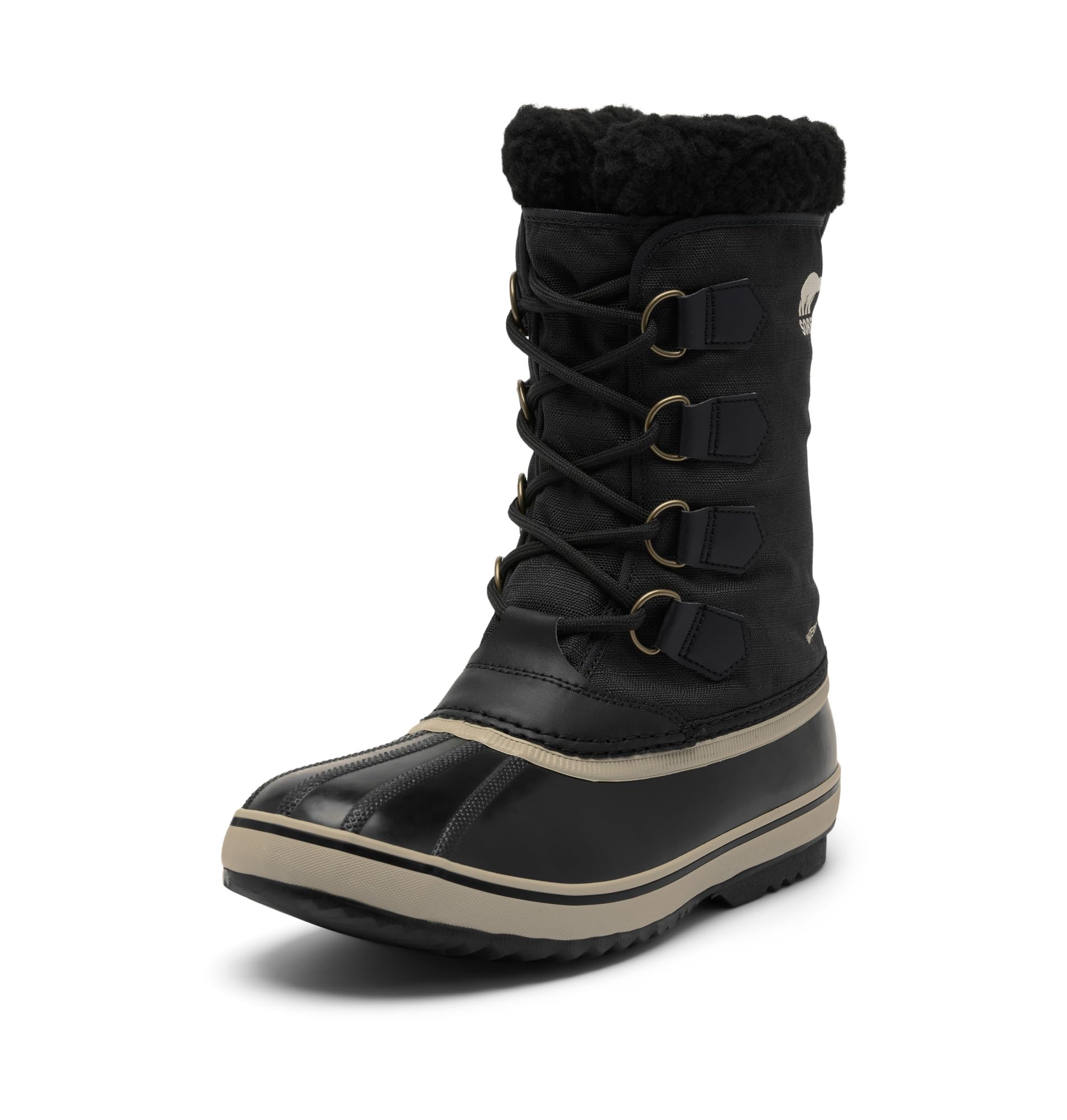
The heritage winter boot with a seam-sealed shell and a Sherpa-lined cuff.
If the look of a winter boot matters as much as the function, the SOREL 1964 Pac Nylon is the pick. It carries the brand’s classic pac-boot silhouette, with a seam-sealed waterproof construction to keep water out at the joins and a Sherpa cuff at the top for a cozy, heritage finish. A vulcanized rubber shell with an extra-grip sole underneath handles the slick stuff. This is the boot you wear when you want to look like you know your way around a snowy street.
The warmth and comfort feedback is strong. Owners wear them all day at work with no discomfort, and one Search & Rescue buyer spent several hours in 18°F temperatures with warm feet after sizing up to fit heavy merino wool socks. The quality is what people praise most — this is a boot that lives up to the SOREL name, and cold-weather loyalists keep coming back to the brand for a reason.
The key thing to plan for is fit. Sizing feedback is mixed, and the most repeated advice is to go a full size up to leave room for big winter socks. Getting caught short on size is the main frustration with this boot, so it is worth ordering deliberately. Build quality draws a small amount of mixed feedback too, so treat it as a heritage-style everyday boot rather than an expedition boot. Style-forward and dependable for normal winter wear.
The style angle: a genuine heritage pac boot look with a seam-sealed waterproof shell and a Sherpa cuff, warm enough for hours in 18°F conditions.
The planning note: go a full size up for thick socks, because the sizing leaves some owners short.
Suits you if: you want a classic-looking, genuinely warm winter boot and do not mind planning your size around thick socks.
Look elsewhere if: you want a lean modern profile or need guaranteed true-to-size fit.
8. Merrell Men’s Coldpack 3 Thermo Mid Waterproof

The ice specialist, with a Vibram sole that bites where other boots slip.
The Coldpack 3 is what you reach for when the ground is more ice than snow. Merrell pairs a waterproof upper with a Vibram Arctic Grip outsole — a rubber compound specifically designed to grab on cold, slick surfaces — and adds 200g of insulation plus a fleece lining for warmth. The result is a boot that stays dry, stays warm, and gives you real confidence underfoot on packed snow and rink ice.
What buyers keep coming back to is exactly that grip. People who work around ice rinks say it beats standard boots on the ice, keeps their feet comfortable all shift without overheating, and gets good enough to buy a second pair. This boot is also lighter than a pac boot, which makes a difference over a long day. The fit gets praise for its room above the toes, and the wide option runs genuinely wide — one owner compared it to a New Balance wide.
The honest note is durability. Feedback there is mixed, with some buyers reporting the sole coming loose over time. Treat this as a boot for a committed winter season rather than something you pass down. On sizing, most people find it true to size, so buy your normal size rather than sizing up — this one is the exception to the pattern elsewhere in this list. If the ice is the enemy, this is the boot that handles it best.
The case for it
- Vibram Arctic Grip sole delivers confident footing on ice and packed snow
- 200g insulation plus fleece lining keeps feet warm and dry
- Lighter than a pac boot, with a roomy toe box and a genuinely wide option
- Holds heat on long days without overheating indoors
Where it could fall short
- Premium pricing puts it at the top of the value ladder here
- Some buyers report the sole coming loose over time
- Long-term durability is the one mixed signal
Made for: anyone who walks on ice, works around rinks, or spends winter on packed snow and cold pavement.
Know before you buy: this one runs true to size, so buy your normal size and watch the sole over a long season.
9. KEEN Revel 4 Mid Height Polar Insulated Waterproof
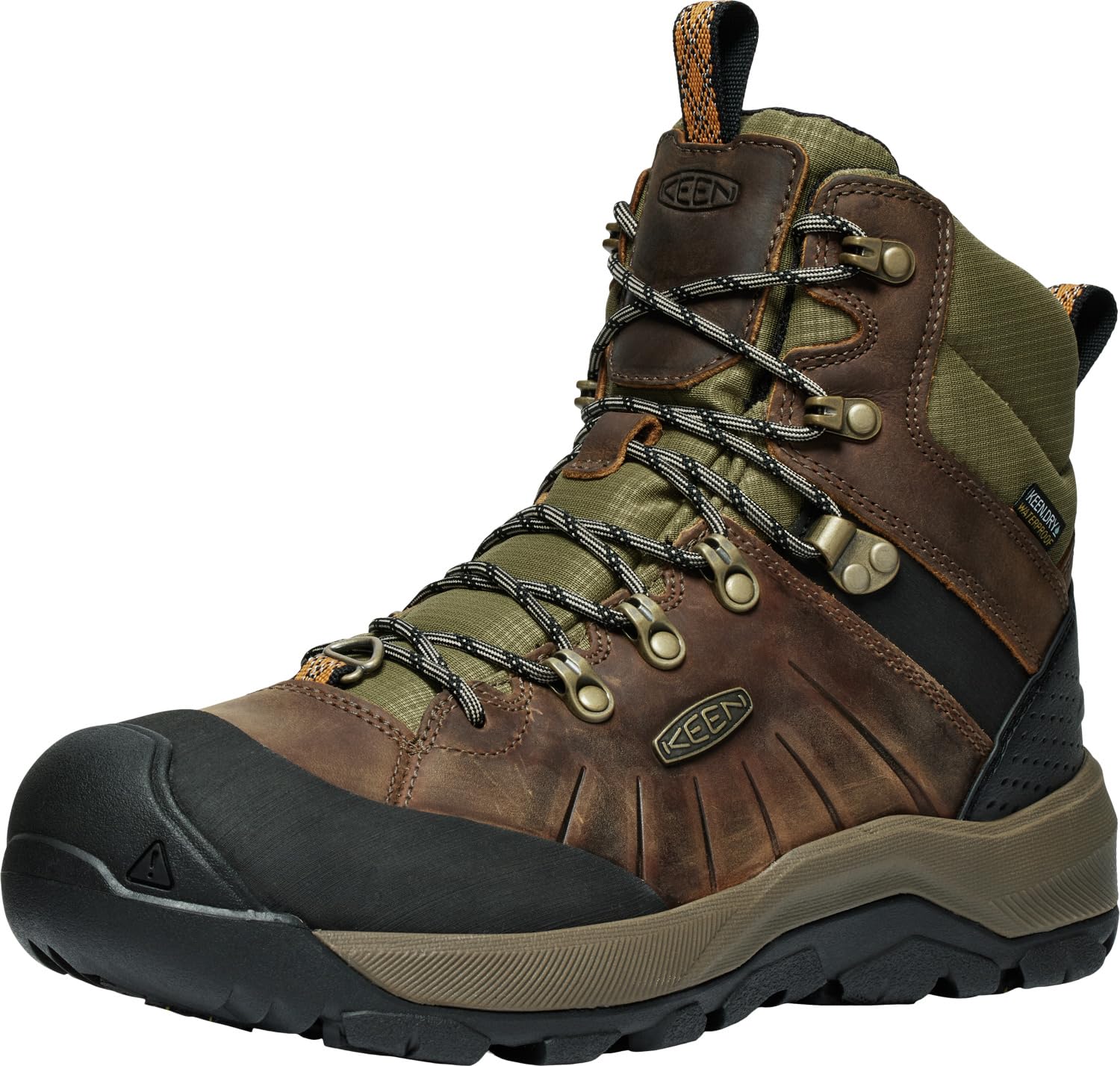
The wide-toe winter boot built for snowshoeing, hiking and long days on your feet.
The Revel 4 is the pick for anyone with wide feet or anyone who has ever given up on a winter boot because their toes felt trapped. KEEN builds on its traditional wider form, adds a thermal heat shield inside to capture warmth, and uses a speed lace webbing system so you can tighten the fit fast. The waterproof, breathable build keeps moisture out while letting your feet breathe, which is a rare combination in a heavy winter boot.
The fit is the thing people talk about most, and it is exactly what you would hope for from KEEN. A wide toe box accommodates thick winter socks, and owners describe good arch support and all-day cushioning with zero break-in and no blisters. People wear them for snowshoeing, winter hiking and snow-plow driving, and one buyer took them up a Colorado fourteener in snow and ice at -5°F with feet that stayed dry and warm. Another spent 10 to 12 hours standing in them comfortably.
The trade-off here is durability. While some owners get plenty of seasons out of them, others report the rubber toe guard delaminating or stitching coming undone within a couple of winters. That is a legitimate reason to think of this as a boot for committed winter use rather than one you expect to last forever. The other thing to know is the mid-height cut: for extended deep-snow walking, some owners suggest gaiters or the taller version. It is also worth checking the fit details: most find it true to size, though a few step up half a size for thick socks.
The wide-foot advantage: a genuinely roomy toe box (extra space across the front of the foot) with a thermal heat shield and speed laces (quick-pull laces), all in a waterproof breathable build. For snowshoeing and winter hiking, that combination is tough to top.
The durability question: feedback on longevity is mixed, with some toe guards separating and stitching failing, so keep an eye on the seams.
Ideal for: wide-footed winter hikers and snowshoers who want toe room and all-day cushioning.
One caveat: watch the toe guard and seams, since durability is the most mixed part of the story.
Know the Specs
200g vs 400g Insulation
Insulation is measured in grams, and it tells you roughly how much warmth the boot traps. A 200g boot is the everyday choice for most people walking around town, to class or to work in normal winter temperatures. A 400g boot, like the Kricely’s 3M 400g Thinsulate, is for serious cold and long hours outdoors. More grams means more warmth, but also more bulk and a hotter foot once you get indoors. Pick 200g for commutes and errands, 400g for hours outdoors in deep cold.
Waterproof vs Water-Resistant
Waterproof means the material and the seams stop water from getting through. Water-resistant means the upper pushes water away for a while but will eventually soak through in deep slush or long wet walks. If your winters involve wet sidewalks and hours outdoors, a waterproof boot is worth prioritizing. If your worst exposure is a walk to the car in fresh snow, water-resistant can hold up fine.
What a Temperature Rating Really Means
A rating like -40℃ / -40℉ is a claim about the coldest condition the boot is built for, not a promise that your feet will feel cozy at that number. It gives you a way to compare boots on paper. Real warmth also depends on your socks, your circulation and how long you are standing still. Use the rating as a starting point when comparing, and pair it with thick wool socks for the coldest days.
Why the Tread and Sole Compound Matter
Most winter falls happen on ice, and the outsole is the only thing between you and the pavement. A deep lug pattern on a rubber outsole grips snow and packed ice. A cold-specific rubber compound, like the Vibram Arctic Grip on the Merrell, is designed to grab where regular rubber goes slick. Deep lugs also carry snow and sand indoors, so stomp off at the door.
Common Questions
Do these snow boots run true to size or should I size up?
Will these boots keep my feet warm on a long walk in deep snow?
Are these boots fully waterproof or just water-resistant?
Can I wear these snow boots for hiking in the winter?
Which snow boot has the best grip on ice?
How much insulation do young men need for a normal winter?
Are these boots good for people with wide feet?
Can I wear these snow boots indoors or on the bus all day?
Do the thick-tread boots track snow and dirt into the house?
The Bottom Line
For most young men, the winner in this roundup of young men’s snow boots is the Columbia Expeditionist Shield, because it balances a waterproof-breathable build, thermal-reflective warmth (a lining that reflects body heat back to you) and everyday comfort in one light, walkable boot. If you need genuine deep-cold warmth, reach for the Kricely with its 3M 400g Thinsulate (400 grams of 3M-brand insulation). And if icy ground is your daily reality, the Merrell Coldpack 3 with its Vibram Arctic Grip sole (a rubber sole built to grip wet ice) is the safest pairing of warmth and grip here — just watch the sole over time and size true to your normal fit.
How we choose
We do not accept paid placement. Every pick is matched to a real buyer and a real use-case; we do not hands-on test units.
Sources
Specifications: manufacturer listings and product documentation. Review insights: verified customer reviews, as of October 2026. Pricing: not shown on this page (it changes often); check the current price via the retailer link.
As an Amazon Associate, Home Digitized earns from qualifying purchases. This does not affect which products we feature.