
Specs are compiled from manufacturer listings and verified buyer reviews and can change over time — please confirm the key details on the product page before buying.
If your cabinets are sticky around the stove and your wood floors have gone grey where the sun hits them, the fix is usually one good product, not five. The picks below split into three jobs: cleaning finished wood without a rinse, feeding dry furniture with oil and beeswax, and restoring a worn floor so it reads as new. Match the product to your job and you are done.
This guide is built by comparing the manufacturers’ published specifications and the patterns across verified customer reviews, so you get each pick’s real strengths and trade-offs instead of marketing spin.
What follows is nine real formulas, sorted by what they actually do to wood — from a three-bottle concentrate that handles whole floors to a six-ounce wax tin that lasts years. The best wood care products here are matched to the surface you are standing in front of, not to a shelf label.
Top Picks


How To Choose The Best Wood Care Products
Wood care goes wrong for one reason: people buy the wrong format for their surface. A cleaner strips grime. An oil feeds dry timber. A wax seals it. A restorer rebuilds shine on a floor that is beyond wax. Buying all four is waste; buying the one your wood actually needs is the whole game.
Match the formula to the finish, not the furniture
Finished wood — the factory seal or polyurethane on most cabinets and modern tables — wants a light, silicone-free polish that sits on top and buffs clear. Unfinished or oiled wood, like a butcher block or an old dresser, drinks in oil and wax. Put a heavy wax on a factory finish and you get haze. Put a spray polish on bare oak and it vanishes in minutes.
Read the “free from” line before the scent
The label line that matters most is what is left out. Silicone-free means the polish will not build a film that fights your manufacturer’s finish over time. Petroleum-free and mineral-oil-free matters if you are polishing a cutting board or a child’s desk. Ammonia-free matters on anything with a topcoat. These are real differences between the bottles below, not marketing noise.
Concentrate or ready-to-use — the volume question
A concentrate that you dilute cleans far more square footage per bottle than a ready-to-use spray. A wax paste in a small tin covers more furniture per ounce than a liquid because you use a fingertip amount. If you have one table, buy the small format. If you have floors and cabinets and trim, the concentrate multiplies fast.
Side-by-Side Comparison
| Model | Best For | Format | Size | Key Claim | Amazon |
|---|---|---|---|---|---|
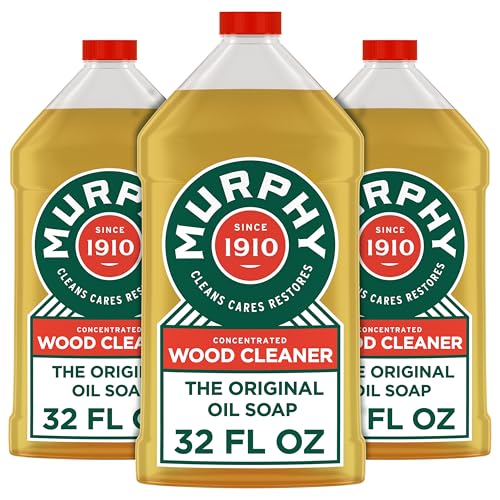
| Murphy Oil Soap Wood Cleaner, 3 Pack★ Best Overall | Whole-home cleaning | Concentrated liquid | 32 fl oz × 3 | 99% natural, phosphate-free | Amazon |
| Old Craftsmen’s Lemon Oil with Bees WaxBest Value | Antique furniture revival | Oil and beeswax liquid | 8 oz | Mineral-oil free, natural | Amazon |
| Goddard’s Cabinet & Wood Cleaning SprayBest for Cabinets | Kitchen cabinets | Spray, lemon oil + beeswax | 23 oz | No buffing required | Amazon |
| Guardsman Clean & Polish, 2 Pack | Fine furniture upkeep | Spray, silicone-free | 12.5 oz × 2 | UV sunblock protection | Amazon |
| Howard Lemon Oil Furniture Polish | Everyday routine care | Spray, lemon oil | 16 oz | Finished and unfinished wood | Amazon |
| Milsek Antiques & Restoration Polish | Heat and water rings | Oil polish, no wax | 12 oz | Erases rings and blemishes | Amazon |
| Daddy Van’s Beeswax & Lavender Polish | Chalk paint and bare wood | Wax paste | 6 oz | USDA Certified 100% Biobased | Amazon |
| Scott’s Liquid Gold Wood Floor Restore | Dull hardwood floors | Liquid floor restorer | Single bottle | Synthetic polymers, one application | Amazon |
| Howard Feed-N-Wax, 64-Ounce | Bulk wax conditioning | Carnauba and beeswax blend | 64 oz | Feeds and seals in one step | Amazon |
Detailed Reviews
1. Murphy Oil Soap Wood Cleaner 3 Pack
Our pick — 4.5+★ from 23,000+ verified ratings; the strongest balance of quality and price.
Three bottles of concentrate that clean wood without a rinse step.
Three 32 fl oz bottles of a concentrated formula is the reason this sits at the top. You dilute it, so one bottle cleans floors, cabinets, paneling, and laminate far past the point where a spray bottle would be empty. It removes dirt, grease, and grime from finished wood and is dye free with 0% phosphates and 99% natural ingredients.
The cleanup job that made this famous is kitchen grease. Buyers report the gas-stove build-up on cabinet fronts wipes away with a little elbow grease and the surface comes back looking new — the exact problem a spray polish cannot touch because it has nothing to cut the grease with. It also doubles as an all-purpose cleaner on sealed stone, tile, vinyl, and plastic, though you should spot-test first.
The honest catch is residue. Some people find it leaves an oily film, especially if they mix it too strong, so follow the dilution and wipe dry. The citronella scent is also assertive while you work, though it fades. At 4.5+ stars across 23,000+ ratings, most buyers never hit either issue.
What earns it first place
- Concentrated — three bottles of dilution go a very long way
- Ammonia free, dye free, 0% phosphates, and 99% natural ingredients
- Cuts kitchen grease on cabinets that polish alone cannot lift
- Works on finished wood, laminate, sealed stone, and vinyl
The honest trade-offs
- Too strong a mix can leave an oily film — dilute to the label
- The citronella scent is strong in a small kitchen while wet
- Not a polishing step — you still want a wax or oil afterward
Reach for this if: you have real grime to remove from finished wood and want one bottle that handles floors and cabinets both.
skip it if: your wood is already clean and only needs a shine — a wax or oil does that job better.
2. Old Craftsmen’s Lemon Oil with Bees Wax 8oz
An eight-ounce bottle of oil and beeswax that brings dead wood back.
For the money, this is the most impressive revival in the group. The blend of lemon oil and beeswax lifts grime and lays down a velvet film, with repeated use building a finish that protects as it shines. It is mineral-oil free and lists natural as a material feature, which matters if you are feeding an antique rather than just wiping it.
The oak cabinet test is the one to picture: twenty years of dried, faded finish, cleaned first with an oil soap, then this applied and left to soak overnight and buffed out with a microfiber cloth. The wood comes back deeper and richer than it had looked in years. It also handles blotchy absorption well — expect to wait about half an hour and buff two or three times for a streak-free result.
The size is the sticking point. Eight fluid ounces is a small bottle, and it is a runny liquid, so you use it faster than a paste. A few find it pricier per ounce than they expected, but a second bottle in two years tells you it stretches when you go light.
The revival math: the bottle is small but so is the amount you need per application, which is why a repeat buyer reports it lasting two years between bottles.
Buy it for: faded oak, tired dressers, and antique wood that needs deep feeding more than a light dust-off.
Think twice if: your wood is factory-finished and only dusty — a spray polish is faster and lighter.
3. Goddard’s Cabinet & Wood Cleaning Spray
Twenty-three ounces of spray that cleans cabinets without a buffing step.
This is the one for the kitchen, full stop. Hold the bottle six inches from the cabinet and spray, wipe immediately along the grain, and you are done — no buffing, no second pass. The formula pairs lemon oil with beeswax to clean, shine, and protect in a single step, and it is made to brighten wood without changing the color of your stain.
Age is where it earns its keep. Owners mention cabinets thirty-plus years old shining the way they did on move-in day, and you can see the grime on the cloth when you are finished. It also guards against sun damage, stains, drying, and cracking, and locks in moisture so cabinet wood near the sink does not go chalky.
The sprayer is the weak link — it can spurt rather than mist, so hold it steady and keep the distance. If you are degreasing a truly greasy cabinet, clean first with something stronger and use this as the finish. A 4.5+ star score across 450+ ratings is strong for a cabinet spray used weekly.
Why the kitchen crowd likes it: the no-buffing step means you can run through a whole set of cabinets before the coffee gets cold.
Made for: kitchen cabinet fronts and trim that need a fast clean-and-shine with no elbow grease.
Not the tool for: bare or oiled wood — it sits on top of a finish rather than soaking in.
4. Guardsman Clean & Polish Lemon Fresh 2 Pack

Two cans of silicone-free polish built to protect a fine factory finish.
If your furniture is good — mahogany, walnut, a solid-wood armoire — this is the safest pair of cans in the list. It is silicone-free, which preserves the manufacturer’s finish instead of building a film that dulls it over time, and it lays down UV sunblock to slow discoloration from window light. It also conceals fine surface scratches.
The restoration stories are the sell here. A seventy-year-old piano and a fifty-year-old bedroom set both come back to a deep shine with no residue left behind, though stripping old Pledge buildup first took real work. A wood repair technician also recommends it for solid wood.
The one real snag is shipping. Cans with plastic caps can arrive with a broken cap, and a liquid like this is not returnable to Amazon in the usual way — Guardsman sends replacements directly, which it did for a buyer whose caps both broke. The polish itself delivers a streak-free shine.
The finish-first argument: silicone-free plus UV protection makes this the pick for a piece you intend to keep for decades, not the one you just want wiped.
Go with this for: fine solid-wood furniture and anything sitting in sunlight that you want protected, not just polished.
Pass on it if: you want one cheap can to dust with — the two-pack is aimed at people caring for good wood.
5. Howard Products Lemon Oil Furniture Polish 16-Ounce

Sixteen ounces of lemon oil that works on sealed and bare wood alike.
This is the middle-ground pick: an oil that cleans and shines finished cabinets and tables, and soaks into unfinished surfaces instead of sitting on top. It is built to prevent drying and fading and to pull dust and dirt without abrasive chemicals, and the lemon scent is the light counterpoint to the heavier wax tins here.
What people keep it for is routine upkeep — chairs, tables, cabinets, and the odd stainless steel sink, where a buff leaves a near-new finish if you want a multi-surface trick. On solid cherry cabinetry it brings the color up and lifts surface grime. At 4.5+ stars across 500+ ratings, it is a bottle people reorder for routine upkeep.
The honest note is that the shine wears off faster than a wax paste, so plan on reapplying more often. A few also grumble that it is a furniture polish rather than pure lemon oil by ingredients, which is fair — it is formulated to polish, not to be a raw oil.
The pick’s identity: a light, fast oil for weekly dust-and-shine duty on furniture you touch every day, not a deep restoration formula.
Good match for: tables, chairs, and cabinets you want to wipe and brighten on a routine basis.
Hold off if: you need a long-lasting protective coat — a wax gives more staying power.
6. Milsek Antiques & Restoration Wood Polish 12 oz

A twelve-ounce oil polish that pulls heat and water rings out of antiques.
The specialty here is the marks other products cannot touch. Heat and water rings on an antique sideboard are the classic case — this formula erases them and restores the surface without water, wax, or silicone to build up over time. It is enriched with organic oils that feed and add moisture, so the wood does not just look better, it feels fed.
The restoration results come fast. Grime built up over years on dull kitchen cabinets lifts and brightens with one pass, and minor to moderate scratches soften under it. It also protects as it cleans, so an antique keeps its finish rather than losing it. A 4.5+ star score across nearly two hundred ratings is high for a ring-removal formula.
The scent is the split. Some find the lemon fresh and pleasant; others call it strong on application. Set it in a well-ventilated room and the disagreement shrinks.
The one trick worth the bottle: rings and blemishes that a plain polish cannot fix are exactly what this is built for.
Choose it when: you are restoring an antique with real heat or water damage and want oil that feeds without wax buildup.
Less useful if: your furniture is new and factory-finished — a light silicone-free polish is the safer daily choice.
7. Daddy Van’s All Natural Beeswax & Lavender Furniture Polish

A six-ounce tin of beeswax paste that seals chalk paint and bare wood.
This is the only wax paste on the list, and that format matters. Six ounces sounds small until you realize you rub on a fingertip amount with a soft cloth and buff it out — people report using one tin across plant stands, desk drawers, a spice rack, a chair frame, a storage trunk, and garden tools and still having some left.
It is a USDA Certified 100% Biobased furniture polish, petroleum free, chemical free, and solvent free, which is the reason people trust it on a cutting board and around kids and pets. On new solid maple, it left a rich even color with a gentle sheen rather than a gloss, and water beaded up on the surface afterward. That is water resistance, not a waterproof seal, so treat it as protection with limits.
The learning curve is real — you have to wait before you buff, and buff too soon and the finish stays tacky. A light lavender scent carries through application and fades within a day.
Where it shines brightest: chalk-painted furniture and bare wood both want a matte, non-hazardous sealing wax, and this delivers that without a solvent smell.
Reach for it for: chalk paint projects, bare wood desks, cutting boards, and any surface where you want a matte finish and natural ingredients.
Look elsewhere if: you want a spray-and-wipe job — this needs cloth, time, and buffing.
8. Scott’s Liquid Gold Wood Floor Restore

A floor restorer that brings a 90-year-old dull hardwood back to life.
This is the only pick built specifically for hardwood floors, and it does the thing you actually want: one application restores shine, minimizes scratches, and leaves a clean bright finish. The synthetic polymers treat scratches and dullness instead of coating over them with wax, and it is aimed at high-traffic rooms where the finish takes a beating.
The before-and-after stories here are dramatic. A 90-year-old original wood floor comes back to a point where people ask if new flooring was installed, and a twenty-year hardwood that had gone rough reads almost new after one pass. The shine also holds — one owner reports it lasting up to four months before reapplication, which is why this beats wax on a floor.
Prep matters. Thoroughly clean, vacuum, and mop, then let the floor dry completely before you apply in small sections with a clean damp mop. Skip the prep and the finish can go uneven. A 4.5+ star score across 350+ ratings is solid for a restorer judged on whole-room floors.
Why the floor crowd rates it: it removes the “the floors are too far gone” conclusion and buys years on hardwood that looks beyond wax.
Use it for: dull, worn, or scratched natural hardwood floors in high-traffic rooms.
Don’t reach for it for: furniture — the wax and oil picks above do a better job on tables and cabinets.
9. Howard Feed-N-Wax Wood Polish and Conditioner, 64-Ounce

A half gallon of feed-and-seal wax for a whole house of wood.
Sixty-four ounces is the reason this is here. It is the format for someone with floors, antiques, doors, trim, and a workshop full of projects — a protective blend of carnauba wax and beeswax that also introduces conditioning oils to keep the wood from drying and fading. It is the perfect follow-up to a restorer to maintain a newly restored finish.
The results speak to it. On a polyurethane-finished island countertop it reduces the plastic look and adds a warm glow, and on antique furniture that refuses to shine it brings out a glass-like finish. It also handles old waxed hardwood floors, where the effect lasts a couple of weeks where other products fade in two days. At 4.5+ stars across 700+ ratings, buyers keep reordering the 64-ounce tub.
The honest limit is that it is furniture wax first. On a floor it is softer than a dedicated floor finish, so it needs more frequent reapplication, and it is not meant for factory-finished floors without care. There is also a smell while it soaks in that some pets dislike until it dries.
The bulk math: a finger of wax per piece means the half gallon is less of a splurge and more of a refill that lasts an entire house’s worth of wood.
The right buy for: households with a lot of wood — antiques, trim, and workshop builds — who want one big tin to keep it all fed and sealed.
Overkill if: you have one table or a few cabinets; the smaller liquid formats above will last you longer.
Know the Specs
Concentrated versus ready-to-use
A concentrate like an oil soap is mixed with water before use, so a single bottle cleans floors, cabinets, and trim without running dry. A ready-to-use spray is convenience-first and cleans a smaller area per bottle. Choose a concentrate when you have whole rooms to do and a spray when you want a quick wipe on furniture.
Oil, wax, or polymer
Oils feed and condition dry wood but wear off. Waxes such as beeswax and carnauba lay down a protective film and build up with repeated use. Polymer restorers create a hard, durable shine on floors that oil and wax cannot match. The formula type is the real decision — not the scent or the bottle size.
Finished versus unfinished wood
Finished wood has a factory topcoat that a light, silicone-free polish should sit on. Unfinished or oiled wood drinks in the product, so oil and wax are the right tools. Using a heavy wax on a factory finish can haze it; using a spray polish on bare wood gives little benefit because it soaks in immediately.
The “free from” labels
Silicone-free protects a manufacturer’s finish from film buildup. Petroleum-free and mineral-oil-free matter on cutting boards and bare wood. Ammonia-free is kinder to topcoats. These lines tell you more about whether a product suits your surface than the scent or the marketing name on the front of the bottle.
Common Questions
Can I use a furniture polish on hardwood floors?
Do I have to rinse an oil soap off after cleaning?
What is the difference between beeswax polish and lemon oil?
Will a silicone-free polish really protect my factory finish?
Can these products remove water rings and heat marks?
Is a wax polish safe on a cutting board?
How long does one tin or bottle actually last?
Can I use these on unfinished or oiled wood?
What does UV protection actually do in a furniture polish?
Should I clean first, then polish?
The Bottom Line
For most homes, the best wood care products winner is Murphy Oil Soap because it tackles the job that trips people up first — real grease and grime on finished wood, from floors to cabinet fronts — and one concentrated bottle handles whole rooms. If your cabinets are the target, Goddard’s Cabinet & Wood Cleaning Spray cleans and shines in one wipe. And for a dull floor that has gone grey and worn, Scott’s Liquid Gold Wood Floor Restore is the one to reach for. Start with the surface in front of you, and the rest of the list sorts itself.
How we choose
We do not accept paid placement. Every pick is matched to a real buyer and a real use-case; we do not hands-on test units.
Sources
Specifications: manufacturer listings and product documentation. Review insights: verified customer reviews. Pricing: not shown on this page (it changes often); check the current price via the retailer link.
As an Amazon Associate, Home Digitized earns from qualifying purchases. This does not affect which products we feature.