
Specs are compiled from manufacturer listings and verified buyer reviews and can change over time — please confirm the key details on the product page before buying.
Your wood stove throws heat where you do not want it — into the wall behind it, the deck railing outside, or the tent fabric around the chimney. A heat shield (a fireproof barrier that stands between the stove or pipe and the surface you are protecting) is the cheapest fix you can buy. It matters more than most buyers expect, because the gap between stove and wall is exactly what building codes and tent fabric care about.
This guide is built by comparing the manufacturers’ published specifications and the patterns across verified customer reviews, so you get each pick’s real strengths and trade-offs instead of marketing spin.
Below you will find the four barriers worth a place by a real stove, split by whether they guard a wall, a chimney, or a deck.
The right wood stove heat shield depends on whether you are guarding a wall, a pipe, or a deck railing from heat and grease.
Top Picks
How To Choose The Best Wood Stove Heat Shield
Start with the surface you are protecting, not with the shield. A flexible fabric barrier and a rigid metal panel solve two different problems, and buying the wrong one leaves the wall just as hot as before.
Match the barrier to the surface, not the stove
If your worry is a wooden wall or an outdoor deck behind a grill, you want a wide flexible sheet you can hang in minutes. If your worry is the spot where the chimney exits a tent, you want a rigid guard that clamps around the pipe itself. Mixing these up is the most common mistake buyers make here.
Check pipe diameter before you buy a pipe guard
A stovepipe shield is sized to a pipe, and a few inches of misfit is the difference between full coverage and an exposed gap. Measure the outside of your pipe where the guard will sit, then confirm the shield’s stated fit range covers it. One shield in this list fits stovepipes 5″ to 8″, which is a broad range but still leaves the sides uncovered on the widest pipe.
Thickness and material decide how much heat gets turned away
Metal panels are graded by gauge, where a lower number means thicker steel that holds its shape and resists warping longer. Fabric barriers instead rely on a coating that reflects heat and wipes clean of grease. Neither is inherently better; each suits a different job.
Side-by-Side Comparison
| Model | Best For | Material | Size | Mounting | Amazon |
|---|---|---|---|---|---|
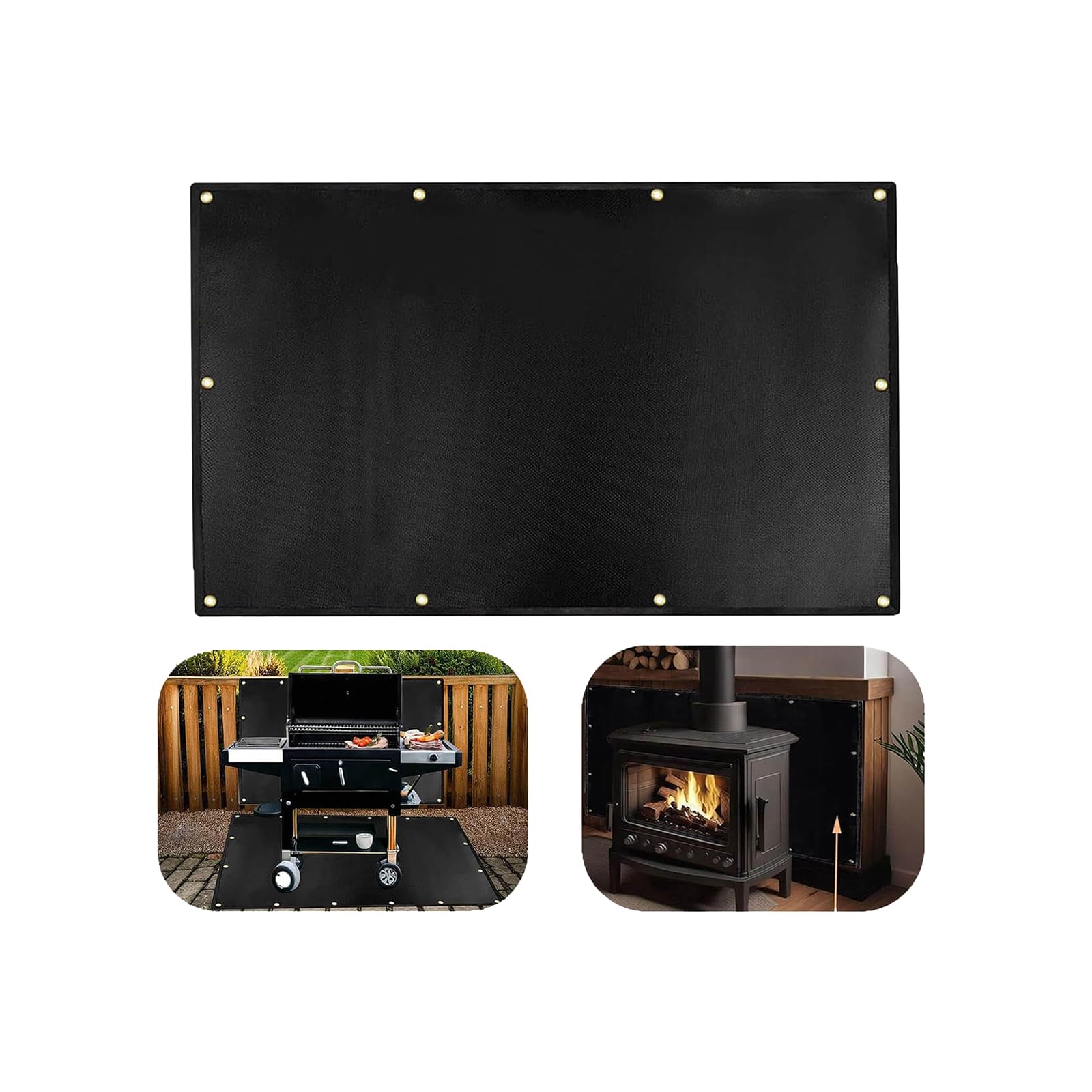
| 4′ X 6′ Fireproof Heat Shield★ Best Overall | Deck, wall, and fence cover | Glass fiber with silicone coating | 71″L x 47″H | Grommets and ties | Amazon |
| Winnerwell Mesh Protector | Hot tent stovepipe exit | AISI 304 stainless steel | 19.7″H | Fits around pipe | Amazon |
| HomeSaver Stovepipe Shield | Back-wall pipe deflection | Metal | 35″ long | Fits 5″ to 8″ pipe | Amazon |
| United States Stove Company Heat Shield | Full wall protection indoors | 24-gauge metal | 51″W x 42″H | Wall mount | Amazon |
Detailed Reviews
1. 4′ X 6′ Heat Shield
Our pick — 4.5+★ from 200+ verified ratings; the strongest balance of quality and price.
A huge flexible sheet that turns a scorched deck railing into a surface you can touch.
The number that sells this one is 47 by 71 inches — a 4′ x 6′ sheet of glass fiber with a heat-resistant silicone coating on both faces. That coating holds up to 900F of working heat, with a melting point of 2000F, so falling embers and hot oil splash hit the fabric instead of your fence or siding. If you have ever scraped black smoke stains off a cedar railing, this is the fix.
What makes it the strongest pick here is the sheer area combined with how little effort it takes to hang. The edge is lined with copper grommets (reinforced eyelets), and nylon ties come in the package, so you thread and knot it by hand with no tools. The same sheet wet-wipes clean, hoses down, folds flat for storage, and can double as a low-visibility balcony screen when the grill is cold.
The trade-off is heft and rigidity — it is a soft fabric sheet, not a solid panel, so it hangs on ties rather than bolting flat. Buyers report: “Seemed a little light weight, but has been working out just fine. The grommets made it super easy to install over my siding.” That is the honest shape of it: flexible, forgiving, and never going to look like built-in cabinetry. Functionality is what wins people over most, well ahead of any other quality they mention, and the customer consensus backs it — it does the job wherever it is tied.
Where this sheet dominates
- A 71″ x 47″ surface area covers a wide railing or wall run in one piece.
- 900F working resistance with a 2000F melting point shields against embers and oil.
- Water-proof, oil-resistant face wipes or hoses clean and reuses after drying.
- Grommets and included nylon ties mean a tool-free install in minutes.
Where it asks you to compromise
- Soft fabric tensioned on ties — no rigid standoff gap like a steel panel.
- Indoor wall use leaves it visible as a hanging sheet, not a flush fixture.
Reach for this if: your grill sits near wood siding, a deck rail, or a fence you want to keep clean and unmarked.
Look elsewhere if: you need a stiff panel bolted permanently to an interior wall behind a stove.
2. Winnerwell Mesh Protector Heat Shield

The chimney guard that keeps a glowing stovepipe from burning through your tent fabric.
This is a completely different animal from the big fabric sheet above — a 19.7-inch-tall guard built from AISI 304 stainless steel (a corrosion-resistant steel grade made for outdoor use). It sits at the stove jack, the reinforced hole where the chimney leaves the tent, and reduces the heat that reaches the fabric right at that exit. In a hot tent the pipe can run red-hot, and that contact point is the one spot you cannot afford to guess about.
At 0.63 kg it is light enough to toss in a pack and simple to slip on and off, which is the whole point for camping gear. It is made specifically for Winnerwell Woodlander and Nomad stoves across the S, M, and L sizes, so it seats stably rather than rattling loose on a generic pipe. Stainless also shrugs off rain and repeated pack-away cycles far better than a coated fabric would.
Here is the catch worth knowing before you order: this guard is sized to a pipe, not to your tent. A camper running a 63mm pipe found the shield fit the chimney but only just cleared the tent hole, and had to press it in. Measure your jack opening as carefully as your pipe. A handful of units have also shown up with cosmetic assembly quirks, so give it a once-over on arrival.
Built for the trail: 304 stainless construction, a 19.7-inch height, and 0.63 kg of carry weight make this a guard you can leave in the stove bag all season. The comparison against the big fabric sheet is stark — that one is a 71″ x 47″ wall of material, while this is a compact pipe collar doing a far narrower job very well.
Your match if: you run a Winnerwell Woodlander or Nomad in a hot tent and want the stove jack protected.
Not your match if: you own a different stove brand or an odd pipe size — fit is model-specific.
3. HomeSaver Stovepipe Shield

A long steel collar that pushes pipe heat away from the wall behind it.
Thirty-five inches of metal running along your stovepipe is a lot of deflection in one piece, and this shield is built from 24-gauge steel — a mid-weight metal that holds its curve instead of sagging. It is designed to wrap stovepipes from 5″ to 8″, which covers most single-wall setups you will meet in a cabin or sauna. The job it does best is the boring one: keeping the back wall behind the pipe cool.
With the single-wall pipe running hot, the back face stays cool to the touch — proof it deflects heat rather than merely blocking it. It also pushes usable heat forward: in a barrel sauna, the shield cut heat-up time by 5 to 10 minutes. Shipping arrives with solid instructions and install tips, which matters when you are fitting a metal collar around a hot-adjacent pipe.
The honest limitation is width and fit at the top of its range. On an 8 inch pipe the shield protects the back wall but leaves the side walls exposed, and the material is a single panel — there is no wrap-around coverage. If your pipe sits in a tight alcove with combustibles on both sides, this guard alone will not close the gap.
Steel that earns its keep: 24-gauge metal over 35 inches of pipe, rated for 5″ to 8″ fits, with real forward heat deflection you can feel in a sauna.
Size it carefully: the wider your pipe, the more side exposure you accept — measure your clearances before ordering.
Pick this one when: your stovepipe runs close to a rear wall or mantle and you want that surface cooled.
Think twice when: combustibles flank both sides of an 8 inch pipe — you will want wider coverage than this panel gives.
4. United States Stove Company Heat Shield

The biggest rigid panel here, sized to stand between a stove and a whole wall.
At 51 inches wide and 42 inches high, this is the largest solid sheet in the group — a 24-gauge metal panel in a powder-coated matte black finish that matches a typical stove. Its purpose is reducing the clearance between a wood stove and nearby combustibles, which is exactly the figure a safety-conscious install cares about. If you want one flat barrier covering a broad stretch of wall, this is the one built for it.
In practice it does what a wall panel should. A bookshelf that used to run hot beside the stove now stays cool to the touch, and the 18-pound panel holds its position and is manageable for one person to hang. The matte black finish blends with the stove rather than shouting for attention. Quality and heat resistance are the two things that come up most in its favor, and the consensus is that it performs the job it was sold for.
Two things to weigh. First, this kind of rigid panel tends to arrive with cosmetic travel marks — bent edges or faint scratches — though the unit behind them still functions. Second, and more important, value is the one point where opinion is genuinely split: some feel the panel is worth what it costs, others feel the same coverage should be cheaper. It is a solid panel, priced like a niche one.
The case for the big panel
- A 51″ x 42″ face shields a wide wall run that smaller guards cannot reach.
- 24-gauge metal with a powder-coated matte black finish suits most stove rooms.
- 18 pounds stays in place and keeps nearby furniture cool to the touch.
- Rigid construction holds a flat, permanent standoff off the combustibles.
What to expect going in
- Arrives with occasional bent edges or scratches from shipping.
- Value is the most debated point — this is a specialty part with few alternatives.
- Thinner metal than some buyers picture from the product photos.
Suits you when: you need a wide rigid barrier indoors and want a permanent wall-mounted fix.
Does not suit you when: cosmetic perfection from the start matters more than coverage — inspect it on arrival and expect a possible ding.
Know the Specs
Gauge: how thick a metal shield really is
Gauge is the thickness of sheet metal, and a lower number means thicker steel. A 24-gauge panel is mid-weight — thick enough to hold its shape and stay flat, thin enough for one person to hang alone. Thicker metal resists warping and warps less over a hot season, but it also carries more weight. When two shields are both 24-gauge, the real difference is size and how they mount.
Heat resistance ratings: 900F and 2000F explained
A 900F working rating is the temperature a heat-resistant surface can take in normal use, while a 2000F melting point is where the material itself fails. That gap is the safety margin between embers landing on the surface and the fabric giving way. For a stovepipe guard, the rating lives in the steel grade — AISI 304 stainless is chosen for heat resistance and corrosion resistance together.
Pipe fit range: why 5″ to 8″ is not a free pass
A pipe shield rated for 5″ to 8″ fits every pipe in that window, but the fit is tightest and loosest at the ends. On the widest pipe, the guard covers less of the circumference, which is why side walls can stay exposed. Measure the outside of your pipe where the collar sits, then read the fit range as a maximum, not a guarantee of full coverage.
Flexible sheet vs rigid panel
A flexible fiberglass sheet with a silicone coating hangs from ties and wipes clean, so it suits outdoor decks and grease splatter. A rigid metal panel stands off the wall on its own and reduces clearance to combustibles, so it suits a permanent indoor install. Pick by the surface you are protecting, not by price.
Common Questions
Will a heat shield let me put my wood stove closer to the wall?
How do I know which pipe size my stovepipe shield fits?
Is a fabric heat shield as safe as a metal one for a wood stove?
Can I use the 4′ x 6′ heat shield on my balcony as a privacy screen?
How do I clean a heat shield that has grease and soot on it?
Does a stovepipe heat shield block heat from the room or deflect it?
Why do some metal heat shields arrive bent or scratched?
Is the Winnerwell pipe guard only for Winnerwell stoves?
What weight can I expect to hang by myself?
The Bottom Line
For most buyers, the wood stove heat shield winner is the 4′ X 6′ Fireproof Heat Shield because its 71″ x 47″ silicone-coated sheet covers more surface per dollar and hangs in minutes with the included ties. If your chimney exits a hot tent, grab the Winnerwell Mesh Protector and its 304 stainless collar. And for a permanent interior wall behind the stove, the United States Stove Company Heat Shield is the wide rigid panel to mount. Pair the HomeSaver Stovepipe Shield with it when the pipe itself runs close to a rear wall. This is a small accessory purchase with real consequences at the wall, so buy for the surface you are protecting.
How we choose
We do not accept paid placement. Every pick is matched to a real buyer and a real use-case; we do not hands-on test units.
Sources
Specifications: manufacturer listings and product documentation. Review insights: verified customer reviews, as of October 2026. Pricing: not shown on this page (it changes often); check the current price via the retailer link.
As an Amazon Associate, Home Digitized earns from qualifying purchases. This does not affect which products we feature.